A SEMINAR ON
RIA OF DIGITALIS
Presented by –
K. Shiny
M.Pharm 1st year
Pharmaceutical chemistry
1008-18-884-006
Definition
Introduction
Principle and Theory
Advantages & disadvantages
Ria of digitalis
Applications
Reference
3
DEFINITION
“Ria is a technique for determining antibody
levels by introducing an antigen labelled with a
radioisotope and measuring the subsequent
radioactivity of the antibody component”.
INTRODUCTION
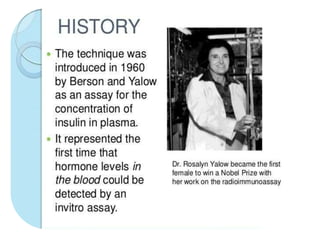
This isotopic measuring method was developed in 1959 by two Americans,
biophysicist Rosalyn Yalow and physician Solomon A. Berson.
RIA combines the specificity of an antigen-antibody reaction with sensitivity of
radioactivity measurements.
This is a technique used for detection of micro quantities of protein, viral antigens,
antibodies, structural proteins, vitamins and drug and their metabolites.
It can also be used for detection of pictogram quantities (10−12 g) of biological
constituents present in biological fluid.
RIA is used in place of bioassay in various branches of science like Biochemistry,
Microbiology, and Hematology and Clinical pharmacology.
6
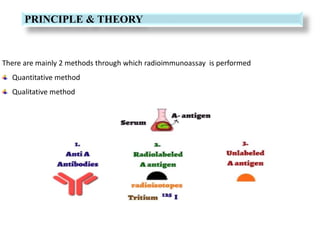
There are mainly 2 methods through which radioimmunoassay is performed
Quantitative method
Qualitative method
PRINCIPLE & THEORY
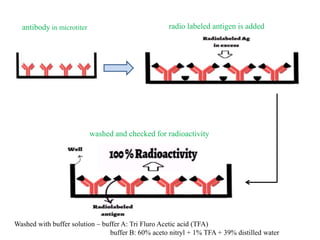
antibody in microtiter radio labeled antigen is added
washed and checked for radioactivity
Washed with buffer solution – buffer A: Tri Fluro Acetic acid (TFA)
buffer B: 60% aceto nitryl + 1% TFA + 39% distilled water
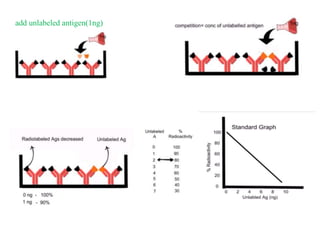
add unlabeled antigen(1ng)
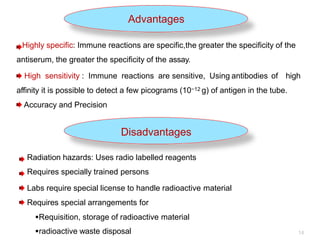
Advantages
Highly specific: Immune reactions are specific,the greater the specificity of the
antiserum, the greater the specificity of the assay.
High sensitivity : Immune reactions are sensitive, Using antibodies of high
affinity it is possible to detect a few picograms (10−12 g) of antigen in the tube.
Accuracy and Precision
Disadvantages
Radiation hazards: Uses radio labelled reagents
Requires specially trained persons
Labs require special license to handle radioactive material
Requires special arrangements for
Requisition, storage of radioactive material
-
radioactive waste disposal 14
RIA OF DIGITALIS
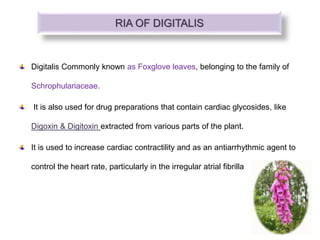
Digitalis Commonly known as Foxglove leaves, belonging to the family of
Schrophulariaceae.
It is also used for drug preparations that contain cardiac glycosides, like
Digoxin & Digitoxin extracted from various parts of the plant.
It is used to increase cardiac contractility and as an antiarrhythmic agent to
control the heart rate, particularly in the irregular atrial fibrillation.
The assay is based on the use of 125-iodine-labelled digoxin and of a gel
equilibration technique for the separation of antibody- bound and free digoxin.
Digoxin in serum samples competes with radio-labelled (125-1) digoxin
derivative for binding sites on the antibody to digoxin.
The unbound digoxin is then separated from bound form.
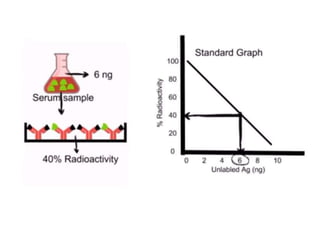
It is then quantified by counting radioactivity & concentration of unlabelled
digoxin in serum sample is calculated by comparison to digoxin standards.
PRINCIPLE OF RIA FOR DIGITALIS
Materials Used
For Assay
Digoxin Standards:-From 0.5- 8.0 ng/ml
Anti-serum and Tracer solutions
Digoxin antibodies raised in rabbits by subcutaneous
injections of digoxin-bovine serum albumin.
Phosphate saline buffer
Digoxin Radio Immuno assay kit, with 3-0-succinyl
digoxigenin tyrosine 125-1.
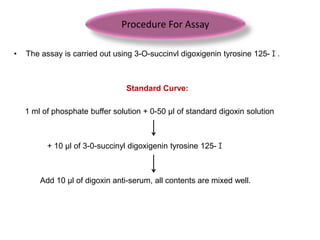
• The assay is carried out using 3-O-succinvl digoxigenin tyrosine 125-Ⅰ.
Standard Curve:
1 ml of phosphate buffer solution + 0-50 µl of standard digoxin solution
+ 10 µl of 3-0-succinyl digoxigenin tyrosine 125-Ⅰ
Add 10 µl of digoxin anti-serum, all contents are mixed well.
Procedure For Assay
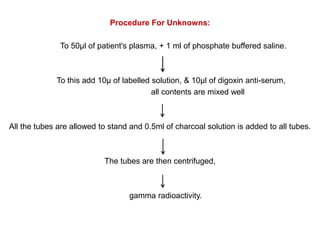
Procedure For Unknowns:
To 50µl of patient's plasma, + 1 ml of phosphate buffered saline.
To this add 10µ of labelled solution, & 10µl of digoxin anti-serum,
all contents are mixed well
All the tubes are allowed to stand and 0.5ml of charcoal solution is added to all tubes.
The tubes are then centrifuged,
gamma radioactivity.
Application of RIA:
Blood banking
Detection of presence of Hepatitis B Surface antigen (HBsAg) in donated blood.
Diagnosis of allergies
Detect inhalant allergens (antibody)
Endocrinology
Detect physiology of Endocrine functions.
Pharmacology
Detect of Drug Abuse or Drug poisoning.
Study drug kinetics
Oncology
Detect Carcinoembryonic Antigen.
Others
Narcotic drug detection
Tracking of leukemia virus
Research with neurotransmitter
REFERENCES
BIO CHEMISTRY, 3rd edition, mathews , van holde, aheren
Practical biochemistry 4th edition, keith wilson & john walker
https://www.youtube.com/watch?v=hJ8AYS5rpyU
https://www.slideshare.net/AfreenHashmi2/immunoassay-of-
digoxin?qid=746c8620-25d7-4dbc-b274-
5dc8f8d832d7&v=&b=&from_search=11
https://www.slideshare.net/tbeknathbabu/radio-immunoassay-
notes?qid=746c8620-25d7-4dbc-b274-
5dc8f8d832d7&v=&b=&from_search=39
http://m.authorstream.com/presentation/amitpharmacy13-2092352-ria-ppt/
ria on digitalis
ria on digitalis

ria on digitalis

  • 1.
    A SEMINAR ON RIAOF DIGITALIS Presented by – K. Shiny M.Pharm 1st year Pharmaceutical chemistry 1008-18-884-006
  • 3.
    Definition Introduction Principle and Theory Advantages& disadvantages Ria of digitalis Applications Reference 3
  • 4.
    DEFINITION “Ria is atechnique for determining antibody levels by introducing an antigen labelled with a radioisotope and measuring the subsequent radioactivity of the antibody component”.
  • 6.
    INTRODUCTION This isotopic measuringmethod was developed in 1959 by two Americans, biophysicist Rosalyn Yalow and physician Solomon A. Berson. RIA combines the specificity of an antigen-antibody reaction with sensitivity of radioactivity measurements. This is a technique used for detection of micro quantities of protein, viral antigens, antibodies, structural proteins, vitamins and drug and their metabolites. It can also be used for detection of pictogram quantities (10−12 g) of biological constituents present in biological fluid. RIA is used in place of bioassay in various branches of science like Biochemistry, Microbiology, and Hematology and Clinical pharmacology. 6
  • 7.
    There are mainly2 methods through which radioimmunoassay is performed Quantitative method Qualitative method PRINCIPLE & THEORY
  • 8.
    antibody in microtiterradio labeled antigen is added washed and checked for radioactivity Washed with buffer solution – buffer A: Tri Fluro Acetic acid (TFA) buffer B: 60% aceto nitryl + 1% TFA + 39% distilled water
  • 9.
  • 11.
    Advantages Highly specific: Immunereactions are specific,the greater the specificity of the antiserum, the greater the specificity of the assay. High sensitivity : Immune reactions are sensitive, Using antibodies of high affinity it is possible to detect a few picograms (10−12 g) of antigen in the tube. Accuracy and Precision Disadvantages Radiation hazards: Uses radio labelled reagents Requires specially trained persons Labs require special license to handle radioactive material Requires special arrangements for Requisition, storage of radioactive material - radioactive waste disposal 14
  • 12.
    RIA OF DIGITALIS DigitalisCommonly known as Foxglove leaves, belonging to the family of Schrophulariaceae. It is also used for drug preparations that contain cardiac glycosides, like Digoxin & Digitoxin extracted from various parts of the plant. It is used to increase cardiac contractility and as an antiarrhythmic agent to control the heart rate, particularly in the irregular atrial fibrillation.
  • 13.
    The assay isbased on the use of 125-iodine-labelled digoxin and of a gel equilibration technique for the separation of antibody- bound and free digoxin. Digoxin in serum samples competes with radio-labelled (125-1) digoxin derivative for binding sites on the antibody to digoxin. The unbound digoxin is then separated from bound form. It is then quantified by counting radioactivity & concentration of unlabelled digoxin in serum sample is calculated by comparison to digoxin standards. PRINCIPLE OF RIA FOR DIGITALIS
  • 14.
    Materials Used For Assay DigoxinStandards:-From 0.5- 8.0 ng/ml Anti-serum and Tracer solutions Digoxin antibodies raised in rabbits by subcutaneous injections of digoxin-bovine serum albumin. Phosphate saline buffer Digoxin Radio Immuno assay kit, with 3-0-succinyl digoxigenin tyrosine 125-1.
  • 15.
    • The assayis carried out using 3-O-succinvl digoxigenin tyrosine 125-Ⅰ. Standard Curve: 1 ml of phosphate buffer solution + 0-50 µl of standard digoxin solution + 10 µl of 3-0-succinyl digoxigenin tyrosine 125-Ⅰ Add 10 µl of digoxin anti-serum, all contents are mixed well. Procedure For Assay
  • 16.
    Procedure For Unknowns: To50µl of patient's plasma, + 1 ml of phosphate buffered saline. To this add 10µ of labelled solution, & 10µl of digoxin anti-serum, all contents are mixed well All the tubes are allowed to stand and 0.5ml of charcoal solution is added to all tubes. The tubes are then centrifuged, gamma radioactivity.
  • 17.
    Application of RIA: Bloodbanking Detection of presence of Hepatitis B Surface antigen (HBsAg) in donated blood. Diagnosis of allergies Detect inhalant allergens (antibody) Endocrinology Detect physiology of Endocrine functions. Pharmacology Detect of Drug Abuse or Drug poisoning. Study drug kinetics Oncology Detect Carcinoembryonic Antigen. Others Narcotic drug detection Tracking of leukemia virus Research with neurotransmitter
  • 18.
    REFERENCES BIO CHEMISTRY, 3rdedition, mathews , van holde, aheren Practical biochemistry 4th edition, keith wilson & john walker https://www.youtube.com/watch?v=hJ8AYS5rpyU https://www.slideshare.net/AfreenHashmi2/immunoassay-of- digoxin?qid=746c8620-25d7-4dbc-b274- 5dc8f8d832d7&v=&b=&from_search=11 https://www.slideshare.net/tbeknathbabu/radio-immunoassay- notes?qid=746c8620-25d7-4dbc-b274- 5dc8f8d832d7&v=&b=&from_search=39 http://m.authorstream.com/presentation/amitpharmacy13-2092352-ria-ppt/