Contact dermatitis
(pathology and treatment)
By
Srota Dawn.
M.Pharm (pharmacology)
Meaning of dermatitis:
Dermatitis
derives from
Greek ward
derma "skin" + -itis "inflammation".
What Is Dermatitis ?
Dermatitis is the inflammation of the
skin caused by factors such as:
1.Allergies
2.Irritants
3.Ultraviolet light
4.Foods
5.Medications
6.Hereditary
Types of Dermatitis
• SEBORRHEIC DERMATITIS [Skin eruptions on face, scalp, and
trunk of body. This symptoms will produce greasy, dry scales
and will appear reddish.]
• CONTACT DERMATITIS [The appearance of skin vesicles that
burn, itch , sting or scale. ]
• ATOPIC DERMATITIS [There will appear lesions on the face,
neck, knees, elbows, trunk of body.]
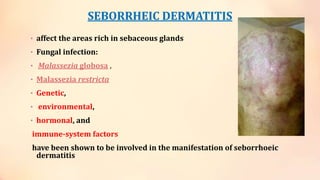
SEBORRHEIC DERMATITIS
• affect the areas rich in sebaceous glands
• Fungal infection:
• Malassezia globosa ,
• Malassezia restricta
• Genetic,
• environmental,
• hormonal, and
immune-system factors
have been shown to be involved in the manifestation of seborrhoeic
dermatitis
Antifungals
Over-the-counter
Dermol
betadine
zinc pyrithione
salicylic acid
selenium disulfide
Ketoconazole
Prescription
ciclopiroxolamine
sodium sulfacetamide
terbinafine
Fluconazole
Ketoconazole
Antihistamines
loratadine
cetirizine
fexofenadine
diphenhydramine
chlorpheniramine
Other medications
Coal tar
Lithium gluconate
Lithium succinate
Vitamin B6 ointment
Topical steroid
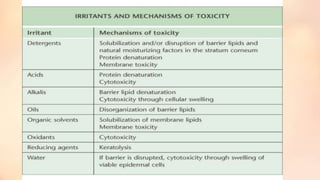
• ICD is a cutaneous inflammation resulting from a direct
cytotoxic effect of a chemical or physical agent
• Constitutes nearly 80% of occupational contact dermatitis
(OCD)
• OCD is a matter of public health importance, contributing
to combined direct and indirect annual costs (in the USA)
of up to $1 billion when accounting for medical costs,
workers compensation, and lost time from work
Contact dermatitis:
Definition:
Contact dermatitis is a term for a skin reaction (dermatitis)
resulting from
exposure to
•ALLERGENS (ALLERGIC CONTACT DERMATITIS)
OR
•IRRITANTS(IRRITANT CONTACT DERMATITIS).
•Phototoxic dermatitis occurs when the allergen or irritant is
activated by sunlight.
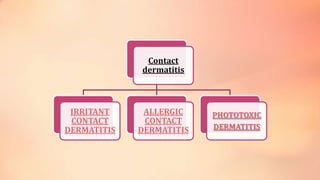
Contact
dermatitis
IRRITANT
CONTACT
DERMATITIS
ALLERGIC
CONTACT
DERMATITIS
PHOTOTOXIC
DERMATITIS
Irritant contact dermatitis:
It is a form of contact dermatitis that can be divided into forms caused
by chemical irritants and those caused by physical irritants.
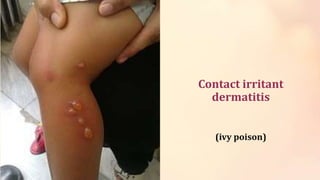
Contact irritant
dermatitis
(ivy poison)
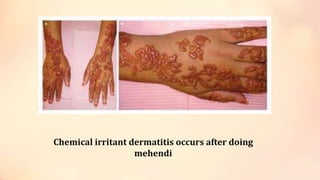
Chemical irritant dermatitis occurs after doing
mehendi
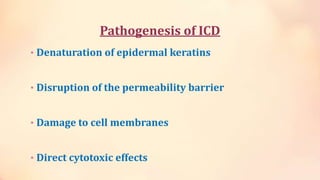
Pathogenesis of ICD
• Denaturation of epidermal keratins
• Disruption of the permeability barrier
• Damage to cell membranes
• Direct cytotoxic effects
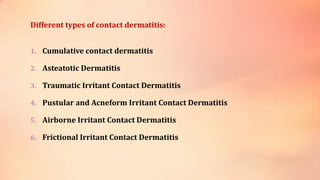
Different types of contact dermatitis:
1. Cumulative contact dermatitis
2. Asteatotic Dermatitis
3. Traumatic Irritant Contact Dermatitis
4. Pustular and Acneform Irritant Contact Dermatitis
5. Airborne Irritant Contact Dermatitis
6. Frictional Irritant Contact Dermatitis
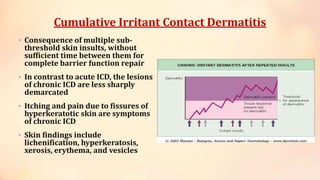
Cumulative Irritant Contact Dermatitis
• Consequence of multiple sub-
threshold skin insults, without
sufficient time between them for
complete barrier function repair
• In contrast to acute ICD, the lesions
of chronic ICD are less sharply
demarcated
• Itching and pain due to fissures of
hyperkeratotic skin are symptoms
of chronic ICD
• Skin findings include
lichenification, hyperkeratosis,
xerosis, erythema, and vesicles
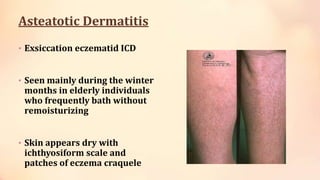
Asteatotic Dermatitis
• Exsiccation eczematid ICD
• Seen mainly during the winter
months in elderly individuals
who frequently bath without
remoisturizing
• Skin appears dry with
ichthyosiform scale and
patches of eczema craquele
Traumatic Irritant Contact Dermatitis
• May develop after acute skin trauma, such as burns, lacerations, or
acute ICD
• Patients should be asked if they have cleansed with strong soaps or
detergents
• Characterized by eczematous lesions most commonly on the hands,
that persist
• Healing is delayed with redness, infiltration, scale, and fissuring in
the affected areas
Traumatic Irritant Contact Dermatitis
• Reports of stinging or burning in the absence of visible
cutaneous signs of irritation
• Response to irritants such as lactic or sorbic acid
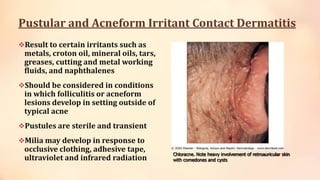
Pustular and Acneform Irritant Contact Dermatitis
Result to certain irritants such as
metals, croton oil, mineral oils, tars,
greases, cutting and metal working
fluids, and naphthalenes
Should be considered in conditions
in which folliculitis or acneform
lesions develop in setting outside of
typical acne
Pustules are sterile and transient
Milia may develop in response to
occlusive clothing, adhesive tape,
ultraviolet and infrared radiation
Chloracne. Note heavy involvement of retroauricular skin
with comedones and cysts
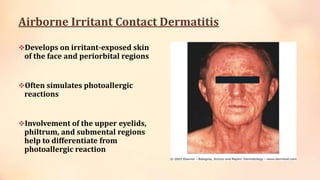
Airborne Irritant Contact Dermatitis
Develops on irritant-exposed skin
of the face and periorbital regions
Often simulates photoallergic
reactions
Involvement of the upper eyelids,
philtrum, and submental regions
help to differentiate from
photoallergic reaction
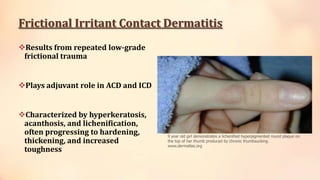
Frictional Irritant Contact Dermatitis
Results from repeated low-grade
frictional trauma
Plays adjuvant role in ACD and ICD
Characterized by hyperkeratosis,
acanthosis, and lichenification,
often progressing to hardening,
thickening, and increased
toughness
9 year old girl demonstrates a lichenified hyperpigmented round plaque on
the top of her thumb produced by chronic thumbsucking.
www.dermatlas.org
Pathology of ICD
Variable mix of inflammation, necrosis of epidermal keratinocytes, and mild
spongiosis
Combination of an upper dermal perivascular infiltrate of lymphocytes with
minimal extension of inflammatory cells into the overlying epidermis, and
widely scattered necrotic keratinocytes is most typical picture
True features of interface dermatitis are absent, and spongiosis should be
focal or absent
Over time additional histologic findings include acanthosis with mild
hypergranulosis and hyperkeratosis
Acids
Inorganic and organic acids can be corrosive to the skin
Cause epidermal damage via protein denaturation and cytotoxicity
Symptoms include erythema, vesication, and necrosis
Hydrofluoric and sulfuric acid can cause the most severe burns
Hydrofluoric acid, used in the semiconductor industry, is able to
penetrate intact skin with subsequent dissociation in deeper tissues
and resultant liquefactive necrosis
Acids
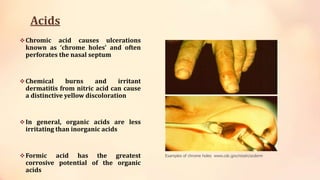
Chromic acid causes ulcerations
known as ‘chrome holes’ and often
perforates the nasal septum
Chemical burns and irritant
dermatitis from nitric acid can cause
a distinctive yellow discoloration
In general, organic acids are less
irritating than inorganic acids
Formic acid has the greatest
corrosive potential of the organic
acids
Examples of chrome holes www.cdc.gov/niosh/ocderm
Alkalis
 Strong Alkalis include sodium, ammonium,
potassium hydroxide, sodium and
potassium carbonate, and calcium oxide
 Found in soaps, detergents, bleaches,
ammonia preparations, lye, drain pipe
cleaner, toilet bowl cleansers, and oven
cleaner
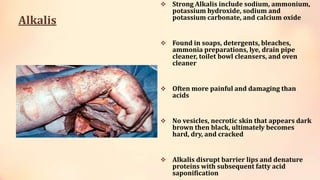
 Often more painful and damaging than
acids
 No vesicles, necrotic skin that appears dark
brown then black, ultimately becomes
hard, dry, and cracked
 Alkalis disrupt barrier lips and denature
proteins with subsequent fatty acid
saponification
Alkalis
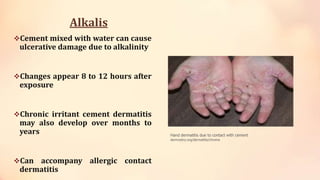
Cement mixed with water can cause
ulcerative damage due to alkalinity
Changes appear 8 to 12 hours after
exposure
Chronic irritant cement dermatitis
may also develop over months to
years
Can accompany allergic contact
dermatitis
Hand dermatitis due to contact with cement
dermnetnz.org/dermatitis/chrome
Metal Salts
Include arsenic trioxide, beryllium compounds, calcium oxide,
copper salts, inorganic mercury, thimerosal, and selenium
Signs ranging from ulceration to folliculitis
Solvents
Act mainly by dissolving the intercellular lipid barrier of
the epidermis
Prolonged skin contact can result in severe burns and well
as systemic toxicity
Examples include turpentine, benzene, toluene, xylene,
carbon tetrachloride, gasoline, and kerosene
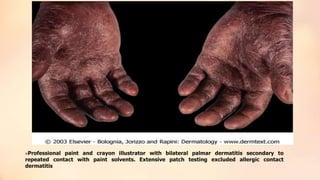
Professional paint and crayon illustrator with bilateral palmar dermatitis secondary to
repeated contact with paint solvents. Extensive patch testing excluded allergic contact
dermatitis
Detergents and Cleansers
Include any surface active agent (surfactant) that concentrates at the
oil-water interfaces and has both emulsifying and cleansing
properties
Found in skin cleansers, cosmetics, and household cleaning products
Surfactants cause protein denaturation of the stratum corneum,
impairing barrier function
Anionic detergents such as alkyl sulfates and alkyl carboxylate salts
are the most irritating
Disinfectants
• Include, alcohols, aldehydes,
phenolic compounds, halogenated
compounds, surfactants, dyes,
oxidizing agents, and mercury
compounds
• Weak toxic agents that can cause
chronic ICD
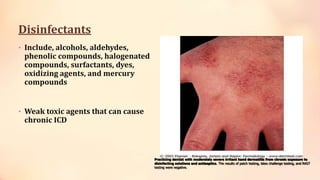
Practicing dentist with moderately severe irritant hand dermatitis from chronic exposure to
disinfecting solutions and antiseptics. The results of patch testing, latex challenge testing, and RAST
testing were negative.
Plastics
Three categories: thermoplastics, thermosettings,
elastomers
Skin damage is attributed to monomer ingredients,
hardeners, and stabilizers
Final hardened plastic product is generally considered
inert
Food
Agriculture, fishing, catering, and food
processing
Often work without gloves, in damp
working conditions with frequent hand
washing
Mechanical, thermal, and climatic factors
Nearly 100% of exposed persons in food
handling and fishing professions may be
affected by chronic irritant hand
dermatitis
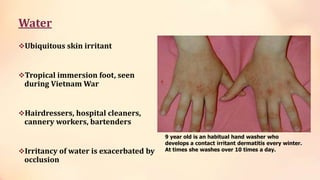
Water
Ubiquitous skin irritant
Tropical immersion foot, seen
during Vietnam War
Hairdressers, hospital cleaners,
cannery workers, bartenders
Irritancy of water is exacerbated by
occlusion
9 year old is an habitual hand washer who
develops a contact irritant dermatitis every winter.
At times she washes over 10 times a day.
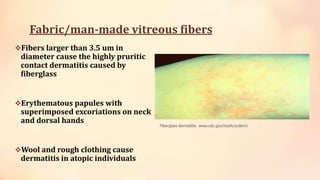
Fabric/man-made vitreous fibers
Fibers larger than 3.5 um in
diameter cause the highly pruritic
contact dermatitis caused by
fiberglass
Erythematous papules with
superimposed excoriations on neck
and dorsal hands
Wool and rough clothing cause
dermatitis in atopic individuals
Fiberglass dermatitis www.cdc.gov/niosh/ocderm
Differential Diagnosis
Allergic and ICD, especially in chronic stage appear similar
by clinical appearance, histology, and immunohistology
Look identical with erythema, papules, xerosis, scaling,
and lichenification with sharp borders
ICD has remained a diagnosis of exclusion when dermatitis
is not explained by positive patch test to a known allergen
More frequent complaint of burning and stinging with ICD
in contrast to pruritus in ACD
Treatment
Avoidance of causative irritants at home or in the workplace is the primary TX
Engineering controls to reduce exposure in the workplace
Shielding and personal protection such as gloves and special clothing
Pre-exposure protection by protective creams, removal of irritants by mild cleaning agents,
and enhancement of barrier function generation by emollients and moisturizers
Emphasizing personal and occupational hygiene
Establishing educational programs to increase awareness in the workplace
Allergic contact dermatitis (ACD)
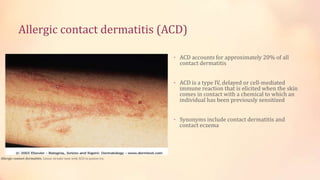
• ACD accounts for approximately 20% of all
contact dermatitis
• ACD is a type IV, delayed or cell-mediated
immune reaction that is elicited when the skin
comes in contact with a chemical to which an
individual has been previously sensitized
• Synonyms include contact dermatitis and
contact eczema
Allergic contact dermatitis. Linear streaks seen with ACD to poison ivy.
Acute Contact Dermatitis
• Key Features
ACD is a pruritic, eczematous reaction
Acute ACD and many cases of chronic
ACD are well demarcated and located to
the site of contact with the allergen
Prototypic reactions are ACD due to
poison ivy and nickel
Patch testing remains the gold standard
for accurate and consistent diagnosis
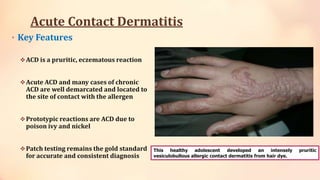
This healthy adolescent developed an intensely pruritic
vesiculobullous allergic contact dermatitis from hair dye.
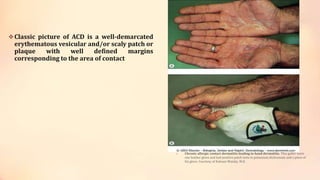
Classic picture of ACD is a well-demarcated
erythematous vesicular and/or scaly patch or
plaque with well defined margins
corresponding to the area of contact
 Chronic allergic contact dermatitis leading to hand dermatitis. This golfer wore
one leather glove and had positive patch tests to potassium dichromate and a piece of
his glove. Courtesy of Kalman Watsky, M.D.
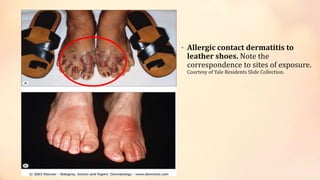
• Allergic contact dermatitis to
leather shoes. Note the
correspondence to sites of exposure.
Courtesy of Yale Residents Slide Collection.
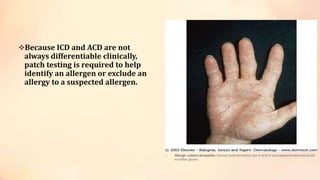
Because ICD and ACD are not
always differentiable clinically,
patch testing is required to help
identify an allergen or exclude an
allergy to a suspected allergen.
 Allergic contact dermatitis. Chronic hand dermatitis due to ACD to mercaptobenzothiazole found
in rubber gloves
Epidemiology of ACD
Affects the old and young, individuals of all races, and both sexes
Differences in genders usually based on exposure patterns, such as nickel
allergy being seen more frequently in women, presumably due to greater
exposure to jewelry
Occupations and avocations play an important role
Allergens differ from region to region, e.g. preservatives used in personal care
products can vary based on government legislation
Pathogenesis of ACD
ACD is a type IV hypersensitivity response
Requires prior sensitization to the chemical in question
Subsequent re-exposure of individual leads to allergen being presented to a
primed T-cell milieu leading to release of numerous cytokines and
chemotactic factors leading to the clinical picture of eczema
Once sensitized a low concentration of causative chemical elicits a response
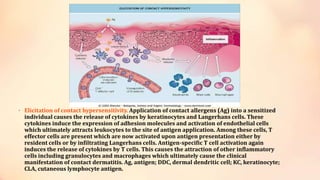
• Elicitation of contact hypersensitivity. Application of contact allergens (Ag) into a sensitized
individual causes the release of cytokines by keratinocytes and Langerhans cells. These
cytokines induce the expression of adhesion molecules and activation of endothelial cells
which ultimately attracts leukocytes to the site of antigen application. Among these cells, T
effector cells are present which are now activated upon antigen presentation either by
resident cells or by infiltrating Langerhans cells. Antigen-specific T cell activation again
induces the release of cytokines by T cells. This causes the attraction of other inflammatory
cells including granulocytes and macrophages which ultimately cause the clinical
manifestation of contact dermatitis. Ag, antigen; DDC, dermal dendritic cell; KC, keratinocyte;
CLA, cutaneous lymphocyte antigen.
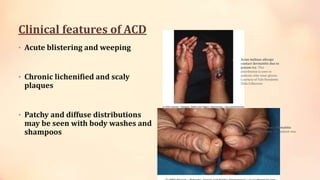
Clinical features of ACD
• Acute blistering and weeping
• Chronic lichenified and scaly
plaques
• Patchy and diffuse distributions
may be seen with body washes and
shampoos
 Acute bullous allergic
contact dermatitis due to
poison ivy. This
distribution is seen in
patients who wear gloves.
Courtesy of Yale Residents
Slide Collection
 Chronic allergic contact dermatitis
due to glutaraldehyde. The patient was
an optometrist
Pathology of ACD
• ACD is the prototype of spongiotic dermatitis
• Acute stage: variable degree of spongiosis with mixed dermal
inflammatory infiltrate containing lymphocytes, histiocytes, and
variable numbers of eosinophils
• Moderate to severe reactions show intraepidermal vesiculation
• Subacute to chronic stages have epidermal hyperplasia, often
psoriasiform
Treatment of ACD
• Involves identification of causative allergens
• Clear the dermatitis with topical, or if necessary systemic
corticosteroids
• Complete and prolonged clearing can take up to 6 weeks or
more, even when allergens are being avoided
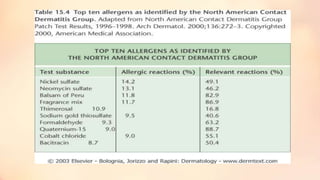
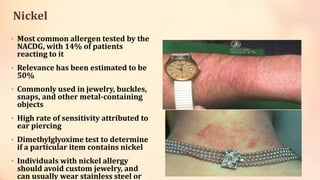
Nickel
• Most common allergen tested by the
NACDG, with 14% of patients
reacting to it
• Relevance has been estimated to be
50%
• Commonly used in jewelry, buckles,
snaps, and other metal-containing
objects
• High rate of sensitivity attributed to
ear piercing
• Dimethylglyoxime test to determine
if a particular item contains nickel
• Individuals with nickel allergy
should avoid custom jewelry, and
can usually wear stainless steel or
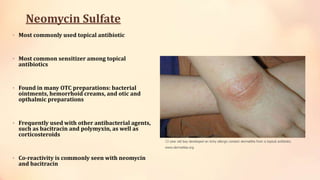
Neomycin Sulfate
• Most commonly used topical antibiotic
• Most common sensitizer among topical
antibiotics
• Found in many OTC preparations: bacterial
ointments, hemorrhoid creams, and otic and
opthalmic preparations
• Frequently used with other antibacterial agents,
such as bacitracin and polymyxin, as well as
corticosteroids
• Co-reactivity is commonly seen with neomycin
and bacitracin
13 year old boy developed an itchy allergic contact dermatitis from a topical antibiotic.
www.dermatlas.org
Balsam of Peru
• Naturally occurring fragrance material
• Prior to introduction of fragrance mix in the 1970’s, balsam of Peru was used to
screen for fragrance allergy
• Capable of identifying 50% of those allergic to fragrance
• Seen in those with allergies to spices, in particular cloves, Jamaicin pepper, and
cinnamon
• Patients with a positive reaction need to avoid fragrances, occasionally spices,
and other sources such as colas, tobacco, wines, and vermouth
Thimerosal
• Thimerosal is a combination of thiosalicylic acid and ethylmercuric
chloride, and is used as a preservative
• Most sensitization may be due to its use as a preservative in
vaccines
• Other exposures include: contact lens solution, otic and opthalmic
solutions, antiseptics, and cosmetics
• Positive reactions are common, relevance is low and therefore
routine testing to this allergen should be reconsidered
Gold
• Gold allergy is found a positive rate of 9.5%
• NACDC found 90% of gold-allergic patients were women, and there was a
higher rate of nickel (33.5%) and cobalt allergy (18%) in this group
• Most common clinical picture is hand, facial, or eyelid dermatitis
• Systemic reactions to gold in patients whom it was used to tx RA, SLE, or
pemphigus.
• Cutaneous findings of lichen planus-like reactions to pityriasis rosea-like
reactions and papular eruptions with systemic reactions
Formaldehyde
• Is a ubiquitous, colorless gas found in the workplace, cosmetics, medications, textiles, paints,
cigarette smoke, paper, and formaldehyde resins in plastic bottles
• Commonly seen in association with formaldehyde-releasing presevatives, such as
quarternuim-15 imidazolidinyl urea, diazolidinyl urea, DMDM hydantoin, 2-bromo-2-
nitropropane-1-3,diol, and tris(hydroxymethyl)nitromethane
• ICD is most common, ACD, contact urticaria, and mucous membrane irritation can occur
• Textile dermatitis due to formaldehyde resins in ‘wash-and-wear’ and wrinkle resistant
clothes
• Another source of formaldehyde is ‘formaldehyde-free’ products that are packaged in
containers coated with formaldehyde resins
• So widespread that avoidance is difficult and clinical relevance should be determined
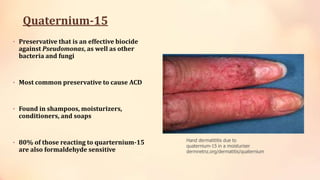
Quaternium-15
• Preservative that is an effective biocide
against Pseudomonas, as well as other
bacteria and fungi
• Most common preservative to cause ACD
• Found in shampoos, moisturizers,
conditioners, and soaps
• 80% of those reacting to quarternium-15
are also formaldehyde sensitive
Hand dermatititis due to
quaternium-15 in a moisturiser
dermnetnz.org/dermatitis/quaternium
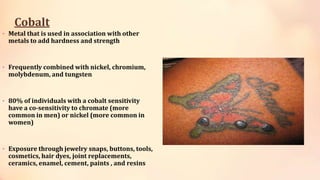
Cobalt
• Metal that is used in association with other
metals to add hardness and strength
• Frequently combined with nickel, chromium,
molybdenum, and tungsten
• 80% of individuals with a cobalt sensitivity
have a co-sensitivity to chromate (more
common in men) or nickel (more common in
women)
• Exposure through jewelry snaps, buttons, tools,
cosmetics, hair dyes, joint replacements,
ceramics, enamel, cement, paints , and resins
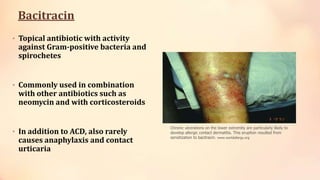
Bacitracin
• Topical antibiotic with activity
against Gram-positive bacteria and
spirochetes
• Commonly used in combination
with other antibiotics such as
neomycin and with corticosteroids
• In addition to ACD, also rarely
causes anaphylaxis and contact
urticaria
Chronic ulcerations on the lower extremity are particularly likely to
develop allergic contact dermatitis. This eruption resulted from
sensitization to bacitracin. www.worldallergy.org
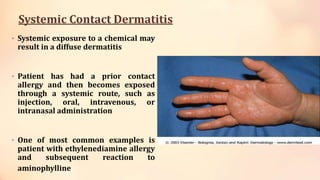
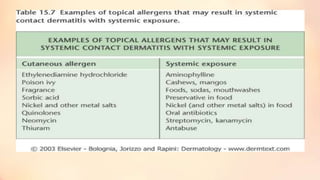
Systemic Contact Dermatitis
• Systemic exposure to a chemical may
result in a diffuse dermatitis
• Patient has had a prior contact
allergy and then becomes exposed
through a systemic route, such as
injection, oral, intravenous, or
intranasal administration
• One of most common examples is
patient with ethylenediamine allergy
and subsequent reaction to
aminophylline
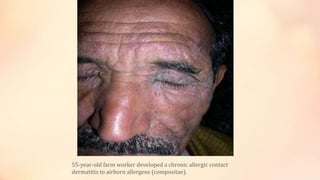
55-year-old farm worker developed a chronic allergic contact
dermatitis to airborn allergens (compositae).
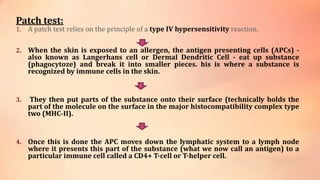
Patch test:
1. A patch test relies on the principle of a type IV hypersensitivity reaction.
2. When the skin is exposed to an allergen, the antigen presenting cells (APCs) -
also known as Langerhans cell or Dermal Dendritic Cell - eat up substance
(phagocytoze) and break it into smaller pieces. his is where a substance is
recognized by immune cells in the skin.
3. They then put parts of the substance onto their surface (technically holds the
part of the molecule on the surface in the major histocompatibility complex type
two (MHC-II).
4. Once this is done the APC moves down the lymphatic system to a lymph node
where it presents this part of the substance (what we now call an antigen) to a
particular immune cell called a CD4+ T-cell or T-helper cell.
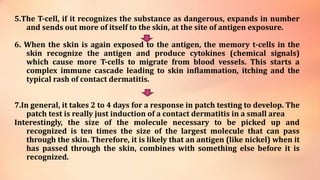
5.The T-cell, if it recognizes the substance as dangerous, expands in number
and sends out more of itself to the skin, at the site of antigen exposure.
6. When the skin is again exposed to the antigen, the memory t-cells in the
skin recognize the antigen and produce cytokines (chemical signals)
which cause more T-cells to migrate from blood vessels. This starts a
complex immune cascade leading to skin inflammation, itching and the
typical rash of contact dermatitis.
7.In general, it takes 2 to 4 days for a response in patch testing to develop. The
patch test is really just induction of a contact dermatitis in a small area
Interestingly, the size of the molecule necessary to be picked up and
recognized is ten times the size of the largest molecule that can pass
through the skin. Therefore, it is likely that an antigen (like nickel) when it
has passed through the skin, combines with something else before it is
recognized.
Contact dermatitis

Contact dermatitis

  • 1.
    Contact dermatitis (pathology andtreatment) By Srota Dawn. M.Pharm (pharmacology)
  • 2.
    Meaning of dermatitis: Dermatitis derivesfrom Greek ward derma "skin" + -itis "inflammation".
  • 3.
    What Is Dermatitis? Dermatitis is the inflammation of the skin caused by factors such as: 1.Allergies 2.Irritants 3.Ultraviolet light 4.Foods 5.Medications 6.Hereditary
  • 4.
    Types of Dermatitis •SEBORRHEIC DERMATITIS [Skin eruptions on face, scalp, and trunk of body. This symptoms will produce greasy, dry scales and will appear reddish.] • CONTACT DERMATITIS [The appearance of skin vesicles that burn, itch , sting or scale. ] • ATOPIC DERMATITIS [There will appear lesions on the face, neck, knees, elbows, trunk of body.]
  • 5.
    SEBORRHEIC DERMATITIS • affectthe areas rich in sebaceous glands • Fungal infection: • Malassezia globosa , • Malassezia restricta • Genetic, • environmental, • hormonal, and immune-system factors have been shown to be involved in the manifestation of seborrhoeic dermatitis
  • 6.
    Antifungals Over-the-counter Dermol betadine zinc pyrithione salicylic acid seleniumdisulfide Ketoconazole Prescription ciclopiroxolamine sodium sulfacetamide terbinafine Fluconazole Ketoconazole Antihistamines loratadine cetirizine fexofenadine diphenhydramine chlorpheniramine Other medications Coal tar Lithium gluconate Lithium succinate Vitamin B6 ointment Topical steroid
  • 7.
    • ICD isa cutaneous inflammation resulting from a direct cytotoxic effect of a chemical or physical agent • Constitutes nearly 80% of occupational contact dermatitis (OCD) • OCD is a matter of public health importance, contributing to combined direct and indirect annual costs (in the USA) of up to $1 billion when accounting for medical costs, workers compensation, and lost time from work
  • 8.
    Contact dermatitis: Definition: Contact dermatitisis a term for a skin reaction (dermatitis) resulting from exposure to •ALLERGENS (ALLERGIC CONTACT DERMATITIS) OR •IRRITANTS(IRRITANT CONTACT DERMATITIS). •Phototoxic dermatitis occurs when the allergen or irritant is activated by sunlight.
  • 9.
  • 10.
    Irritant contact dermatitis: Itis a form of contact dermatitis that can be divided into forms caused by chemical irritants and those caused by physical irritants.
  • 11.
  • 12.
    Chemical irritant dermatitisoccurs after doing mehendi
  • 14.
    Pathogenesis of ICD •Denaturation of epidermal keratins • Disruption of the permeability barrier • Damage to cell membranes • Direct cytotoxic effects
  • 15.
    Different types ofcontact dermatitis: 1. Cumulative contact dermatitis 2. Asteatotic Dermatitis 3. Traumatic Irritant Contact Dermatitis 4. Pustular and Acneform Irritant Contact Dermatitis 5. Airborne Irritant Contact Dermatitis 6. Frictional Irritant Contact Dermatitis
  • 16.
    Cumulative Irritant ContactDermatitis • Consequence of multiple sub- threshold skin insults, without sufficient time between them for complete barrier function repair • In contrast to acute ICD, the lesions of chronic ICD are less sharply demarcated • Itching and pain due to fissures of hyperkeratotic skin are symptoms of chronic ICD • Skin findings include lichenification, hyperkeratosis, xerosis, erythema, and vesicles
  • 17.
    Asteatotic Dermatitis • Exsiccationeczematid ICD • Seen mainly during the winter months in elderly individuals who frequently bath without remoisturizing • Skin appears dry with ichthyosiform scale and patches of eczema craquele
  • 18.
    Traumatic Irritant ContactDermatitis • May develop after acute skin trauma, such as burns, lacerations, or acute ICD • Patients should be asked if they have cleansed with strong soaps or detergents • Characterized by eczematous lesions most commonly on the hands, that persist • Healing is delayed with redness, infiltration, scale, and fissuring in the affected areas
  • 19.
    Traumatic Irritant ContactDermatitis • Reports of stinging or burning in the absence of visible cutaneous signs of irritation • Response to irritants such as lactic or sorbic acid
  • 20.
    Pustular and AcneformIrritant Contact Dermatitis Result to certain irritants such as metals, croton oil, mineral oils, tars, greases, cutting and metal working fluids, and naphthalenes Should be considered in conditions in which folliculitis or acneform lesions develop in setting outside of typical acne Pustules are sterile and transient Milia may develop in response to occlusive clothing, adhesive tape, ultraviolet and infrared radiation Chloracne. Note heavy involvement of retroauricular skin with comedones and cysts
  • 21.
    Airborne Irritant ContactDermatitis Develops on irritant-exposed skin of the face and periorbital regions Often simulates photoallergic reactions Involvement of the upper eyelids, philtrum, and submental regions help to differentiate from photoallergic reaction
  • 22.
    Frictional Irritant ContactDermatitis Results from repeated low-grade frictional trauma Plays adjuvant role in ACD and ICD Characterized by hyperkeratosis, acanthosis, and lichenification, often progressing to hardening, thickening, and increased toughness 9 year old girl demonstrates a lichenified hyperpigmented round plaque on the top of her thumb produced by chronic thumbsucking. www.dermatlas.org
  • 23.
    Pathology of ICD Variablemix of inflammation, necrosis of epidermal keratinocytes, and mild spongiosis Combination of an upper dermal perivascular infiltrate of lymphocytes with minimal extension of inflammatory cells into the overlying epidermis, and widely scattered necrotic keratinocytes is most typical picture True features of interface dermatitis are absent, and spongiosis should be focal or absent Over time additional histologic findings include acanthosis with mild hypergranulosis and hyperkeratosis
  • 24.
    Acids Inorganic and organicacids can be corrosive to the skin Cause epidermal damage via protein denaturation and cytotoxicity Symptoms include erythema, vesication, and necrosis Hydrofluoric and sulfuric acid can cause the most severe burns Hydrofluoric acid, used in the semiconductor industry, is able to penetrate intact skin with subsequent dissociation in deeper tissues and resultant liquefactive necrosis
  • 25.
    Acids Chromic acid causesulcerations known as ‘chrome holes’ and often perforates the nasal septum Chemical burns and irritant dermatitis from nitric acid can cause a distinctive yellow discoloration In general, organic acids are less irritating than inorganic acids Formic acid has the greatest corrosive potential of the organic acids Examples of chrome holes www.cdc.gov/niosh/ocderm
  • 26.
    Alkalis  Strong Alkalisinclude sodium, ammonium, potassium hydroxide, sodium and potassium carbonate, and calcium oxide  Found in soaps, detergents, bleaches, ammonia preparations, lye, drain pipe cleaner, toilet bowl cleansers, and oven cleaner  Often more painful and damaging than acids  No vesicles, necrotic skin that appears dark brown then black, ultimately becomes hard, dry, and cracked  Alkalis disrupt barrier lips and denature proteins with subsequent fatty acid saponification
  • 27.
    Alkalis Cement mixed withwater can cause ulcerative damage due to alkalinity Changes appear 8 to 12 hours after exposure Chronic irritant cement dermatitis may also develop over months to years Can accompany allergic contact dermatitis Hand dermatitis due to contact with cement dermnetnz.org/dermatitis/chrome
  • 28.
    Metal Salts Include arsenictrioxide, beryllium compounds, calcium oxide, copper salts, inorganic mercury, thimerosal, and selenium Signs ranging from ulceration to folliculitis
  • 29.
    Solvents Act mainly bydissolving the intercellular lipid barrier of the epidermis Prolonged skin contact can result in severe burns and well as systemic toxicity Examples include turpentine, benzene, toluene, xylene, carbon tetrachloride, gasoline, and kerosene
  • 30.
    Professional paint andcrayon illustrator with bilateral palmar dermatitis secondary to repeated contact with paint solvents. Extensive patch testing excluded allergic contact dermatitis
  • 31.
    Detergents and Cleansers Includeany surface active agent (surfactant) that concentrates at the oil-water interfaces and has both emulsifying and cleansing properties Found in skin cleansers, cosmetics, and household cleaning products Surfactants cause protein denaturation of the stratum corneum, impairing barrier function Anionic detergents such as alkyl sulfates and alkyl carboxylate salts are the most irritating
  • 32.
    Disinfectants • Include, alcohols,aldehydes, phenolic compounds, halogenated compounds, surfactants, dyes, oxidizing agents, and mercury compounds • Weak toxic agents that can cause chronic ICD Practicing dentist with moderately severe irritant hand dermatitis from chronic exposure to disinfecting solutions and antiseptics. The results of patch testing, latex challenge testing, and RAST testing were negative.
  • 33.
    Plastics Three categories: thermoplastics,thermosettings, elastomers Skin damage is attributed to monomer ingredients, hardeners, and stabilizers Final hardened plastic product is generally considered inert
  • 34.
    Food Agriculture, fishing, catering,and food processing Often work without gloves, in damp working conditions with frequent hand washing Mechanical, thermal, and climatic factors Nearly 100% of exposed persons in food handling and fishing professions may be affected by chronic irritant hand dermatitis
  • 35.
    Water Ubiquitous skin irritant Tropicalimmersion foot, seen during Vietnam War Hairdressers, hospital cleaners, cannery workers, bartenders Irritancy of water is exacerbated by occlusion 9 year old is an habitual hand washer who develops a contact irritant dermatitis every winter. At times she washes over 10 times a day.
  • 36.
    Fabric/man-made vitreous fibers Fiberslarger than 3.5 um in diameter cause the highly pruritic contact dermatitis caused by fiberglass Erythematous papules with superimposed excoriations on neck and dorsal hands Wool and rough clothing cause dermatitis in atopic individuals Fiberglass dermatitis www.cdc.gov/niosh/ocderm
  • 37.
    Differential Diagnosis Allergic andICD, especially in chronic stage appear similar by clinical appearance, histology, and immunohistology Look identical with erythema, papules, xerosis, scaling, and lichenification with sharp borders ICD has remained a diagnosis of exclusion when dermatitis is not explained by positive patch test to a known allergen More frequent complaint of burning and stinging with ICD in contrast to pruritus in ACD
  • 38.
    Treatment Avoidance of causativeirritants at home or in the workplace is the primary TX Engineering controls to reduce exposure in the workplace Shielding and personal protection such as gloves and special clothing Pre-exposure protection by protective creams, removal of irritants by mild cleaning agents, and enhancement of barrier function generation by emollients and moisturizers Emphasizing personal and occupational hygiene Establishing educational programs to increase awareness in the workplace
  • 39.
    Allergic contact dermatitis(ACD) • ACD accounts for approximately 20% of all contact dermatitis • ACD is a type IV, delayed or cell-mediated immune reaction that is elicited when the skin comes in contact with a chemical to which an individual has been previously sensitized • Synonyms include contact dermatitis and contact eczema Allergic contact dermatitis. Linear streaks seen with ACD to poison ivy.
  • 40.
    Acute Contact Dermatitis •Key Features ACD is a pruritic, eczematous reaction Acute ACD and many cases of chronic ACD are well demarcated and located to the site of contact with the allergen Prototypic reactions are ACD due to poison ivy and nickel Patch testing remains the gold standard for accurate and consistent diagnosis This healthy adolescent developed an intensely pruritic vesiculobullous allergic contact dermatitis from hair dye.
  • 41.
    Classic picture ofACD is a well-demarcated erythematous vesicular and/or scaly patch or plaque with well defined margins corresponding to the area of contact  Chronic allergic contact dermatitis leading to hand dermatitis. This golfer wore one leather glove and had positive patch tests to potassium dichromate and a piece of his glove. Courtesy of Kalman Watsky, M.D.
  • 42.
    • Allergic contactdermatitis to leather shoes. Note the correspondence to sites of exposure. Courtesy of Yale Residents Slide Collection.
  • 43.
    Because ICD andACD are not always differentiable clinically, patch testing is required to help identify an allergen or exclude an allergy to a suspected allergen.  Allergic contact dermatitis. Chronic hand dermatitis due to ACD to mercaptobenzothiazole found in rubber gloves
  • 44.
    Epidemiology of ACD Affectsthe old and young, individuals of all races, and both sexes Differences in genders usually based on exposure patterns, such as nickel allergy being seen more frequently in women, presumably due to greater exposure to jewelry Occupations and avocations play an important role Allergens differ from region to region, e.g. preservatives used in personal care products can vary based on government legislation
  • 45.
    Pathogenesis of ACD ACDis a type IV hypersensitivity response Requires prior sensitization to the chemical in question Subsequent re-exposure of individual leads to allergen being presented to a primed T-cell milieu leading to release of numerous cytokines and chemotactic factors leading to the clinical picture of eczema Once sensitized a low concentration of causative chemical elicits a response
  • 46.
    • Elicitation ofcontact hypersensitivity. Application of contact allergens (Ag) into a sensitized individual causes the release of cytokines by keratinocytes and Langerhans cells. These cytokines induce the expression of adhesion molecules and activation of endothelial cells which ultimately attracts leukocytes to the site of antigen application. Among these cells, T effector cells are present which are now activated upon antigen presentation either by resident cells or by infiltrating Langerhans cells. Antigen-specific T cell activation again induces the release of cytokines by T cells. This causes the attraction of other inflammatory cells including granulocytes and macrophages which ultimately cause the clinical manifestation of contact dermatitis. Ag, antigen; DDC, dermal dendritic cell; KC, keratinocyte; CLA, cutaneous lymphocyte antigen.
  • 47.
    Clinical features ofACD • Acute blistering and weeping • Chronic lichenified and scaly plaques • Patchy and diffuse distributions may be seen with body washes and shampoos  Acute bullous allergic contact dermatitis due to poison ivy. This distribution is seen in patients who wear gloves. Courtesy of Yale Residents Slide Collection  Chronic allergic contact dermatitis due to glutaraldehyde. The patient was an optometrist
  • 48.
    Pathology of ACD •ACD is the prototype of spongiotic dermatitis • Acute stage: variable degree of spongiosis with mixed dermal inflammatory infiltrate containing lymphocytes, histiocytes, and variable numbers of eosinophils • Moderate to severe reactions show intraepidermal vesiculation • Subacute to chronic stages have epidermal hyperplasia, often psoriasiform
  • 49.
    Treatment of ACD •Involves identification of causative allergens • Clear the dermatitis with topical, or if necessary systemic corticosteroids • Complete and prolonged clearing can take up to 6 weeks or more, even when allergens are being avoided
  • 51.
    Nickel • Most commonallergen tested by the NACDG, with 14% of patients reacting to it • Relevance has been estimated to be 50% • Commonly used in jewelry, buckles, snaps, and other metal-containing objects • High rate of sensitivity attributed to ear piercing • Dimethylglyoxime test to determine if a particular item contains nickel • Individuals with nickel allergy should avoid custom jewelry, and can usually wear stainless steel or
  • 52.
    Neomycin Sulfate • Mostcommonly used topical antibiotic • Most common sensitizer among topical antibiotics • Found in many OTC preparations: bacterial ointments, hemorrhoid creams, and otic and opthalmic preparations • Frequently used with other antibacterial agents, such as bacitracin and polymyxin, as well as corticosteroids • Co-reactivity is commonly seen with neomycin and bacitracin 13 year old boy developed an itchy allergic contact dermatitis from a topical antibiotic. www.dermatlas.org
  • 53.
    Balsam of Peru •Naturally occurring fragrance material • Prior to introduction of fragrance mix in the 1970’s, balsam of Peru was used to screen for fragrance allergy • Capable of identifying 50% of those allergic to fragrance • Seen in those with allergies to spices, in particular cloves, Jamaicin pepper, and cinnamon • Patients with a positive reaction need to avoid fragrances, occasionally spices, and other sources such as colas, tobacco, wines, and vermouth
  • 54.
    Thimerosal • Thimerosal isa combination of thiosalicylic acid and ethylmercuric chloride, and is used as a preservative • Most sensitization may be due to its use as a preservative in vaccines • Other exposures include: contact lens solution, otic and opthalmic solutions, antiseptics, and cosmetics • Positive reactions are common, relevance is low and therefore routine testing to this allergen should be reconsidered
  • 55.
    Gold • Gold allergyis found a positive rate of 9.5% • NACDC found 90% of gold-allergic patients were women, and there was a higher rate of nickel (33.5%) and cobalt allergy (18%) in this group • Most common clinical picture is hand, facial, or eyelid dermatitis • Systemic reactions to gold in patients whom it was used to tx RA, SLE, or pemphigus. • Cutaneous findings of lichen planus-like reactions to pityriasis rosea-like reactions and papular eruptions with systemic reactions
  • 56.
    Formaldehyde • Is aubiquitous, colorless gas found in the workplace, cosmetics, medications, textiles, paints, cigarette smoke, paper, and formaldehyde resins in plastic bottles • Commonly seen in association with formaldehyde-releasing presevatives, such as quarternuim-15 imidazolidinyl urea, diazolidinyl urea, DMDM hydantoin, 2-bromo-2- nitropropane-1-3,diol, and tris(hydroxymethyl)nitromethane • ICD is most common, ACD, contact urticaria, and mucous membrane irritation can occur • Textile dermatitis due to formaldehyde resins in ‘wash-and-wear’ and wrinkle resistant clothes • Another source of formaldehyde is ‘formaldehyde-free’ products that are packaged in containers coated with formaldehyde resins • So widespread that avoidance is difficult and clinical relevance should be determined
  • 57.
    Quaternium-15 • Preservative thatis an effective biocide against Pseudomonas, as well as other bacteria and fungi • Most common preservative to cause ACD • Found in shampoos, moisturizers, conditioners, and soaps • 80% of those reacting to quarternium-15 are also formaldehyde sensitive Hand dermatititis due to quaternium-15 in a moisturiser dermnetnz.org/dermatitis/quaternium
  • 58.
    Cobalt • Metal thatis used in association with other metals to add hardness and strength • Frequently combined with nickel, chromium, molybdenum, and tungsten • 80% of individuals with a cobalt sensitivity have a co-sensitivity to chromate (more common in men) or nickel (more common in women) • Exposure through jewelry snaps, buttons, tools, cosmetics, hair dyes, joint replacements, ceramics, enamel, cement, paints , and resins
  • 59.
    Bacitracin • Topical antibioticwith activity against Gram-positive bacteria and spirochetes • Commonly used in combination with other antibiotics such as neomycin and with corticosteroids • In addition to ACD, also rarely causes anaphylaxis and contact urticaria Chronic ulcerations on the lower extremity are particularly likely to develop allergic contact dermatitis. This eruption resulted from sensitization to bacitracin. www.worldallergy.org
  • 60.
    Systemic Contact Dermatitis •Systemic exposure to a chemical may result in a diffuse dermatitis • Patient has had a prior contact allergy and then becomes exposed through a systemic route, such as injection, oral, intravenous, or intranasal administration • One of most common examples is patient with ethylenediamine allergy and subsequent reaction to aminophylline
  • 62.
    55-year-old farm workerdeveloped a chronic allergic contact dermatitis to airborn allergens (compositae).
  • 63.
    Patch test: 1. Apatch test relies on the principle of a type IV hypersensitivity reaction. 2. When the skin is exposed to an allergen, the antigen presenting cells (APCs) - also known as Langerhans cell or Dermal Dendritic Cell - eat up substance (phagocytoze) and break it into smaller pieces. his is where a substance is recognized by immune cells in the skin. 3. They then put parts of the substance onto their surface (technically holds the part of the molecule on the surface in the major histocompatibility complex type two (MHC-II). 4. Once this is done the APC moves down the lymphatic system to a lymph node where it presents this part of the substance (what we now call an antigen) to a particular immune cell called a CD4+ T-cell or T-helper cell.
  • 64.
    5.The T-cell, ifit recognizes the substance as dangerous, expands in number and sends out more of itself to the skin, at the site of antigen exposure. 6. When the skin is again exposed to the antigen, the memory t-cells in the skin recognize the antigen and produce cytokines (chemical signals) which cause more T-cells to migrate from blood vessels. This starts a complex immune cascade leading to skin inflammation, itching and the typical rash of contact dermatitis. 7.In general, it takes 2 to 4 days for a response in patch testing to develop. The patch test is really just induction of a contact dermatitis in a small area Interestingly, the size of the molecule necessary to be picked up and recognized is ten times the size of the largest molecule that can pass through the skin. Therefore, it is likely that an antigen (like nickel) when it has passed through the skin, combines with something else before it is recognized.