MBA 9011
Lecture 2
Consumer Behavior in Service,
Customer expectation of service and
Customer Perceptions of service
Course Instructor: Sneha Sharma (PhD*, MBA, Dip T & D)
MBA 901
Consumer Behavior in Services
2
MBA 901
Consumer Behavior
• The behavior that consumers display in
–Searching
–Purchasing
–Using
–Evaluating
–Disposing
Of products and services that they expect
will satisfy their needs.
MBA 901
Decision in a CB in Services
4
MBA 901
Need Arousal
5
Decision to buy or use a service is triggered by need
arousal
Triggers of need:
Consumers are then motivated to find a solution for their
need
Unconscious minds
(e.g., personal
identity and
aspirations)
Physical conditions
(e.g., hunger )
External sources
(e.g., a service firm’s
marketing activities)
MBA 901
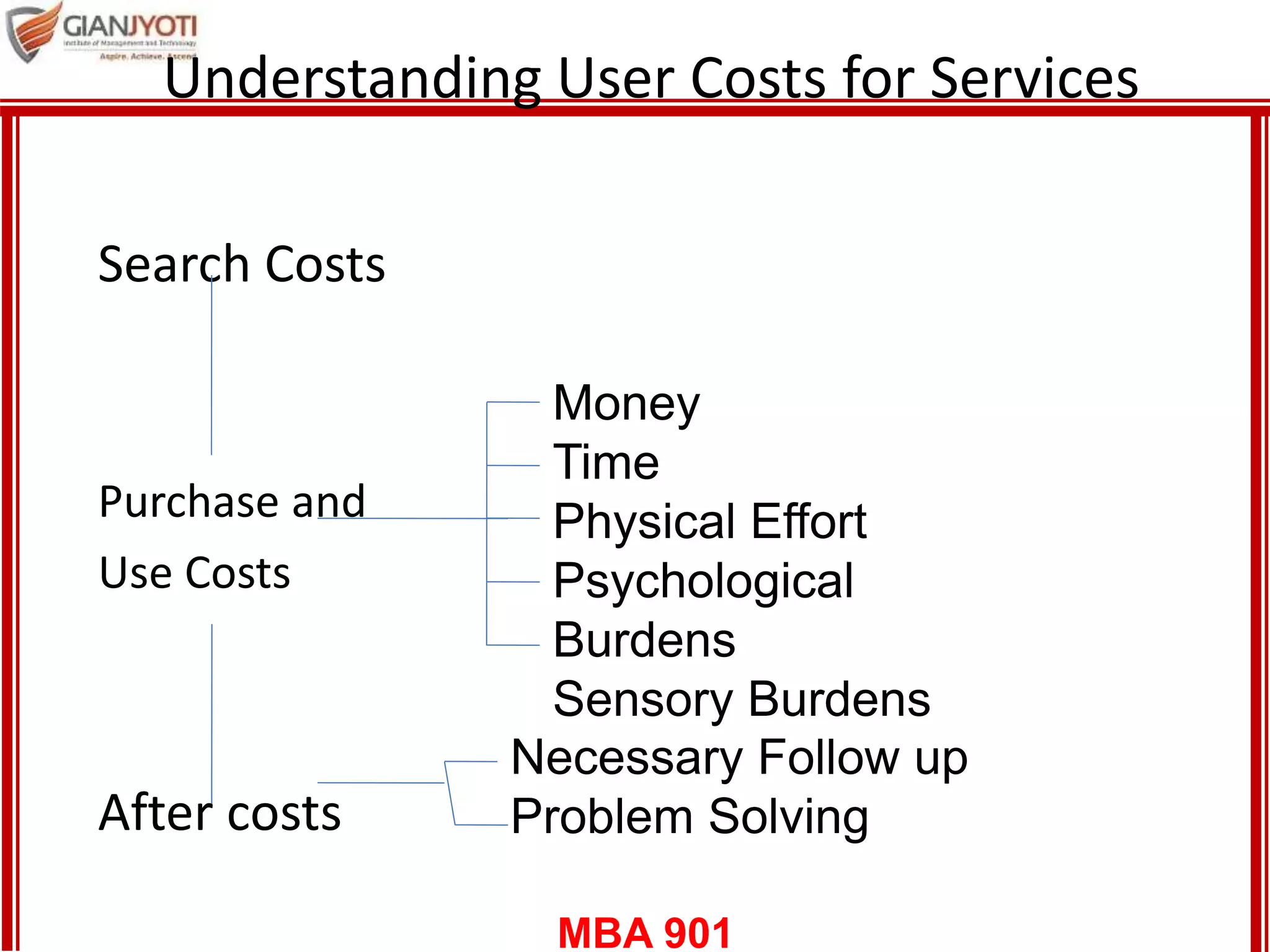
Understanding User Costs for Services
Search Costs
Purchase and
Use Costs
After costs
Money
Time
Physical Effort
Psychological
Burdens
Sensory Burdens
Necessary Follow up
Problem Solving
MBA 901
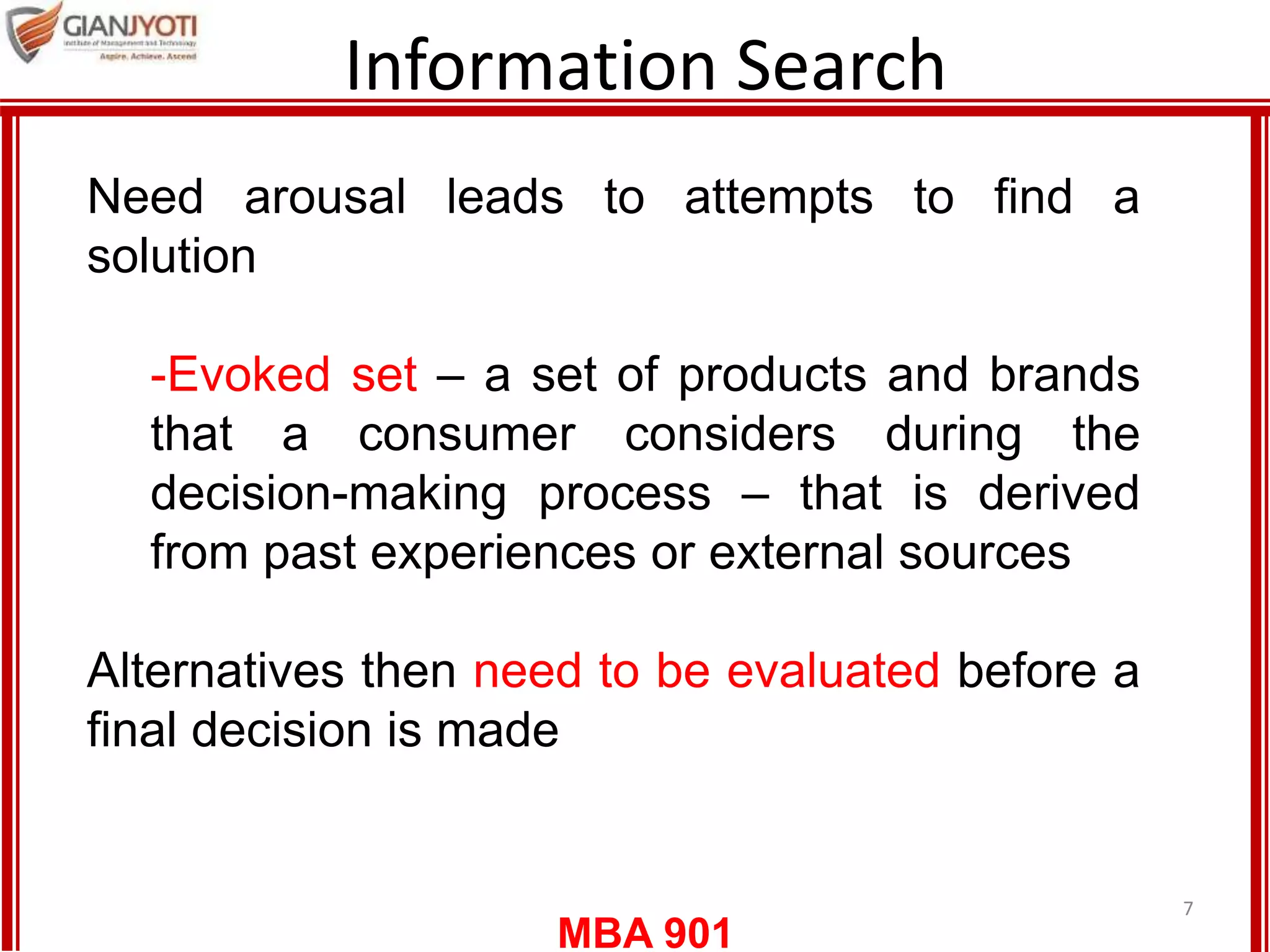
Information Search
7
Need arousal leads to attempts to find a
solution
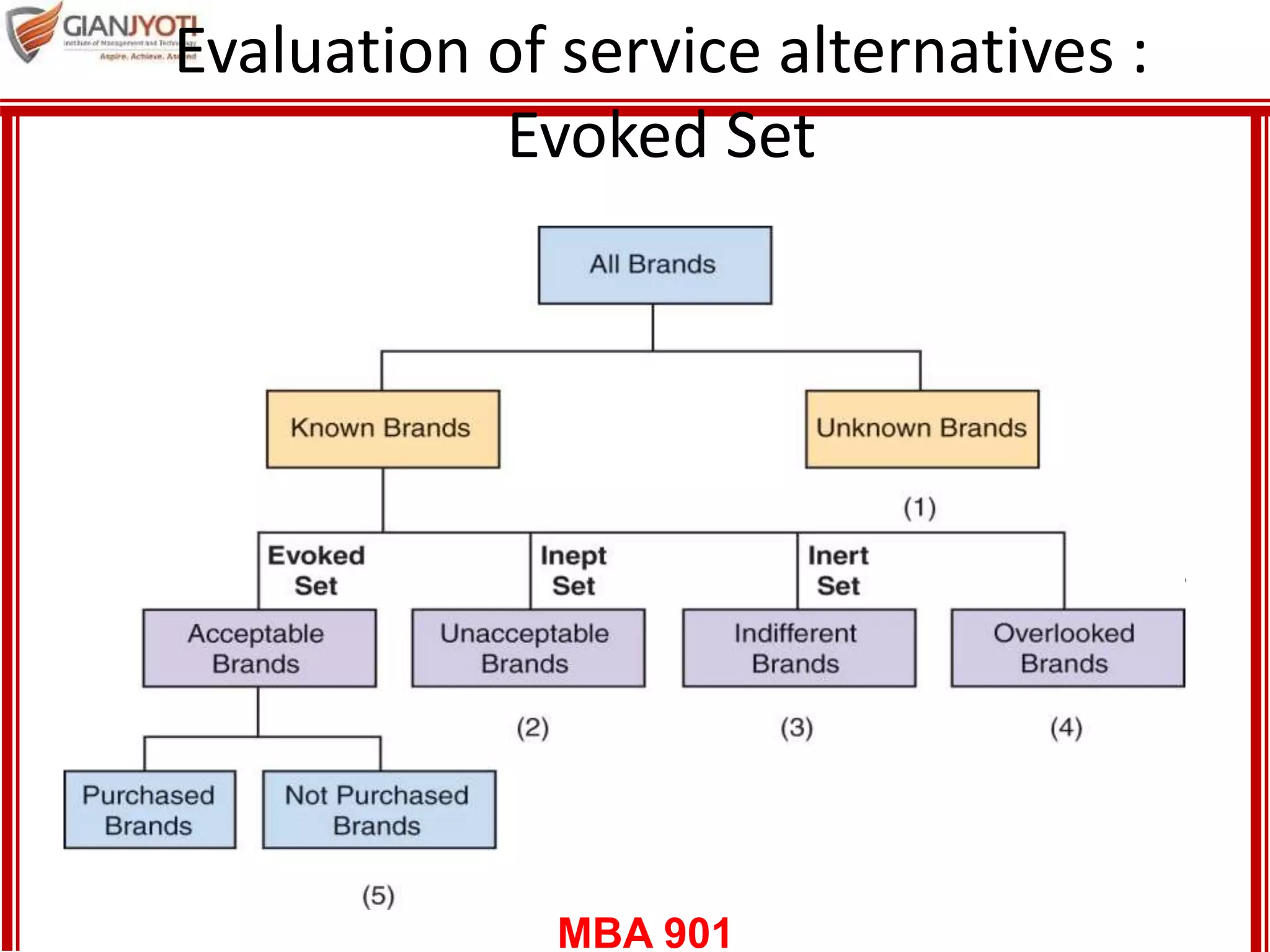
-Evoked set – a set of products and brands
that a consumer considers during the
decision-making process – that is derived
from past experiences or external sources
Alternatives then need to be evaluated before a
final decision is made
MBA 901
Evaluation of service alternatives :
Evoked Set
• The evoked set of alternatives likely to be smaller with
services than goods
• Competitive services can not be displayed for
comparison  always a single brand
• Available service providers in geographical area is small.
• Difficult to obtain adequate pre-purchase information
about service
• The Internet may widen this potential
MBA 901
Evaluating Alternatives – Service
Attributes
9
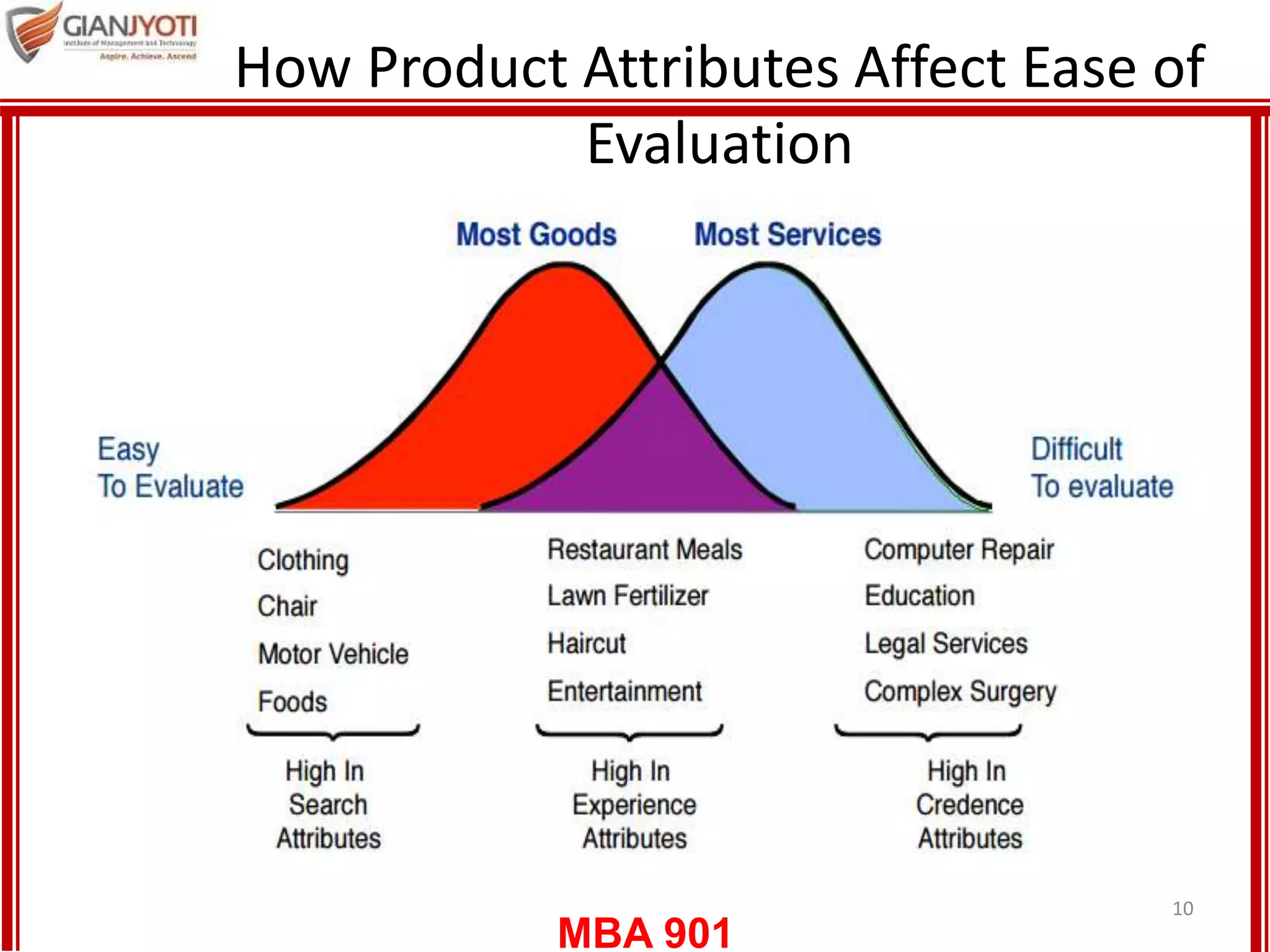
- Search attributes help customers evaluate a product before
purchase.
- E.g., type of food, location, type of restaurant and price .
- Experience attributes cannot be evaluated before purchase.
- The consumer will not know how much she/he will enjoy the
food, the service, and the atmosphere until the actual
experience .
- Credence attributes are those that customers find impossible to
evaluate confidently even after purchase and consumption.
- E.g., hygiene conditions of the kitchen and the healthiness
of the cooking ingredients.
MBA 901
How Product Attributes Affect Ease of
Evaluation
10
MBA 901
Perceived Risks of Purchasing and Using
Services
11
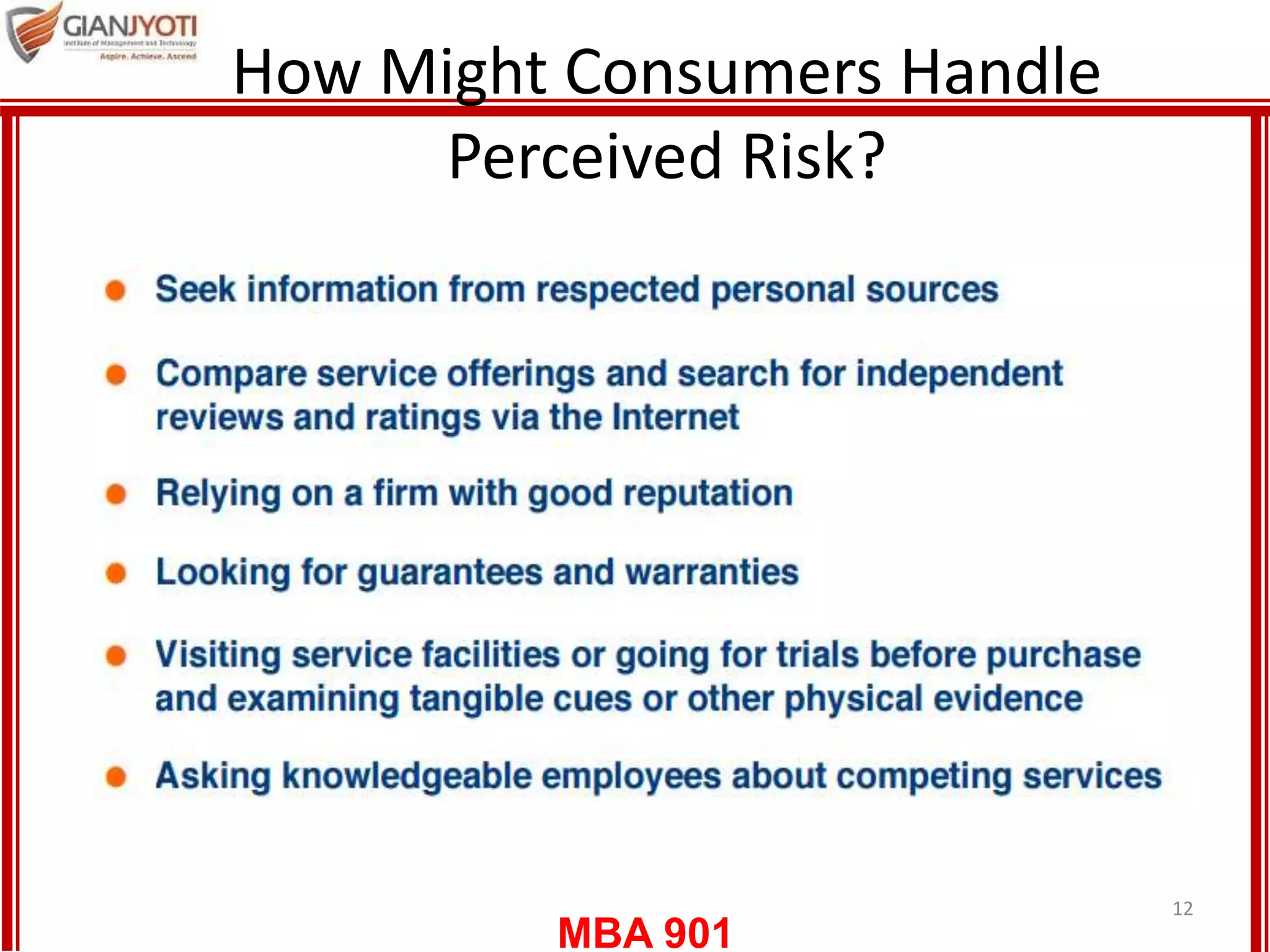
• unsatisfactory performance outcomes
Functional
• monetary loss, unexpected extra costs
Financial
• wasted time, delays leading to problems
Temporal
• personal injury, damage to possessions
Physical
• fears and negative emotions
Psychological
• how others may think and react
Social
• unwanted impact on any of five senses
Sensory
MBA 901
How Might Consumers Handle
Perceived Risk?
12
MBA 901
Strategic Responses to Managing
Customer Perceptions of Risk
13
MBA 901
Customer Expectation of
Services
14
MBA 901
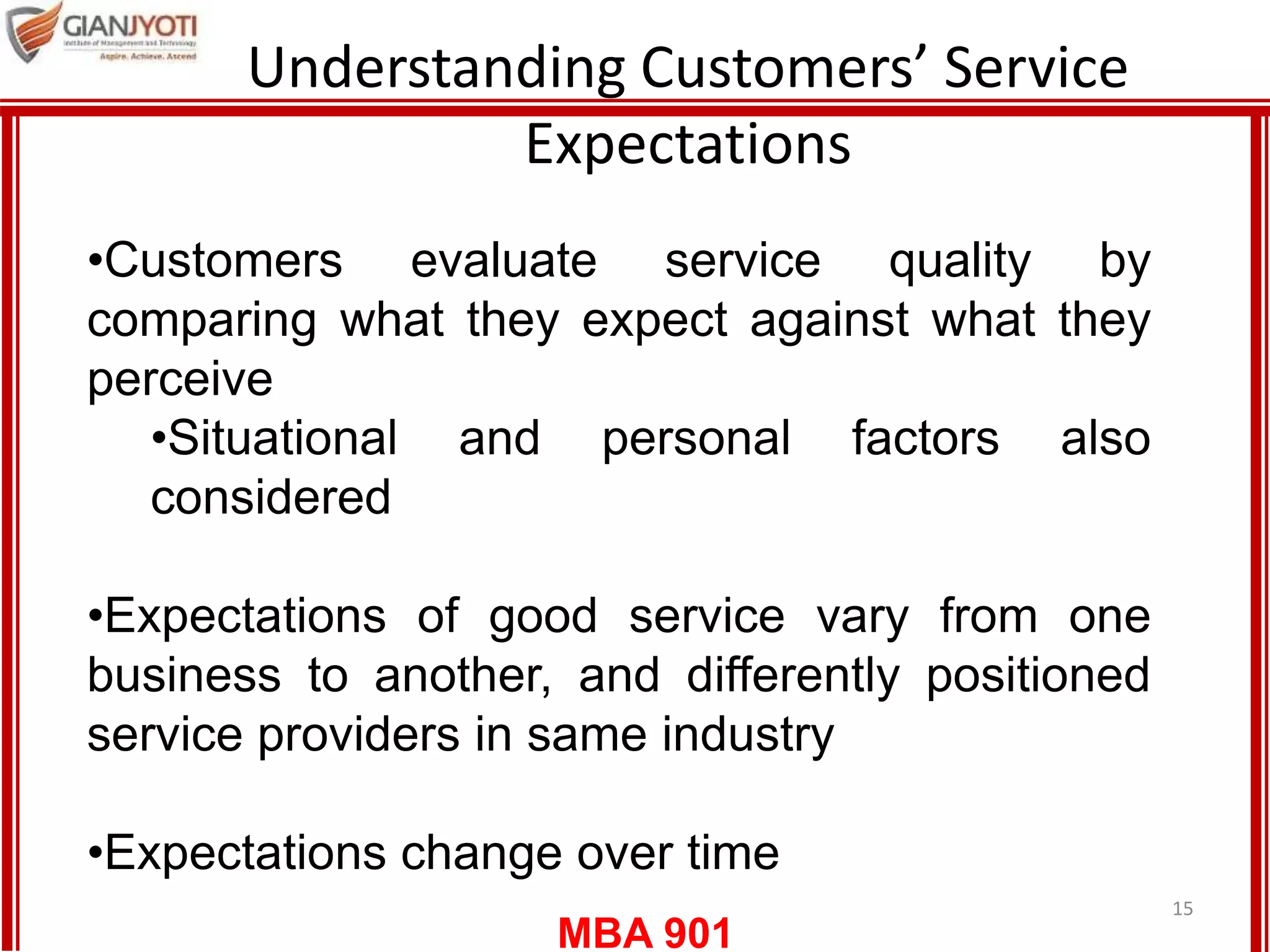
Understanding Customers’ Service
Expectations
15
•Customers evaluate service quality by
comparing what they expect against what they
perceive
•Situational and personal factors also
considered
•Expectations of good service vary from one
business to another, and differently positioned
service providers in same industry
•Expectations change over time
MBA 901
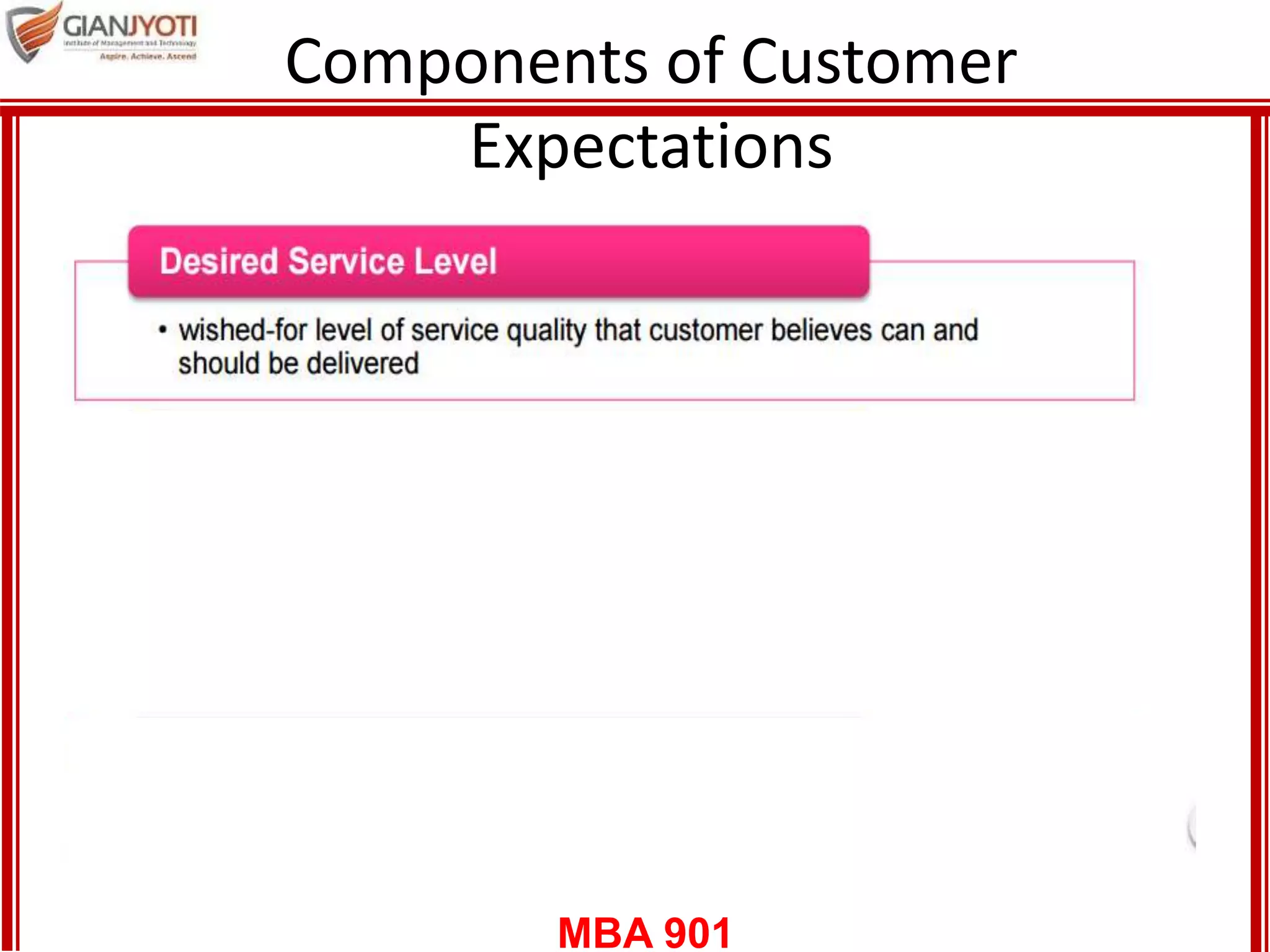
Components of Customer
Expectations
Frustration
Customer Delight
MBA 901
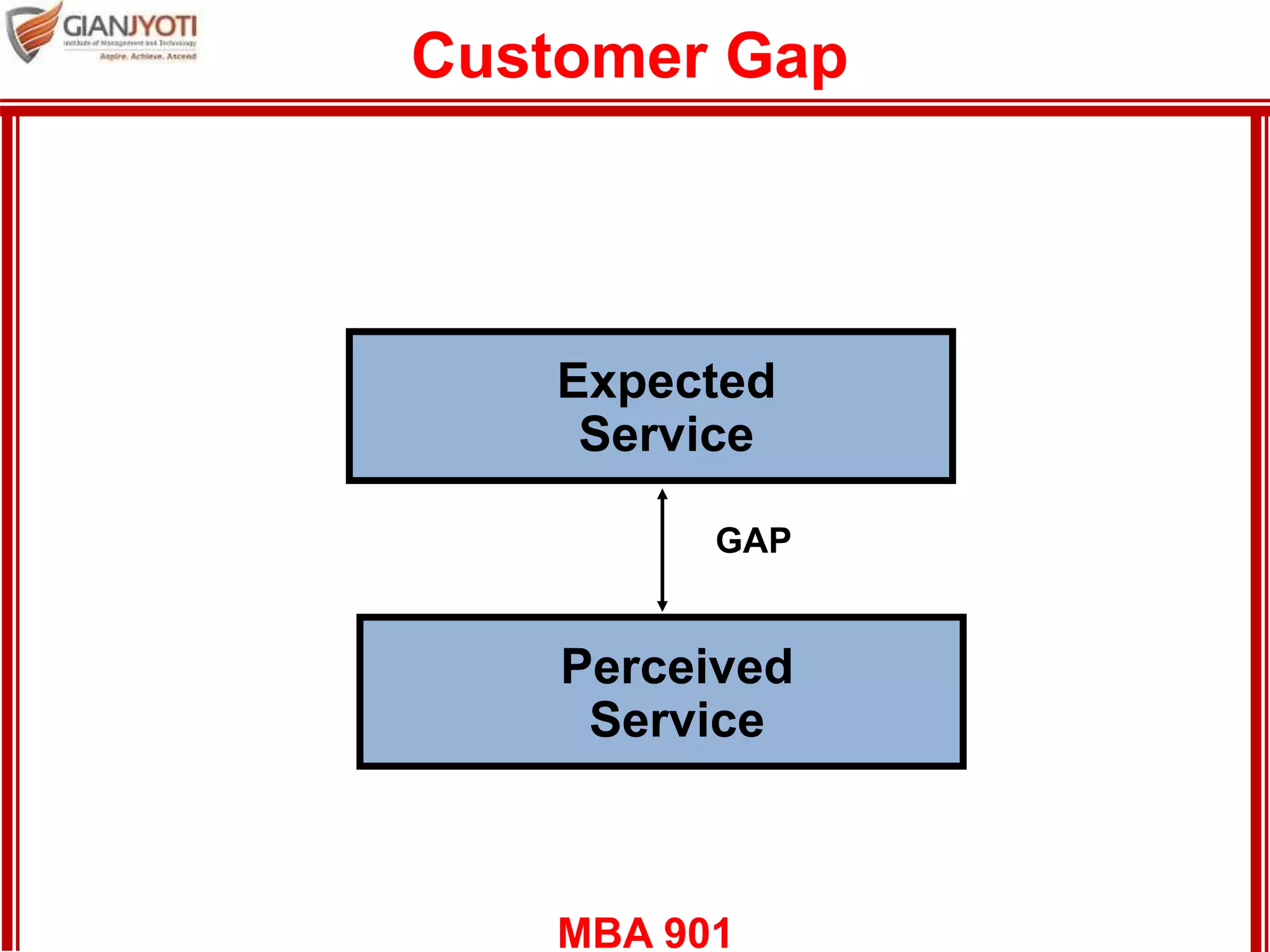
Customer Gap
Expected
Service
Perceived
Service
GAP
MBA 901
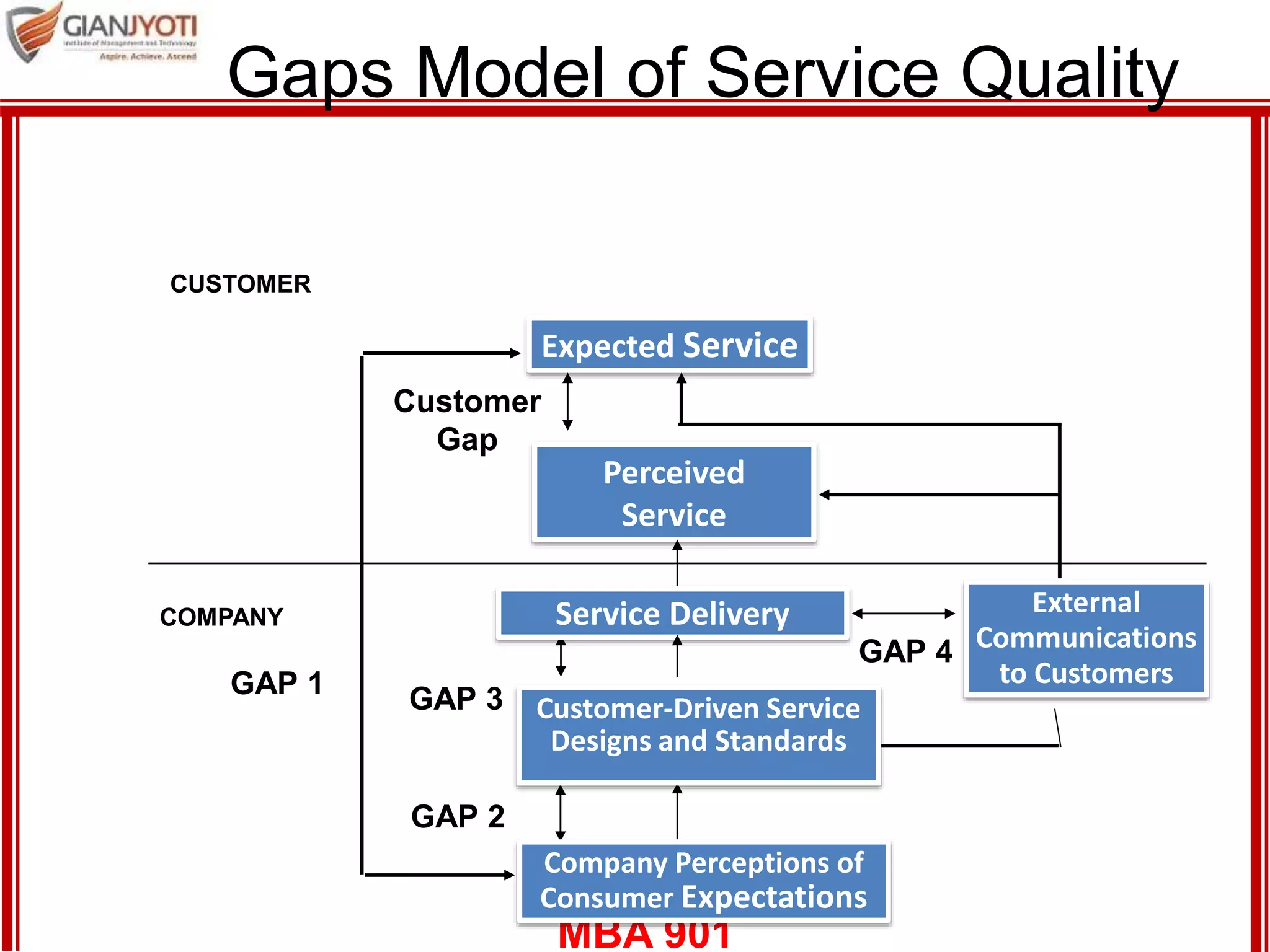
Perceived
Service
Expected Service
CUSTOMER
COMPANY
Customer
Gap
GAP 1
GAP 2
Gaps Model of Service Quality
GAP 3
External
Communications
to Customers
GAP 4
Service Delivery
Customer-Driven Service
Designs and Standards
Company Perceptions of
Consumer Expectations
MBA 901
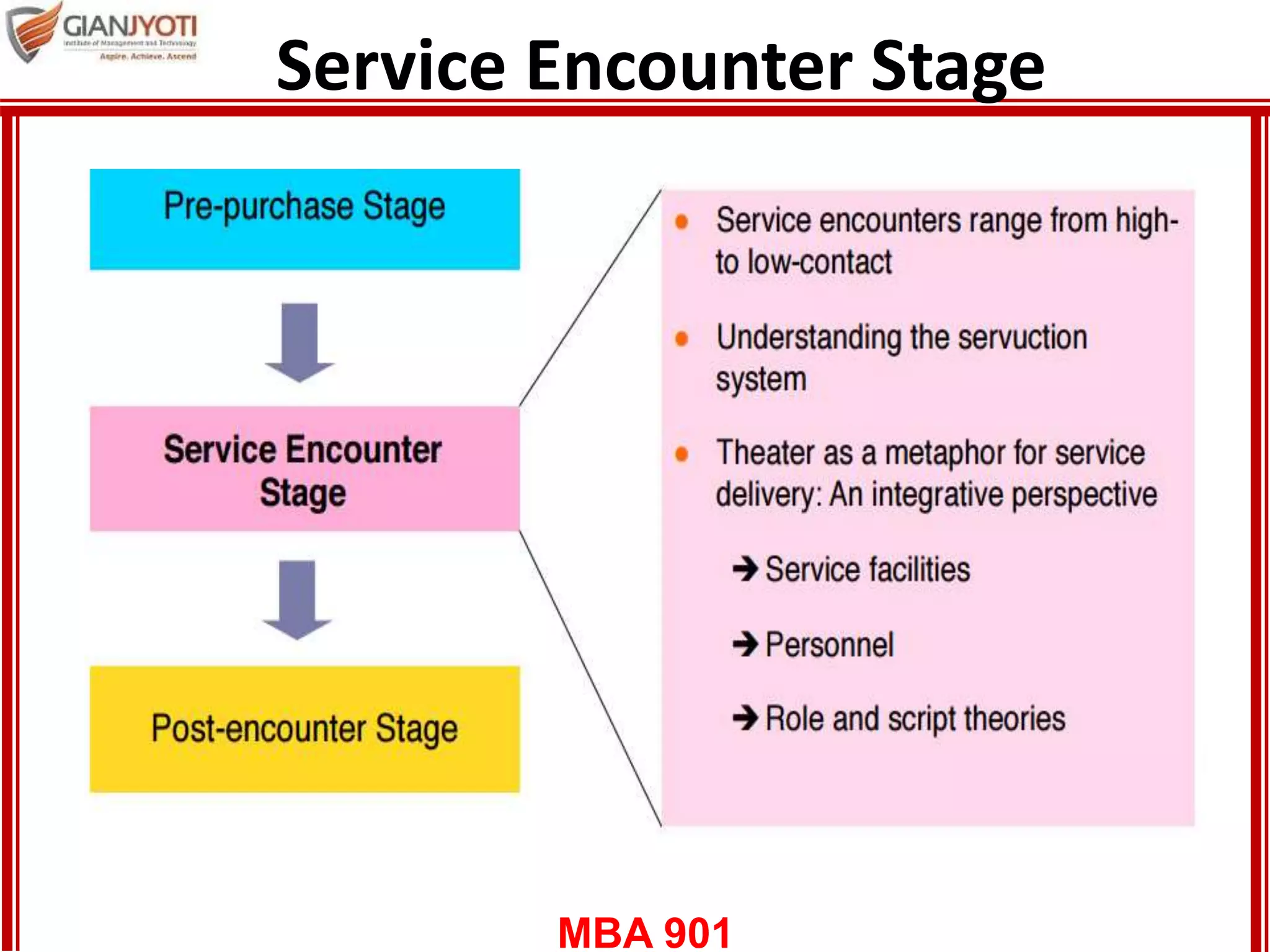
Service Encounter Stage
20
MBA 901
Service Encounter Stage
21
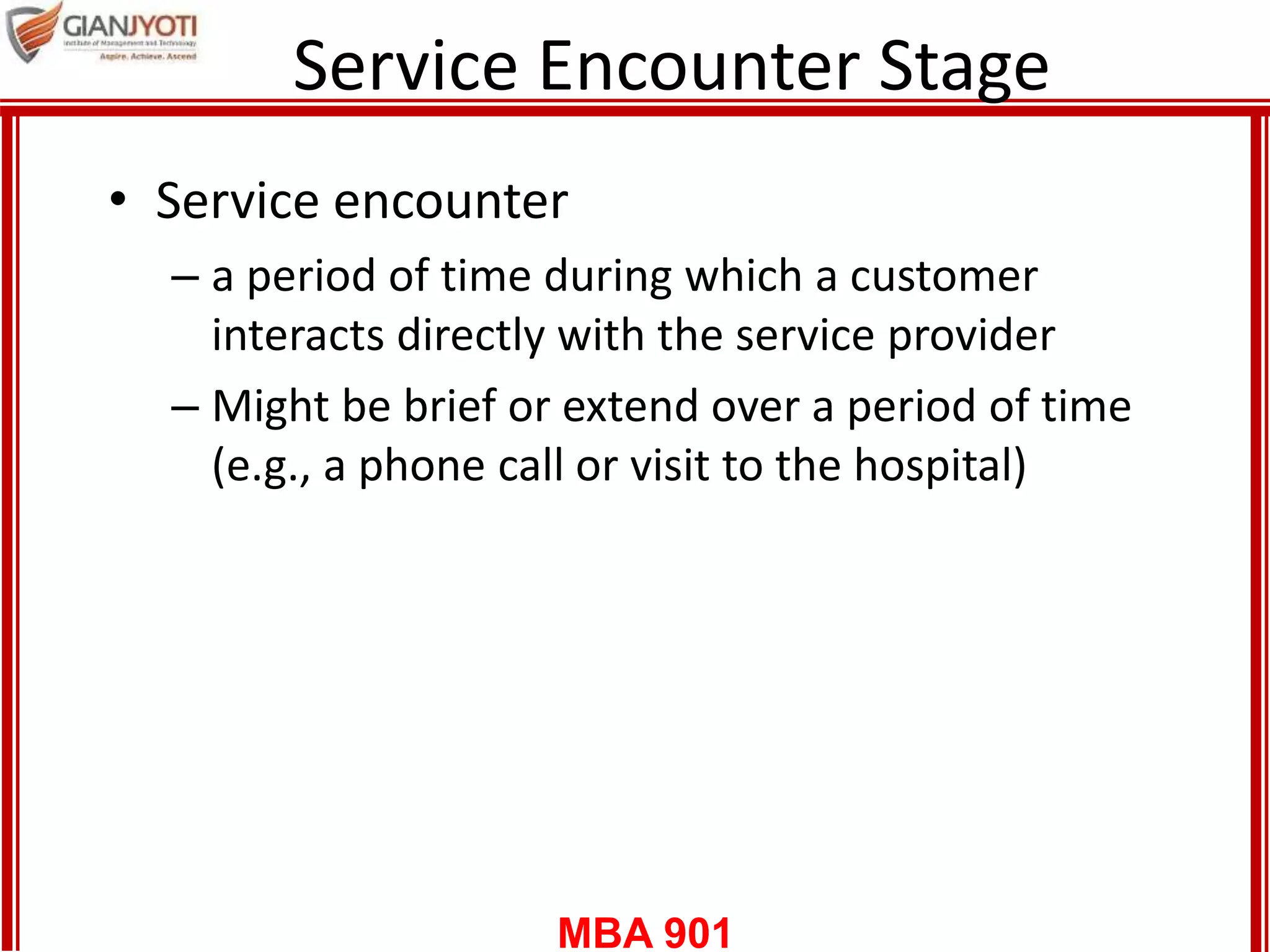
• Service encounter
– a period of time during which a customer
interacts directly with the service provider
– Might be brief or extend over a period of time
(e.g., a phone call or visit to the hospital)
MBA 901
Service Provision as Drama
• Drama: Create and maintain impression
– Actors, audience, setting, performance: Drama
– Actor: Service personnel
– Audience: Service customers
– Setting : Physical evidence
– Performance: Process of service assembly.
MBA 901
Service Roles and Scripts
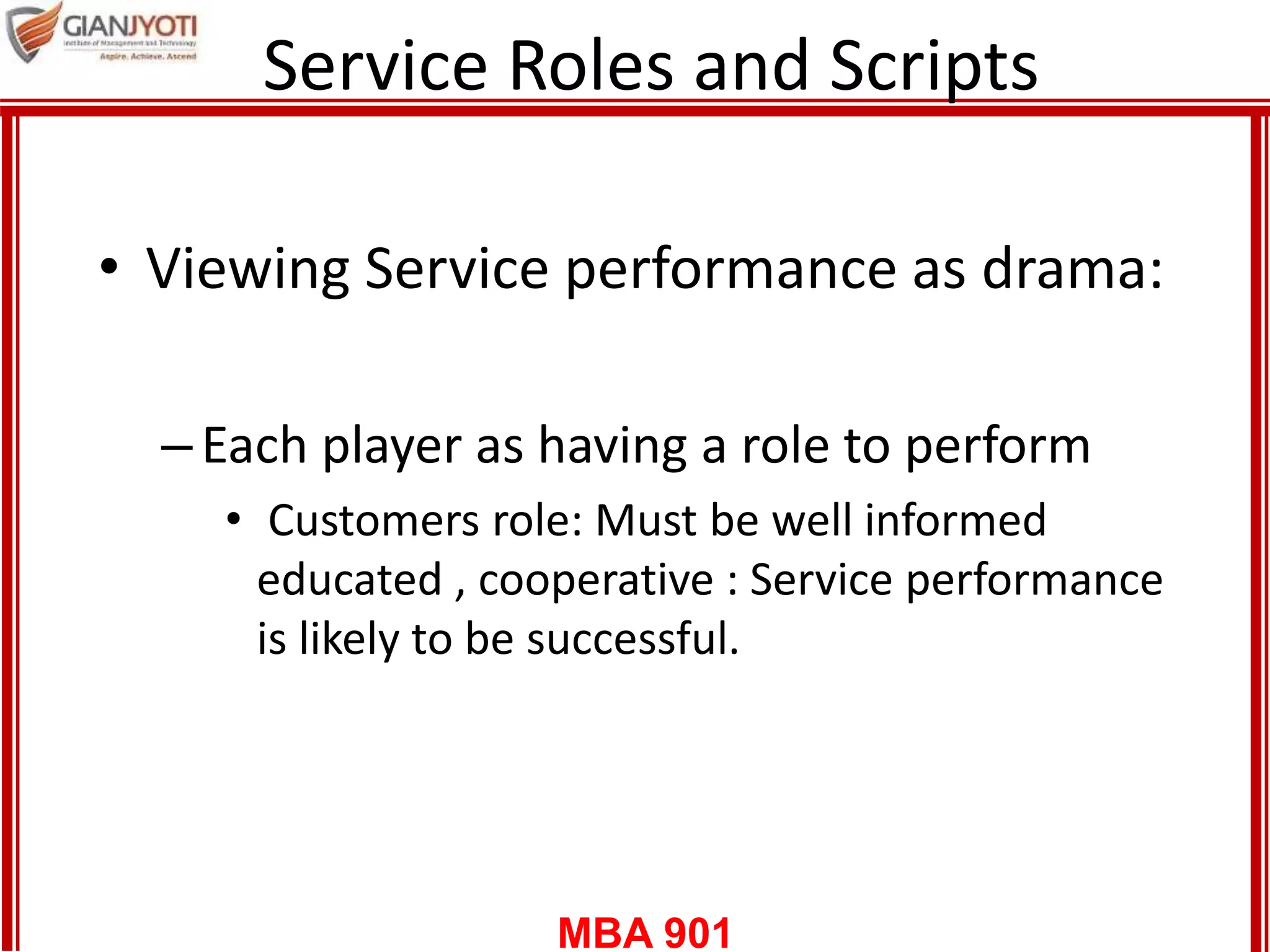
• Viewing Service performance as drama:
–Each player as having a role to perform
• Customers role: Must be well informed
educated , cooperative : Service performance
is likely to be successful.
MBA 901
Service Roles and Scripts
–Script: A coherent sequence of events
expected by individual
• Consists of set of ordered actions ,actors and
objects
• Conformance with script –satisfying the
customer
• Deviation with script – dissatisfaction and
confusion
MBA 901
Service Encounter Stage
25
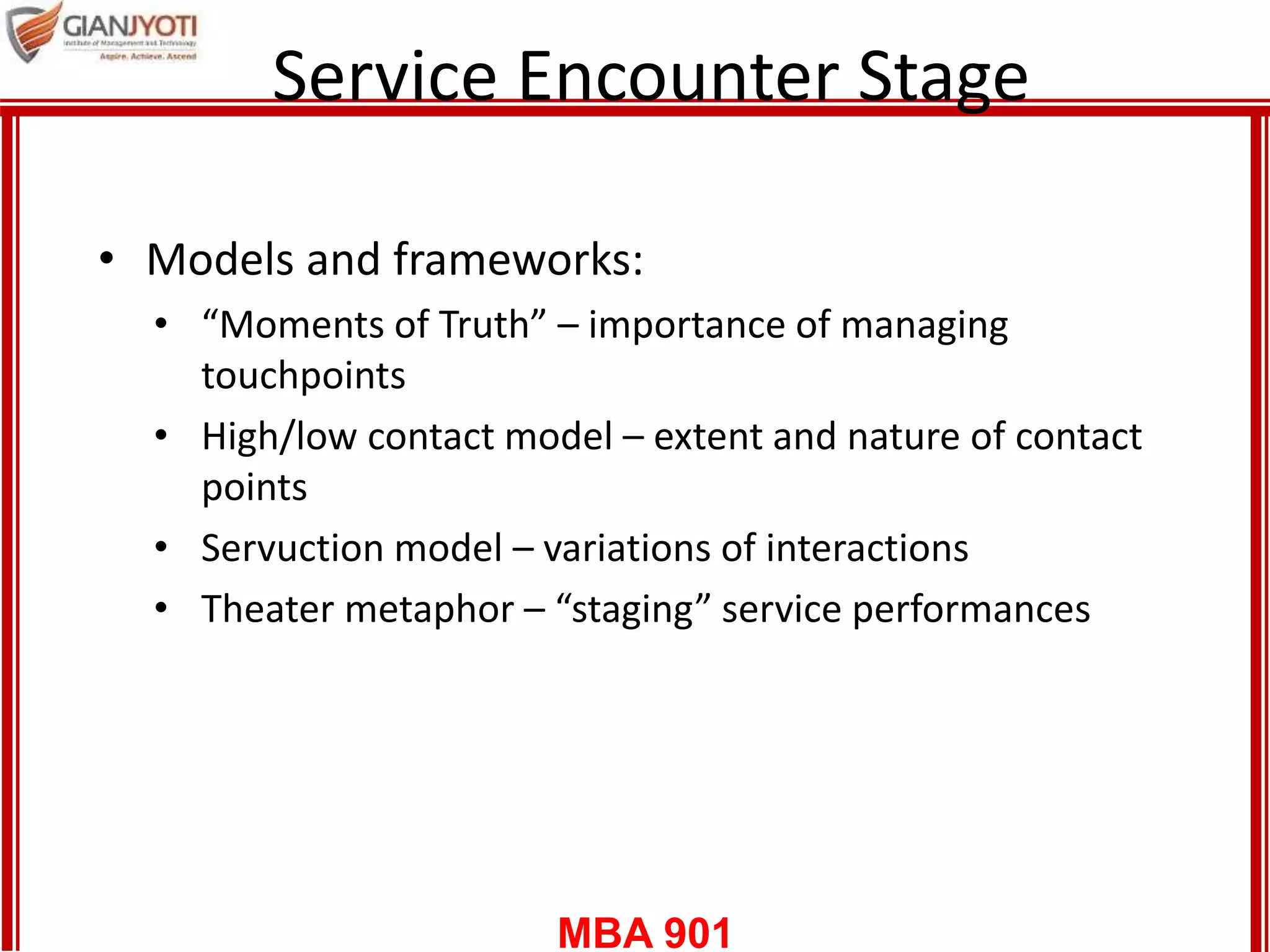
• Models and frameworks:
• “Moments of Truth” – importance of managing
touchpoints
• High/low contact model – extent and nature of contact
points
• Servuction model – variations of interactions
• Theater metaphor – “staging” service performances
MBA 901
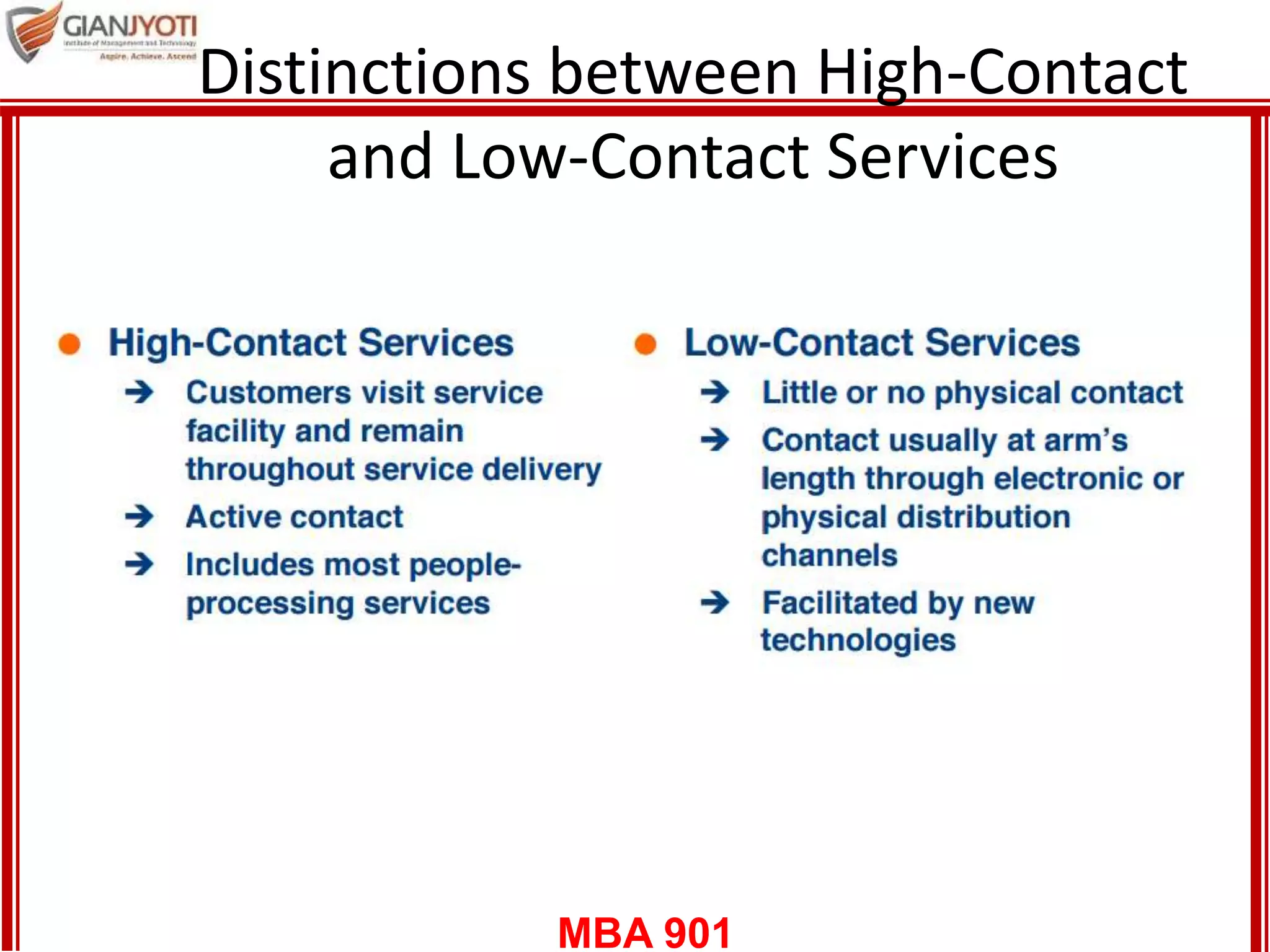
Distinctions between High-Contact
and Low-Contact Services
26
MBA 901
The Servuction System: Service
Production and Delivery
27
• Servuction System: visible front stage and invisible
backstage
• Service Operations
– Technical core where inputs are processed and service
elements created
– Contact people
– Inanimate environment
• Service Delivery
– Where “final assembly” of service elements takes place and
service is delivered
– Includes customer interactions with operations and other
customers
MBA 901
Theatrical Metaphor: an Integrative
Perspective
28
MBA 901
Implications of Customer Participation in
Service Delivery
29
MBA 901
Post – Encounter Stage
30
MBA 901
Customer Satisfaction with Service
Experience
31
MBA 901
Customer Delight: Going Beyond
Satisfaction
32
MBA 901
33

Consumer behavior in service

  • 1.
    MBA 9011 Lecture 2 ConsumerBehavior in Service, Customer expectation of service and Customer Perceptions of service Course Instructor: Sneha Sharma (PhD*, MBA, Dip T & D)
  • 2.
  • 3.
    MBA 901 Consumer Behavior •The behavior that consumers display in –Searching –Purchasing –Using –Evaluating –Disposing Of products and services that they expect will satisfy their needs.
  • 4.
    MBA 901 Decision ina CB in Services 4
  • 5.
    MBA 901 Need Arousal 5 Decisionto buy or use a service is triggered by need arousal Triggers of need: Consumers are then motivated to find a solution for their need Unconscious minds (e.g., personal identity and aspirations) Physical conditions (e.g., hunger ) External sources (e.g., a service firm’s marketing activities)
  • 6.
    MBA 901 Understanding UserCosts for Services Search Costs Purchase and Use Costs After costs Money Time Physical Effort Psychological Burdens Sensory Burdens Necessary Follow up Problem Solving
  • 7.
    MBA 901 Information Search 7 Needarousal leads to attempts to find a solution -Evoked set – a set of products and brands that a consumer considers during the decision-making process – that is derived from past experiences or external sources Alternatives then need to be evaluated before a final decision is made
  • 8.
    MBA 901 Evaluation ofservice alternatives : Evoked Set • The evoked set of alternatives likely to be smaller with services than goods • Competitive services can not be displayed for comparison  always a single brand • Available service providers in geographical area is small. • Difficult to obtain adequate pre-purchase information about service • The Internet may widen this potential
  • 9.
    MBA 901 Evaluating Alternatives– Service Attributes 9 - Search attributes help customers evaluate a product before purchase. - E.g., type of food, location, type of restaurant and price . - Experience attributes cannot be evaluated before purchase. - The consumer will not know how much she/he will enjoy the food, the service, and the atmosphere until the actual experience . - Credence attributes are those that customers find impossible to evaluate confidently even after purchase and consumption. - E.g., hygiene conditions of the kitchen and the healthiness of the cooking ingredients.
  • 10.
    MBA 901 How ProductAttributes Affect Ease of Evaluation 10
  • 11.
    MBA 901 Perceived Risksof Purchasing and Using Services 11 • unsatisfactory performance outcomes Functional • monetary loss, unexpected extra costs Financial • wasted time, delays leading to problems Temporal • personal injury, damage to possessions Physical • fears and negative emotions Psychological • how others may think and react Social • unwanted impact on any of five senses Sensory
  • 12.
    MBA 901 How MightConsumers Handle Perceived Risk? 12
  • 13.
    MBA 901 Strategic Responsesto Managing Customer Perceptions of Risk 13
  • 14.
  • 15.
    MBA 901 Understanding Customers’Service Expectations 15 •Customers evaluate service quality by comparing what they expect against what they perceive •Situational and personal factors also considered •Expectations of good service vary from one business to another, and differently positioned service providers in same industry •Expectations change over time
  • 16.
    MBA 901 Components ofCustomer Expectations
  • 17.
  • 18.
  • 19.
    MBA 901 Perceived Service Expected Service CUSTOMER COMPANY Customer Gap GAP1 GAP 2 Gaps Model of Service Quality GAP 3 External Communications to Customers GAP 4 Service Delivery Customer-Driven Service Designs and Standards Company Perceptions of Consumer Expectations
  • 20.
  • 21.
    MBA 901 Service EncounterStage 21 • Service encounter – a period of time during which a customer interacts directly with the service provider – Might be brief or extend over a period of time (e.g., a phone call or visit to the hospital)
  • 22.
    MBA 901 Service Provisionas Drama • Drama: Create and maintain impression – Actors, audience, setting, performance: Drama – Actor: Service personnel – Audience: Service customers – Setting : Physical evidence – Performance: Process of service assembly.
  • 23.
    MBA 901 Service Rolesand Scripts • Viewing Service performance as drama: –Each player as having a role to perform • Customers role: Must be well informed educated , cooperative : Service performance is likely to be successful.
  • 24.
    MBA 901 Service Rolesand Scripts –Script: A coherent sequence of events expected by individual • Consists of set of ordered actions ,actors and objects • Conformance with script –satisfying the customer • Deviation with script – dissatisfaction and confusion
  • 25.
    MBA 901 Service EncounterStage 25 • Models and frameworks: • “Moments of Truth” – importance of managing touchpoints • High/low contact model – extent and nature of contact points • Servuction model – variations of interactions • Theater metaphor – “staging” service performances
  • 26.
    MBA 901 Distinctions betweenHigh-Contact and Low-Contact Services 26
  • 27.
    MBA 901 The ServuctionSystem: Service Production and Delivery 27 • Servuction System: visible front stage and invisible backstage • Service Operations – Technical core where inputs are processed and service elements created – Contact people – Inanimate environment • Service Delivery – Where “final assembly” of service elements takes place and service is delivered – Includes customer interactions with operations and other customers
  • 28.
    MBA 901 Theatrical Metaphor:an Integrative Perspective 28
  • 29.
    MBA 901 Implications ofCustomer Participation in Service Delivery 29
  • 30.
    MBA 901 Post –Encounter Stage 30
  • 31.
    MBA 901 Customer Satisfactionwith Service Experience 31
  • 32.
    MBA 901 Customer Delight:Going Beyond Satisfaction 32
  • 33.