Methods of Payment
Course Instructor: Sneha Sharma
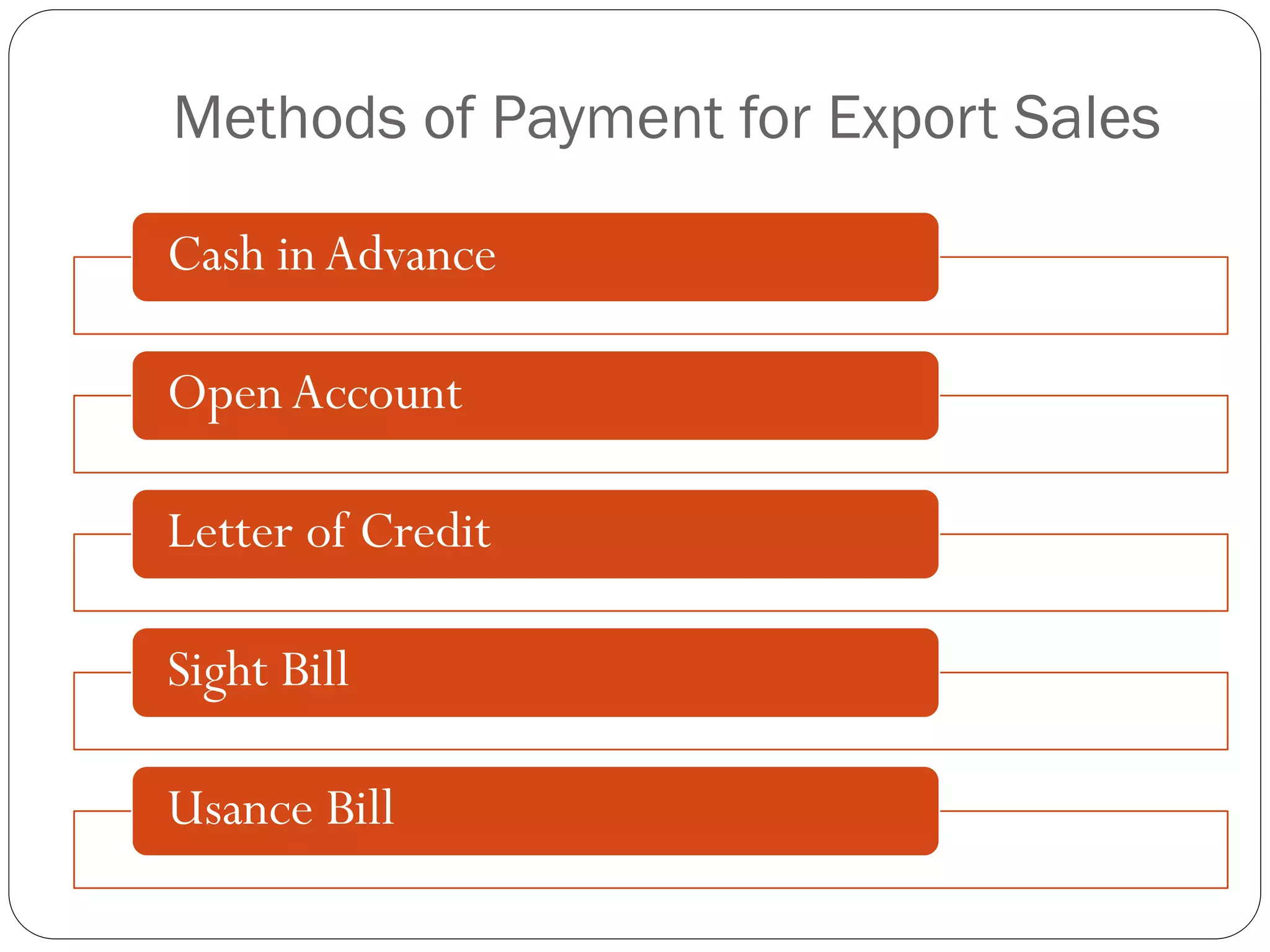
Methods of Payment for Export Sales
Cash in Advance

Open Account
Letter of Credit
Sight Bill

Usance Bill
Cash in Advance/Advance Payment
 With cash-in-advance payment terms,
 an exporter can avoid credit risk because payment is

received before the ownership of the goods is
transferred.
 For international sales, wire transfers and credit

cards are the most commonly used cash-in-advance
options available to exporters.
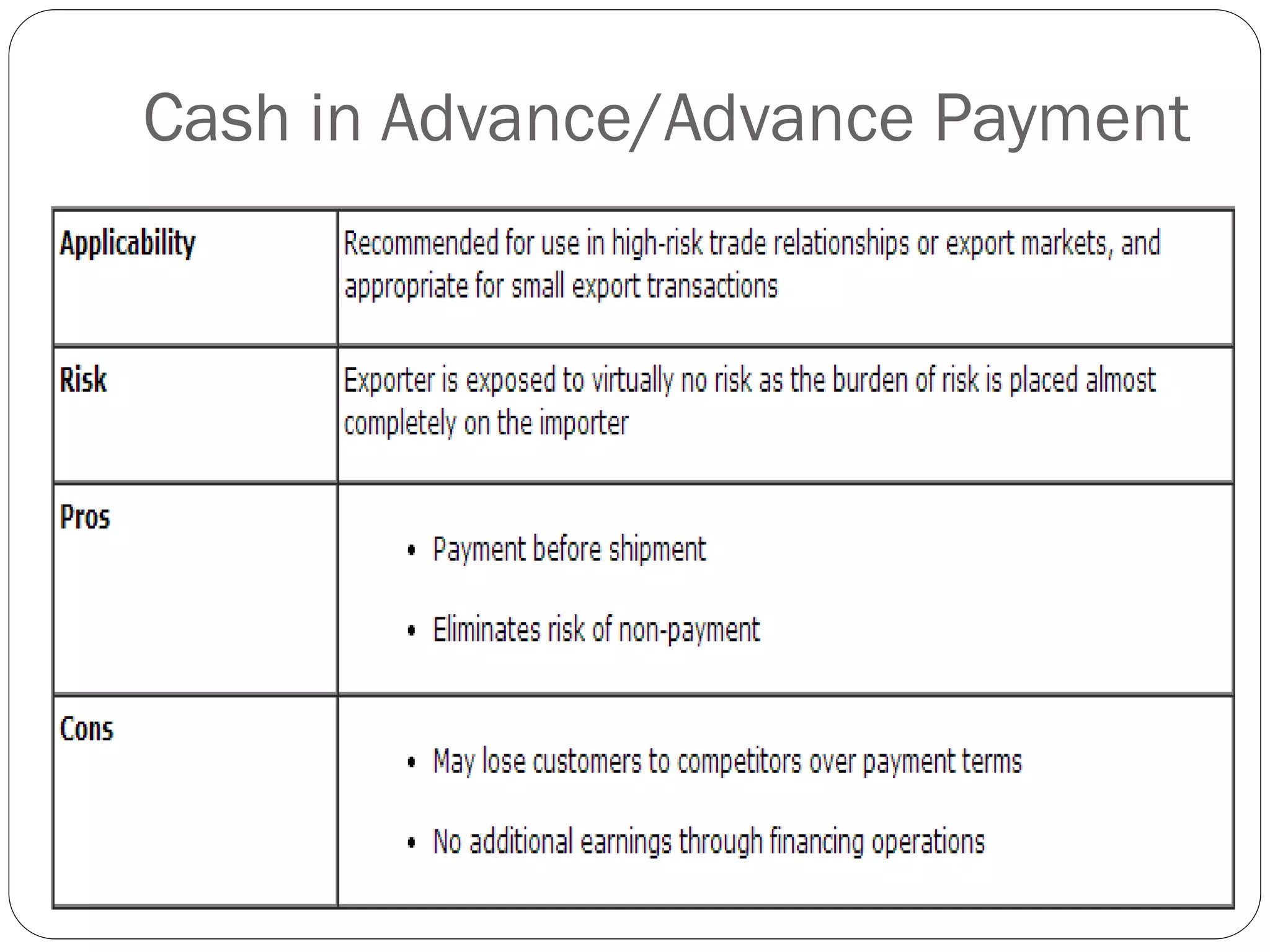
Cash in Advance/Advance Payment
Open Account
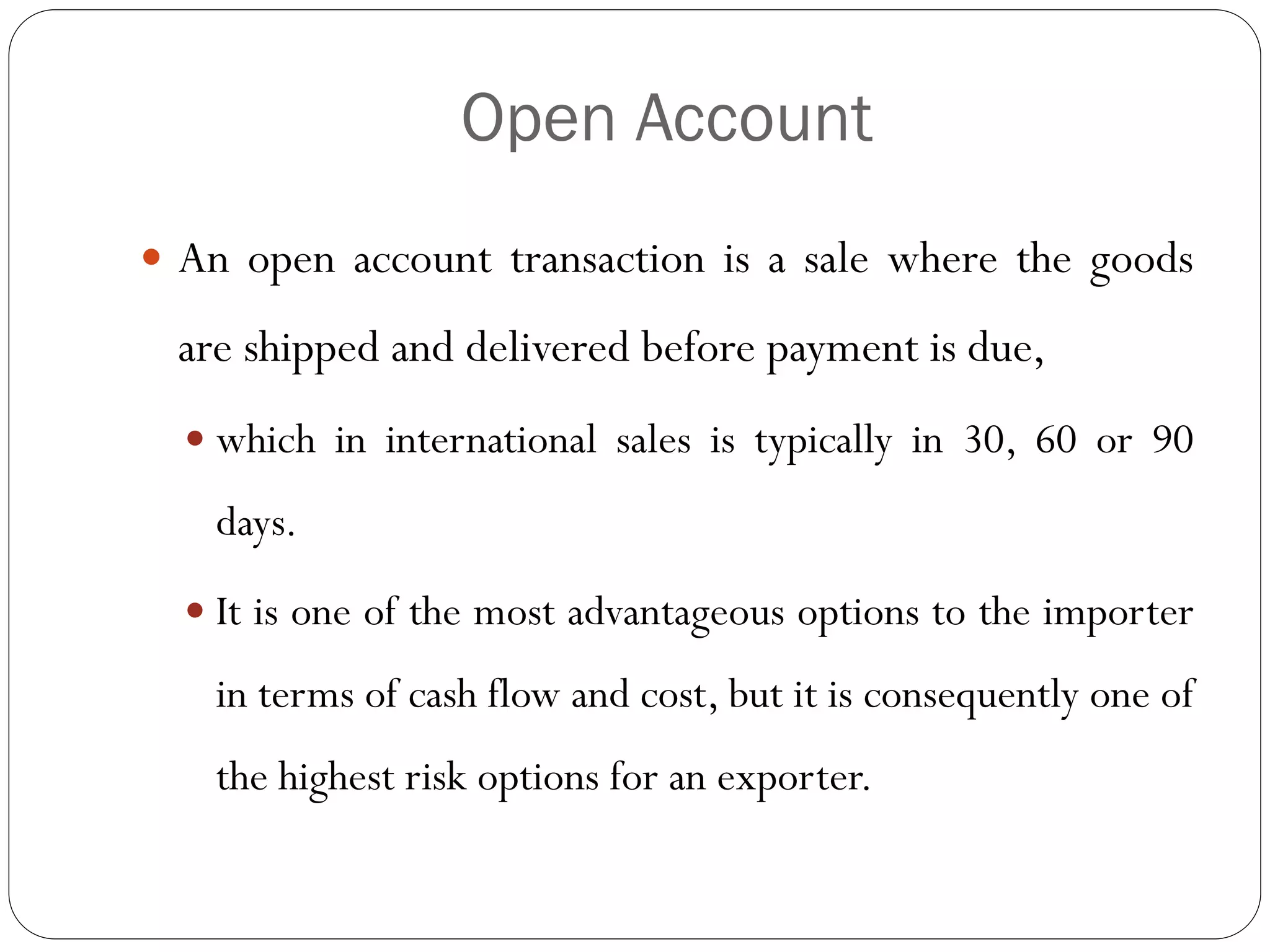
 An open account transaction is a sale where the goods

are shipped and delivered before payment is due,
 which in international sales is typically in 30, 60 or 90

days.
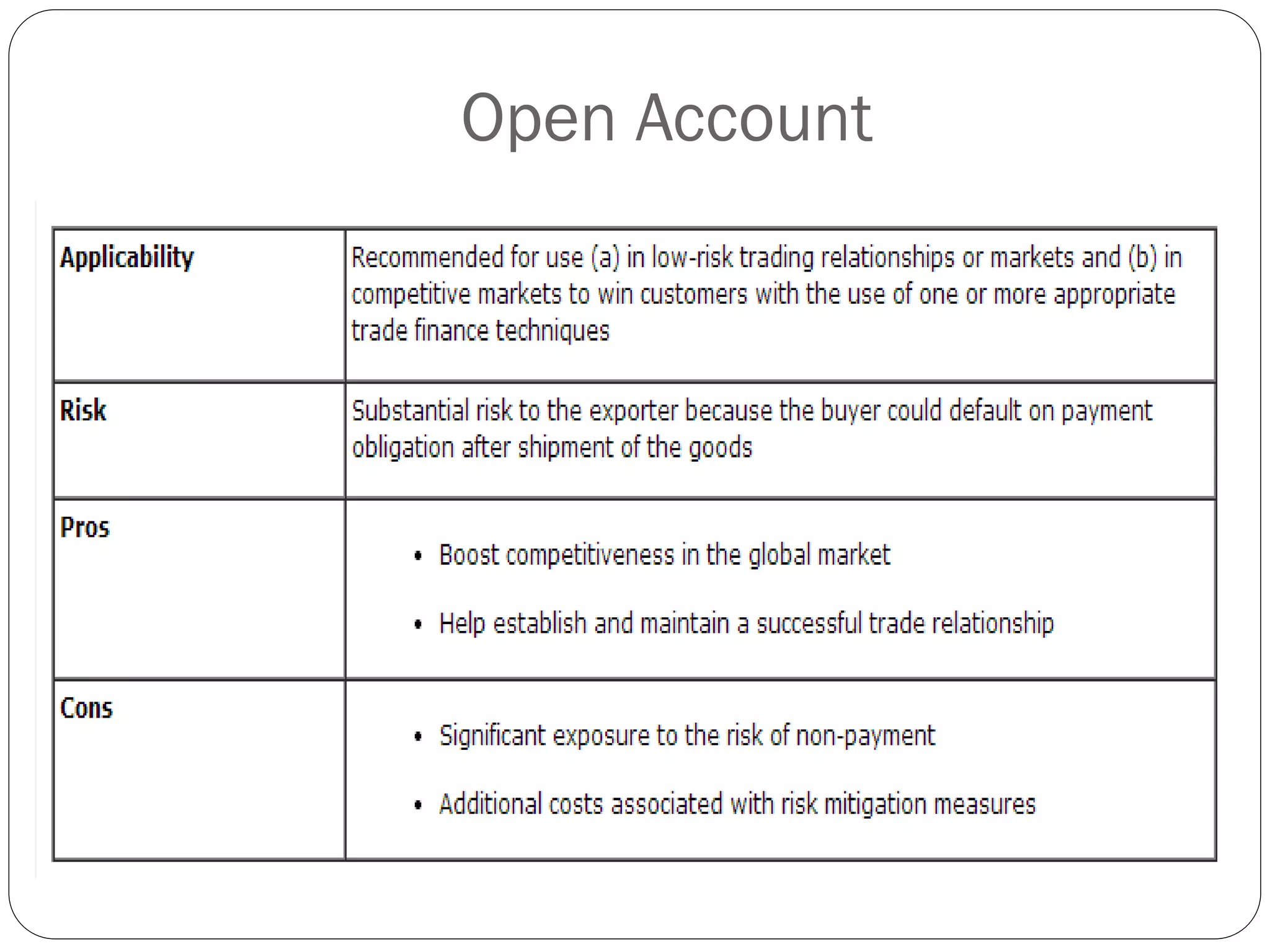
 It is one of the most advantageous options to the importer

in terms of cash flow and cost, but it is consequently one of
the highest risk options for an exporter.
Open Account
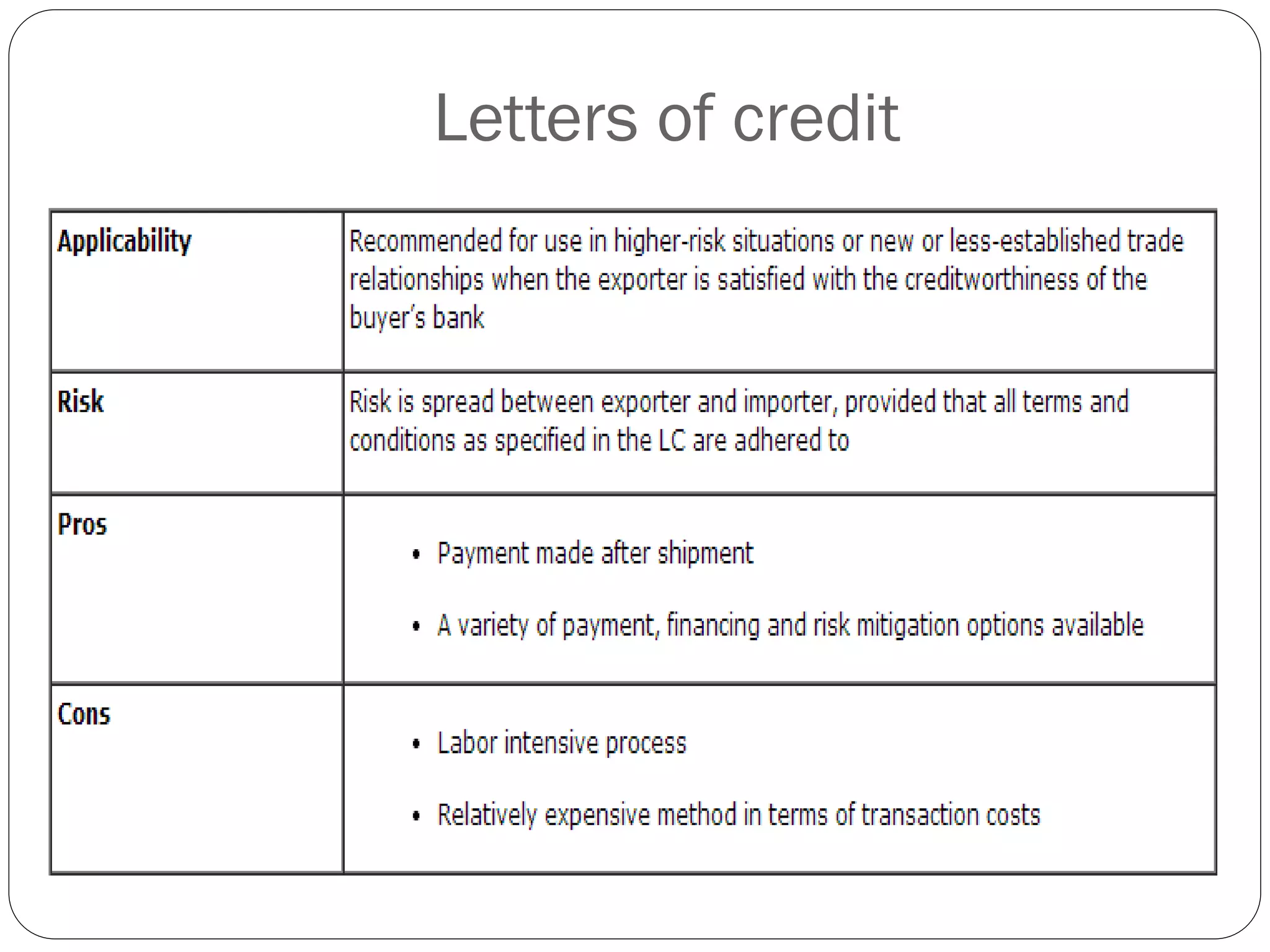
Letters of credit
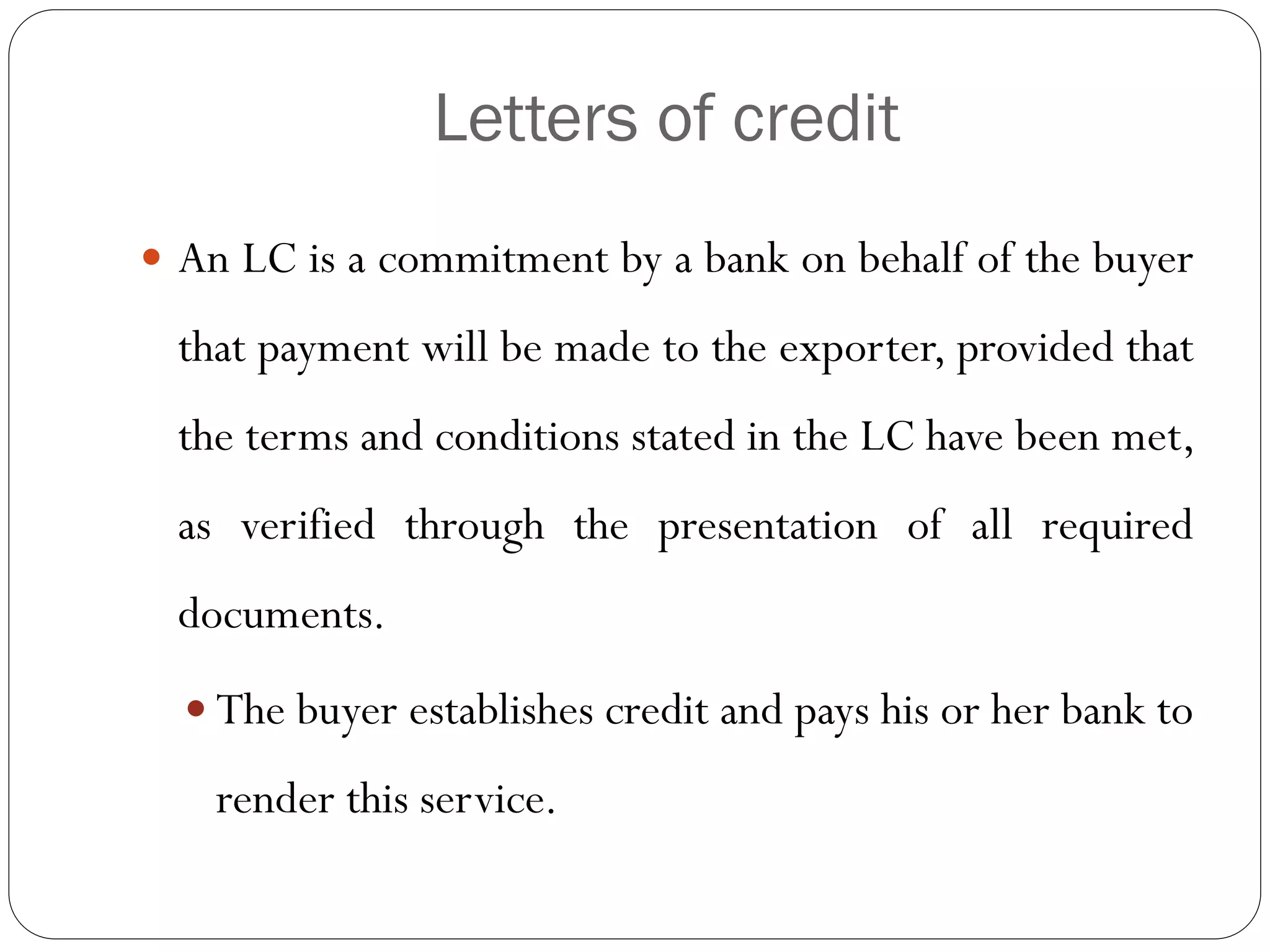
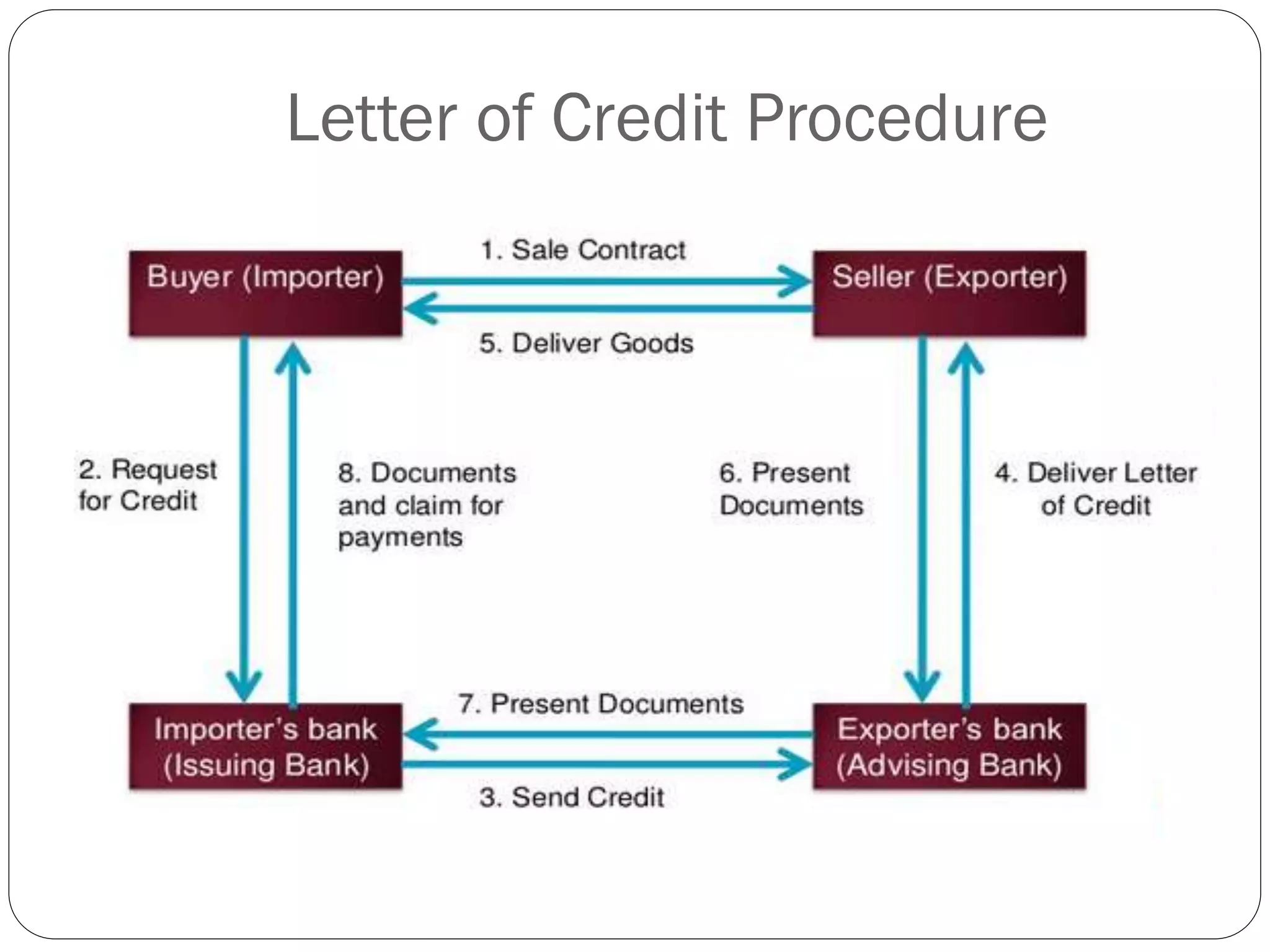
 An LC is a commitment by a bank on behalf of the buyer

that payment will be made to the exporter, provided that
the terms and conditions stated in the LC have been met,
as verified through the presentation of all required
documents.
 The buyer establishes credit and pays his or her bank to

render this service.
Letter of Credit Procedure
Letters of credit
Documents Against Payment (D/P)/
Sight Bill
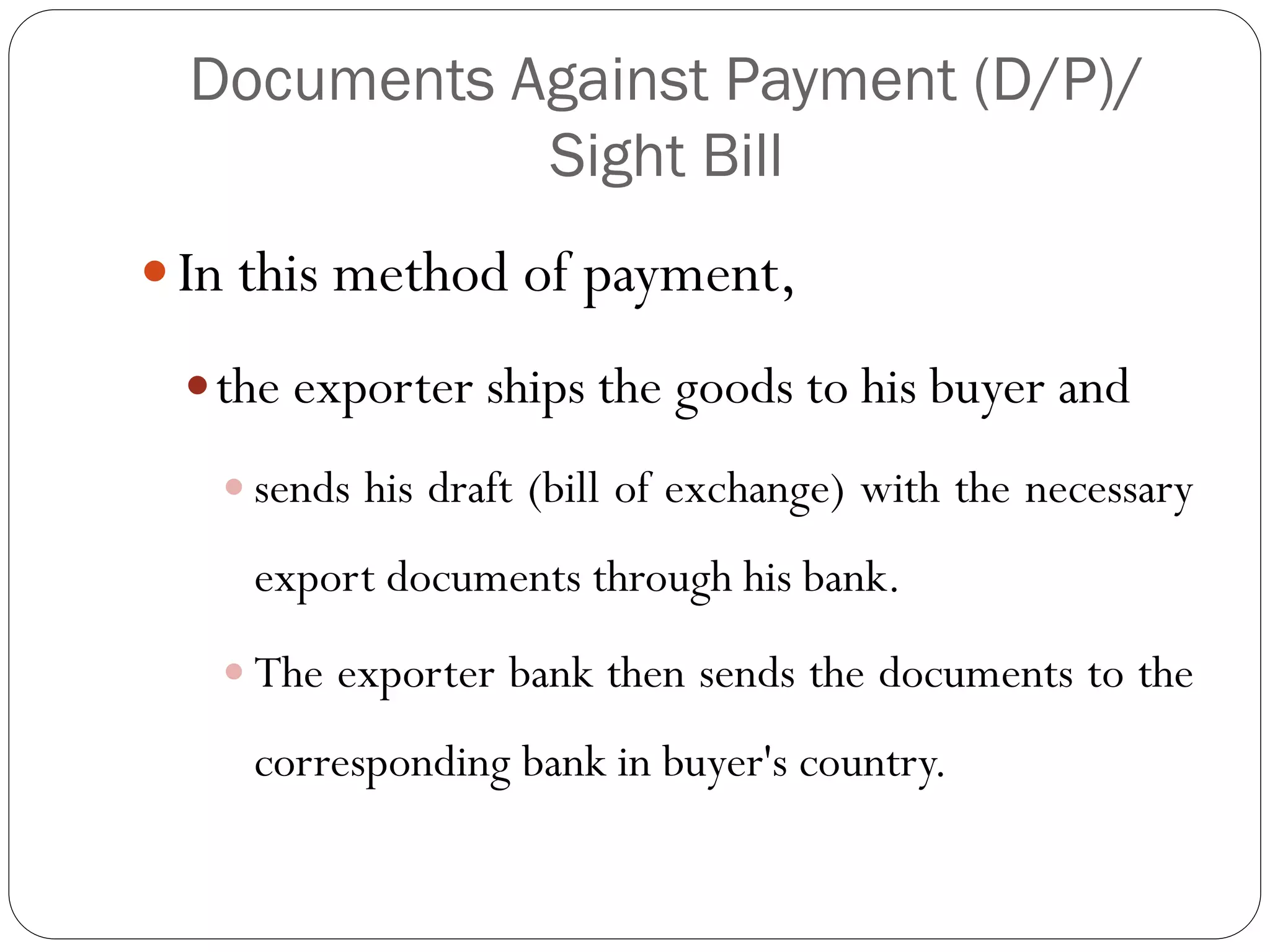
 In this method of payment,
 the exporter ships the goods to his buyer and
 sends his draft (bill of exchange) with the necessary

export documents through his bank.
 The exporter bank then sends the documents to the

corresponding bank in buyer's country.
Documents Against Payment (D/P)/
Sight Bill
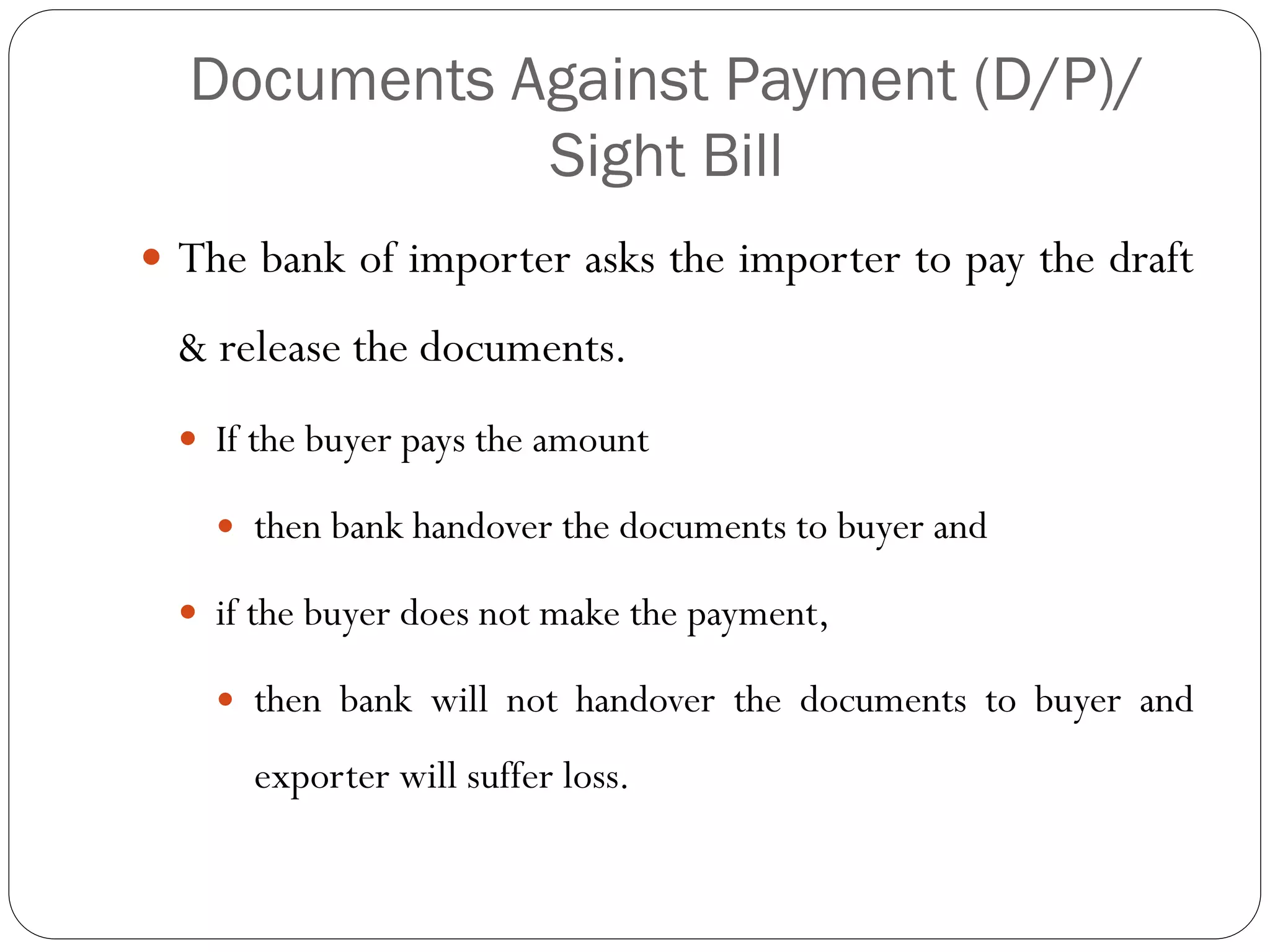
 The bank of importer asks the importer to pay the draft

& release the documents.
 If the buyer pays the amount


then bank handover the documents to buyer and

 if the buyer does not make the payment,


then bank will not handover the documents to buyer and
exporter will suffer loss.
Documents Against Acceptance (D/A)/
Usance Bill/ Time Draft
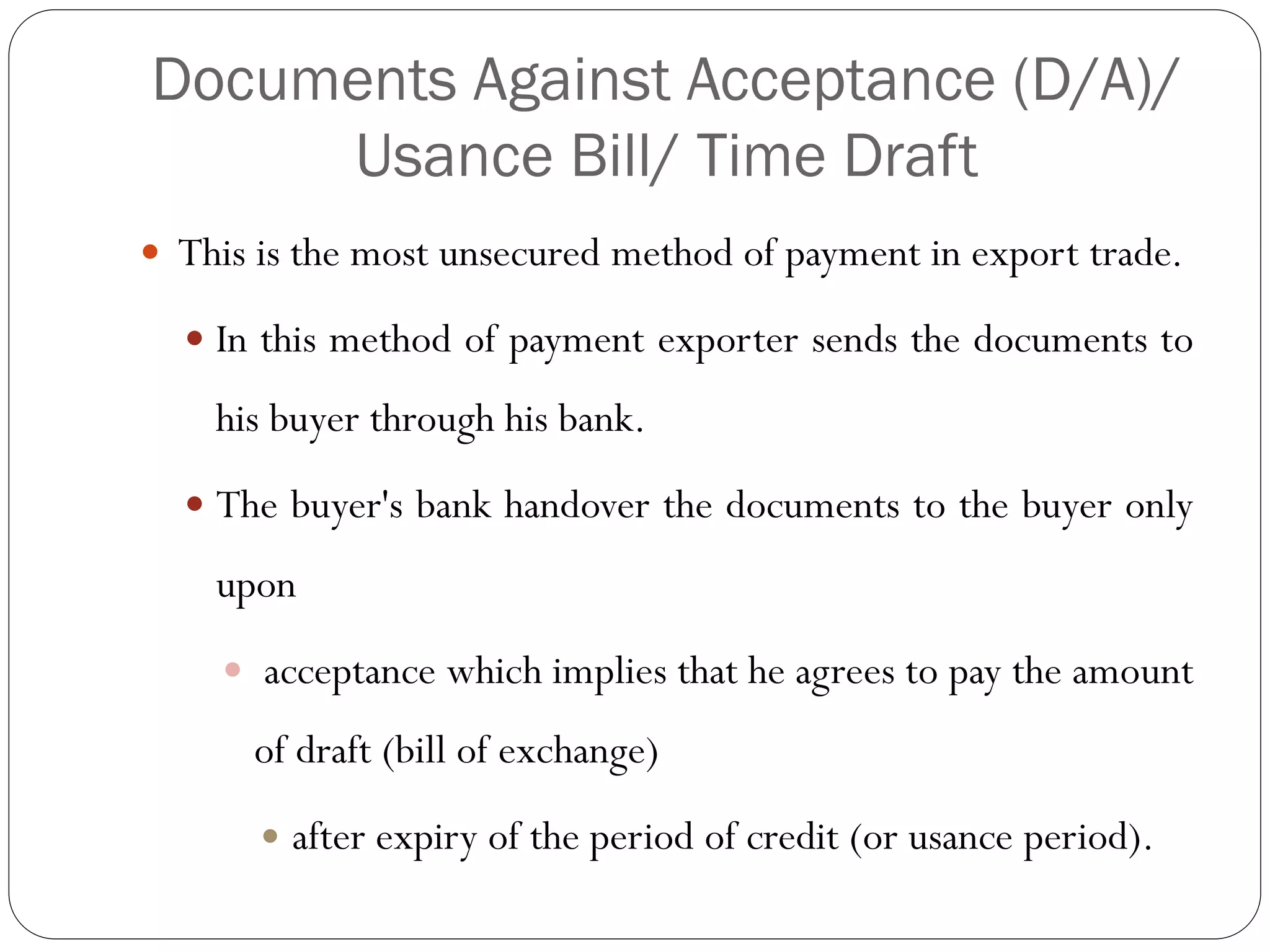
 This is the most unsecured method of payment in export trade.
 In this method of payment exporter sends the documents to

his buyer through his bank.
 The buyer's bank handover the documents to the buyer only

upon
 acceptance which implies that he agrees to pay the amount

of draft (bill of exchange)


after expiry of the period of credit (or usance period).
Documents Against Acceptance (D/A)/
Usance Bill/ Time Draft
 The maximum usance period is for 180 days.
 The disadvantage of Documents Against Acceptance

(D/A) terms is that
 It allows buyer to take delivery of the goods before making

the payment.

Methods of payment in International trade

  • 1.
    Methods of Payment CourseInstructor: Sneha Sharma
  • 2.
    Methods of Paymentfor Export Sales Cash in Advance Open Account Letter of Credit Sight Bill Usance Bill
  • 3.
    Cash in Advance/AdvancePayment  With cash-in-advance payment terms,  an exporter can avoid credit risk because payment is received before the ownership of the goods is transferred.  For international sales, wire transfers and credit cards are the most commonly used cash-in-advance options available to exporters.
  • 4.
  • 5.
    Open Account  Anopen account transaction is a sale where the goods are shipped and delivered before payment is due,  which in international sales is typically in 30, 60 or 90 days.  It is one of the most advantageous options to the importer in terms of cash flow and cost, but it is consequently one of the highest risk options for an exporter.
  • 6.
  • 7.
    Letters of credit An LC is a commitment by a bank on behalf of the buyer that payment will be made to the exporter, provided that the terms and conditions stated in the LC have been met, as verified through the presentation of all required documents.  The buyer establishes credit and pays his or her bank to render this service.
  • 8.
  • 9.
  • 10.
    Documents Against Payment(D/P)/ Sight Bill  In this method of payment,  the exporter ships the goods to his buyer and  sends his draft (bill of exchange) with the necessary export documents through his bank.  The exporter bank then sends the documents to the corresponding bank in buyer's country.
  • 11.
    Documents Against Payment(D/P)/ Sight Bill  The bank of importer asks the importer to pay the draft & release the documents.  If the buyer pays the amount  then bank handover the documents to buyer and  if the buyer does not make the payment,  then bank will not handover the documents to buyer and exporter will suffer loss.
  • 12.
    Documents Against Acceptance(D/A)/ Usance Bill/ Time Draft  This is the most unsecured method of payment in export trade.  In this method of payment exporter sends the documents to his buyer through his bank.  The buyer's bank handover the documents to the buyer only upon  acceptance which implies that he agrees to pay the amount of draft (bill of exchange)  after expiry of the period of credit (or usance period).
  • 13.
    Documents Against Acceptance(D/A)/ Usance Bill/ Time Draft  The maximum usance period is for 180 days.  The disadvantage of Documents Against Acceptance (D/A) terms is that  It allows buyer to take delivery of the goods before making the payment.