MBA 9061
Delivering services through intermediaries
and electronic channels
Services Marketing
Course Instructor: Sneha Sharma (PhD*, MBA, Dip T & D)
MBA 906
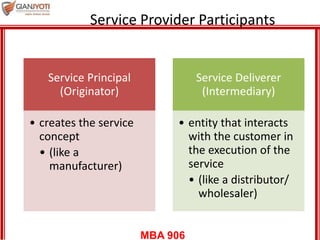
Service Provider Participants
Service Principal
(Originator)
• creates the service
concept
• (like a
manufacturer)
Service Deliverer
(Intermediary)
• entity that interacts
with the customer in
the execution of the
service
• (like a distributor/
wholesaler)
MBA 906
Key Issues
Involving Intermediaries
Conflict Over Objectives And Performance
Conflict Over Costs And Rewards
Control Of Service Quality
Empowerment Versus Control
Channel Ambiguity
MBA 906
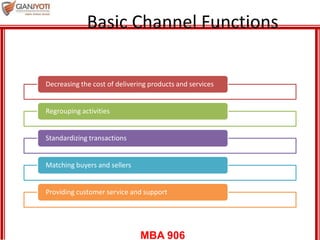
Basic Channel Functions
Decreasing the cost of delivering products and services
Regrouping activities
Standardizing transactions
Matching buyers and sellers
Providing customer service and support
MBA 906
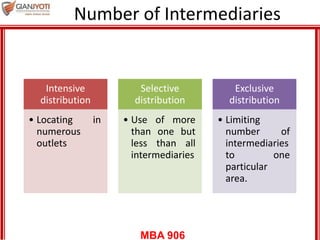
Number of Intermediaries
Intensive
distribution
• Locating in
numerous
outlets
Selective
distribution
• Use of more
than one but
less than all
intermediaries
Exclusive
distribution
• Limiting
number of
intermediaries
to one
particular
area.
MBA 906
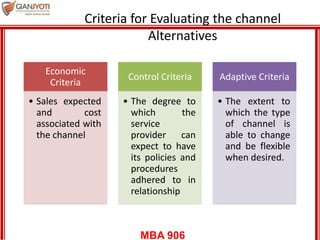
Criteria for Evaluating the channel
Alternatives
Economic
Criteria
• Sales expected
and cost
associated with
the channel
Control Criteria
• The degree to
which the
service
provider can
expect to have
its policies and
procedures
adhered to in
relationship
Adaptive Criteria
• The extent to
which the type
of channel is
able to change
and be flexible
when desired.
MBA 906
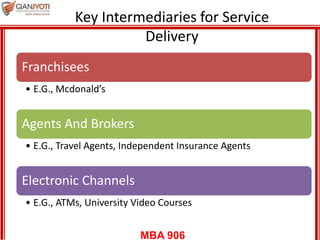
Key Intermediaries for Service
Delivery
Franchisees
• E.G., Mcdonald’s
Agents And Brokers
• E.G., Travel Agents, Independent Insurance Agents
Electronic Channels
• E.G., ATMs, University Video Courses
MBA 906
Summary of Benefits and Challenges for
Franchisers of Service
• Leverages the business
format to gain
expansion and revenues
• Maintains consistency in
outlets
• Gains knowledge of
local markets
• Shares financial risk and
frees up capital
• Difficulty in maintaining
and motivating
franchisees
• Highly publicized disputes
and conflict
• Possibility of inconsistent
quality that can undermine
the company name
• Control of customer
relationship by
intermediary
Benefits Challenges
MBA 906
Summary of Benefits and Challenges
for Franchisees of Service
• Obtaining an
established business
format on which to base
a business
• Receiving national or
regional brand
marketing
• Minimizing the risks of
starting a business
• Disappointing profits and
revenues
• Encroachment and
franchise saturation
• High failure rates and
unfair terminations
• Lack of perceived control
• High fees and rigid
contracts
• Unrealistic expectations
Benefits Challenges
MBA 906
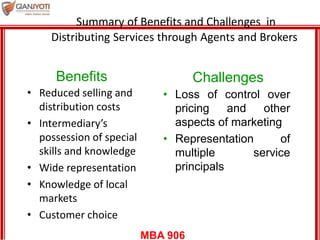
Summary of Benefits and Challenges in
Distributing Services through Agents and Brokers
• Reduced selling and
distribution costs
• Intermediary’s
possession of special
skills and knowledge
• Wide representation
• Knowledge of local
markets
• Customer choice
• Loss of control over
pricing and other
aspects of marketing
• Representation of
multiple service
principals
Benefits Challenges
MBA 906
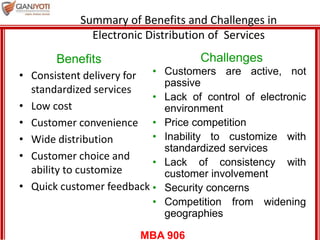
Summary of Benefits and Challenges in
Electronic Distribution of Services
• Consistent delivery for
standardized services
• Low cost
• Customer convenience
• Wide distribution
• Customer choice and
ability to customize
• Quick customer feedback
• Customers are active, not
passive
• Lack of control of electronic
environment
• Price competition
• Inability to customize with
standardized services
• Lack of consistency with
customer involvement
• Security concerns
• Competition from widening
geographies
Benefits Challenges
MBA 90612
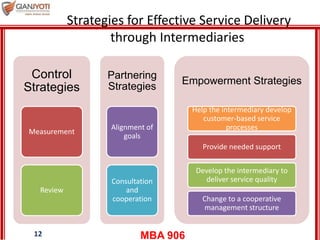
Strategies for Effective Service Delivery
through Intermediaries
Control
Strategies
Measurement
Review
Partnering
Strategies
Alignment of
goals
Consultation
and
cooperation
Empowerment Strategies
Help the intermediary develop
customer-based service
processes
Provide needed support
Develop the intermediary to
deliver service quality
Change to a cooperative
management structure

Delivering services through intermediaries and electronic channels

  • 1.
    MBA 9061 Delivering servicesthrough intermediaries and electronic channels Services Marketing Course Instructor: Sneha Sharma (PhD*, MBA, Dip T & D)
  • 2.
    MBA 906 Service ProviderParticipants Service Principal (Originator) • creates the service concept • (like a manufacturer) Service Deliverer (Intermediary) • entity that interacts with the customer in the execution of the service • (like a distributor/ wholesaler)
  • 3.
    MBA 906 Key Issues InvolvingIntermediaries Conflict Over Objectives And Performance Conflict Over Costs And Rewards Control Of Service Quality Empowerment Versus Control Channel Ambiguity
  • 4.
    MBA 906 Basic ChannelFunctions Decreasing the cost of delivering products and services Regrouping activities Standardizing transactions Matching buyers and sellers Providing customer service and support
  • 5.
    MBA 906 Number ofIntermediaries Intensive distribution • Locating in numerous outlets Selective distribution • Use of more than one but less than all intermediaries Exclusive distribution • Limiting number of intermediaries to one particular area.
  • 6.
    MBA 906 Criteria forEvaluating the channel Alternatives Economic Criteria • Sales expected and cost associated with the channel Control Criteria • The degree to which the service provider can expect to have its policies and procedures adhered to in relationship Adaptive Criteria • The extent to which the type of channel is able to change and be flexible when desired.
  • 7.
    MBA 906 Key Intermediariesfor Service Delivery Franchisees • E.G., Mcdonald’s Agents And Brokers • E.G., Travel Agents, Independent Insurance Agents Electronic Channels • E.G., ATMs, University Video Courses
  • 8.
    MBA 906 Summary ofBenefits and Challenges for Franchisers of Service • Leverages the business format to gain expansion and revenues • Maintains consistency in outlets • Gains knowledge of local markets • Shares financial risk and frees up capital • Difficulty in maintaining and motivating franchisees • Highly publicized disputes and conflict • Possibility of inconsistent quality that can undermine the company name • Control of customer relationship by intermediary Benefits Challenges
  • 9.
    MBA 906 Summary ofBenefits and Challenges for Franchisees of Service • Obtaining an established business format on which to base a business • Receiving national or regional brand marketing • Minimizing the risks of starting a business • Disappointing profits and revenues • Encroachment and franchise saturation • High failure rates and unfair terminations • Lack of perceived control • High fees and rigid contracts • Unrealistic expectations Benefits Challenges
  • 10.
    MBA 906 Summary ofBenefits and Challenges in Distributing Services through Agents and Brokers • Reduced selling and distribution costs • Intermediary’s possession of special skills and knowledge • Wide representation • Knowledge of local markets • Customer choice • Loss of control over pricing and other aspects of marketing • Representation of multiple service principals Benefits Challenges
  • 11.
    MBA 906 Summary ofBenefits and Challenges in Electronic Distribution of Services • Consistent delivery for standardized services • Low cost • Customer convenience • Wide distribution • Customer choice and ability to customize • Quick customer feedback • Customers are active, not passive • Lack of control of electronic environment • Price competition • Inability to customize with standardized services • Lack of consistency with customer involvement • Security concerns • Competition from widening geographies Benefits Challenges
  • 12.
    MBA 90612 Strategies forEffective Service Delivery through Intermediaries Control Strategies Measurement Review Partnering Strategies Alignment of goals Consultation and cooperation Empowerment Strategies Help the intermediary develop customer-based service processes Provide needed support Develop the intermediary to deliver service quality Change to a cooperative management structure