
CONSTRUCTION OF HUMAN GENE MAP 
THROUGH MAP INTEGRATION- FROM 
GENETIC MAP TO PHYSICAL MAP TO 
SEQUENCE MAP 
Preety Sweta Hembrom 
M.Sc Genomic Science
MAP INTEGRATION 
Mapping is identifying relationships between 
genes on chromosomes 
Two broad categories of map: 
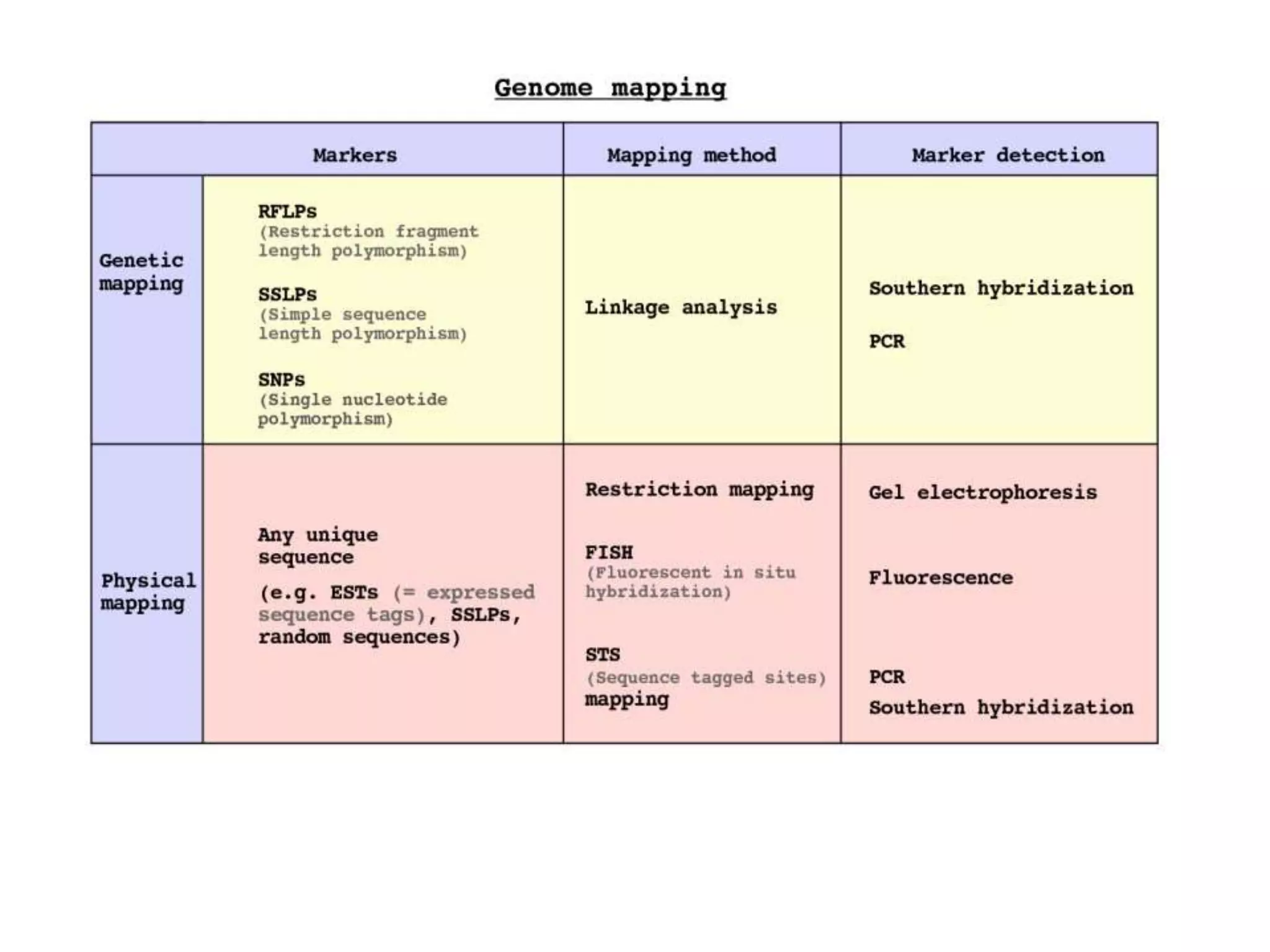
1. Genetic map 
2. Physical map
GENETIC MAP 
 Describes the order of genes or other markers 
and the spacing between them on each 
chromosome. 
 Use of genetic markers. 
 DNA based marker can also serve as markers. 
 Value of genetic map is that an inherited 
disease can be located on the map. 
 Used to find the exact location of several 
important disease genes.
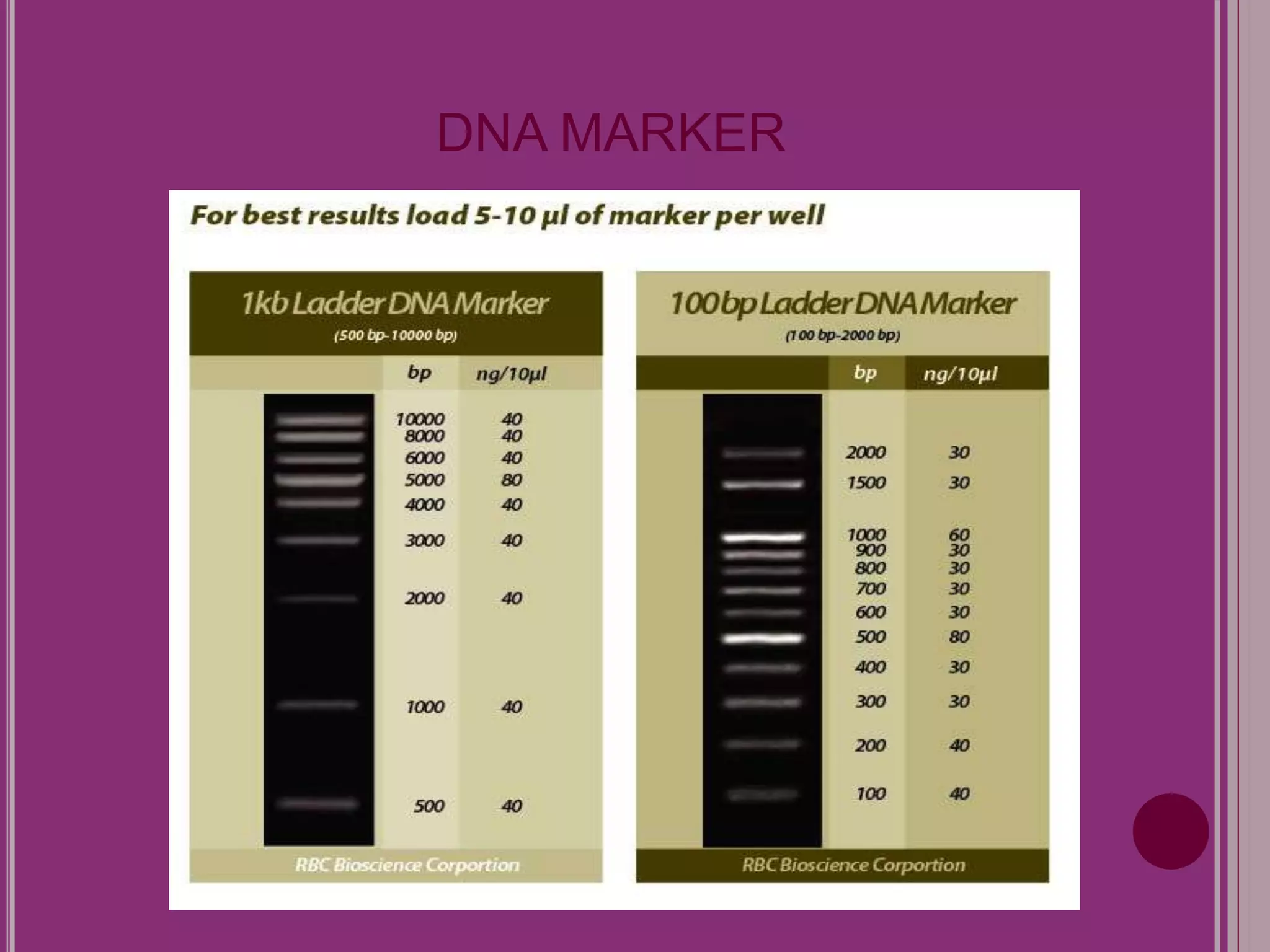
DNA MARKER
1. RFLPS (RESTRICTION FRAGMENT LENGTH 
POLYMORPHISMS): 
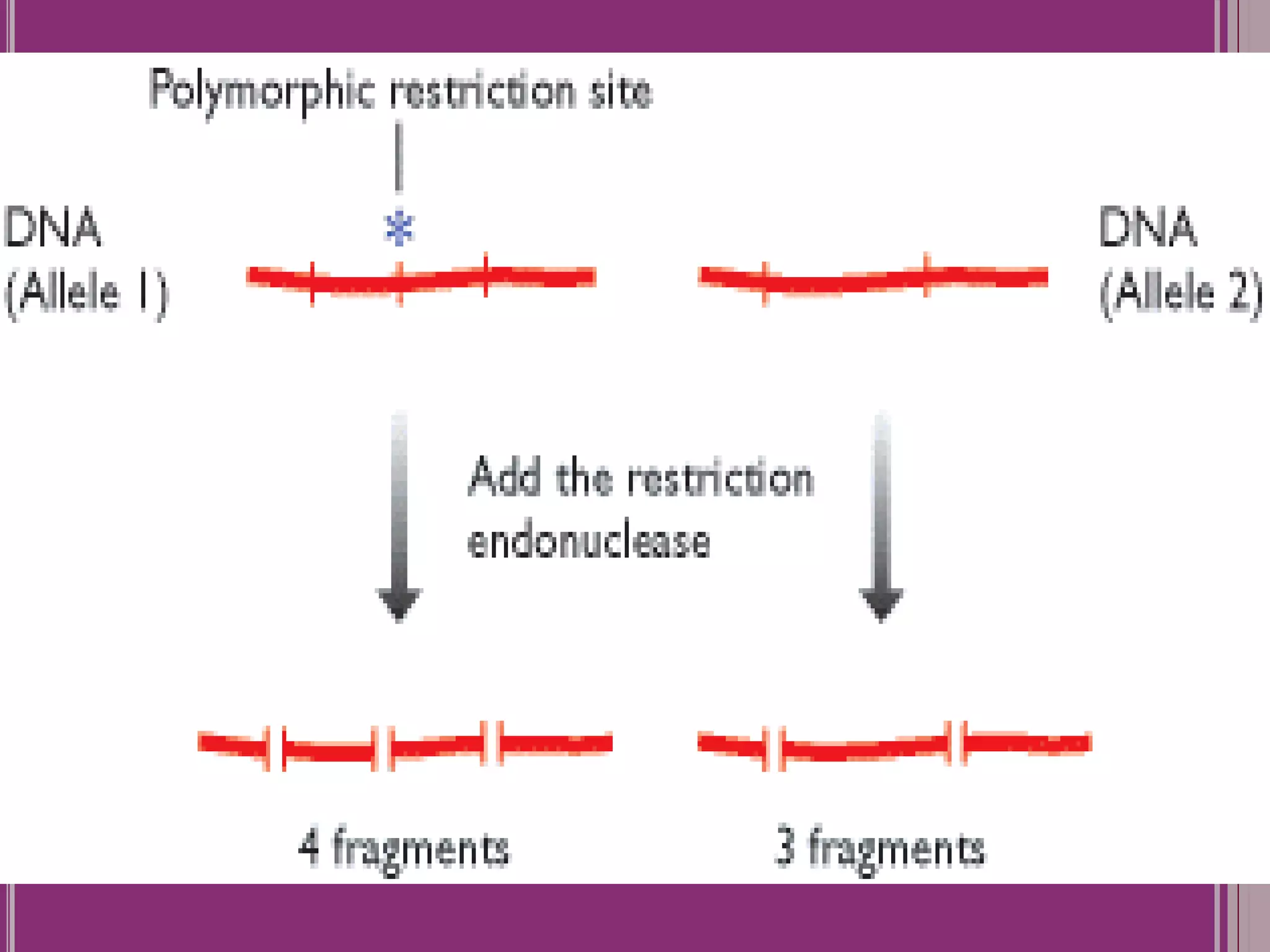
 Defined by the presence or absence of a 
specific site- restriction site. 
 If 2 related but different DNA molecules are 
cut with the same restriction enzymes, a 
segment of different lengths are produced. 
 And RFLP is the difference between two 
DNA sequences that affect a restriction site.
2. SIMPLE SEQUENCE LENGTH 
POLYMORPHISMS (SSLPS) 
 Arrays of repeat sequences that display length 
variations, different alleles containing different 
numbers of repeat units. 
 Two types of SSLP: 
I. Minisatellites:- 
 Also known as variable number of tandem 
repeats (VNTRs) 
 Defined by the presence of a nucleotide 
sequence that is repeated several times.
II. MICROSATELLITES 
 simple tandem repeats (STRs) 
 Whose repeats are shorter, usually dinucleotide or 
tetra nucleotide units. 
 Polymorphic because the number of repeats may 
vary. 
 Scored by determining their length by PCR. 
 Fragments are separated by electrophoresis. 
 Primers is labeled with fluorescent dye. 
 Human genome contains 5870 markers.
3. SNPS (SINGLE NUCLEOTIDE 
POLYMORPHISMS) 
Positions in a genome where some 
individuals have one nucleotide and others 
have a different nucleotide. 
Some of which also give rise to RFLPs. 
 In the human genome there are at least 
1.42 million SNPs, only 100 000 of which 
result in an RFLP.
LOD SCORE METHOD FOR ESTIMATING 
RECOMBINATION FREQUENCY 
 Imperfect pedigrees are analyzed statistically, using 
a measure called the lod score (Morton, 1955). 
 This stands for logarithm of the odds that the genes 
are linked and is used primarily to determine if the 
two markers being studied lie on the same 
chromosome. 
 If the LOD analysis establishes linkage then it can 
also provide a measure of the most likely 
recombination frequency.
THE LOD SCORE 
 Computerized LOD score analysis is a simple way to 
analyze complex family pedigrees in order to determine 
the linkage between a trait and a marker, or two 
markers. 
 The method briefly, works as follows: 
 Establish a pedigree 
 Make a number of estimates of recombination frequency 
 Calculate a LOD score for each estimate 
 The estimate with the highest LOD score will be 
considered the best estimate.
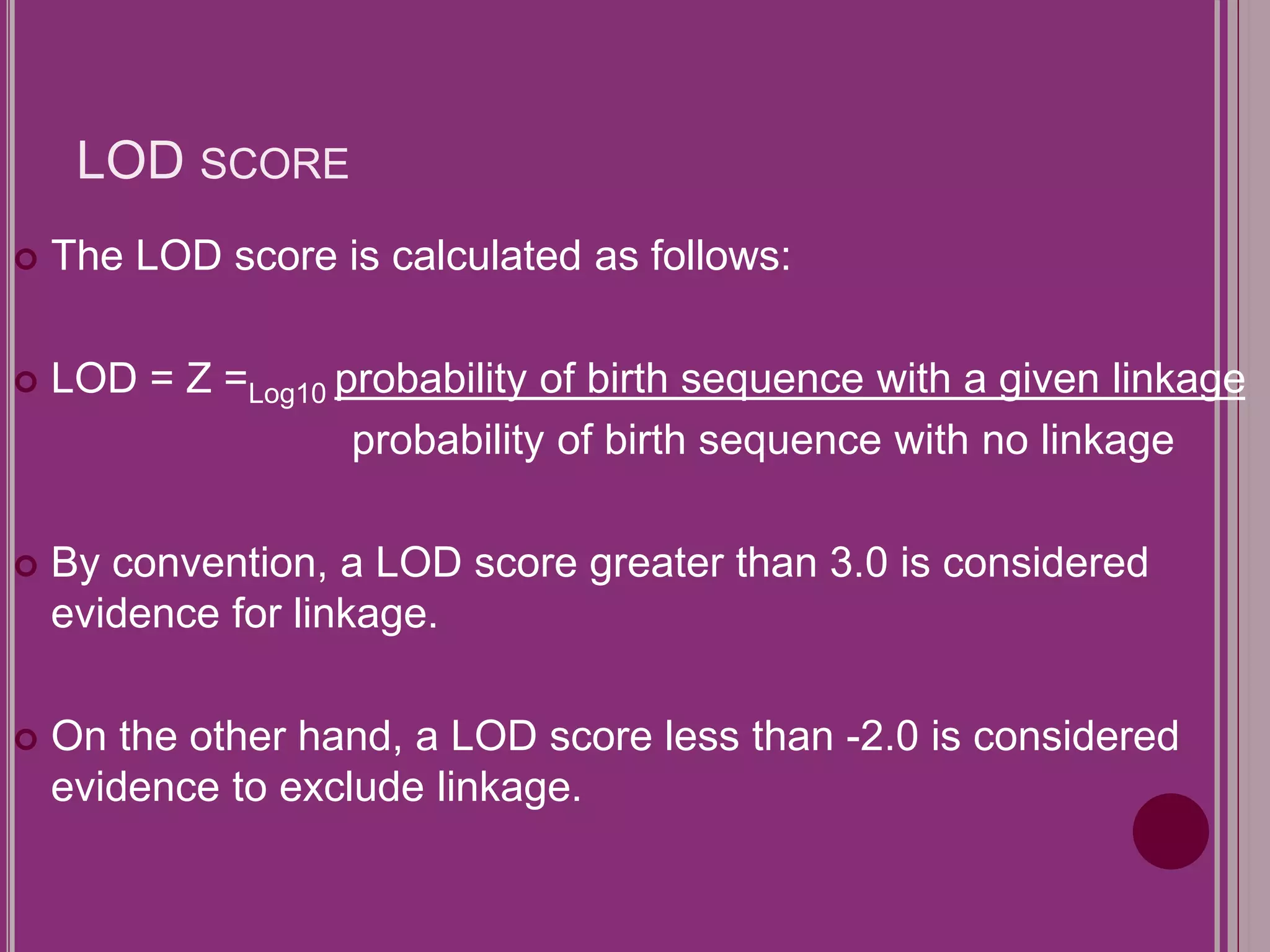
LOD SCORE 
 The LOD score is calculated as follows: 
 LOD = Z =Log10 probability of birth sequence with a given linkage 
probability of birth sequence with no linkage 
 By convention, a LOD score greater than 3.0 is considered 
evidence for linkage. 
 On the other hand, a LOD score less than -2.0 is considered 
evidence to exclude linkage.
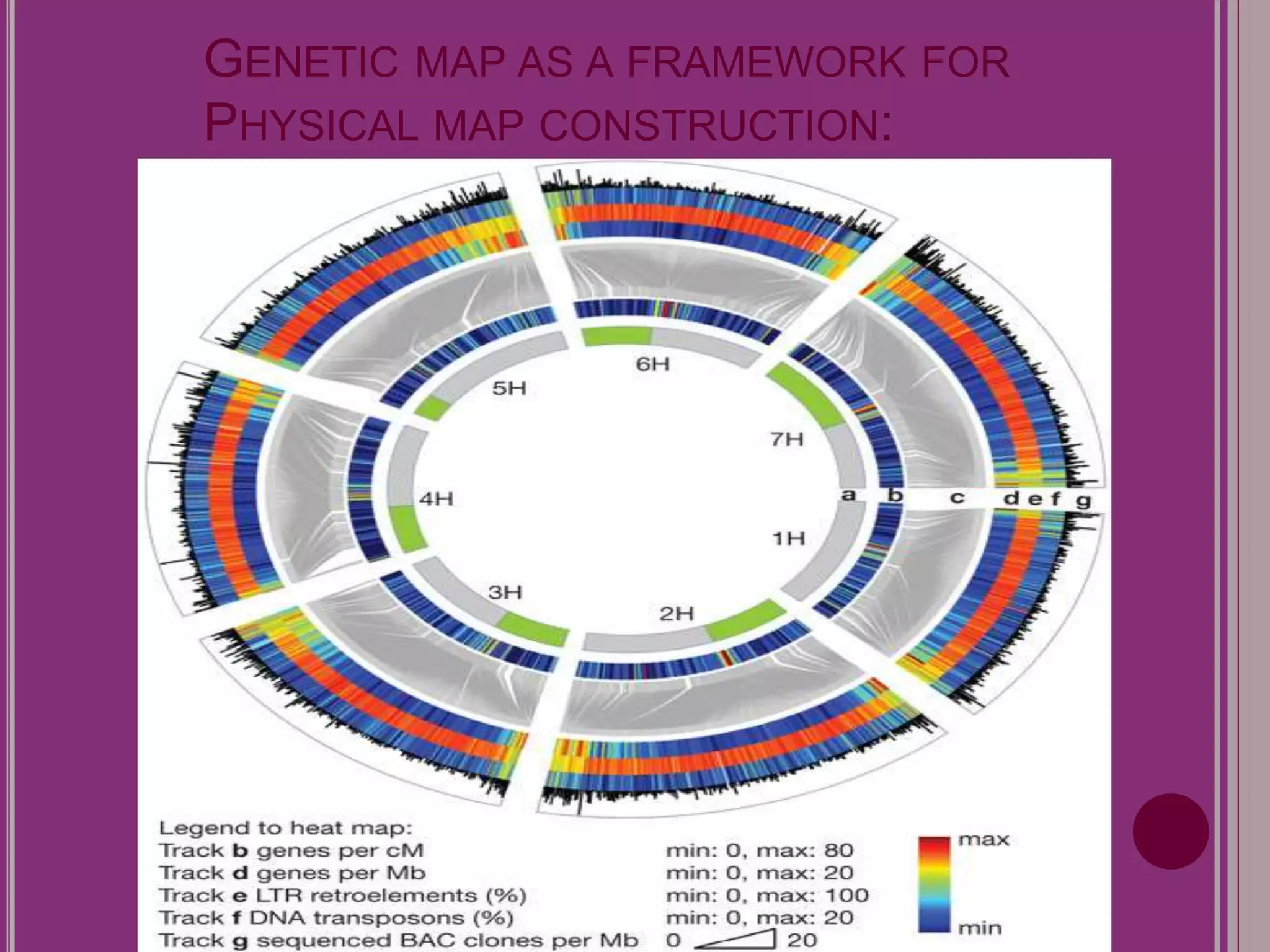
GENETIC MAP AS A FRAMEWORK FOR 
PHYSICAL MAP CONSTRUCTION:
PHYSICAL MAP 
 Determination of physical distance between 
two points on chromosome. 
 Distance in base pairs 
Example: between physical marker and a 
gene. 
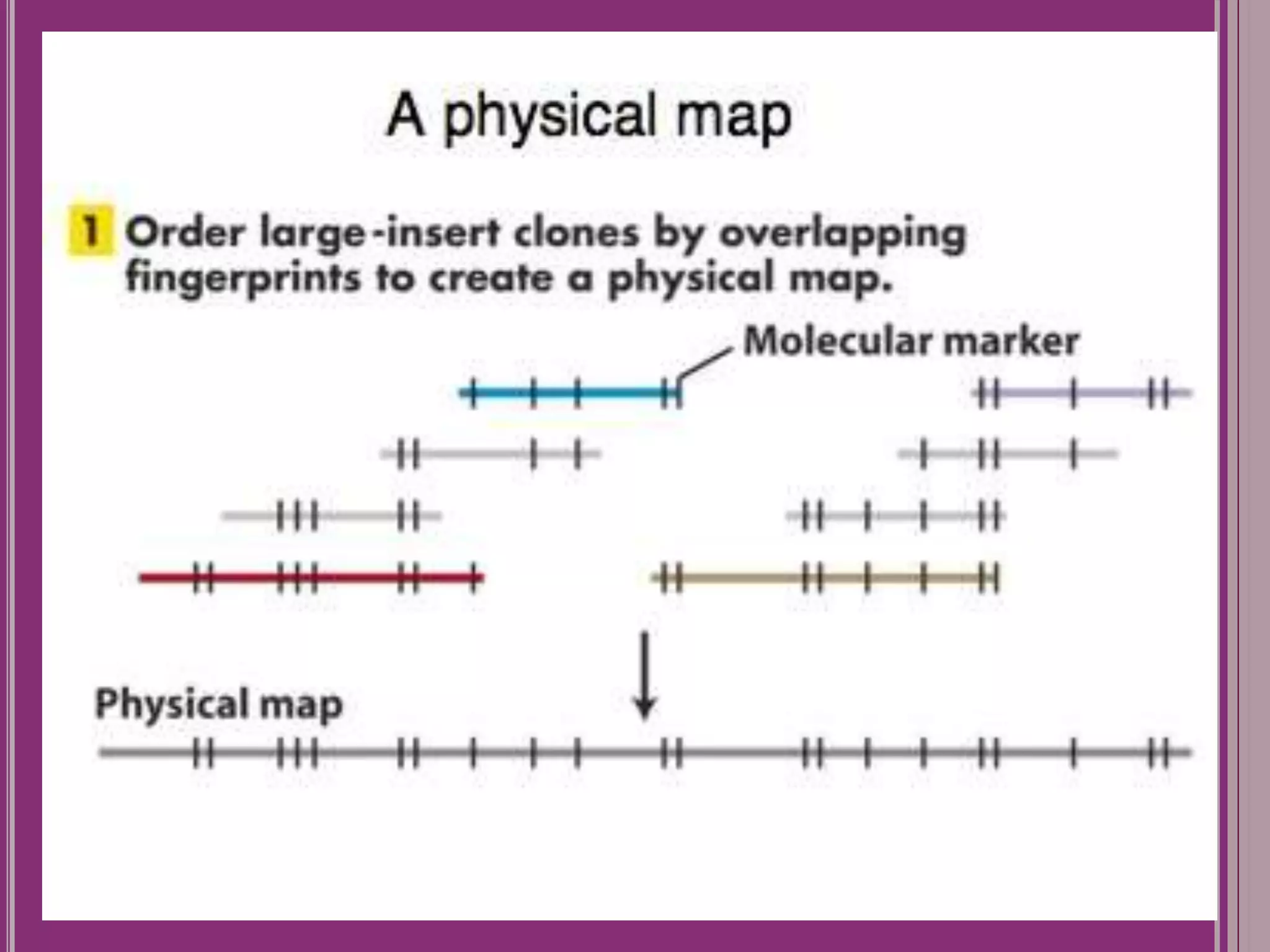
 Need overlapping fragments of DNA 
 Requires vectors that accommodate large inserts 
Examples: cosmids, YACs, and BACs
CONTD. 
 Divided into 2 groups: 
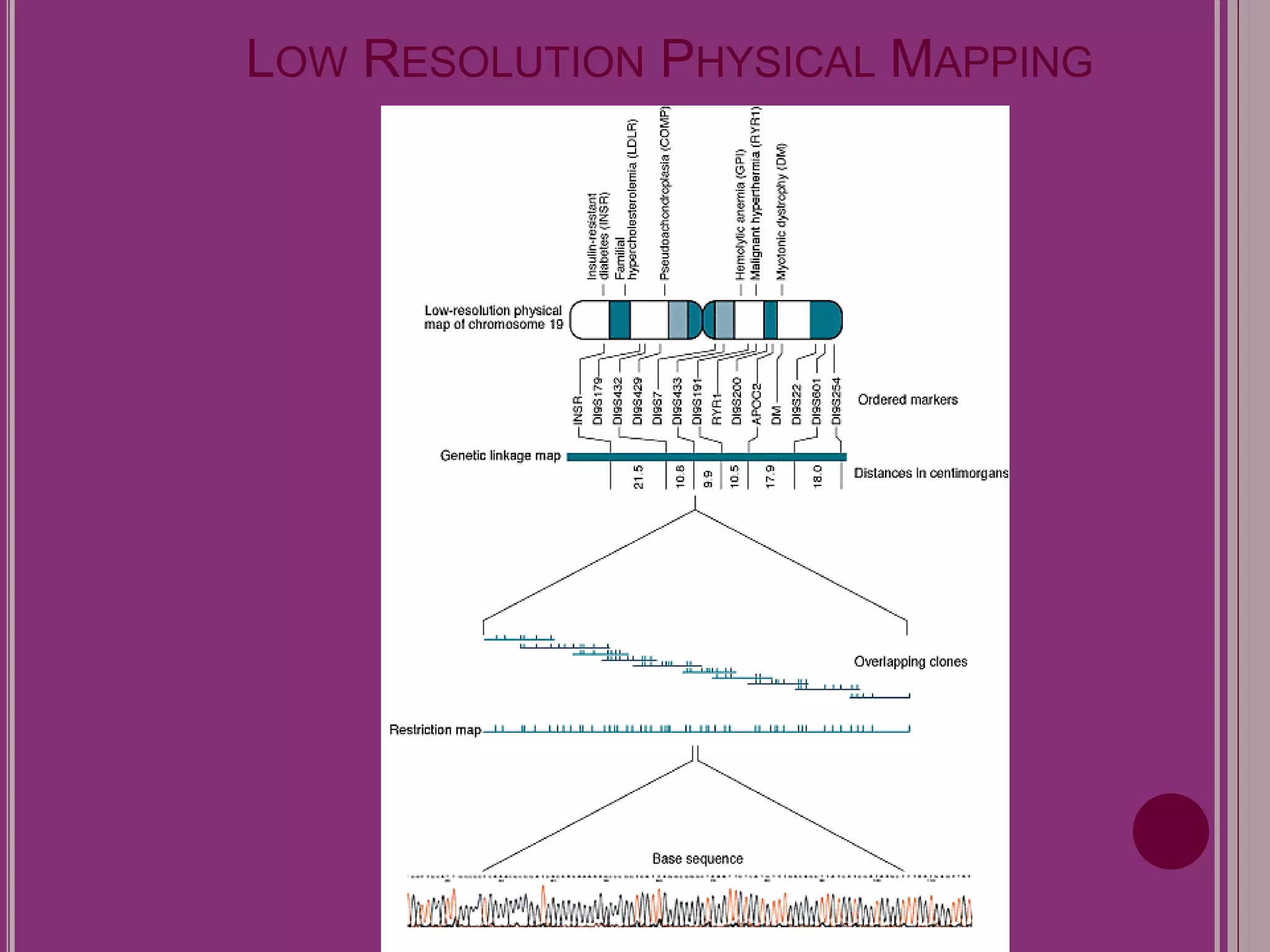
 Low Resolution Physical mapping: 
i. Cytogenetic map 
ii. cDNA map 
iii. Contig map 
 High Resolution Physical mapping: 
i. Macrorestriction map 
ii. RH mapping 
iii. Sequence map
LOW RESOLUTION PHYSICAL MAPPING
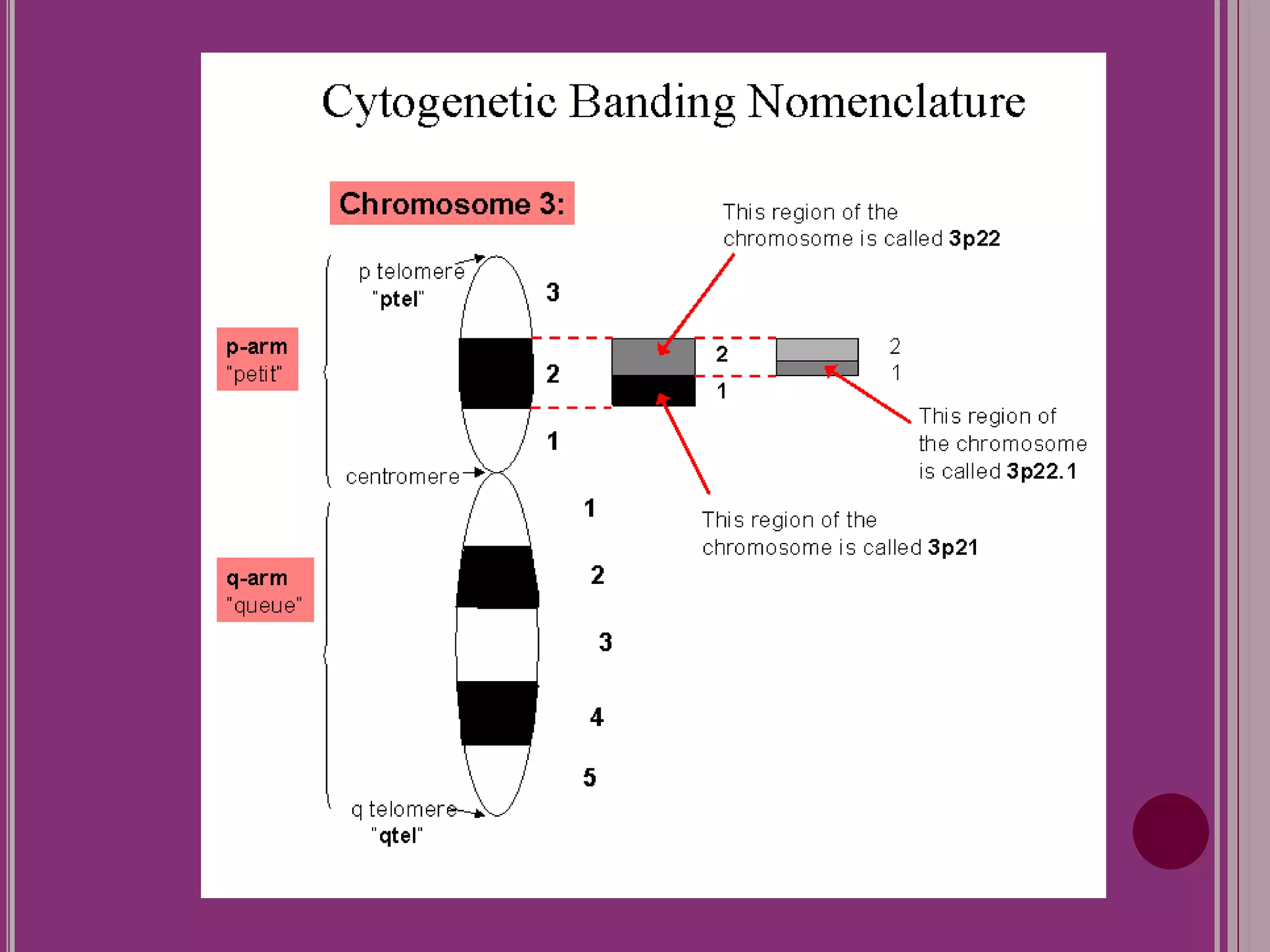
1. CYTOGENETIC MAP 
 Chromosomal mapping. 
Genes or other identifiable DNA fragments 
are assigned to their respective 
chromosome. 
 Based on the distinctive banding patterns. 
 Used to locate genetic markers.
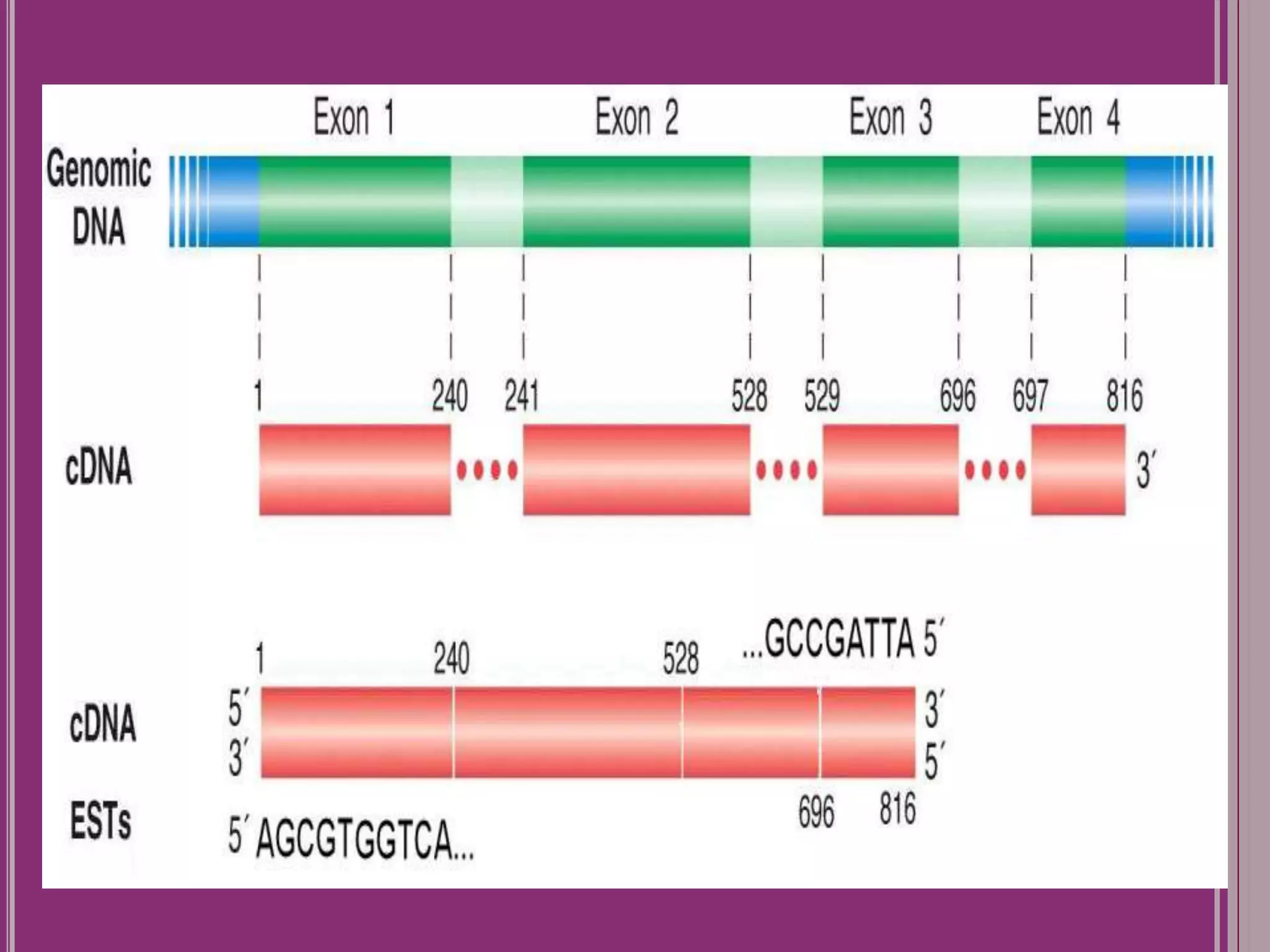
2. CDNA MAP 
 Shows the position of expressed DNA 
regions. 
 Synthesized in the laboratory using mRNA 
as a template. 
 Can be mapped to genomic regions. 
 Provide the chromosomal location of the 
genes whose functions are currently 
unknown.
3. CONTIG MAPS 
 Bottom up mapping. 
 Involves cutting the chromosome into small pieces. 
 Can be verified by FISH which localizes cosmids to 
specific regions within chromosomal bands. 
 Consist of a linked library of small overlapping 
clones.
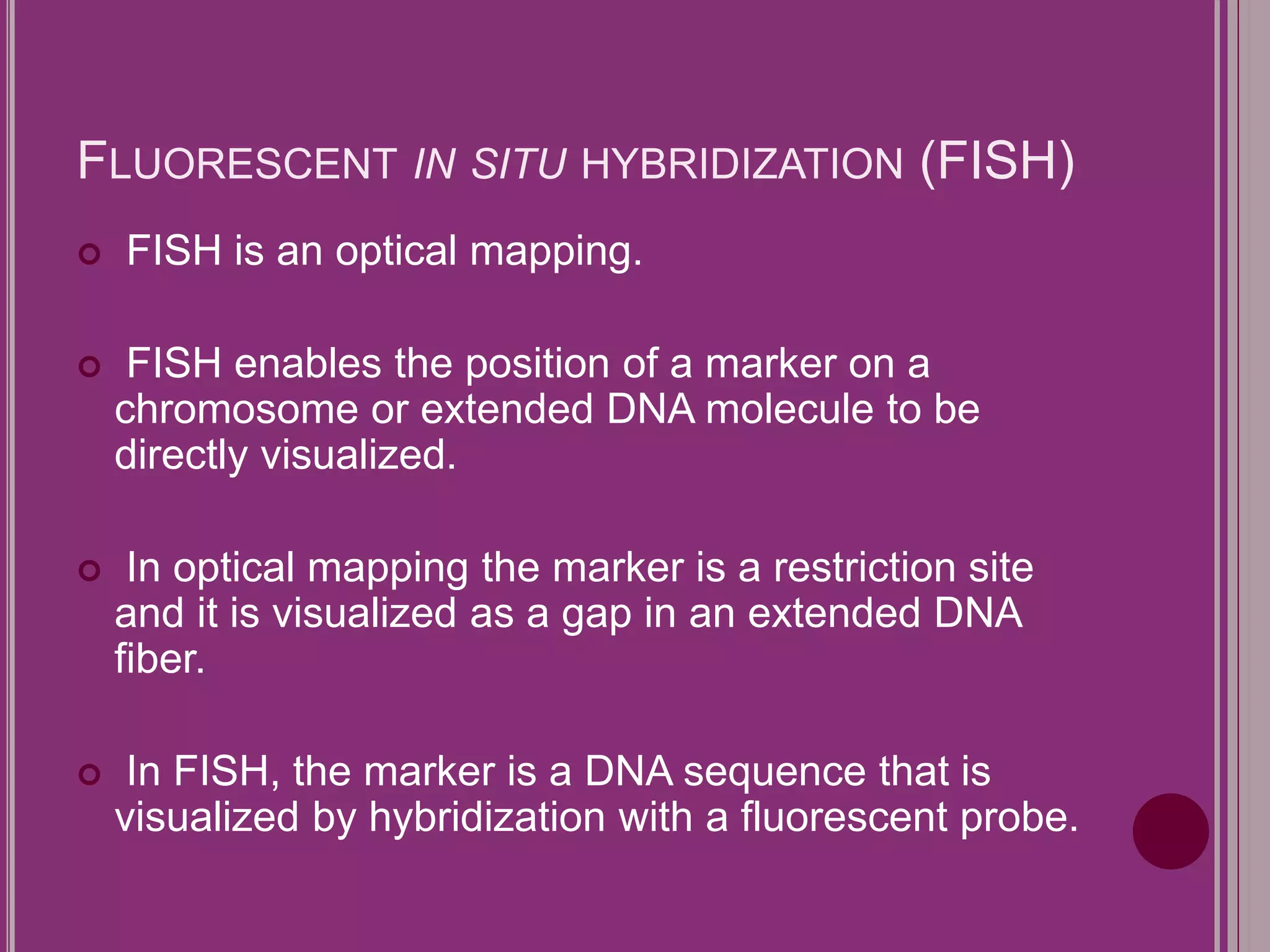
FLUORESCENT IN SITU HYBRIDIZATION (FISH) 
 FISH is an optical mapping. 
 FISH enables the position of a marker on a 
chromosome or extended DNA molecule to be 
directly visualized. 
 In optical mapping the marker is a restriction site 
and it is visualized as a gap in an extended DNA 
fiber. 
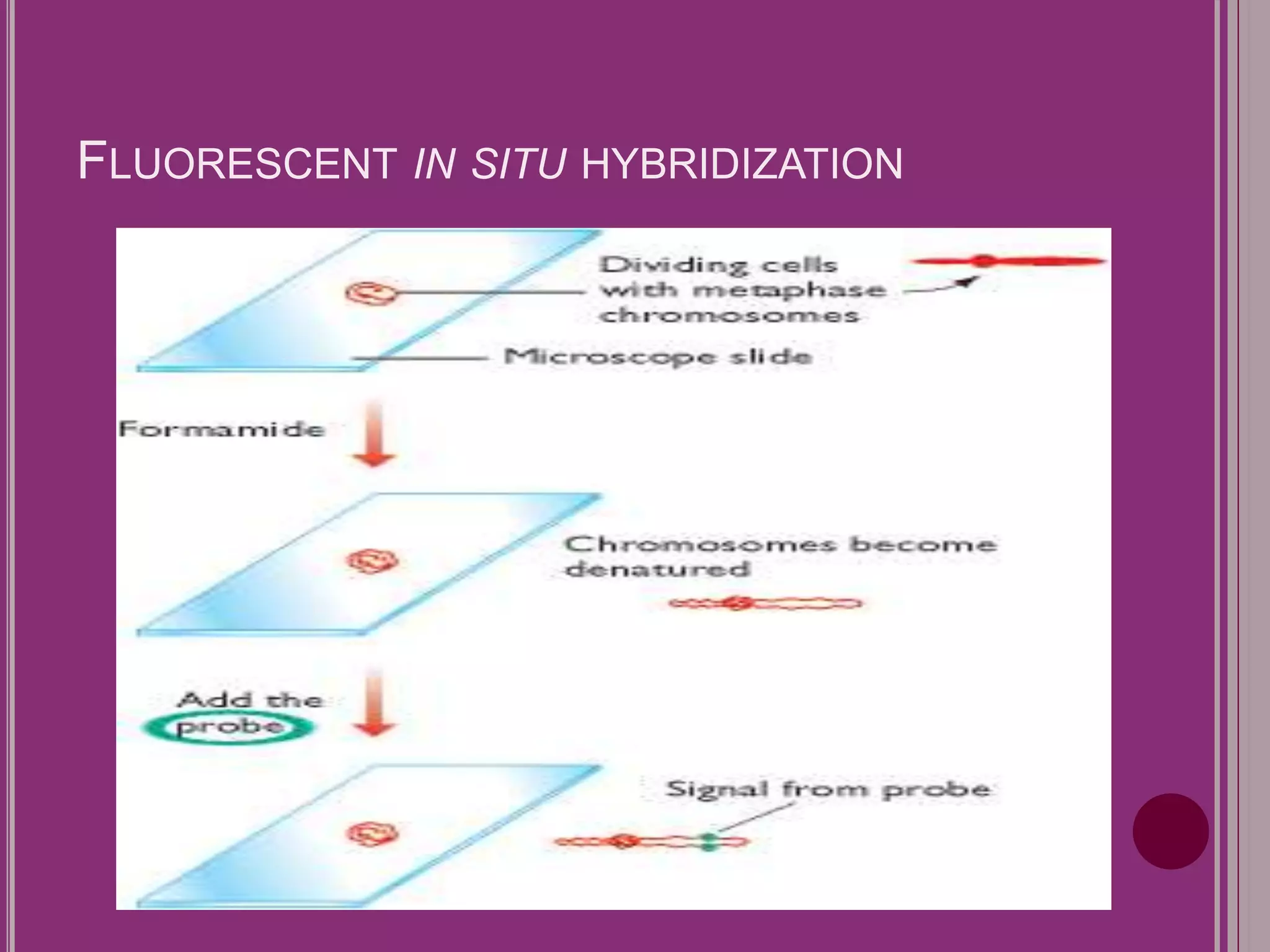
 In FISH, the marker is a DNA sequence that is 
visualized by hybridization with a fluorescent probe.
FLUORESCENT IN SITU HYBRIDIZATION
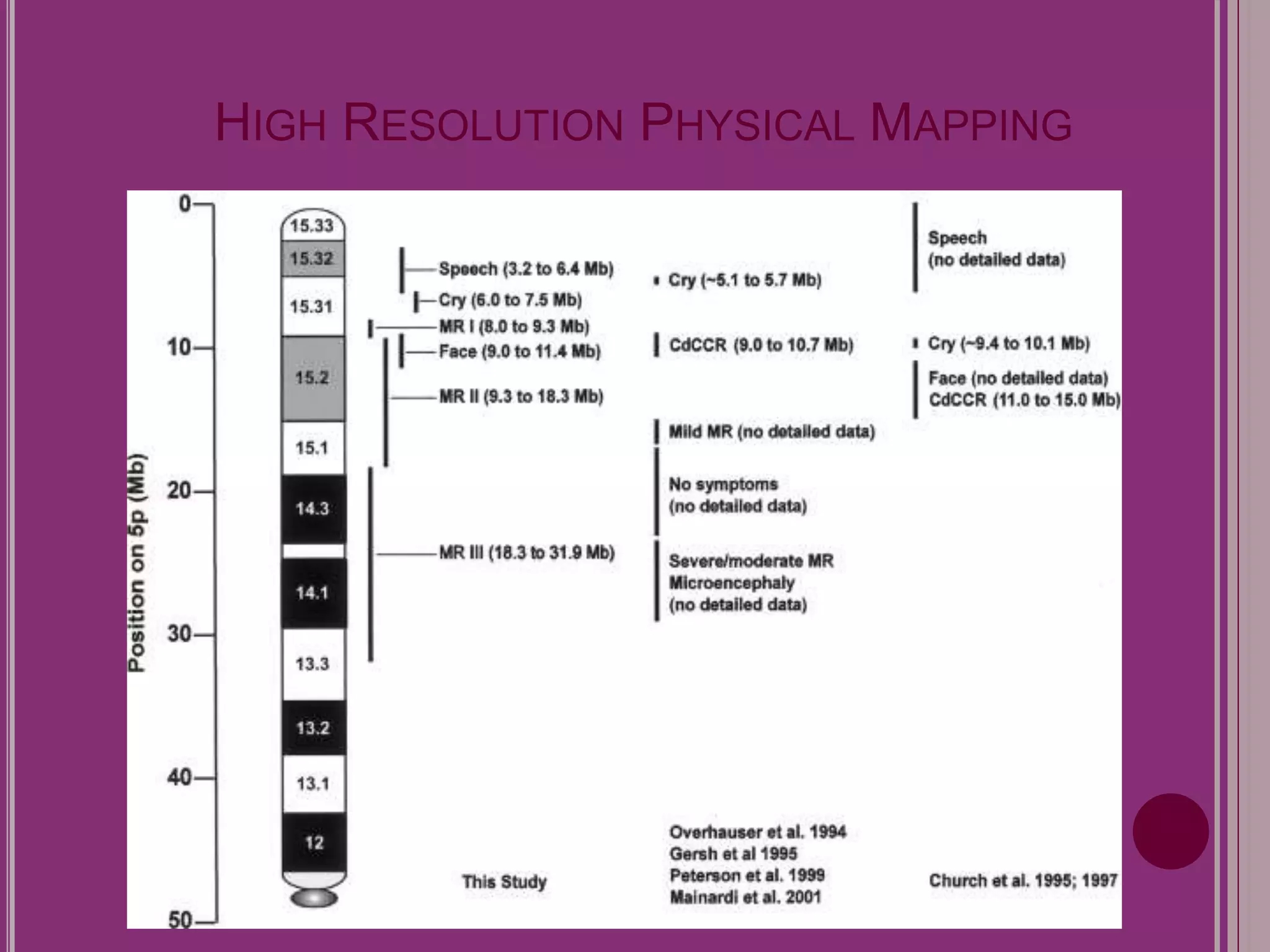
HIGH RESOLUTION PHYSICAL MAPPING
1. MACRORESTRICTION MAPS 
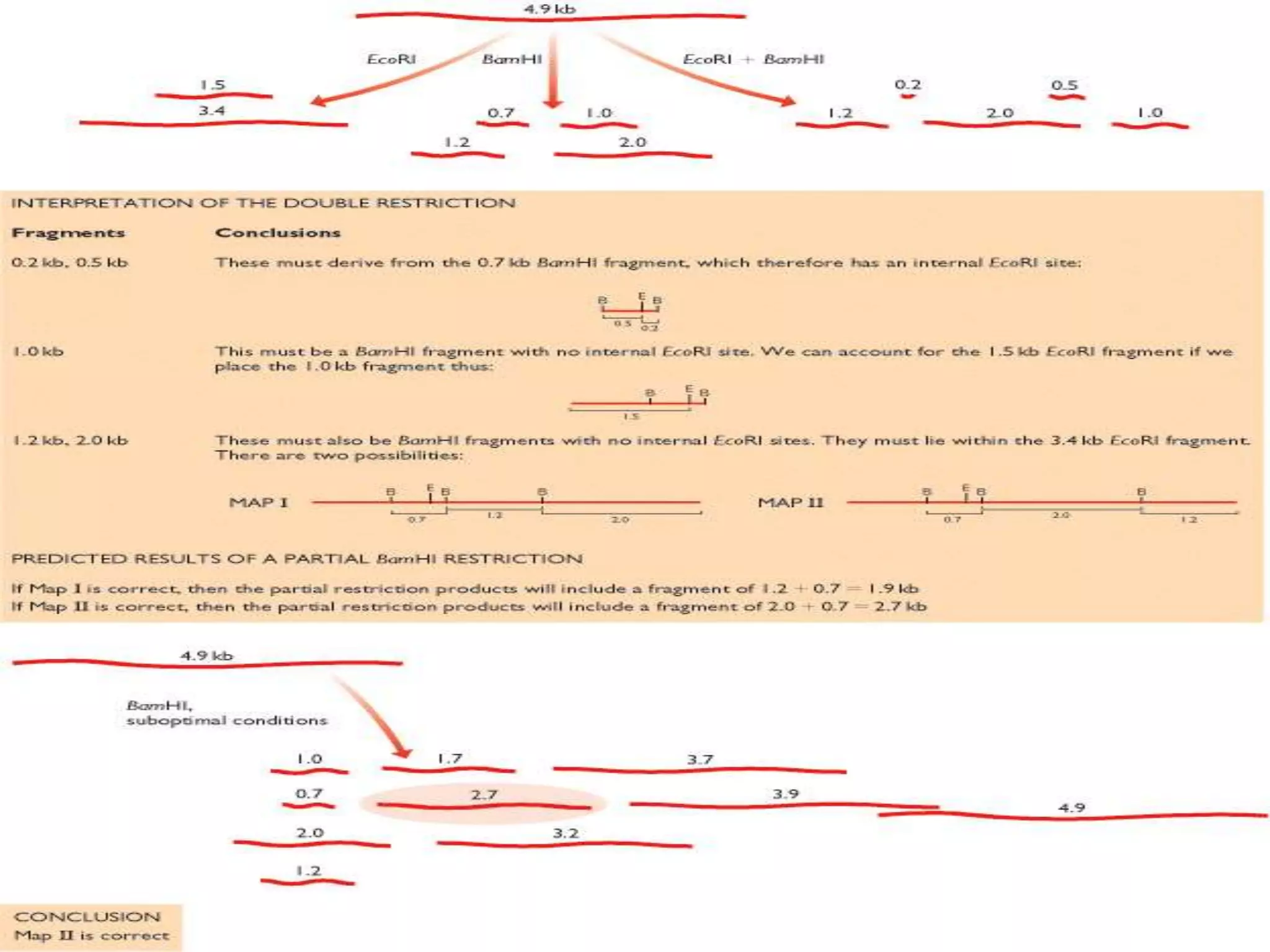
 Single chromosome is cut into large pieces. 
 Depicts the order of and distance between 
sites at which rare- cutter enzymes cleave. 
 Simplest way to construct is to compare the 
fragment sizes. 
 The scale of restriction mapping limited by 
the sizes of the restriction fragments.
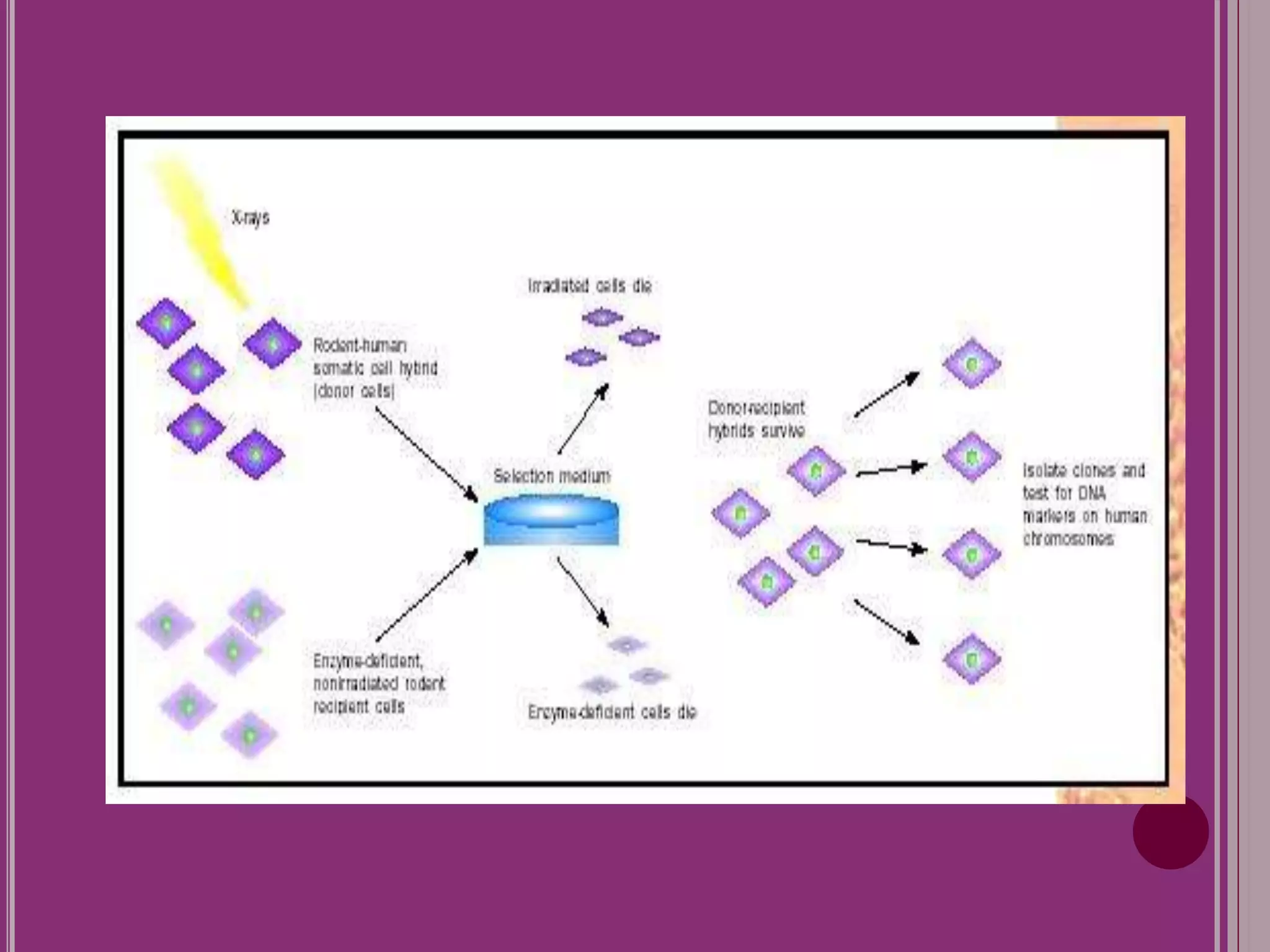
2. RADIATION HYBRID MAPPING 
 Shows an estimated distance between genetic 
markers. 
 A scientist exposes DNA to measure doses of 
radiation. 
 Useful for ordering markers in regions where highly 
polymorphic genetic markers are scarce. 
 Bridge between linkage map and sequence maps.
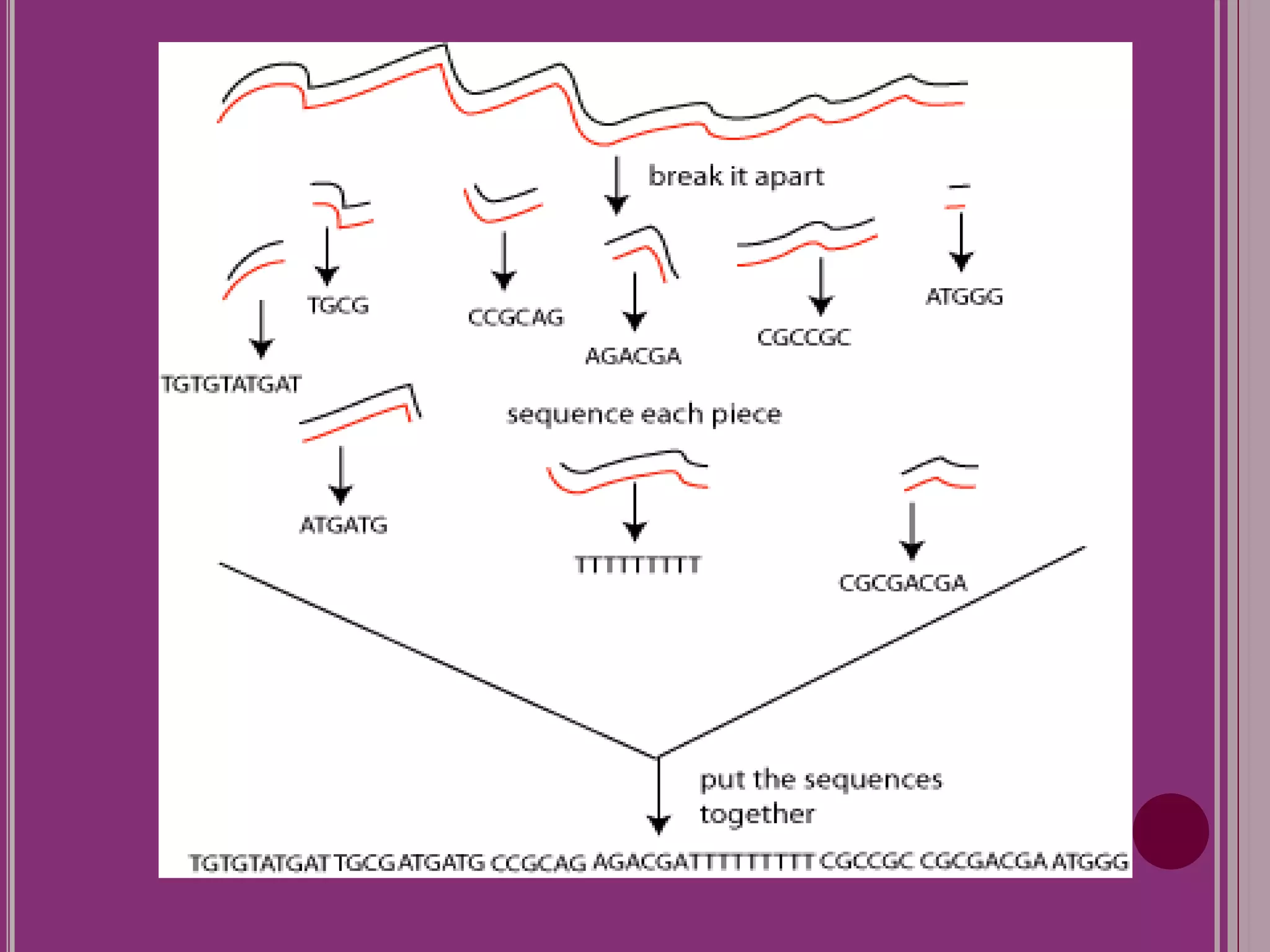
3. SEQUENCE MAPPING 
 Sequence tagged site (STS) mapping. 
 Short sequence of DNA. 
 Exact location and order of the bases of 
sequence must be known. 
May occur only once in the chromosome.
COMMON SOURCES OF STS
I. EXPRESSED SEQUENCE TAGS(ESTS) 
 Obtained by analysis of cDNA clones. 
cDNA is prepared by converting mRNA into 
double stranded DNA. 
 Thought to represent the sequences of the 
genes being expressed.
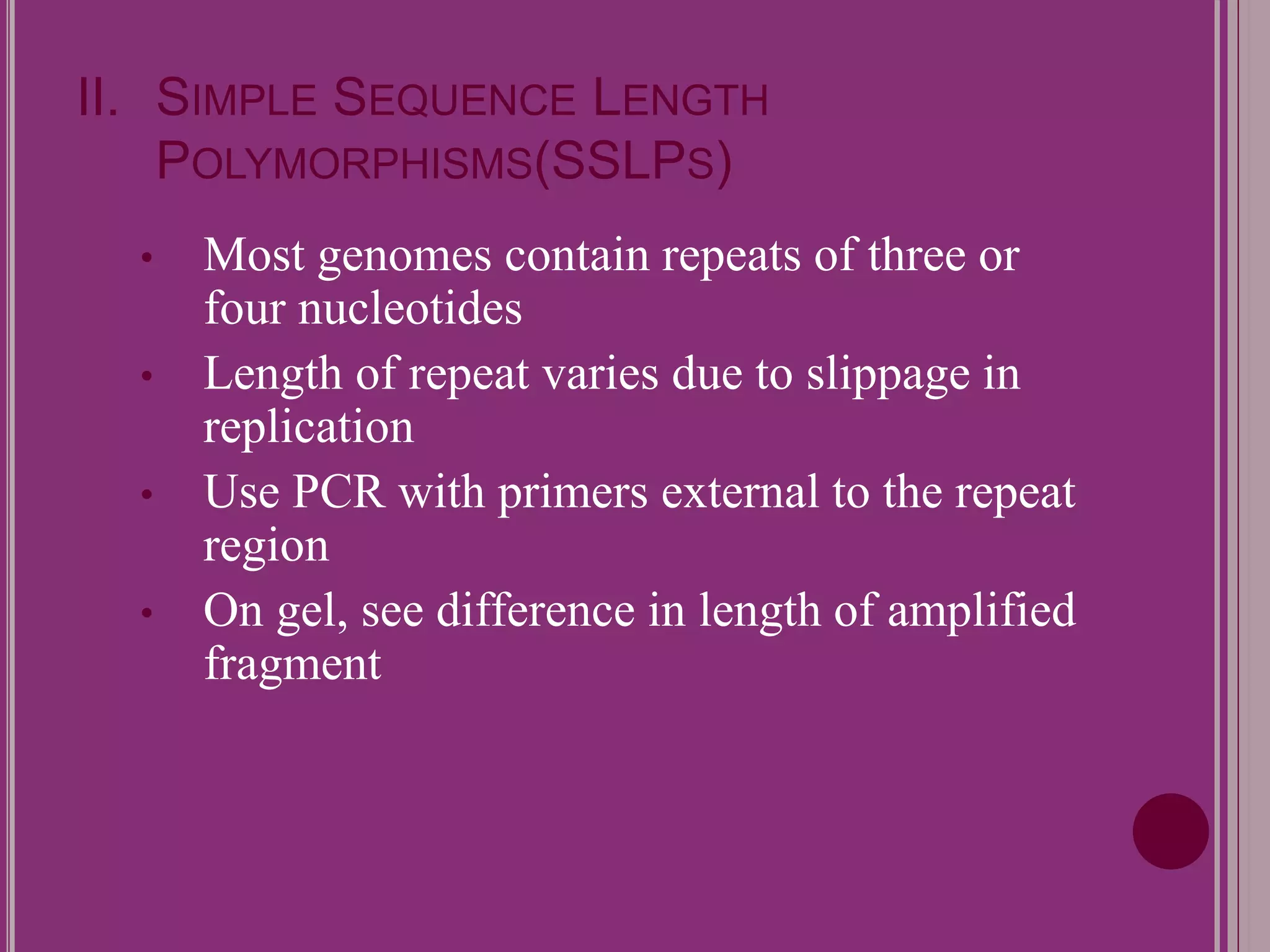
II. SIMPLE SEQUENCE LENGTH 
POLYMORPHISMS(SSLPS) 
• Most genomes contain repeats of three or 
four nucleotides 
• Length of repeat varies due to slippage in 
replication 
• Use PCR with primers external to the repeat 
region 
• On gel, see difference in length of amplified 
fragment
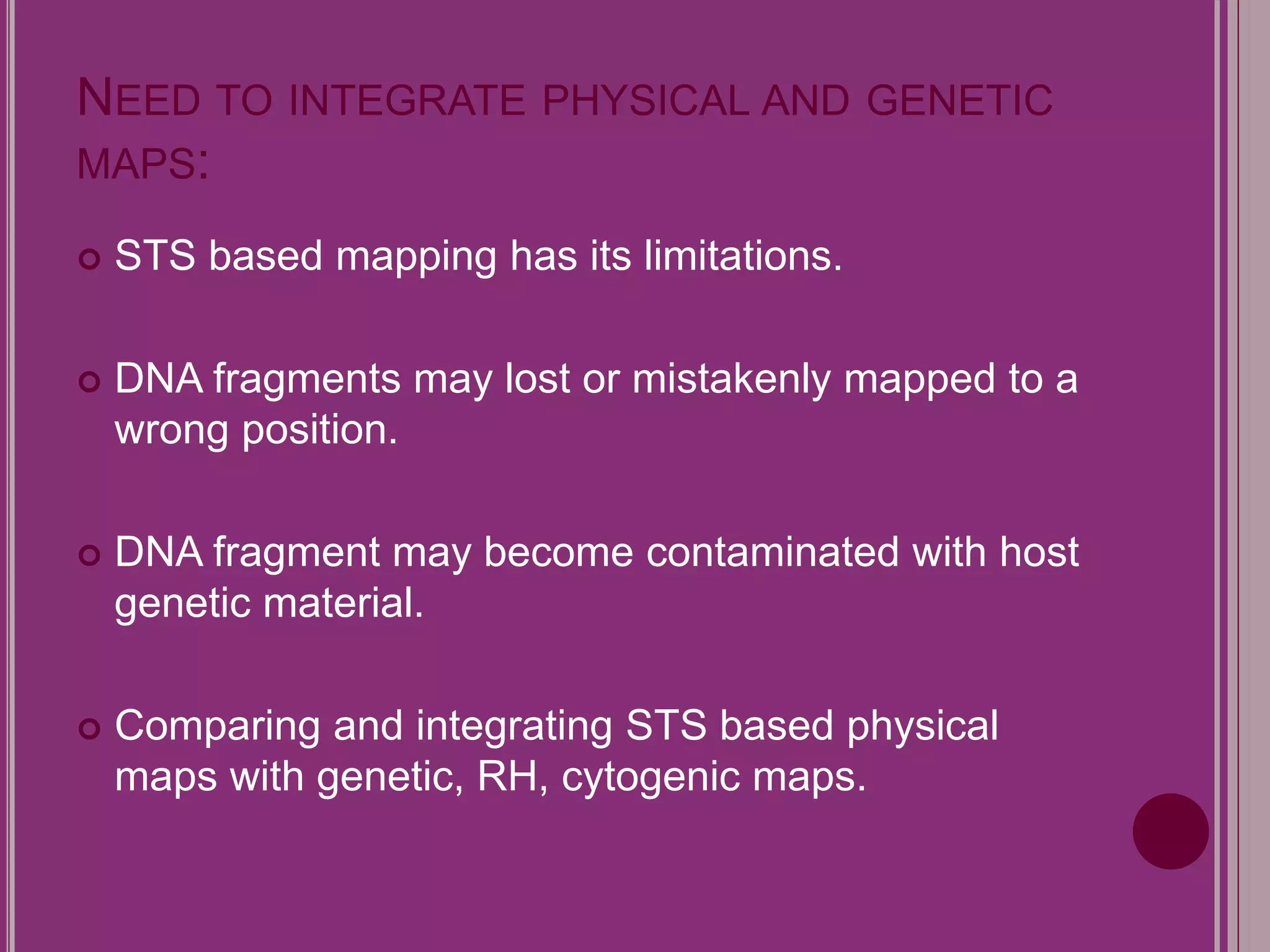
NEED TO INTEGRATE PHYSICAL AND GENETIC 
MAPS: 
 STS based mapping has its limitations. 
 DNA fragments may lost or mistakenly mapped to a 
wrong position. 
 DNA fragment may become contaminated with host 
genetic material. 
 Comparing and integrating STS based physical 
maps with genetic, RH, cytogenic maps.
CONTD 
 Ultimate objective of human genome was to 
complete DNA sequence for the organism. 
 In order to locate genes and other interesting 
features. 
 So in order to master sequence of chromosome 
involves several sequencing method: 
1. Sequence assembly by clone Contig method. 
2. Whole genome Shotgun sequencing.
1. SEQUENCE ASSEMBLY BY THE CLONE 
CONTIG METHOD: 
 Conventional method for obtaining sequence of a 
eukaryotic genome. 
 Genomes are broken into fragments of upto 1.5 Mb 
in length. 
 Built up by identifying clones containing overlapping 
fragments.
2. WHOLE GENOME SHOTGUN SEQUENCING 
 Uses a map to aid assembly of the master 
sequence 
 Used to speed up the acquisition of contig 
sequence data for large genomes such as human 
genome. 
 At least two libraries are used.
MAPPING PHASE OF THE HUMAN GENOME 
PROJECT 
 Discovery of RFLPs. 
 In 1987 first human RFLP map was published. 
 Goal was a genetic map with density of one marker 
per 1 Mb. 
 The 1994 map contained 5800 markers of which 
over 4000 were SSLPs.
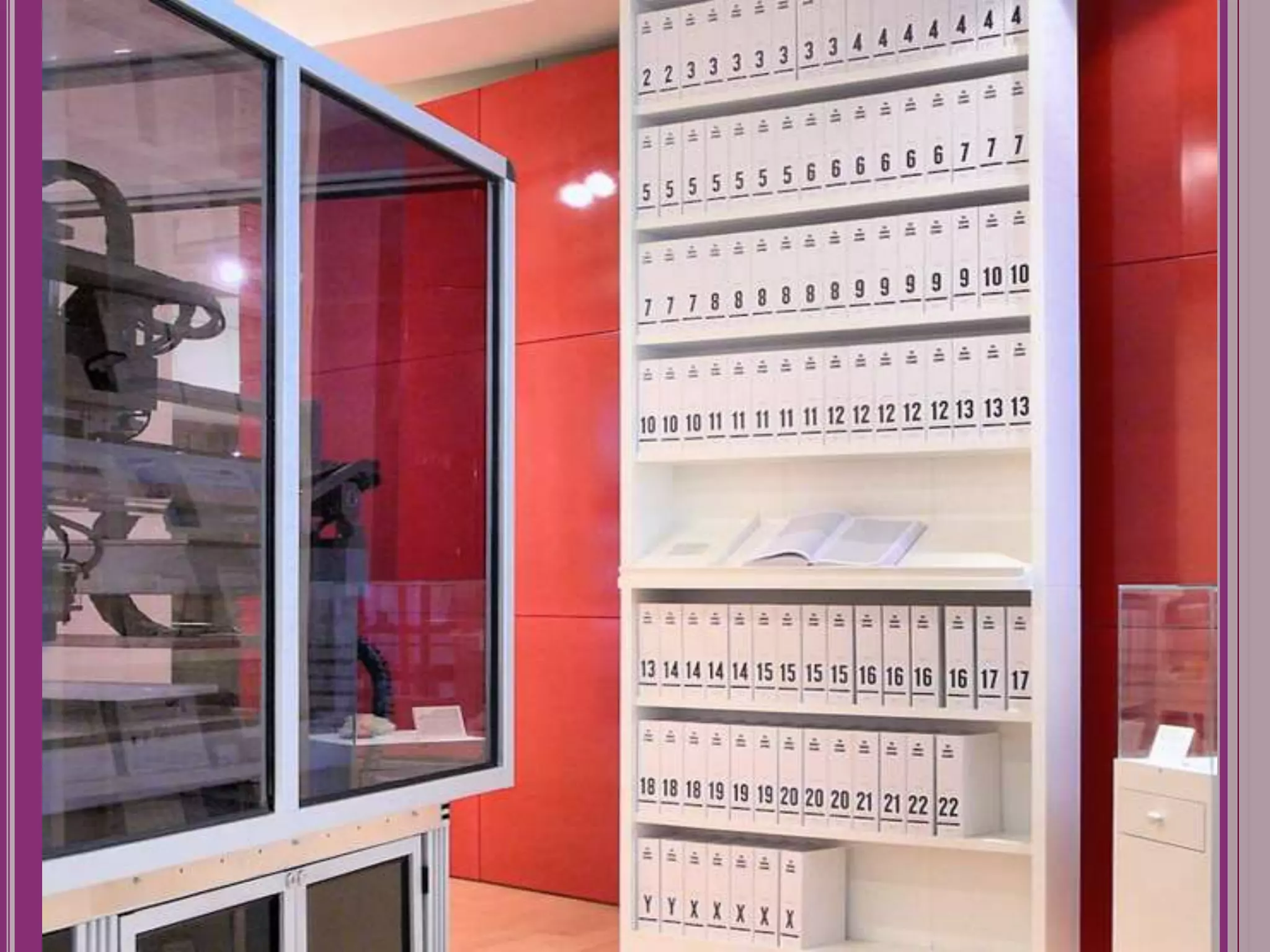
SEQUENCING THE HUMAN GENOME 
 The whole genome shotgun was first proposed as 
an alternative to contig method. 
 The first draft sequence of an entire human 
chromosome (22) was published in December 
1991. 
 Finally on June 26, 2000 Francis Collins and Craig 
Venter jointly announced the completion of project.
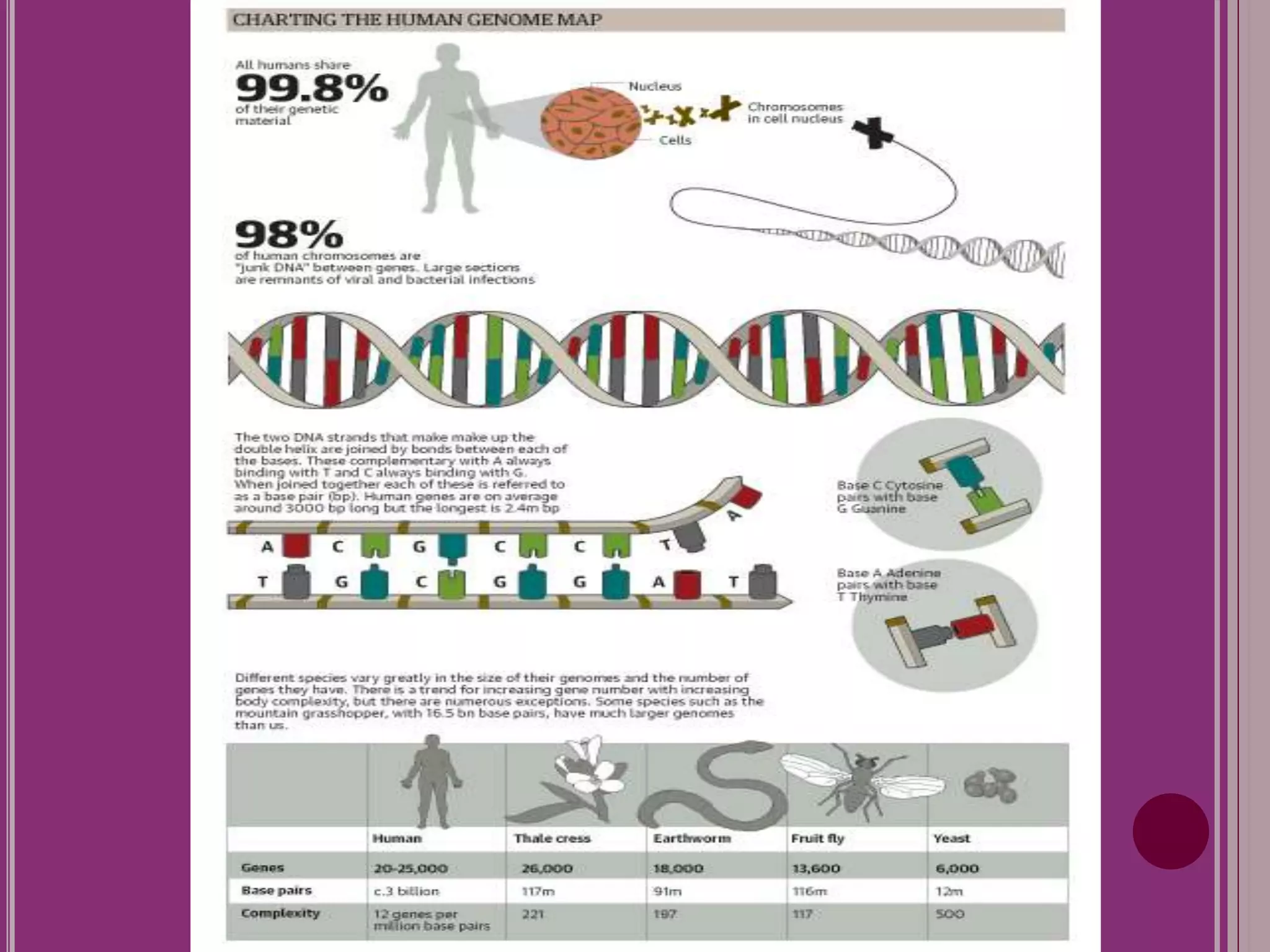
HUMAN GENOME 
 Contains about 20,000 to 30,000 genes. 
 Only 1-2% is coding region. 
 Rest are “junk DNA”. 
 Some sections of the human genome have a 
sequence almost exactly the same as equivalent 
sections in other vertebrates .
FUTURE OF THE HUMAN GENOME PROJECT 
 Completion of a finished sequence is not only the 
goal. 
 Use of comparative genomics. 
 Direct development of new drugs and therapies 
against cancer and other diseases.
Construction of human gene map through map integration- from genetic map to physical map to sequence map

Construction of human gene map through map integration- from genetic map to physical map to sequence map

  • 1.
    CONSTRUCTION OF HUMANGENE MAP THROUGH MAP INTEGRATION- FROM GENETIC MAP TO PHYSICAL MAP TO SEQUENCE MAP Preety Sweta Hembrom M.Sc Genomic Science
  • 2.
    MAP INTEGRATION Mappingis identifying relationships between genes on chromosomes Two broad categories of map: 1. Genetic map 2. Physical map
  • 3.
    GENETIC MAP Describes the order of genes or other markers and the spacing between them on each chromosome.  Use of genetic markers.  DNA based marker can also serve as markers.  Value of genetic map is that an inherited disease can be located on the map.  Used to find the exact location of several important disease genes.
  • 4.
  • 5.
    1. RFLPS (RESTRICTIONFRAGMENT LENGTH POLYMORPHISMS):  Defined by the presence or absence of a specific site- restriction site.  If 2 related but different DNA molecules are cut with the same restriction enzymes, a segment of different lengths are produced.  And RFLP is the difference between two DNA sequences that affect a restriction site.
  • 7.
    2. SIMPLE SEQUENCELENGTH POLYMORPHISMS (SSLPS)  Arrays of repeat sequences that display length variations, different alleles containing different numbers of repeat units.  Two types of SSLP: I. Minisatellites:-  Also known as variable number of tandem repeats (VNTRs)  Defined by the presence of a nucleotide sequence that is repeated several times.
  • 8.
    II. MICROSATELLITES simple tandem repeats (STRs)  Whose repeats are shorter, usually dinucleotide or tetra nucleotide units.  Polymorphic because the number of repeats may vary.  Scored by determining their length by PCR.  Fragments are separated by electrophoresis.  Primers is labeled with fluorescent dye.  Human genome contains 5870 markers.
  • 9.
    3. SNPS (SINGLENUCLEOTIDE POLYMORPHISMS) Positions in a genome where some individuals have one nucleotide and others have a different nucleotide. Some of which also give rise to RFLPs.  In the human genome there are at least 1.42 million SNPs, only 100 000 of which result in an RFLP.
  • 10.
    LOD SCORE METHODFOR ESTIMATING RECOMBINATION FREQUENCY  Imperfect pedigrees are analyzed statistically, using a measure called the lod score (Morton, 1955).  This stands for logarithm of the odds that the genes are linked and is used primarily to determine if the two markers being studied lie on the same chromosome.  If the LOD analysis establishes linkage then it can also provide a measure of the most likely recombination frequency.
  • 11.
    THE LOD SCORE  Computerized LOD score analysis is a simple way to analyze complex family pedigrees in order to determine the linkage between a trait and a marker, or two markers.  The method briefly, works as follows:  Establish a pedigree  Make a number of estimates of recombination frequency  Calculate a LOD score for each estimate  The estimate with the highest LOD score will be considered the best estimate.
  • 12.
    LOD SCORE The LOD score is calculated as follows:  LOD = Z =Log10 probability of birth sequence with a given linkage probability of birth sequence with no linkage  By convention, a LOD score greater than 3.0 is considered evidence for linkage.  On the other hand, a LOD score less than -2.0 is considered evidence to exclude linkage.
  • 13.
    GENETIC MAP ASA FRAMEWORK FOR PHYSICAL MAP CONSTRUCTION:
  • 14.
    PHYSICAL MAP Determination of physical distance between two points on chromosome.  Distance in base pairs Example: between physical marker and a gene.  Need overlapping fragments of DNA  Requires vectors that accommodate large inserts Examples: cosmids, YACs, and BACs
  • 16.
    CONTD.  Dividedinto 2 groups:  Low Resolution Physical mapping: i. Cytogenetic map ii. cDNA map iii. Contig map  High Resolution Physical mapping: i. Macrorestriction map ii. RH mapping iii. Sequence map
  • 17.
  • 18.
    1. CYTOGENETIC MAP  Chromosomal mapping. Genes or other identifiable DNA fragments are assigned to their respective chromosome.  Based on the distinctive banding patterns.  Used to locate genetic markers.
  • 20.
    2. CDNA MAP  Shows the position of expressed DNA regions.  Synthesized in the laboratory using mRNA as a template.  Can be mapped to genomic regions.  Provide the chromosomal location of the genes whose functions are currently unknown.
  • 21.
    3. CONTIG MAPS  Bottom up mapping.  Involves cutting the chromosome into small pieces.  Can be verified by FISH which localizes cosmids to specific regions within chromosomal bands.  Consist of a linked library of small overlapping clones.
  • 22.
    FLUORESCENT IN SITUHYBRIDIZATION (FISH)  FISH is an optical mapping.  FISH enables the position of a marker on a chromosome or extended DNA molecule to be directly visualized.  In optical mapping the marker is a restriction site and it is visualized as a gap in an extended DNA fiber.  In FISH, the marker is a DNA sequence that is visualized by hybridization with a fluorescent probe.
  • 23.
    FLUORESCENT IN SITUHYBRIDIZATION
  • 24.
  • 25.
    1. MACRORESTRICTION MAPS  Single chromosome is cut into large pieces.  Depicts the order of and distance between sites at which rare- cutter enzymes cleave.  Simplest way to construct is to compare the fragment sizes.  The scale of restriction mapping limited by the sizes of the restriction fragments.
  • 27.
    2. RADIATION HYBRIDMAPPING  Shows an estimated distance between genetic markers.  A scientist exposes DNA to measure doses of radiation.  Useful for ordering markers in regions where highly polymorphic genetic markers are scarce.  Bridge between linkage map and sequence maps.
  • 29.
    3. SEQUENCE MAPPING  Sequence tagged site (STS) mapping.  Short sequence of DNA.  Exact location and order of the bases of sequence must be known. May occur only once in the chromosome.
  • 31.
  • 32.
    I. EXPRESSED SEQUENCETAGS(ESTS)  Obtained by analysis of cDNA clones. cDNA is prepared by converting mRNA into double stranded DNA.  Thought to represent the sequences of the genes being expressed.
  • 34.
    II. SIMPLE SEQUENCELENGTH POLYMORPHISMS(SSLPS) • Most genomes contain repeats of three or four nucleotides • Length of repeat varies due to slippage in replication • Use PCR with primers external to the repeat region • On gel, see difference in length of amplified fragment
  • 36.
    NEED TO INTEGRATEPHYSICAL AND GENETIC MAPS:  STS based mapping has its limitations.  DNA fragments may lost or mistakenly mapped to a wrong position.  DNA fragment may become contaminated with host genetic material.  Comparing and integrating STS based physical maps with genetic, RH, cytogenic maps.
  • 37.
    CONTD  Ultimateobjective of human genome was to complete DNA sequence for the organism.  In order to locate genes and other interesting features.  So in order to master sequence of chromosome involves several sequencing method: 1. Sequence assembly by clone Contig method. 2. Whole genome Shotgun sequencing.
  • 38.
    1. SEQUENCE ASSEMBLYBY THE CLONE CONTIG METHOD:  Conventional method for obtaining sequence of a eukaryotic genome.  Genomes are broken into fragments of upto 1.5 Mb in length.  Built up by identifying clones containing overlapping fragments.
  • 39.
    2. WHOLE GENOMESHOTGUN SEQUENCING  Uses a map to aid assembly of the master sequence  Used to speed up the acquisition of contig sequence data for large genomes such as human genome.  At least two libraries are used.
  • 40.
    MAPPING PHASE OFTHE HUMAN GENOME PROJECT  Discovery of RFLPs.  In 1987 first human RFLP map was published.  Goal was a genetic map with density of one marker per 1 Mb.  The 1994 map contained 5800 markers of which over 4000 were SSLPs.
  • 42.
    SEQUENCING THE HUMANGENOME  The whole genome shotgun was first proposed as an alternative to contig method.  The first draft sequence of an entire human chromosome (22) was published in December 1991.  Finally on June 26, 2000 Francis Collins and Craig Venter jointly announced the completion of project.
  • 43.
    HUMAN GENOME Contains about 20,000 to 30,000 genes.  Only 1-2% is coding region.  Rest are “junk DNA”.  Some sections of the human genome have a sequence almost exactly the same as equivalent sections in other vertebrates .
  • 44.
    FUTURE OF THEHUMAN GENOME PROJECT  Completion of a finished sequence is not only the goal.  Use of comparative genomics.  Direct development of new drugs and therapies against cancer and other diseases.