GENE MAPPING
Presented By: Aryakrishna (NU24PHPY04)
GENE MAPPING

Gene mapping also called genome mapping, is the creation of
a genetic map assigning DNA fragments to chromosome

A genetic map is also called a linkage map or a chromosome
map.

It is a critical step in the understanding of genetic diseases.

The concept of genetic mapping was first developed by Alfred
H. Sturtevant, in 1913.

The early geneticists understood that recombination between
genes takes place by an exchange of segments between
homologous chromosomes in the process now called crossing-
over.

Genetic map is the principal technique used in modern human
genetics to identify the chromosomal location of mutant genes
associated with inherited diseases.

The genetic markers used in human genetics are homologous
DNA fragments, which differ in length from one person to the
next
TYPES OF GENE MAPPING
•
Genetic mapping
•
Physical mapping

Restriction mapping

Cytogenic mapping

Somatic mapping

Radiation hybridation

Comparative mapping
Genetic mapping

Using linkage analysis to determine the relative position
between two genes on a chromosome

Position of each locus on the chromosomes.

Locus: Specific physical location or position of a gene or other
significant sequence on a chromosomes.

This type of mapping is based on genetic recombination
(crossing over) between genes.
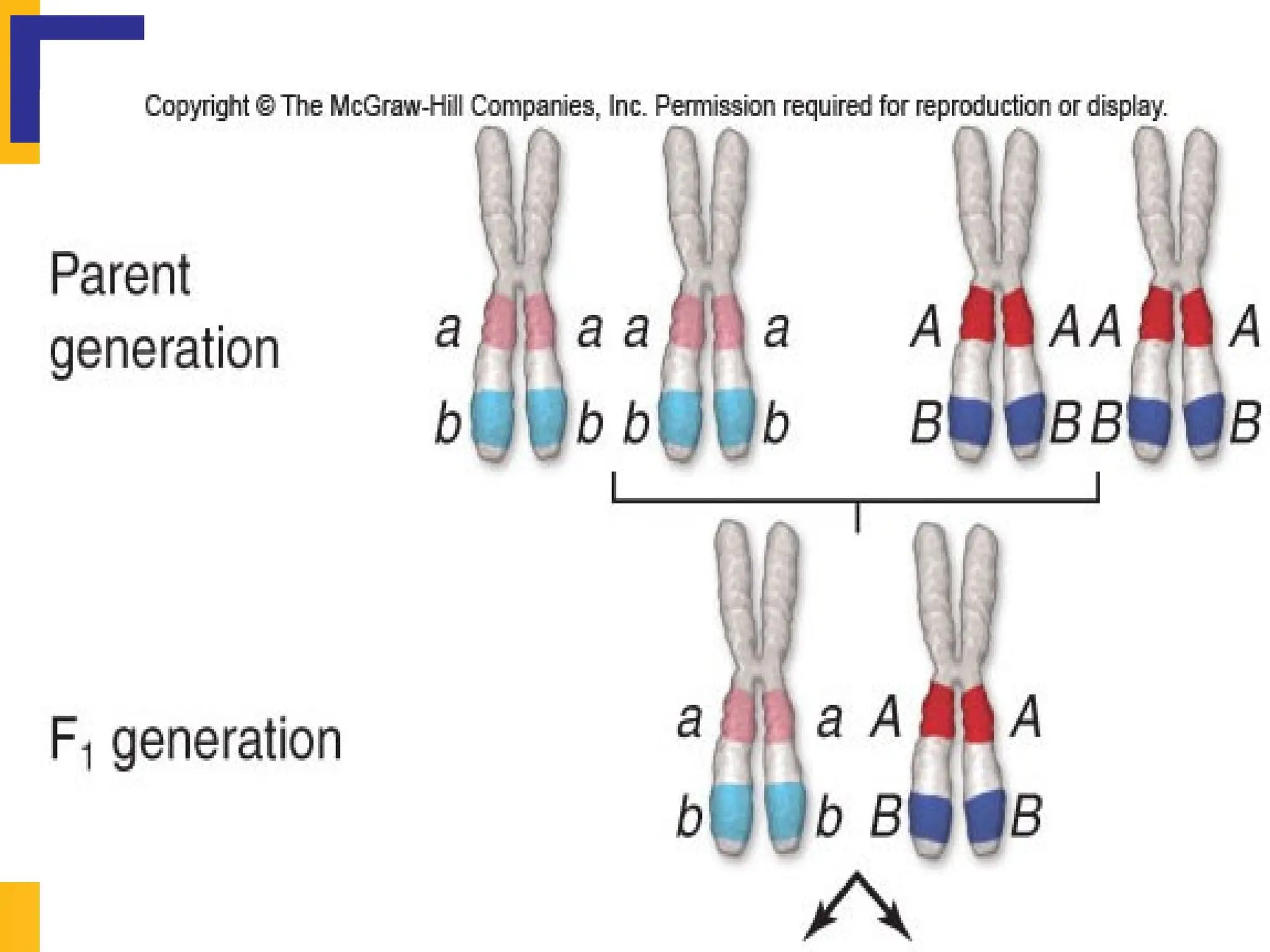
To determine the distance between genes:
- dihybrid organisms are testcrossed
- offspring resembling the dihybrid parent result from homologues
that were not involved in the crossover
-
offspring resulting from a crossover are called recombinant
progeny
The distance between genes is proportional to the frequency of
recombination events.
Recombination recombinant progeny
frequency total progeny
1% recombination = 1 map unit (m.u.)
1 map unit = 1 centimorgan (cM)
•
The unit of distance in a genetic map is called a map unit
•
1 map unit is equal to 1 percent recombination.
•
For example, two genes that recombine with a frequency of 3.5
percent are said to be located 3.5 map units apart.
•
One map unit is also called a centimorgan, abbreviated cM.
•
A distance of 3.5 map units therefore equals 3.5 centimorgans
and indicates 3.5 percent recombination between the genes.
•
Genes that are located on the same chromosomes are described
as linkage gene.
•
However, linked genes are not always transmitted as en bloc
because of the phenomenon of recombination.
•
The main step in meiosis is crossing over in which homologous
chromosomes exchange segments causing a reshuffling of
genes.
•
If genes are far apart on the same chromosome, it is likely that
recombination occurs.
Constructing a gene map:

Studies of genetic linkage and recombination frequencies have
been used to create gene maps.

This has been done extensively in Drosophilia. This organism is
very suitable for such study because it has very prominent,
easily studied characteristics, has a short life cycle and produces
hundreds of offspring.

In an experiment investigating two characteristics A and B it
was found that their recombinant frequency was 1.0%. In
further experiments it was found that the recombinant frequency
for characteristics A and C was 0.6% and the recombinant
frequency between B and C was 0.4%.

A genetic map of the three genes responsible for these
characteristics may be constructed as follows. The values are in
centimorgans.
A 0.6 C 0.4 B
1.0
Two characteristics A and B it was found that their recombinant frequency is 1.0%.
A and C = 0.6%
B and C = 0.4%
The values are in Centimograns.
•
Further recombinant studies can be performed to estimate the
gene distances between gene C and other genes D and E, and
then between B and other genes, E,F, G and so on. In this way a
larger and more detailed map is gradually constructed.
Physical mapping

Available techniques or information to determine the absolute
position of a gene on a chromosome.

The ultimate goal of gene mapping is to clone genes, especially
diseased genes.

Once the gene is cloned, we can determined its sequence and
study its protein product.
RFLPs can be used for genetic mapping

RFLP Restriction Fragment Length Polymorphism is a
technique used in the gene mapping to identify variations on
DNA sequences. It works by exploiting difference in the DNA
sequence that affect the location of the restriction enzyme cut
size.

RFLP is one of the earliest methods used in genetic mapping.
RFLPs can be used for genetic mapping

Restriction endonucleases are naturally occurring enzymes
produced by bacteria as a defence against invasion by viruses.

The bacterial endonucleases cut the viral DNA thus restricting its
further proliferation.

A particular restriction endonuclease recognises a specific
nucleotide sequences in DNA and cleave it.

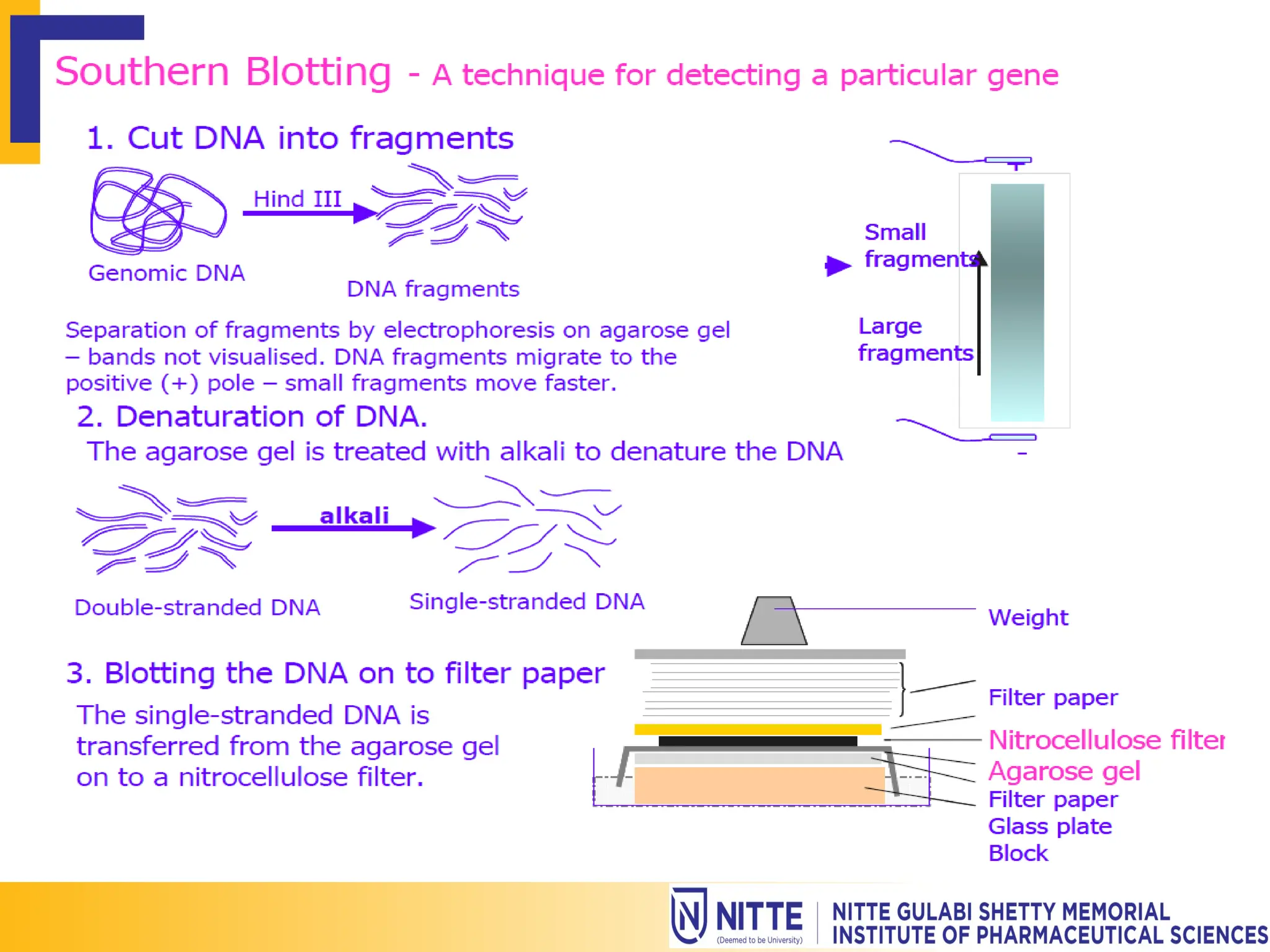
For example the restriction enzyme Hind III recognises the
following DNA sequence and cuts it open as
As this sequence occurs by chance at several sites along the
human genome. If a segment of DNA is exposed to Hind III,
this will cut the DNA into several fragments of various sizes.
These can be sorted out by electrophoresis according to the
length of the fragments. This will form a pattern of fragments,
identified by the length of each fragment . In this example, the
specific sequence occurs at the sites indicated as A, B, C, D, E
and F and exposure to the corresponding restriction enzyme will
generate five fragments of size 16, 4, 1, 2 and 8 units
respectively.
If the sequence were missing at site C, there would be 4 fragments of
lengths 16, 5, 2 and 8 units. This variation is referred to as a restriction
fragment length polymorphism (RFLP). Using a large number of
restriction endonucleases, it is likely that one finds one or more RFLPs
close to the gene of interest. Such RFLPs are then used as markers for
linkage studies with known genes. Linkage studies have been one of the
most important tools for gene mapping.

RFLPs has been assigned to a linkage group, it can be placed on
the genetic map.

RFLPs mapping leads to construction of the linkage map.

RFLPs basis for a technique to establish unequivocal parent
progeny relationship.

The use of DNA restriction analysis to identify individual has
been called DNA finger printing.
Cytogenetic mapping
Cytogenetic mapping refers to observing a map location in
reference to a chromosomal banding pattern.
Somatic hybrid mapping
Mapping human genes by using human–rodent somatic cell hybrids
The technique of somatic cell hybridization is extensively
used in human genome mapping, but it can in principle be
used in many different animal systems. The procedure uses
cells growing in culture. A virus called the Sendai virus has
a useful property that makes the mapping technique
possible.
•
Each Sendai virus has several points of attachment, so it can
simultaneously attach to two different cells if they happen to be
close together.
•
However, a virus is very small in comparison with a cell, so the
two cells to which the virus is attached are held very close
together indeed. In fact, the membranes of the two cells may
fuse together and the two cells become one—a
binucleate heterokaryon.
•
If suspensions of human and mouse cells are mixed together in the
presence of Sendai virus that has been inactivated by ultraviolet
light, the virus can mediate fusion of the cells from the
different species.
•
When the cells have fused, the nuclei subsequently fuse to form a
uni-nucleate cell line composed of both human and
mouse chromosome sets. Because the mouse and
human chromosomes are recognizably different in number and
shape, the two sets in the hybrid cells can be readily distinguished.
•
However, in the course of subsequent cell divisions, for unknown
reasons the human chromosomes are gradually eliminated from the
hybridat random.
Radiation Hybrid Mapping

Radiation hybrid mapping is a method for high-resolution
mapping.

Exploits the ability of rodent cells (hamster cells) to stably
incorporate genetic material from fused cells
Comparative Mapping
•
Can be very useful in utilizing animal models of human disease,
and also in exploring the causes of complex diseases.
•
Comparing gene content, localization and ordering among
multiple species.
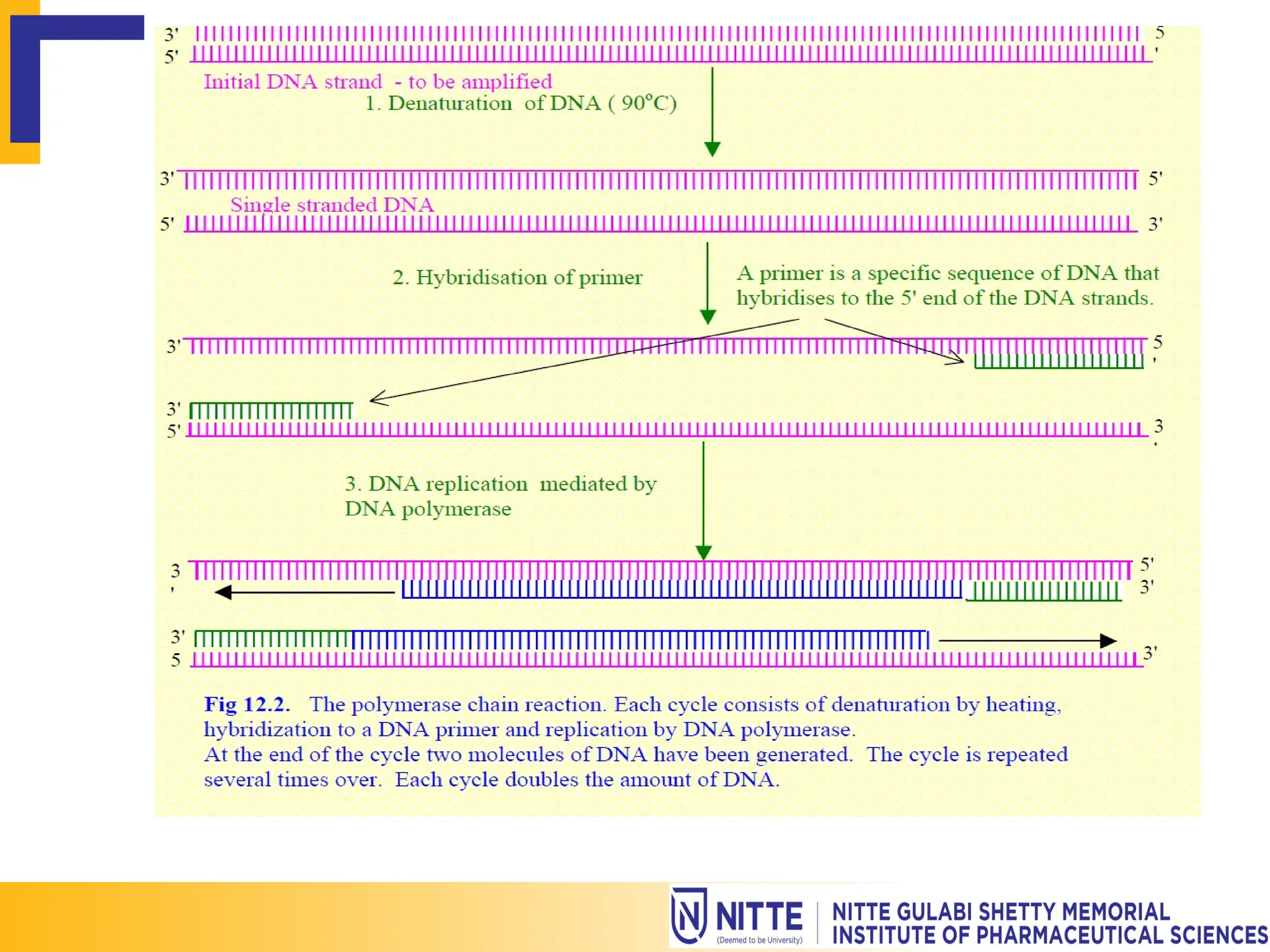
POLYMERASE CHAIN REACTION

This is most important tool in molecular biology and gene
mapping.

Mainly used for the amplification of the gene.

This is one of the most important tools in modern genetics
because it can amplify one gene to make millions of copies.

Detection of the gene is thus facilitated.

After 20 to 25 cycles it would have amplified several million
times.
Fluorescence insitu hybridization

Direct method for the visualization of gene and chromosomes.

A DNA probe for a particular gene is a complementary sequence for part
of the gene.

This is usually labeled with a fluorescent dye.

If the DNA in a chromosome preparation is first denatured, the probe
hybridizes specifically with the corresponding gene on the chromosomes.
•
The site of hybridization is visualized under a microscope. The site of the
gene appears as a bright spot.
Human Genetic Disorders
•
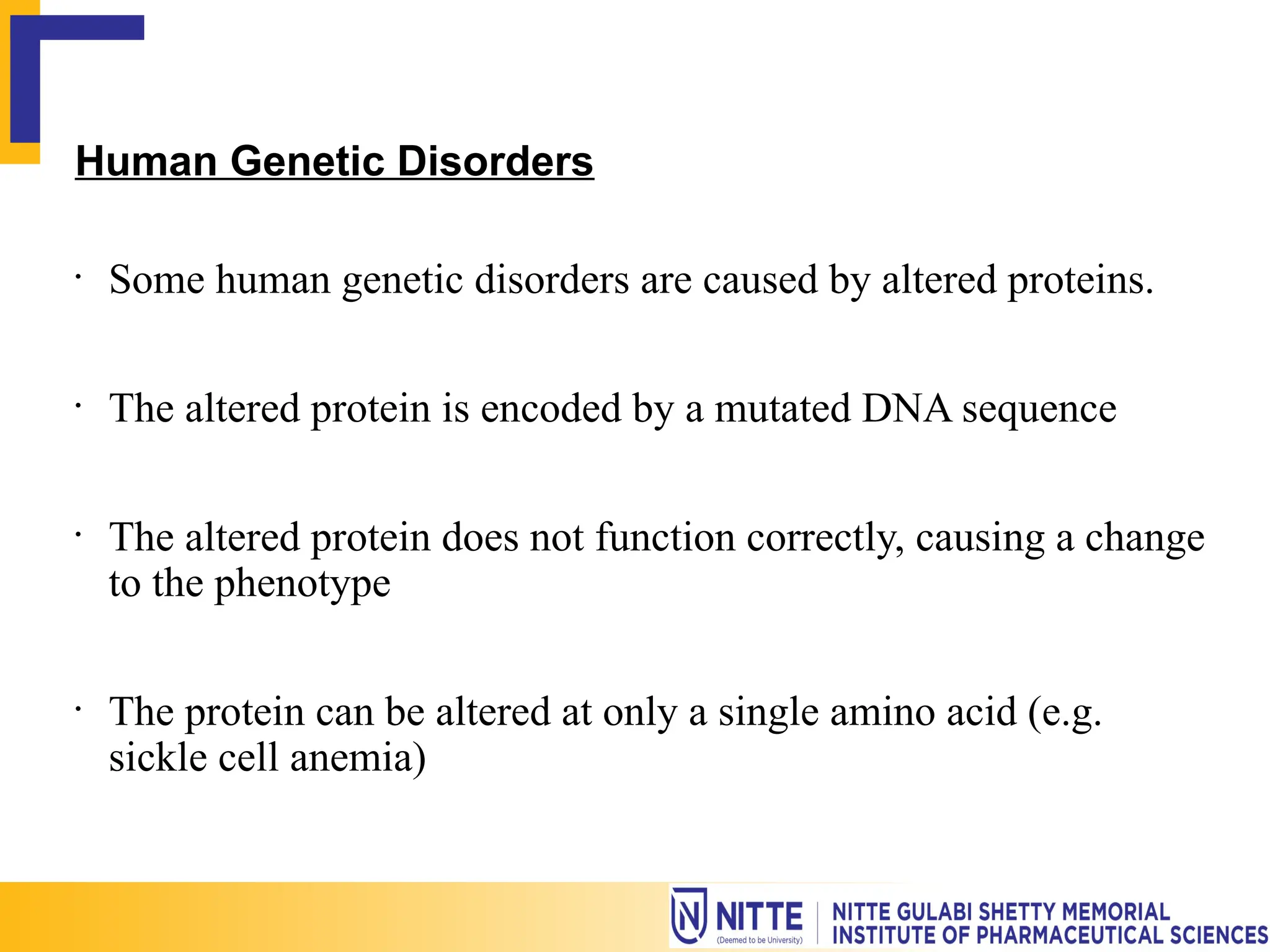
Some human genetic disorders are caused by altered proteins.
•
The altered protein is encoded by a mutated DNA sequence
•
The altered protein does not function correctly, causing a change
to the phenotype
•
The protein can be altered at only a single amino acid (e.g.
sickle cell anemia)

Some genetic disorders are caused by a change in the number of
chromosomes.

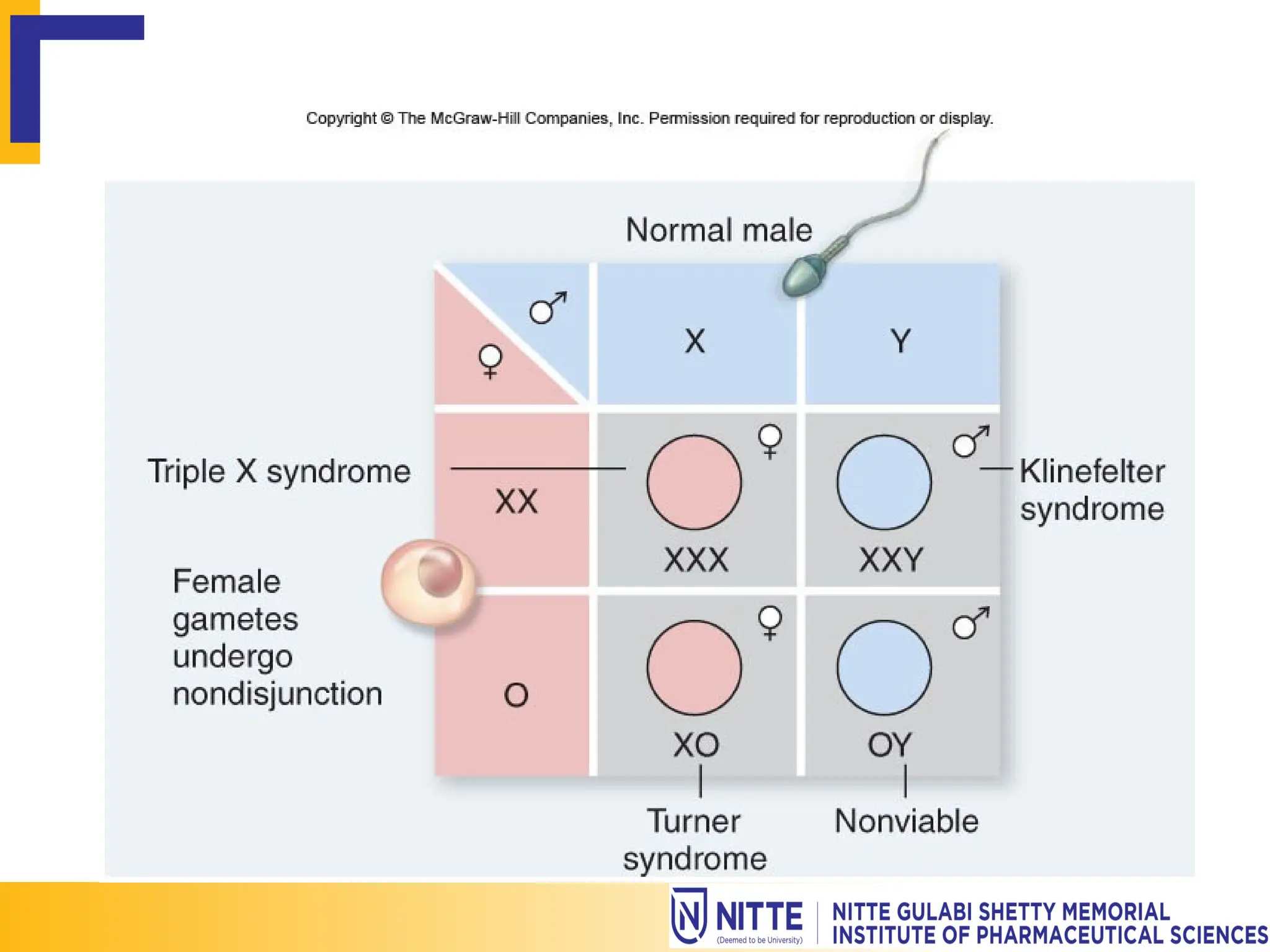
Nondisjunction during meiosis can create gametes having one
too many or one too few chromosomes

Fertilization of these gametes creates trisomic or monosomic
individuals

Down syndrome is trisomy of chromosome 21
Nondisjunction of sex chromosomes can result in:
XXX triple-X females
XXY males (Klinefelter syndrome)
XO females (Turner syndrome)
OY nonviable zygotes
XYY males (Jacob syndrome)
REFERENCE

International edition, GenesvIII by lewin benjamin, pearson
prentice hali, page no. 50-59

http://www.ncbi.nlm.nih.gov/genemap99

faculty.ksu.edu.sa

An Introduction to Genetic Analysis. 7th edition.
Griffiths AJF, Miller JH, Suzuki DT, et al. New York: W. H.
Freeman; 2000.
gene mapping presentation Molecular Biology

gene mapping presentation Molecular Biology

  • 1.
    GENE MAPPING Presented By:Aryakrishna (NU24PHPY04)
  • 2.
    GENE MAPPING  Gene mappingalso called genome mapping, is the creation of a genetic map assigning DNA fragments to chromosome  A genetic map is also called a linkage map or a chromosome map.  It is a critical step in the understanding of genetic diseases.  The concept of genetic mapping was first developed by Alfred H. Sturtevant, in 1913.
  • 3.
     The early geneticistsunderstood that recombination between genes takes place by an exchange of segments between homologous chromosomes in the process now called crossing- over.  Genetic map is the principal technique used in modern human genetics to identify the chromosomal location of mutant genes associated with inherited diseases.  The genetic markers used in human genetics are homologous DNA fragments, which differ in length from one person to the next
  • 4.
    TYPES OF GENEMAPPING • Genetic mapping • Physical mapping  Restriction mapping  Cytogenic mapping  Somatic mapping  Radiation hybridation  Comparative mapping
  • 5.
    Genetic mapping  Using linkageanalysis to determine the relative position between two genes on a chromosome  Position of each locus on the chromosomes.  Locus: Specific physical location or position of a gene or other significant sequence on a chromosomes.  This type of mapping is based on genetic recombination (crossing over) between genes.
  • 8.
    To determine thedistance between genes: - dihybrid organisms are testcrossed - offspring resembling the dihybrid parent result from homologues that were not involved in the crossover - offspring resulting from a crossover are called recombinant progeny The distance between genes is proportional to the frequency of recombination events.
  • 9.
    Recombination recombinant progeny frequencytotal progeny 1% recombination = 1 map unit (m.u.) 1 map unit = 1 centimorgan (cM)
  • 10.
    • The unit ofdistance in a genetic map is called a map unit • 1 map unit is equal to 1 percent recombination. • For example, two genes that recombine with a frequency of 3.5 percent are said to be located 3.5 map units apart. • One map unit is also called a centimorgan, abbreviated cM. • A distance of 3.5 map units therefore equals 3.5 centimorgans and indicates 3.5 percent recombination between the genes.
  • 11.
    • Genes that arelocated on the same chromosomes are described as linkage gene. • However, linked genes are not always transmitted as en bloc because of the phenomenon of recombination. • The main step in meiosis is crossing over in which homologous chromosomes exchange segments causing a reshuffling of genes. • If genes are far apart on the same chromosome, it is likely that recombination occurs.
  • 12.
    Constructing a genemap:  Studies of genetic linkage and recombination frequencies have been used to create gene maps.  This has been done extensively in Drosophilia. This organism is very suitable for such study because it has very prominent, easily studied characteristics, has a short life cycle and produces hundreds of offspring.
  • 13.
     In an experimentinvestigating two characteristics A and B it was found that their recombinant frequency was 1.0%. In further experiments it was found that the recombinant frequency for characteristics A and C was 0.6% and the recombinant frequency between B and C was 0.4%.  A genetic map of the three genes responsible for these characteristics may be constructed as follows. The values are in centimorgans.
  • 14.
    A 0.6 C0.4 B 1.0 Two characteristics A and B it was found that their recombinant frequency is 1.0%. A and C = 0.6% B and C = 0.4% The values are in Centimograns.
  • 15.
    • Further recombinant studiescan be performed to estimate the gene distances between gene C and other genes D and E, and then between B and other genes, E,F, G and so on. In this way a larger and more detailed map is gradually constructed.
  • 16.
    Physical mapping  Available techniquesor information to determine the absolute position of a gene on a chromosome.  The ultimate goal of gene mapping is to clone genes, especially diseased genes.  Once the gene is cloned, we can determined its sequence and study its protein product.
  • 17.
    RFLPs can beused for genetic mapping  RFLP Restriction Fragment Length Polymorphism is a technique used in the gene mapping to identify variations on DNA sequences. It works by exploiting difference in the DNA sequence that affect the location of the restriction enzyme cut size.  RFLP is one of the earliest methods used in genetic mapping.
  • 18.
    RFLPs can beused for genetic mapping  Restriction endonucleases are naturally occurring enzymes produced by bacteria as a defence against invasion by viruses.  The bacterial endonucleases cut the viral DNA thus restricting its further proliferation.  A particular restriction endonuclease recognises a specific nucleotide sequences in DNA and cleave it.  For example the restriction enzyme Hind III recognises the following DNA sequence and cuts it open as
  • 19.
    As this sequenceoccurs by chance at several sites along the human genome. If a segment of DNA is exposed to Hind III, this will cut the DNA into several fragments of various sizes. These can be sorted out by electrophoresis according to the length of the fragments. This will form a pattern of fragments, identified by the length of each fragment . In this example, the specific sequence occurs at the sites indicated as A, B, C, D, E and F and exposure to the corresponding restriction enzyme will generate five fragments of size 16, 4, 1, 2 and 8 units respectively.
  • 20.
    If the sequencewere missing at site C, there would be 4 fragments of lengths 16, 5, 2 and 8 units. This variation is referred to as a restriction fragment length polymorphism (RFLP). Using a large number of restriction endonucleases, it is likely that one finds one or more RFLPs close to the gene of interest. Such RFLPs are then used as markers for linkage studies with known genes. Linkage studies have been one of the most important tools for gene mapping.
  • 21.
     RFLPs has beenassigned to a linkage group, it can be placed on the genetic map.  RFLPs mapping leads to construction of the linkage map.  RFLPs basis for a technique to establish unequivocal parent progeny relationship.  The use of DNA restriction analysis to identify individual has been called DNA finger printing.
  • 22.
    Cytogenetic mapping Cytogenetic mappingrefers to observing a map location in reference to a chromosomal banding pattern.
  • 23.
    Somatic hybrid mapping Mappinghuman genes by using human–rodent somatic cell hybrids The technique of somatic cell hybridization is extensively used in human genome mapping, but it can in principle be used in many different animal systems. The procedure uses cells growing in culture. A virus called the Sendai virus has a useful property that makes the mapping technique possible.
  • 24.
    • Each Sendai virushas several points of attachment, so it can simultaneously attach to two different cells if they happen to be close together. • However, a virus is very small in comparison with a cell, so the two cells to which the virus is attached are held very close together indeed. In fact, the membranes of the two cells may fuse together and the two cells become one—a binucleate heterokaryon.
  • 25.
    • If suspensions ofhuman and mouse cells are mixed together in the presence of Sendai virus that has been inactivated by ultraviolet light, the virus can mediate fusion of the cells from the different species. • When the cells have fused, the nuclei subsequently fuse to form a uni-nucleate cell line composed of both human and mouse chromosome sets. Because the mouse and human chromosomes are recognizably different in number and shape, the two sets in the hybrid cells can be readily distinguished. • However, in the course of subsequent cell divisions, for unknown reasons the human chromosomes are gradually eliminated from the hybridat random.
  • 27.
    Radiation Hybrid Mapping  Radiationhybrid mapping is a method for high-resolution mapping.  Exploits the ability of rodent cells (hamster cells) to stably incorporate genetic material from fused cells
  • 30.
    Comparative Mapping • Can bevery useful in utilizing animal models of human disease, and also in exploring the causes of complex diseases. • Comparing gene content, localization and ordering among multiple species.
  • 31.
    POLYMERASE CHAIN REACTION  Thisis most important tool in molecular biology and gene mapping.  Mainly used for the amplification of the gene.  This is one of the most important tools in modern genetics because it can amplify one gene to make millions of copies.  Detection of the gene is thus facilitated.  After 20 to 25 cycles it would have amplified several million times.
  • 33.
    Fluorescence insitu hybridization  Directmethod for the visualization of gene and chromosomes.  A DNA probe for a particular gene is a complementary sequence for part of the gene.  This is usually labeled with a fluorescent dye.  If the DNA in a chromosome preparation is first denatured, the probe hybridizes specifically with the corresponding gene on the chromosomes. • The site of hybridization is visualized under a microscope. The site of the gene appears as a bright spot.
  • 37.
    Human Genetic Disorders • Somehuman genetic disorders are caused by altered proteins. • The altered protein is encoded by a mutated DNA sequence • The altered protein does not function correctly, causing a change to the phenotype • The protein can be altered at only a single amino acid (e.g. sickle cell anemia)
  • 40.
     Some genetic disordersare caused by a change in the number of chromosomes.  Nondisjunction during meiosis can create gametes having one too many or one too few chromosomes  Fertilization of these gametes creates trisomic or monosomic individuals  Down syndrome is trisomy of chromosome 21
  • 41.
    Nondisjunction of sexchromosomes can result in: XXX triple-X females XXY males (Klinefelter syndrome) XO females (Turner syndrome) OY nonviable zygotes XYY males (Jacob syndrome)
  • 43.
    REFERENCE  International edition, GenesvIIIby lewin benjamin, pearson prentice hali, page no. 50-59  http://www.ncbi.nlm.nih.gov/genemap99  faculty.ksu.edu.sa  An Introduction to Genetic Analysis. 7th edition. Griffiths AJF, Miller JH, Suzuki DT, et al. New York: W. H. Freeman; 2000.