 Fossil fuels are fuels formed by natural processes such

as anaerobic decomposition of buried dead organisms. The age
of the organisms and their resulting fossil fuels is typically
millions of years, and sometimes exceeds 650 million
years. Fossil fuels contain high percentages of carbon and
include coal, petroleum, and natural gas. They range
from volatile materials with low carbon:hydrogen ratios
like methane, to liquid petroleum to nonvolatile materials
composed of almost pure carbon, like anthracite coal. Methane
can be found in hydrocarbon fields, alone, associated with oil, or
in the form of methane clathrates. The theory that fossil fuels
formed from the fossilized remains of dead plants by exposure to
heat and pressure in the Earth's crust over millions of
year (see biogenic theory) was first introduced by Georg
Agricola in 1556 and later by Mikhail Lomonosov in the 18th
century.
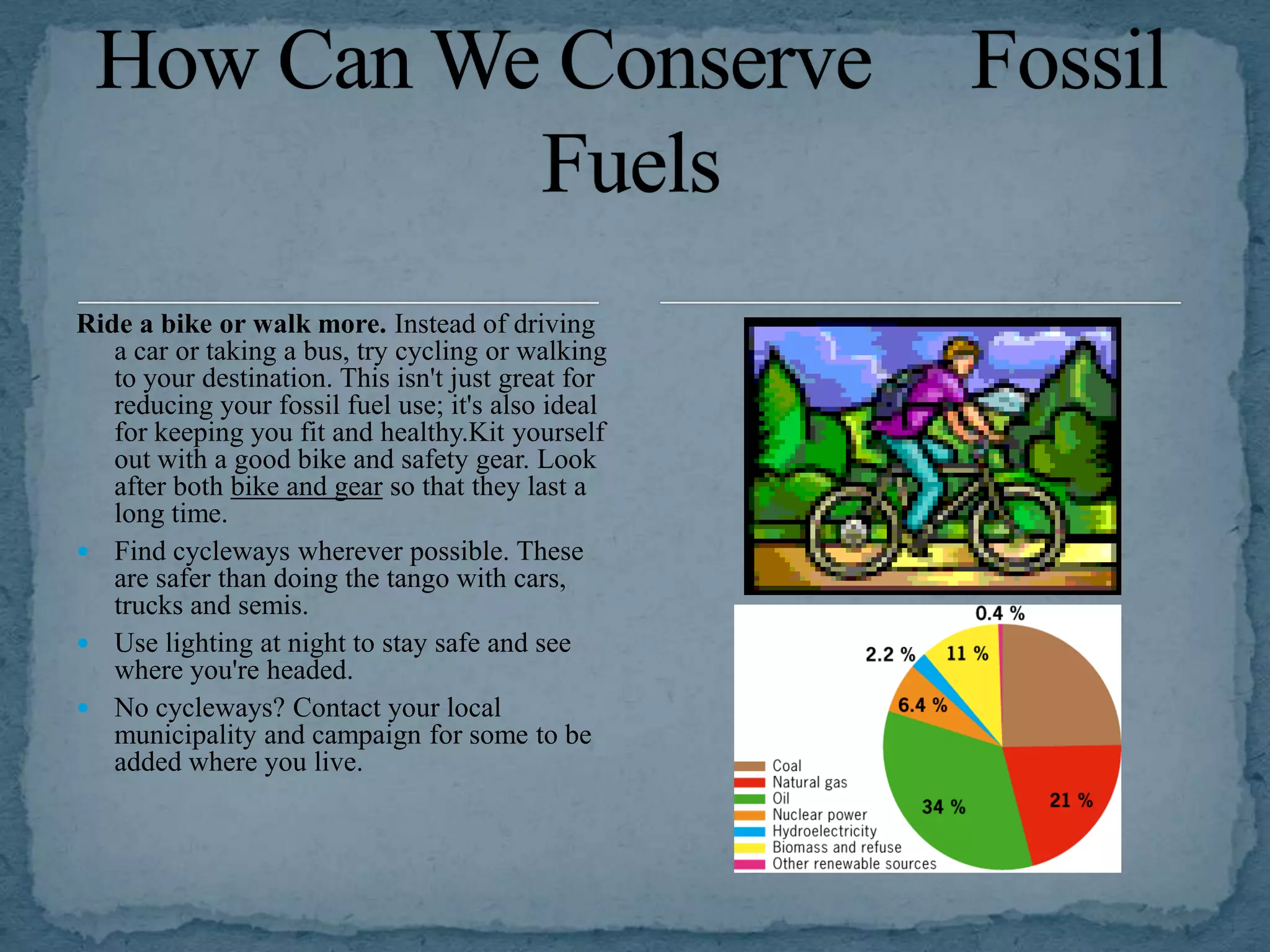
Ride a bike or walk more. Instead of driving
a car or taking a bus, try cycling or walking
to your destination. This isn't just great for
reducing your fossil fuel use; it's also ideal
for keeping you fit and healthy.Kit yourself
out with a good bike and safety gear. Look
after both bike and gear so that they last a
long time.
 Find cycleways wherever possible. These
are safer than doing the tango with cars,
trucks and semis.
 Use lighting at night to stay safe and see
where you're headed.
 No cycleways? Contact your local
municipality and campaign for some to be
added where you live.


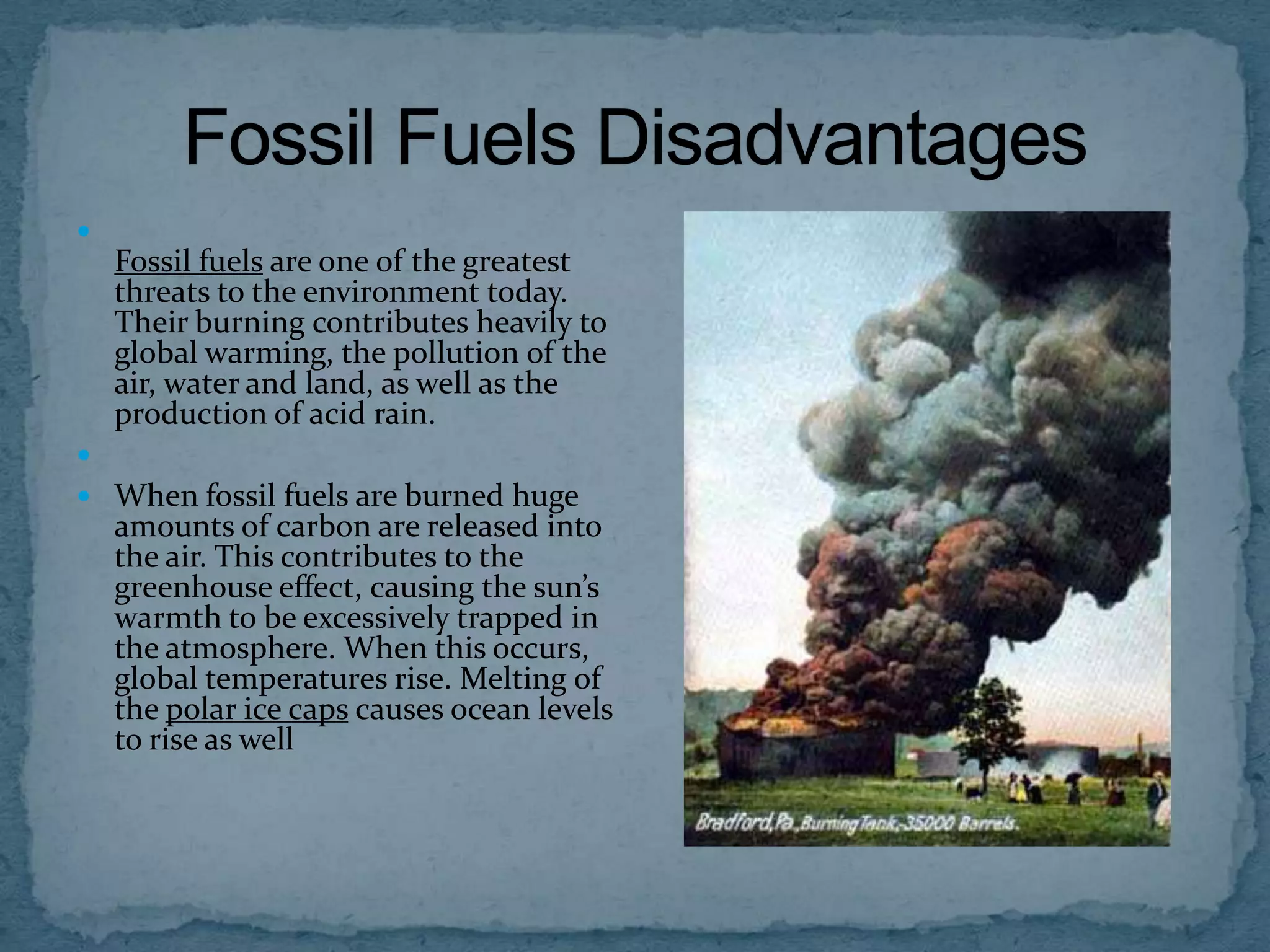
Fossil fuels are one of the greatest
threats to the environment today.
Their burning contributes heavily to
global warming, the pollution of the
air, water and land, as well as the
production of acid rain.

 When fossil fuels are burned huge

amounts of carbon are released into
the air. This contributes to the
greenhouse effect, causing the sun’s
warmth to be excessively trapped in
the atmosphere. When this occurs,
global temperatures rise. Melting of
the polar ice caps causes ocean levels
to rise as well
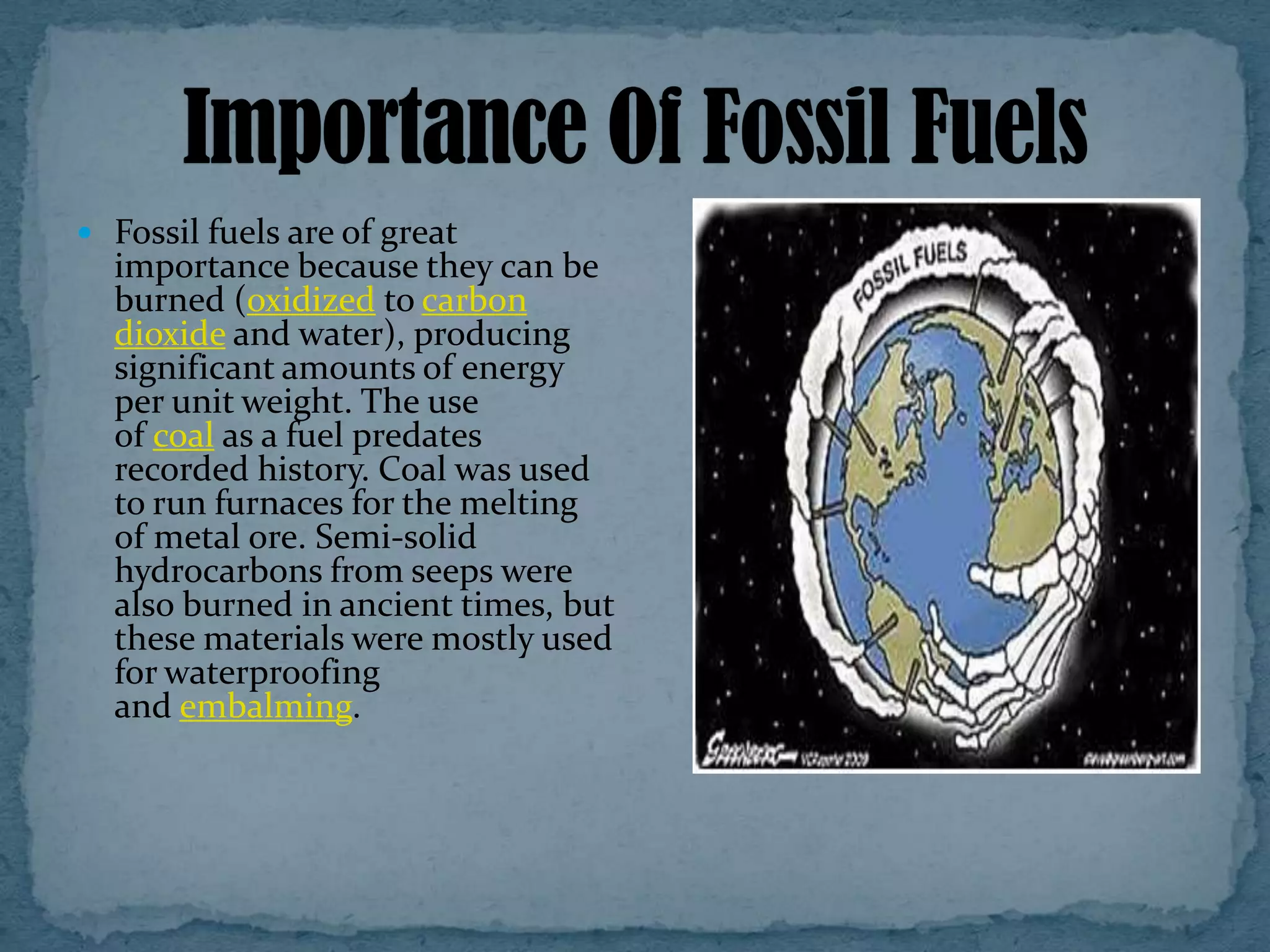
 Fossil fuels are of great

importance because they can be
burned (oxidized to carbon
dioxide and water), producing
significant amounts of energy
per unit weight. The use
of coal as a fuel predates
recorded history. Coal was used
to run furnaces for the melting
of metal ore. Semi-solid
hydrocarbons from seeps were
also burned in ancient times, but
these materials were mostly used
for waterproofing
and embalming.




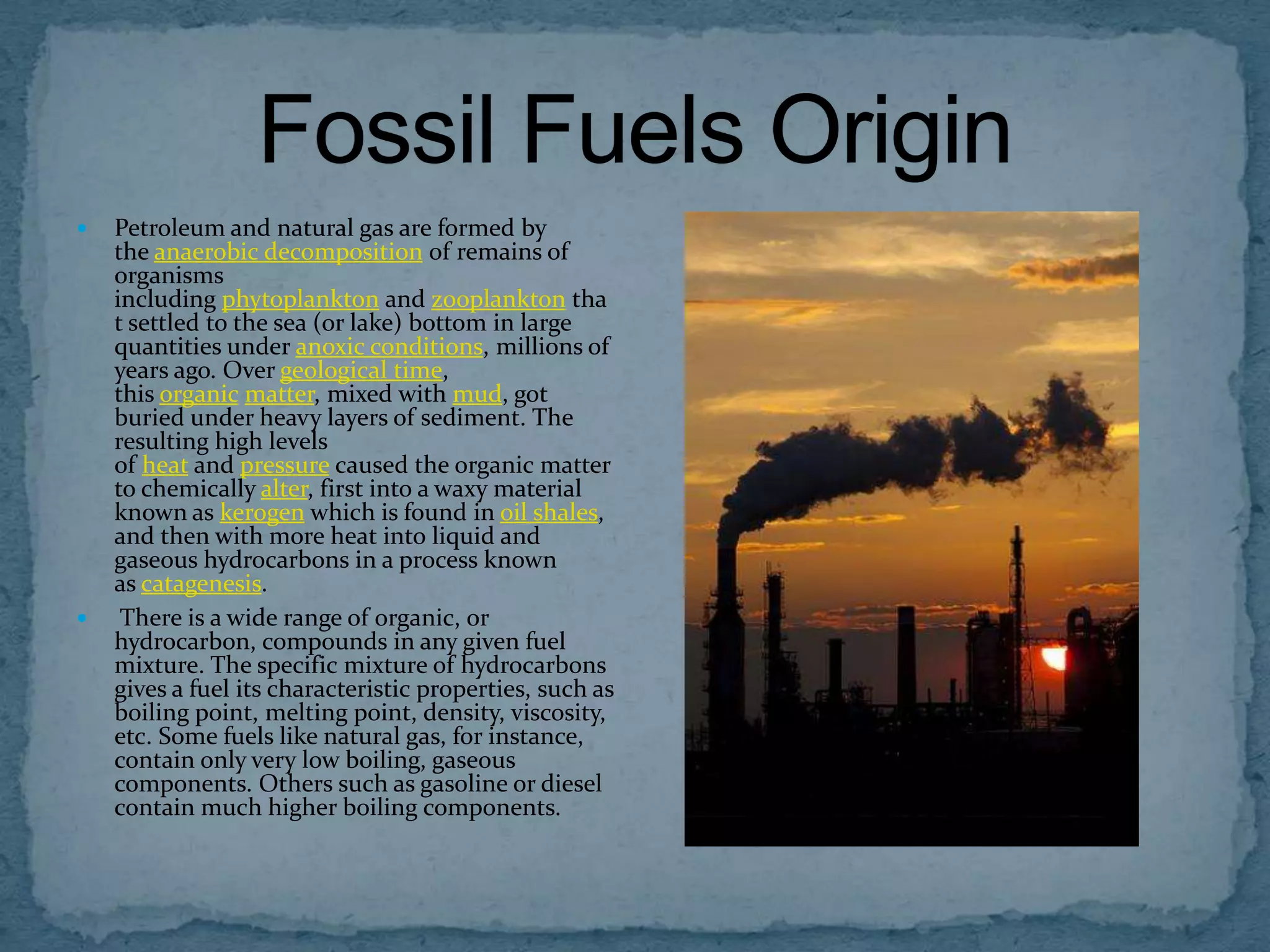
Petroleum and natural gas are formed by
the anaerobic decomposition of remains of
organisms
including phytoplankton and zooplankton tha
t settled to the sea (or lake) bottom in large
quantities under anoxic conditions, millions of
years ago. Over geological time,
this organic matter, mixed with mud, got
buried under heavy layers of sediment. The
resulting high levels
of heat and pressure caused the organic matter
to chemically alter, first into a waxy material
known as kerogen which is found in oil shales,
and then with more heat into liquid and
gaseous hydrocarbons in a process known
as catagenesis.
There is a wide range of organic, or
hydrocarbon, compounds in any given fuel
mixture. The specific mixture of hydrocarbons
gives a fuel its characteristic properties, such as
boiling point, melting point, density, viscosity,
etc. Some fuels like natural gas, for instance,
contain only very low boiling, gaseous
components. Others such as gasoline or diesel
contain much higher boiling components.
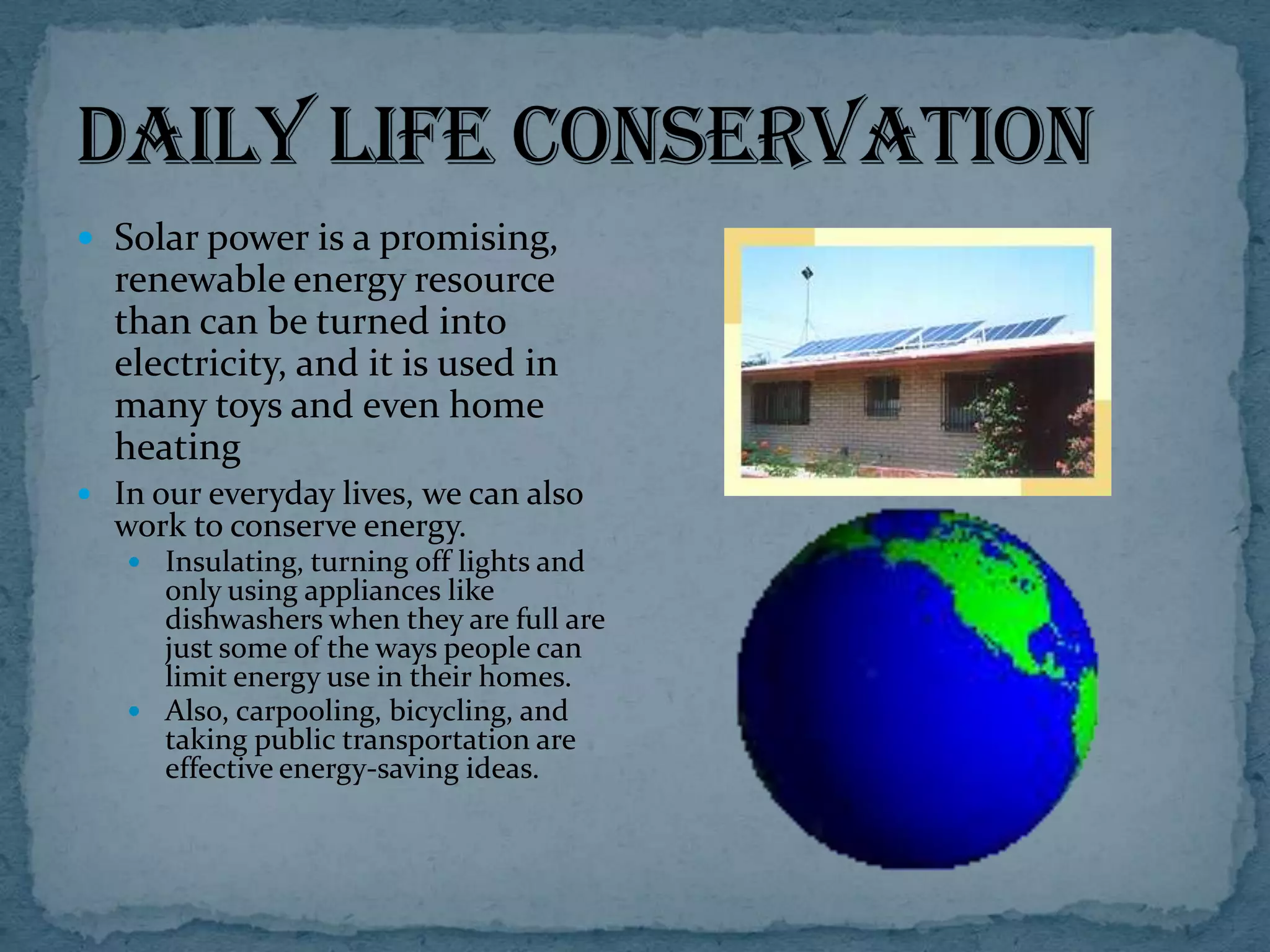
 Solar power is a promising,

renewable energy resource
than can be turned into
electricity, and it is used in
many toys and even home
heating
 In our everyday lives, we can also

work to conserve energy.

 Insulating, turning off lights and

only using appliances like
dishwashers when they are full are
just some of the ways people can
limit energy use in their homes.
 Also, carpooling, bicycling, and
taking public transportation are
effective energy-saving ideas.
Car Pool

Recycle
Reuse
Shut off &

unplug when
not in use
Use alternative
energy sources
Wind Power

Solar Energy
Plant based

Energy
 Geothermal
Biomass
 Water power
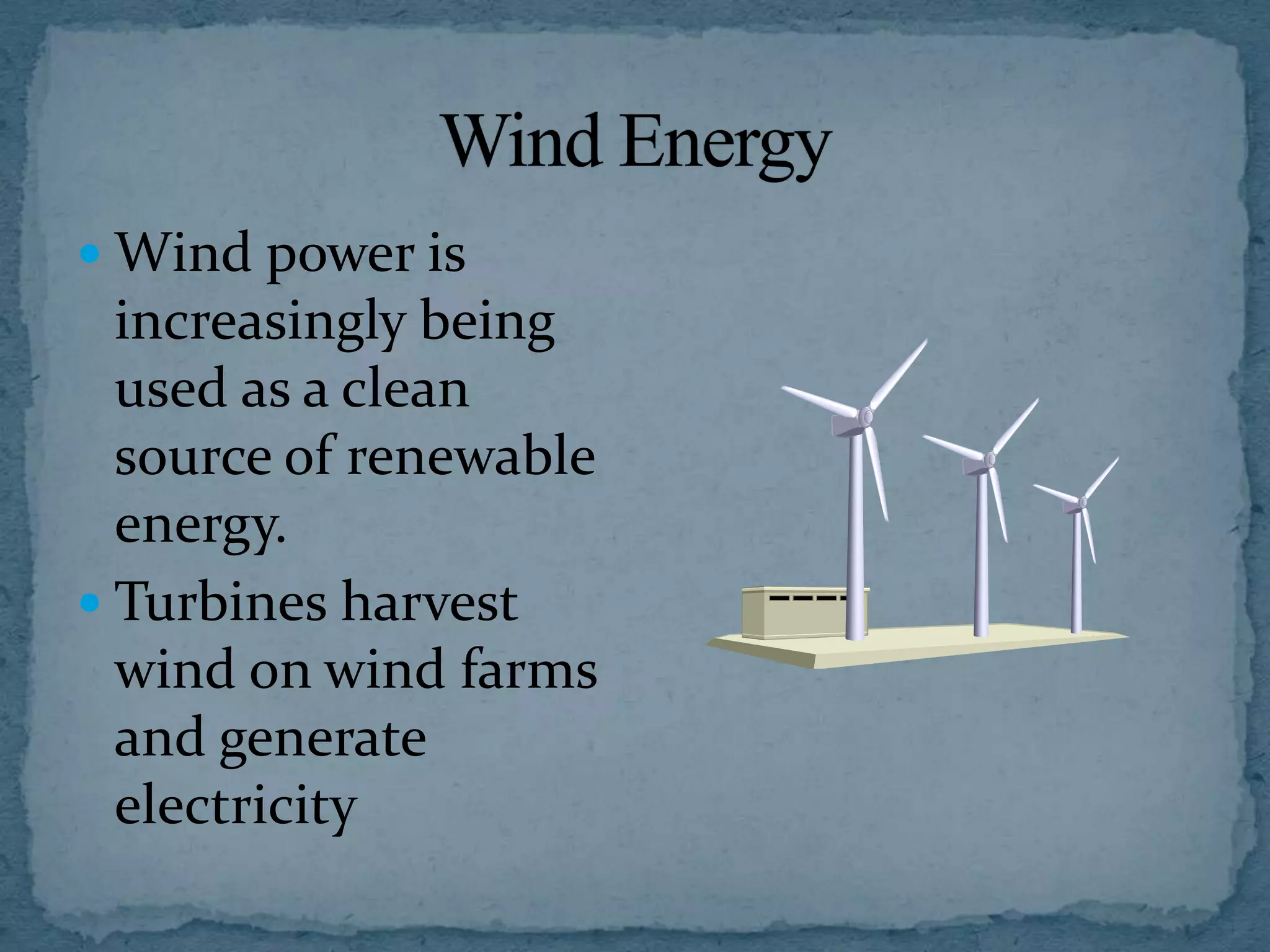
 Wind power is

increasingly being
used as a clean
source of renewable
energy.
 Turbines harvest
wind on wind farms
and generate
electricity
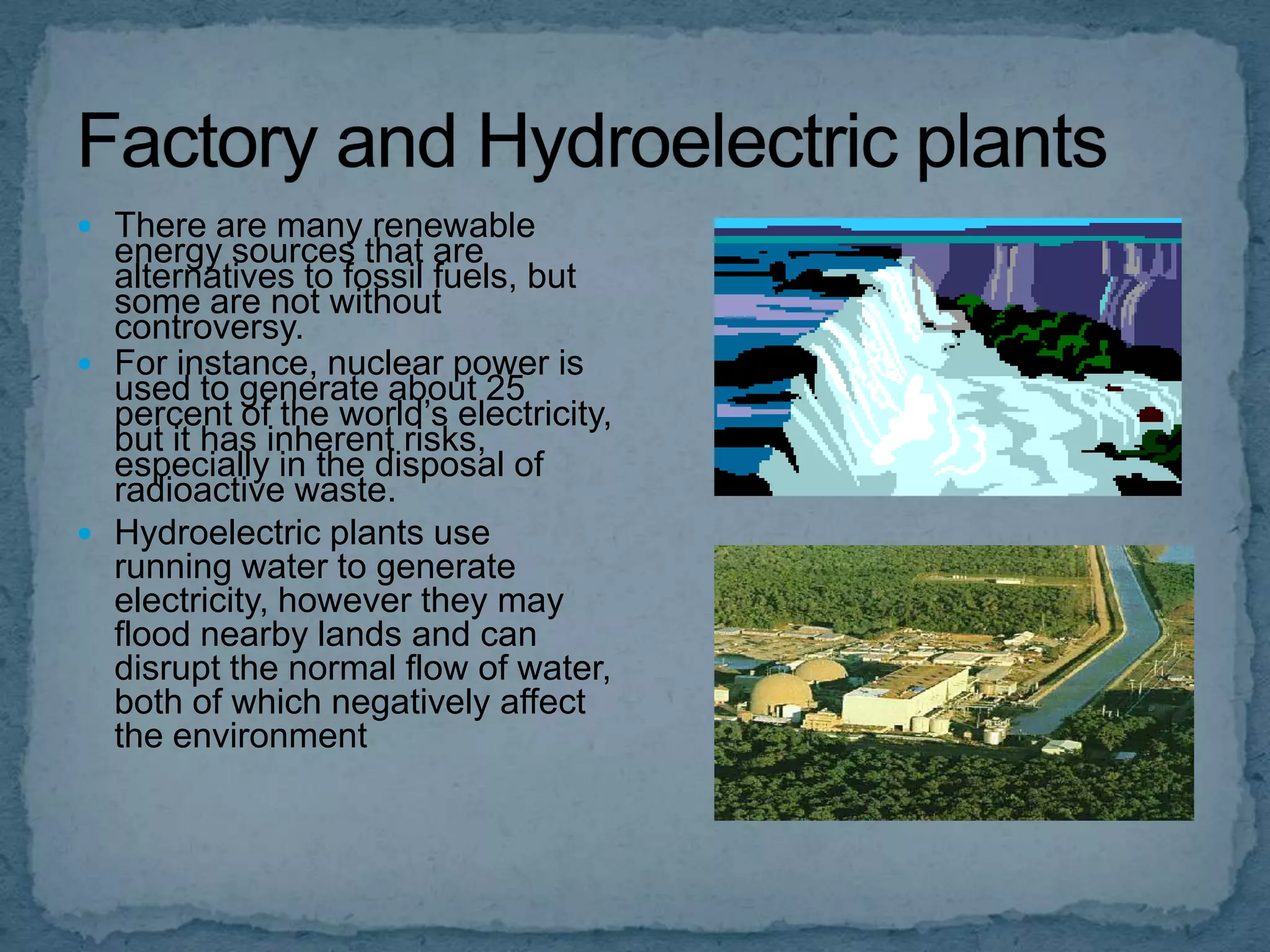
 There are many renewable

energy sources that are
alternatives to fossil fuels, but
some are not without
controversy.
 For instance, nuclear power is
used to generate about 25
percent of the world’s electricity,
but it has inherent risks,
especially in the disposal of
radioactive waste.
 Hydroelectric plants use
running water to generate
electricity, however they may
flood nearby lands and can
disrupt the normal flow of water,
both of which negatively affect
the environment
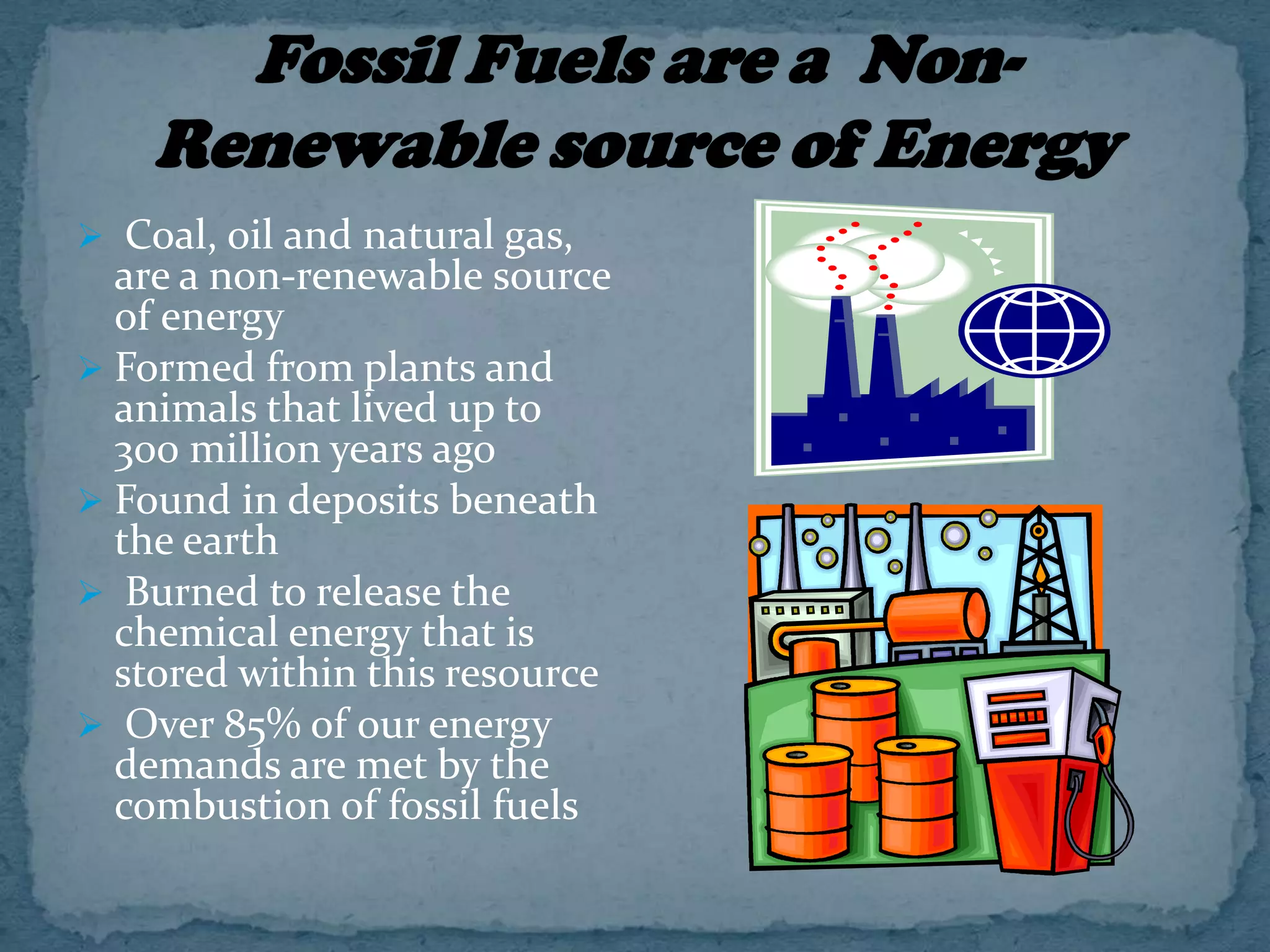
 Coal, oil and natural gas,

are a non-renewable source
of energy
 Formed from plants and
animals that lived up to
300 million years ago
 Found in deposits beneath
the earth
 Burned to release the
chemical energy that is
stored within this resource
 Over 85% of our energy
demands are met by the
combustion of fossil fuels
 Green House

 9th D
 Animation by-Yash Somkuwar

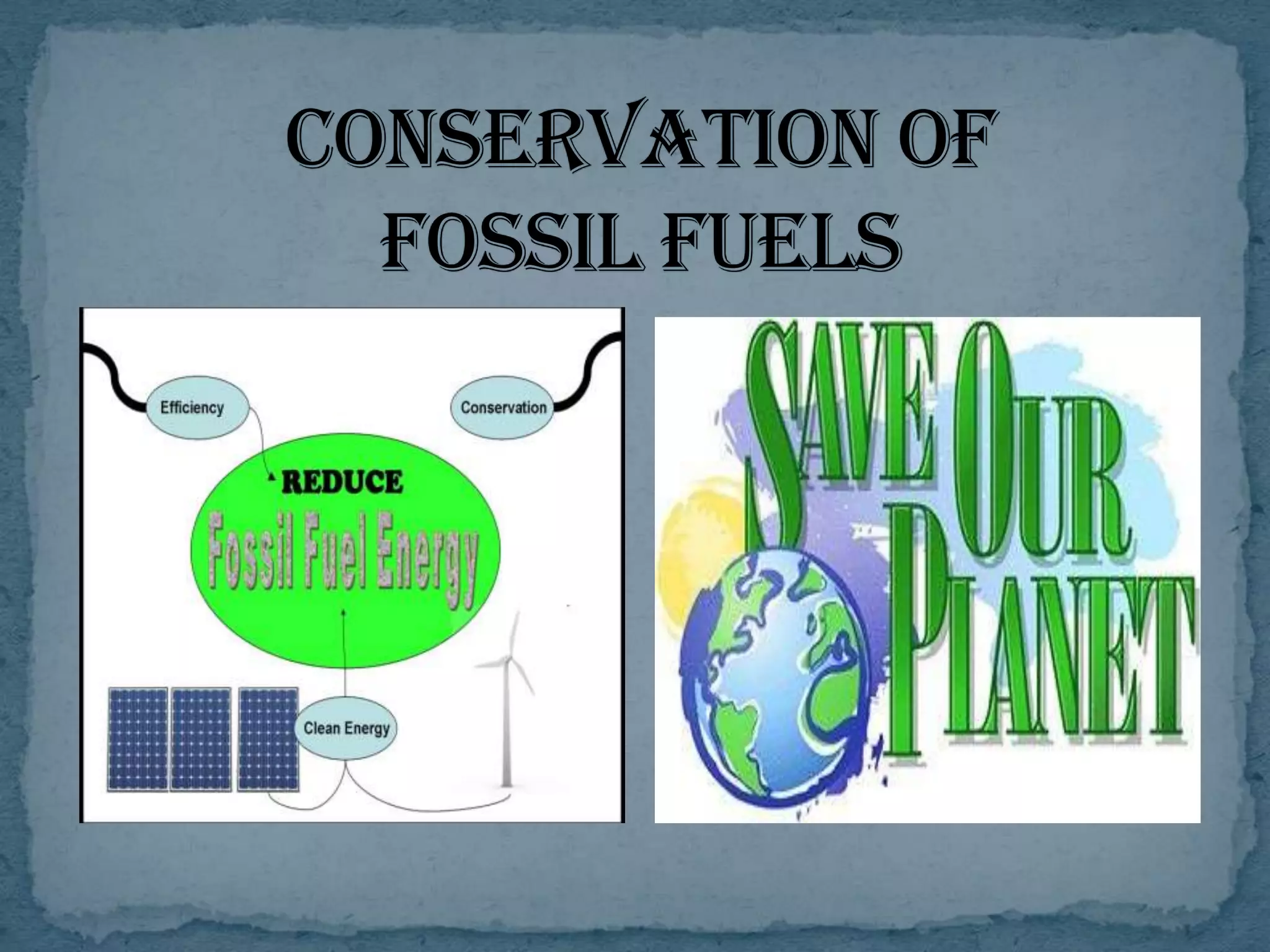
Conservation of fossil fuels

  • 2.
     Fossil fuelsare fuels formed by natural processes such as anaerobic decomposition of buried dead organisms. The age of the organisms and their resulting fossil fuels is typically millions of years, and sometimes exceeds 650 million years. Fossil fuels contain high percentages of carbon and include coal, petroleum, and natural gas. They range from volatile materials with low carbon:hydrogen ratios like methane, to liquid petroleum to nonvolatile materials composed of almost pure carbon, like anthracite coal. Methane can be found in hydrocarbon fields, alone, associated with oil, or in the form of methane clathrates. The theory that fossil fuels formed from the fossilized remains of dead plants by exposure to heat and pressure in the Earth's crust over millions of year (see biogenic theory) was first introduced by Georg Agricola in 1556 and later by Mikhail Lomonosov in the 18th century.
  • 3.
    Ride a bikeor walk more. Instead of driving a car or taking a bus, try cycling or walking to your destination. This isn't just great for reducing your fossil fuel use; it's also ideal for keeping you fit and healthy.Kit yourself out with a good bike and safety gear. Look after both bike and gear so that they last a long time.  Find cycleways wherever possible. These are safer than doing the tango with cars, trucks and semis.  Use lighting at night to stay safe and see where you're headed.  No cycleways? Contact your local municipality and campaign for some to be added where you live.
  • 4.
     Fossil fuels areone of the greatest threats to the environment today. Their burning contributes heavily to global warming, the pollution of the air, water and land, as well as the production of acid rain.   When fossil fuels are burned huge amounts of carbon are released into the air. This contributes to the greenhouse effect, causing the sun’s warmth to be excessively trapped in the atmosphere. When this occurs, global temperatures rise. Melting of the polar ice caps causes ocean levels to rise as well
  • 5.
     Fossil fuelsare of great importance because they can be burned (oxidized to carbon dioxide and water), producing significant amounts of energy per unit weight. The use of coal as a fuel predates recorded history. Coal was used to run furnaces for the melting of metal ore. Semi-solid hydrocarbons from seeps were also burned in ancient times, but these materials were mostly used for waterproofing and embalming.
  • 6.
      Petroleum and naturalgas are formed by the anaerobic decomposition of remains of organisms including phytoplankton and zooplankton tha t settled to the sea (or lake) bottom in large quantities under anoxic conditions, millions of years ago. Over geological time, this organic matter, mixed with mud, got buried under heavy layers of sediment. The resulting high levels of heat and pressure caused the organic matter to chemically alter, first into a waxy material known as kerogen which is found in oil shales, and then with more heat into liquid and gaseous hydrocarbons in a process known as catagenesis. There is a wide range of organic, or hydrocarbon, compounds in any given fuel mixture. The specific mixture of hydrocarbons gives a fuel its characteristic properties, such as boiling point, melting point, density, viscosity, etc. Some fuels like natural gas, for instance, contain only very low boiling, gaseous components. Others such as gasoline or diesel contain much higher boiling components.
  • 7.
     Solar poweris a promising, renewable energy resource than can be turned into electricity, and it is used in many toys and even home heating  In our everyday lives, we can also work to conserve energy.  Insulating, turning off lights and only using appliances like dishwashers when they are full are just some of the ways people can limit energy use in their homes.  Also, carpooling, bicycling, and taking public transportation are effective energy-saving ideas.
  • 8.
    Car Pool Recycle Reuse Shut off& unplug when not in use Use alternative energy sources
  • 9.
    Wind Power Solar Energy Plantbased Energy  Geothermal Biomass  Water power
  • 10.
     Wind poweris increasingly being used as a clean source of renewable energy.  Turbines harvest wind on wind farms and generate electricity
  • 11.
     There aremany renewable energy sources that are alternatives to fossil fuels, but some are not without controversy.  For instance, nuclear power is used to generate about 25 percent of the world’s electricity, but it has inherent risks, especially in the disposal of radioactive waste.  Hydroelectric plants use running water to generate electricity, however they may flood nearby lands and can disrupt the normal flow of water, both of which negatively affect the environment
  • 12.
     Coal, oiland natural gas, are a non-renewable source of energy  Formed from plants and animals that lived up to 300 million years ago  Found in deposits beneath the earth  Burned to release the chemical energy that is stored within this resource  Over 85% of our energy demands are met by the combustion of fossil fuels
  • 13.
     Green House 9th D  Animation by-Yash Somkuwar