Combustion And Flame
Made By:-
Anmol Pant
VIII-C
31
A Flame or not?
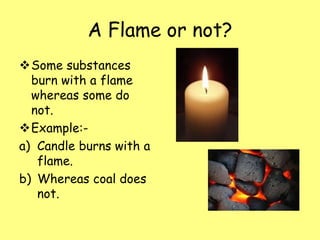
Some substances
burn with a flame
whereas some do
not.
Example:-
a) Candle burns with a
flame.
b) Whereas coal does
not.
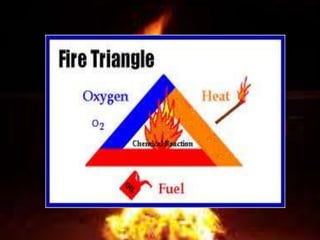
What is combustion?
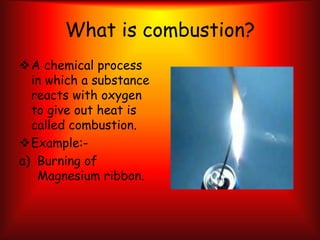
A chemical process
in which a substance
reacts with oxygen
to give out heat is
called combustion.
Example:-
a) Burning of
Magnesium ribbon.
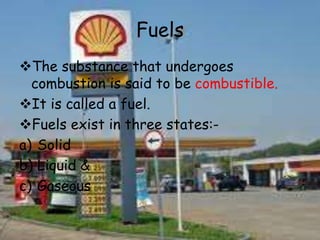
Fuels
The substance that undergoes
combustion is said to be combustible.
It is called a fuel.
Fuels exist in three states:-
a) Solid
b) Liquid &
c) Gaseous
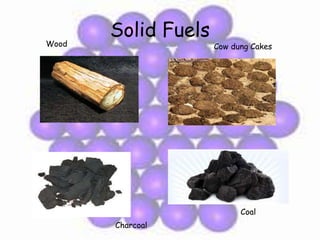
Solid Fuels
Wood Cow dung Cakes
Charcoal
Coal
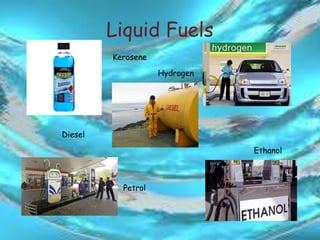
Liquid Fuels
Ethanol
Kerosene
Hydrogen
Diesel
Petrol
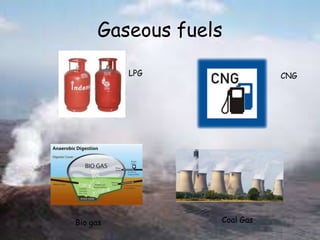
Gaseous fuels
LPG CNG
Bio gas Coal Gas
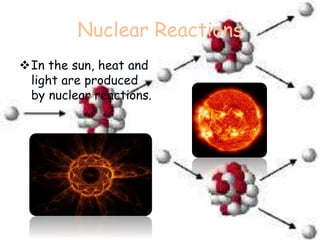
Nuclear Reactions
In the sun, heat and
light are produced
by nuclear reactions.
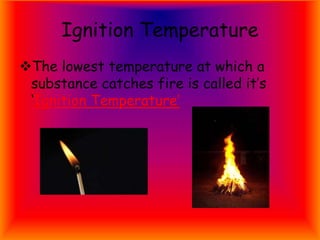
Ignition Temperature
The lowest temperature at which a
substance catches fire is called it’s
‘Ignition Temperature’
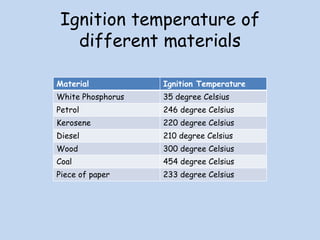
Ignition temperature of
different materials
Material Ignition Temperature
White Phosphorus 35 degree Celsius
Petrol 246 degree Celsius
Kerosene 220 degree Celsius
Diesel 210 degree Celsius
Wood 300 degree Celsius
Coal 454 degree Celsius
Piece of paper 233 degree Celsius
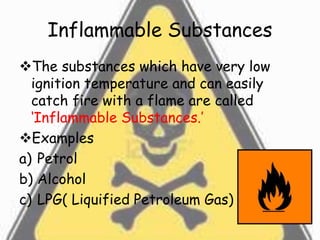
Inflammable Substances
The substances which have very low
ignition temperature and can easily
catch fire with a flame are called
‘Inflammable Substances.’
Examples
a) Petrol
b) Alcohol
c) LPG( Liquified Petroleum Gas)
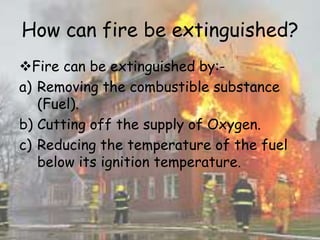
How can fire be extinguished?
Fire can be extinguished by:-
a) Removing the combustible substance
(Fuel).
b) Cutting off the supply of Oxygen.
c) Reducing the temperature of the fuel
below its ignition temperature.
Fire Extinguisher(Water)
Water is an excellent extinguisher when
it comes to paper, wood.
Water cools the combustible substance
below the ignition temperature so that
the combustion is stopped.
Water vapors also surround the flame
so the supply of Oxygen is cut off.
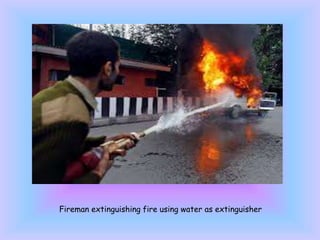
Fireman extinguishing fire using water as extinguisher
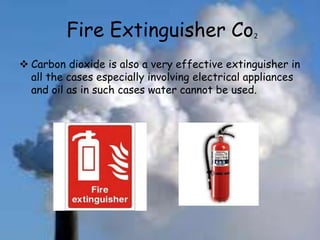
Fire Extinguisher Co
 Carbon dioxide is also a very effective extinguisher in
all the cases especially involving electrical appliances
and oil as in such cases water cannot be used.
2
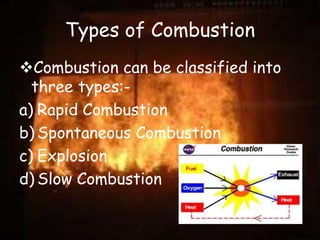
Types of Combustion
Combustion can be classified into
three types:-
a) Rapid Combustion
b) Spontaneous Combustion
c) Explosion
d) Slow Combustion
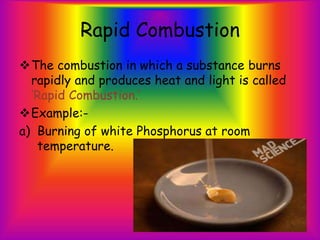
Rapid Combustion
The combustion in which a substance burns
rapidly and produces heat and light is called
‘Rapid Combustion.’
Example:-
a) Burning of white Phosphorus at room
temperature.
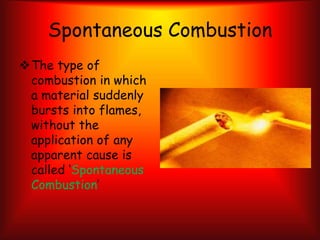
Spontaneous Combustion
The type of
combustion in which
a material suddenly
bursts into flames,
without the
application of any
apparent cause is
called ‘Spontaneous
Combustion’
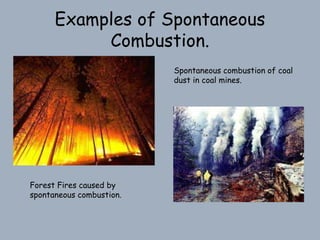
Examples of Spontaneous
Combustion.
Forest Fires caused by
spontaneous combustion.
Spontaneous combustion of coal
dust in coal mines.
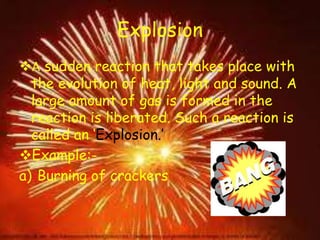
Explosion
A sudden reaction that takes place with
the evolution of heat, light and sound. A
large amount of gas is formed in the
reaction is liberated. Such a reaction is
called an ‘Explosion.’
Example:-
a) Burning of crackers
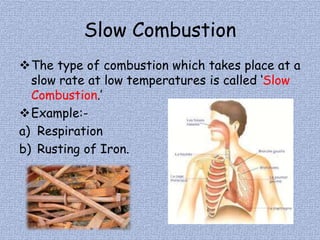
Slow Combustion
The type of combustion which takes place at a
slow rate at low temperatures is called ‘Slow
Combustion.’
Example:-
a) Respiration
b) Rusting of Iron.
Flame
A flame is the visible, gaseous part of a fire. It
is caused by a
highly exothermic reaction taking place in a
thin zone. Some flames are hot enough to
have ionized gaseous components of sufficient
density to be considered plasma. However, a
candle flame which has a temperature below
1500 °C produces too low an ion density to be
considered a plasma.
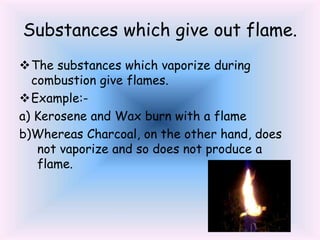
Substances which give out flame.
The substances which vaporize during
combustion give flames.
Example:-
a) Kerosene and Wax burn with a flame
b)Whereas Charcoal, on the other hand, does
not vaporize and so does not produce a
flame.
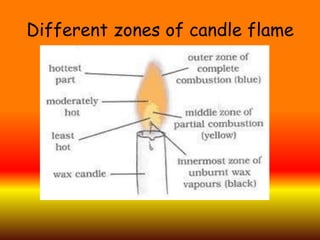
Different zones of candle flame
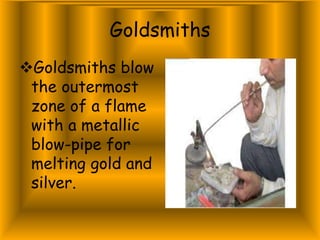
Goldsmiths
Goldsmiths blow
the outermost
zone of a flame
with a metallic
blow-pipe for
melting gold and
silver.
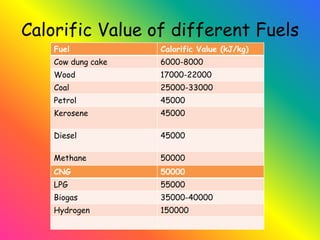
Calorific Value
The amount of heat energy
produced on complete
combustion of 1kg of a fuel is
called its ‘Calorific Value’
The calorific value of a fuel is
expressed in a unit called
‘Kilojoule per kg (kJ/kg)
Calorific Value of different Fuels
Fuel Calorific Value (kJ/kg)
Cow dung cake 6000-8000
Wood 17000-22000
Coal 25000-33000
Petrol 45000
Kerosene 45000
Diesel 45000
Methane 50000
CNG 50000
LPG 55000
Biogas 35000-40000
Hydrogen 150000
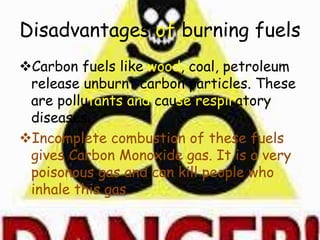
Disadvantages of burning fuels
Carbon fuels like wood, coal, petroleum
release unburnt carbon particles. These
are pollutants and cause respiratory
diseases.
Incomplete combustion of these fuels
gives Carbon Monoxide gas. It is a very
poisonous gas and can kill people who
inhale this gas.
Disadvantages of burning fuels
Combustion of most fuels releases
carbon dioxide in the environment.
Increased concentration of this gas
leads to ‘Global Warming’.
Burning of coal and diesel releases
oxides of Sulphur and nitrogen dissolve
in rain water and form acids. Such rains
are called ‘Acid Rains.’
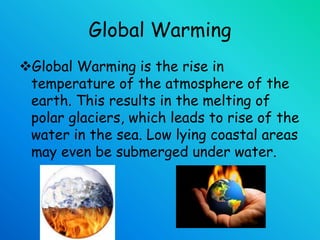
Global Warming
Global Warming is the rise in
temperature of the atmosphere of the
earth. This results in the melting of
polar glaciers, which leads to rise of the
water in the sea. Low lying coastal areas
may even be submerged under water.
Combustion and flame

Combustion and flame

  • 1.
    Combustion And Flame MadeBy:- Anmol Pant VIII-C 31
  • 2.
    A Flame ornot? Some substances burn with a flame whereas some do not. Example:- a) Candle burns with a flame. b) Whereas coal does not.
  • 3.
    What is combustion? Achemical process in which a substance reacts with oxygen to give out heat is called combustion. Example:- a) Burning of Magnesium ribbon.
  • 4.
    Fuels The substance thatundergoes combustion is said to be combustible. It is called a fuel. Fuels exist in three states:- a) Solid b) Liquid & c) Gaseous
  • 5.
    Solid Fuels Wood Cowdung Cakes Charcoal Coal
  • 6.
  • 7.
  • 8.
    Nuclear Reactions In thesun, heat and light are produced by nuclear reactions.
  • 9.
    Ignition Temperature The lowesttemperature at which a substance catches fire is called it’s ‘Ignition Temperature’
  • 10.
    Ignition temperature of differentmaterials Material Ignition Temperature White Phosphorus 35 degree Celsius Petrol 246 degree Celsius Kerosene 220 degree Celsius Diesel 210 degree Celsius Wood 300 degree Celsius Coal 454 degree Celsius Piece of paper 233 degree Celsius
  • 11.
    Inflammable Substances The substanceswhich have very low ignition temperature and can easily catch fire with a flame are called ‘Inflammable Substances.’ Examples a) Petrol b) Alcohol c) LPG( Liquified Petroleum Gas)
  • 12.
    How can firebe extinguished? Fire can be extinguished by:- a) Removing the combustible substance (Fuel). b) Cutting off the supply of Oxygen. c) Reducing the temperature of the fuel below its ignition temperature.
  • 13.
    Fire Extinguisher(Water) Water isan excellent extinguisher when it comes to paper, wood. Water cools the combustible substance below the ignition temperature so that the combustion is stopped. Water vapors also surround the flame so the supply of Oxygen is cut off.
  • 14.
    Fireman extinguishing fireusing water as extinguisher
  • 15.
    Fire Extinguisher Co Carbon dioxide is also a very effective extinguisher in all the cases especially involving electrical appliances and oil as in such cases water cannot be used. 2
  • 17.
    Types of Combustion Combustioncan be classified into three types:- a) Rapid Combustion b) Spontaneous Combustion c) Explosion d) Slow Combustion
  • 18.
    Rapid Combustion The combustionin which a substance burns rapidly and produces heat and light is called ‘Rapid Combustion.’ Example:- a) Burning of white Phosphorus at room temperature.
  • 19.
    Spontaneous Combustion The typeof combustion in which a material suddenly bursts into flames, without the application of any apparent cause is called ‘Spontaneous Combustion’
  • 20.
    Examples of Spontaneous Combustion. ForestFires caused by spontaneous combustion. Spontaneous combustion of coal dust in coal mines.
  • 21.
    Explosion A sudden reactionthat takes place with the evolution of heat, light and sound. A large amount of gas is formed in the reaction is liberated. Such a reaction is called an ‘Explosion.’ Example:- a) Burning of crackers
  • 22.
    Slow Combustion The typeof combustion which takes place at a slow rate at low temperatures is called ‘Slow Combustion.’ Example:- a) Respiration b) Rusting of Iron.
  • 23.
    Flame A flame isthe visible, gaseous part of a fire. It is caused by a highly exothermic reaction taking place in a thin zone. Some flames are hot enough to have ionized gaseous components of sufficient density to be considered plasma. However, a candle flame which has a temperature below 1500 °C produces too low an ion density to be considered a plasma.
  • 24.
    Substances which giveout flame. The substances which vaporize during combustion give flames. Example:- a) Kerosene and Wax burn with a flame b)Whereas Charcoal, on the other hand, does not vaporize and so does not produce a flame.
  • 25.
    Different zones ofcandle flame
  • 26.
    Goldsmiths Goldsmiths blow the outermost zoneof a flame with a metallic blow-pipe for melting gold and silver.
  • 27.
    Calorific Value The amountof heat energy produced on complete combustion of 1kg of a fuel is called its ‘Calorific Value’ The calorific value of a fuel is expressed in a unit called ‘Kilojoule per kg (kJ/kg)
  • 28.
    Calorific Value ofdifferent Fuels Fuel Calorific Value (kJ/kg) Cow dung cake 6000-8000 Wood 17000-22000 Coal 25000-33000 Petrol 45000 Kerosene 45000 Diesel 45000 Methane 50000 CNG 50000 LPG 55000 Biogas 35000-40000 Hydrogen 150000
  • 29.
    Disadvantages of burningfuels Carbon fuels like wood, coal, petroleum release unburnt carbon particles. These are pollutants and cause respiratory diseases. Incomplete combustion of these fuels gives Carbon Monoxide gas. It is a very poisonous gas and can kill people who inhale this gas.
  • 30.
    Disadvantages of burningfuels Combustion of most fuels releases carbon dioxide in the environment. Increased concentration of this gas leads to ‘Global Warming’. Burning of coal and diesel releases oxides of Sulphur and nitrogen dissolve in rain water and form acids. Such rains are called ‘Acid Rains.’
  • 31.
    Global Warming Global Warmingis the rise in temperature of the atmosphere of the earth. This results in the melting of polar glaciers, which leads to rise of the water in the sea. Low lying coastal areas may even be submerged under water.