 Renewable Energy
 Renewable energy is energy which is generated
from natural sources i.e. sun, wind, rain, tides and can
be generated again and again as and when required.
 They are available in plenty and by far most the
cleanest sources of energy available on this planet.
For eg: Energy that we receive from the sun can be
used to generate electricity. Similarly, energy from
wind, geothermal, biomass from plants, tides can be
used this form of energy to another form.
Non-Renewable Energy
 Non-Renewable energy is energy which is taken from
the sources that are available on the earth in limited
quantity and will vanish fifty-sixty years from now.
 Non-renewable sources are not environmental friendly
and can have serious affect on our health.
 They are called non-renewable because they cannot
be re-generated within a short span of time. Non-
renewable sources exist in the form of fossil fuels,
natural gas, oil and coal.
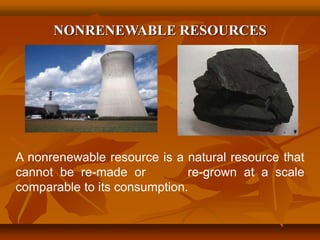
NONRENEWABLE RESOURCES
A nonrenewable resource is a natural resource that
cannot be re-made or re-grown at a scale
comparable to its consumption.
MERITS OF RE OVER NRE
 The sun, wind, geothermal, ocean energy are
available in the abundant quantity and free to use.
 The non-renewable sources of energy that we are
using are limited and are bound to expire one day.
 Renewable sources have low carbon emissions,
therefore they are considered as green and
environment friendly.
Conventional energy sources are:
 (a) Fossil fuel energy
 (b) Hydraulic energy
 (c) Nuclear energy
(a) Fossil fuel energy
 Coal, petroleum, and natural gas are called Fossil
fuel as these are formed by the decomposition of
the remains of dead plants and animals buried
under the earth for a long time.
 These are non-renewable sources of energy,
which, if exhausted, can not be replenished in a
short time. Their reserves are limited and are
considered very precious. These should be used
with care and caution to let them last long. These
are also contributing to the global environmental
pollution.
(ii). Petroleum
 It is a dark coloured, viscous and foul smelling
crude oil.
 The petroleum means rock oil. It is normally
found under the crust of earth trapped in rocks.
The crude oil is a complex mixture of several
solid liquid gaseous hydrocarbons mixed with
water, salt and earth particles. It is a natural
product obtained from oil wells.
The products obtained from crude petroleum as
follows:
 (i) Petroleum gas (below 40oC) used as LPG.
 (ii) Petrol (40oC to 170oC) for light vehicles.
 (iii) Kerosene (170 to 250oC) for household
and industrial use.
 (iv) Diesel oil (250 to 350oC) for heavy
vehicles.
 (v) Residual oil ; (a) Lubrication oils (b)
paraffin wax and (c) asphalt
 (vi) Fuel oil (350 to 400oC) for boilers and
furnaces.
(iii) Natural gas
 It consists about 95% Methane and rest ethane
and propane.
 It occurs deep under the crust of the earth
either alone or a long with oil above the
petroleum deposits. It is a product of
petroleum mining.
(c) Nuclear energy
 According to modern theories of atomic
structure, matter consists of minute particles
known as atoms. Heavier unstable atoms such
as U235,Th239, liberate large amount of heat
energy. The energy released by the complete
fission of one Kg of Uranium (U235), is equal
to the heat energy obtained by burning 4500
tonnes of coal (or) 220 tons of oil.
What waste do fossil fuels produce?
 Burning fossil fuels creates waste products that can
act as pollutants and have harmful environmental
effects.
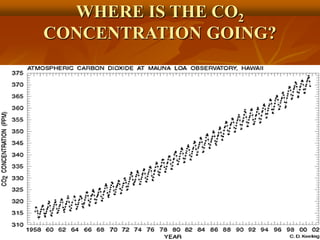
 Carbon dioxide – This greenhouse gas is the main
waste product of burning fossil fuels. Increased levels
of carbon dioxide due to human activities are thought
to be connected with global warming.
 Sulfur dioxide and nitric oxides – These gaseous
pollutants contribute to the formation of smog and
acid rain.
 Ash – This waste solid is disposed of in landfill sites.
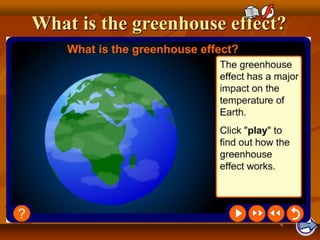
What is the greenhouse effect?
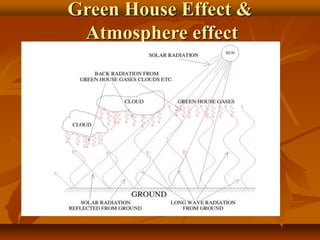
Green House Effect &
Atmosphere effect
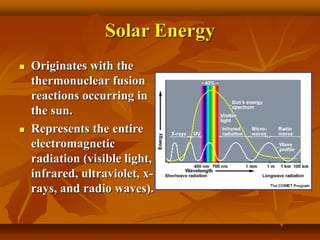
Solar Energy
 Originates with the
thermonuclear fusion
reactions occurring in
the sun.
 Represents the entire
electromagnetic
radiation (visible light,
infrared, ultraviolet, x-
rays, and radio waves).
Without Green House effect -
 Without it, the Earth’s average temperature
would be a chilling -18 0C.
 Then life on Earth would probably have never
emerged from the sea.
 Thanks to the greenhouse effect, however, heat
emitted from the Earth is trapped in the
atmosphere, providing us with a comfortable
average temperature of 14 0C.
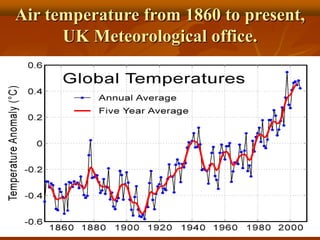
But when man makes it increase uncontrolled...
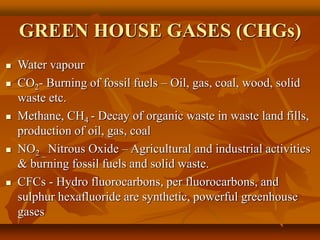
GREEN HOUSE GASES (CHGs)
 Water vapour
 CO2- Burning of fossil fuels – Oil, gas, coal, wood, solid
waste etc.
 Methane, CH4 - Decay of organic waste in waste land fills,
production of oil, gas, coal
 NO2 _ Nitrous Oxide – Agricultural and industrial activities
& burning fossil fuels and solid waste.
 CFCs - Hydro fluorocarbons, per fluorocarbons, and
sulphur hexafluoride are synthetic, powerful greenhouse
gases
WHERE IS THE CO2
CONCENTRATION GOING?
Air temperature from 1860 to present,
UK Meteorological office.
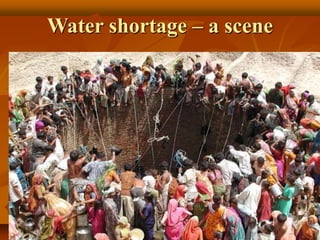
Water shortage – a scene
RENEWABLE RESOURCES
Renewable resources are natural resources
that can be replenished in a short period of
time.
● Solar ● Geothermal
● Wind ● Biomass
● Water
 Non-Conventional Energy Sources
 The sources of energy which are being
produced continuously in nature and are in
exhaustible are called renewable sources of
energy (or) non-conventional energy.
 Some of these sources are:
 (a) Wind energy
 (b) Tidal energy
 (c) Solar energy
Solar energy
 Energy from the sun is called solar energy. The
Sun’s energy comes from nuclear fusion
reaction that take place deep in the Sun.
Hydrogen nucleus fuse into helium nucleus.
The energy from these reactions flow out from
the sun and escape into space
 Wind energy
 Winds are caused because of two factors.
 1. The absorption of solar energy on the earth’s
surface and in the atmosphere.
 2. The rotation of the earth about its axis and its
motion around the Sun.
 A wind mill converts the kinetic energy of
moving air into Mechanical energy that can be
either used directly to run the Machine or to run
the generator to produce electricity.
 Tides are generated primarily by the
gravitational attraction between the earth and
the Moon. They arise twice a day in Mid-
Ocean.
 Basically in a tidal power station water at high
tide is first trapped in a artificial basin and then
allowed to escape at low tide.
 The escaping water is used to drive water
turbines, which in turn drive electrical
generators.

Renewable and Non- renewable energy Sources

  • 1.
     Renewable Energy Renewable energy is energy which is generated from natural sources i.e. sun, wind, rain, tides and can be generated again and again as and when required.  They are available in plenty and by far most the cleanest sources of energy available on this planet. For eg: Energy that we receive from the sun can be used to generate electricity. Similarly, energy from wind, geothermal, biomass from plants, tides can be used this form of energy to another form.
  • 2.
    Non-Renewable Energy  Non-Renewableenergy is energy which is taken from the sources that are available on the earth in limited quantity and will vanish fifty-sixty years from now.  Non-renewable sources are not environmental friendly and can have serious affect on our health.  They are called non-renewable because they cannot be re-generated within a short span of time. Non- renewable sources exist in the form of fossil fuels, natural gas, oil and coal.
  • 3.
    NONRENEWABLE RESOURCES A nonrenewableresource is a natural resource that cannot be re-made or re-grown at a scale comparable to its consumption.
  • 4.
    MERITS OF REOVER NRE  The sun, wind, geothermal, ocean energy are available in the abundant quantity and free to use.  The non-renewable sources of energy that we are using are limited and are bound to expire one day.  Renewable sources have low carbon emissions, therefore they are considered as green and environment friendly.
  • 5.
    Conventional energy sourcesare:  (a) Fossil fuel energy  (b) Hydraulic energy  (c) Nuclear energy
  • 6.
    (a) Fossil fuelenergy  Coal, petroleum, and natural gas are called Fossil fuel as these are formed by the decomposition of the remains of dead plants and animals buried under the earth for a long time.  These are non-renewable sources of energy, which, if exhausted, can not be replenished in a short time. Their reserves are limited and are considered very precious. These should be used with care and caution to let them last long. These are also contributing to the global environmental pollution.
  • 7.
    (ii). Petroleum  Itis a dark coloured, viscous and foul smelling crude oil.  The petroleum means rock oil. It is normally found under the crust of earth trapped in rocks. The crude oil is a complex mixture of several solid liquid gaseous hydrocarbons mixed with water, salt and earth particles. It is a natural product obtained from oil wells.
  • 8.
    The products obtainedfrom crude petroleum as follows:  (i) Petroleum gas (below 40oC) used as LPG.  (ii) Petrol (40oC to 170oC) for light vehicles.  (iii) Kerosene (170 to 250oC) for household and industrial use.  (iv) Diesel oil (250 to 350oC) for heavy vehicles.  (v) Residual oil ; (a) Lubrication oils (b) paraffin wax and (c) asphalt  (vi) Fuel oil (350 to 400oC) for boilers and furnaces.
  • 9.
    (iii) Natural gas It consists about 95% Methane and rest ethane and propane.  It occurs deep under the crust of the earth either alone or a long with oil above the petroleum deposits. It is a product of petroleum mining.
  • 10.
    (c) Nuclear energy According to modern theories of atomic structure, matter consists of minute particles known as atoms. Heavier unstable atoms such as U235,Th239, liberate large amount of heat energy. The energy released by the complete fission of one Kg of Uranium (U235), is equal to the heat energy obtained by burning 4500 tonnes of coal (or) 220 tons of oil.
  • 11.
    What waste dofossil fuels produce?  Burning fossil fuels creates waste products that can act as pollutants and have harmful environmental effects.  Carbon dioxide – This greenhouse gas is the main waste product of burning fossil fuels. Increased levels of carbon dioxide due to human activities are thought to be connected with global warming.  Sulfur dioxide and nitric oxides – These gaseous pollutants contribute to the formation of smog and acid rain.  Ash – This waste solid is disposed of in landfill sites.
  • 12.
    What is thegreenhouse effect?
  • 13.
    Green House Effect& Atmosphere effect
  • 14.
    Solar Energy  Originateswith the thermonuclear fusion reactions occurring in the sun.  Represents the entire electromagnetic radiation (visible light, infrared, ultraviolet, x- rays, and radio waves).
  • 15.
    Without Green Houseeffect -  Without it, the Earth’s average temperature would be a chilling -18 0C.  Then life on Earth would probably have never emerged from the sea.  Thanks to the greenhouse effect, however, heat emitted from the Earth is trapped in the atmosphere, providing us with a comfortable average temperature of 14 0C. But when man makes it increase uncontrolled...
  • 16.
    GREEN HOUSE GASES(CHGs)  Water vapour  CO2- Burning of fossil fuels – Oil, gas, coal, wood, solid waste etc.  Methane, CH4 - Decay of organic waste in waste land fills, production of oil, gas, coal  NO2 _ Nitrous Oxide – Agricultural and industrial activities & burning fossil fuels and solid waste.  CFCs - Hydro fluorocarbons, per fluorocarbons, and sulphur hexafluoride are synthetic, powerful greenhouse gases
  • 17.
    WHERE IS THECO2 CONCENTRATION GOING?
  • 18.
    Air temperature from1860 to present, UK Meteorological office.
  • 19.
  • 20.
    RENEWABLE RESOURCES Renewable resourcesare natural resources that can be replenished in a short period of time. ● Solar ● Geothermal ● Wind ● Biomass ● Water
  • 21.
     Non-Conventional EnergySources  The sources of energy which are being produced continuously in nature and are in exhaustible are called renewable sources of energy (or) non-conventional energy.  Some of these sources are:  (a) Wind energy  (b) Tidal energy  (c) Solar energy
  • 22.
    Solar energy  Energyfrom the sun is called solar energy. The Sun’s energy comes from nuclear fusion reaction that take place deep in the Sun. Hydrogen nucleus fuse into helium nucleus. The energy from these reactions flow out from the sun and escape into space
  • 23.
     Wind energy Winds are caused because of two factors.  1. The absorption of solar energy on the earth’s surface and in the atmosphere.  2. The rotation of the earth about its axis and its motion around the Sun.  A wind mill converts the kinetic energy of moving air into Mechanical energy that can be either used directly to run the Machine or to run the generator to produce electricity.
  • 24.
     Tides aregenerated primarily by the gravitational attraction between the earth and the Moon. They arise twice a day in Mid- Ocean.  Basically in a tidal power station water at high tide is first trapped in a artificial basin and then allowed to escape at low tide.  The escaping water is used to drive water turbines, which in turn drive electrical generators.

Editor's Notes

  • #13 Teacher notes This four-stage interactive animation could be used to explain how the greenhouse effect works. While showing the animation it is important to highlight the longer wavelength of the infrared that is emitted by the Earth. It is this radiation that is partially absorbed by greenhouse gases in the atmosphere, raising the temperature of the atmosphere. See the Chemistry “Climate Change” presentation for more information about the greenhouse effect.