NON RENEWABLE
ENERGY RESOURCES
AKHIL LAL P
MBA-MCMAT
ENERGY RESOURCES
• Energy is the capacity to do work and is required for life processes. An
energy resource is something that can produce heat, power life, move
objects, or produce electricity.
•
NON RENEWABLE ENERGY RESOURCES
• Non-renewable energy is energy which is taken
from the sources that are available on the earth in
limited quantity and will vanish fifty-sixty years
from now.
• Non-renewable sources are not environmental
friendly and can have serious affect on our health.
• They are called non-renewable because they
cannot be re-generated within a short span of
time. Non-renewable sources exist in the form of
fossil fuels, natural gas, oil and coal.
FOSSIL FUEL ENERGY
• Coal, petroleum, and natural gas are called fossil fuel as these are formed by the
decomposition of the remains of dead plants and animals buried under the earth
for a long time.
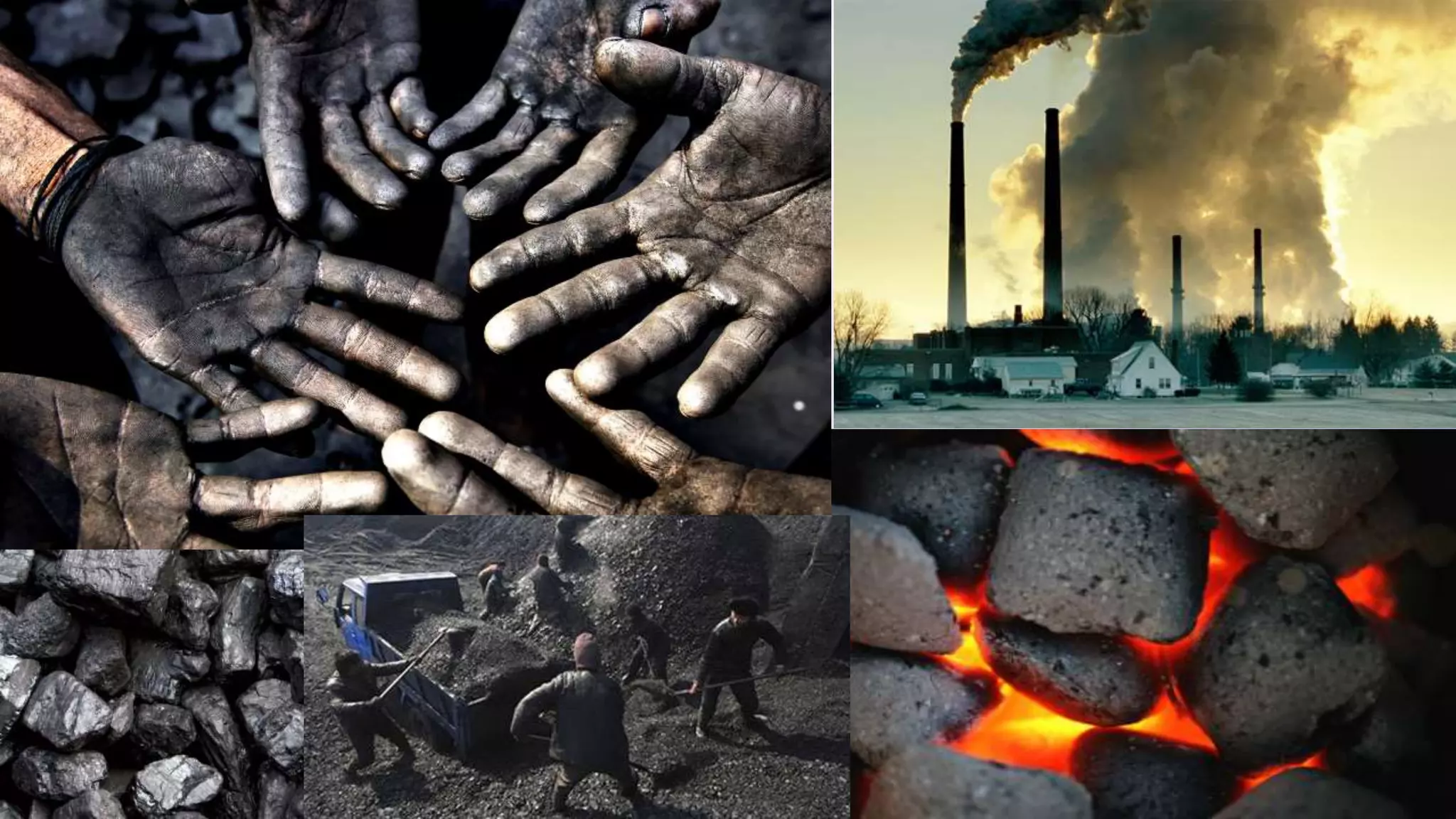
HOW IS COAL FORMED?
• Coal is formed by carbon, hydrogen, oxygen, nitrogen and
varying amounts of sulphur. The dead plants from the
swamps are piled up with sand and mud on top. Without
water the carbon increases and forms a hard black
substance called coal.
• Coal is used as a fossil fuel to produce electricity and heat in
something such as a train.
IMPACT OF COAL MINING ON ENVIRONMENT
• Impact of mining on Air
• Co2 emission
• Ozone depletion
• Global warming and climate change
• Mine fires
• Impact on water
• Impact on land
• Mining waste
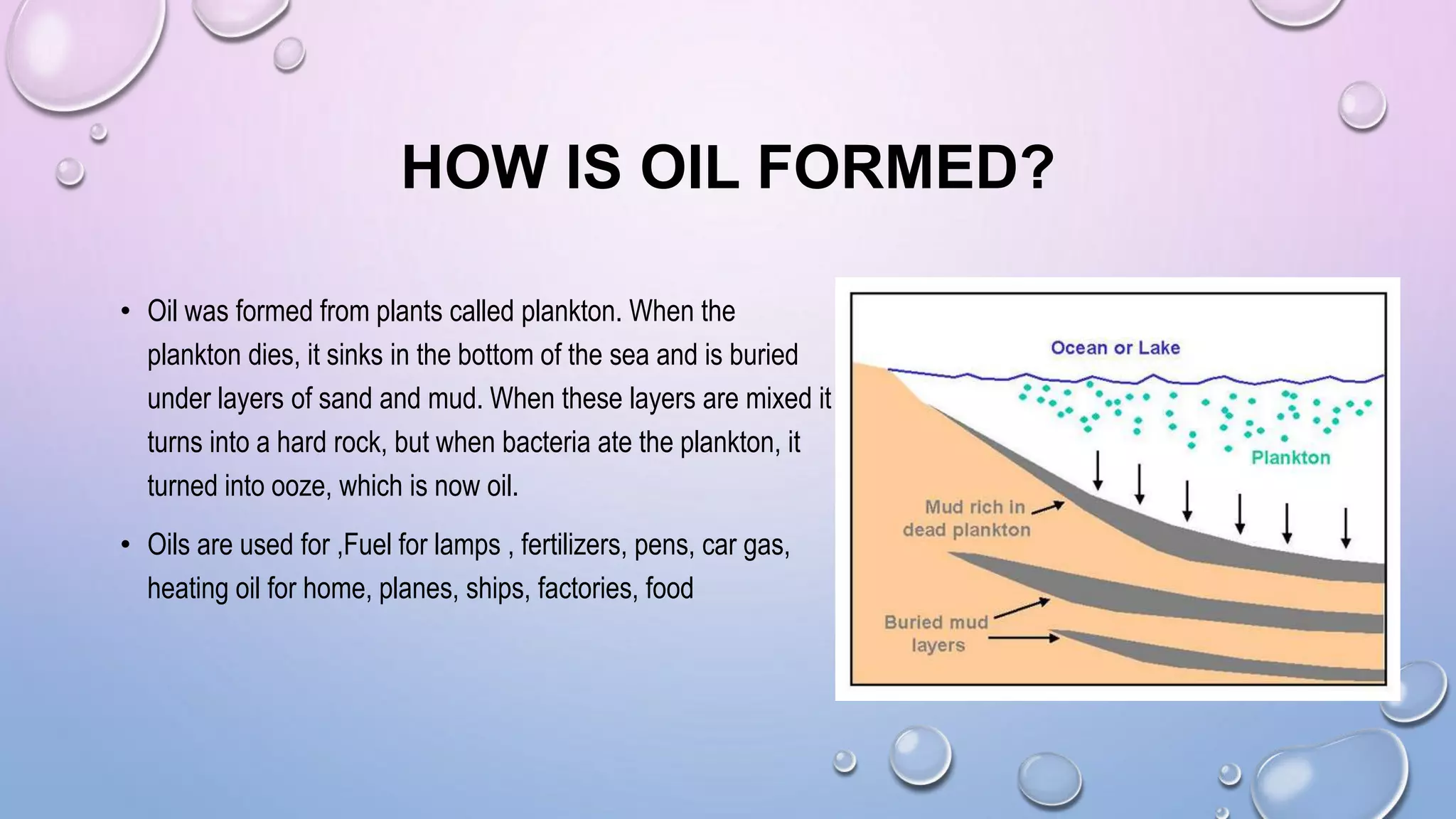
HOW IS OIL FORMED?
• Oil was formed from plants called plankton. When the
plankton dies, it sinks in the bottom of the sea and is buried
under layers of sand and mud. When these layers are mixed it
turns into a hard rock, but when bacteria ate the plankton, it
turned into ooze, which is now oil.
• Oils are used for ,Fuel for lamps , fertilizers, pens, car gas,
heating oil for home, planes, ships, factories, food
Advantages;
• Widely and easily distributed all over world
• Easy to store and transport
• Cleaner and easier to burn than coal
• Reliable electricity
Disadvantages;
• Growing demand
• Non-renewable and fast depleting( used up fast)
• Burning produces carbon dioxide which is major cause for global warmingleaves
harmful products when combusting
• Increasing prices
HOW IS NATURAL GAS FORMED?
• It is formed from a plant called plankton just like oil. The
plankton died, sank to the bottom, and sand and mud
covered it up. Over the years, bacteria and heat pressure
turned the plankton into natural gas.
• Natural gas is used as fossil fuel when people are heating
homes, buildings, heating water, fertilizations or cooking
NUCLEAR ENERGY
• Nuclear energy is a powerful source of energy, generated during a nuclear reaction, by change in
the nucleus of an atom.
• Two ways to obtain nuclear energy:
1. Nuclear fission
2. Nuclear fusion
• Nuclear power is the use of sustained nuclear fission to generate heat and electricity. Nuclear power plants provide
about 5.7% of the world's energy and 13% of the world's electricity.
• Environmentalists for nuclear energy contend that nuclear power is a sustainable energy source that reduces carbon
emissions.
ADVANTAGES OF NUCLEAR ENERGY
• Nuclear plants bring job and prosperity to country
• Provides the world with the most of its electricity
• Not many nuclear have happened; natural disasters cause more damages
• Canada has easy access to uranium
• Its good for the economy
• Lot of energy is produced from a small amount of uranium
• Do not emit co2
• Generating electricity from nuclear energy cause little pollution
DISADVANTAGES OF NUCLEAR ENERGY
• Disposing of nuclear waste is very difficult and needs to be done after a
lot planning by the experts
• The radioactive waste takes years to be no longer hazardous
• Waste must be stored very carefully for a long time
• Storing is a huge problem. Waste is very dangerous. It is radioactive
• Nuclear power plants are very expensive to build
• Uranium is not renewable and can lead to environmental problems
through mining and processing
NUCLEAR FISSION
• Nuclear fission reaction, the nucleus of a heavy radioactive element like uranium, plutonium or thorium splits up into
smaller nuclei, when bombarded by low energy neutrons. A huge amount of heat is generated in this process, which is
used in nuclear power plants to generate electricity.
NUCLEAR FUSION
• Nuclear fusion reaction involves the combination or fusion of two light elements to form a heavier element and release
uncontrollable energy. Thus it cannot be used to generate electricity, unlike fission reaction.
• The heat and light that we get from sun, is all due to the continuous reactions going on inside it. We can now imagine
how much energy would be released in the nuclear fusion reaction, that it is the source of sun’s energy

Non renewable-energy

  • 1.
  • 2.
    ENERGY RESOURCES • Energyis the capacity to do work and is required for life processes. An energy resource is something that can produce heat, power life, move objects, or produce electricity. •
  • 3.
    NON RENEWABLE ENERGYRESOURCES • Non-renewable energy is energy which is taken from the sources that are available on the earth in limited quantity and will vanish fifty-sixty years from now. • Non-renewable sources are not environmental friendly and can have serious affect on our health. • They are called non-renewable because they cannot be re-generated within a short span of time. Non-renewable sources exist in the form of fossil fuels, natural gas, oil and coal.
  • 4.
    FOSSIL FUEL ENERGY •Coal, petroleum, and natural gas are called fossil fuel as these are formed by the decomposition of the remains of dead plants and animals buried under the earth for a long time.
  • 5.
    HOW IS COALFORMED? • Coal is formed by carbon, hydrogen, oxygen, nitrogen and varying amounts of sulphur. The dead plants from the swamps are piled up with sand and mud on top. Without water the carbon increases and forms a hard black substance called coal. • Coal is used as a fossil fuel to produce electricity and heat in something such as a train.
  • 7.
    IMPACT OF COALMINING ON ENVIRONMENT • Impact of mining on Air • Co2 emission • Ozone depletion • Global warming and climate change • Mine fires • Impact on water • Impact on land • Mining waste
  • 8.
    HOW IS OILFORMED? • Oil was formed from plants called plankton. When the plankton dies, it sinks in the bottom of the sea and is buried under layers of sand and mud. When these layers are mixed it turns into a hard rock, but when bacteria ate the plankton, it turned into ooze, which is now oil. • Oils are used for ,Fuel for lamps , fertilizers, pens, car gas, heating oil for home, planes, ships, factories, food
  • 9.
    Advantages; • Widely andeasily distributed all over world • Easy to store and transport • Cleaner and easier to burn than coal • Reliable electricity Disadvantages; • Growing demand • Non-renewable and fast depleting( used up fast) • Burning produces carbon dioxide which is major cause for global warmingleaves harmful products when combusting • Increasing prices
  • 10.
    HOW IS NATURALGAS FORMED? • It is formed from a plant called plankton just like oil. The plankton died, sank to the bottom, and sand and mud covered it up. Over the years, bacteria and heat pressure turned the plankton into natural gas. • Natural gas is used as fossil fuel when people are heating homes, buildings, heating water, fertilizations or cooking
  • 11.
    NUCLEAR ENERGY • Nuclearenergy is a powerful source of energy, generated during a nuclear reaction, by change in the nucleus of an atom. • Two ways to obtain nuclear energy: 1. Nuclear fission 2. Nuclear fusion
  • 12.
    • Nuclear poweris the use of sustained nuclear fission to generate heat and electricity. Nuclear power plants provide about 5.7% of the world's energy and 13% of the world's electricity. • Environmentalists for nuclear energy contend that nuclear power is a sustainable energy source that reduces carbon emissions.
  • 13.
    ADVANTAGES OF NUCLEARENERGY • Nuclear plants bring job and prosperity to country • Provides the world with the most of its electricity • Not many nuclear have happened; natural disasters cause more damages • Canada has easy access to uranium • Its good for the economy • Lot of energy is produced from a small amount of uranium • Do not emit co2 • Generating electricity from nuclear energy cause little pollution
  • 14.
    DISADVANTAGES OF NUCLEARENERGY • Disposing of nuclear waste is very difficult and needs to be done after a lot planning by the experts • The radioactive waste takes years to be no longer hazardous • Waste must be stored very carefully for a long time • Storing is a huge problem. Waste is very dangerous. It is radioactive • Nuclear power plants are very expensive to build • Uranium is not renewable and can lead to environmental problems through mining and processing
  • 15.
    NUCLEAR FISSION • Nuclearfission reaction, the nucleus of a heavy radioactive element like uranium, plutonium or thorium splits up into smaller nuclei, when bombarded by low energy neutrons. A huge amount of heat is generated in this process, which is used in nuclear power plants to generate electricity.
  • 16.
    NUCLEAR FUSION • Nuclearfusion reaction involves the combination or fusion of two light elements to form a heavier element and release uncontrollable energy. Thus it cannot be used to generate electricity, unlike fission reaction. • The heat and light that we get from sun, is all due to the continuous reactions going on inside it. We can now imagine how much energy would be released in the nuclear fusion reaction, that it is the source of sun’s energy