Outlines
• Introduction.
• Immunity to infection.
• Types of primary immunodeficiency
• Clinical approach to the child with recurrent
infections.
• History & Examination.
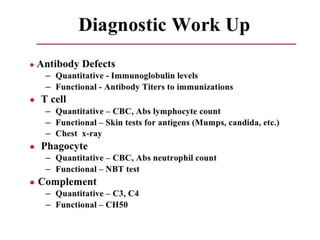
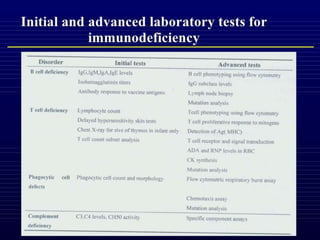
• Investigations.
• Treatment
Immunology
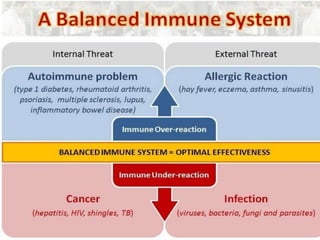
• Definition: Study of the immune system, both
in wellness and disease
• - Infectious disease
• - Autoimmune disease
• - Allergic disorder
• - Oncology
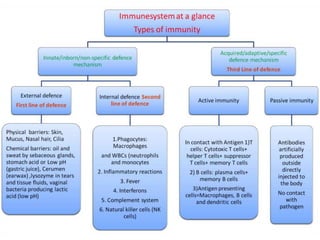
Immunity to infection
• The different areas of the immune system to
be consider are:-
• Humoral immunity(B-cells and IG production)
• Cell-mediated immunity(T-cells) ;
granulocytes(neutrophils , polymorphs).
• Complement cascade.
Microorganism
• Invading organisms can be divided into
intracellular and extracellular.
• Extracellular organisms are mainly bacteria, and
are predominantly cleared by phagocytic
cells,aided by opsonization with
antibody(produced by B-cells) and complement.
• Intracellular organisms such as viruses,
Mycobacterium tuberculosis and listeria, they
are hidden from extracellular defenses, and the
immunological response against these organisms
is predominantly mediated by cellular immunity.
INTRODUCTION
• Immunodeficiency is a state in which the immune system’s
ability to fight infectious disease is either compromised or is
completely absent.
• Two Types:-
• Primary Immunodeficiency :Usually congenital, resulting
from genetic defects in some components of the immune
system.
• Secondary (Acquired):as a result of other diseases or
conditions such as:
• DRUGS
• INFECTIONS
• Malnutrition
Incidence
• Exact incidence is not known but it is
estimated to be 1:10000
Types of primary immunodeficiency
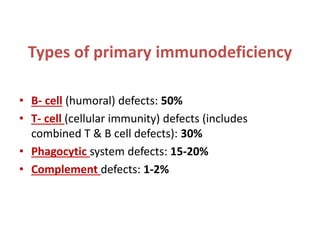
• B- cell (humoral) defects: 50%
• T- cell (cellular immunity) defects (includes
combined T & B cell defects): 30%
• Phagocytic system defects: 15-20%
• Complement defects: 1-2%
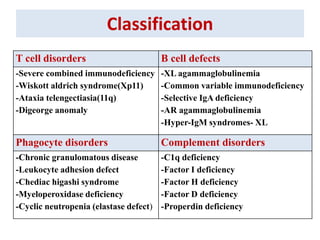
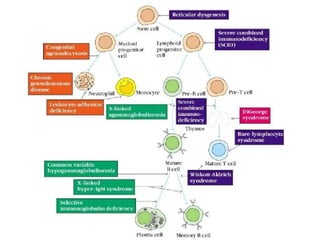
Classification
T cell disorders B cell defects
-Severe combined immunodeficiency
-Wiskott aldrich syndrome(Xp11)
-Ataxia telengectiasia(11q)
-Digeorge anomaly
-XL agammaglobulinemia
-Common variable immunodeficiency
-Selective IgA deficiency
-AR agammaglobulinemia
-Hyper-IgM syndromes- XL
Phagocyte disorders Complement disorders
-Chronic granulomatous disease
-Leukocyte adhesion defect
-Chediac higashi syndrome
-Myeloperoxidase deficiency
-Cyclic neutropenia (elastase defect)
-C1q deficiency
-Factor I deficiency
-Factor H deficiency
-Factor D deficiency
-Properdin deficiency
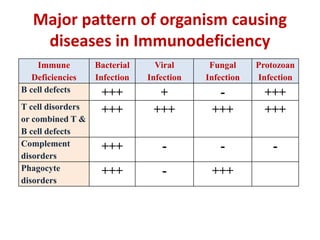
Major pattern of organism causing
diseases in Immunodeficiency
Immune
Deficiencies
Bacterial
Infection
Viral
Infection
Fungal
Infection
Protozoan
Infection
B cell defects +++ + - +++
T cell disorders
or combined T &
B cell defects
+++ +++ +++ +++
Complement
disorders
+++ - - -
Phagocyte
disorders
+++ - +++
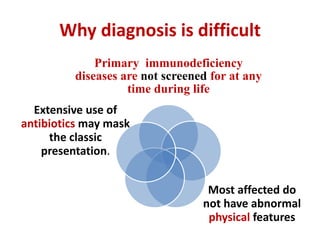
Why diagnosis is difficult
Primary immunodeficiency
diseases are not screened for at any
time during life
Most affected do
not have abnormal
physical features
Extensive use of
antibiotics may mask
the classic
presentation.
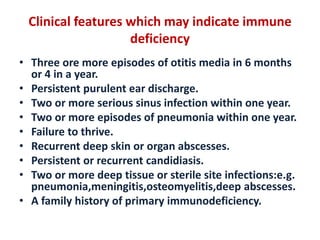
Clinical features which may indicate immune
deficiency
• Three ore more episodes of otitis media in 6 months
or 4 in a year.
• Persistent purulent ear discharge.
• Two or more serious sinus infection within one year.
• Two or more episodes of pneumonia within one year.
• Failure to thrive.
• Recurrent deep skin or organ abscesses.
• Persistent or recurrent candidiasis.
• Two or more deep tissue or sterile site infections:e.g.
pneumonia,meningitis,osteomyelitis,deep abscesses.
• A family history of primary immunodeficiency.
Diagnostic approach- history
• Whether patients have a history of risk factors for
infection
• Symptoms and risk factors for secondary
immunodeficiency disorders
• Family history is important
Age of presentation
• Onset before age 6 mo suggests a T-cell defect
• Onset between the age of 6 and 12 mo may suggest
combined B- and T-cell defects or a B-cell defect
• Later than 12 mo usually suggests a B-cell defect or
secondary immunodeficiency
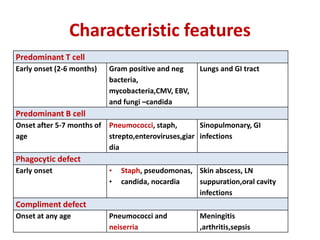
Characteristic features
Predominant T cell
Early onset (2-6 months) Gram positive and neg
bacteria,
mycobacteria,CMV, EBV,
and fungi –candida
Lungs and GI tract
Predominant B cell
Onset after 5-7 months of
age
Pneumococci, staph,
strepto,enteroviruses,giar
dia
Sinopulmonary, GI
infections
Phagocytic defect
Early onset • Staph, pseudomonas,
• candida, nocardia
Skin abscess, LN
suppuration,oral cavity
infections
Compliment defect
Onset at any age Pneumococci and
neiserria
Meningitis
,arthritis,sepsis
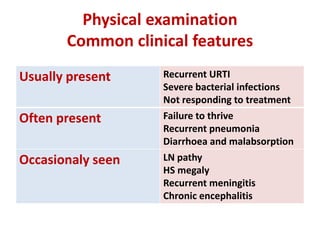
Physical examination
Common clinical features
Usually present Recurrent URTI
Severe bacterial infections
Not responding to treatment
Often present Failure to thrive
Recurrent pneumonia
Diarrhoea and malabsorption
Occasionaly seen LN pathy
HS megaly
Recurrent meningitis
Chronic encephalitis
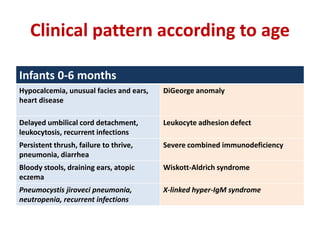
Clinical pattern according to age
Infants 0-6 months
Hypocalcemia, unusual facies and ears,
heart disease
DiGeorge anomaly
Delayed umbilical cord detachment,
leukocytosis, recurrent infections
Leukocyte adhesion defect
Persistent thrush, failure to thrive,
pneumonia, diarrhea
Severe combined immunodeficiency
Bloody stools, draining ears, atopic
eczema
Wiskott-Aldrich syndrome
Pneumocystis jiroveci pneumonia,
neutropenia, recurrent infections
X-linked hyper-IgM syndrome
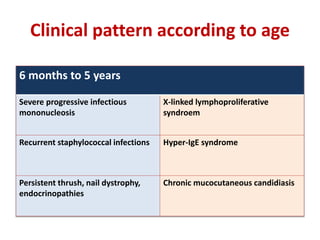
Clinical pattern according to age
6 months to 5 years
Severe progressive infectious
mononucleosis
X-linked lymphoproliferative
syndroem
Recurrent staphylococcal infections Hyper-IgE syndrome
Persistent thrush, nail dystrophy,
endocrinopathies
Chronic mucocutaneous candidiasis
Clinical pattern according to age
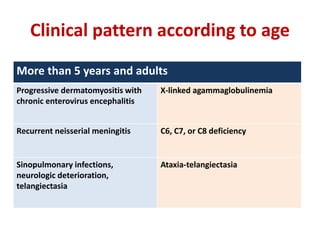
More than 5 years and adults
Progressive dermatomyositis with
chronic enterovirus encephalitis
X-linked agammaglobulinemia
Recurrent neisserial meningitis C6, C7, or C8 deficiency
Sinopulmonary infections,
neurologic deterioration,
telangiectasia
Ataxia-telangiectasia
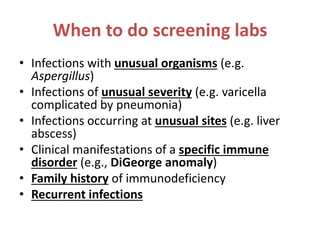
When to do screening labs
• Infections with unusual organisms (e.g.
Aspergillus)
• Infections of unusual severity (e.g. varicella
complicated by pneumonia)
• Infections occurring at unusual sites (e.g. liver
abscess)
• Clinical manifestations of a specific immune
disorder (e.g., DiGeorge anomaly)
• Family history of immunodeficiency
• Recurrent infections
Key Points
• High index of suspicions
• Thorough history and complete physical
examination is must
• Begin with screening tests and approperiate
additional testing as required
• Teach patients how to avoid infections ,and
do required preventive measures
• Early diagnosis and prompt treatment could
be life saving
References
• Nelsons textbook of pediatrics 19 th ed
• Diagnostic Approach to Primary
Immunodeficiency Disorders; indian
pediatrics,june 2013
• Approach to the Patient With Suspected
Immunodeficiency: Immunodeficiency
Disorders: Merck Manual
• TUTORIALS in Paediatric Differential
Diagnosis.
• www.uptodate.com
THANKS FOR YOUR
PATIENCE….

Immunodeficiency in children

  • 2.
    Outlines • Introduction. • Immunityto infection. • Types of primary immunodeficiency • Clinical approach to the child with recurrent infections. • History & Examination. • Investigations. • Treatment
  • 3.
    Immunology • Definition: Studyof the immune system, both in wellness and disease • - Infectious disease • - Autoimmune disease • - Allergic disorder • - Oncology
  • 6.
    Immunity to infection •The different areas of the immune system to be consider are:- • Humoral immunity(B-cells and IG production) • Cell-mediated immunity(T-cells) ; granulocytes(neutrophils , polymorphs). • Complement cascade.
  • 7.
    Microorganism • Invading organismscan be divided into intracellular and extracellular. • Extracellular organisms are mainly bacteria, and are predominantly cleared by phagocytic cells,aided by opsonization with antibody(produced by B-cells) and complement. • Intracellular organisms such as viruses, Mycobacterium tuberculosis and listeria, they are hidden from extracellular defenses, and the immunological response against these organisms is predominantly mediated by cellular immunity.
  • 8.
    INTRODUCTION • Immunodeficiency isa state in which the immune system’s ability to fight infectious disease is either compromised or is completely absent. • Two Types:- • Primary Immunodeficiency :Usually congenital, resulting from genetic defects in some components of the immune system. • Secondary (Acquired):as a result of other diseases or conditions such as: • DRUGS • INFECTIONS • Malnutrition
  • 9.
    Incidence • Exact incidenceis not known but it is estimated to be 1:10000
  • 10.
    Types of primaryimmunodeficiency • B- cell (humoral) defects: 50% • T- cell (cellular immunity) defects (includes combined T & B cell defects): 30% • Phagocytic system defects: 15-20% • Complement defects: 1-2%
  • 11.
    Classification T cell disordersB cell defects -Severe combined immunodeficiency -Wiskott aldrich syndrome(Xp11) -Ataxia telengectiasia(11q) -Digeorge anomaly -XL agammaglobulinemia -Common variable immunodeficiency -Selective IgA deficiency -AR agammaglobulinemia -Hyper-IgM syndromes- XL Phagocyte disorders Complement disorders -Chronic granulomatous disease -Leukocyte adhesion defect -Chediac higashi syndrome -Myeloperoxidase deficiency -Cyclic neutropenia (elastase defect) -C1q deficiency -Factor I deficiency -Factor H deficiency -Factor D deficiency -Properdin deficiency
  • 13.
    Major pattern oforganism causing diseases in Immunodeficiency Immune Deficiencies Bacterial Infection Viral Infection Fungal Infection Protozoan Infection B cell defects +++ + - +++ T cell disorders or combined T & B cell defects +++ +++ +++ +++ Complement disorders +++ - - - Phagocyte disorders +++ - +++
  • 14.
    Why diagnosis isdifficult Primary immunodeficiency diseases are not screened for at any time during life Most affected do not have abnormal physical features Extensive use of antibiotics may mask the classic presentation.
  • 15.
    Clinical features whichmay indicate immune deficiency • Three ore more episodes of otitis media in 6 months or 4 in a year. • Persistent purulent ear discharge. • Two or more serious sinus infection within one year. • Two or more episodes of pneumonia within one year. • Failure to thrive. • Recurrent deep skin or organ abscesses. • Persistent or recurrent candidiasis. • Two or more deep tissue or sterile site infections:e.g. pneumonia,meningitis,osteomyelitis,deep abscesses. • A family history of primary immunodeficiency.
  • 16.
    Diagnostic approach- history •Whether patients have a history of risk factors for infection • Symptoms and risk factors for secondary immunodeficiency disorders • Family history is important
  • 17.
    Age of presentation •Onset before age 6 mo suggests a T-cell defect • Onset between the age of 6 and 12 mo may suggest combined B- and T-cell defects or a B-cell defect • Later than 12 mo usually suggests a B-cell defect or secondary immunodeficiency
  • 18.
    Characteristic features Predominant Tcell Early onset (2-6 months) Gram positive and neg bacteria, mycobacteria,CMV, EBV, and fungi –candida Lungs and GI tract Predominant B cell Onset after 5-7 months of age Pneumococci, staph, strepto,enteroviruses,giar dia Sinopulmonary, GI infections Phagocytic defect Early onset • Staph, pseudomonas, • candida, nocardia Skin abscess, LN suppuration,oral cavity infections Compliment defect Onset at any age Pneumococci and neiserria Meningitis ,arthritis,sepsis
  • 19.
    Physical examination Common clinicalfeatures Usually present Recurrent URTI Severe bacterial infections Not responding to treatment Often present Failure to thrive Recurrent pneumonia Diarrhoea and malabsorption Occasionaly seen LN pathy HS megaly Recurrent meningitis Chronic encephalitis
  • 20.
    Clinical pattern accordingto age Infants 0-6 months Hypocalcemia, unusual facies and ears, heart disease DiGeorge anomaly Delayed umbilical cord detachment, leukocytosis, recurrent infections Leukocyte adhesion defect Persistent thrush, failure to thrive, pneumonia, diarrhea Severe combined immunodeficiency Bloody stools, draining ears, atopic eczema Wiskott-Aldrich syndrome Pneumocystis jiroveci pneumonia, neutropenia, recurrent infections X-linked hyper-IgM syndrome
  • 21.
    Clinical pattern accordingto age 6 months to 5 years Severe progressive infectious mononucleosis X-linked lymphoproliferative syndroem Recurrent staphylococcal infections Hyper-IgE syndrome Persistent thrush, nail dystrophy, endocrinopathies Chronic mucocutaneous candidiasis
  • 22.
    Clinical pattern accordingto age More than 5 years and adults Progressive dermatomyositis with chronic enterovirus encephalitis X-linked agammaglobulinemia Recurrent neisserial meningitis C6, C7, or C8 deficiency Sinopulmonary infections, neurologic deterioration, telangiectasia Ataxia-telangiectasia
  • 23.
    When to doscreening labs • Infections with unusual organisms (e.g. Aspergillus) • Infections of unusual severity (e.g. varicella complicated by pneumonia) • Infections occurring at unusual sites (e.g. liver abscess) • Clinical manifestations of a specific immune disorder (e.g., DiGeorge anomaly) • Family history of immunodeficiency • Recurrent infections
  • 31.
    Key Points • Highindex of suspicions • Thorough history and complete physical examination is must • Begin with screening tests and approperiate additional testing as required • Teach patients how to avoid infections ,and do required preventive measures • Early diagnosis and prompt treatment could be life saving
  • 32.
    References • Nelsons textbookof pediatrics 19 th ed • Diagnostic Approach to Primary Immunodeficiency Disorders; indian pediatrics,june 2013 • Approach to the Patient With Suspected Immunodeficiency: Immunodeficiency Disorders: Merck Manual • TUTORIALS in Paediatric Differential Diagnosis. • www.uptodate.com
  • 33.