A PRESENTATION ON
CONFLICT MANAGMENT
PRESENTED BY
Malik Rehan
Hyder Ali
OBJECTIVES
• What is conflict
• Causes of conflict
• Types of conflict
• Different views on conflict
• What is conflict management
• Ways of managing conflict
• Tips for handling conflict in an organization
WHAT IS CONFLICT???
A disagreement between people that may be
the result of different:
• – Ideas
• – Perspectives
• – Priorities
• – Preferences
• – Beliefs
• – Values
• – Goals
• – Organisational structures
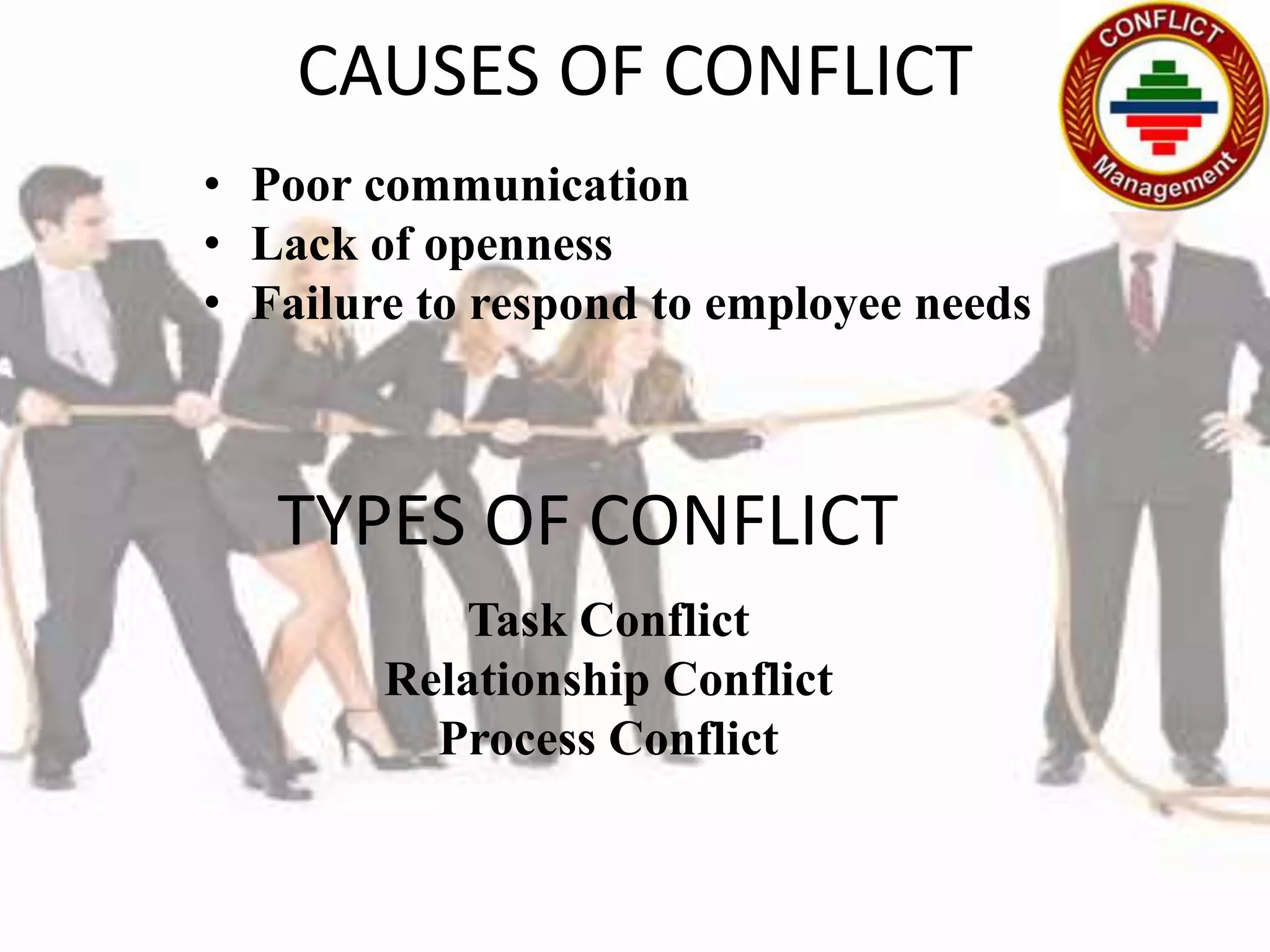
CAUSES OF CONFLICT
• Poor communication
• Lack of openness
• Failure to respond to employee needs
TYPES OF CONFLICT
Task Conflict
Relationship Conflict
Process Conflict
Transitions in Conflict Thought
Human Relations View of Conflict
• The belief that conflict is a natural and
inevitable outcome in any group.
Traditional View of Conflict
The belief that all conflict is harmful and must be avoided.
Interactionist View of Conflict
The belief that conflict is not only a positive force in a group
but that it is absolutely necessary for a group to perform
effectively.
Functional versus Dysfunctional
Conflict
Functional Conflict
Conflict that supports the goals
of the group and improves its
performance.
Dysfunctional Conflict
Conflict that hinders group
performance
POSITIVE
NEGATIVE
WHAT IS CONFLICT MANAGEMENT??
5 ways to manage conflict
• Avoidance
• Competition/Forcing (A)
• Accommodation (B)
• Compromise (C)
• Collaboration (D)
I win, you lose (competition—A)
I lose or give in (accommodate—B)
We both get something (compromise—C)
We both “win”(collaborate—D)
A B C D
Tips for Managing Workplace Conflict
• Build good relationships before conflict occurs
• Do not let small problems escalate; deal with them as
they arise
• Respect differences
• Listen to others’ perspectives on the conflict situation
• Acknowledge feelings before focussing on facts
• Focus on solving problems, not changing people
• If you can’t resolve the problem, turn to someone who
can help
• Remember to adapt your style to the situation and
persons involved

Conflict managment

  • 1.
    A PRESENTATION ON CONFLICTMANAGMENT PRESENTED BY Malik Rehan Hyder Ali
  • 2.
    OBJECTIVES • What isconflict • Causes of conflict • Types of conflict • Different views on conflict • What is conflict management • Ways of managing conflict • Tips for handling conflict in an organization
  • 3.
    WHAT IS CONFLICT??? Adisagreement between people that may be the result of different: • – Ideas • – Perspectives • – Priorities • – Preferences • – Beliefs • – Values • – Goals • – Organisational structures
  • 4.
    CAUSES OF CONFLICT •Poor communication • Lack of openness • Failure to respond to employee needs TYPES OF CONFLICT Task Conflict Relationship Conflict Process Conflict
  • 5.
    Transitions in ConflictThought Human Relations View of Conflict • The belief that conflict is a natural and inevitable outcome in any group. Traditional View of Conflict The belief that all conflict is harmful and must be avoided. Interactionist View of Conflict The belief that conflict is not only a positive force in a group but that it is absolutely necessary for a group to perform effectively.
  • 6.
    Functional versus Dysfunctional Conflict FunctionalConflict Conflict that supports the goals of the group and improves its performance. Dysfunctional Conflict Conflict that hinders group performance POSITIVE NEGATIVE
  • 7.
    WHAT IS CONFLICTMANAGEMENT??
  • 8.
    5 ways tomanage conflict • Avoidance • Competition/Forcing (A) • Accommodation (B) • Compromise (C) • Collaboration (D) I win, you lose (competition—A) I lose or give in (accommodate—B) We both get something (compromise—C) We both “win”(collaborate—D) A B C D
  • 10.
    Tips for ManagingWorkplace Conflict • Build good relationships before conflict occurs • Do not let small problems escalate; deal with them as they arise • Respect differences • Listen to others’ perspectives on the conflict situation • Acknowledge feelings before focussing on facts • Focus on solving problems, not changing people • If you can’t resolve the problem, turn to someone who can help • Remember to adapt your style to the situation and persons involved