CONFLICT
MANAGEMENT
PRESENTED BY :
RAGINA VENKATESWARA RAO
2/24/2021
AGENDA OF TODAY’S PRESENTATION:-
•INTRODUCTION
•CHARACTERISTICS OF CONFLICT
•NATURE OF CONFLICT
•VIEWS OF CONFLICT
•CAUSES OF CONFLICT
•TYPES OF CONFLICT
•LEVELS OF CONFLICT
•COMPONENTS OF CONFLICT
•CONFLICT MANAGEMENT
•WAYS TO MANAGE CONFLICT
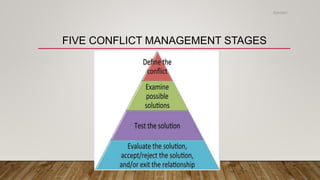
•FIVE CONFLICT MANAGEMENT
STAGES
2/24/2021
INTRODUCTION
Conflict may be defined simply as a struggle or
contest between people with opposing needs, ideas,
beliefs, values, or goals.
2/24/2021
2/24/2021
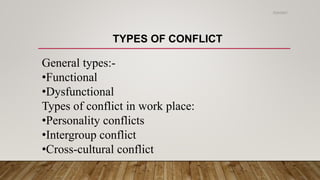
TYPES OF CONFLICT
General types:-
•Functional
•Dysfunctional
Types of conflict in work place:
•Personality conflicts
•Intergroup conflict
•Cross-cultural conflict
2/24/2021
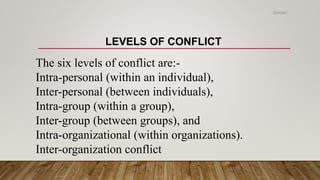
LEVELS OF CONFLICT
The six levels of conflict are:-
Intra-personal (within an individual),
Inter-personal (between individuals),
Intra-group (within a group),
Inter-group (between groups), and
Intra-organizational (within organizations).
Inter-organization conflict
2/24/2021
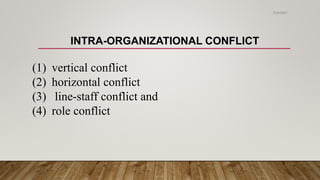
INTRA-ORGANIZATIONAL CONFLICT
(1) vertical conflict
(2) horizontal conflict
(3) line-staff conflict and
(4) role conflict
2/24/2021
COMPONENTS OF CONFLICT
•Good Consequences of Conflict
•Bad Consequences of Conflict
2/24/2021
GOOD CONSEQUENCES OF CONFLICT
•Increased Creativity.
•It forces people to clarify their views.
•It can produce constructive social change.
•It gives people the opportunity to test their capacities.
•Development of group and organization cohesion.
2/24/2021
BAD CONSEQUENCES OF CONFLICT
•Violence.
•Break down of relationship.
•A breakdown of collaborative ventures.
•Destruction of Communication.
2/24/2021
CONFLICT MANAGEMENT
Conflict management is defined as “the opportunity
to improve situations and strengthen relationships”.
2/24/2021
WAYS TO MANAGE CONFLICT
•Strategies to Resolve Conflicts
•Active listening
•Empathy
• Avoidance
•Compromise
•Competence
•Collaboration
•Accomodation
2/24/2021
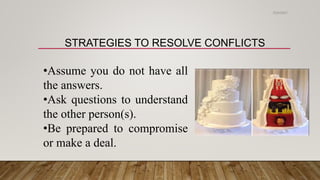
STRATEGIES TO RESOLVE CONFLICTS
•Assume you do not have all
the answers.
•Ask questions to understand
the other person(s).
•Be prepared to compromise
or make a deal.
2/24/2021
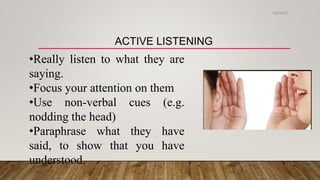
ACTIVE LISTENING
•Really listen to what they are
saying.
•Focus your attention on them
•Use non-verbal cues (e.g.
nodding the head)
•Paraphrase what they have
said, to show that you have
understood.
2/24/2021
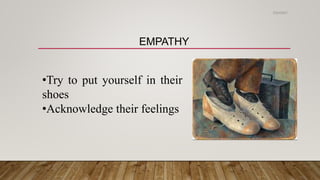
EMPATHY
•Try to put yourself in their
shoes
•Acknowledge their feelings
2/24/2021
AVOIDANCE
when you have no chance of winning.
2/24/2021
COMPROMISE
where both sides have equally important goals.
2/24/2021
COMPETENCE
when you need quick, decisive action.
2/24/2021
COLLABORATION
Effective for complex scenarios where you need to find
a novel solution.
2/24/2021
ACCOMODATION
Effective when the other party is the expert or
has a better solution.
2/24/2021
FIVE CONFLICT MANAGEMENT STAGES
2/24/2021
CONCLUSION
PEOPLE WILL GET SUCCEED IN THE
ORGANISATION IF THEY ARE ABLE TO
MANAGE THE CONFLITS
2/24/2021
THANK YOU
2/24/2021

Conflict management

  • 1.
  • 2.
    AGENDA OF TODAY’SPRESENTATION:- •INTRODUCTION •CHARACTERISTICS OF CONFLICT •NATURE OF CONFLICT •VIEWS OF CONFLICT •CAUSES OF CONFLICT •TYPES OF CONFLICT •LEVELS OF CONFLICT •COMPONENTS OF CONFLICT •CONFLICT MANAGEMENT •WAYS TO MANAGE CONFLICT •FIVE CONFLICT MANAGEMENT STAGES 2/24/2021
  • 3.
    INTRODUCTION Conflict may bedefined simply as a struggle or contest between people with opposing needs, ideas, beliefs, values, or goals. 2/24/2021
  • 4.
  • 5.
    TYPES OF CONFLICT Generaltypes:- •Functional •Dysfunctional Types of conflict in work place: •Personality conflicts •Intergroup conflict •Cross-cultural conflict 2/24/2021
  • 6.
    LEVELS OF CONFLICT Thesix levels of conflict are:- Intra-personal (within an individual), Inter-personal (between individuals), Intra-group (within a group), Inter-group (between groups), and Intra-organizational (within organizations). Inter-organization conflict 2/24/2021
  • 7.
    INTRA-ORGANIZATIONAL CONFLICT (1) verticalconflict (2) horizontal conflict (3) line-staff conflict and (4) role conflict 2/24/2021
  • 8.
    COMPONENTS OF CONFLICT •GoodConsequences of Conflict •Bad Consequences of Conflict 2/24/2021
  • 9.
    GOOD CONSEQUENCES OFCONFLICT •Increased Creativity. •It forces people to clarify their views. •It can produce constructive social change. •It gives people the opportunity to test their capacities. •Development of group and organization cohesion. 2/24/2021
  • 10.
    BAD CONSEQUENCES OFCONFLICT •Violence. •Break down of relationship. •A breakdown of collaborative ventures. •Destruction of Communication. 2/24/2021
  • 11.
    CONFLICT MANAGEMENT Conflict managementis defined as “the opportunity to improve situations and strengthen relationships”. 2/24/2021
  • 12.
    WAYS TO MANAGECONFLICT •Strategies to Resolve Conflicts •Active listening •Empathy • Avoidance •Compromise •Competence •Collaboration •Accomodation 2/24/2021
  • 13.
    STRATEGIES TO RESOLVECONFLICTS •Assume you do not have all the answers. •Ask questions to understand the other person(s). •Be prepared to compromise or make a deal. 2/24/2021
  • 14.
    ACTIVE LISTENING •Really listento what they are saying. •Focus your attention on them •Use non-verbal cues (e.g. nodding the head) •Paraphrase what they have said, to show that you have understood. 2/24/2021
  • 15.
    EMPATHY •Try to putyourself in their shoes •Acknowledge their feelings 2/24/2021
  • 16.
    AVOIDANCE when you haveno chance of winning. 2/24/2021
  • 17.
    COMPROMISE where both sideshave equally important goals. 2/24/2021
  • 18.
    COMPETENCE when you needquick, decisive action. 2/24/2021
  • 19.
    COLLABORATION Effective for complexscenarios where you need to find a novel solution. 2/24/2021
  • 20.
    ACCOMODATION Effective when theother party is the expert or has a better solution. 2/24/2021
  • 21.
    FIVE CONFLICT MANAGEMENTSTAGES 2/24/2021
  • 22.
    CONCLUSION PEOPLE WILL GETSUCCEED IN THE ORGANISATION IF THEY ARE ABLE TO MANAGE THE CONFLITS 2/24/2021
  • 23.