CONFLICT MANAGEMENT
BEENA EDWARD
BCOM ( REG)
Definition
The practice of recognizing and dealing with disputes in a
rational, balanced and effective way. Conflict
management implemented within a business
environment usually involves effective communication,
problem resolving abilities and good negotiating skills to
restore the focus to the company’s overall goals.
In simple terms it is defined as “the opportunity to
improve situations and strengthen relationships”
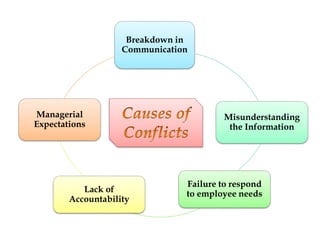
Breakdown in
Communication
Misunderstanding
the Information
Failure to respond
to employee needsLack of
Accountability
Managerial
Expectations
Types of Conflicts
General types:
 Functional
 Dysfunctional
 Functional conflicts:
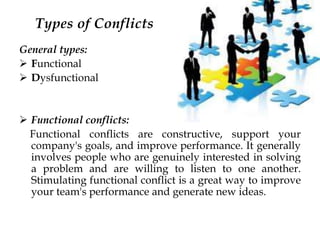
Functional conflicts are constructive, support your
company's goals, and improve performance. It generally
involves people who are genuinely interested in solving
a problem and are willing to listen to one another.
Stimulating functional conflict is a great way to improve
your team's performance and generate new ideas.
 Dysfunctional conflicts:
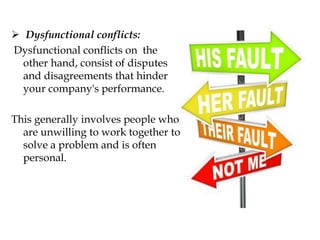
Dysfunctional conflicts on the
other hand, consist of disputes
and disagreements that hinder
your company's performance.
This generally involves people who
are unwilling to work together to
solve a problem and is often
personal.
Types of conflict in work place:
1. Personality conflicts:
It can be defined as interpersonal opposition based on
personal dislike and/or disagreement .
It can arise from something trivial or major, such as an
employee not liking another based on their dress sense,
work ethic, attitude, or communication style etc.
2. Intergroup conflict:
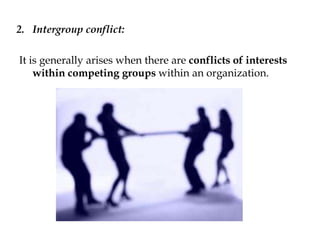
It is generally arises when there are conflicts of interests
within competing groups within an organization.
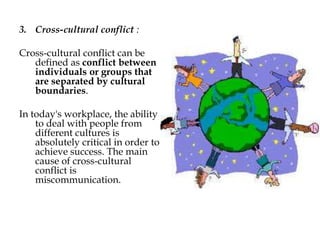
3. Cross-cultural conflict :
Cross-cultural conflict can be
defined as conflict between
individuals or groups that
are separated by cultural
boundaries.
In today's workplace, the ability
to deal with people from
different cultures is
absolutely critical in order to
achieve success. The main
cause of cross-cultural
conflict is
miscommunication.
Information Sources
• 9 Rules For Conflict Management At Work -
http://www.lifehack.org/articles/work/9-rules-for-conflict-management-
work.html

Conflict management

  • 1.
  • 2.
    Definition The practice ofrecognizing and dealing with disputes in a rational, balanced and effective way. Conflict management implemented within a business environment usually involves effective communication, problem resolving abilities and good negotiating skills to restore the focus to the company’s overall goals. In simple terms it is defined as “the opportunity to improve situations and strengthen relationships”
  • 3.
    Breakdown in Communication Misunderstanding the Information Failureto respond to employee needsLack of Accountability Managerial Expectations
  • 4.
    Types of Conflicts Generaltypes:  Functional  Dysfunctional  Functional conflicts: Functional conflicts are constructive, support your company's goals, and improve performance. It generally involves people who are genuinely interested in solving a problem and are willing to listen to one another. Stimulating functional conflict is a great way to improve your team's performance and generate new ideas.
  • 5.
     Dysfunctional conflicts: Dysfunctionalconflicts on the other hand, consist of disputes and disagreements that hinder your company's performance. This generally involves people who are unwilling to work together to solve a problem and is often personal.
  • 6.
    Types of conflictin work place: 1. Personality conflicts: It can be defined as interpersonal opposition based on personal dislike and/or disagreement . It can arise from something trivial or major, such as an employee not liking another based on their dress sense, work ethic, attitude, or communication style etc.
  • 7.
    2. Intergroup conflict: Itis generally arises when there are conflicts of interests within competing groups within an organization.
  • 8.
    3. Cross-cultural conflict: Cross-cultural conflict can be defined as conflict between individuals or groups that are separated by cultural boundaries. In today's workplace, the ability to deal with people from different cultures is absolutely critical in order to achieve success. The main cause of cross-cultural conflict is miscommunication.
  • 19.
    Information Sources • 9Rules For Conflict Management At Work - http://www.lifehack.org/articles/work/9-rules-for-conflict-management- work.html