Tech Academy:  Concept Mapping Eric Wilson  [email_address] Heather Fogell [email_address]
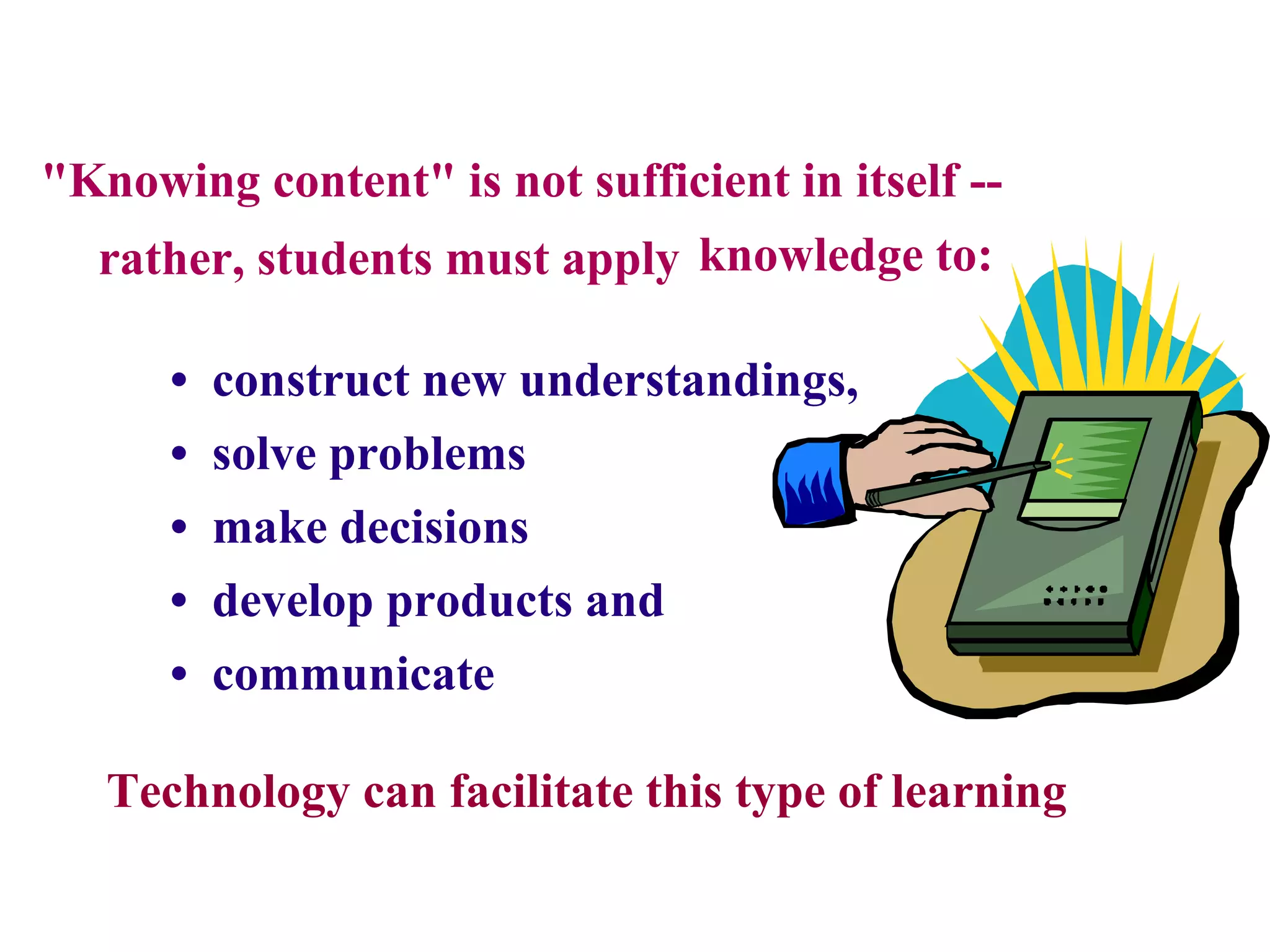
"Knowing content" is not sufficient in itself -- rather, students must apply knowledge to: •  construct new understandings, •  solve problems •   make decisions •  develop products and •  communicate Technology can facilitate this type of learning
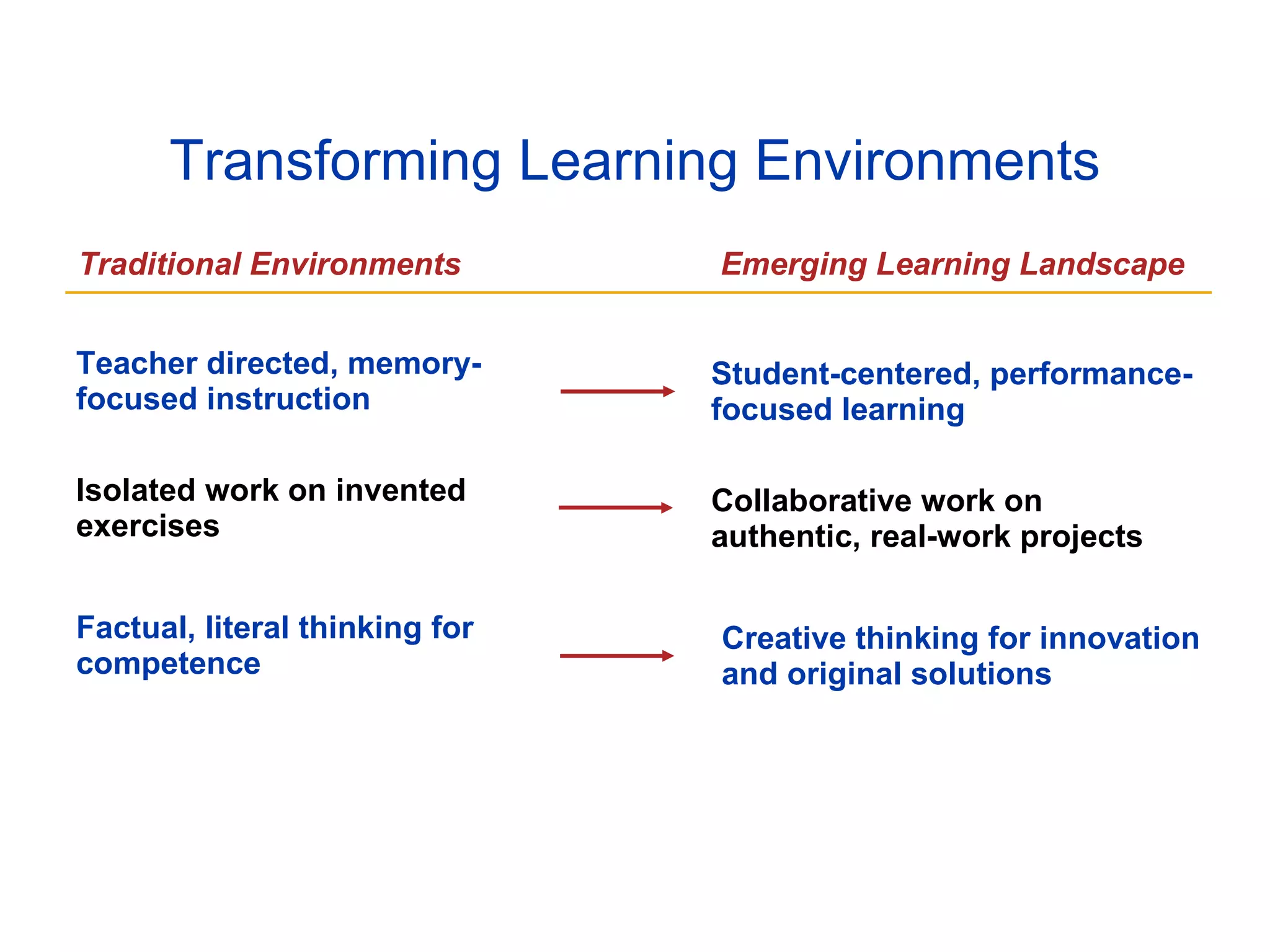
Teacher directed, memory-focused instruction Student-centered, performance-focused learning Isolated work on invented exercises Collaborative work on authentic, real-work projects Factual, literal thinking for competence Creative thinking for innovation and original solutions Transforming Learning Environments Traditional Environments Emerging Learning Landscape
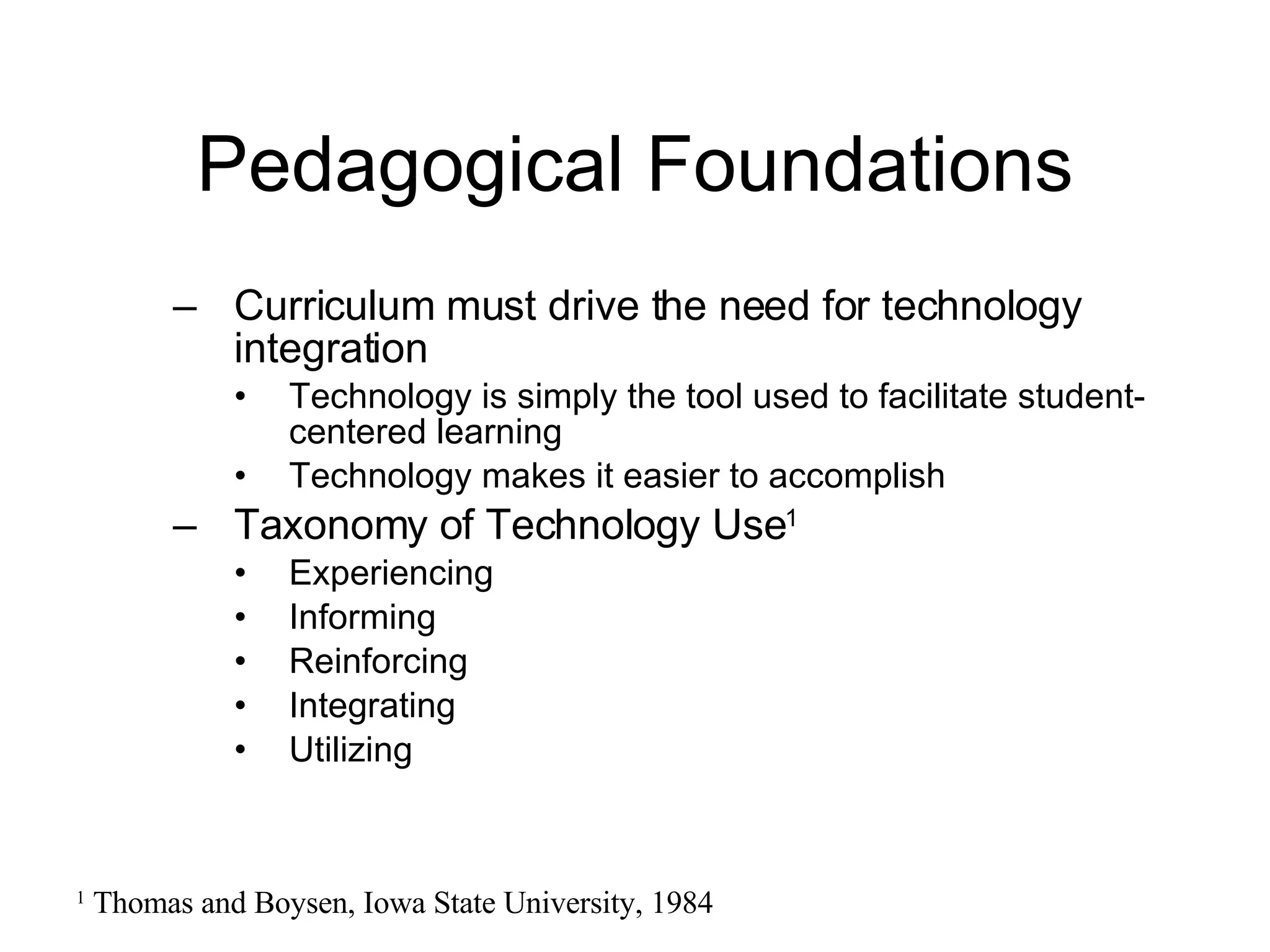
Pedagogical Foundations Curriculum must drive the need for technology integration Technology is simply the tool used to facilitate student-centered learning Technology makes it easier to accomplish Taxonomy of Technology Use 1 Experiencing Informing Reinforcing Integrating Utilizing 1  Thomas and Boysen, Iowa State University, 1984
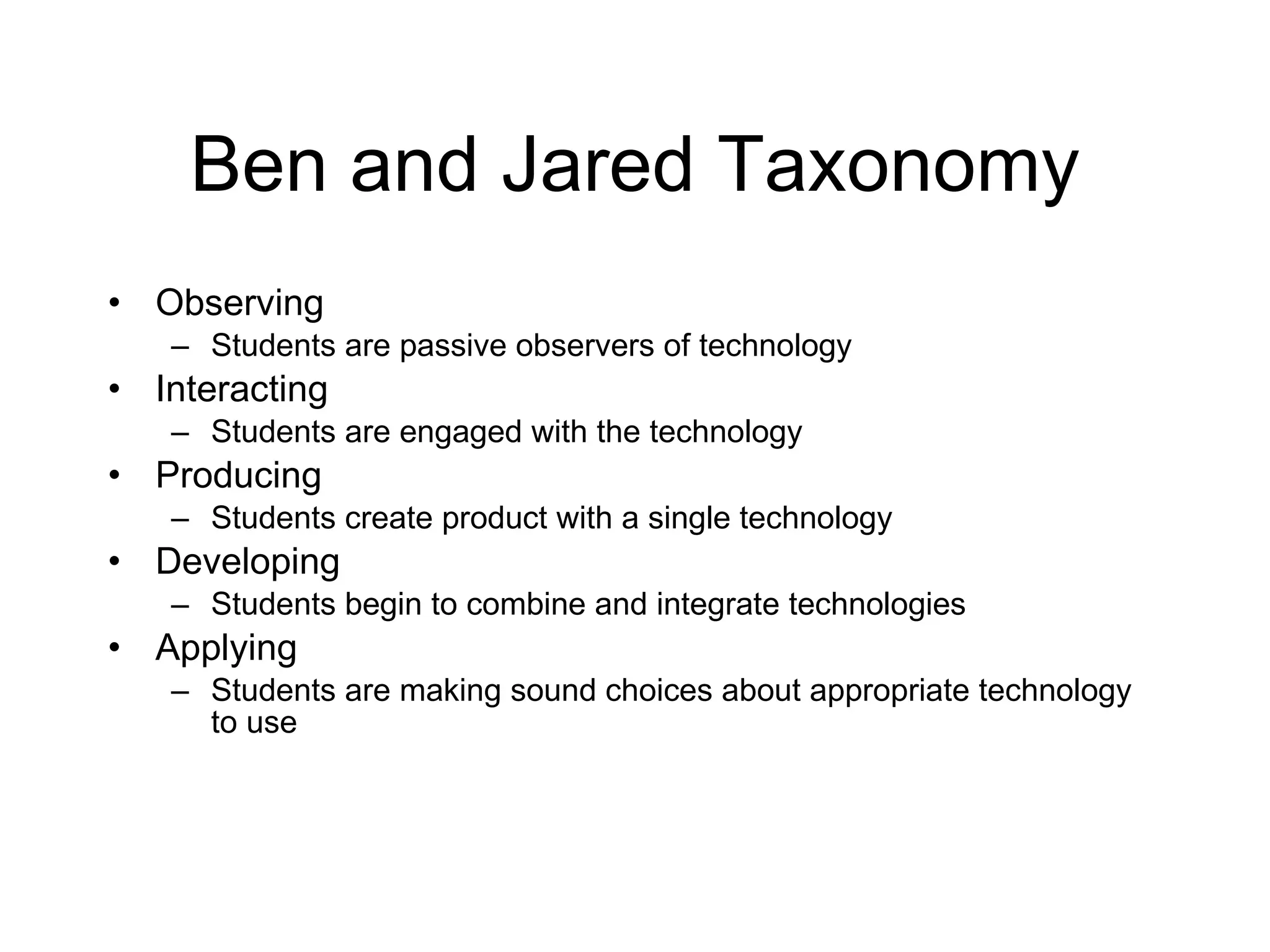
Ben and Jared Taxonomy Observing Students are passive observers of technology Interacting Students are engaged with the technology Producing Students create product with a single technology Developing Students begin to combine and integrate technologies Applying Students are making sound choices about appropriate technology to use
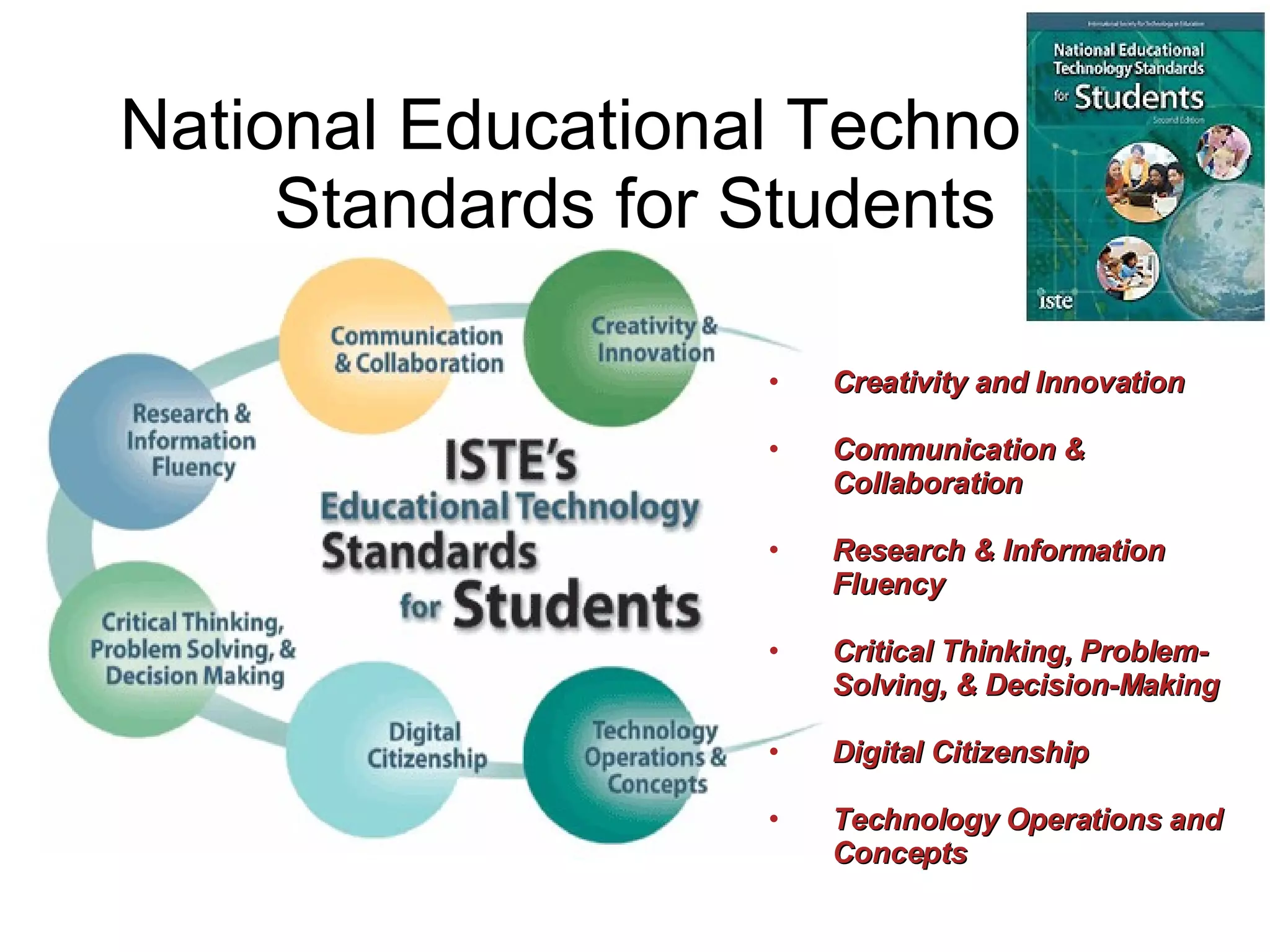
National Educational Technology Standards for Students Creativity and Innovation Communication & Collaboration Research & Information Fluency Critical Thinking, Problem-Solving, & Decision-Making Digital Citizenship Technology Operations and Concepts
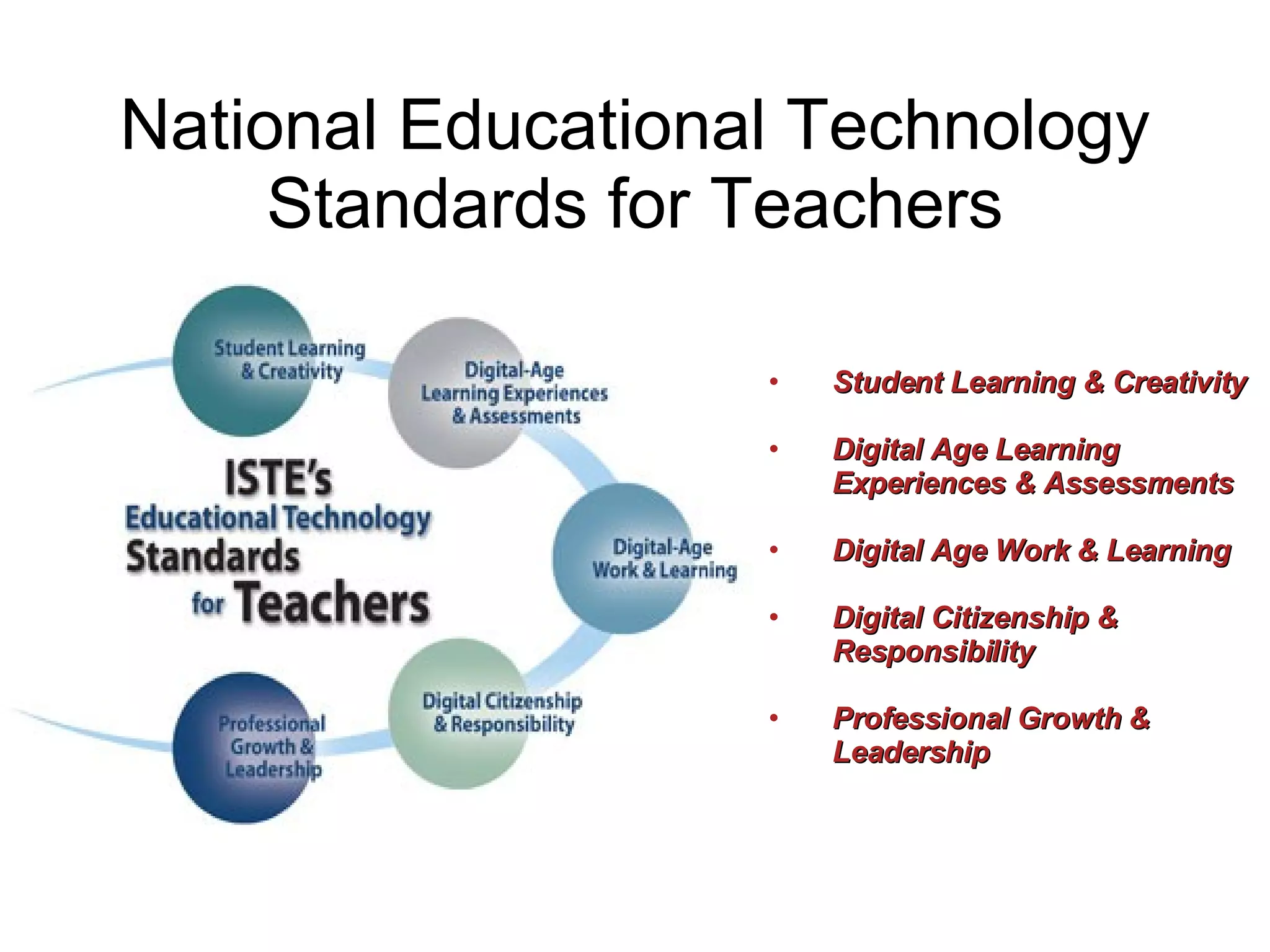
National Educational Technology Standards for Teachers Student Learning & Creativity Digital Age Learning Experiences & Assessments Digital Age Work & Learning Digital Citizenship & Responsibility Professional Growth & Leadership


Concept Mapping

  • 1.
    Tech Academy: Concept Mapping Eric Wilson [email_address] Heather Fogell [email_address]
  • 2.
    "Knowing content" isnot sufficient in itself -- rather, students must apply knowledge to: • construct new understandings, • solve problems •  make decisions • develop products and • communicate Technology can facilitate this type of learning
  • 3.
    Teacher directed, memory-focusedinstruction Student-centered, performance-focused learning Isolated work on invented exercises Collaborative work on authentic, real-work projects Factual, literal thinking for competence Creative thinking for innovation and original solutions Transforming Learning Environments Traditional Environments Emerging Learning Landscape
  • 4.
    Pedagogical Foundations Curriculummust drive the need for technology integration Technology is simply the tool used to facilitate student-centered learning Technology makes it easier to accomplish Taxonomy of Technology Use 1 Experiencing Informing Reinforcing Integrating Utilizing 1 Thomas and Boysen, Iowa State University, 1984
  • 5.
    Ben and JaredTaxonomy Observing Students are passive observers of technology Interacting Students are engaged with the technology Producing Students create product with a single technology Developing Students begin to combine and integrate technologies Applying Students are making sound choices about appropriate technology to use
  • 6.
    National Educational TechnologyStandards for Students Creativity and Innovation Communication & Collaboration Research & Information Fluency Critical Thinking, Problem-Solving, & Decision-Making Digital Citizenship Technology Operations and Concepts
  • 7.
    National Educational TechnologyStandards for Teachers Student Learning & Creativity Digital Age Learning Experiences & Assessments Digital Age Work & Learning Digital Citizenship & Responsibility Professional Growth & Leadership
  • 8.
  • 9.