Technology-based
innovation in schools
   Lessons learned and implications 
        for policy and practice
         Oystein Johannessen
         oysteinj@cerpus.com
     www.slideshare.net/oysteinj/
Innovation:
Backdrop,What and Why?
• Backdrop: 

  • OECD work on innovation, e.g. "Inspired by Technology, Driven by
    Pedagogy" (OECD, 2010)

  • Systemic and policy perspective

  • Lack of scalable innovations. Impact is hard to document

• Innovation: Implementation of new or significantly improved product,
  processes, methods or practices (OECD Oslo Manual 2005)

• ICT as a facilitator of learning processes (Content, LMS, social
  media++)
Lessons learned (i)
• Imbalance between investments and the necessary
  knowledge base

• Tension between technology and pedagogy

• Axis between incremental and radical innovation

• Expectations versus feasibility

• Multi-layered, multi-method and multidisciplinary
  approach
Lessons learned (ii)
• Explore potential of various research disciplines, e.g.
  brain research

• ICT use in asessment is too limited

• Need for social dialogue with all stakeholders

• Research must be translated into meaningful guidelines
  for practice

• Research evidence must be phased into the training
  and practice of teachers
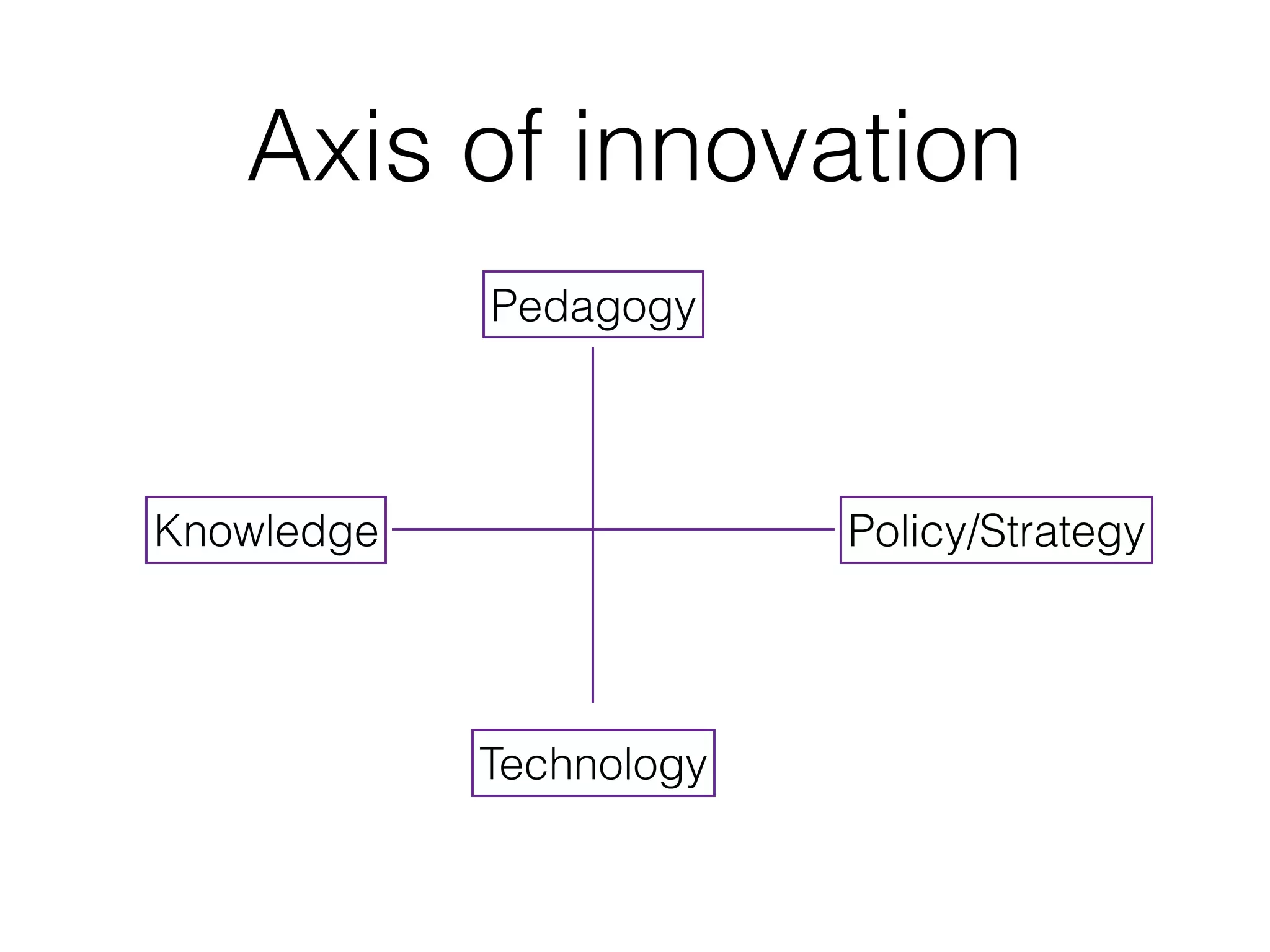
Axis of innovation
            Pedagogy


Knowledge                Policy/Strategy


            Technology
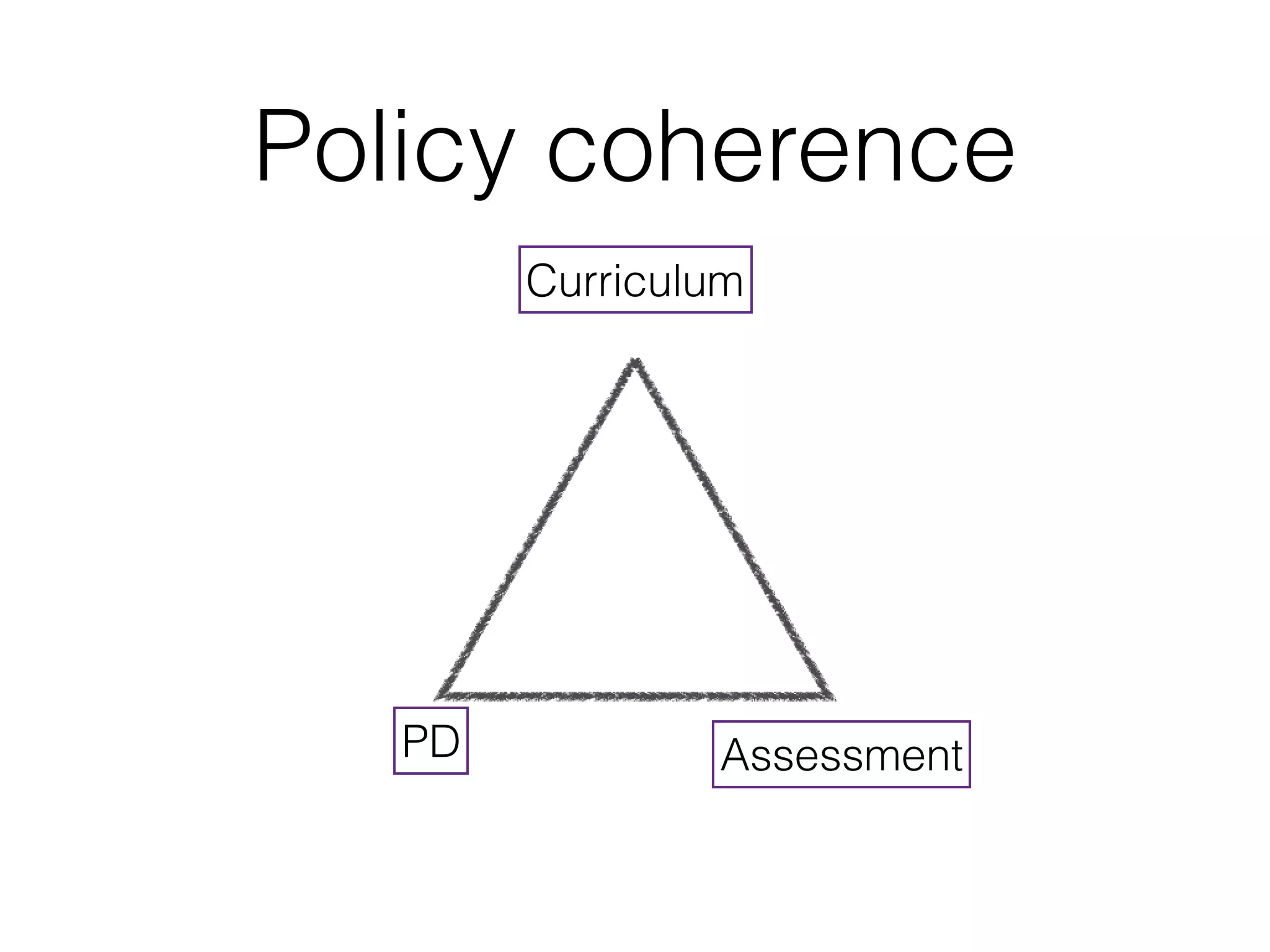
Policy coherence
        Curriculum


   PD           Assessment
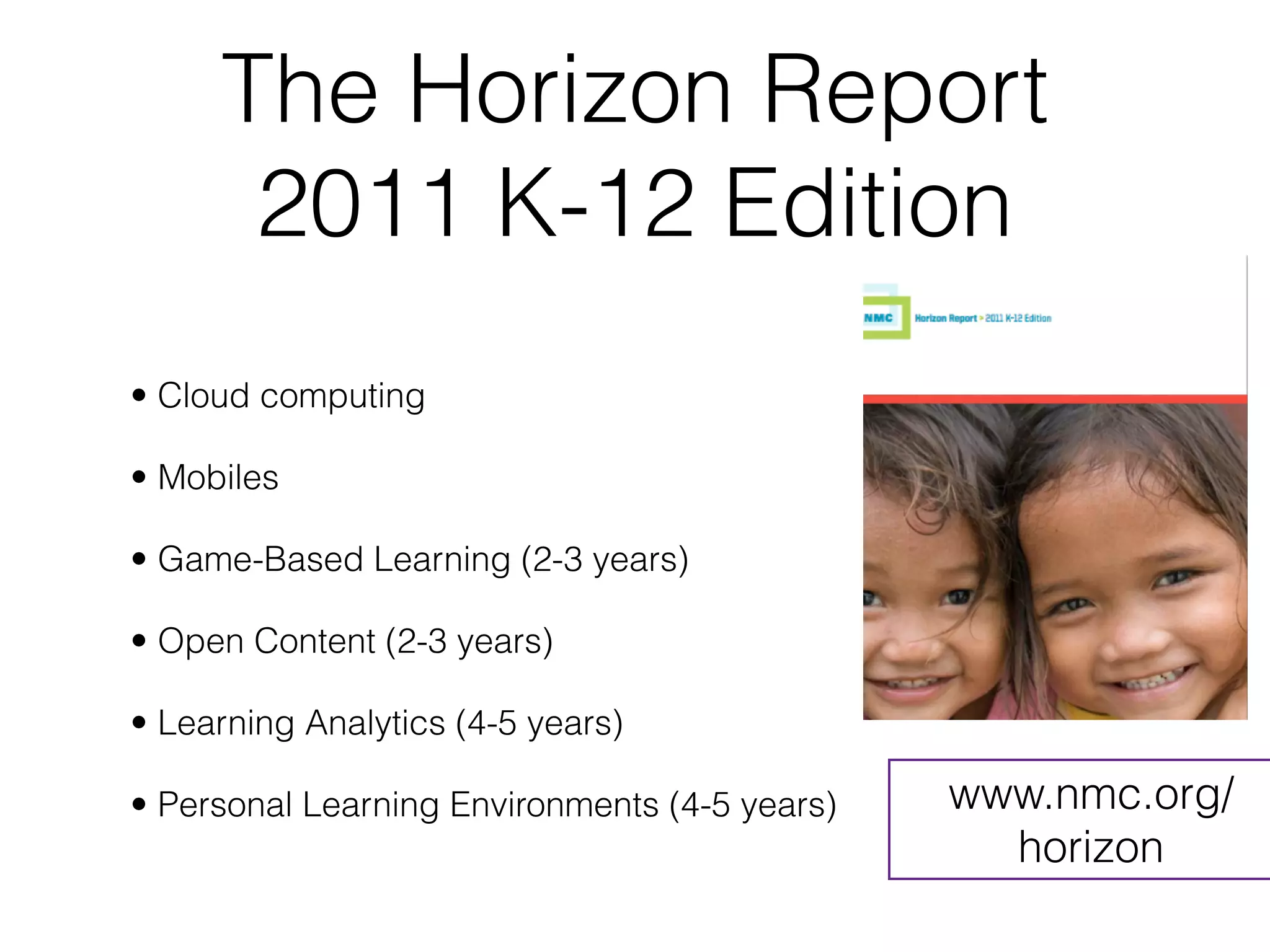
The Horizon Report
      2011 K-12 Edition
• Cloud computing 

• Mobiles

• Game-Based Learning (2-3 years)

• Open Content (2-3 years)

• Learning Analytics (4-5 years)

• Personal Learning Environments (4-5 years)   www.nmc.org/
                                                 horizon
Policy implications
• Develop a systemic approach to innovation as a
  guiding principle for innovation-related policies

• Promote and support a continuous dialogue with
  major stakeholder

• Develop a well organized, coherent, accessible
  and updated knowledge base

• Investments require necessary monitoring and
  evaluation
Policy implications
           (cont'd)
• Support research on technology in education

• Ensure that technology-based innovations do
  not widen or create new digital divides

• Strategies for technology-based innovations
  should be aligned with or embedded in
  national strategies
The Road Ahead
• Making the case for
  innovation: Impact and
  Scalability

• Digital Divide

• Understanding technological
  complexity and diversity

• Knowledge for All: You are
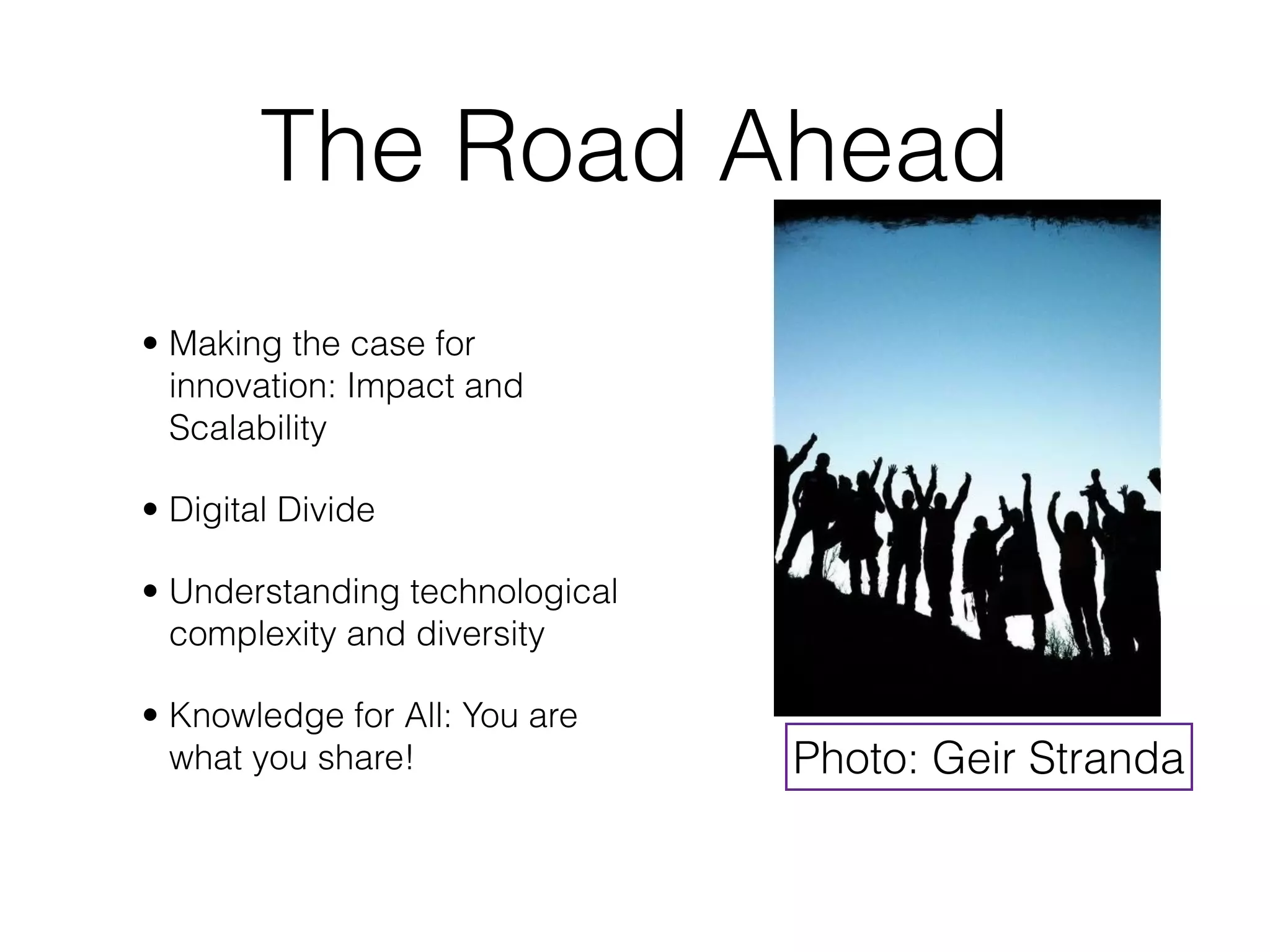
  what you share!               Photo: Geir Stranda

Presentation beijing forum o johannessen

  • 1.
    Technology-based innovation in schools Lessons learned and implications for policy and practice Oystein Johannessen oysteinj@cerpus.com www.slideshare.net/oysteinj/
  • 2.
    Innovation: Backdrop,What and Why? •Backdrop: • OECD work on innovation, e.g. "Inspired by Technology, Driven by Pedagogy" (OECD, 2010) • Systemic and policy perspective • Lack of scalable innovations. Impact is hard to document • Innovation: Implementation of new or significantly improved product, processes, methods or practices (OECD Oslo Manual 2005) • ICT as a facilitator of learning processes (Content, LMS, social media++)
  • 3.
    Lessons learned (i) •Imbalance between investments and the necessary knowledge base • Tension between technology and pedagogy • Axis between incremental and radical innovation • Expectations versus feasibility • Multi-layered, multi-method and multidisciplinary approach
  • 4.
    Lessons learned (ii) •Explore potential of various research disciplines, e.g. brain research • ICT use in asessment is too limited • Need for social dialogue with all stakeholders • Research must be translated into meaningful guidelines for practice • Research evidence must be phased into the training and practice of teachers
  • 5.
    Axis of innovation Pedagogy Knowledge Policy/Strategy Technology
  • 6.
    Policy coherence Curriculum PD Assessment
  • 7.
    The Horizon Report 2011 K-12 Edition • Cloud computing • Mobiles • Game-Based Learning (2-3 years) • Open Content (2-3 years) • Learning Analytics (4-5 years) • Personal Learning Environments (4-5 years) www.nmc.org/ horizon
  • 8.
    Policy implications • Developa systemic approach to innovation as a guiding principle for innovation-related policies • Promote and support a continuous dialogue with major stakeholder • Develop a well organized, coherent, accessible and updated knowledge base • Investments require necessary monitoring and evaluation
  • 9.
    Policy implications (cont'd) • Support research on technology in education • Ensure that technology-based innovations do not widen or create new digital divides • Strategies for technology-based innovations should be aligned with or embedded in national strategies
  • 10.
    The Road Ahead •Making the case for innovation: Impact and Scalability • Digital Divide • Understanding technological complexity and diversity • Knowledge for All: You are what you share! Photo: Geir Stranda