Downloaded 103 times



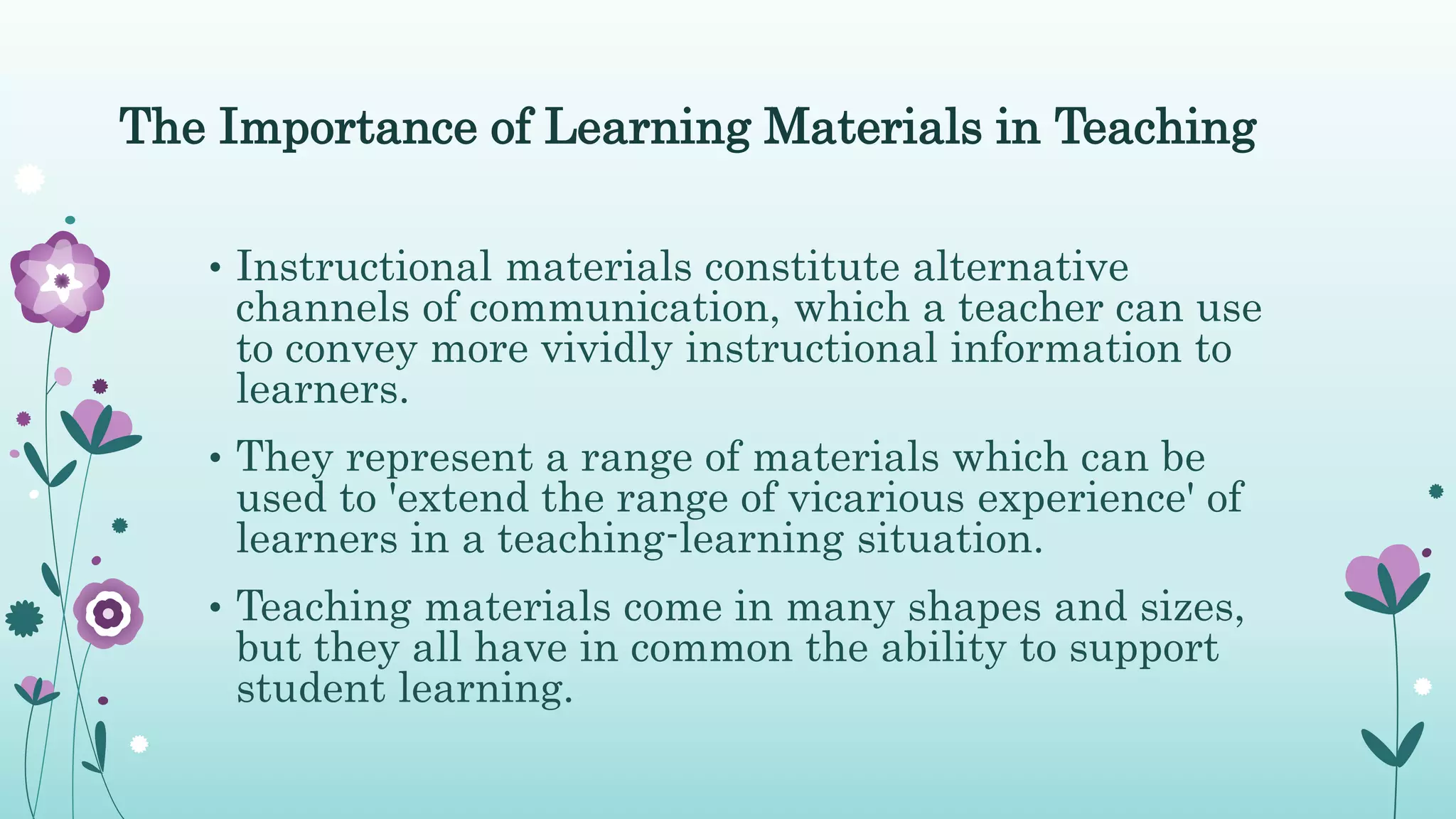
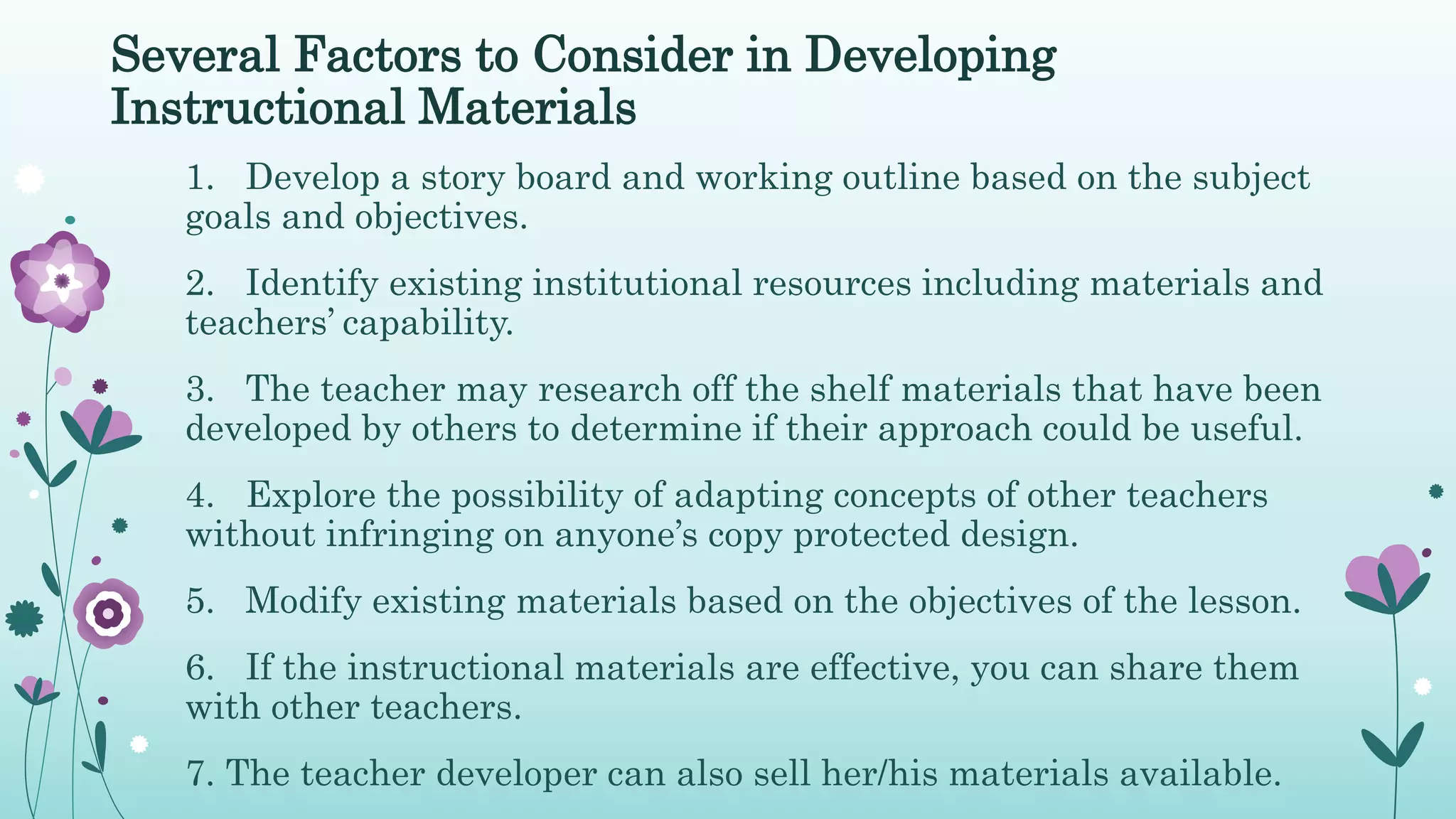
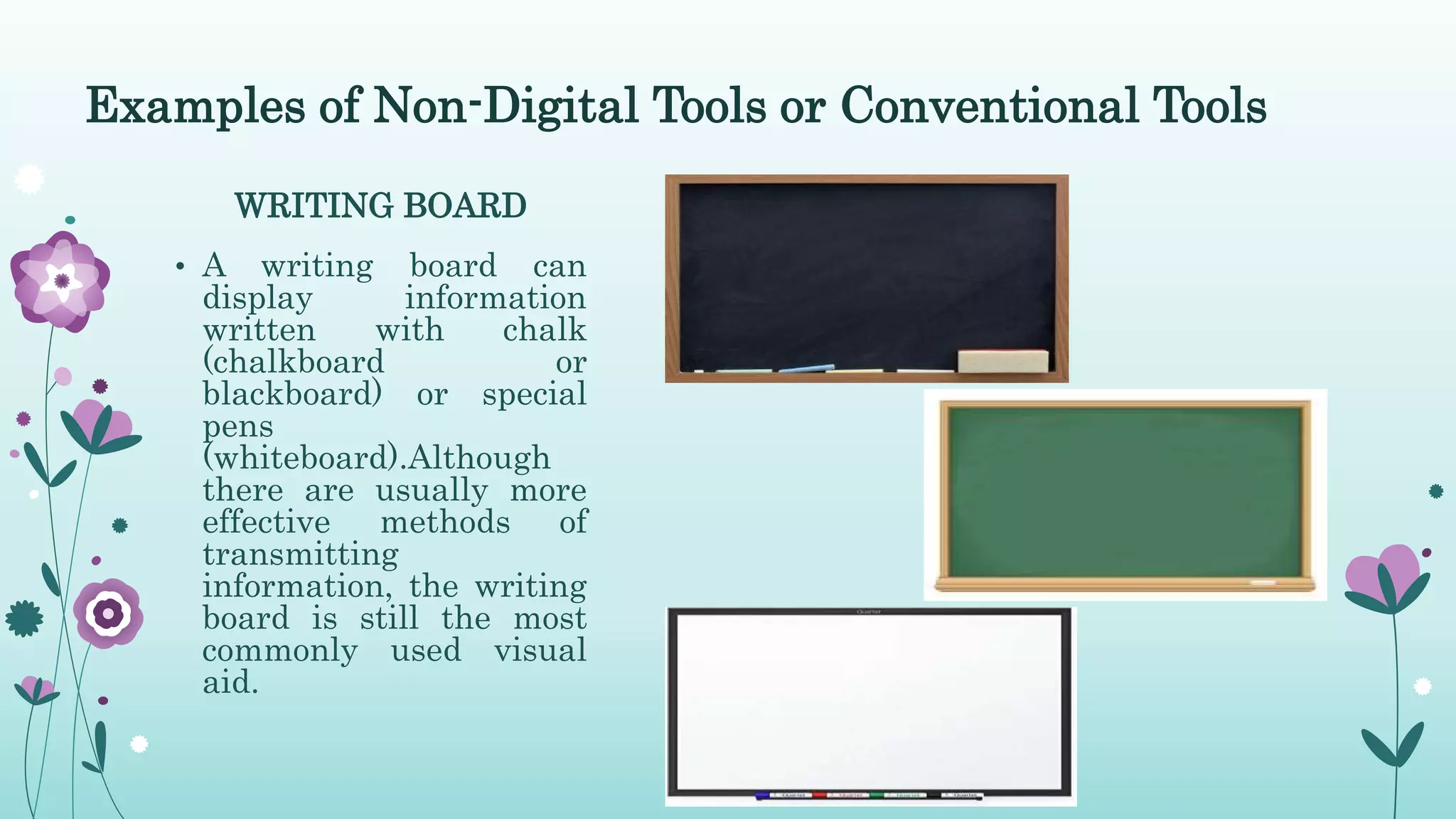
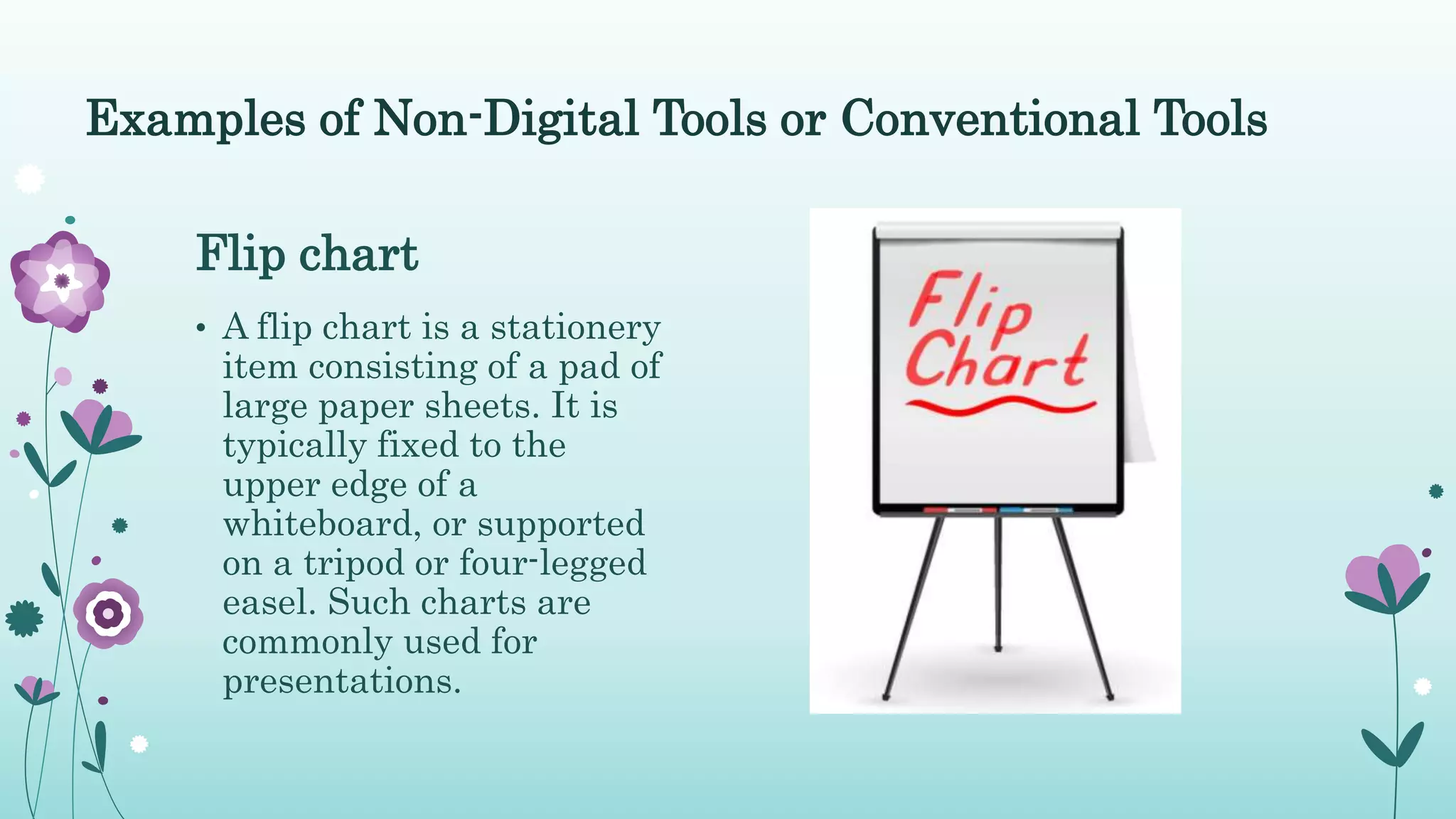
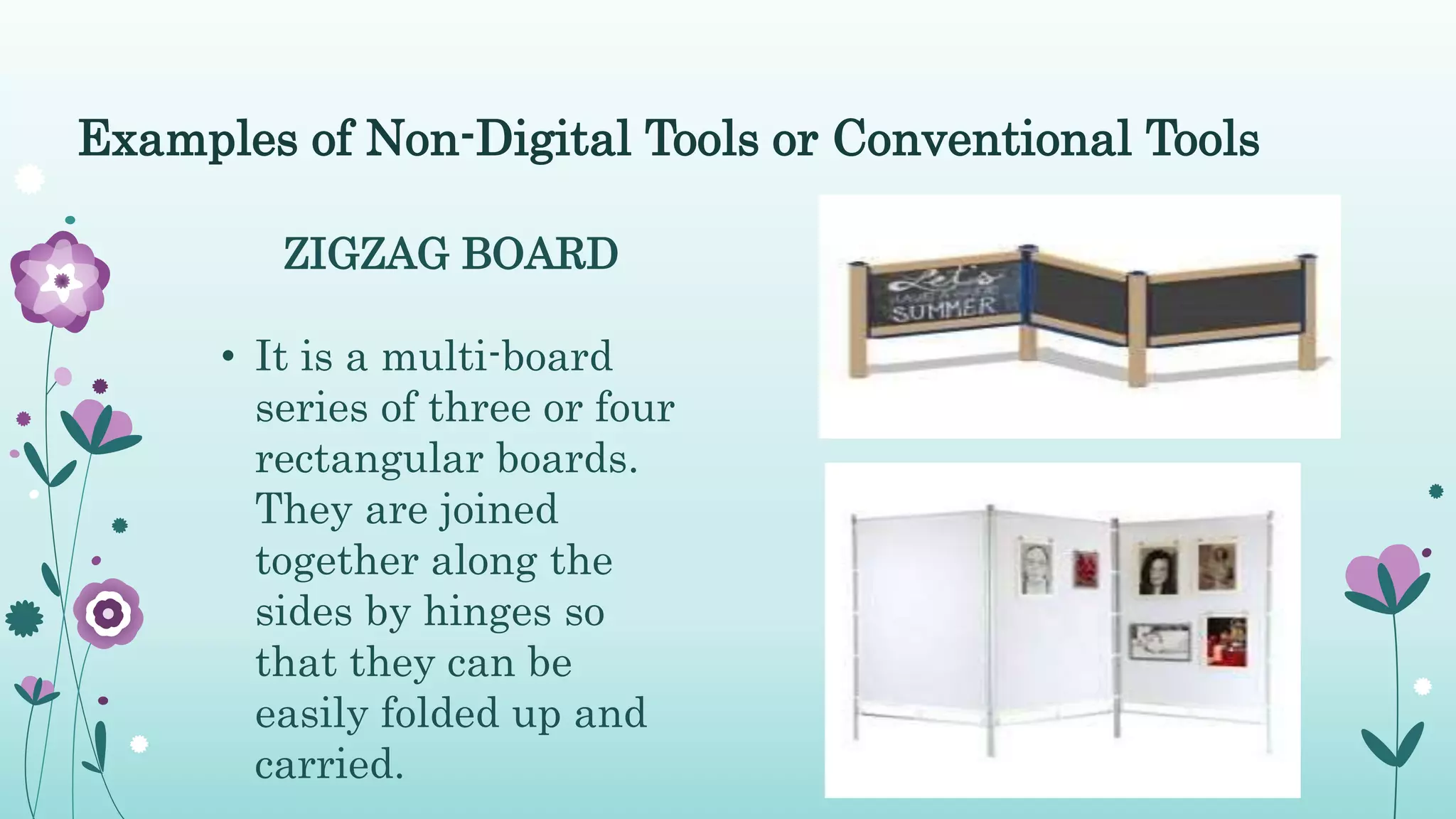



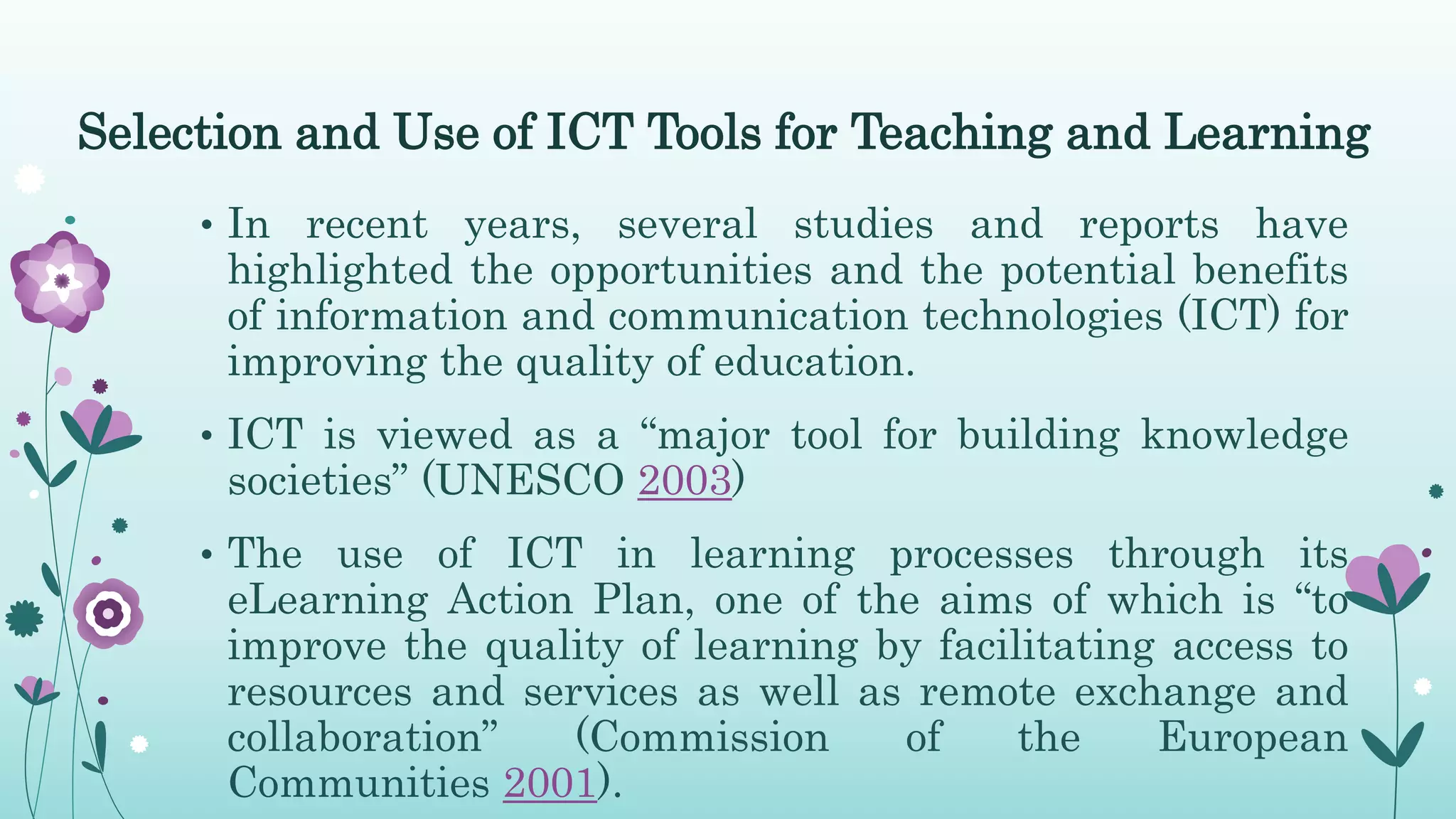
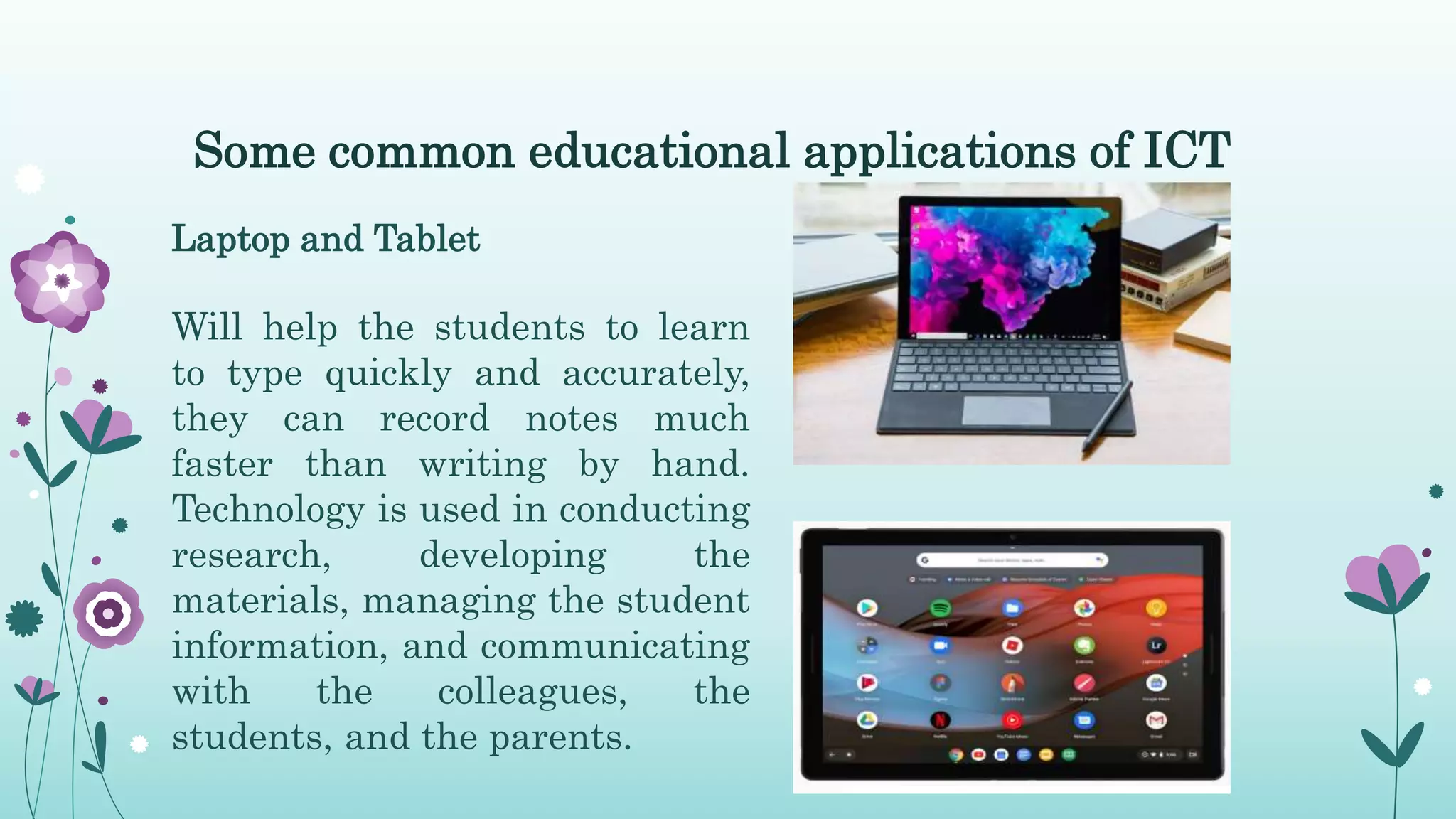

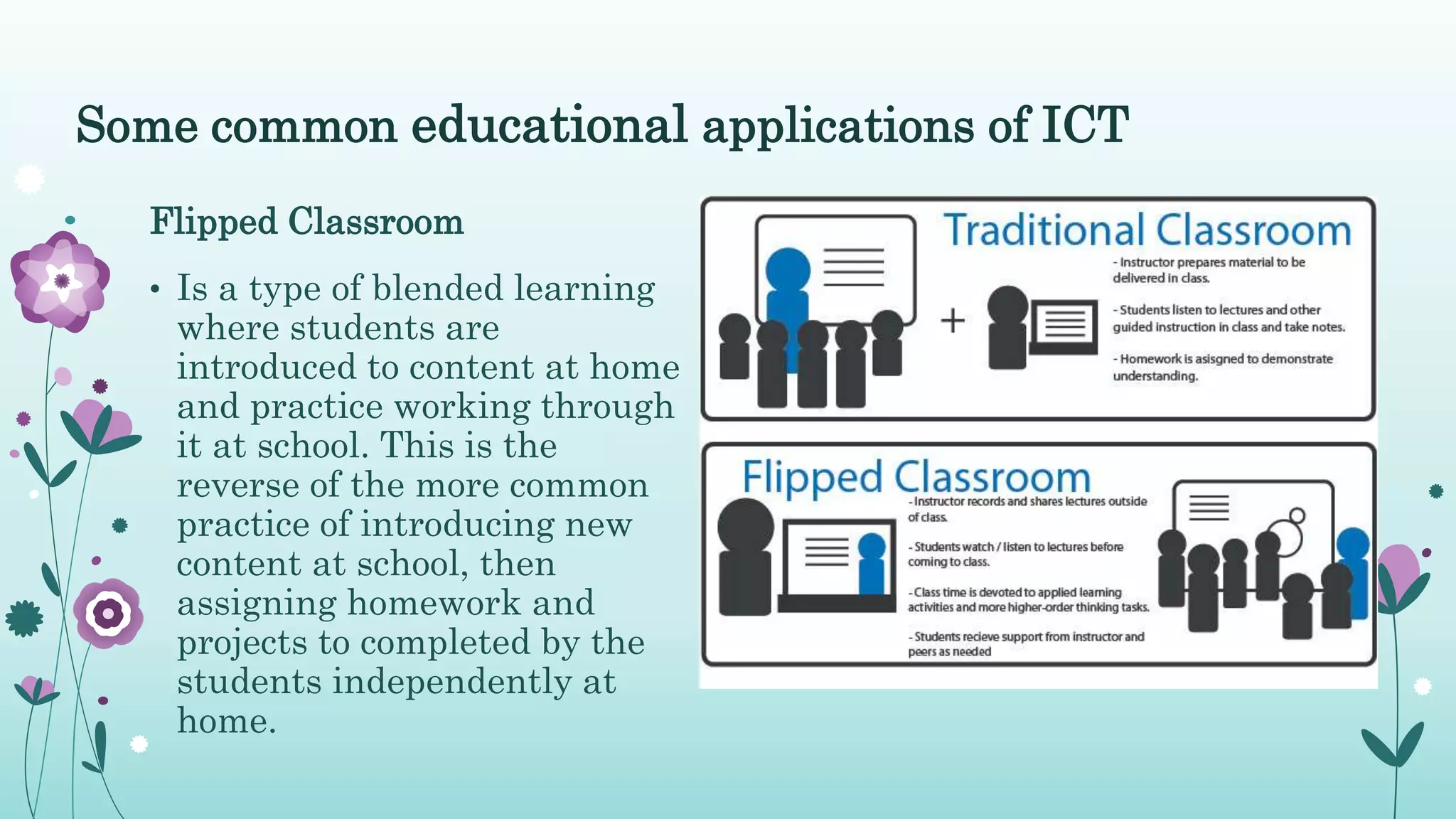




This document discusses non-digital instructional materials and their importance in education. It provides examples of commonly used non-digital materials like writing boards, flip charts, and nature tables. Guidelines for designing effective instructional materials include keeping them simple, legible, and consistent. The document also discusses digital tools in education like laptops, smart boards, and e-readers, and their benefits in enhancing communication, making learning more efficient and eco-friendly. Both non-digital and digital tools are important for teachers in delivering technology-enhanced lessons.


