Computer System Validation
By: Payam Khorramshahi
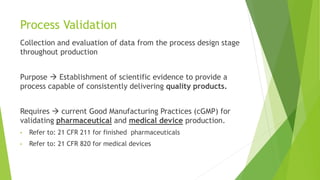
Process Validation
Collection and evaluation of data from the process design stage
throughout production
Purpose  Establishment of scientific evidence to provide a
process capable of consistently delivering quality products.
Requires  current Good Manufacturing Practices (cGMP) for
validating pharmaceutical and medical device production.
• Refer to: 21 CFR 211 for finished pharmaceuticals
• Refer to: 21 CFR 820 for medical devices
FDA Regulation
The U.S. Food and Drug Administration (FDA) has
proposed guidelines with the following definition for
process validation:
“Process Validation is establishing documented
evidence which provides a high degree of assurance
that a specific process consistently produces a product
meeting its predetermined specifications and quality
attributes”
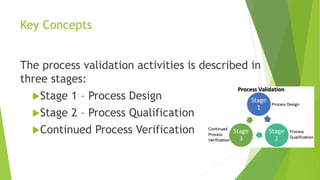
Key Concepts
The process validation activities is described in
three stages:
Stage 1 – Process Design
Stage 2 – Process Qualification
Continued Process Verification
Definitions
 Process Design  The commercial process is defined
during this stage based on knowledge gained through
development and scale-up activities.
 Process Qualification  During this stage, the process
design is confirmed s being capable of reproducible
commercial manufacturing.
 Continued Process Verification  Ongoing assurance
is gained during routine production that the process
in a state of control.
Types of Process Validation
A.Prospective Validation
B.Retrospective Validation
C.Concurrent Validation
D.Revalidation
Definitions
 Prospective Validation  Establishing documented evidence prior to
process implementation that a system does what it proposed to do
based on preplanned protocols.
 Retrospective Validation  Is used for facilities, processes, and
process controls in operation use that have not undergone a formally
documented validation process.
 Concurrent Validation  Is used for establishing documented
evidence that a facility and processes do what they purport to do,
based on information generated during actual imputation of the
process.
 Revalidation  Revalidation means repeating the original validation
effort or any part of it, and includes the investigative review of
existing performance data.
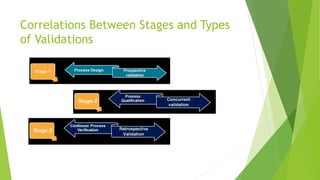
Correlations Between Stages and Types
of Validations
 Revalidation is required since 
When any changes are made in to the process or its environment is very
essential to ensure that it should not have any adverse effects on :
• Product Quality
• Process Characteristics

Computer system validation

  • 1.
  • 2.
    Process Validation Collection andevaluation of data from the process design stage throughout production Purpose  Establishment of scientific evidence to provide a process capable of consistently delivering quality products. Requires  current Good Manufacturing Practices (cGMP) for validating pharmaceutical and medical device production. • Refer to: 21 CFR 211 for finished pharmaceuticals • Refer to: 21 CFR 820 for medical devices
  • 3.
    FDA Regulation The U.S.Food and Drug Administration (FDA) has proposed guidelines with the following definition for process validation: “Process Validation is establishing documented evidence which provides a high degree of assurance that a specific process consistently produces a product meeting its predetermined specifications and quality attributes”
  • 4.
    Key Concepts The processvalidation activities is described in three stages: Stage 1 – Process Design Stage 2 – Process Qualification Continued Process Verification
  • 5.
    Definitions  Process Design The commercial process is defined during this stage based on knowledge gained through development and scale-up activities.  Process Qualification  During this stage, the process design is confirmed s being capable of reproducible commercial manufacturing.  Continued Process Verification  Ongoing assurance is gained during routine production that the process in a state of control.
  • 6.
    Types of ProcessValidation A.Prospective Validation B.Retrospective Validation C.Concurrent Validation D.Revalidation
  • 7.
    Definitions  Prospective Validation Establishing documented evidence prior to process implementation that a system does what it proposed to do based on preplanned protocols.  Retrospective Validation  Is used for facilities, processes, and process controls in operation use that have not undergone a formally documented validation process.  Concurrent Validation  Is used for establishing documented evidence that a facility and processes do what they purport to do, based on information generated during actual imputation of the process.  Revalidation  Revalidation means repeating the original validation effort or any part of it, and includes the investigative review of existing performance data.
  • 8.
    Correlations Between Stagesand Types of Validations
  • 9.
     Revalidation isrequired since  When any changes are made in to the process or its environment is very essential to ensure that it should not have any adverse effects on : • Product Quality • Process Characteristics