Computer Science for Health
Prepared by
Md. Shafiuzzaman
Lecturer, Dept. of CSE, JUST
Objective
“Medical Informatics is not about using
Microsoft Word to enter patient
information…”
Charles Friedman, PhD
University of Pittsburgh
at the UW Symposium, Fall 2000
Objective
“ Medical informatics is the rapidly developing
scientific field that deals with resources,
devices and formalized methods for
optimizing the storage, retrieval and
management of biomedical information for
problem solving and decision making”
Edward Shortliffe, MD, PhD
1995
Computers in Medicine
•Information central to biomedical research and
clinical practice
•Type
• integrated information-management environments
• affect on practice of medicine and biomedical
•Method
• medical computing
• medical informatics
• clinical informatics
• bioinformatics
Areas
• Medical decision making
• Probabilistic medical reasoning
• Patient care and monitoring systems
• Computer aided surgery
• Electronic patient records
• Clinical decision support
• Standards in medical informatics
• Imaging
• Image management systems
• Telemedicine
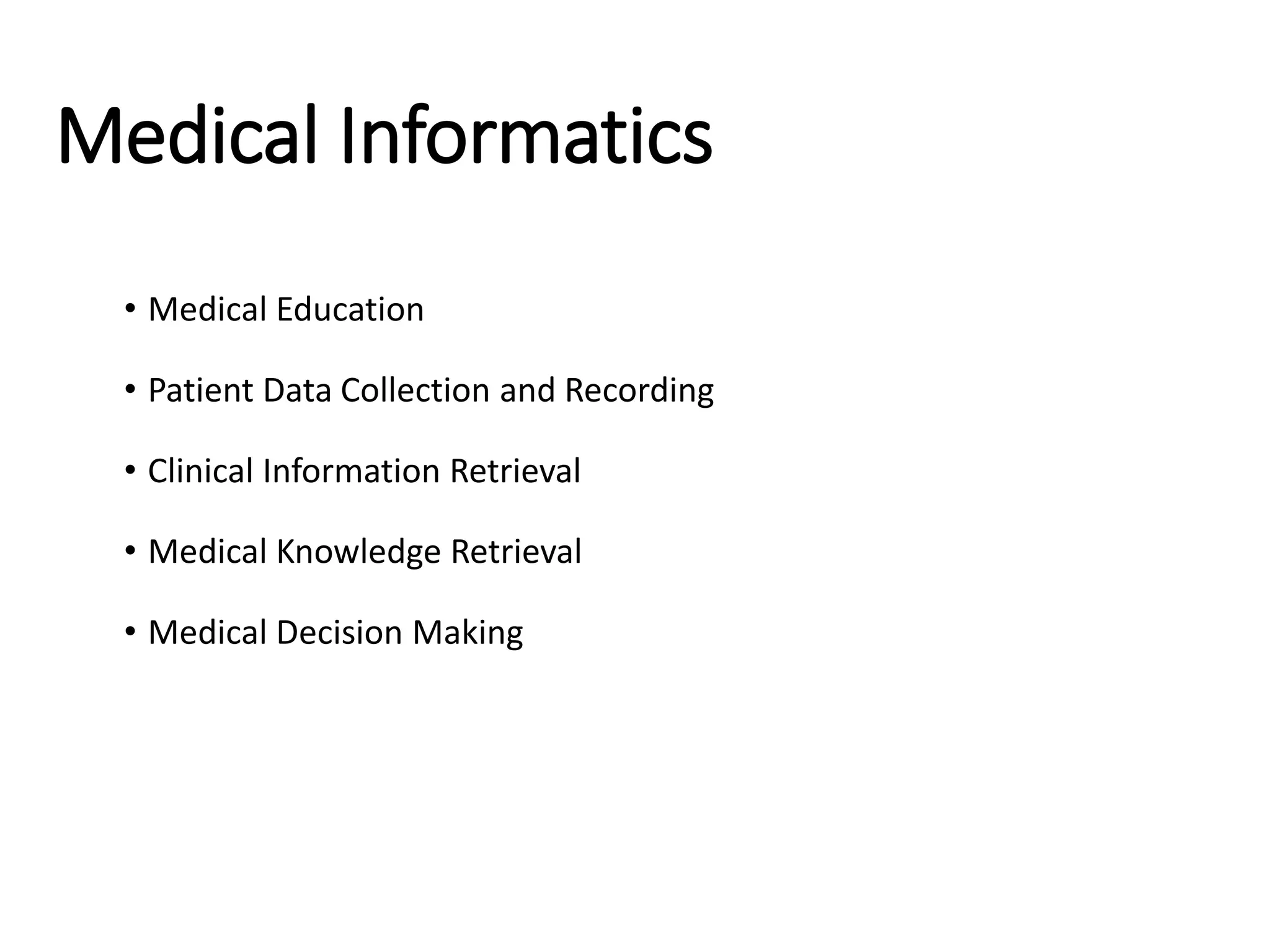
Medical Informatics
• Medical Education
• Patient Data Collection and Recording
• Clinical Information Retrieval
• Medical Knowledge Retrieval
• Medical Decision Making
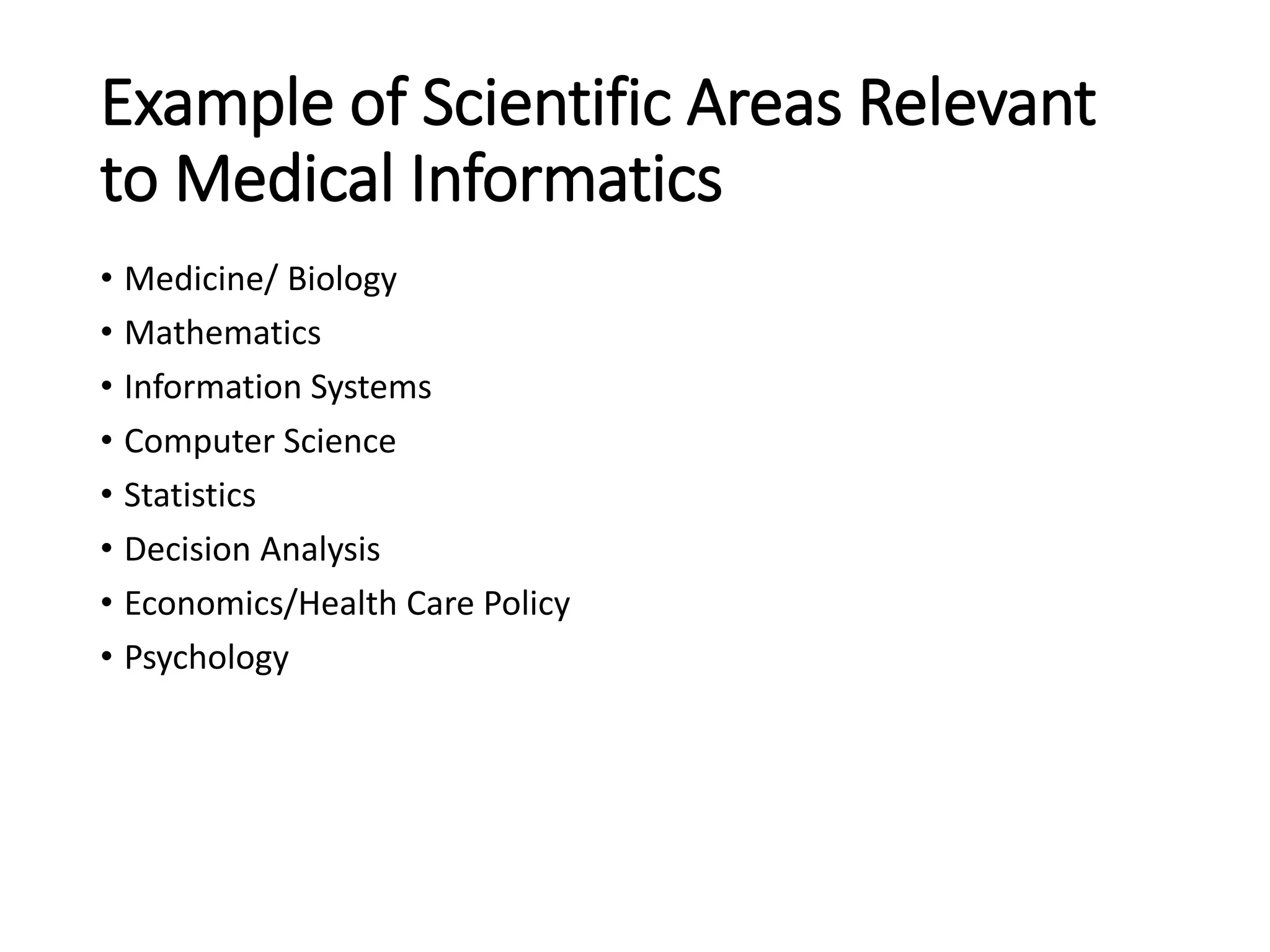
Example of Scientific Areas Relevant
to Medical Informatics
• Medicine/ Biology
• Mathematics
• Information Systems
• Computer Science
• Statistics
• Decision Analysis
• Economics/Health Care Policy
• Psychology
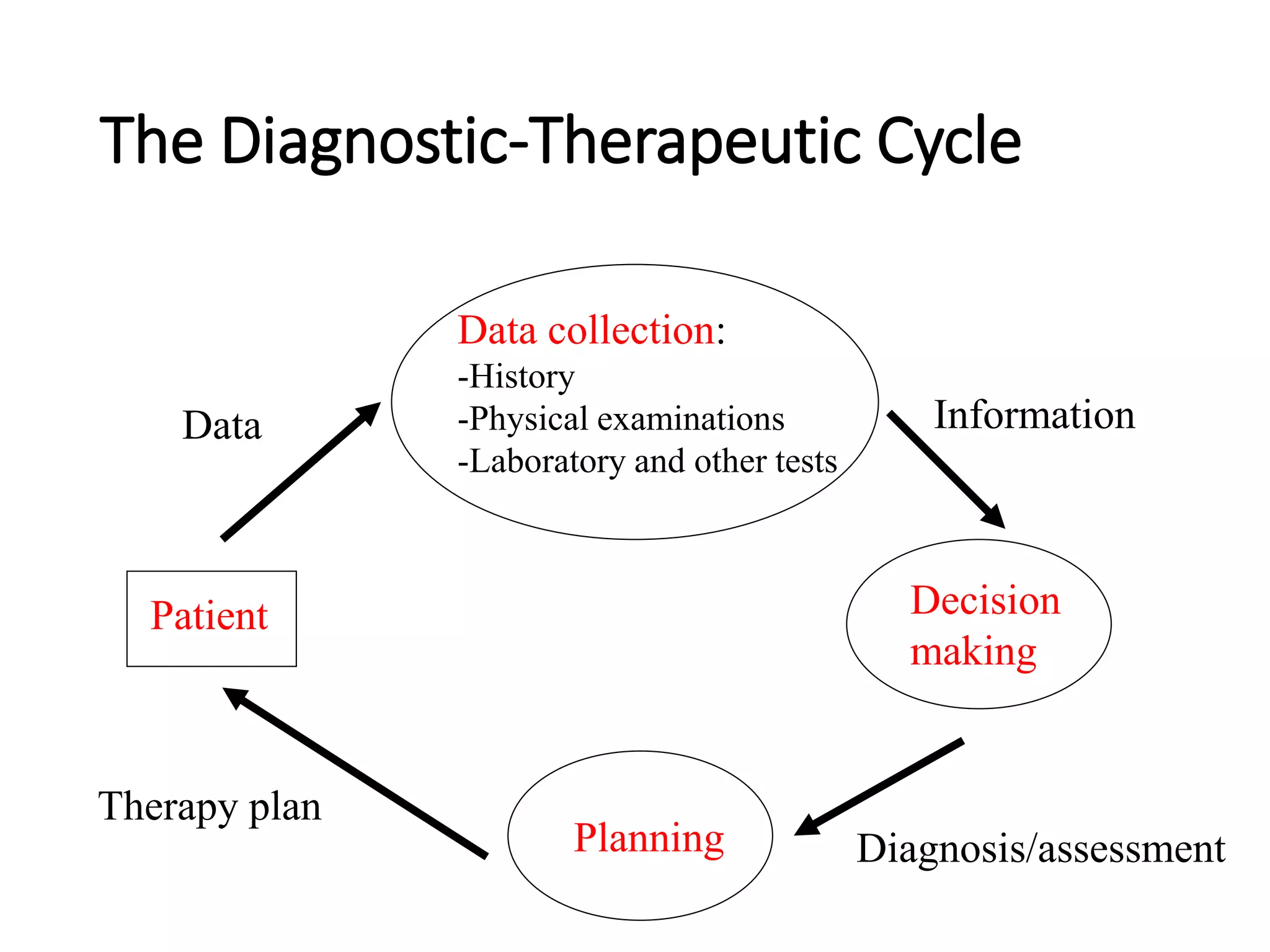
The Diagnostic-Therapeutic Cycle
Patient
Data collection:
-History
-Physical examinations
-Laboratory and other tests
Decision
making
Planning
Information
Diagnosis/assessment
Therapy plan
Data
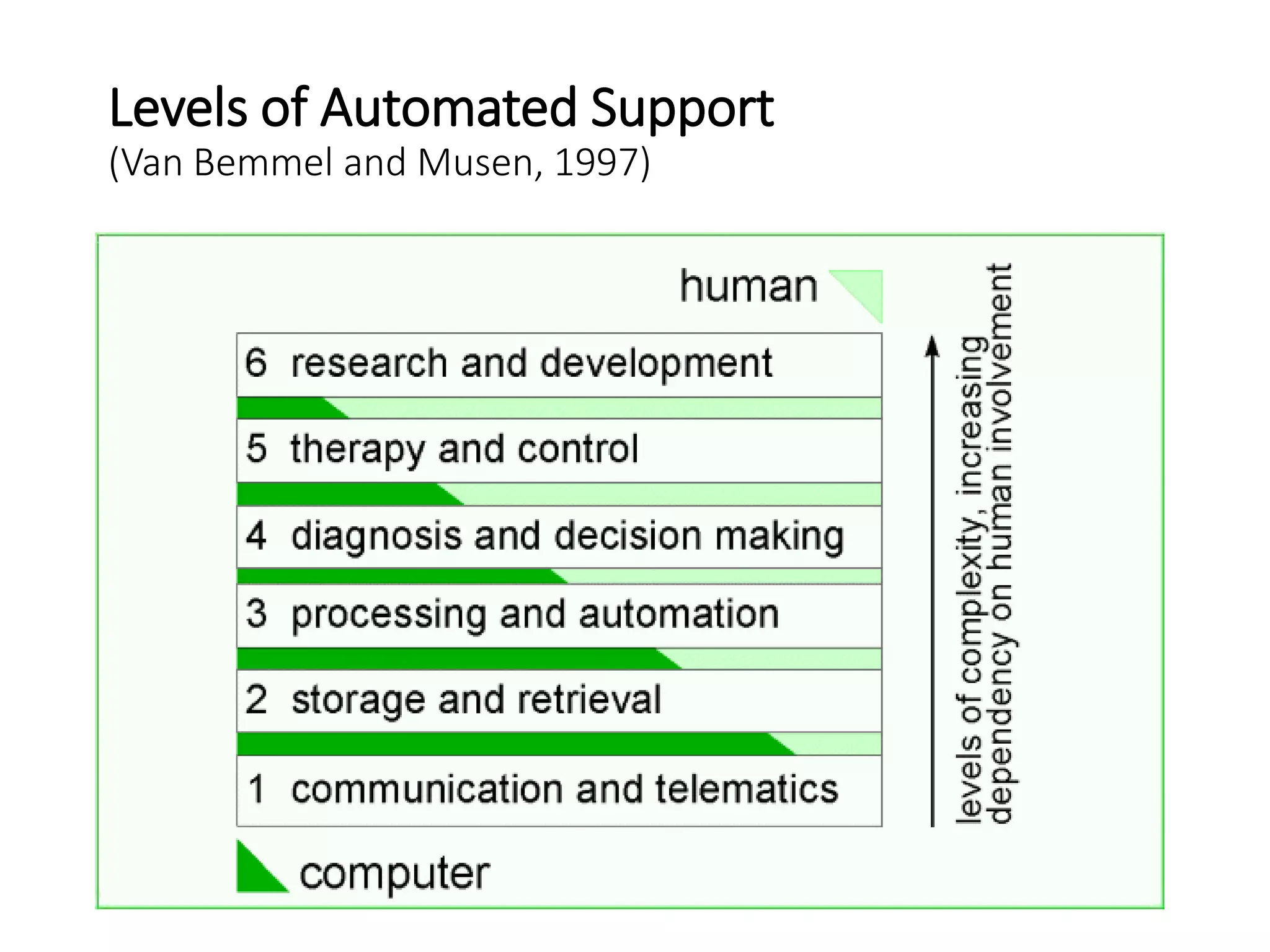
Levels of Automated Support
(Van Bemmel and Musen, 1997)
Definitions
•Medical Informatics: the science of medical
information collection and management
•Medical Decision Making: quantitative methods for
reasoning under uncertainty
•Medical Computing: computer applications for
information management
•Medical Decision Support: computer-based
information processing to help human decision
makers
How Did We Do It?
• Information Science
• Standards
• Integration
Ambulatory Care
•Aka Primary Care, Office Medicine…
•Roles (information specific):
•Patient
•Scheduling, Registration
•Nursing
•Physician
Patient
• Able to request an appointment
• Check medicines
• Self report
• Insurance Information!
Clinic Receptionist
• Appointment scheduling
• Check-in
• Insurance Information
• Billing
• Follow-up visit
Nurse
• Triage (certain settings)
• Chief Complaint
• Brief History
• Vital signs & Initial Exam
• Pulse, BP, Respirations, Pulse Oximeter
• Psychosocial Assessment
• Discharge Instructions (Pt Education)
Physician
• Review Chart Data, Studies
• Document History and Physical Exam
• Dx, Tx plan (orders, follow-up)
• SOAP note
• Subjective
• Objective
• Assessment
• Plan
Ancillary Studies: Radiology Tech
• Schedule Exam
• Review Allergies, Pregnancy
• Review Clinical Indication
• Enter Exam Data
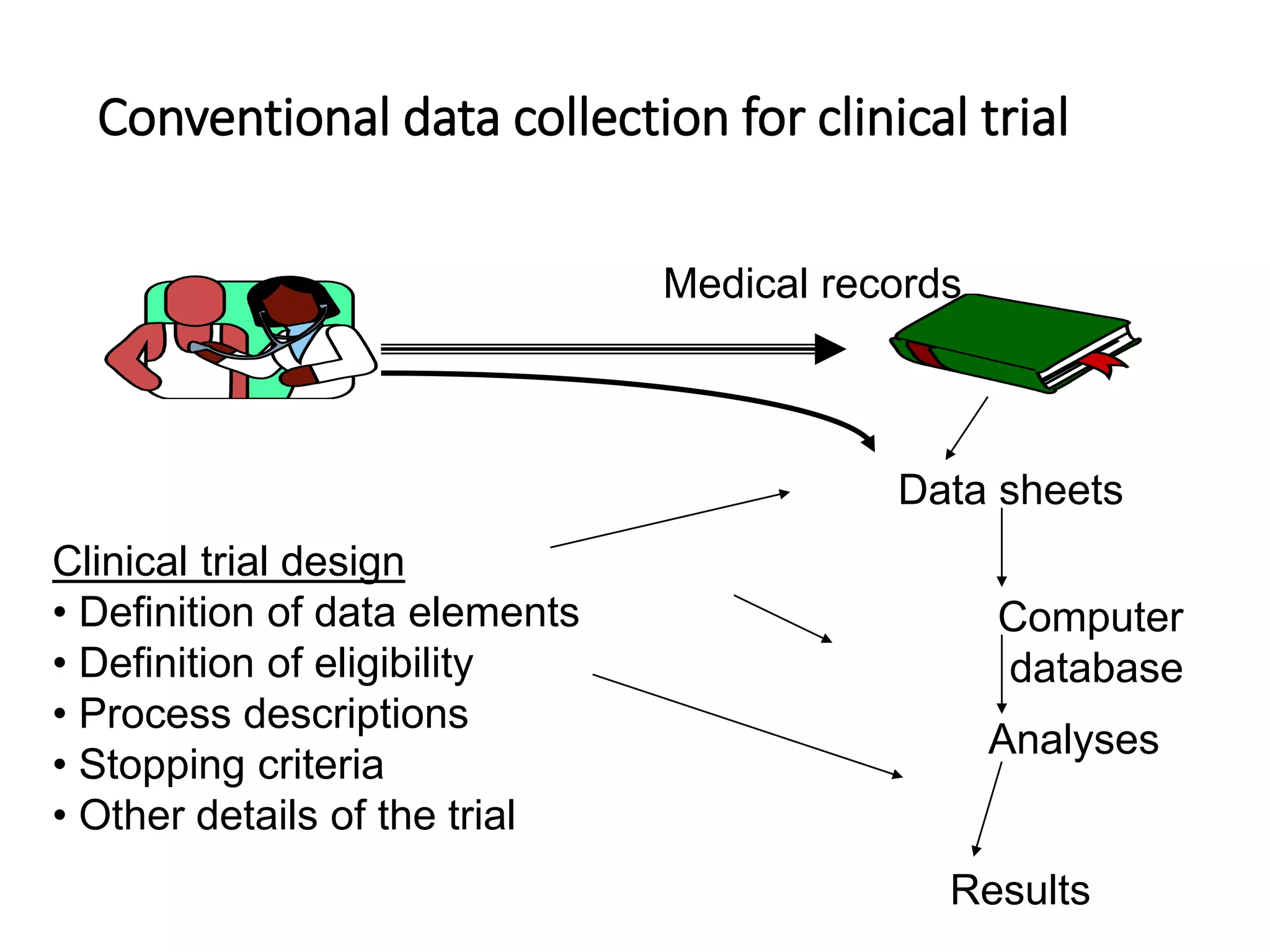
Conventional data collection for clinical trial
Clinical trial design
• Definition of data elements
• Definition of eligibility
• Process descriptions
• Stopping criteria
• Other details of the trial
Data sheets
Computer
database
Analyses
Results
Medical records
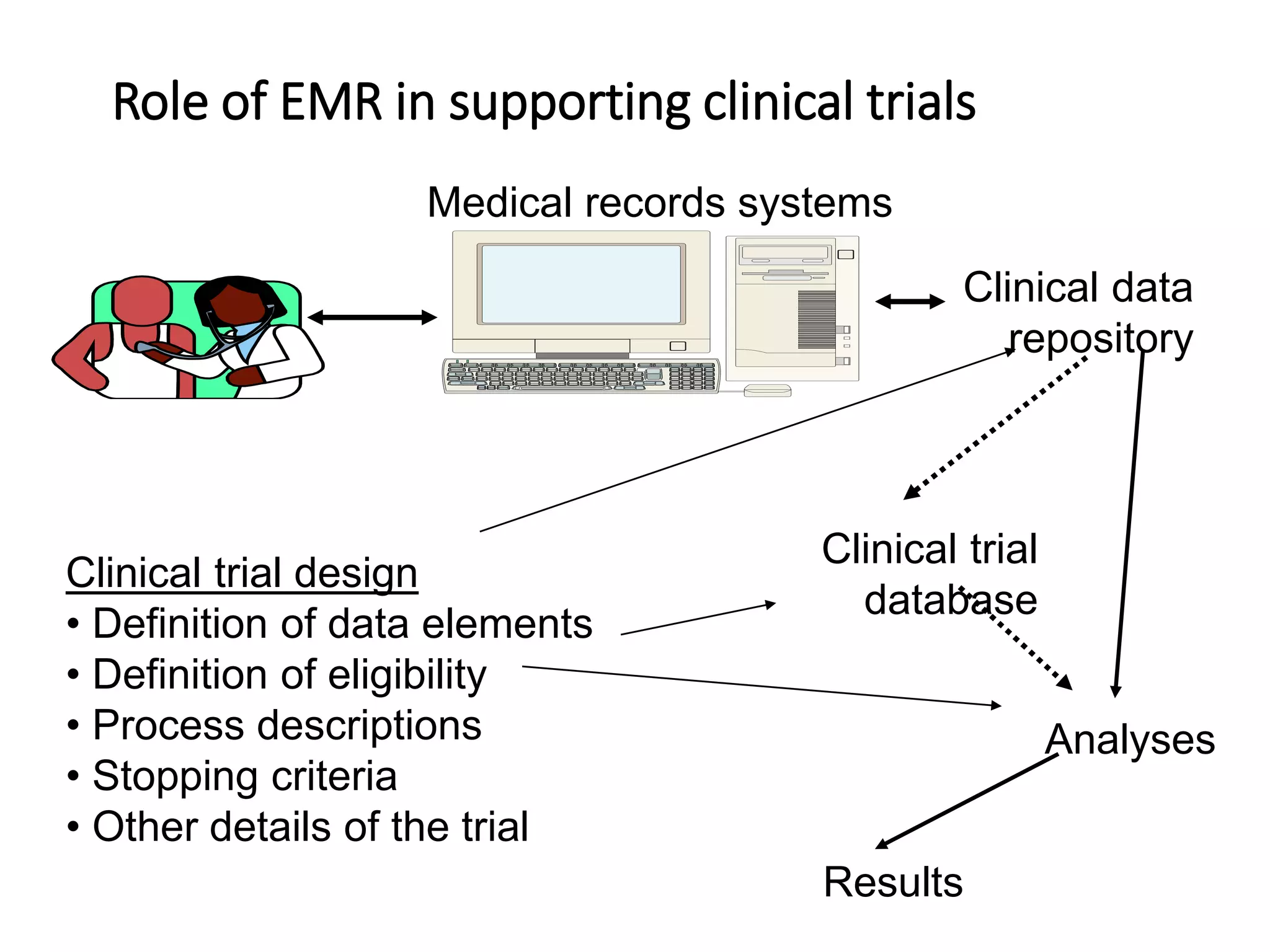
Role of EMR in supporting clinical trials
Clinical trial design
• Definition of data elements
• Definition of eligibility
• Process descriptions
• Stopping criteria
• Other details of the trial
Clinical trial
database
Analyses
Results
Medical records systems
Clinical data
repository
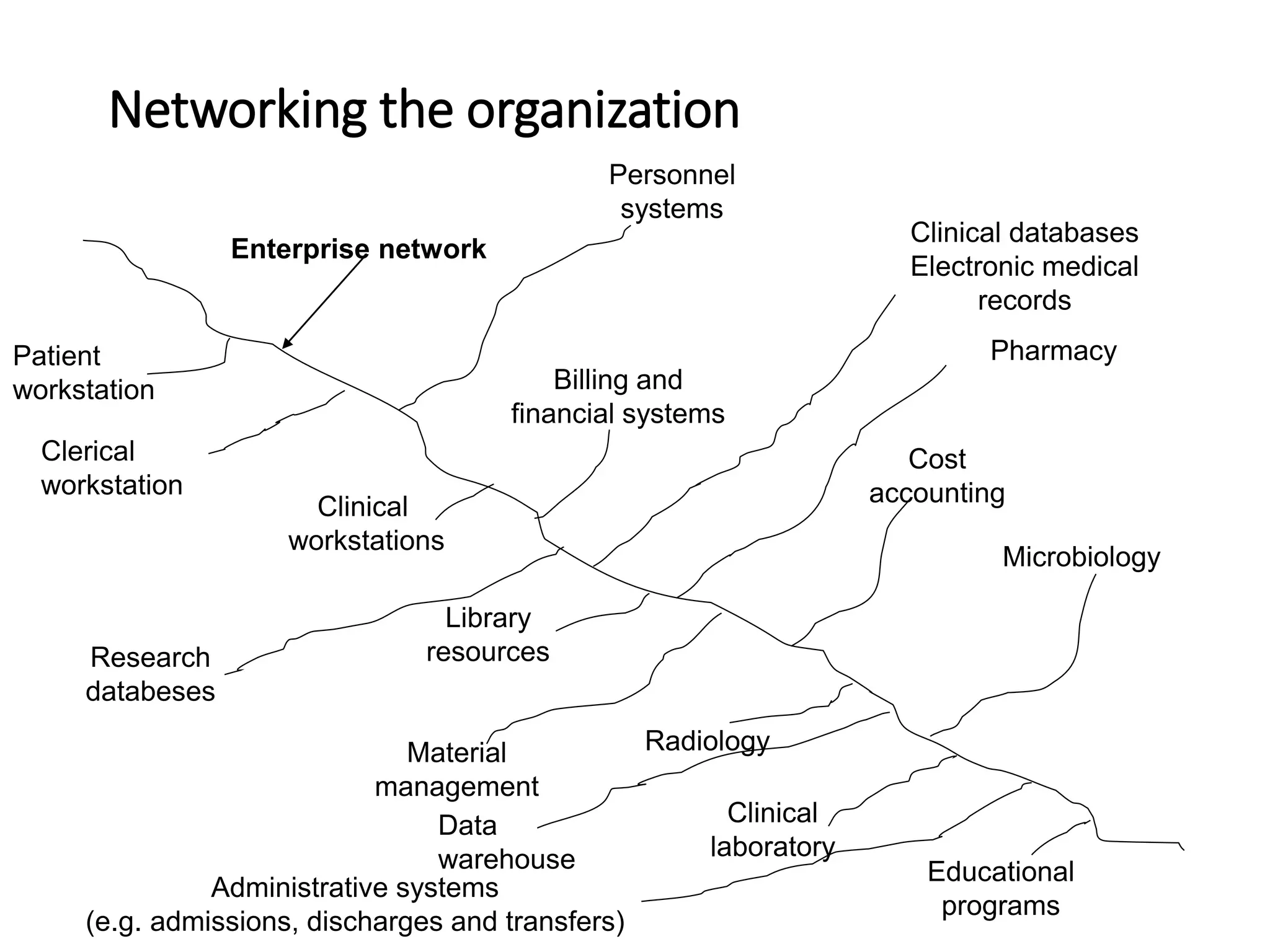
Networking the organization
Enterprise network
Patient
workstation
Clinical
workstations
Clerical
workstation
Research
databeses
Administrative systems
(e.g. admissions, discharges and transfers)
Library
resources
Radiology
Billing and
financial systems
Cost
accounting
Microbiology
Pharmacy
Clinical databases
Electronic medical
records
Personnel
systems
Material
management
Educational
programs
Clinical
laboratory
Data
warehouse
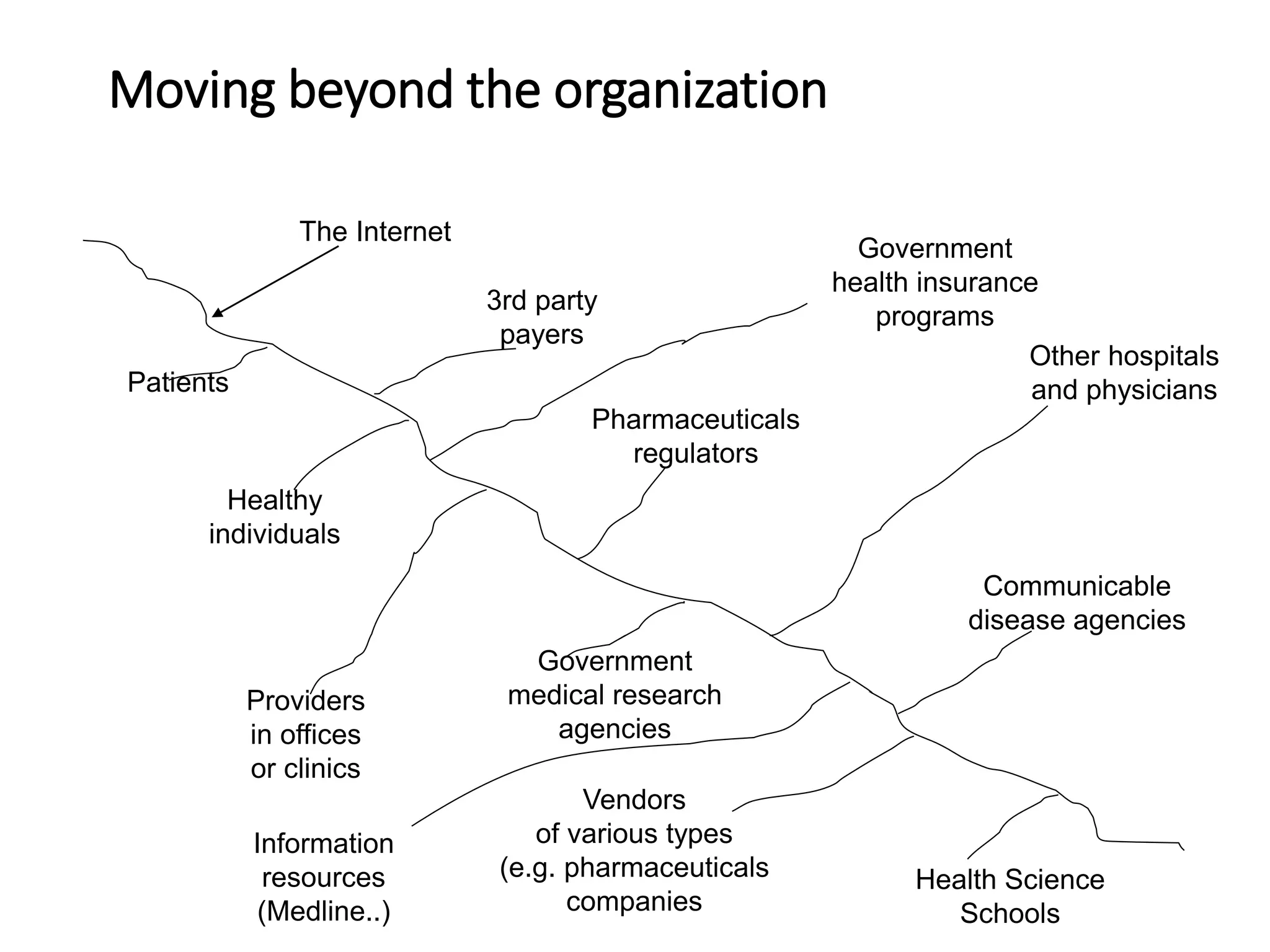
Moving beyond the organization
Patients
Healthy
individuals
Providers
in offices
or clinics
Information
resources
(Medline..)
Government
medical research
agencies
3rd party
payers
The Internet
Government
health insurance
programs
Other hospitals
and physicians
Pharmaceuticals
regulators
Communicable
disease agencies
Health Science
Schools
Vendors
of various types
(e.g. pharmaceuticals
companies
Healthcare institutes Needs
•Healthcare institutes are seeking Integrated clinical
work stations that will assist with clinical matters
by:
• Reporting results of tests
• Allowing direct entry of orders
• Facilitating access to transcribed reports
• Supporting telemedicine applications
• Supporting decision-support functions
The Heart of the Evolving Clinical
Workstation
• Electronic
• Confidential
• Secure
• Acceptable to clinicians and patients.
• Integrated with non-patient-specific information
Bioinformatics vs. Clinical
•Bioinformatics - The study of how information is
represented and transmitted in biological systems,
starting at the molecular level.
•Clinical informatics deals with the management of
information related to the delivery of health care
•Bioinformatics focuses on the management of
information related to the underlying basic
biological sciences.
Medical Image Processing
• Input: X-Ray, CT-scan, MRI, PET, etc.
• Tasks:
• Correction of multiple artifacts
• Registration:Superimposition to enhance visualization
• Segmentation: Decomposition into semantically meaningful regions
Conclusion
•Multidisciplinary research, development, and
application
• inspired by and benefits underlying core
scientific/engineering areas
•Medical Decision support systems:
• Tasks: Diagnosis, therapy
• Mode: Human initiated, data driven, closed loop
• Interaction style: Prescriptive, critiquing
• Multiple diagnostic/therapeutic methodologies

Computer science for health

  • 1.
    Computer Science forHealth Prepared by Md. Shafiuzzaman Lecturer, Dept. of CSE, JUST
  • 2.
    Objective “Medical Informatics isnot about using Microsoft Word to enter patient information…” Charles Friedman, PhD University of Pittsburgh at the UW Symposium, Fall 2000
  • 3.
    Objective “ Medical informaticsis the rapidly developing scientific field that deals with resources, devices and formalized methods for optimizing the storage, retrieval and management of biomedical information for problem solving and decision making” Edward Shortliffe, MD, PhD 1995
  • 4.
    Computers in Medicine •Informationcentral to biomedical research and clinical practice •Type • integrated information-management environments • affect on practice of medicine and biomedical •Method • medical computing • medical informatics • clinical informatics • bioinformatics
  • 5.
    Areas • Medical decisionmaking • Probabilistic medical reasoning • Patient care and monitoring systems • Computer aided surgery • Electronic patient records • Clinical decision support • Standards in medical informatics • Imaging • Image management systems • Telemedicine
  • 6.
    Medical Informatics • MedicalEducation • Patient Data Collection and Recording • Clinical Information Retrieval • Medical Knowledge Retrieval • Medical Decision Making
  • 7.
    Example of ScientificAreas Relevant to Medical Informatics • Medicine/ Biology • Mathematics • Information Systems • Computer Science • Statistics • Decision Analysis • Economics/Health Care Policy • Psychology
  • 8.
    The Diagnostic-Therapeutic Cycle Patient Datacollection: -History -Physical examinations -Laboratory and other tests Decision making Planning Information Diagnosis/assessment Therapy plan Data
  • 9.
    Levels of AutomatedSupport (Van Bemmel and Musen, 1997)
  • 10.
    Definitions •Medical Informatics: thescience of medical information collection and management •Medical Decision Making: quantitative methods for reasoning under uncertainty •Medical Computing: computer applications for information management •Medical Decision Support: computer-based information processing to help human decision makers
  • 11.
    How Did WeDo It? • Information Science • Standards • Integration
  • 12.
    Ambulatory Care •Aka PrimaryCare, Office Medicine… •Roles (information specific): •Patient •Scheduling, Registration •Nursing •Physician
  • 13.
    Patient • Able torequest an appointment • Check medicines • Self report • Insurance Information!
  • 14.
    Clinic Receptionist • Appointmentscheduling • Check-in • Insurance Information • Billing • Follow-up visit
  • 15.
    Nurse • Triage (certainsettings) • Chief Complaint • Brief History • Vital signs & Initial Exam • Pulse, BP, Respirations, Pulse Oximeter • Psychosocial Assessment • Discharge Instructions (Pt Education)
  • 16.
    Physician • Review ChartData, Studies • Document History and Physical Exam • Dx, Tx plan (orders, follow-up) • SOAP note • Subjective • Objective • Assessment • Plan
  • 17.
    Ancillary Studies: RadiologyTech • Schedule Exam • Review Allergies, Pregnancy • Review Clinical Indication • Enter Exam Data
  • 18.
    Conventional data collectionfor clinical trial Clinical trial design • Definition of data elements • Definition of eligibility • Process descriptions • Stopping criteria • Other details of the trial Data sheets Computer database Analyses Results Medical records
  • 19.
    Role of EMRin supporting clinical trials Clinical trial design • Definition of data elements • Definition of eligibility • Process descriptions • Stopping criteria • Other details of the trial Clinical trial database Analyses Results Medical records systems Clinical data repository
  • 20.
    Networking the organization Enterprisenetwork Patient workstation Clinical workstations Clerical workstation Research databeses Administrative systems (e.g. admissions, discharges and transfers) Library resources Radiology Billing and financial systems Cost accounting Microbiology Pharmacy Clinical databases Electronic medical records Personnel systems Material management Educational programs Clinical laboratory Data warehouse
  • 21.
    Moving beyond theorganization Patients Healthy individuals Providers in offices or clinics Information resources (Medline..) Government medical research agencies 3rd party payers The Internet Government health insurance programs Other hospitals and physicians Pharmaceuticals regulators Communicable disease agencies Health Science Schools Vendors of various types (e.g. pharmaceuticals companies
  • 22.
    Healthcare institutes Needs •Healthcareinstitutes are seeking Integrated clinical work stations that will assist with clinical matters by: • Reporting results of tests • Allowing direct entry of orders • Facilitating access to transcribed reports • Supporting telemedicine applications • Supporting decision-support functions
  • 23.
    The Heart ofthe Evolving Clinical Workstation • Electronic • Confidential • Secure • Acceptable to clinicians and patients. • Integrated with non-patient-specific information
  • 24.
    Bioinformatics vs. Clinical •Bioinformatics- The study of how information is represented and transmitted in biological systems, starting at the molecular level. •Clinical informatics deals with the management of information related to the delivery of health care •Bioinformatics focuses on the management of information related to the underlying basic biological sciences.
  • 25.
    Medical Image Processing •Input: X-Ray, CT-scan, MRI, PET, etc. • Tasks: • Correction of multiple artifacts • Registration:Superimposition to enhance visualization • Segmentation: Decomposition into semantically meaningful regions
  • 26.
    Conclusion •Multidisciplinary research, development,and application • inspired by and benefits underlying core scientific/engineering areas •Medical Decision support systems: • Tasks: Diagnosis, therapy • Mode: Human initiated, data driven, closed loop • Interaction style: Prescriptive, critiquing • Multiple diagnostic/therapeutic methodologies