DevOps
Prepared by
Md. Shafiuzzaman
Recap of Agile..
 sprints
 backlogs
 scrums
 development team
 operation team
 management team
What?
 The term DevOps was formed by combining the words “development”
and “operations”
 bridges the gap between development and operation teams
 a set of practices that works to automate and integrate the processes
between software development and IT teams
 combination of cultural philosophies, practices, and tools
How?
 development and operations teams are merged into a single team
 engineers work across the entire application lifecycle, from development
and test to deployment to operations
 quality assurance and security teams may also become more tightly
integrated with development and operations
 practices to automate processes that historically have been manual and
slow
 use a technology stack and tooling which help them operate and evolve
applications quickly and reliably
Why?
 Speed
 Rapid Delivery
 Reliability
 Scale
 Improved Collaboration
 Security
DevOps Practices
BEST PRACTICES FOR IMPLEMENTING DEVOPS
Agile project management
 smaller incremental delivery
 continuous evaluation of requirements, plans and results
 respond to feedbacks
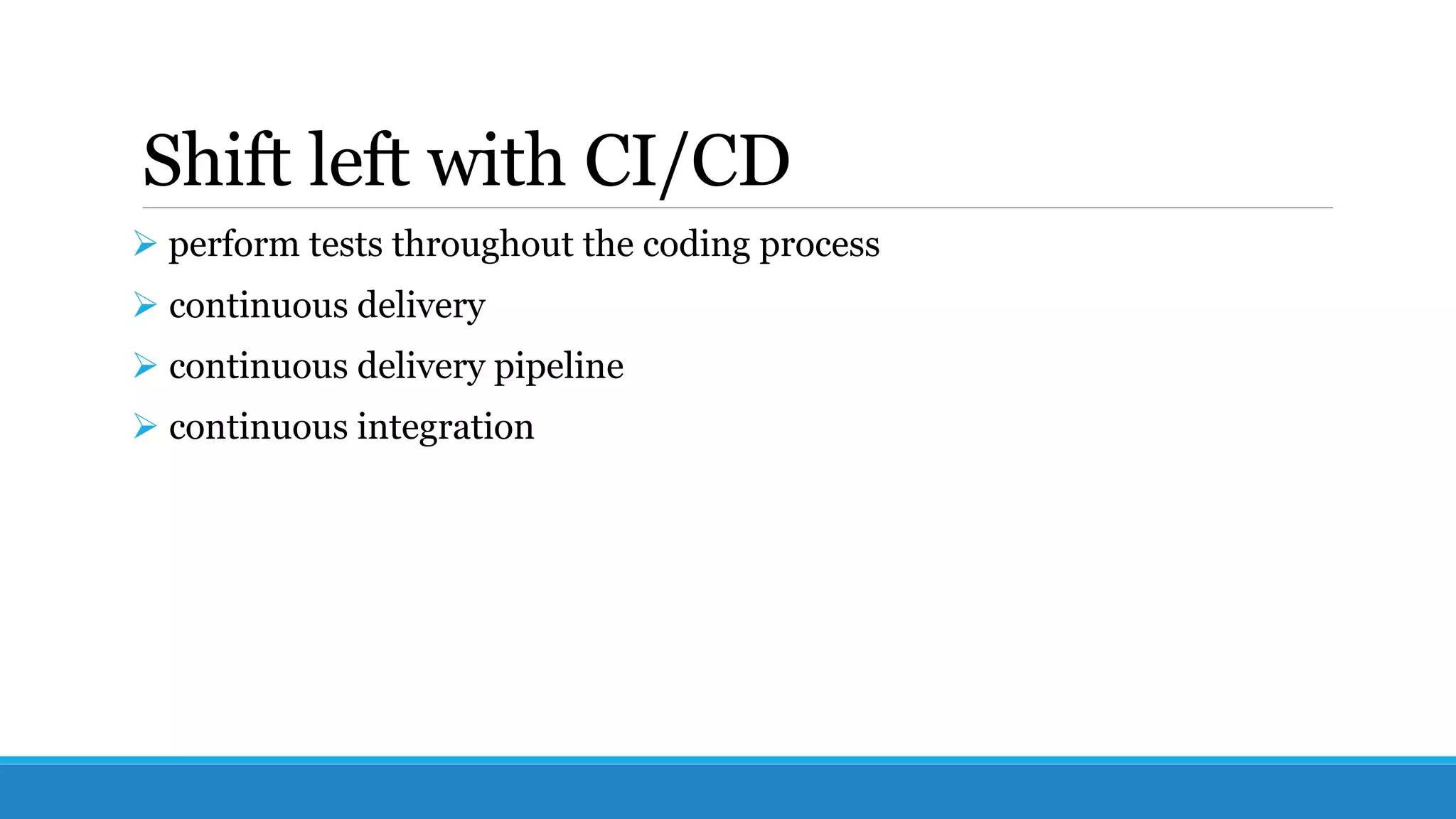
Shift left with CI/CD
 perform tests throughout the coding process
 continuous delivery
 continuous delivery pipeline
 continuous integration
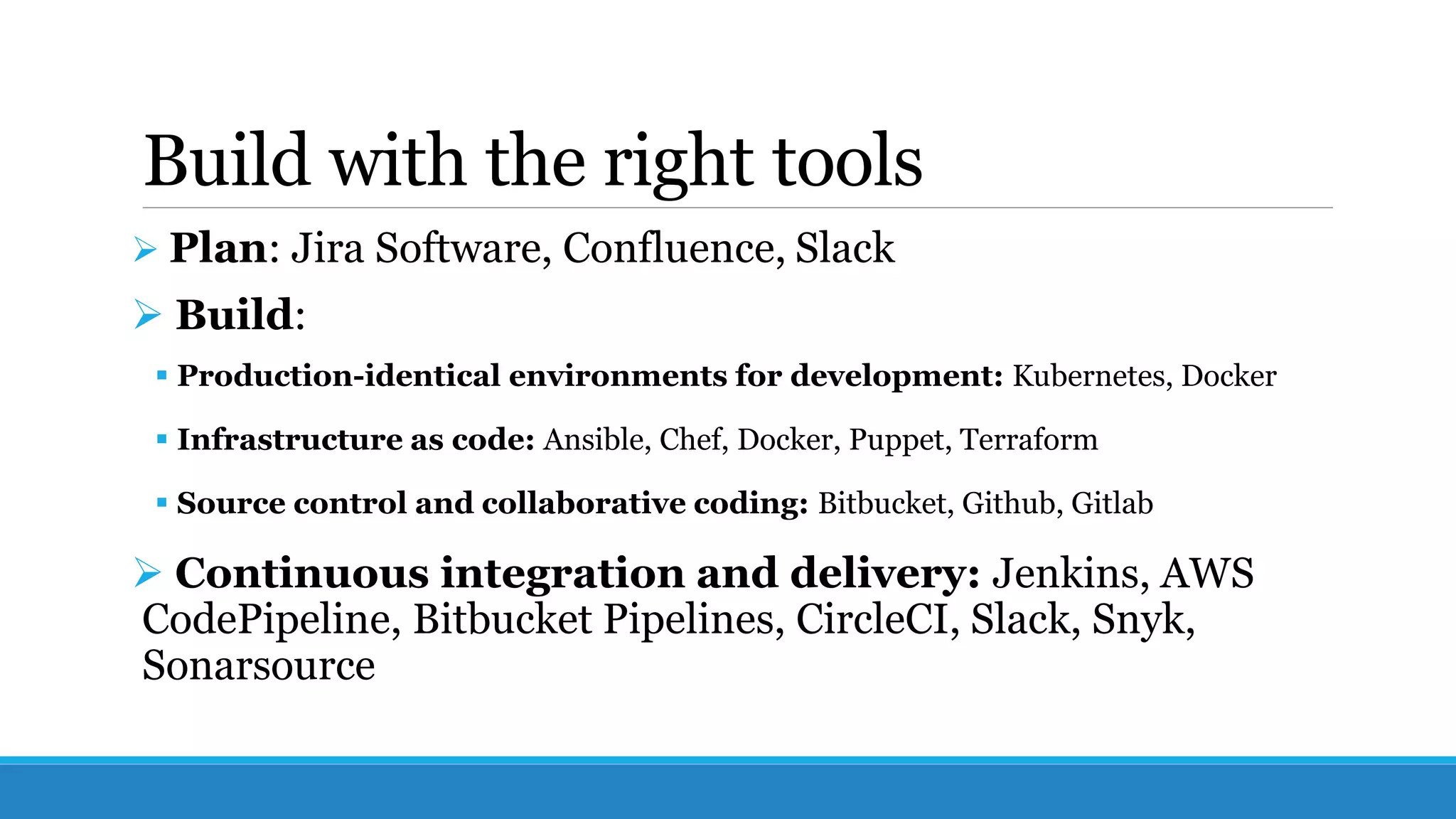
Build with the right tools
 Plan: Jira Software, Confluence, Slack
 Build:
 Production-identical environments for development: Kubernetes, Docker
 Infrastructure as code: Ansible, Chef, Docker, Puppet, Terraform
 Source control and collaborative coding: Bitbucket, Github, Gitlab
 Continuous integration and delivery: Jenkins, AWS
CodePipeline, Bitbucket Pipelines, CircleCI, Slack, Snyk,
Sonarsource
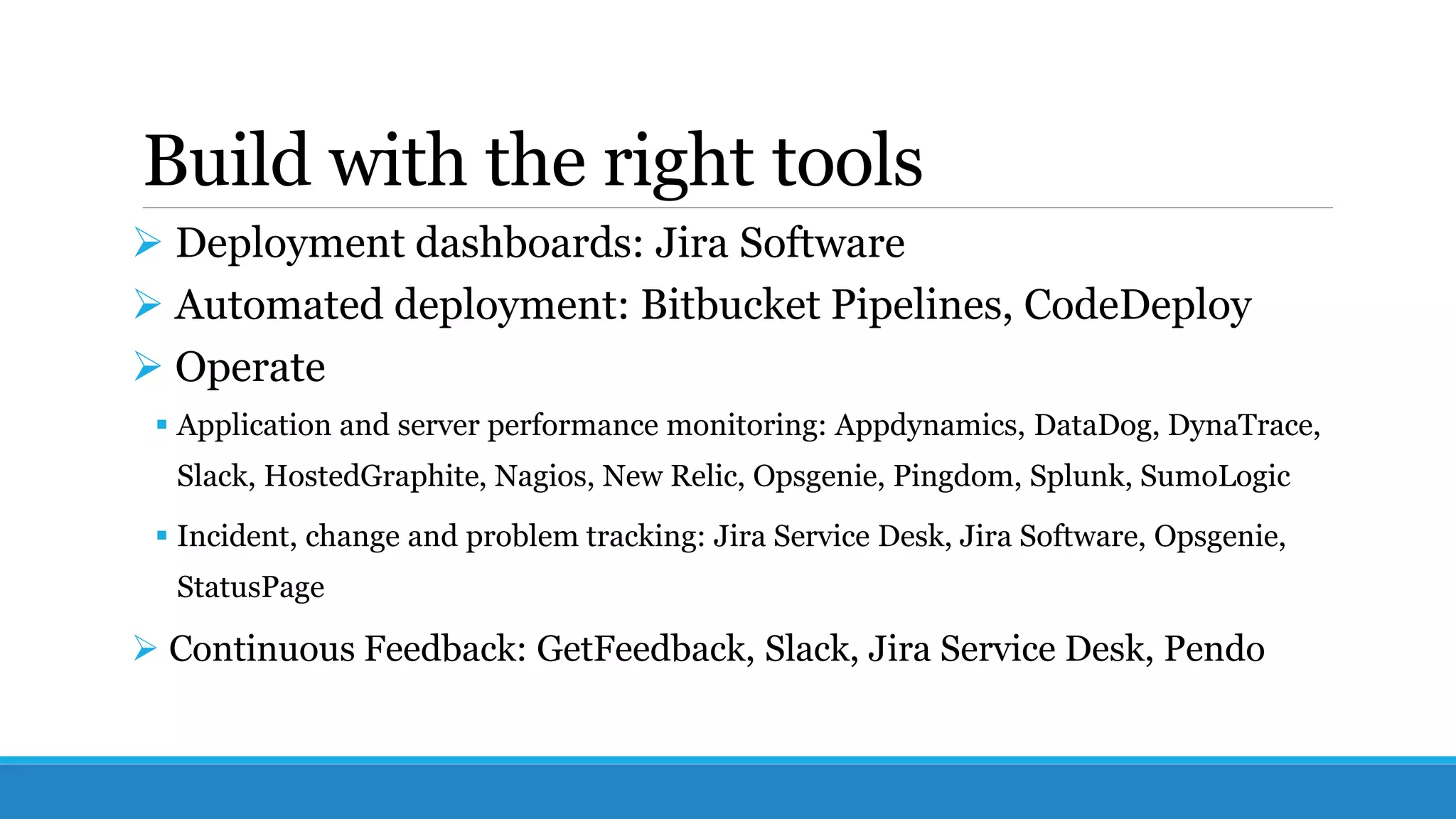
Build with the right tools
 Deployment dashboards: Jira Software
 Automated deployment: Bitbucket Pipelines, CodeDeploy
 Operate
 Application and server performance monitoring: Appdynamics, DataDog, DynaTrace,
Slack, HostedGraphite, Nagios, New Relic, Opsgenie, Pingdom, Splunk, SumoLogic
 Incident, change and problem tracking: Jira Service Desk, Jira Software, Opsgenie,
StatusPage
 Continuous Feedback: GetFeedback, Slack, Jira Service Desk, Pendo
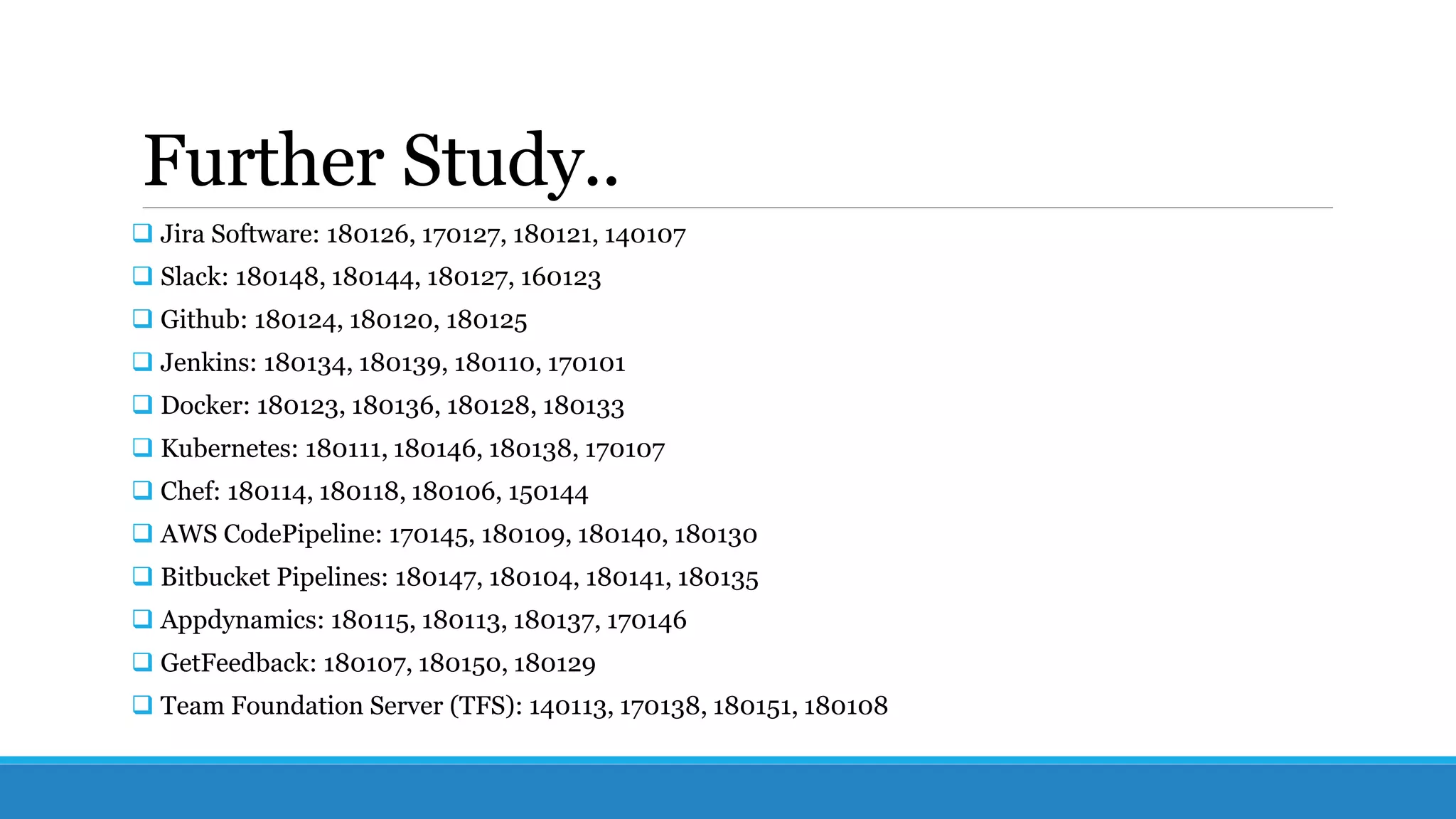
Further Study..
 Jira Software: 180126, 170127, 180121, 140107
 Slack: 180148, 180144, 180127, 160123
 Github: 180124, 180120, 180125
 Jenkins: 180134, 180139, 180110, 170101
 Docker: 180123, 180136, 180128, 180133
 Kubernetes: 180111, 180146, 180138, 170107
 Chef: 180114, 180118, 180106, 150144
 AWS CodePipeline: 170145, 180109, 180140, 180130
 Bitbucket Pipelines: 180147, 180104, 180141, 180135
 Appdynamics: 180115, 180113, 180137, 170146
 GetFeedback: 180107, 180150, 180129
 Team Foundation Server (TFS): 140113, 170138, 180151, 180108
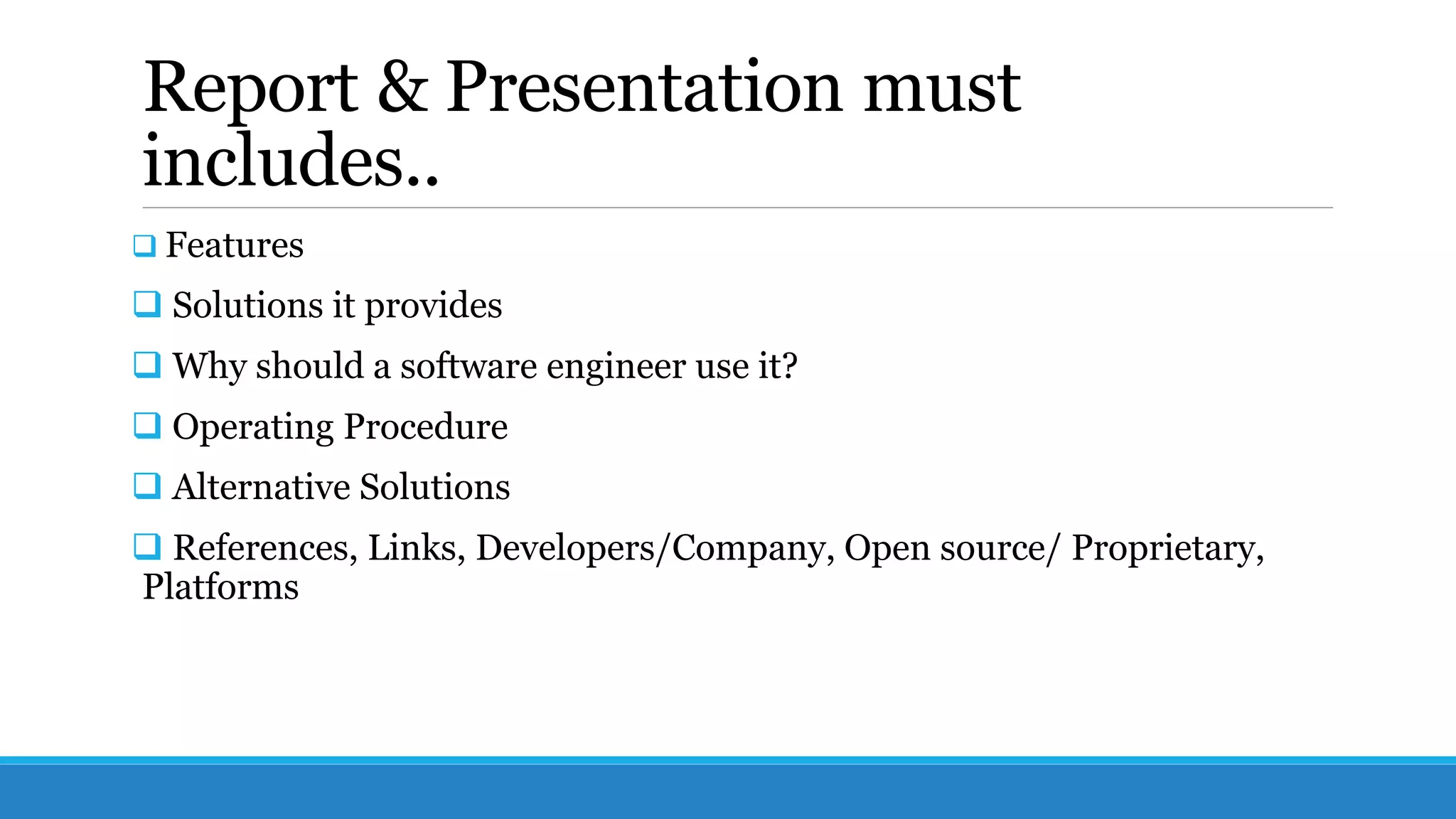
Report & Presentation must
includes..
 Features
 Solutions it provides
 Why should a software engineer use it?
 Operating Procedure
 Alternative Solutions
 References, Links, Developers/Company, Open source/ Proprietary,
Platforms
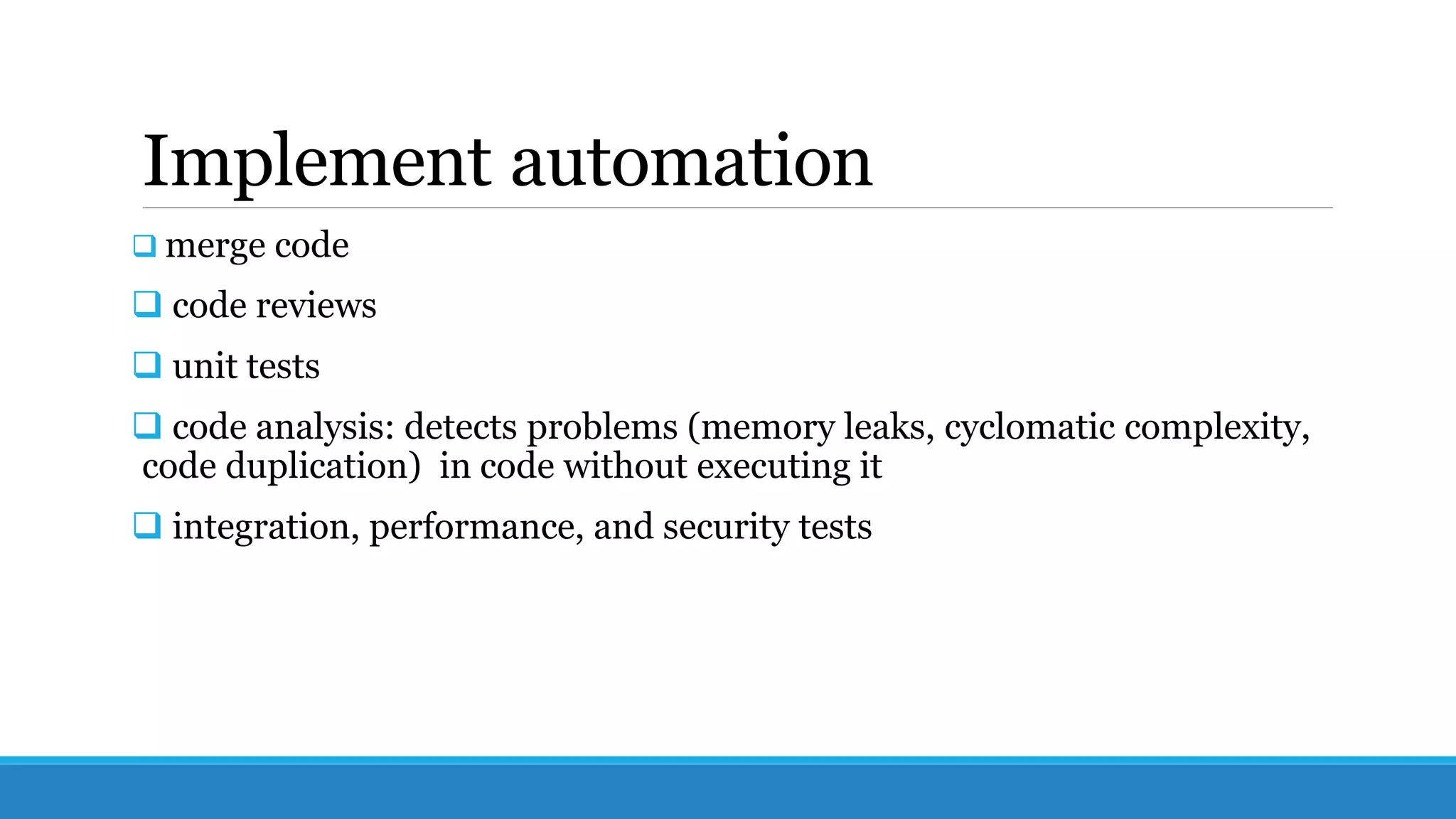
Implement automation
 merge code
 code reviews
 unit tests
 code analysis: detects problems (memory leaks, cyclomatic complexity,
code duplication) in code without executing it
 integration, performance, and security tests
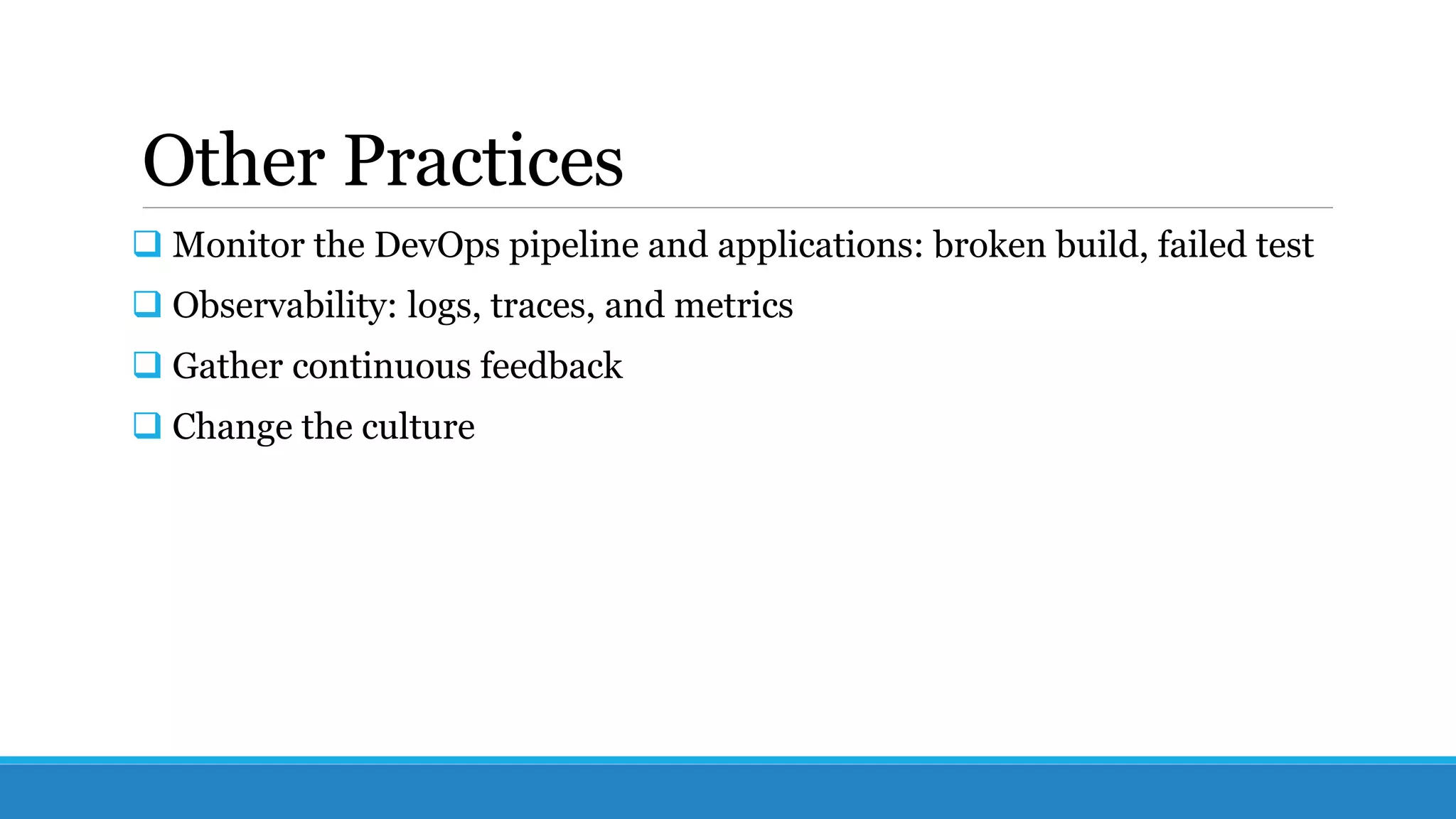
Other Practices
 Monitor the DevOps pipeline and applications: broken build, failed test
 Observability: logs, traces, and metrics
 Gather continuous feedback
 Change the culture
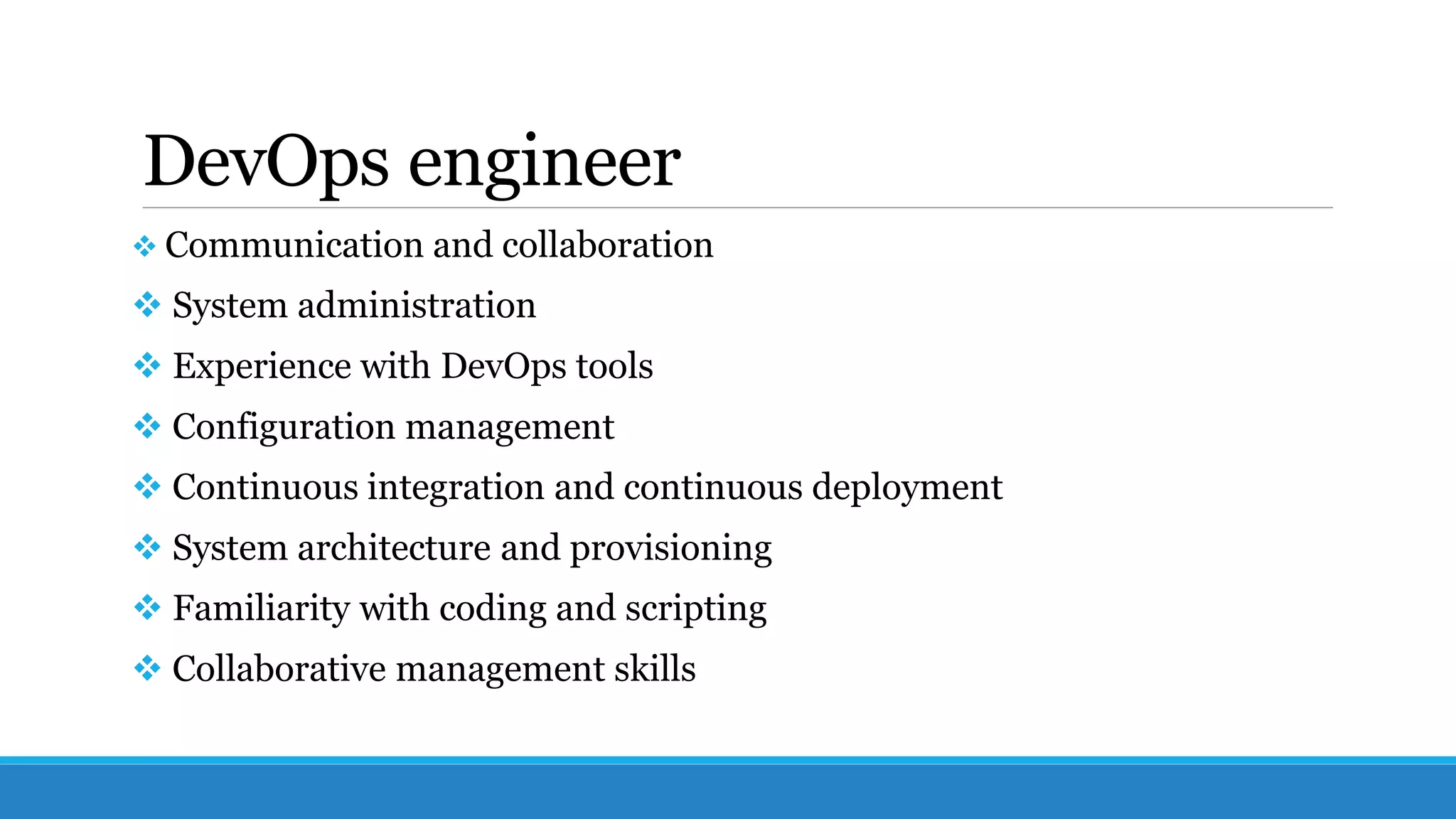
DevOps engineer
 Communication and collaboration
 System administration
 Experience with DevOps tools
 Configuration management
 Continuous integration and continuous deployment
 System architecture and provisioning
 Familiarity with coding and scripting
 Collaborative management skills
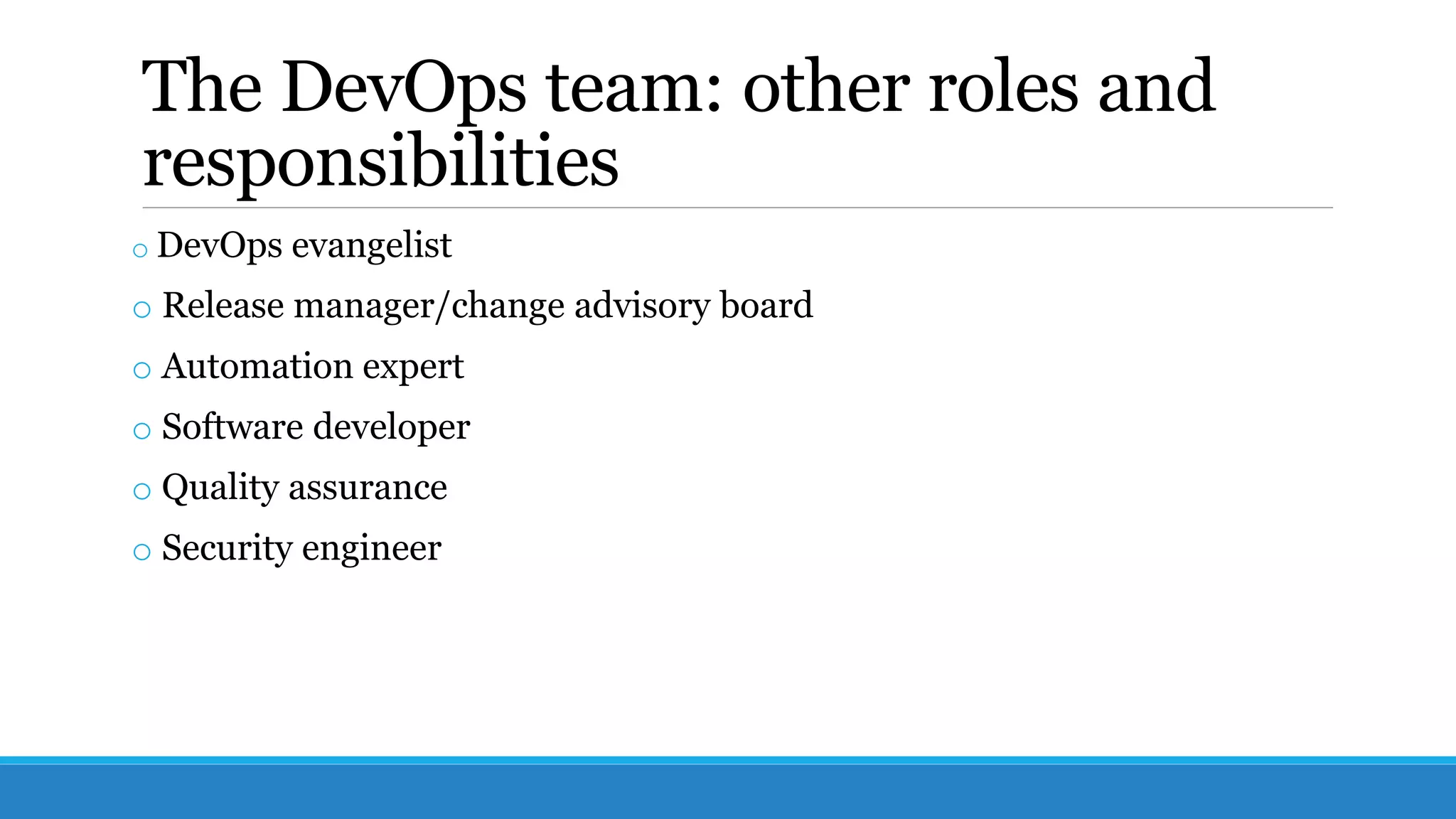
The DevOps team: other roles and
responsibilities
o DevOps evangelist
o Release manager/change advisory board
o Automation expert
o Software developer
o Quality assurance
o Security engineer
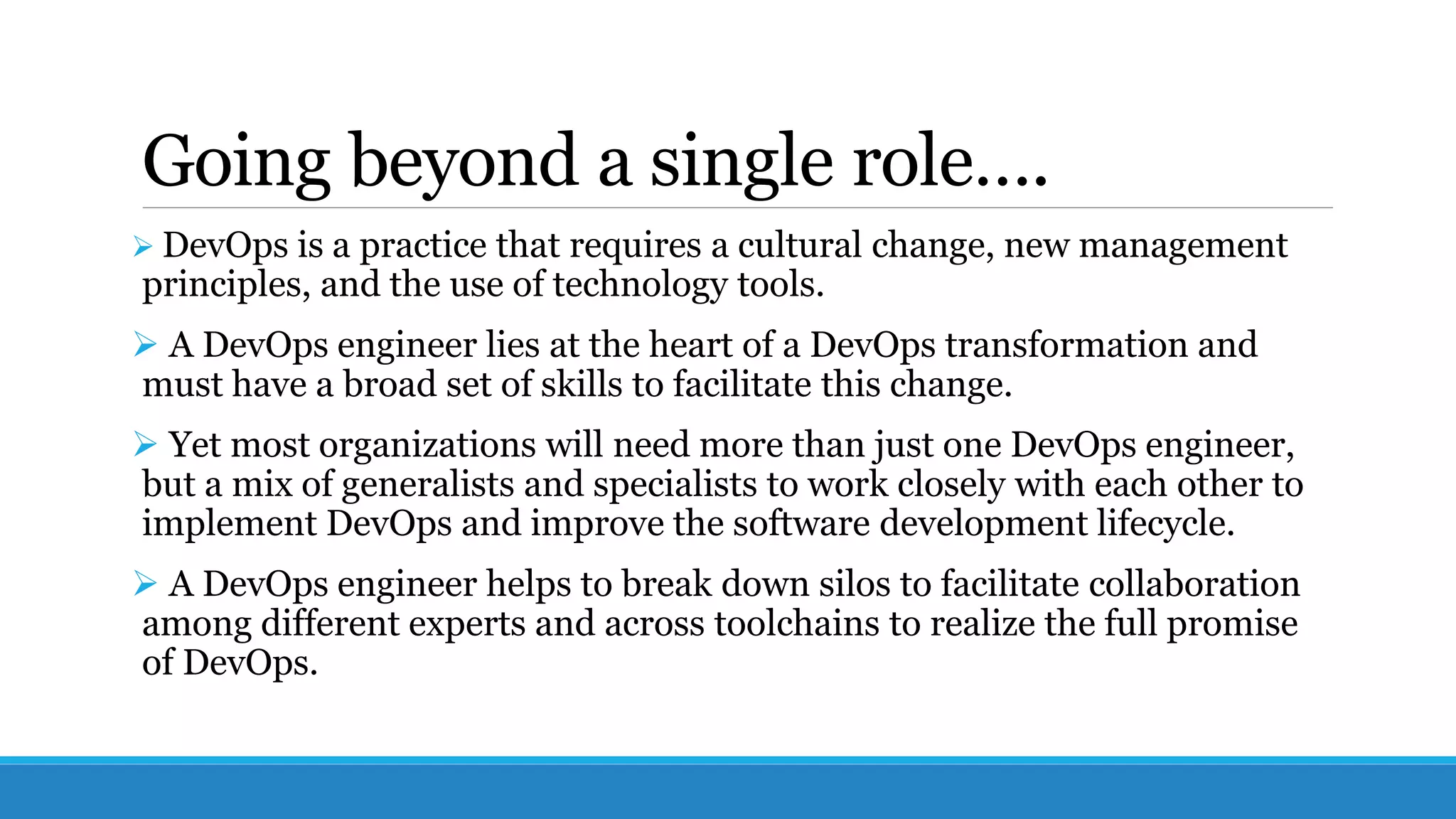
Going beyond a single role….
 DevOps is a practice that requires a cultural change, new management
principles, and the use of technology tools.
 A DevOps engineer lies at the heart of a DevOps transformation and
must have a broad set of skills to facilitate this change.
 Yet most organizations will need more than just one DevOps engineer,
but a mix of generalists and specialists to work closely with each other to
implement DevOps and improve the software development lifecycle.
 A DevOps engineer helps to break down silos to facilitate collaboration
among different experts and across toolchains to realize the full promise
of DevOps.

Dev ops

  • 1.
  • 2.
    Recap of Agile.. sprints  backlogs  scrums  development team  operation team  management team
  • 4.
    What?  The termDevOps was formed by combining the words “development” and “operations”  bridges the gap between development and operation teams  a set of practices that works to automate and integrate the processes between software development and IT teams  combination of cultural philosophies, practices, and tools
  • 5.
    How?  development andoperations teams are merged into a single team  engineers work across the entire application lifecycle, from development and test to deployment to operations  quality assurance and security teams may also become more tightly integrated with development and operations  practices to automate processes that historically have been manual and slow  use a technology stack and tooling which help them operate and evolve applications quickly and reliably
  • 6.
    Why?  Speed  RapidDelivery  Reliability  Scale  Improved Collaboration  Security
  • 7.
    DevOps Practices BEST PRACTICESFOR IMPLEMENTING DEVOPS
  • 8.
    Agile project management smaller incremental delivery  continuous evaluation of requirements, plans and results  respond to feedbacks
  • 9.
    Shift left withCI/CD  perform tests throughout the coding process  continuous delivery  continuous delivery pipeline  continuous integration
  • 10.
    Build with theright tools  Plan: Jira Software, Confluence, Slack  Build:  Production-identical environments for development: Kubernetes, Docker  Infrastructure as code: Ansible, Chef, Docker, Puppet, Terraform  Source control and collaborative coding: Bitbucket, Github, Gitlab  Continuous integration and delivery: Jenkins, AWS CodePipeline, Bitbucket Pipelines, CircleCI, Slack, Snyk, Sonarsource
  • 11.
    Build with theright tools  Deployment dashboards: Jira Software  Automated deployment: Bitbucket Pipelines, CodeDeploy  Operate  Application and server performance monitoring: Appdynamics, DataDog, DynaTrace, Slack, HostedGraphite, Nagios, New Relic, Opsgenie, Pingdom, Splunk, SumoLogic  Incident, change and problem tracking: Jira Service Desk, Jira Software, Opsgenie, StatusPage  Continuous Feedback: GetFeedback, Slack, Jira Service Desk, Pendo
  • 12.
    Further Study..  JiraSoftware: 180126, 170127, 180121, 140107  Slack: 180148, 180144, 180127, 160123  Github: 180124, 180120, 180125  Jenkins: 180134, 180139, 180110, 170101  Docker: 180123, 180136, 180128, 180133  Kubernetes: 180111, 180146, 180138, 170107  Chef: 180114, 180118, 180106, 150144  AWS CodePipeline: 170145, 180109, 180140, 180130  Bitbucket Pipelines: 180147, 180104, 180141, 180135  Appdynamics: 180115, 180113, 180137, 170146  GetFeedback: 180107, 180150, 180129  Team Foundation Server (TFS): 140113, 170138, 180151, 180108
  • 13.
    Report & Presentationmust includes..  Features  Solutions it provides  Why should a software engineer use it?  Operating Procedure  Alternative Solutions  References, Links, Developers/Company, Open source/ Proprietary, Platforms
  • 14.
    Implement automation  mergecode  code reviews  unit tests  code analysis: detects problems (memory leaks, cyclomatic complexity, code duplication) in code without executing it  integration, performance, and security tests
  • 15.
    Other Practices  Monitorthe DevOps pipeline and applications: broken build, failed test  Observability: logs, traces, and metrics  Gather continuous feedback  Change the culture
  • 16.
    DevOps engineer  Communicationand collaboration  System administration  Experience with DevOps tools  Configuration management  Continuous integration and continuous deployment  System architecture and provisioning  Familiarity with coding and scripting  Collaborative management skills
  • 17.
    The DevOps team:other roles and responsibilities o DevOps evangelist o Release manager/change advisory board o Automation expert o Software developer o Quality assurance o Security engineer
  • 18.
    Going beyond asingle role….  DevOps is a practice that requires a cultural change, new management principles, and the use of technology tools.  A DevOps engineer lies at the heart of a DevOps transformation and must have a broad set of skills to facilitate this change.  Yet most organizations will need more than just one DevOps engineer, but a mix of generalists and specialists to work closely with each other to implement DevOps and improve the software development lifecycle.  A DevOps engineer helps to break down silos to facilitate collaboration among different experts and across toolchains to realize the full promise of DevOps.