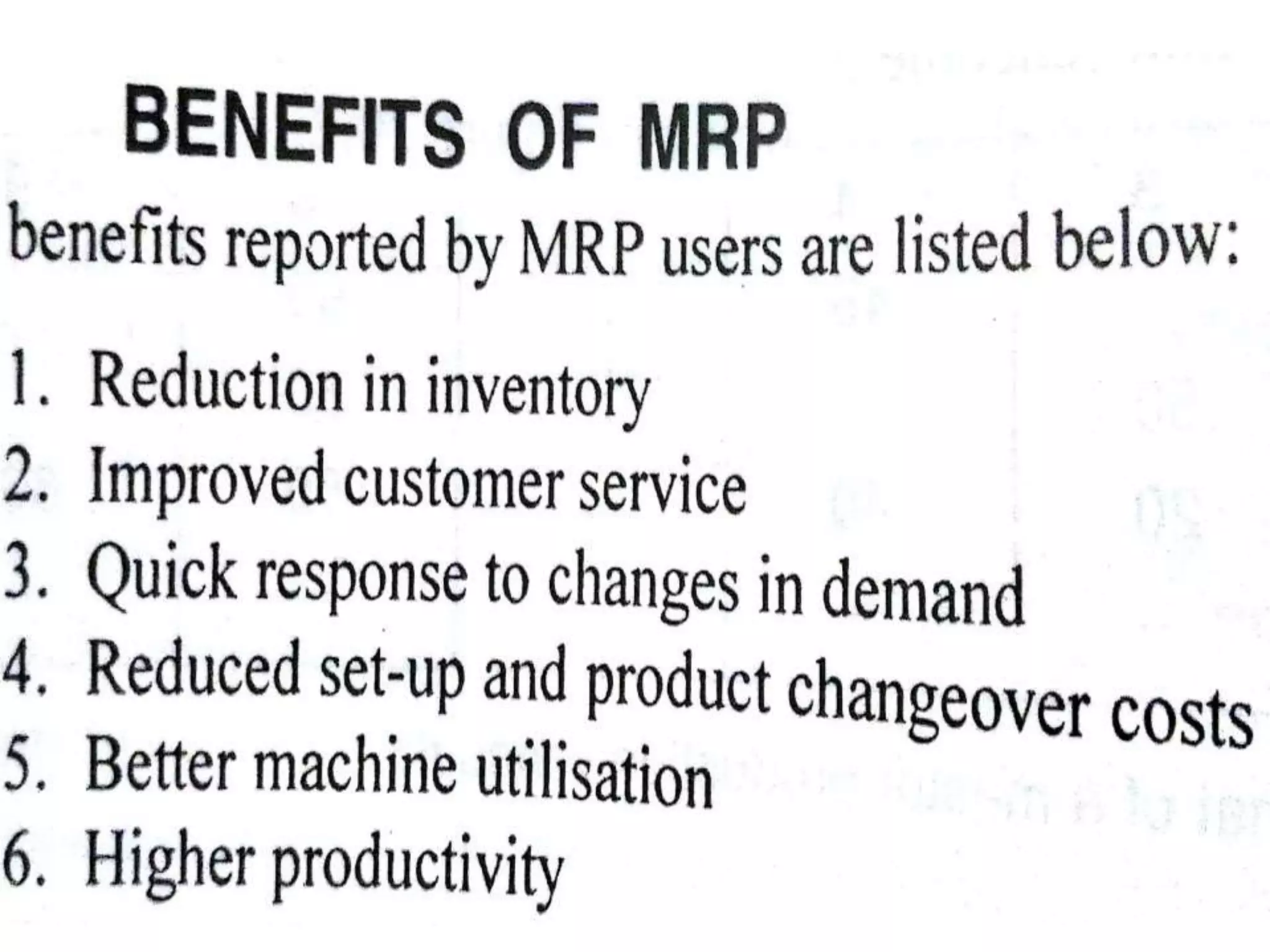

Computer- aided
Manufacturing Resource
Planning
Introduction
1. In recent years , manufacturing has become
highly competitive world wide.
2. It has become essential to control production
and inventory to the increased demand of
productivity.
3. The use of computers in manufacturing has
resulted in the development of Material
resource planning (MRP).
4. This concept has been extended to
Manufacturing resource planning (MRP II),
Capacity resource planning (CRP) ,and
Enterprise resource planning (ERP).
Material Resource Planning (MRP)
1. MRP is computational technique that converts
master schedule for end products into a
detailed schedule for the raw materials and
components used in the end products.
2. It is an inventory control system.
3. The basic MRP concepts are :
1.Independent and dependent demand.
2.Lumpy demands.
3.Manufacturing lead times.
4.Common use items.
1.Independent and Dependent Demand
1.Independent demand is the demand for a product
,which is unrelated to the demand for other items.
Example: End products and spare parts are
independent demand.
2.Depending demand is the demand for the item,
which is directly related to the demand for other
items
Example :Piston and cylinder of an automobile
engine are dependent demand.
MRP is a technique for determining the quantities of
dependent demand items.
2.Lumpy Demand
1. In a manufacturing system, when the demand
became very large for a certain item, it is referred
to as lumpy demand.
2. MRP is an appropriate technique for
determining the inventory of lumpy demand items.
3 .Manufacturing Lead times
1. Manufacturing lead time is the time required to
process the part through the sequence of
workstations specified on the route sheet.
2. It includes both productive and non -
productive times.
3. In MRP , lead time is used to determine the
stating dates for assembling final products and
sub - assemblies , for manufacturing
component part and for ordering raw materials.
4 .Common Use items
1. In a manufacturing environment , certain
components become common items for the
assembling of several final products and sub -
assemblies.
Example : The same type of steel rod
stock may be used to produce different
types of screws.
2. MRP collects these common items required
for different products for ordering the raw
materials and manufacturing the components.
Inputs to MRP
● MRP converts the master production schedule
into the detailed schedule for raw materials
and components
● The inputs to MRP are:
1.The master production schedule and
service parts.
2.The bill - of - materials file.
3.The inventory record file.
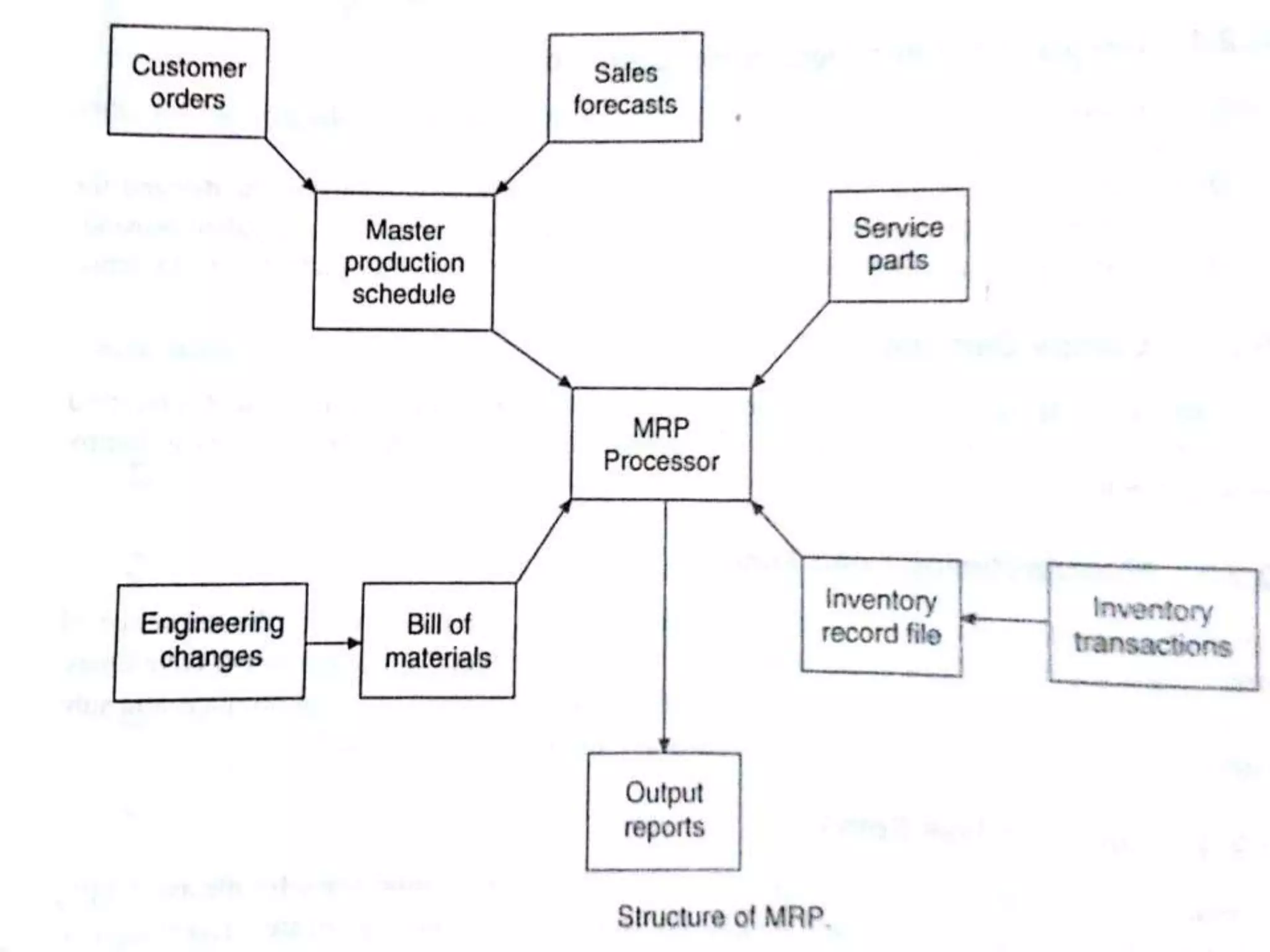
1. Figure show the structure of MRP material resource planning
representing the flow of data into the MRP processor and its
conversion into output records.
2. The MRP processor operates on the data contained in the
master production schedule , the bill-of-material, and the
inventor record file.
3. The master schedule specifies the periodical requirement of
final products.
4. The bill-of-material defines the materials and components
needed for each product.
5. The inventory record file consists of information on the current
and future inventory status of each component.
6. An MRP program computes the quantities of each component
and raw material that are needed by exploding the end-product
requirements into successively lower levels in the product
structure.
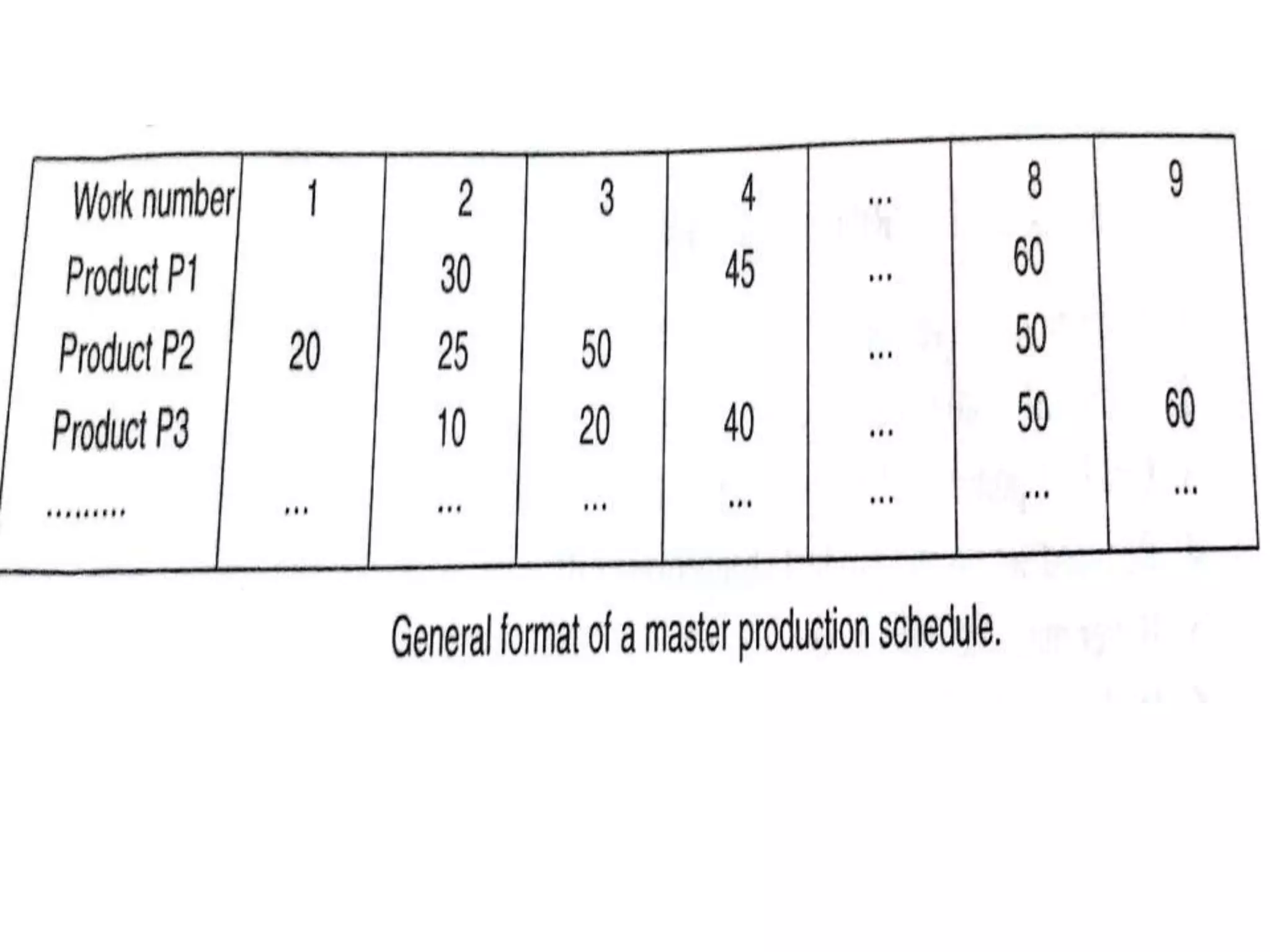
1.Master production Schedule
● The master production schedule is a list of:
1.Types of end products manufactured.
2.Number of each product produced
3.The time when the products would be ready
for shipment.
2.Bill-of-materials file:
It consists of list of component parts and
sub-assemblies that make up the end point.
3 .Inventor Record File :
1.Computerised inventory system is used to
maintain the inventory record file.
2.A definition of the lead time for the raw materials
, components and assemblies must be established in
the inventory record file.
3.The inventory record file is maintained by
inputting the inventory transactions to the file.
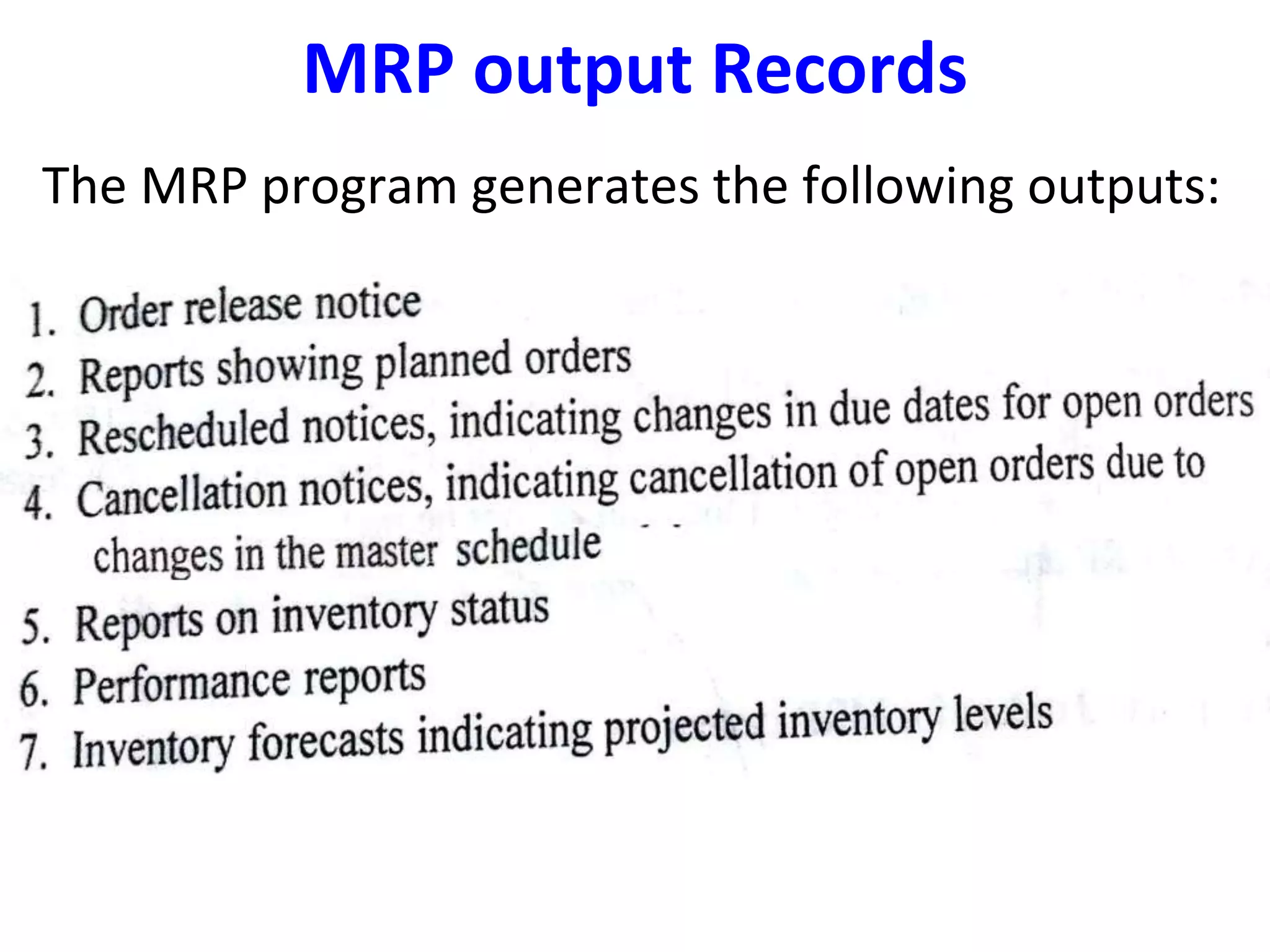
MRP output Records
The MRP program generates the following outputs:
Manufacturing Resource Planning (MRP II)
1. This is an information system used to plan and
control inventories and capacities in manufacturing
companies.
2. MRP II coordinates the sales , purchasing ,
manufacturing, finance and engineering functions.
The various modules of MRP II are follows:
1.Manufacturing Applications
2.Engineering applications.
3.Financial Applications.
4.Marketing applications.
Capacity Requirements Planning (CRP)
● CRP is a technique for determining the
personnel and equipment capacities that are
required to meet the production objectives
specified in the master production schedule
and material requirement.
The inputs to the CRP are:
1.planned orders and released orders from the MRP
system
2.loading information from the centre status file.
3.Routing information from the shop routing file.
4.Changes (alternative routings , Capacity of new
equipments ,etc )
• The released and planned orders from the MRP
system are converted into standard hours of loading
by the CRP system
• The CRP is an iterative process that simulates loads
on the work centres and relies upon the planners to
suggest changes if the plan cannot be met.
The major outputs of CRP are:
1.load reports
2.Verification of planned orders for MRP
system
Enterprise Resource Planning (ERP)
● The activity of ERP is the creation of
an integrated data model , covering
employees, customers , suppliers, etc
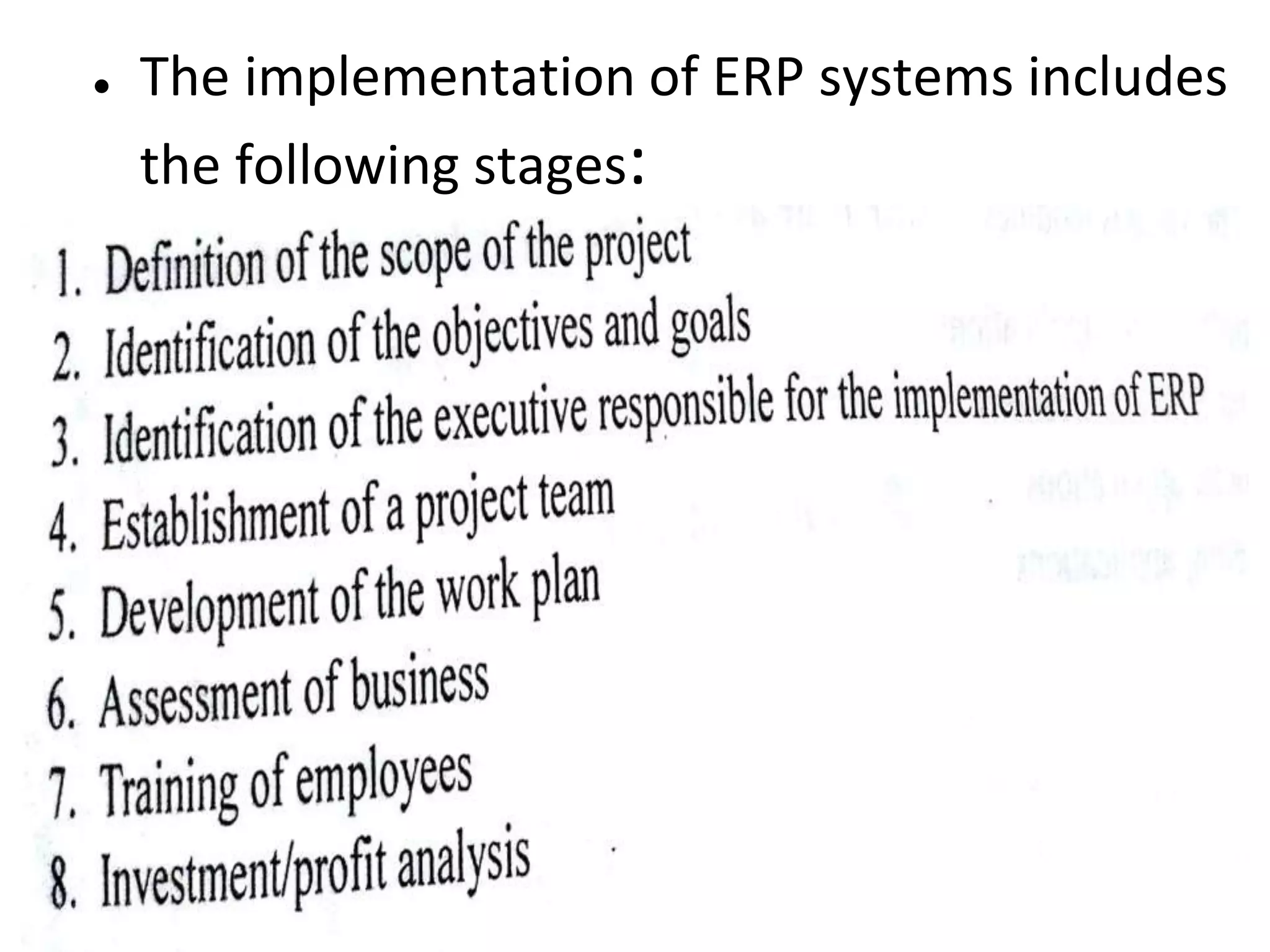
● The implementation of ERP systems includes
the following stages:
Thank you
Boshalla Narsaiah

Computer- aided Manufacturing Resource Planning

  • 1.
  • 2.
    Introduction 1. In recentyears , manufacturing has become highly competitive world wide. 2. It has become essential to control production and inventory to the increased demand of productivity. 3. The use of computers in manufacturing has resulted in the development of Material resource planning (MRP). 4. This concept has been extended to Manufacturing resource planning (MRP II), Capacity resource planning (CRP) ,and Enterprise resource planning (ERP).
  • 3.
    Material Resource Planning(MRP) 1. MRP is computational technique that converts master schedule for end products into a detailed schedule for the raw materials and components used in the end products. 2. It is an inventory control system. 3. The basic MRP concepts are : 1.Independent and dependent demand. 2.Lumpy demands. 3.Manufacturing lead times. 4.Common use items.
  • 4.
    1.Independent and DependentDemand 1.Independent demand is the demand for a product ,which is unrelated to the demand for other items. Example: End products and spare parts are independent demand. 2.Depending demand is the demand for the item, which is directly related to the demand for other items Example :Piston and cylinder of an automobile engine are dependent demand. MRP is a technique for determining the quantities of dependent demand items.
  • 5.
    2.Lumpy Demand 1. Ina manufacturing system, when the demand became very large for a certain item, it is referred to as lumpy demand. 2. MRP is an appropriate technique for determining the inventory of lumpy demand items.
  • 6.
    3 .Manufacturing Leadtimes 1. Manufacturing lead time is the time required to process the part through the sequence of workstations specified on the route sheet. 2. It includes both productive and non - productive times. 3. In MRP , lead time is used to determine the stating dates for assembling final products and sub - assemblies , for manufacturing component part and for ordering raw materials.
  • 7.
    4 .Common Useitems 1. In a manufacturing environment , certain components become common items for the assembling of several final products and sub - assemblies. Example : The same type of steel rod stock may be used to produce different types of screws. 2. MRP collects these common items required for different products for ordering the raw materials and manufacturing the components.
  • 8.
    Inputs to MRP ●MRP converts the master production schedule into the detailed schedule for raw materials and components ● The inputs to MRP are: 1.The master production schedule and service parts. 2.The bill - of - materials file. 3.The inventory record file.
  • 10.
    1. Figure showthe structure of MRP material resource planning representing the flow of data into the MRP processor and its conversion into output records. 2. The MRP processor operates on the data contained in the master production schedule , the bill-of-material, and the inventor record file. 3. The master schedule specifies the periodical requirement of final products. 4. The bill-of-material defines the materials and components needed for each product. 5. The inventory record file consists of information on the current and future inventory status of each component. 6. An MRP program computes the quantities of each component and raw material that are needed by exploding the end-product requirements into successively lower levels in the product structure.
  • 11.
    1.Master production Schedule ●The master production schedule is a list of: 1.Types of end products manufactured. 2.Number of each product produced 3.The time when the products would be ready for shipment.
  • 13.
    2.Bill-of-materials file: It consistsof list of component parts and sub-assemblies that make up the end point. 3 .Inventor Record File : 1.Computerised inventory system is used to maintain the inventory record file. 2.A definition of the lead time for the raw materials , components and assemblies must be established in the inventory record file. 3.The inventory record file is maintained by inputting the inventory transactions to the file.
  • 14.
    MRP output Records TheMRP program generates the following outputs:
  • 15.
    Manufacturing Resource Planning(MRP II) 1. This is an information system used to plan and control inventories and capacities in manufacturing companies. 2. MRP II coordinates the sales , purchasing , manufacturing, finance and engineering functions. The various modules of MRP II are follows: 1.Manufacturing Applications 2.Engineering applications. 3.Financial Applications. 4.Marketing applications.
  • 17.
    Capacity Requirements Planning(CRP) ● CRP is a technique for determining the personnel and equipment capacities that are required to meet the production objectives specified in the master production schedule and material requirement.
  • 18.
    The inputs tothe CRP are: 1.planned orders and released orders from the MRP system 2.loading information from the centre status file. 3.Routing information from the shop routing file. 4.Changes (alternative routings , Capacity of new equipments ,etc ) • The released and planned orders from the MRP system are converted into standard hours of loading by the CRP system • The CRP is an iterative process that simulates loads on the work centres and relies upon the planners to suggest changes if the plan cannot be met.
  • 19.
    The major outputsof CRP are: 1.load reports 2.Verification of planned orders for MRP system
  • 20.
    Enterprise Resource Planning(ERP) ● The activity of ERP is the creation of an integrated data model , covering employees, customers , suppliers, etc
  • 21.
    ● The implementationof ERP systems includes the following stages:
  • 22.