
Under the Guidance of
Mr. Selvin Paul Peter
Associate professor & HOD
By,
Manasa D
 Introduction
 History
 Components
 Working
 Companies Name
 Advantages
 Disadvantages
 Conclusion
 References
 A driverless car are also called automated car or robotic
vehicle or self-driving car .
 That is designed to travel between destinations without a
human interaction.
 Driver error is the most common cause of traffic accidents.
 India contributes 6 % of the world's road accident deaths
 Cell phones in-car entertainment systems, more traffic and
more complicated road systems making it more frequent.
 Drowsiness of the driver and failure in taking sudden
decisions adds up to the factors .
 The fully autonomous cars posses the technology which
drives it the safest way possible and have been proved
successful in this context till now .
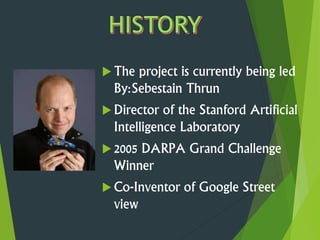
 The project is currently being led
By:Sebestain Thrun
 Director of the Stanford Artificial
Intelligence Laboratory
 2005 DARPA Grand Challenge
Winner
 Co-Inventor of Google Street
view
Google Maps
 Sensor
Artificial Intelligence
Radar
Global Positioning System (GPS)
Lidar
 The “driver” sets a destination. The car’s software
calculates a route and starts the car on its way.
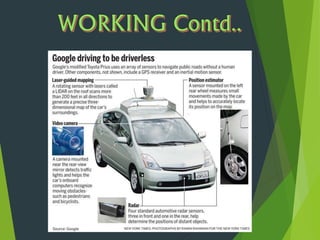
 A rotating, roof-mounted LIDAR (Light Detection and
Ranging - a technology similar to radar) sensor monitors a
60-meter range around the car and creates a
dynamic 3D map of the car’s current environment.
 Radar systems in the front and rear bumpers calculate
distances to obstacles.
 Artificial intelligence (AI) software in the car is connected
to all the sensors and has input from Google Street View
and video cameras inside the car.
 The car’s software consults Google Maps for advance
notice of things like landmarks and traffic signals and lights.
Companies developing and/or testing cars include:
 Audi
 BMW
 Ford
 Google
 General Motors
 Volkswagen
 Volvo
 It would eliminate accidents
 Increasing roadway capacity
 The current location of vehicle can be
determined using global positioning
system (G.P.S) .
 Reduces or eliminates traffic jams.
 Finally, the systems would allow us to do
other things while traveling, such as
working, reading or sleeping.
 Expensive – The cost of car is high
 No Privacy- If we are using internet which have less security then from the
hackers point of view some cases vehicle can be switched of an the road (rare
cases)
 It cannot handle heavy rain and snow-covered roads
 The vehicles are unable to recognize temporary traffic signals
 They are also unable to navigate through parking lots
 By coming Google driverless car into the market so many taxi drivers can lose
their jobs
 It steals Driving pleasure from drivers who love it
 The driver less car’s technologies improves vehicles
stability helps to minimize loss of control.
 Driver less cars are designed to minimize accidents by
addressing the main causes of collisions:
 Driving error
 Distraction
 Drowsiness
 http://en.wikipedia.org/wiki/driverl
esscar
 http://autocontrols.com.au/
 http://www.howstuffworks.com/cru
ise-control
 http://www.howstuffworks.com/ele
ctroistabilitycontrol
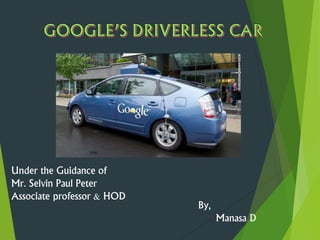
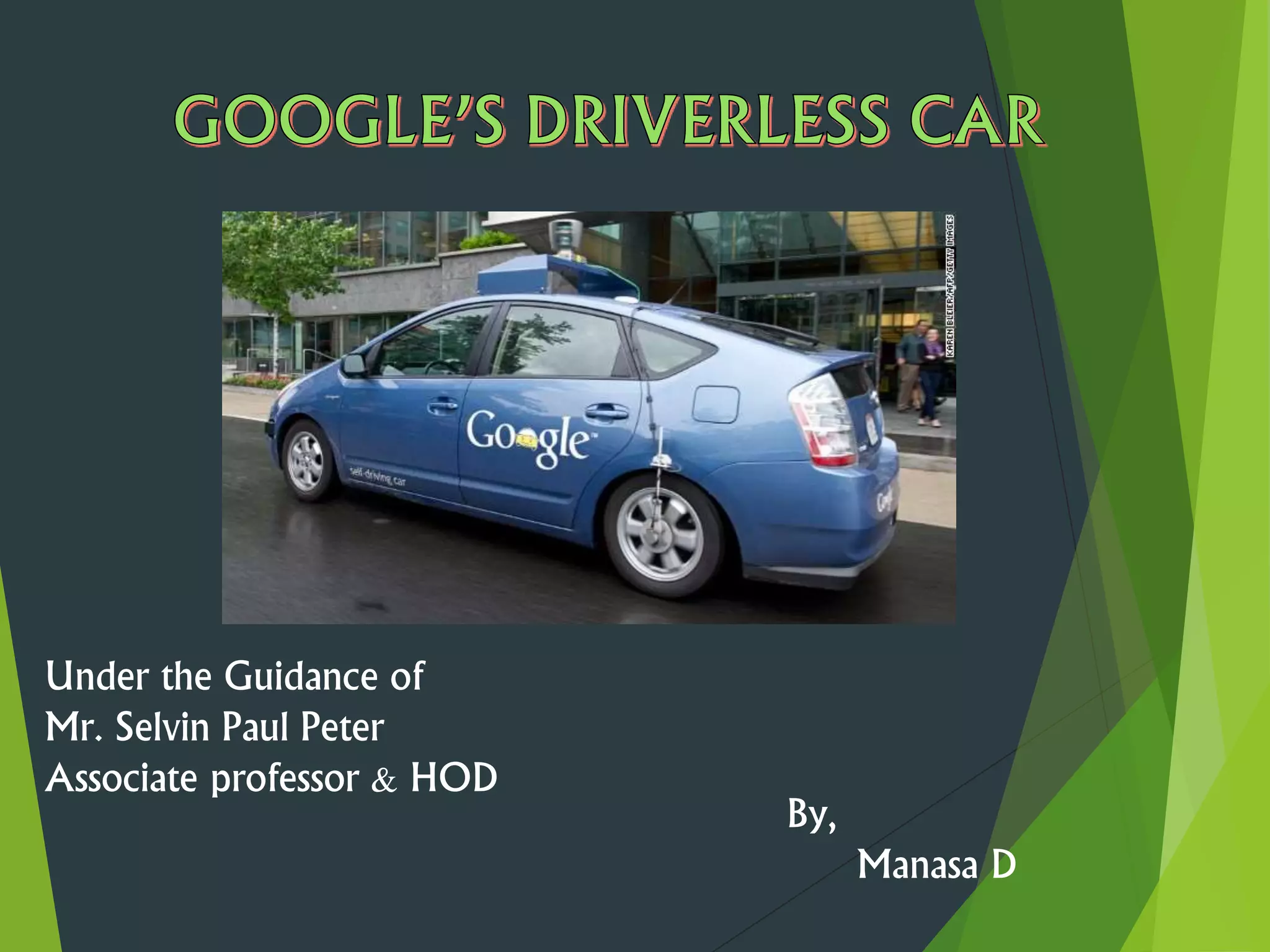
Google's Driverless Car

Google's Driverless Car

  • 1.
    Under the Guidanceof Mr. Selvin Paul Peter Associate professor & HOD By, Manasa D
  • 2.
     Introduction  History Components  Working  Companies Name  Advantages  Disadvantages  Conclusion  References
  • 3.
     A driverlesscar are also called automated car or robotic vehicle or self-driving car .  That is designed to travel between destinations without a human interaction.  Driver error is the most common cause of traffic accidents.  India contributes 6 % of the world's road accident deaths  Cell phones in-car entertainment systems, more traffic and more complicated road systems making it more frequent.  Drowsiness of the driver and failure in taking sudden decisions adds up to the factors .  The fully autonomous cars posses the technology which drives it the safest way possible and have been proved successful in this context till now .
  • 4.
     The projectis currently being led By:Sebestain Thrun  Director of the Stanford Artificial Intelligence Laboratory  2005 DARPA Grand Challenge Winner  Co-Inventor of Google Street view
  • 5.
  • 6.
  • 7.
     The “driver”sets a destination. The car’s software calculates a route and starts the car on its way.  A rotating, roof-mounted LIDAR (Light Detection and Ranging - a technology similar to radar) sensor monitors a 60-meter range around the car and creates a dynamic 3D map of the car’s current environment.  Radar systems in the front and rear bumpers calculate distances to obstacles.  Artificial intelligence (AI) software in the car is connected to all the sensors and has input from Google Street View and video cameras inside the car.  The car’s software consults Google Maps for advance notice of things like landmarks and traffic signals and lights.
  • 9.
    Companies developing and/ortesting cars include:  Audi  BMW  Ford  Google  General Motors  Volkswagen  Volvo
  • 10.
     It wouldeliminate accidents  Increasing roadway capacity  The current location of vehicle can be determined using global positioning system (G.P.S) .  Reduces or eliminates traffic jams.  Finally, the systems would allow us to do other things while traveling, such as working, reading or sleeping.
  • 11.
     Expensive –The cost of car is high  No Privacy- If we are using internet which have less security then from the hackers point of view some cases vehicle can be switched of an the road (rare cases)  It cannot handle heavy rain and snow-covered roads  The vehicles are unable to recognize temporary traffic signals  They are also unable to navigate through parking lots  By coming Google driverless car into the market so many taxi drivers can lose their jobs  It steals Driving pleasure from drivers who love it
  • 12.
     The driverless car’s technologies improves vehicles stability helps to minimize loss of control.  Driver less cars are designed to minimize accidents by addressing the main causes of collisions:  Driving error  Distraction  Drowsiness
  • 13.
     http://en.wikipedia.org/wiki/driverl esscar  http://autocontrols.com.au/ http://www.howstuffworks.com/cru ise-control  http://www.howstuffworks.com/ele ctroistabilitycontrol