Competitive
Advantage
&
Competency
By
R. Paul Godwin
What is Competitive Advantage…?
Analyzing Competitors.
Strategies in Competitive Advantage.
What is Competency…?
Types in Competency.
Competency Clusters.
Benifits of Competency.
Conclusion.
Contents……… .
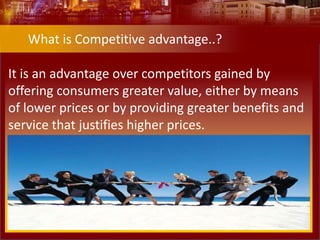
It is an advantage over competitors gained by
offering consumers greater value, either by means
of lower prices or by providing greater benefits and
service that justifies higher prices.
What is Competitive advantage..?
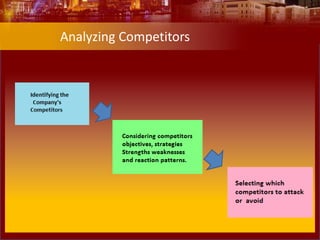
Analyzing Competitors
 Cost leadership Advantage
 Differentiation Advantage.
 Focus on Few Market.
 Customer Intimacy.
 Product Leadership.
Strategies On Competitive Advantage
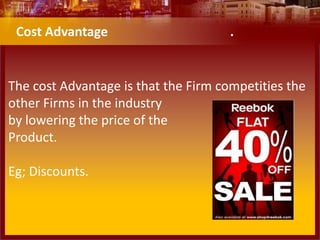
The cost Advantage is that the Firm competities the
other Firms in the industry
by lowering the price of the
Product.
Eg; Discounts.
Cost Advantage .
In this the company concentrates on creating a
highly differentiated product line and marketing
program so that it comes accross as the CLASS
LEADER in the industry.
Eg:Mercedes Benz.
Differntiation Advantage .
Here the company focuses its effort on serving a few
market segments well raether than going after
whole market.
Eg; Hohner owns a stunning 85% of
Harmonica(music) Market.
Focus on Few Market .
Its the company targets the customers precisely, and
provides products and services exactly the needs of
the customers.
Eg:Raymonds Suitings.
Customer intimacy .
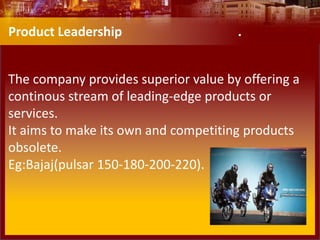
The company provides superior value by offering a
continous stream of leading-edge products or
services.
It aims to make its own and competiting products
obsolete.
Eg:Bajaj(pulsar 150-180-200-220).
Product Leadership .
 Competencies are the human capabilities and
work -related behaviours that provide a
compatitive advantage to an organisation.
What is Competency...? .
Types in Competency
Information and understanding needed to
fulfill the responsibilities
Acquired ability or experience needed to
fulfill the responsibilities
Way of thinking or behaving needed to
fulfill the responsibilities
Natural ability that prepares the person to
fulfill the responsibilitiesAptitudes
Attitudes
Skills
Knowledge
COMPETENCY CLUSTERS .
Business Knowledge
Proactivity
Collaboration
Customer Focus
Leadership
Innovation
Conceptual Thinking
 Understands the Industry.
 Financial decision making.
 Knowledge of company products.
 Overview of business.
Business knowledge .
Anticipates and forecasts customer requirements.
Defines quality standards for customer service.
Develops partnership with the customer.
Enhances long term relationship with customer.
Creates new solutions to meet customer needs.
Customer Focus .
Seizing opportunities as they arise.
Handling crises swiftly and effectively.
Exceeding the bounds of one’s formal authority.
Proactivity .
Leadership .
 Sets out clear standards and goals
 Motivates others to achieve and
maintain high standards
 Works to reach consensus and
agreement wherever possible.
 Welcomes constructive criticism.
 Identifies and shares success stories.
Adapts and applies different new approaches to
situations
Modifies standard approaches for more effective
outcomes
Develops original approaches to non-routine situations
Encourages innovation and creativity in others ,
supports new ideas
Innovation .
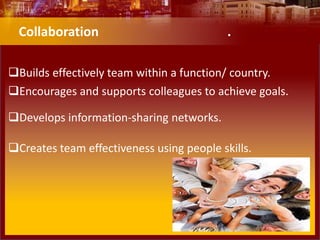
Builds effectively team within a function/ country.
Encourages and supports colleagues to achieve goals.
Develops information-sharing networks.
Creates team effectiveness using people skills.
Collaboration .
Develops concepts/ patterns perceived in a set of facts.
Rapidly identifies key issues/ actions in a complex
situation.
Seeing connections or patterns.
Using vigorous, original analogies or metaphors.
Conceptual Thinking .
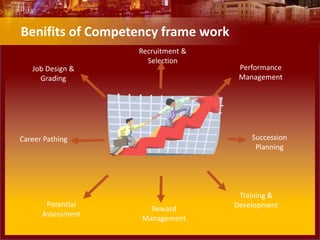
Benifits of Competency frame work
Career Pathing
Potential
Assessment
Reward
Management
Recruitment &
Selection
Succession
Planning
Training &
Development
Job Design &
Grading
Performance
Management
Competative Advantage is that makes a firm to
withstand in the market for a longrun. Competitive
advantage is achieved only when the company has
the effective competency.
Conclusion

Competitive advantage and competency

  • 1.
  • 2.
  • 3.
    What is CompetitiveAdvantage…? Analyzing Competitors. Strategies in Competitive Advantage. What is Competency…? Types in Competency. Competency Clusters. Benifits of Competency. Conclusion. Contents……… .
  • 4.
    It is anadvantage over competitors gained by offering consumers greater value, either by means of lower prices or by providing greater benefits and service that justifies higher prices. What is Competitive advantage..?
  • 5.
  • 6.
     Cost leadershipAdvantage  Differentiation Advantage.  Focus on Few Market.  Customer Intimacy.  Product Leadership. Strategies On Competitive Advantage
  • 7.
    The cost Advantageis that the Firm competities the other Firms in the industry by lowering the price of the Product. Eg; Discounts. Cost Advantage .
  • 8.
    In this thecompany concentrates on creating a highly differentiated product line and marketing program so that it comes accross as the CLASS LEADER in the industry. Eg:Mercedes Benz. Differntiation Advantage .
  • 9.
    Here the companyfocuses its effort on serving a few market segments well raether than going after whole market. Eg; Hohner owns a stunning 85% of Harmonica(music) Market. Focus on Few Market .
  • 10.
    Its the companytargets the customers precisely, and provides products and services exactly the needs of the customers. Eg:Raymonds Suitings. Customer intimacy .
  • 11.
    The company providessuperior value by offering a continous stream of leading-edge products or services. It aims to make its own and competiting products obsolete. Eg:Bajaj(pulsar 150-180-200-220). Product Leadership .
  • 12.
     Competencies arethe human capabilities and work -related behaviours that provide a compatitive advantage to an organisation. What is Competency...? .
  • 13.
    Types in Competency Informationand understanding needed to fulfill the responsibilities Acquired ability or experience needed to fulfill the responsibilities Way of thinking or behaving needed to fulfill the responsibilities Natural ability that prepares the person to fulfill the responsibilitiesAptitudes Attitudes Skills Knowledge
  • 14.
    COMPETENCY CLUSTERS . BusinessKnowledge Proactivity Collaboration Customer Focus Leadership Innovation Conceptual Thinking
  • 15.
     Understands theIndustry.  Financial decision making.  Knowledge of company products.  Overview of business. Business knowledge .
  • 16.
    Anticipates and forecastscustomer requirements. Defines quality standards for customer service. Develops partnership with the customer. Enhances long term relationship with customer. Creates new solutions to meet customer needs. Customer Focus .
  • 17.
    Seizing opportunities asthey arise. Handling crises swiftly and effectively. Exceeding the bounds of one’s formal authority. Proactivity .
  • 18.
    Leadership .  Setsout clear standards and goals  Motivates others to achieve and maintain high standards  Works to reach consensus and agreement wherever possible.  Welcomes constructive criticism.  Identifies and shares success stories.
  • 19.
    Adapts and appliesdifferent new approaches to situations Modifies standard approaches for more effective outcomes Develops original approaches to non-routine situations Encourages innovation and creativity in others , supports new ideas Innovation .
  • 20.
    Builds effectively teamwithin a function/ country. Encourages and supports colleagues to achieve goals. Develops information-sharing networks. Creates team effectiveness using people skills. Collaboration .
  • 21.
    Develops concepts/ patternsperceived in a set of facts. Rapidly identifies key issues/ actions in a complex situation. Seeing connections or patterns. Using vigorous, original analogies or metaphors. Conceptual Thinking .
  • 22.
    Benifits of Competencyframe work Career Pathing Potential Assessment Reward Management Recruitment & Selection Succession Planning Training & Development Job Design & Grading Performance Management
  • 23.
    Competative Advantage isthat makes a firm to withstand in the market for a longrun. Competitive advantage is achieved only when the company has the effective competency. Conclusion