
Global Wine War
2009: New World
versus Old
Patricia Bartlova Naomi Blyth
Lenia Miltiadous
Benedikt Gamperling Yasen Valchev
Introduction
Historically, the Old World
dominated the global wine market
(plus higher wine consumption)
The New World entered the wine
market ("Judgment of Paris")
Decline in demand in Europe and
changing preferences globallly
redefined the wine industry
By 2007 wineries from the New
World were accounted for 14 out of
20 world's top brands.
Global oversupply of wine brought
new challenges for both the New
and Old World wine businesses.
Analysis of the overall wine
industry worldwide
 Continually growing, 230$ billion industry
 Rise of „new world“ producers and upcoming costumer
groups
 European producers lose their surpremacy in wine
making
 Economical shift: e.g. growing affluence in the east
 Changing technologies: growing techniques, space
grapes
 External influences such as global warming
Loss of traditional
producers’ market share
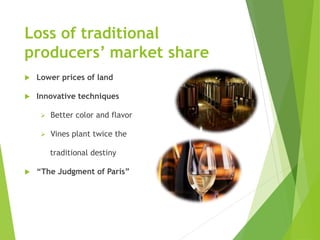
 Lower prices of land
 Innovative techniques
 Better color and flavor
 Vines plant twice the
traditional destiny
 “The Judgment of Paris”
Loss of traditional producers’ market
share
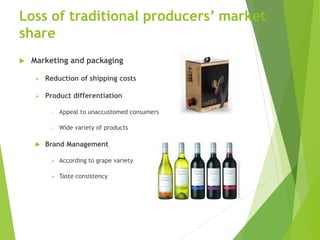
 Marketing and packaging
 Reduction of shipping costs
 Product differentiation
o Appeal to unaccustomed consumers
o Wide variety of products
 Brand Management
 According to grape variety
 Taste consistency
Loss of traditional
producers’ market share
 Distribution
 Value chain control
 Less inventory
 Quality control
 Sense of changes in consumers’ habits
 Bargaining power towards big retailers
Improvement Proposals
Focus their efforts on exports and in particular on
China and USA
Increase French wine production by expanding their
vineyards
Utilize new techniques successful in the New World
(experimenting with grape growing, winemaking
technology)
Decrease complex government regulations and
legislation
Engage heavily in branding and marketing

Global Wine War

  • 1.
    Global Wine War 2009:New World versus Old Patricia Bartlova Naomi Blyth Lenia Miltiadous Benedikt Gamperling Yasen Valchev
  • 2.
    Introduction Historically, the OldWorld dominated the global wine market (plus higher wine consumption) The New World entered the wine market ("Judgment of Paris") Decline in demand in Europe and changing preferences globallly redefined the wine industry By 2007 wineries from the New World were accounted for 14 out of 20 world's top brands. Global oversupply of wine brought new challenges for both the New and Old World wine businesses.
  • 3.
    Analysis of theoverall wine industry worldwide  Continually growing, 230$ billion industry  Rise of „new world“ producers and upcoming costumer groups  European producers lose their surpremacy in wine making  Economical shift: e.g. growing affluence in the east  Changing technologies: growing techniques, space grapes  External influences such as global warming
  • 4.
    Loss of traditional producers’market share  Lower prices of land  Innovative techniques  Better color and flavor  Vines plant twice the traditional destiny  “The Judgment of Paris”
  • 5.
    Loss of traditionalproducers’ market share  Marketing and packaging  Reduction of shipping costs  Product differentiation o Appeal to unaccustomed consumers o Wide variety of products  Brand Management  According to grape variety  Taste consistency
  • 6.
    Loss of traditional producers’market share  Distribution  Value chain control  Less inventory  Quality control  Sense of changes in consumers’ habits  Bargaining power towards big retailers
  • 7.
    Improvement Proposals Focus theirefforts on exports and in particular on China and USA Increase French wine production by expanding their vineyards Utilize new techniques successful in the New World (experimenting with grape growing, winemaking technology) Decrease complex government regulations and legislation Engage heavily in branding and marketing