What are Competencies
What are CompetenciesCompetencies are the human capabilities and work-related behaviors that provide a competitive advantage to an organizationAny quality or characteristics of a person which underpins successful performance
How do Competencies differ from Skills and KnowledgeCompetencies only include behaviors that demonstrate excellent performanceThey do not include knowledge, but do included “applied” knowledge or the behavioral application of knowledge that produces successCompetencies do include skills, but only the manifestation of skills that produce successCompetencies are not work motives, but do include observable behaviors related to motives
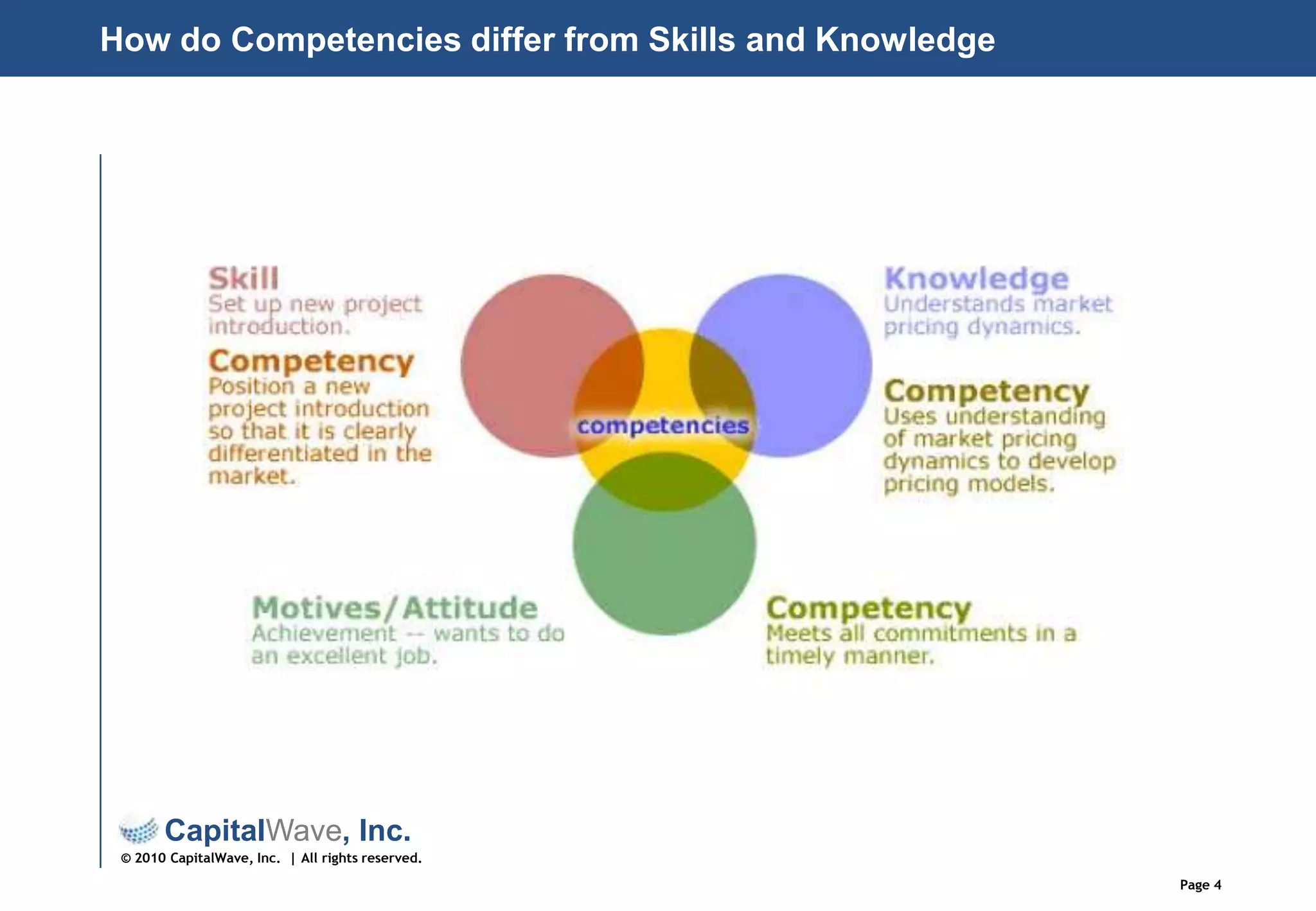
How do Competencies differ from Skills and Knowledge
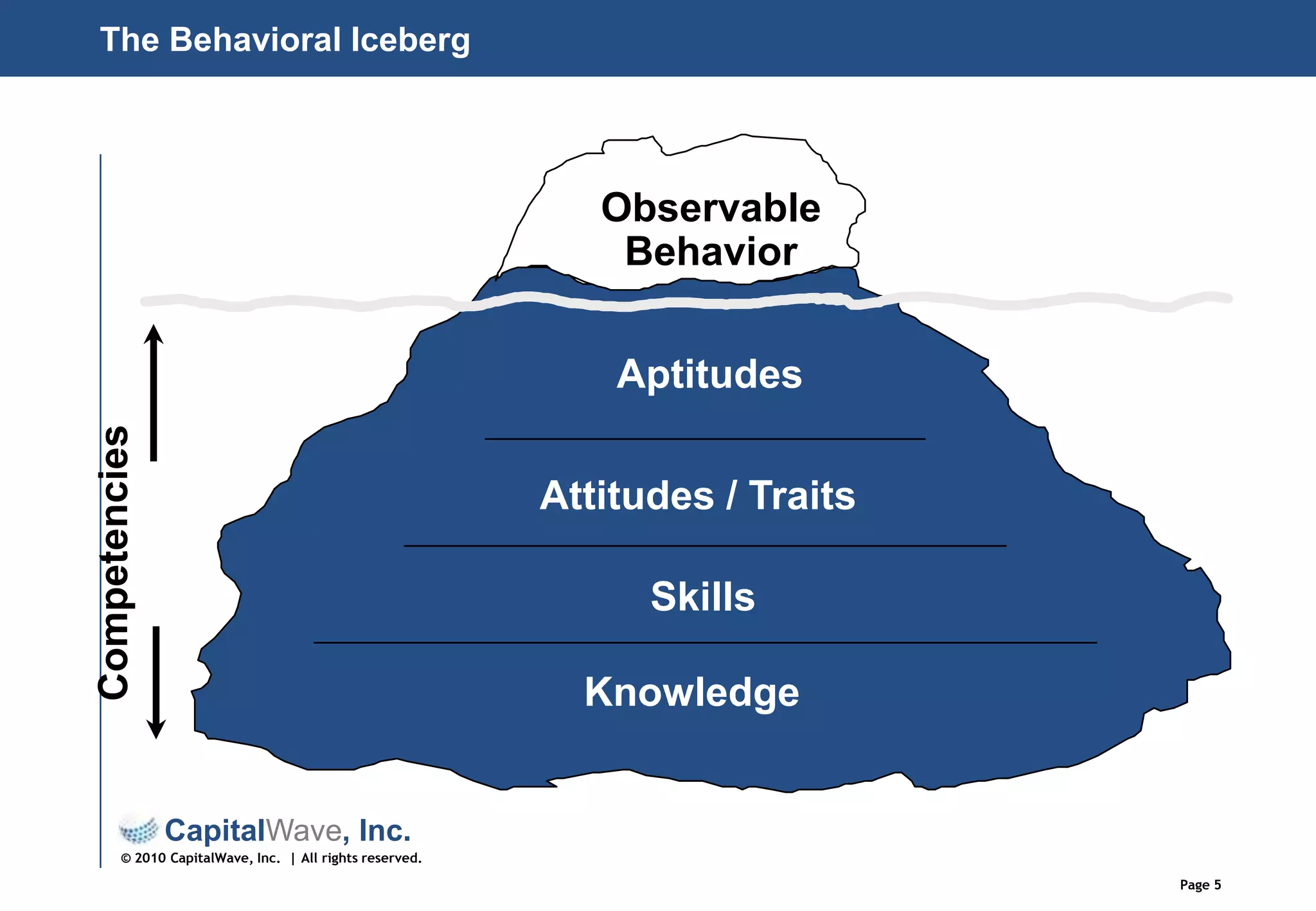
ObservableBehaviorAptitudesAttitudes / TraitsCompetenciesSkillsThe Behavioral IcebergKnowledge
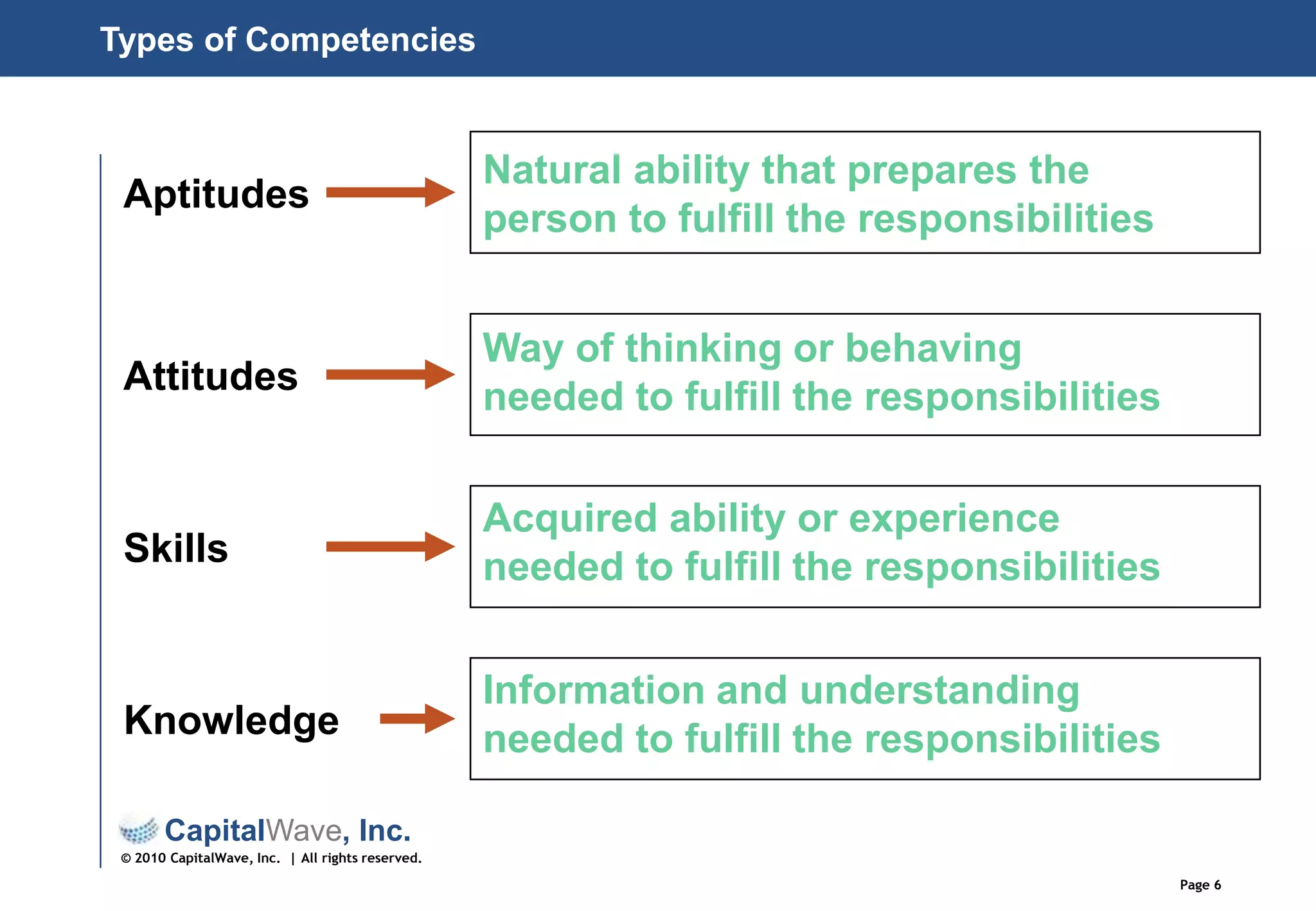
Natural ability that prepares the person to fulfill the responsibilitiesAptitudesWay of thinking or behaving needed to fulfill the responsibilitiesAttitudesAcquired ability or experience needed to fulfill the responsibilitiesSkillsInformation and understanding needed to fulfill the responsibilitiesKnowledgeTypes of Competencies
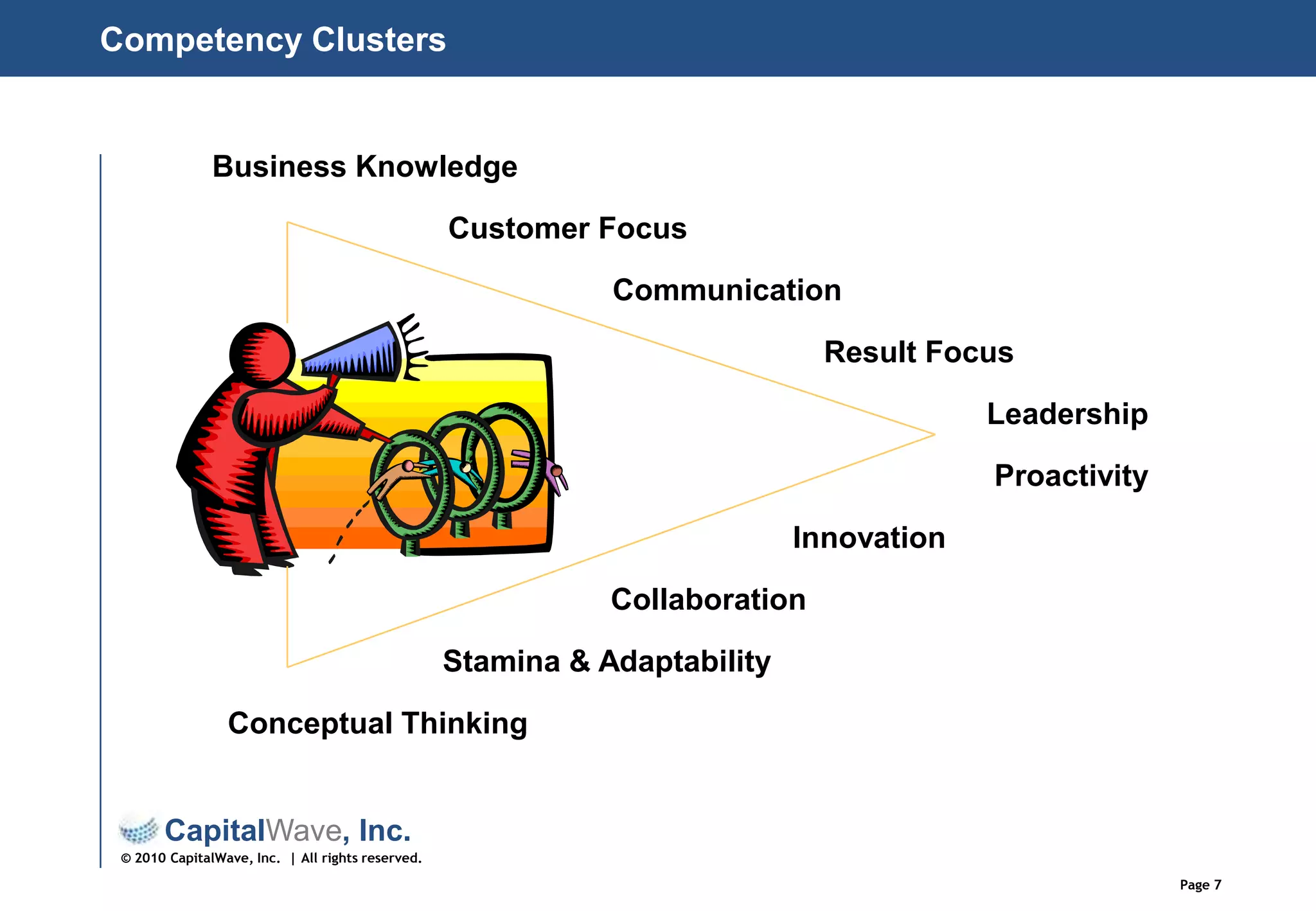
Competency ClustersBusiness KnowledgeCustomer FocusCommunicationResult FocusLeadershipProactivityInnovationCollaborationStamina & AdaptabilityConceptual Thinking
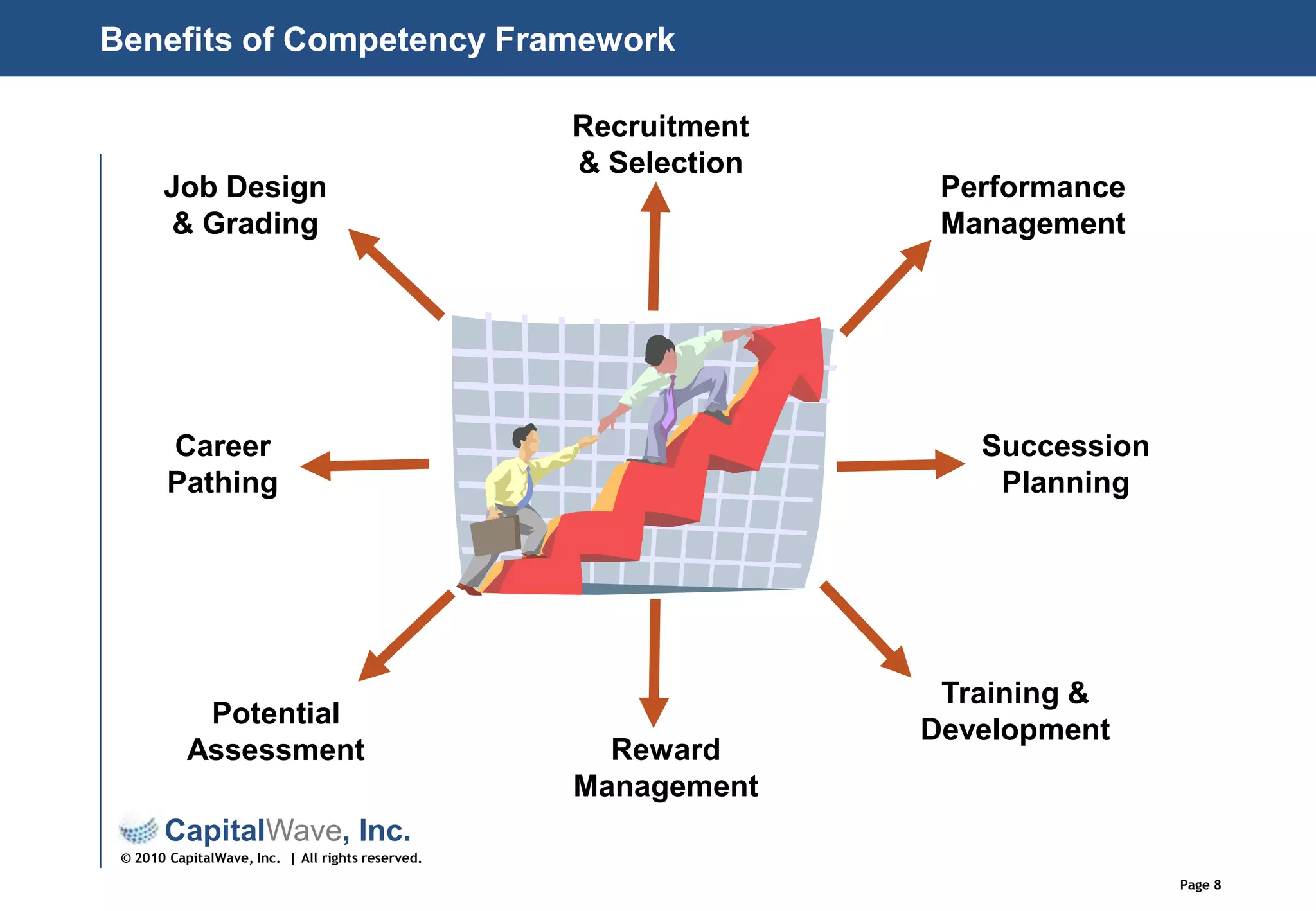
Recruitment & SelectionJob Design & GradingPerformance ManagementCareer PathingSuccession PlanningTraining & DevelopmentPotential AssessmentReward ManagementBenefits of Competency Framework
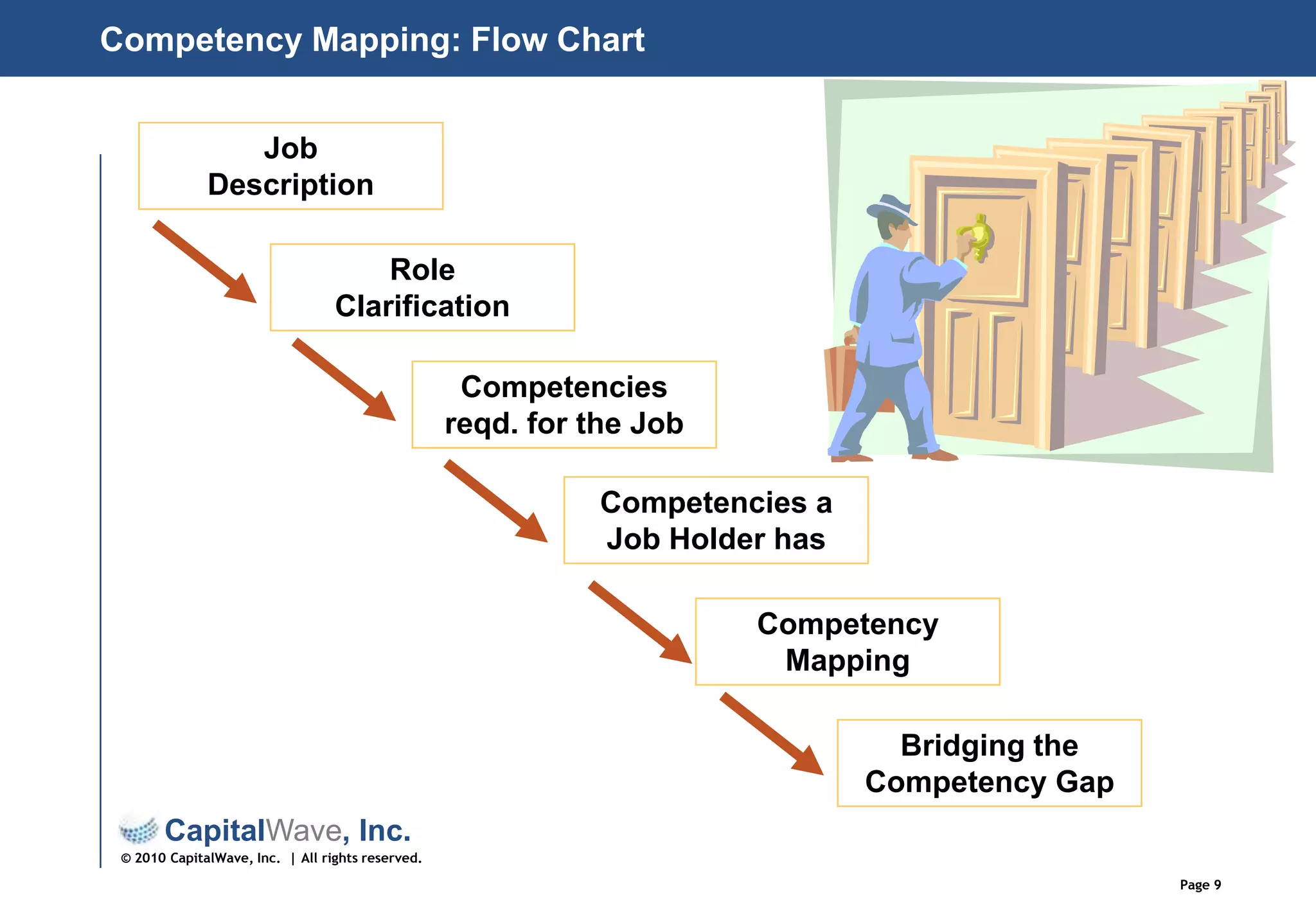
Role     ClarificationCompetencies reqd. for the JobCompetencies a Job Holder hasCompetency MappingBridging the Competency GapCompetency Mapping: Flow ChartJob       Description
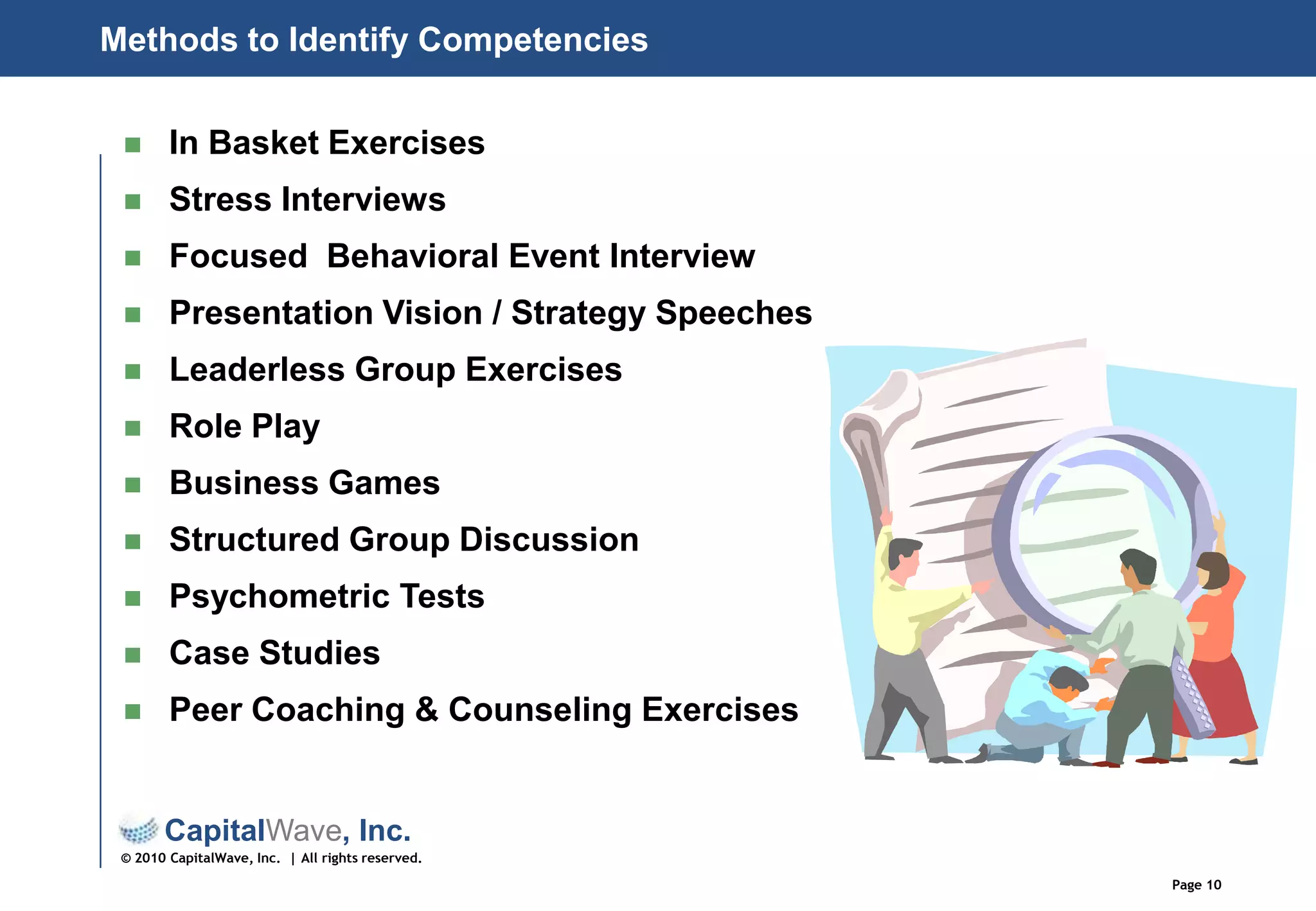
Methods to Identify CompetenciesIn Basket Exercises
Stress Interviews
Focused  Behavioral Event Interview
Presentation Vision / Strategy Speeches
Leaderless Group Exercises
Role Play
Business Games
Structured Group Discussion
Psychometric Tests
Case Studies
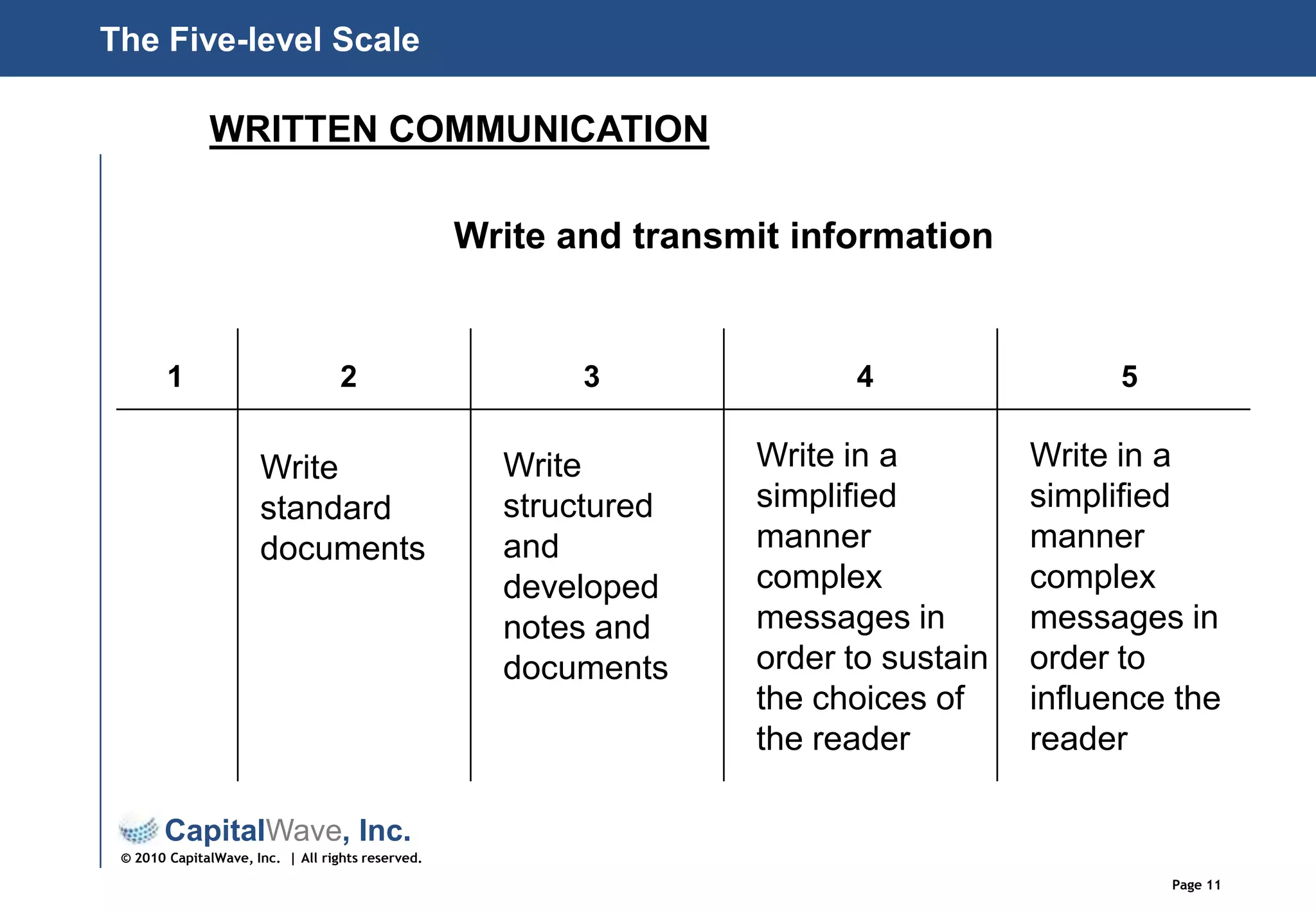
Peer Coaching & Counseling ExercisesWRITTEN COMMUNICATIONWrite and transmit information12345Write in a simplified manner complex messages in order to sustain the choices of the readerWrite in a simplified manner complex messages in order to influence the readerWrite structured and developed notes and documentsWrite standard documentsThe Five-level Scale
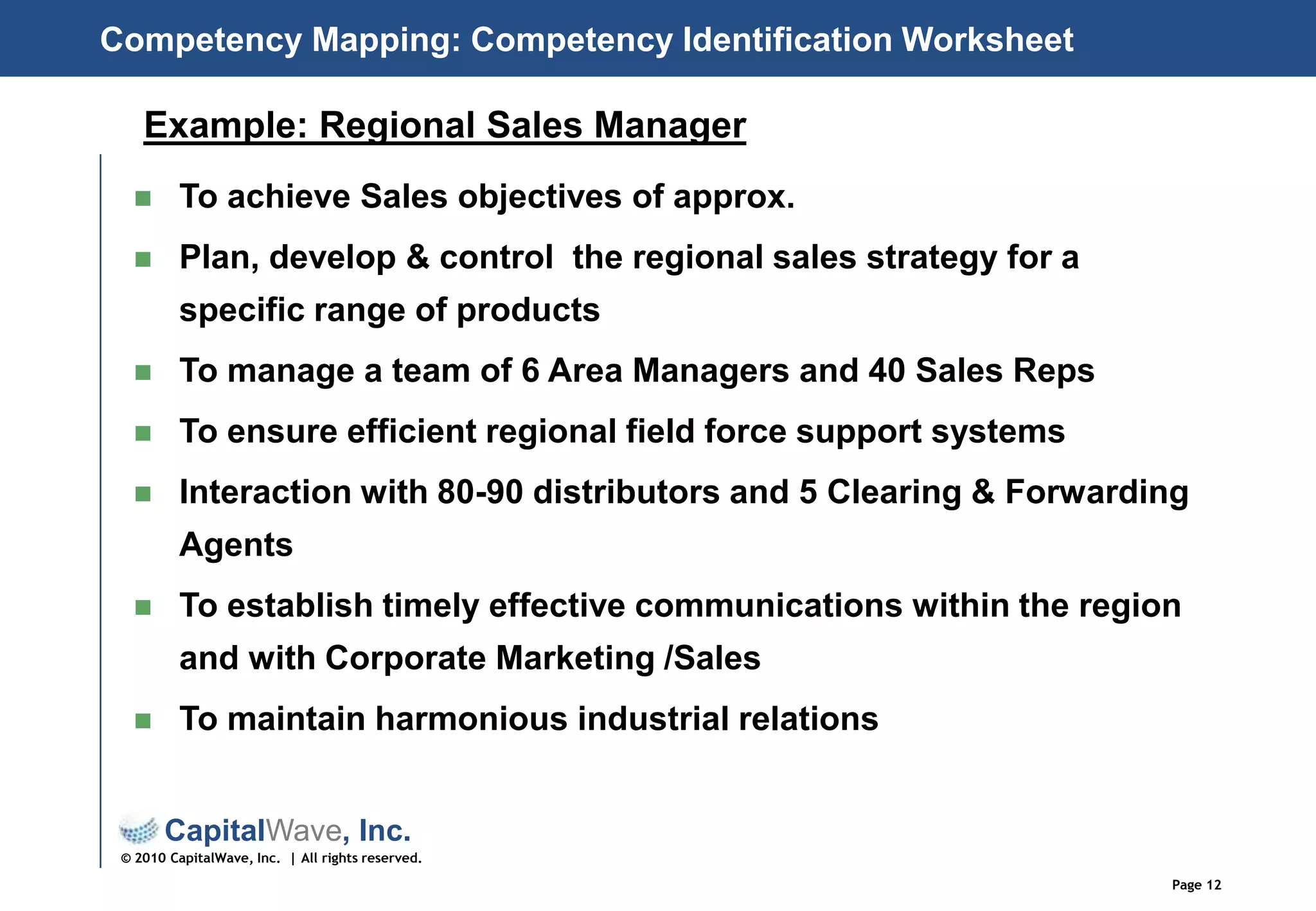
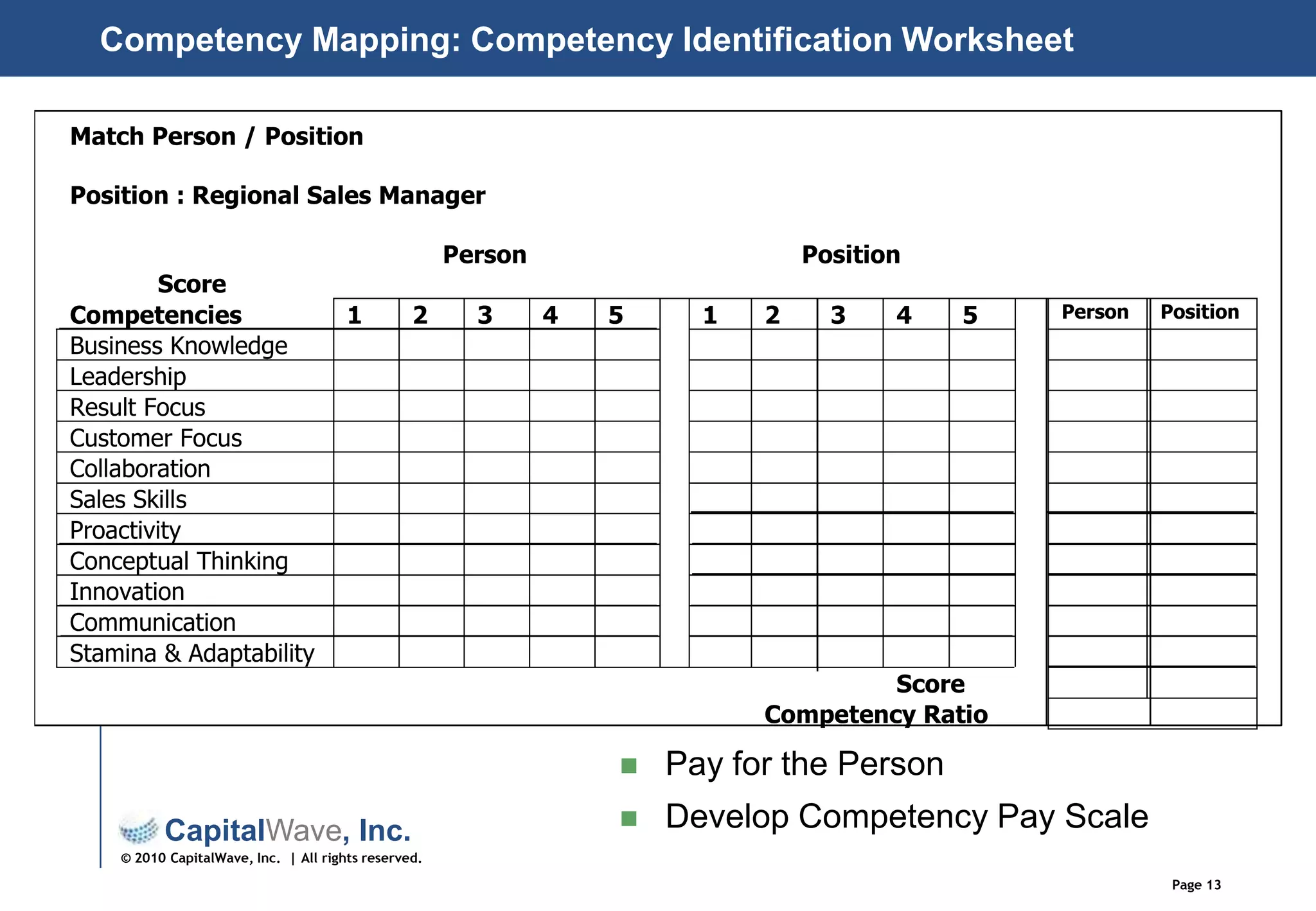
Competency Mapping: Competency Identification WorksheetExample: Regional Sales ManagerTo achieve Sales objectives of approx.
Plan, develop & control  the regional sales strategy for a specific range of products
To manage a team of 6 Area Managers and 40 Sales Reps
To ensure efficient regional field force support systems
Interaction with 80-90 distributors and 5 Clearing & Forwarding Agents

What are competencies

  • 1.
  • 2.
    What are CompetenciesCompetenciesare the human capabilities and work-related behaviors that provide a competitive advantage to an organizationAny quality or characteristics of a person which underpins successful performance
  • 3.
    How do Competenciesdiffer from Skills and KnowledgeCompetencies only include behaviors that demonstrate excellent performanceThey do not include knowledge, but do included “applied” knowledge or the behavioral application of knowledge that produces successCompetencies do include skills, but only the manifestation of skills that produce successCompetencies are not work motives, but do include observable behaviors related to motives
  • 4.
    How do Competenciesdiffer from Skills and Knowledge
  • 5.
  • 6.
    Natural ability thatprepares the person to fulfill the responsibilitiesAptitudesWay of thinking or behaving needed to fulfill the responsibilitiesAttitudesAcquired ability or experience needed to fulfill the responsibilitiesSkillsInformation and understanding needed to fulfill the responsibilitiesKnowledgeTypes of Competencies
  • 7.
    Competency ClustersBusiness KnowledgeCustomerFocusCommunicationResult FocusLeadershipProactivityInnovationCollaborationStamina & AdaptabilityConceptual Thinking
  • 8.
    Recruitment & SelectionJobDesign & GradingPerformance ManagementCareer PathingSuccession PlanningTraining & DevelopmentPotential AssessmentReward ManagementBenefits of Competency Framework
  • 9.
    Role ClarificationCompetencies reqd. for the JobCompetencies a Job Holder hasCompetency MappingBridging the Competency GapCompetency Mapping: Flow ChartJob Description
  • 10.
    Methods to IdentifyCompetenciesIn Basket Exercises
  • 11.
  • 12.
    Focused BehavioralEvent Interview
  • 13.
    Presentation Vision /Strategy Speeches
  • 14.
  • 15.
  • 16.
  • 17.
  • 18.
  • 19.
  • 20.
    Peer Coaching &Counseling ExercisesWRITTEN COMMUNICATIONWrite and transmit information12345Write in a simplified manner complex messages in order to sustain the choices of the readerWrite in a simplified manner complex messages in order to influence the readerWrite structured and developed notes and documentsWrite standard documentsThe Five-level Scale
  • 21.
    Competency Mapping: CompetencyIdentification WorksheetExample: Regional Sales ManagerTo achieve Sales objectives of approx.
  • 22.
    Plan, develop &control the regional sales strategy for a specific range of products
  • 23.
    To manage ateam of 6 Area Managers and 40 Sales Reps
  • 24.
    To ensure efficientregional field force support systems
  • 25.
    Interaction with 80-90distributors and 5 Clearing & Forwarding Agents
  • 26.
    To establish timelyeffective communications within the region and with Corporate Marketing /Sales
  • 27.
    To maintain harmoniousindustrial relationsCompetency Mapping: Competency Identification WorksheetPay for the Person
  • 28.
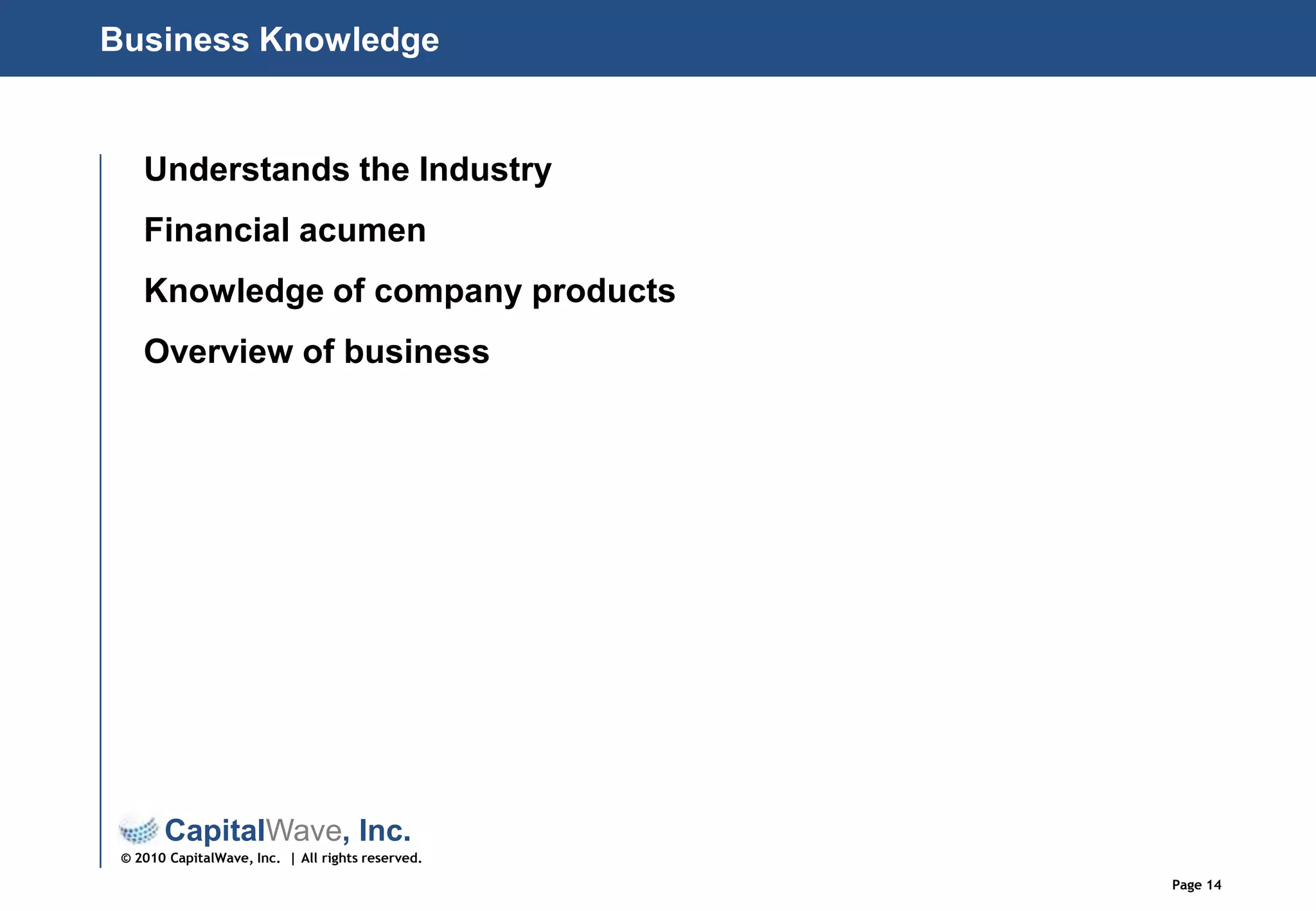
    Develop Competency PayScaleBusiness KnowledgeUnderstands the IndustryFinancial acumenKnowledge of company productsOverview of business
  • 29.
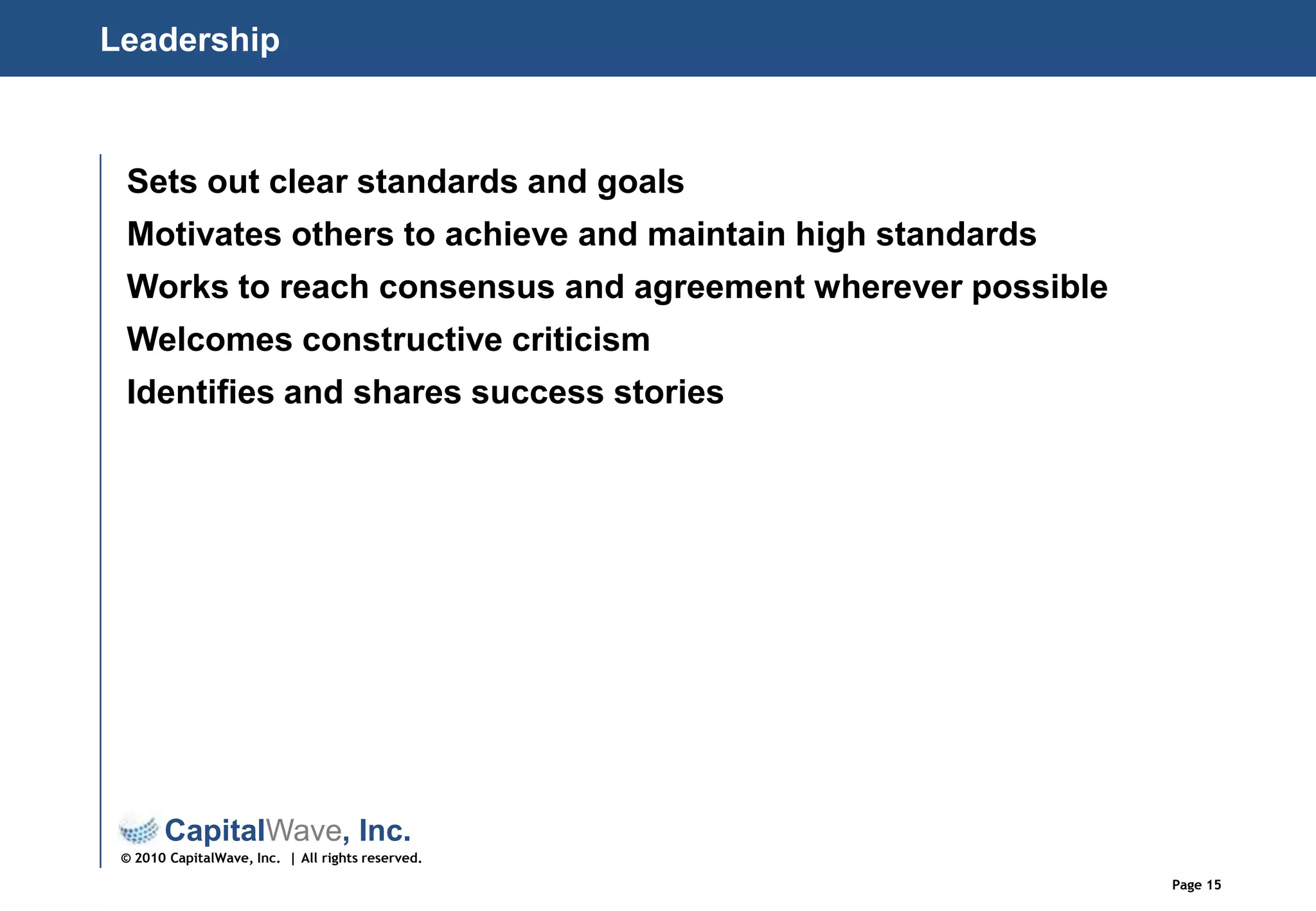
    LeadershipSets out clearstandards and goalsMotivates others to achieve and maintain high standardsWorks to reach consensus and agreement wherever possibleWelcomes constructive criticismIdentifies and shares success stories
  • 30.
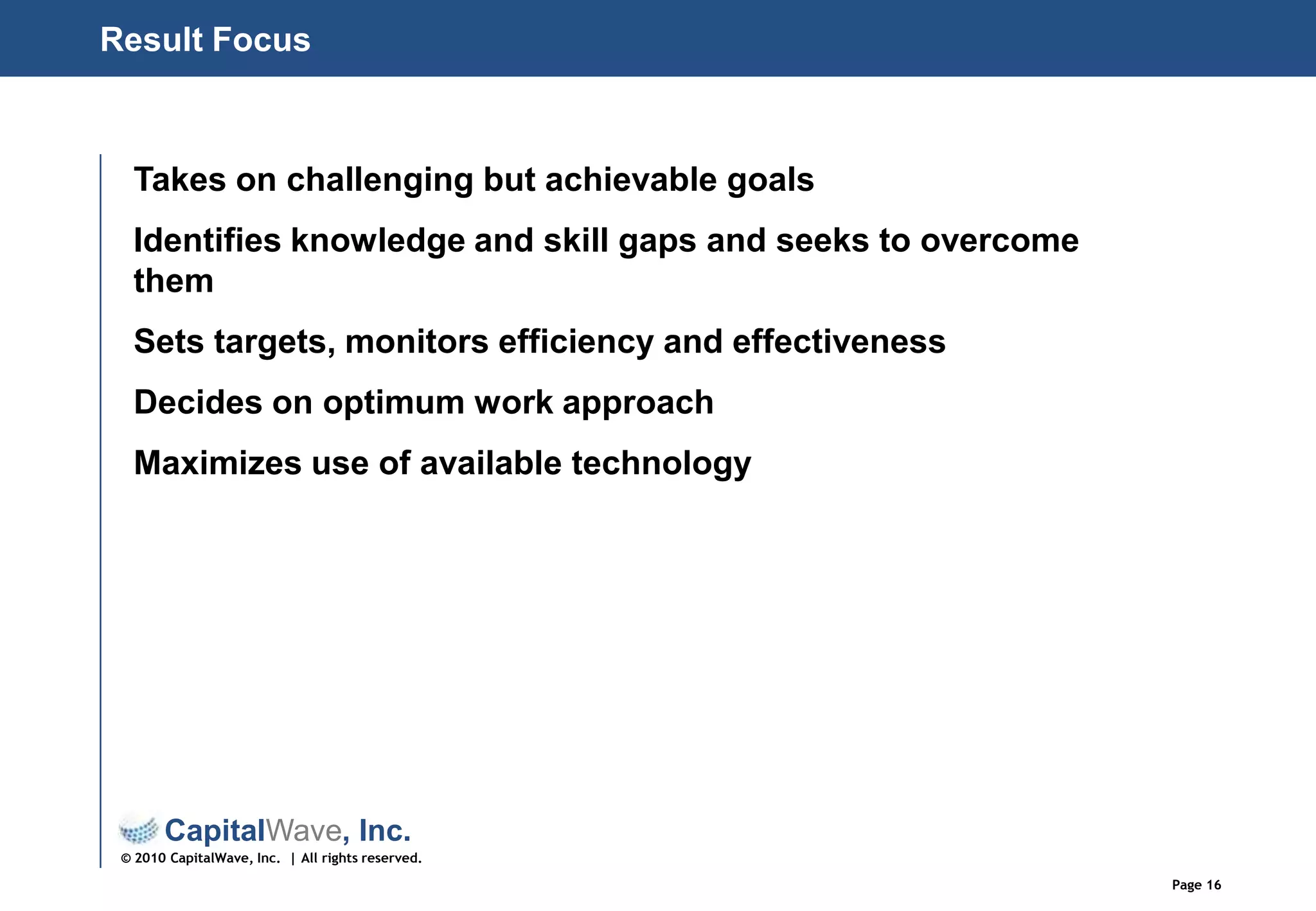
    Result FocusTakes onchallenging but achievable goalsIdentifies knowledge and skill gaps and seeks to overcome themSets targets, monitors efficiency and effectivenessDecides on optimum work approachMaximizes use of available technology
  • 31.
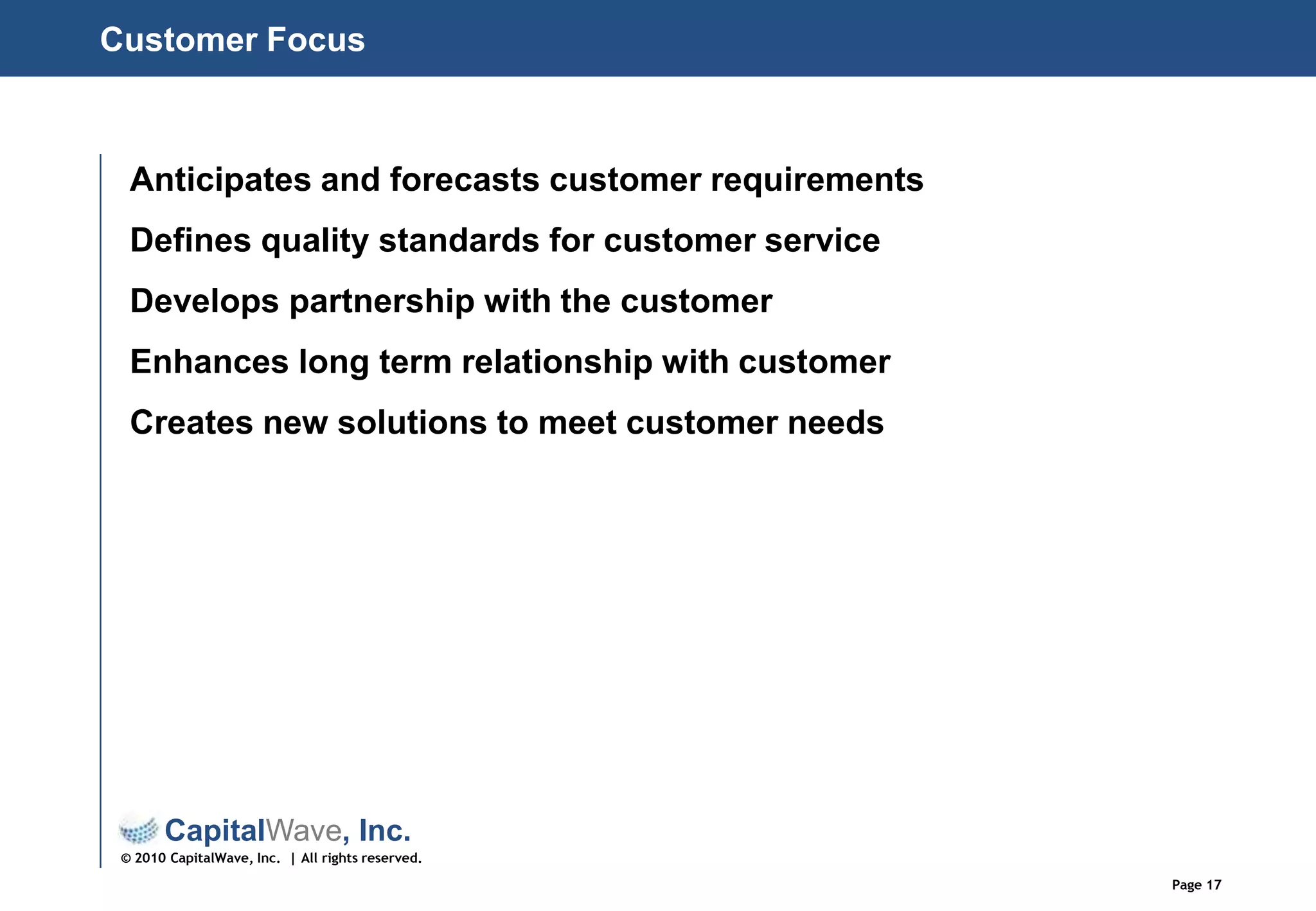
    Customer FocusAnticipates andforecasts customer requirementsDefines quality standards for customer serviceDevelops partnership with the customerEnhances long term relationship with customerCreates new solutions to meet customer needs
  • 32.
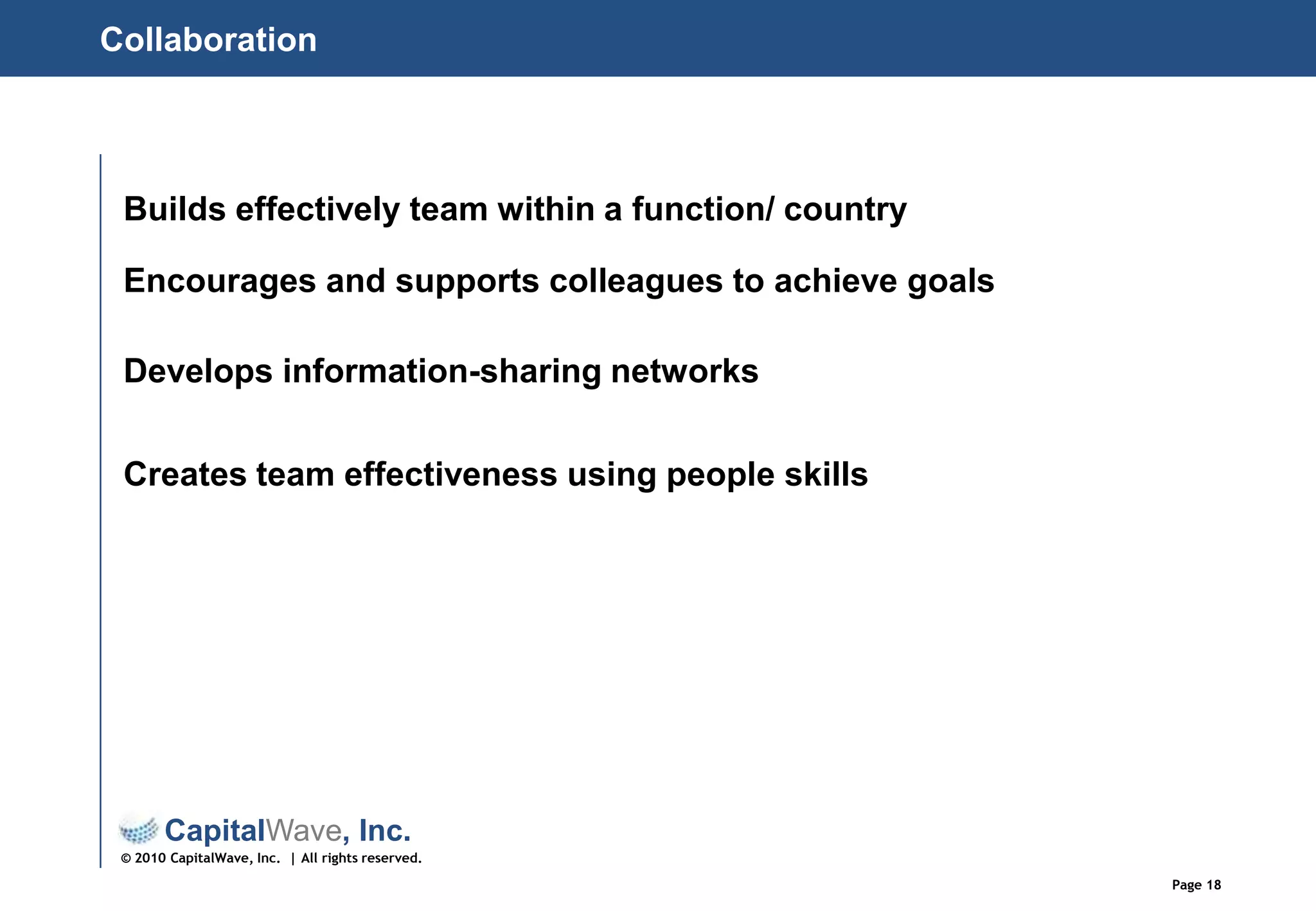
    CollaborationBuilds effectively teamwithin a function/ countryEncourages and supports colleagues to achieve goalsDevelops information-sharing networksCreates team effectiveness using people skills
  • 33.
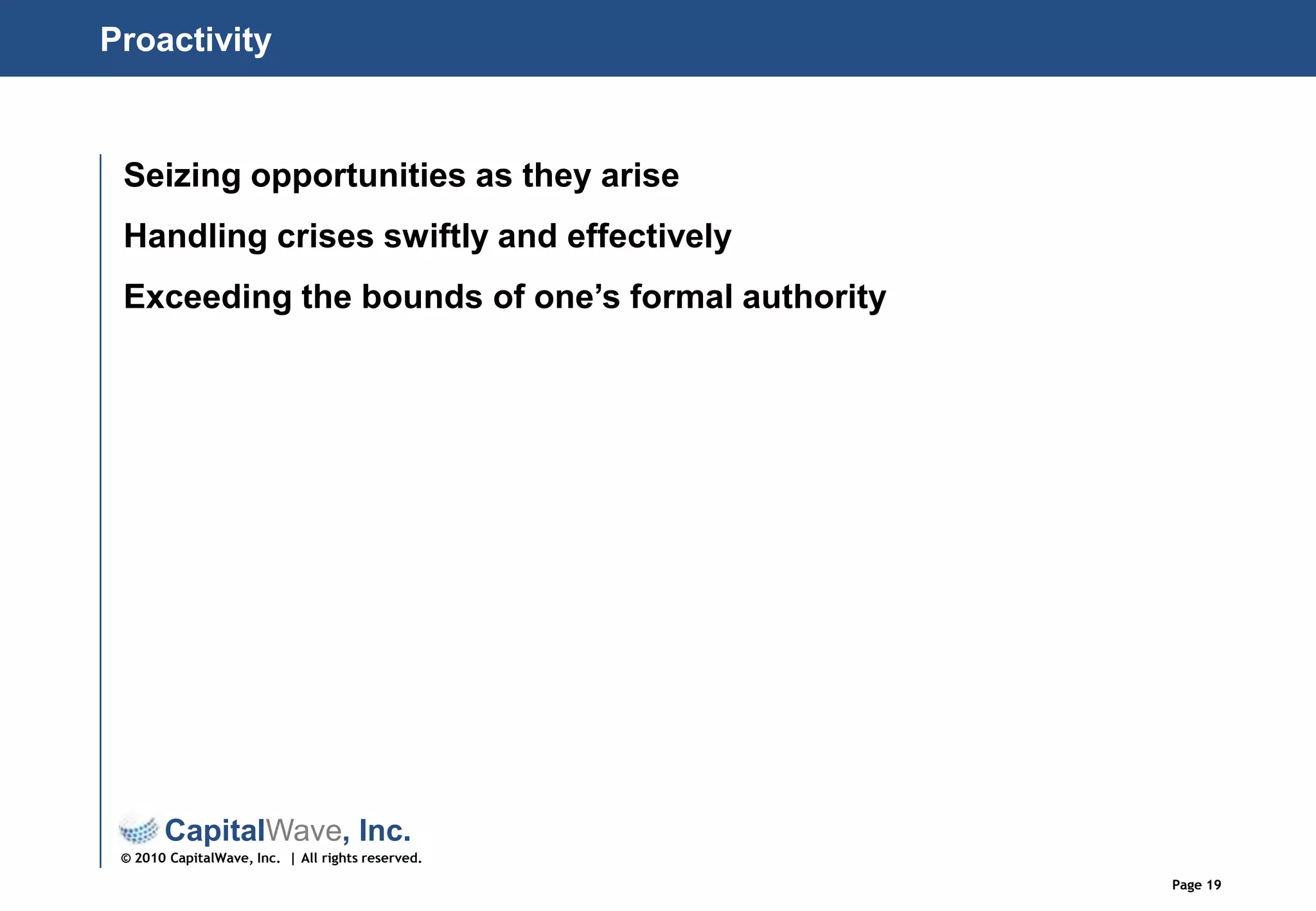
    ProactivitySeizing opportunities asthey ariseHandling crises swiftly and effectivelyExceeding the bounds of one’s formal authority
  • 34.
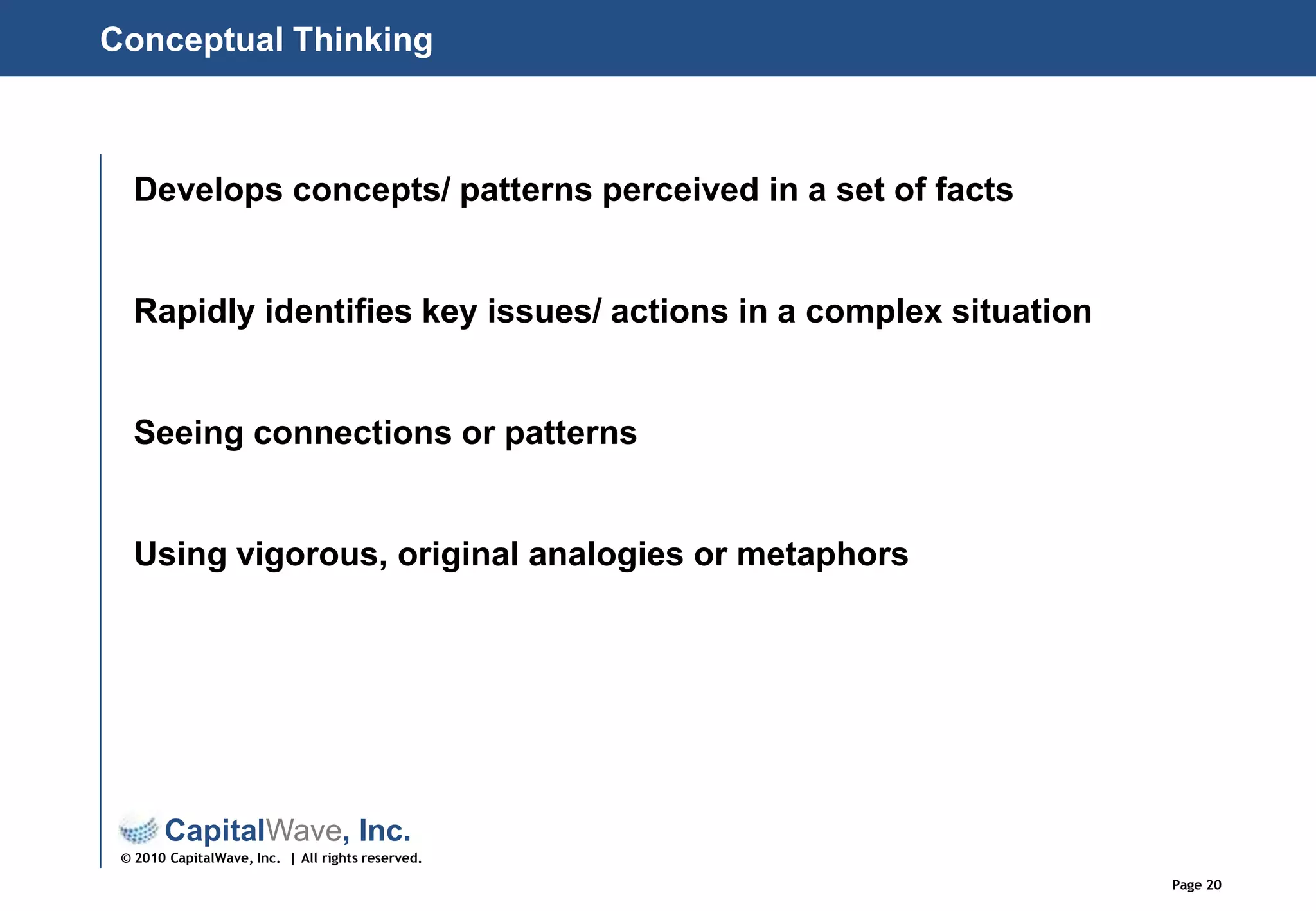
    Conceptual ThinkingDevelops concepts/patterns perceived in a set of factsRapidly identifies key issues/ actions in a complex situationSeeing connections or patternsUsing vigorous, original analogies or metaphors
  • 35.
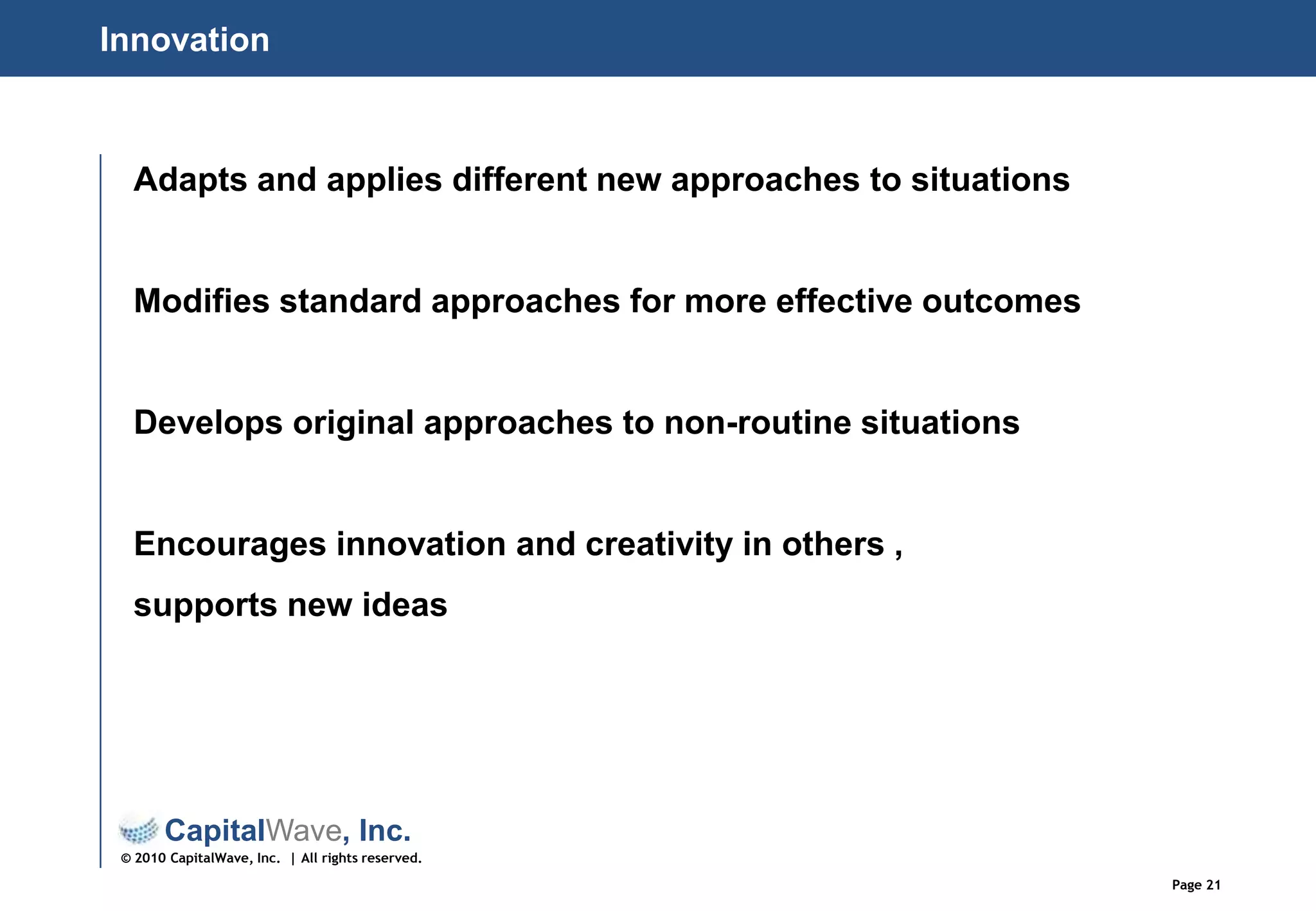
    InnovationAdapts and appliesdifferent new approaches to situationsModifies standard approaches for more effective outcomesDevelops original approaches to non-routine situationsEncourages innovation and creativity in others , supports new ideas
  • 36.
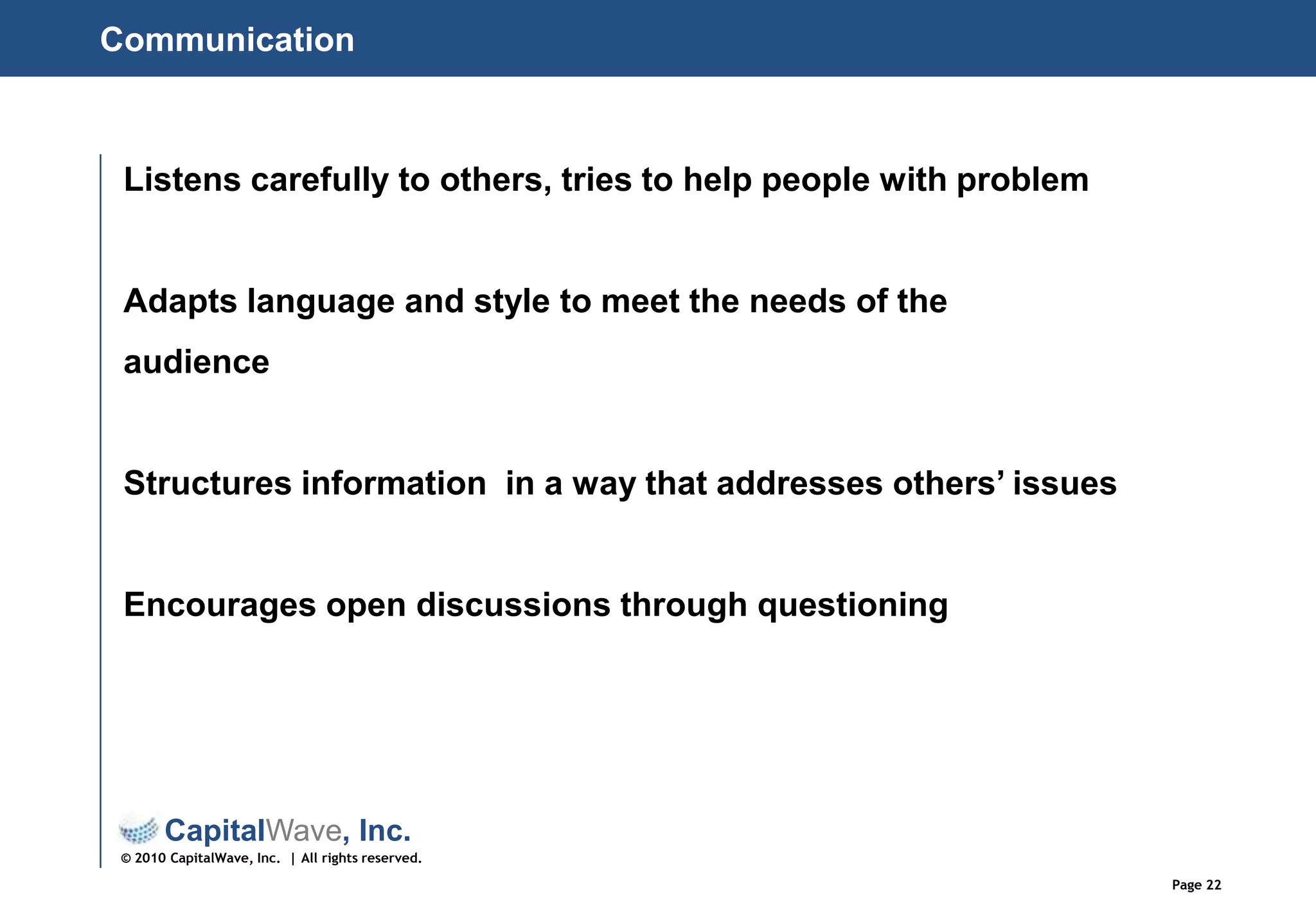
    Communication Listens carefullyto others, tries to help people with problemAdapts language and style to meet the needs of the audienceStructures information in a way that addresses others’ issuesEncourages open discussions through questioning
  • 37.
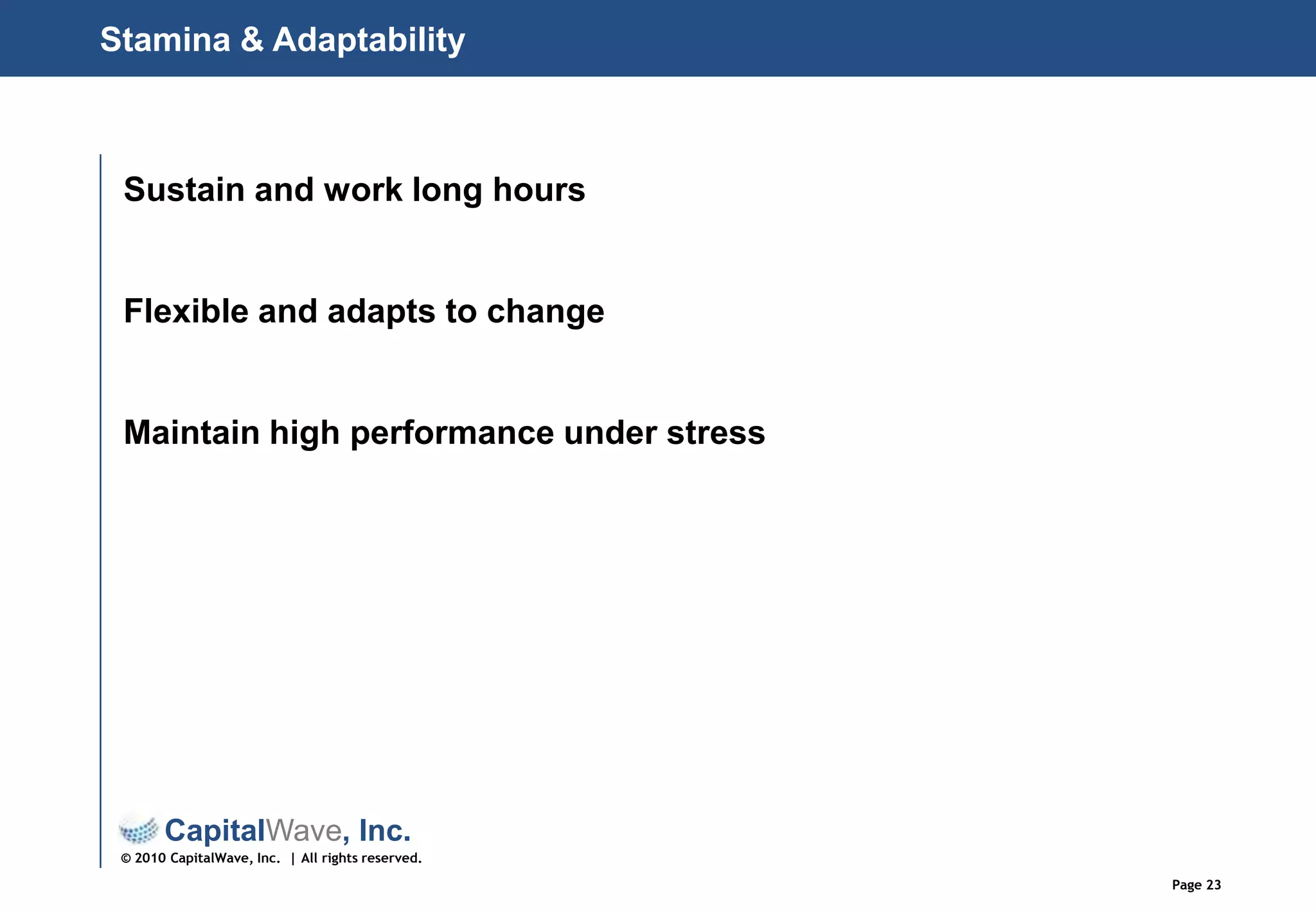
    Stamina & AdaptabilitySustainand work long hoursFlexible and adapts to changeMaintain high performance under stress
  • 38.
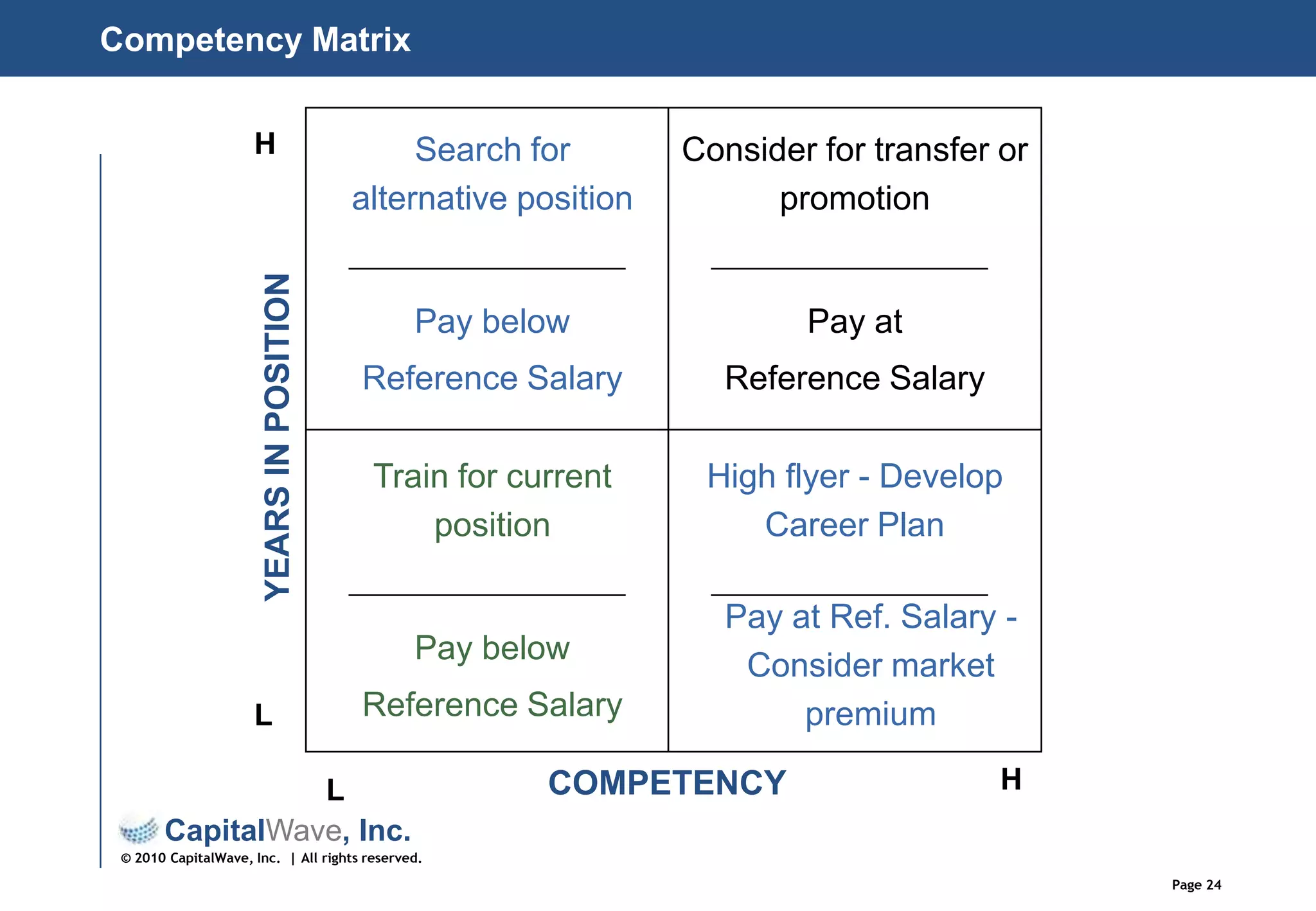
    Search for alternativepositionConsider for transfer or promotionTrain for current positionHPay belowReference SalaryPay atReference SalaryPay belowReference SalaryYEARS IN POSITIONHigh flyer - Develop Career PlanPay at Ref. Salary - Consider market premiumLCOMPETENCYHLCompetency Matrix
  • 39.