COMMUNICATION SKILLS 
“COMMUNICATION CULTURE AND 
CONTEXT”
INDEX 
 Introduction 
 Communication and culture model 
 Perceptions 
 Language, logic and communication 
 High and Low context 
 Cross cultural communication 
 Culture and context 
 Conclusion 
 References
WHAT IS COMMUNICATION? 
Communication is the transmission of a 
message from one person/group to 
another through various communication 
channels.
WHAT IS CULTURE? 
Edward Tylor’s (1871) 
“that complex whole which includes 
knowledge, belief, art, morals, law, custom, 
and any other capabilities and habits 
acquired by man as a member of society”
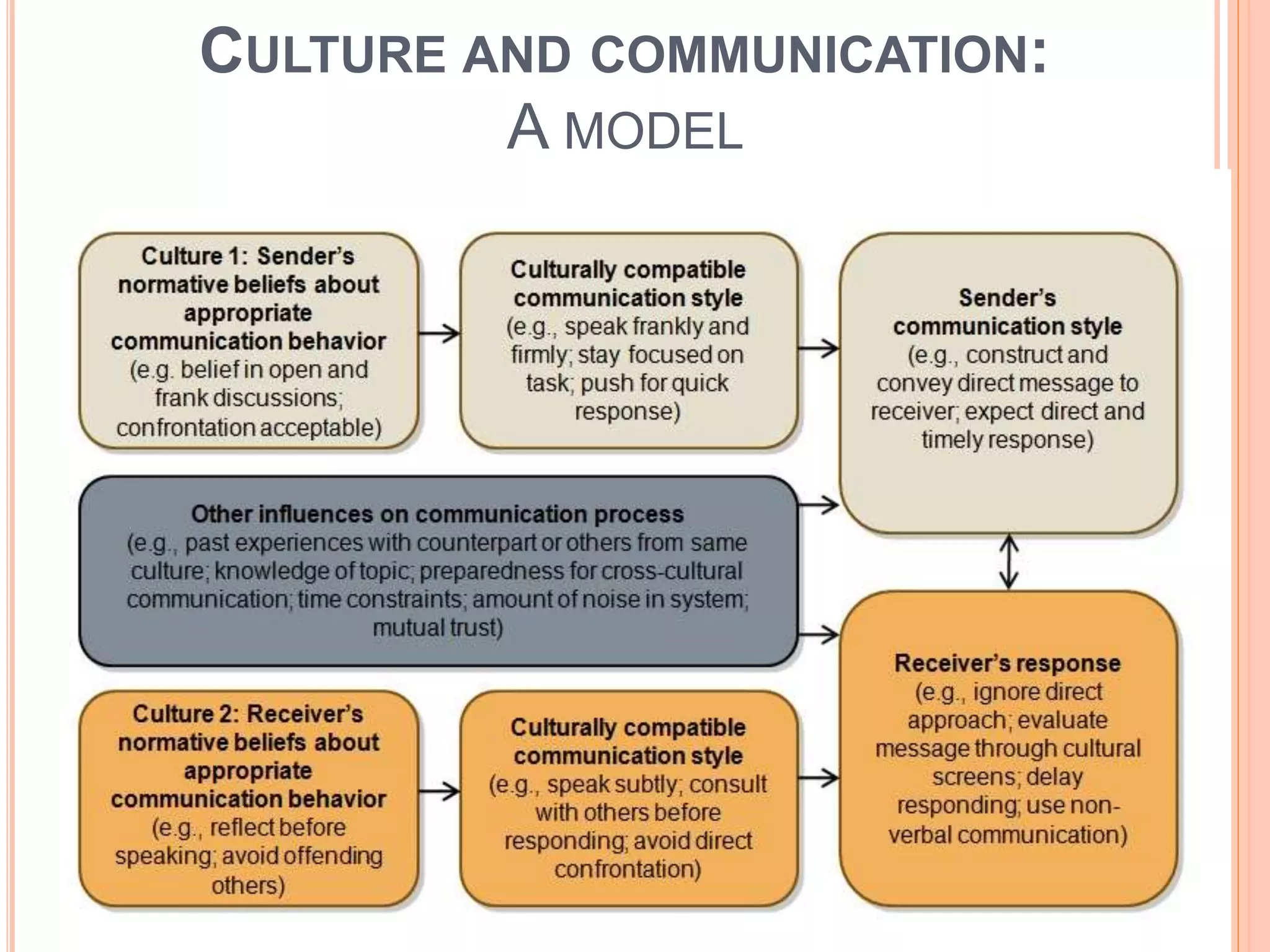
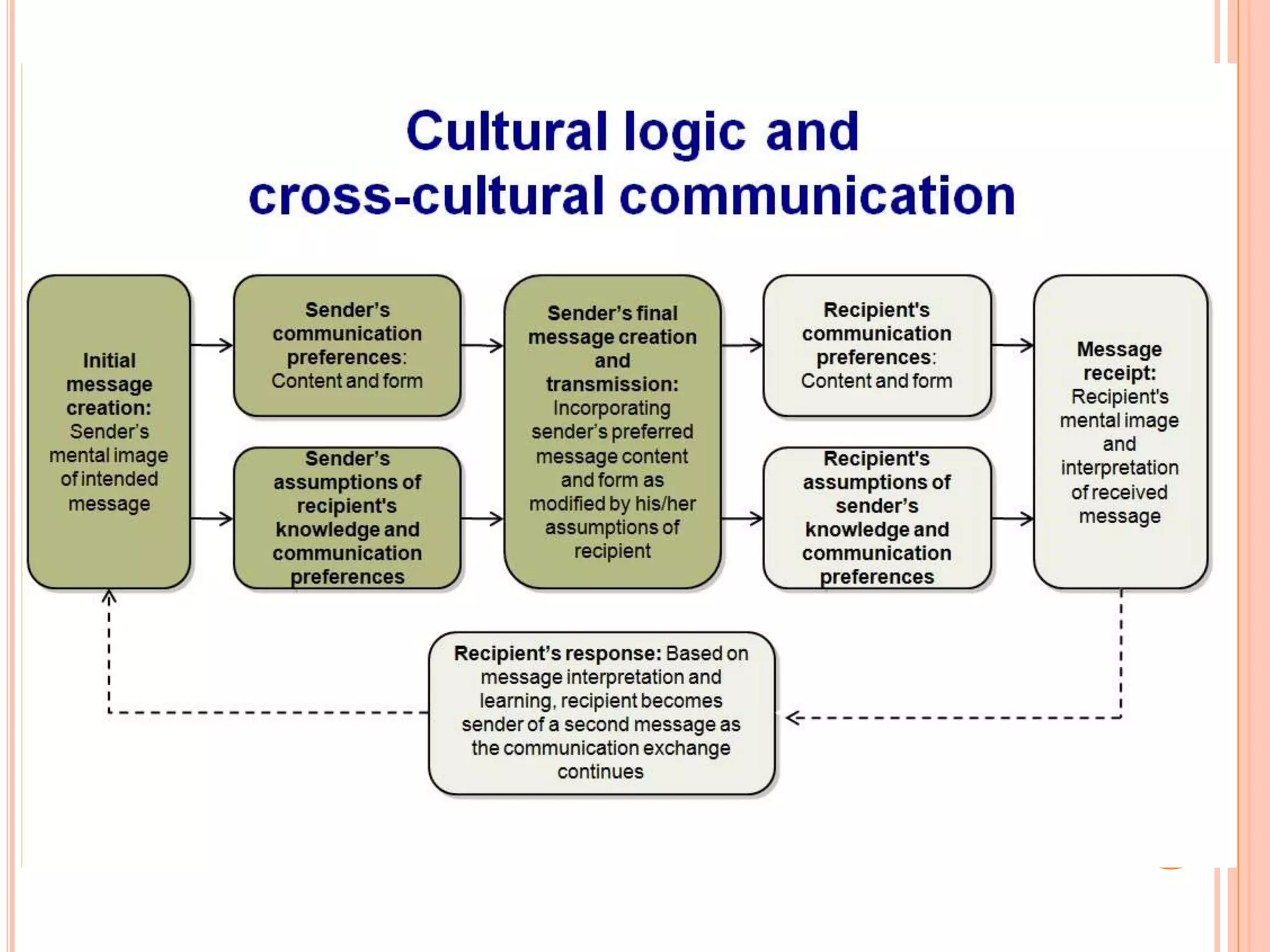
CULTURE AND COMMUNICATION: 
A MODEL
PERCEPTION AND COMMUNICATION 
 Selective perception: People pay attention to 
messages that relate to their own immediate 
problems or needs. 
 Recency effects: A tendency to focus on the most 
recent message or interaction compared to earlier 
ones. 
 Consider: Are these significant, of just minor, 
influences on interpersonal communication?
LANGUAGE, LOGIC, AND COMMUNICATION 
1. Language and linguistic Structures 
2. Cultural Logic
Language and linguistic structures 
The manner in which words, grammar, syntax, and the 
meaning of words are organized and used. 
Cultural Logic 
 Is the process of using our own assumptions to 
interpret the messages and actions of others, thereby 
inferring their motives and intentions. 
 Provides people with a system of assumptions about 
what is mutually known and understood—our 
common ground.
COMMUNICATION TOOLS FOR UNDERSTANDING 
CULTURE 
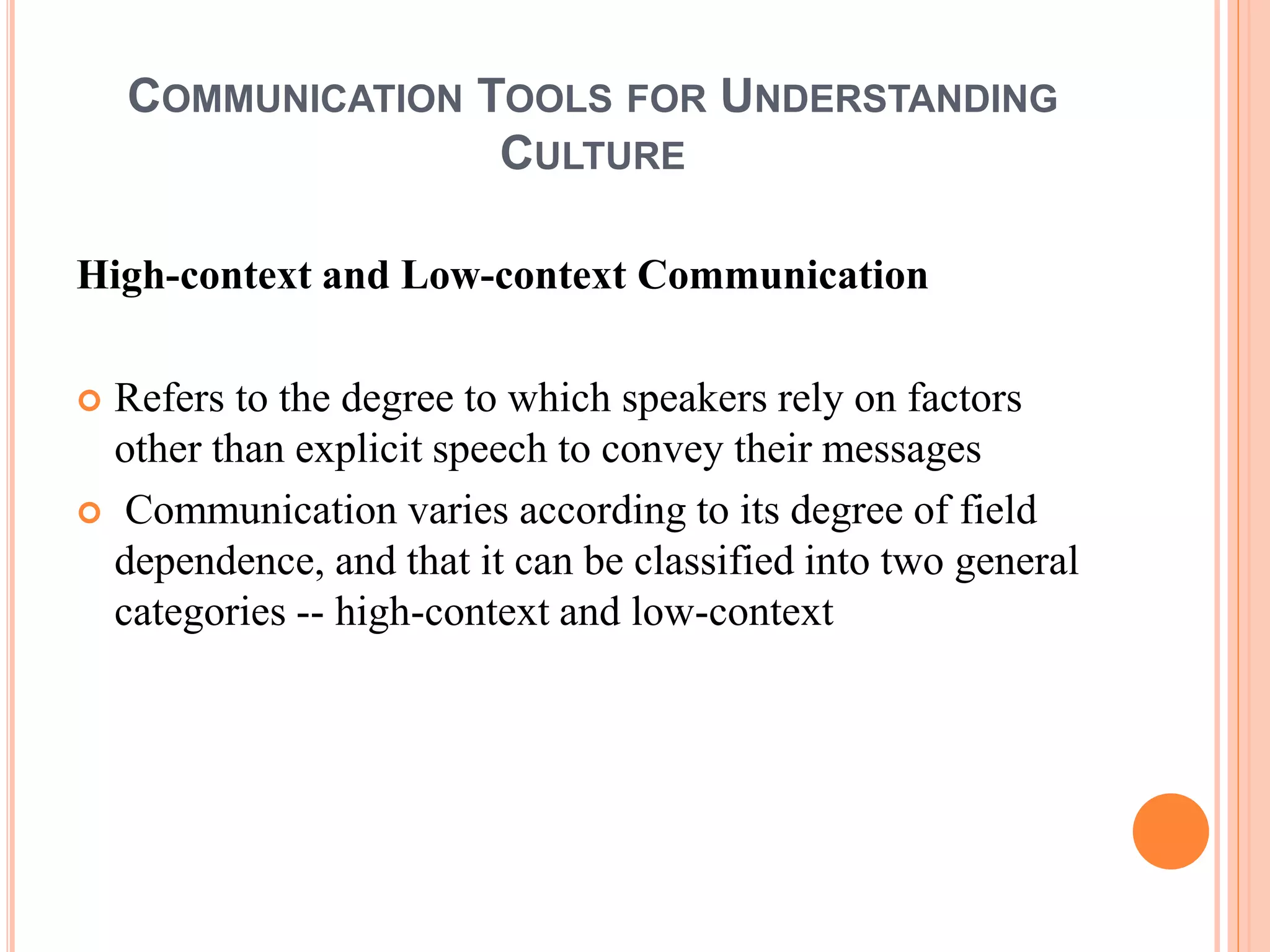
High-context and Low-context Communication 
 Refers to the degree to which speakers rely on factors 
other than explicit speech to convey their messages 
 Communication varies according to its degree of field 
dependence, and that it can be classified into two general 
categories -- high-context and low-context
High Context 
• Indirect and implicit messages 
• Polychronic 
• High use of non-verbal 
communication 
• Low reliance on written 
communication 
• Use of intuition and feelings 
• Long term relationships 
• Relationships are more 
important than schedule 
• Strong distinction between in 
group and out group 
Low Context 
• Direct, simple and clear 
messages 
• Monochromic 
• Low use of non-verbal 
communication 
• High relaince on written 
communication 
• Rely on facts and evidence 
• Short term relationships 
• Schedules are more important 
• Flexible and open
CULTURAL INFLUENCES ON MESSAGE 
CONTEXT 
 Facial expressions: Is it acceptable to show joy 
or anger? 
 Personal space: How close should we stand to 
one another? 
 Body language: Is it acceptable to point at 
someone? If so, how? What are the implications 
of bad posture? 
 Secret communication: Do we use secret codes 
or symbols to convey meaning that others cannot 
detect?
CULTURAL INFLUENCES ON APPROPRIATE 
FORMALITIES (COMMUNICATION PROTOCOLS) 
 Opening a conversation: Who should speak first? 
Should we be assertive or passive? 
 Ending a conversation: Who should end the 
conversation? Is there a formal end or do people 
just wander off? 
 Presenting ideas or proposals: Should you 
present a proposal all-at-once or piece-by-piece? 
 Interruptions and silence: Is it acceptable to 
interrupt? Are you comfortable with periods of 
silence?
CONTD. 
Vocal characteristics: Should you speak fast of 
slow, loud or soft? 
 Apologies: When should you accept blame? 
How to save your own and other’s face? 
 Disagreements: How should you express your 
disagreements? 
Emotional displays: is it OK to yell or cry? 
 Feedback: How (and when) should you provide 
someone with feedback? 
 Requests: How do you make a request?
Communication 
challenges 
• Language and 
logic differences 
• Message content 
and context 
• Communication 
protocols 
• Technology-mediated 
communication 
Communication 
enhancement 
strategies 
• Enhance message 
clarity 
• Enhance message 
comprehension 
• Minimize 
communication 
breakdowns 
Communication 
outcomes 
• Improved 
exchange of ideas 
• Improved 
cooperation and 
job performance 
• Avoidance of 
future 
misunderstandings 
• Establish basis for 
future 
relationships
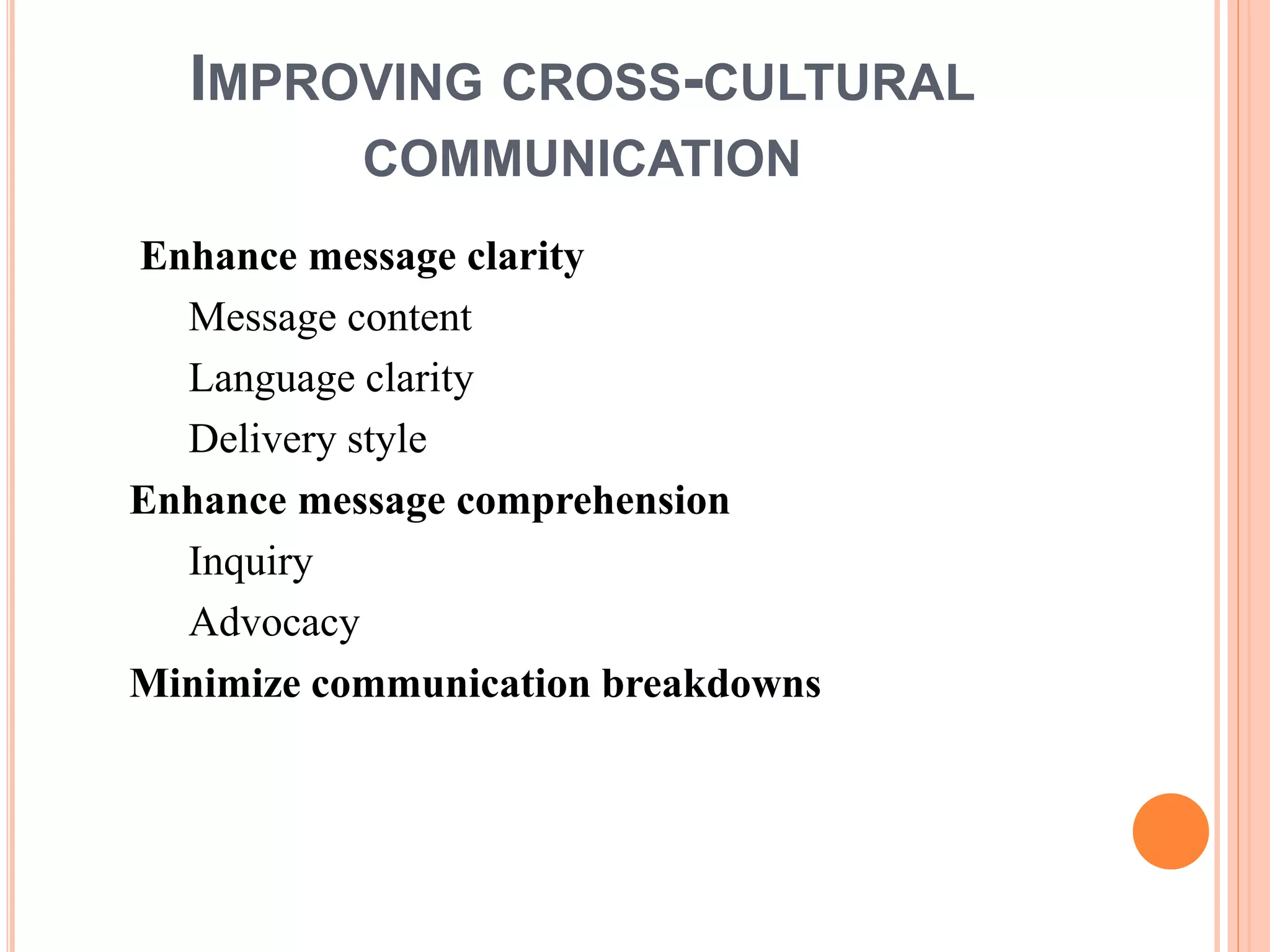
IMPROVING CROSS-CULTURAL 
COMMUNICATION 
1. Enhance message clarity 
 Message content 
 Language clarity 
 Delivery style 
Enhance message comprehension 
 Inquiry 
 Advocacy 
Minimize communication breakdowns
CONCLUSION 
It is very important for one to understand the various 
cultures and contexts that influence communication to 
a varied degree and effect its outcome. Effective 
communication can be enabled only if it is given a 
proper context and structure.
REFERENCES 
 www.google.com 
 www.wikipedia.com 
 www.languagelinguistics.com 
 Research paper on language logic and 
communication by “Johan van Benthem” 
http://turing.wins.uva.nl/~johan/
THANK-YOU

Communication culture and context

  • 1.
  • 2.
    INDEX  Introduction  Communication and culture model  Perceptions  Language, logic and communication  High and Low context  Cross cultural communication  Culture and context  Conclusion  References
  • 3.
    WHAT IS COMMUNICATION? Communication is the transmission of a message from one person/group to another through various communication channels.
  • 4.
    WHAT IS CULTURE? Edward Tylor’s (1871) “that complex whole which includes knowledge, belief, art, morals, law, custom, and any other capabilities and habits acquired by man as a member of society”
  • 5.
  • 6.
    PERCEPTION AND COMMUNICATION  Selective perception: People pay attention to messages that relate to their own immediate problems or needs.  Recency effects: A tendency to focus on the most recent message or interaction compared to earlier ones.  Consider: Are these significant, of just minor, influences on interpersonal communication?
  • 7.
    LANGUAGE, LOGIC, ANDCOMMUNICATION 1. Language and linguistic Structures 2. Cultural Logic
  • 8.
    Language and linguisticstructures The manner in which words, grammar, syntax, and the meaning of words are organized and used. Cultural Logic  Is the process of using our own assumptions to interpret the messages and actions of others, thereby inferring their motives and intentions.  Provides people with a system of assumptions about what is mutually known and understood—our common ground.
  • 9.
    COMMUNICATION TOOLS FORUNDERSTANDING CULTURE High-context and Low-context Communication  Refers to the degree to which speakers rely on factors other than explicit speech to convey their messages  Communication varies according to its degree of field dependence, and that it can be classified into two general categories -- high-context and low-context
  • 10.
    High Context •Indirect and implicit messages • Polychronic • High use of non-verbal communication • Low reliance on written communication • Use of intuition and feelings • Long term relationships • Relationships are more important than schedule • Strong distinction between in group and out group Low Context • Direct, simple and clear messages • Monochromic • Low use of non-verbal communication • High relaince on written communication • Rely on facts and evidence • Short term relationships • Schedules are more important • Flexible and open
  • 12.
    CULTURAL INFLUENCES ONMESSAGE CONTEXT  Facial expressions: Is it acceptable to show joy or anger?  Personal space: How close should we stand to one another?  Body language: Is it acceptable to point at someone? If so, how? What are the implications of bad posture?  Secret communication: Do we use secret codes or symbols to convey meaning that others cannot detect?
  • 13.
    CULTURAL INFLUENCES ONAPPROPRIATE FORMALITIES (COMMUNICATION PROTOCOLS)  Opening a conversation: Who should speak first? Should we be assertive or passive?  Ending a conversation: Who should end the conversation? Is there a formal end or do people just wander off?  Presenting ideas or proposals: Should you present a proposal all-at-once or piece-by-piece?  Interruptions and silence: Is it acceptable to interrupt? Are you comfortable with periods of silence?
  • 14.
    CONTD. Vocal characteristics:Should you speak fast of slow, loud or soft?  Apologies: When should you accept blame? How to save your own and other’s face?  Disagreements: How should you express your disagreements? Emotional displays: is it OK to yell or cry?  Feedback: How (and when) should you provide someone with feedback?  Requests: How do you make a request?
  • 15.
    Communication challenges •Language and logic differences • Message content and context • Communication protocols • Technology-mediated communication Communication enhancement strategies • Enhance message clarity • Enhance message comprehension • Minimize communication breakdowns Communication outcomes • Improved exchange of ideas • Improved cooperation and job performance • Avoidance of future misunderstandings • Establish basis for future relationships
  • 16.
    IMPROVING CROSS-CULTURAL COMMUNICATION 1. Enhance message clarity  Message content  Language clarity  Delivery style Enhance message comprehension  Inquiry  Advocacy Minimize communication breakdowns
  • 17.
    CONCLUSION It isvery important for one to understand the various cultures and contexts that influence communication to a varied degree and effect its outcome. Effective communication can be enabled only if it is given a proper context and structure.
  • 18.
    REFERENCES  www.google.com  www.wikipedia.com  www.languagelinguistics.com  Research paper on language logic and communication by “Johan van Benthem” http://turing.wins.uva.nl/~johan/
  • 19.