Cross Cultural Communication
Culture
 Culture is the ideas, customs, and social behaviour
of a particular people or society.
 A culture is a way of life of a group of people--the
behaviors, beliefs, values and symbols that they
accept, generally without thinking about them,
and that are passed along by communication and
imitation from one generation to the next.
Characteristics of Culture
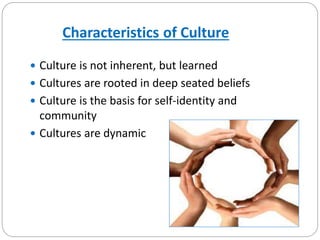
 Culture is not inherent, but learned
 Cultures are rooted in deep seated beliefs
 Culture is the basis for self-identity and
community
 Cultures are dynamic
What is Cross Cultural
Communication
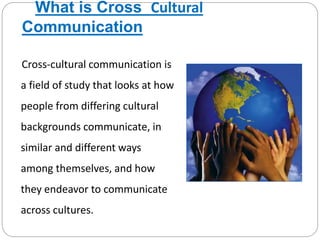
Cross-cultural communication is
a field of study that looks at how
people from differing cultural
backgrounds communicate, in
similar and different ways
among themselves, and how
they endeavor to communicate
across cultures.
Problems of Cultural Differences
 People in different countries have different ways to
interpret events, they have different habits, values, and
ways of relating to one another. When they come across,
problems pops up.
 People tend to view their cultural practices right while
other as wrong or peculiar. This is called ethnocentrism.
 Gestures and body movements, beliefs and practices
related to human relationships are the two main factors
that impacts communication.
Blocks to Cultural Communication
 Ethnocentrism : Inability to accept another culture's
world view; "my way is the best."
 Discrimination : Differential treatment of an individual
due to minority status; actual and perceived.
e.g., "we just aren't equipped to serve people like that."
 Stereotyping : Generalizing about a person while
ignoring presence of individual difference.
e.g., "she's like that because she's Asian – all Asians are
nonverbal."
 Cultural Blindness: Differences are ignored and one
proceeds as though differences did not exist; e.g.,
"there's no need to worry about a person's culture
 Cultural Imposition: Belief that everyone should
conform to the majority; e.g., "we know what's best
for you, if you don't like it you can go elsewhere."
CULTURAL CONFLICTS IN
WORKPLACE
 Cultural conflicts arise because of the differences in
values and norms of behavior of people from different
cultures.
 A person acts according to the values and norms of his
or her culture; another person holding a different
worldview might interpret his or her behavior from an
opposite standpoint.
 This situation creates misunderstanding and can lead to
conflict.
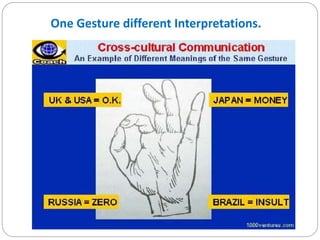
One Gesture different Interpretations.
Why cross culture is important ?
 Globalization
 Business opportunities
 Job opportunities
 Sharing of views and ideas
 Talent improvisation
 An understanding of diverse market
Differences to consider in cross cultural
communication
 Frequency of eye Contact
 Assertiveness
 Use of Hands While Talking
 Physical Distance Between Communicators
 Speed of Speech
 Use of First Names vs. Titles
 Volume of Speech
 Use of Facial Expressions
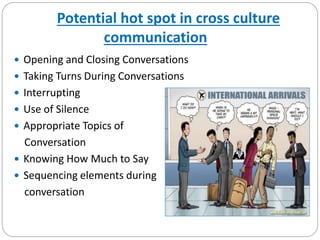
Potential hot spot in cross culture
communication
 Opening and Closing Conversations
 Taking Turns During Conversations
 Interrupting
 Use of Silence
 Appropriate Topics of
Conversation
 Knowing How Much to Say
 Sequencing elements during
conversation
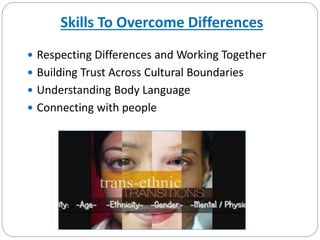
Skills To Overcome Differences
 Respecting Differences and Working Together
 Building Trust Across Cultural Boundaries
 Understanding Body Language
 Connecting with people
Need for Cross-cultural
Communication in Business
•Cultural diversity is perceived quite often
around the world with the change in geography,
climate, countries, states, religion, language,
race and gender.
•For a business to develop in technically
competent and advanced global village, in
terms of communication, travel and
transportation, this cultural diversity must be
breached.
Purpose of Cross-cultural
Communication in Business
 To create cultural synergy between people
from different cultures within a business.
 To avoid problems stemming solely from
misinterpretation when coming across
people from different culture and society in
the large expanding business globally.
 Communicating across cultures effectively
improves your productivity and efficiency
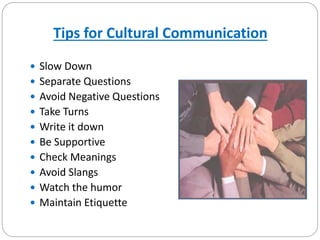
Tips for Cultural Communication
 Slow Down
 Separate Questions
 Avoid Negative Questions
 Take Turns
 Write it down
 Be Supportive
 Check Meanings
 Avoid Slangs
 Watch the humor
 Maintain Etiquette
Cross cultural communication

Cross cultural communication

  • 1.
  • 2.
    Culture  Culture isthe ideas, customs, and social behaviour of a particular people or society.  A culture is a way of life of a group of people--the behaviors, beliefs, values and symbols that they accept, generally without thinking about them, and that are passed along by communication and imitation from one generation to the next.
  • 3.
    Characteristics of Culture Culture is not inherent, but learned  Cultures are rooted in deep seated beliefs  Culture is the basis for self-identity and community  Cultures are dynamic
  • 4.
    What is CrossCultural Communication Cross-cultural communication is a field of study that looks at how people from differing cultural backgrounds communicate, in similar and different ways among themselves, and how they endeavor to communicate across cultures.
  • 5.
    Problems of CulturalDifferences  People in different countries have different ways to interpret events, they have different habits, values, and ways of relating to one another. When they come across, problems pops up.  People tend to view their cultural practices right while other as wrong or peculiar. This is called ethnocentrism.  Gestures and body movements, beliefs and practices related to human relationships are the two main factors that impacts communication.
  • 6.
    Blocks to CulturalCommunication  Ethnocentrism : Inability to accept another culture's world view; "my way is the best."  Discrimination : Differential treatment of an individual due to minority status; actual and perceived. e.g., "we just aren't equipped to serve people like that."  Stereotyping : Generalizing about a person while ignoring presence of individual difference. e.g., "she's like that because she's Asian – all Asians are nonverbal."
  • 7.
     Cultural Blindness:Differences are ignored and one proceeds as though differences did not exist; e.g., "there's no need to worry about a person's culture  Cultural Imposition: Belief that everyone should conform to the majority; e.g., "we know what's best for you, if you don't like it you can go elsewhere."
  • 8.
    CULTURAL CONFLICTS IN WORKPLACE Cultural conflicts arise because of the differences in values and norms of behavior of people from different cultures.  A person acts according to the values and norms of his or her culture; another person holding a different worldview might interpret his or her behavior from an opposite standpoint.  This situation creates misunderstanding and can lead to conflict.
  • 9.
    One Gesture differentInterpretations.
  • 10.
    Why cross cultureis important ?  Globalization  Business opportunities  Job opportunities  Sharing of views and ideas  Talent improvisation  An understanding of diverse market
  • 11.
    Differences to considerin cross cultural communication  Frequency of eye Contact  Assertiveness  Use of Hands While Talking  Physical Distance Between Communicators  Speed of Speech  Use of First Names vs. Titles  Volume of Speech  Use of Facial Expressions
  • 12.
    Potential hot spotin cross culture communication  Opening and Closing Conversations  Taking Turns During Conversations  Interrupting  Use of Silence  Appropriate Topics of Conversation  Knowing How Much to Say  Sequencing elements during conversation
  • 13.
    Skills To OvercomeDifferences  Respecting Differences and Working Together  Building Trust Across Cultural Boundaries  Understanding Body Language  Connecting with people
  • 14.
    Need for Cross-cultural Communicationin Business •Cultural diversity is perceived quite often around the world with the change in geography, climate, countries, states, religion, language, race and gender. •For a business to develop in technically competent and advanced global village, in terms of communication, travel and transportation, this cultural diversity must be breached.
  • 16.
    Purpose of Cross-cultural Communicationin Business  To create cultural synergy between people from different cultures within a business.  To avoid problems stemming solely from misinterpretation when coming across people from different culture and society in the large expanding business globally.  Communicating across cultures effectively improves your productivity and efficiency
  • 18.
    Tips for CulturalCommunication  Slow Down  Separate Questions  Avoid Negative Questions  Take Turns  Write it down  Be Supportive  Check Meanings  Avoid Slangs  Watch the humor  Maintain Etiquette