COMMUNICATING WITH 
STUDENTS 
Dr.T.V.Rao MD
Communication is most 
Desired Talent in Teaching 
• How effective we are 
as teachers has a 
great deal to do with 
how we communicate. 
We communicate 
ideas, information and 
expectations in a 
variety of ways – 
through speaking, 
through gestures and 
other body language, 
and through the 
written word,
We need to be aware 
• Communicating 
effectively can help 
instructors have a 
“presence” in the 
classroom that motivates 
students and facilitates 
learning; 
• We may send 
unintentional messages if 
we are unaware of things 
such as our body 
language;
Be a part of New 
Technologies 
• New 
technologies 
present new 
opportunities 
for 
communicating 
with students.
Communicating Means 
• Communicating effectively often means using a variety of 
modes (spoken, visual, etc.)to reach students who learn 
in different ways; 
• Our body language and other non-verbal cues are 
important modes of communication, and we can harness 
these to promote a positive classroom environment; 
• While technology can make communication easier and 
more convenient, students generally value the opportunity 
for personal contact and conversation with theinstructor 
as well.
Building Your Presentation 
Skills 
• Plan ahead. This cardinal 
rule has been repeated 
throughout the Teaching 
Nuggets ,and you’ll 
continue to see it here in 
the future. To convey 
ideas or concepts 
effectively to your 
students, you need to 
have a clear goal for each 
class and a plan for how 
to reach that goal.
Practice. Practice. Practice 
• You may feel awkward talking to yourself in 
front of the mirror or reciting your lecture in 
the shower. Yet the best presentations, those 
that seem unrehearsed, are the result of 
disciplined practice. Professors who have 
been teaching for 30 years still set aside two 
hours just before class to practice their 
lecture, mastering the ideas and the gestures 
before they enter the classroom.
Learn from better Teachers 
in the Department 
• Watch carefully the 
instructors you regard 
as exemplary. What 
do they do that makes 
them so good? Seek 
them out and speak 
with them about how 
they prepare and the 
techniques that work 
best for them.
Feed back is Mirror of 
your Performance 
• Feedback is essential to continuous 
improvement; even seasoned teachers 
benefit from having a colleague watch them 
teach and offer feedback. Particularly if you 
are new, it can be helpful to practice your 
presentation ahead of time with a trusted 
friend and get feedback from him or her. As 
you progress, have them come to your class, 
or tape yourself and analyse the results later.
Students Attention is 
Important 
• Plan mini-lectures rather than lecturing for the full class. 
The average student has an attention span of ten to 
twenty minutes (Davis, 1993). If you try to present for 
longer, you will almost certainly lose some of your 
students’ attention. Therefore, break up theclass. Talk for 
a bit, then ask students to solve a problem based on the 
concepts you have presented. Have them work in small 
groups to discuss an issue. Ask them to respond to a 
question. Anything you can do to change the pace of the 
class will help keep their attention.
Try Multiple Techniques 
• Use multiple presentation 
techniques. Students learn in 
different ways: some need to 
hear the ideas; others need to 
see things written on the board; 
some need to discover 
concepts and applications while 
others prefer to be shown and 
to have the chance to practice. 
Communicating information in a 
variety of ways allows you to 
meet the needs of different 
learners.
Know your audience 
• you should know who 
your students are and 
what knowledge they 
have. Anticipate what 
they already know, 
what concepts will 
cause them particular 
troubles, and what 
examples will have 
meaning for them.
Understand your Audience 
• Understanding your 
audience will help you 
get a sense of when you 
need to prepare 
multiple, diverse 
exercises or examples 
to make sure they 
understand a concept, 
and when you can 
simply state something 
and move on.
Trying getting feedback will have 
positive effect on your Career 
• Even in large courses, the 
most distinguished teachers 
continuously obtain 
feedback from their 
students by asking 
questions and leaving 
space for students to ask 
questions. This helps to 
vary the pace of the class 
and allows you to see what 
students are struggling with 
so you can adjust 
accordingly
Do no read the Test but 
Teach with Mind 
• Avoid reading your 
presentation. The best talks 
are those that seem to be 
spontaneous but have been 
practiced in advance. 
Reading from your notes or 
PowerPoint bores the 
students, and it prevents 
you from making eye 
contact with them so that 
you can gauge their 
reactions to your words.
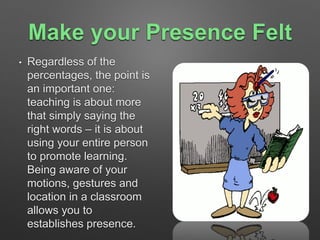
Make your Presence Felt 
• Regardless of the 
percentages, the point is 
an important one: 
teaching is about more 
that simply saying the 
right words – it is about 
using your entire person 
to promote learning. 
Being aware of your 
motions, gestures and 
location in a classroom 
allows you to 
establishes presence.
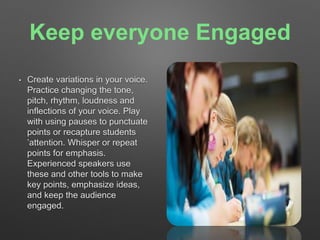
Keep everyone Engaged 
• Create variations in your voice. 
Practice changing the tone, 
pitch, rhythm, loudness and 
inflections of your voice. Play 
with using pauses to punctuate 
points or recapture students 
’attention. Whisper or repeat 
points for emphasis. 
Experienced speakers use 
these and other tools to make 
key points, emphasize ideas, 
and keep the audience 
engaged.
Body language Carries the 
Message of your Talents 
• Be aware of your body and its language. Do you stay 
behind a podium throughout the class? Are you always 
talking with your hands or are they continually stuffed in 
your pockets? Do you nod, smile and look at students 
when they are asking a question or making a point? Find 
ways to use your motions to help accent the message 
you are trying to convey. For instance, use your hands to 
highlight important points. Lean toward the students to 
emphasize an idea.
Do not be a Static Teacher 
MOVE AROUND 
• Moving around the 
classroom can convey 
energy and enthusiasm 
on your part – and it 
brings you into contact 
with all parts of the room. 
It can also help keep 
students’ attention and 
even quiet students who 
are talking or restless. 
• Be careful, however, 
since too much 
movement can be 
annoying.
Sense of Humour Brightens 
Every one in the Class Room 
• Keep a sense of humor. We are 
not talking about using jokes 
here – some instructors can do 
this quite well, and others 
simply find it is not for them. In 
this case, we mean you should 
keep your ability to laugh. 
Funny things happen in our 
classrooms, intentionally or not. 
Try to keep your ability to laugh 
at yourself and the situation, 
though not at your students. 
This kind of relaxed 
atmosphere is conducive to 
learning.
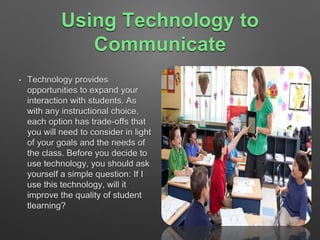
Using Technology to 
Communicate 
• Technology provides 
opportunities to expand your 
interaction with students. As 
with any instructional choice, 
each option has trade-offs that 
you will need to consider in light 
of your goals and the needs of 
the class. Before you decide to 
use technology, you should ask 
yourself a simple question: If I 
use this technology, will it 
improve the quality of student 
tlearning?
• The Programme Created by Dr.T.V.Rao 
MD for many Young Professional who 
Take the Teaching as Challenge for the 
Betterment of the World 
• Email 
• doctortvrao@gmail.com

COMMUNICATING WITH STUDENTS

  • 1.
  • 2.
    Communication is most Desired Talent in Teaching • How effective we are as teachers has a great deal to do with how we communicate. We communicate ideas, information and expectations in a variety of ways – through speaking, through gestures and other body language, and through the written word,
  • 3.
    We need tobe aware • Communicating effectively can help instructors have a “presence” in the classroom that motivates students and facilitates learning; • We may send unintentional messages if we are unaware of things such as our body language;
  • 4.
    Be a partof New Technologies • New technologies present new opportunities for communicating with students.
  • 5.
    Communicating Means •Communicating effectively often means using a variety of modes (spoken, visual, etc.)to reach students who learn in different ways; • Our body language and other non-verbal cues are important modes of communication, and we can harness these to promote a positive classroom environment; • While technology can make communication easier and more convenient, students generally value the opportunity for personal contact and conversation with theinstructor as well.
  • 6.
    Building Your Presentation Skills • Plan ahead. This cardinal rule has been repeated throughout the Teaching Nuggets ,and you’ll continue to see it here in the future. To convey ideas or concepts effectively to your students, you need to have a clear goal for each class and a plan for how to reach that goal.
  • 7.
    Practice. Practice. Practice • You may feel awkward talking to yourself in front of the mirror or reciting your lecture in the shower. Yet the best presentations, those that seem unrehearsed, are the result of disciplined practice. Professors who have been teaching for 30 years still set aside two hours just before class to practice their lecture, mastering the ideas and the gestures before they enter the classroom.
  • 8.
    Learn from betterTeachers in the Department • Watch carefully the instructors you regard as exemplary. What do they do that makes them so good? Seek them out and speak with them about how they prepare and the techniques that work best for them.
  • 9.
    Feed back isMirror of your Performance • Feedback is essential to continuous improvement; even seasoned teachers benefit from having a colleague watch them teach and offer feedback. Particularly if you are new, it can be helpful to practice your presentation ahead of time with a trusted friend and get feedback from him or her. As you progress, have them come to your class, or tape yourself and analyse the results later.
  • 10.
    Students Attention is Important • Plan mini-lectures rather than lecturing for the full class. The average student has an attention span of ten to twenty minutes (Davis, 1993). If you try to present for longer, you will almost certainly lose some of your students’ attention. Therefore, break up theclass. Talk for a bit, then ask students to solve a problem based on the concepts you have presented. Have them work in small groups to discuss an issue. Ask them to respond to a question. Anything you can do to change the pace of the class will help keep their attention.
  • 11.
    Try Multiple Techniques • Use multiple presentation techniques. Students learn in different ways: some need to hear the ideas; others need to see things written on the board; some need to discover concepts and applications while others prefer to be shown and to have the chance to practice. Communicating information in a variety of ways allows you to meet the needs of different learners.
  • 12.
    Know your audience • you should know who your students are and what knowledge they have. Anticipate what they already know, what concepts will cause them particular troubles, and what examples will have meaning for them.
  • 13.
    Understand your Audience • Understanding your audience will help you get a sense of when you need to prepare multiple, diverse exercises or examples to make sure they understand a concept, and when you can simply state something and move on.
  • 14.
    Trying getting feedbackwill have positive effect on your Career • Even in large courses, the most distinguished teachers continuously obtain feedback from their students by asking questions and leaving space for students to ask questions. This helps to vary the pace of the class and allows you to see what students are struggling with so you can adjust accordingly
  • 15.
    Do no readthe Test but Teach with Mind • Avoid reading your presentation. The best talks are those that seem to be spontaneous but have been practiced in advance. Reading from your notes or PowerPoint bores the students, and it prevents you from making eye contact with them so that you can gauge their reactions to your words.
  • 16.
    Make your PresenceFelt • Regardless of the percentages, the point is an important one: teaching is about more that simply saying the right words – it is about using your entire person to promote learning. Being aware of your motions, gestures and location in a classroom allows you to establishes presence.
  • 17.
    Keep everyone Engaged • Create variations in your voice. Practice changing the tone, pitch, rhythm, loudness and inflections of your voice. Play with using pauses to punctuate points or recapture students ’attention. Whisper or repeat points for emphasis. Experienced speakers use these and other tools to make key points, emphasize ideas, and keep the audience engaged.
  • 18.
    Body language Carriesthe Message of your Talents • Be aware of your body and its language. Do you stay behind a podium throughout the class? Are you always talking with your hands or are they continually stuffed in your pockets? Do you nod, smile and look at students when they are asking a question or making a point? Find ways to use your motions to help accent the message you are trying to convey. For instance, use your hands to highlight important points. Lean toward the students to emphasize an idea.
  • 19.
    Do not bea Static Teacher MOVE AROUND • Moving around the classroom can convey energy and enthusiasm on your part – and it brings you into contact with all parts of the room. It can also help keep students’ attention and even quiet students who are talking or restless. • Be careful, however, since too much movement can be annoying.
  • 20.
    Sense of HumourBrightens Every one in the Class Room • Keep a sense of humor. We are not talking about using jokes here – some instructors can do this quite well, and others simply find it is not for them. In this case, we mean you should keep your ability to laugh. Funny things happen in our classrooms, intentionally or not. Try to keep your ability to laugh at yourself and the situation, though not at your students. This kind of relaxed atmosphere is conducive to learning.
  • 21.
    Using Technology to Communicate • Technology provides opportunities to expand your interaction with students. As with any instructional choice, each option has trade-offs that you will need to consider in light of your goals and the needs of the class. Before you decide to use technology, you should ask yourself a simple question: If I use this technology, will it improve the quality of student tlearning?
  • 22.
    • The ProgrammeCreated by Dr.T.V.Rao MD for many Young Professional who Take the Teaching as Challenge for the Betterment of the World • Email • doctortvrao@gmail.com