
Emotional Messaging 
Interpersonal Communication Lecture Three
A complex process 
Difficult and Important 
Thinking often confused 
Lack of education and training 
Needed to communicate 
completely
Primary Emotions 
 Sadness 
 Contempt 
 Anger 
 Disgust 
 Fear 
 Interest 
 Surprise 
 Happiness
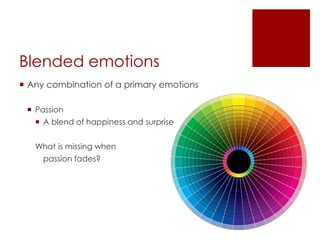
Blended emotions 
 Any combination of a primary emotions 
 Passion 
 A blend of happiness and surprise 
What is missing when 
passion fades?
Three parts of emotion 
Bodily reactions 
Mental evaluations 
Cultural Rules/Beliefs
Emotional Axioms 
Emotions are often ADAPTIVE 
Emotions can be MALADAPTIVE 
Emotions are CONTAGIOUS
Activity – Conflict starters 
 In groups – write a response to these statements 
or questions that would move the 
communication in a NEGATIVE direction: 
1. Did you remember to make reservations? 
2. Did you throw the towel on the floor again? 
3. Just leave me alone. 
4. You always spend to much money on things 
we don’t need.
Skills for expressing – step 1 
 INTRAPERSONAL 
What am I feeling and what made me 
feel this way? 
What exactly do I want to 
communicate? 
What communication choices will be 
the most effective
Skills for expressing – step 2 
 INTERPERSONAL 
 Be very specific 
 Describe the reason for your feelings 
 Address mixed feelings 
 Anchor your feelings in the present 
 Own your feelings 
 Ask for what you want or need 
 In your groups re-write the answers to 
your conflict starters using these steps
ANGER 
MANAGEMENT 
 SCREAM 
 Self 
 Context 
 Receiver 
 Effect 
 Aftermath 
 Messages
Stop to consider... 
Communicating anger Angry communication 
 Stay calm and logical 
 Examine choices 
 Consider a delay 
 Remember the principle of irreversibility

Communicating emotions

  • 1.
    Emotional Messaging InterpersonalCommunication Lecture Three
  • 2.
    A complex process Difficult and Important Thinking often confused Lack of education and training Needed to communicate completely
  • 3.
    Primary Emotions Sadness  Contempt  Anger  Disgust  Fear  Interest  Surprise  Happiness
  • 4.
    Blended emotions Any combination of a primary emotions  Passion  A blend of happiness and surprise What is missing when passion fades?
  • 5.
    Three parts ofemotion Bodily reactions Mental evaluations Cultural Rules/Beliefs
  • 6.
    Emotional Axioms Emotionsare often ADAPTIVE Emotions can be MALADAPTIVE Emotions are CONTAGIOUS
  • 7.
    Activity – Conflictstarters  In groups – write a response to these statements or questions that would move the communication in a NEGATIVE direction: 1. Did you remember to make reservations? 2. Did you throw the towel on the floor again? 3. Just leave me alone. 4. You always spend to much money on things we don’t need.
  • 8.
    Skills for expressing– step 1  INTRAPERSONAL What am I feeling and what made me feel this way? What exactly do I want to communicate? What communication choices will be the most effective
  • 9.
    Skills for expressing– step 2  INTERPERSONAL  Be very specific  Describe the reason for your feelings  Address mixed feelings  Anchor your feelings in the present  Own your feelings  Ask for what you want or need  In your groups re-write the answers to your conflict starters using these steps
  • 10.
    ANGER MANAGEMENT SCREAM  Self  Context  Receiver  Effect  Aftermath  Messages
  • 11.
    Stop to consider... Communicating anger Angry communication  Stay calm and logical  Examine choices  Consider a delay  Remember the principle of irreversibility