Workplace etiquette 
By A.W.Rajesh Gabriel
What is ‘workplace etiquette’ 
 Workplace etiquette means the socially 
acceptable ways that we interact with one 
another and behave in our workplace 
 May vary from one workplace to another, 
however, But there are some behaviors which 
are universally acceptable
Workplace etiquette 
 A lot of workplace etiquette 
has to do with common 
courtesy, 
 Making our workplace a 
comfortable place that is 
conducive to productivity & 
success 
 Non- negotiable: 
◦ Company policy 
◦ Anything that makes another 
person uncomfortable, uneasy, 
or afraid
What behaviors does workplace 
etiquette include? 
 The way you relate to your co-workers 
 The way you relate to customers 
 Your behaviors while at work 
 What you wear 
 How you speak/communicate to/with 
people 
 What else?
What will we discuss? 
Workplace “do’s and don’t” 
Telephone etiquette 
Office etiquette 
 Email etiquette
WORKPLACE “DO’S AND 
DON’T’S” 
 What are some of the most annoying, 
bothersome, and time-wasting “don’ts”? 
◦ Loudness- 
 Loud telephone conversations (even more 
annoying when they are personal 
conversations) 
 Loud talking in general, on the phone, in 
person nearby where people are trying to 
work, on intercoms, etc. 
 Loud complaining (we’ll talk about this more) 
 Loud music
MORE ABOUT LOUDNESS 
 Keep personal 
conversations to a 
minimum while at work – 
close your door or go 
outside on a break 
 Turn your cell phone 
ringer to vibrate or low 
volume 
 What else?
WORKPLACE DON’TS 
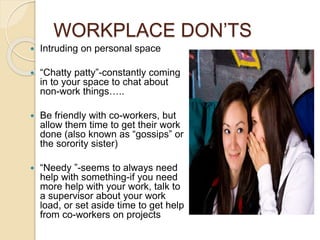
 Intruding on personal space 
 “Chatty patty”-constantly coming 
in to your space to chat about 
non-work things….. 
 Be friendly with co-workers, but 
allow them time to get their work 
done (also known as “gossips” or 
the sorority sister) 
 “Needy ”-seems to always need 
help with something-if you need 
more help with your work, talk to 
a supervisor about your work 
load, or set aside time to get help 
from co-workers on projects
WORKPLACE DON’TS 
 “Negative ”-always coming 
into your space to 
complain-spend more time 
working to improve things, 
complaining is the root of 
all evil at work! 
 What else?
WORKPLACE DON’TS 
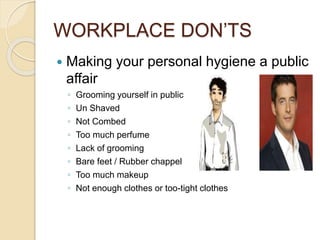
 Making your personal hygiene a public 
affair 
◦ Grooming yourself in public 
◦ Un Shaved 
◦ Not Combed 
◦ Too much perfume 
◦ Lack of grooming 
◦ Bare feet / Rubber chappel 
◦ Too much makeup 
◦ Not enough clothes or too-tight clothes
PERSONAL GROOMING, 
CONTINUED 
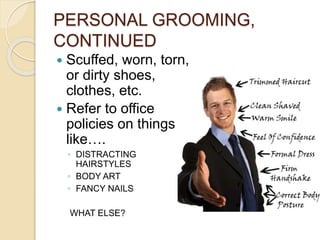
 Scuffed, worn, torn, 
or dirty shoes, 
clothes, etc. 
 Refer to office 
policies on things 
like…. 
◦ DISTRACTING 
HAIRSTYLES 
◦ BODY ART 
◦ FANCY NAILS 
WHAT ELSE?
WORKPLACE DON’TS 
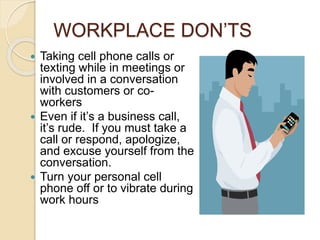
 Taking cell phone calls or 
texting while in meetings or 
involved in a conversation 
with customers or co-workers 
 Even if it’s a business call, 
it’s rude. If you must take a 
call or respond, apologize, 
and excuse yourself from the 
conversation. 
 Turn your personal cell 
phone off or to vibrate during 
work hours
WORKPLACE DON’TS 
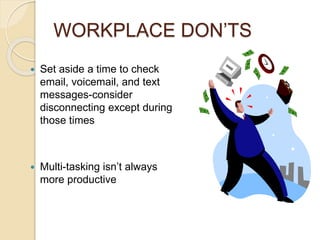
 Set aside a time to check 
email, voicemail, and text 
messages-consider 
disconnecting except during 
those times 
 Multi-tasking isn’t always 
more productive
WORKPLACE DON’TS 
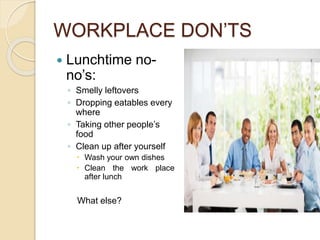
 Lunchtime no-no’s: 
◦ Smelly leftovers 
◦ Dropping eatables every 
where 
◦ Taking other people’s 
food 
◦ Clean up after yourself 
 Wash your own dishes 
 Clean the work place 
after lunch 
What else?
WORKPLACE DON’TS 
 Complaining 
 Complaining is the root of all evil at 
work. It ‘s annoying, it causes 
resentment, it contributes to poor 
morale, and it decreases your ability 
to do your job well. 
 What do people complain about? 
◦ Their workload 
◦ Things they perceive as unfair 
◦ Other employees 
◦ Their pay check 
◦ Their boss
complaining 
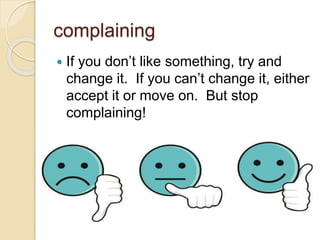
 If you don’t like something, try and 
change it. If you can’t change it, either 
accept it or move on. But stop 
complaining!
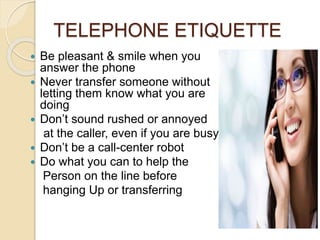
TELEPHONE ETIQUETTE 
 Be pleasant & smile when you 
answer the phone 
 Never transfer someone without 
letting them know what you are 
doing 
 Don’t sound rushed or annoyed 
at the caller, even if you are busy! 
 Don’t be a call-center robot 
 Do what you can to help the 
Person on the line before 
hanging Up or transferring
TELEPHONE ETIQUETTE 
 When making a call, identify 
yourself by first and last name, 
and where you are calling from 
 Leave complete messages 
◦ Your name, company name, why you are 
calling, and what you want the other 
person to do –be specific (call me back by 
3pm please, email me the report, stop in 
and see me before tomorrow) 
◦ Be short and to the point-don’t ramble 
◦ Return messages promptly 
What else?
EMAIL ETIQUETTE 
 Do not send an email 
when a phone call or 
personal conversation 
is more appropriate 
 Business emails should 
be treated like business 
correspondence-not 
text messaging 
 Include a greeting and 
closing
EMAIL ETIQUETTE 
 Address people with 
the appropriate 
formality 
 Spell and grammar 
check 
 Read aloud to make 
sure your message is 
clear 
 Include all necessary 
details and information
EMAIL ETIQUETTE 
 Go easy on the “reply to all” 
and cc: feature ask yourself 
who it is necessary to include 
 Include a relevant subject 
 Don’t use all caps 
 Don’t use distracting 
backgrounds
EMAIL ETIQUETTE 
 To smiley or not to smiley? 
 Don’t send inappropriate 
emails to co-workers 
(remember the rule about 
anything making you feel 
uncomfortable, uneasy, or 
afraid) 
 Chain emails, jokes, political 
or religious content
EMAIL ETIQUETTE 
 Don’t make assumptions from electronic 
correspondence-ask for clarification if 
needed 
 What else?
Workplace Behavior

Workplace Behavior

  • 1.
    Workplace etiquette ByA.W.Rajesh Gabriel
  • 2.
    What is ‘workplaceetiquette’  Workplace etiquette means the socially acceptable ways that we interact with one another and behave in our workplace  May vary from one workplace to another, however, But there are some behaviors which are universally acceptable
  • 3.
    Workplace etiquette A lot of workplace etiquette has to do with common courtesy,  Making our workplace a comfortable place that is conducive to productivity & success  Non- negotiable: ◦ Company policy ◦ Anything that makes another person uncomfortable, uneasy, or afraid
  • 4.
    What behaviors doesworkplace etiquette include?  The way you relate to your co-workers  The way you relate to customers  Your behaviors while at work  What you wear  How you speak/communicate to/with people  What else?
  • 5.
    What will wediscuss? Workplace “do’s and don’t” Telephone etiquette Office etiquette  Email etiquette
  • 6.
    WORKPLACE “DO’S AND DON’T’S”  What are some of the most annoying, bothersome, and time-wasting “don’ts”? ◦ Loudness-  Loud telephone conversations (even more annoying when they are personal conversations)  Loud talking in general, on the phone, in person nearby where people are trying to work, on intercoms, etc.  Loud complaining (we’ll talk about this more)  Loud music
  • 7.
    MORE ABOUT LOUDNESS  Keep personal conversations to a minimum while at work – close your door or go outside on a break  Turn your cell phone ringer to vibrate or low volume  What else?
  • 8.
    WORKPLACE DON’TS Intruding on personal space  “Chatty patty”-constantly coming in to your space to chat about non-work things…..  Be friendly with co-workers, but allow them time to get their work done (also known as “gossips” or the sorority sister)  “Needy ”-seems to always need help with something-if you need more help with your work, talk to a supervisor about your work load, or set aside time to get help from co-workers on projects
  • 9.
    WORKPLACE DON’TS “Negative ”-always coming into your space to complain-spend more time working to improve things, complaining is the root of all evil at work!  What else?
  • 10.
    WORKPLACE DON’TS Making your personal hygiene a public affair ◦ Grooming yourself in public ◦ Un Shaved ◦ Not Combed ◦ Too much perfume ◦ Lack of grooming ◦ Bare feet / Rubber chappel ◦ Too much makeup ◦ Not enough clothes or too-tight clothes
  • 11.
    PERSONAL GROOMING, CONTINUED  Scuffed, worn, torn, or dirty shoes, clothes, etc.  Refer to office policies on things like…. ◦ DISTRACTING HAIRSTYLES ◦ BODY ART ◦ FANCY NAILS WHAT ELSE?
  • 12.
    WORKPLACE DON’TS Taking cell phone calls or texting while in meetings or involved in a conversation with customers or co-workers  Even if it’s a business call, it’s rude. If you must take a call or respond, apologize, and excuse yourself from the conversation.  Turn your personal cell phone off or to vibrate during work hours
  • 13.
    WORKPLACE DON’TS Set aside a time to check email, voicemail, and text messages-consider disconnecting except during those times  Multi-tasking isn’t always more productive
  • 14.
    WORKPLACE DON’TS Lunchtime no-no’s: ◦ Smelly leftovers ◦ Dropping eatables every where ◦ Taking other people’s food ◦ Clean up after yourself  Wash your own dishes  Clean the work place after lunch What else?
  • 15.
    WORKPLACE DON’TS Complaining  Complaining is the root of all evil at work. It ‘s annoying, it causes resentment, it contributes to poor morale, and it decreases your ability to do your job well.  What do people complain about? ◦ Their workload ◦ Things they perceive as unfair ◦ Other employees ◦ Their pay check ◦ Their boss
  • 16.
    complaining  Ifyou don’t like something, try and change it. If you can’t change it, either accept it or move on. But stop complaining!
  • 17.
    TELEPHONE ETIQUETTE Be pleasant & smile when you answer the phone  Never transfer someone without letting them know what you are doing  Don’t sound rushed or annoyed at the caller, even if you are busy!  Don’t be a call-center robot  Do what you can to help the Person on the line before hanging Up or transferring
  • 18.
    TELEPHONE ETIQUETTE When making a call, identify yourself by first and last name, and where you are calling from  Leave complete messages ◦ Your name, company name, why you are calling, and what you want the other person to do –be specific (call me back by 3pm please, email me the report, stop in and see me before tomorrow) ◦ Be short and to the point-don’t ramble ◦ Return messages promptly What else?
  • 19.
    EMAIL ETIQUETTE Do not send an email when a phone call or personal conversation is more appropriate  Business emails should be treated like business correspondence-not text messaging  Include a greeting and closing
  • 20.
    EMAIL ETIQUETTE Address people with the appropriate formality  Spell and grammar check  Read aloud to make sure your message is clear  Include all necessary details and information
  • 21.
    EMAIL ETIQUETTE Go easy on the “reply to all” and cc: feature ask yourself who it is necessary to include  Include a relevant subject  Don’t use all caps  Don’t use distracting backgrounds
  • 22.
    EMAIL ETIQUETTE To smiley or not to smiley?  Don’t send inappropriate emails to co-workers (remember the rule about anything making you feel uncomfortable, uneasy, or afraid)  Chain emails, jokes, political or religious content
  • 23.
    EMAIL ETIQUETTE Don’t make assumptions from electronic correspondence-ask for clarification if needed  What else?