Kidney & Its Common Diseases Neuro Workgroup SIG 12 June 2008 Suhaila Mohamed Usuludin
Content Kidneys & Functions  Kidney Failure/ESRD Risk factors Symptoms Treatment Hemodialysis Peritoneal Dialysis Common Kidney Diseases In the wards…
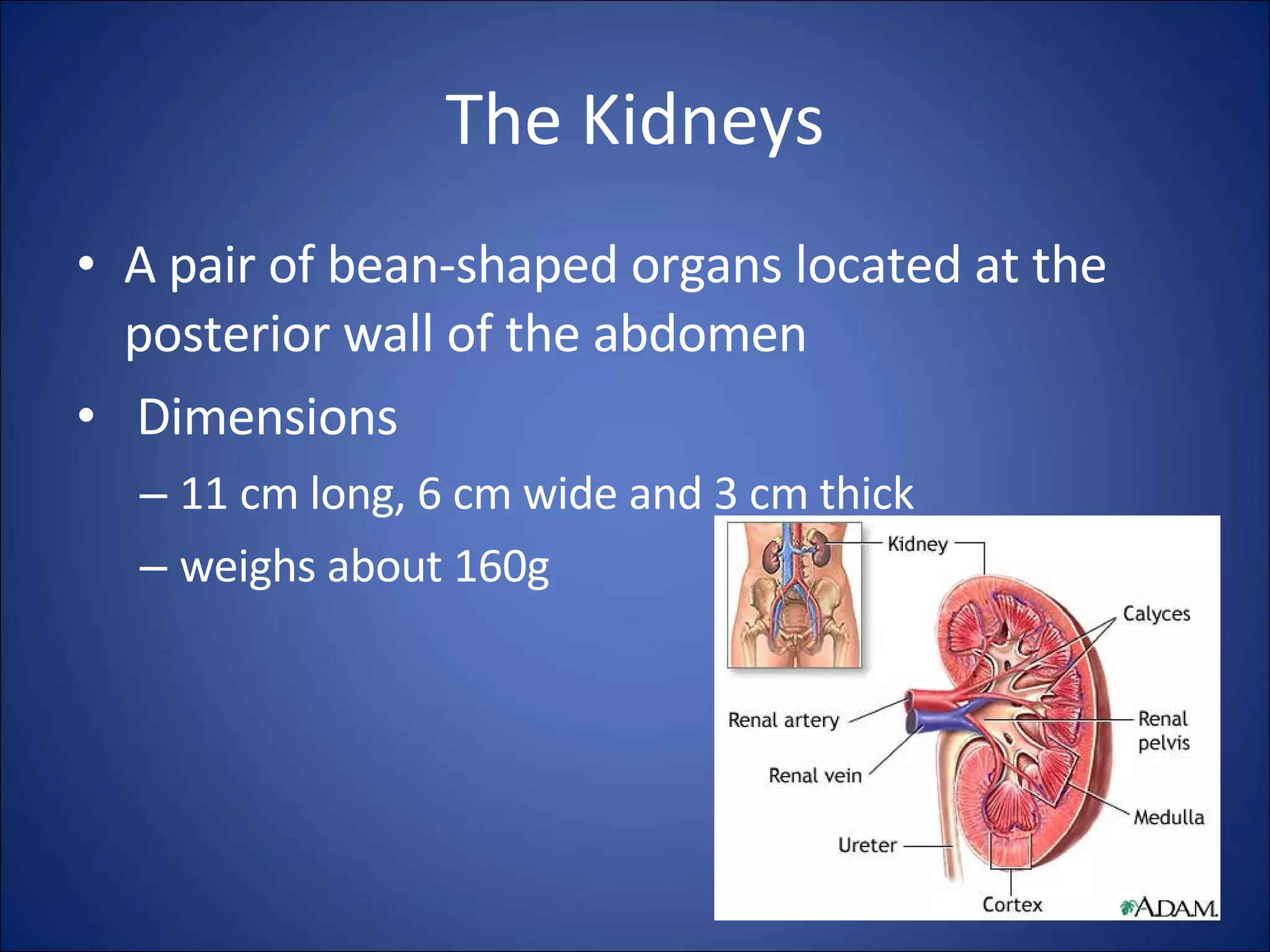
The Kidneys A pair of bean-shaped organs located at the posterior wall of the abdomen Dimensions 11 cm long, 6 cm wide and 3 cm thick weighs about 160g
The Kidneys Made up of functioning units called nephrons Nephron Glomerulus Tubules
The Kidneys
Functions Removal of waste and excess water from body
Normal kidneys release several hormones Renin (regulates blood pressure) Erythropoietin (stimulates production of red blood cells) Activated form of Vitamin D (maintain normal bone structure) Functions
Kidney Failure or End-stage Renal Disease (ESRD) Occurs when the kidneys do not function properly or sufficiently, resulting in the accumulation of waste products and toxic materials may cause permanent and irreversible damage to body cells, tissues and organs kidneys that function <20% of required capacity  need renal replacement therapy
Risk Factors Chronic diseases Inflammatory diseases Blockage of urinary collecting system Chronic infections Rare genetic disorders
Symptoms Decreased urination Blood in the urine Nausea and vomiting Swollen hands and ankles Puffiness around the eyes Itching Sleep disturbances High blood pressure Loss of appetite
Treatment of Kidney Failure Blood creatinine rises to 900 µmol/ L Dialysis Hemodialysis Peritoneal Dialysis Transplant the best means of treatment
Hemodialysis A process by which excess waste products and water are removed from the blood Requires an access to the patient's blood stream and the use of a haemodialysis machine
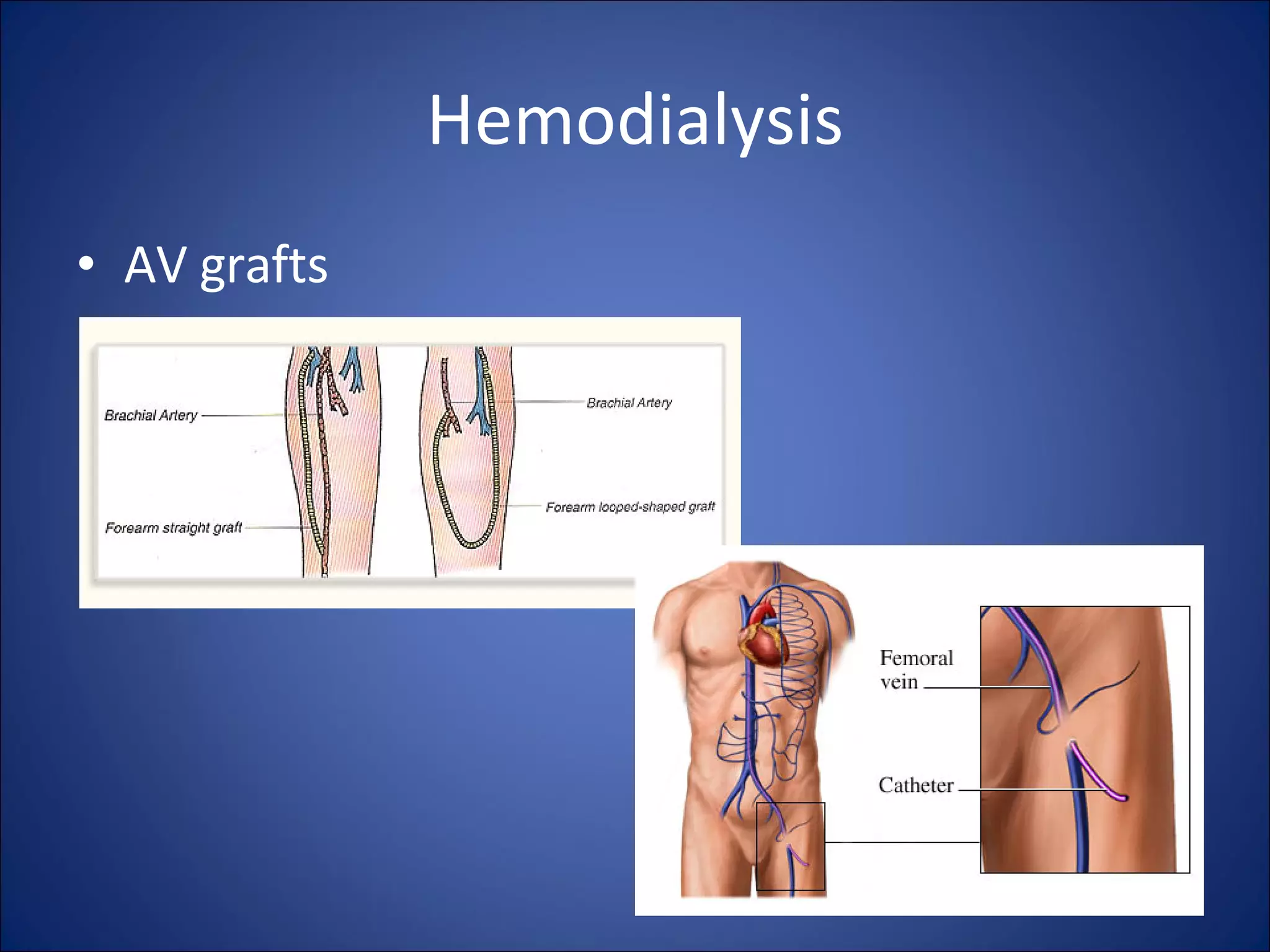
Hemodialysis Vascular Access arterio-venous (AV) fistula AV graft
Hemodialysis AV grafts
Hemodialysis 3 times a week (on alternate days) for 3 to 5 or more hours each visit
Hemodialysis “ Washout Syndrome” feels weak, tremulous, extreme fatigue syndrome may begin toward the end of treatment or minutes following the treatment may last 30 minutes or 12-14 hours in a dissipating form
Hemodialysis Advantages Staff performs treatment in the dialysis centre Three treatments per week in the dialysis centre Permanent internal access required  Regular contact with people in the centre
Hemodialysis Disadvantages Requires travel to a dialysis centre  Fixed treatment schedule  Two needle sticks for each treatment; tie onto a machine and cannot move about during treatment  Diet and fluid intake restriction
Peritoneal Dialysis Dialysis solution flow into the peritoneal (abdominal) cavity through a catheter Petrionuem acts as a filter
Peritoneal Dialysis 2 forms CAPD  (Continuous Ambulatory Peritoneal Dialysis) 4 exchanges during the day, 45 min each  APD (Automated Peritoneal Dialysis) exchanges are performed by the machine during the night while the patient is asleep
Peritoneal Dialysis Advantages Patient's involvement in self-care  Control over schedule Less diet & fluid restriction More steady physical condition as it provides slow, continuous therapy  Most similar to original kidneys. Can be done in the night as in automated peritoneal dialysis  Provide less severe cardiovascular instabilities in patients with underlying heart disease
Peritoneal Dialysis Disadvantages Four exchanges per day Permanent external catheter Change of body image Some risks of infection If on automated peritoneal dialysis, one will be tie onto a machine in the night Storage space is needed for supplies
Kidney Transplant A kidney from either a living related or a brain dead person is removed and surgically placed into the kidney failure patient.  Not all kidney failure patients are fit to undergo transplantation.   Medication to suppress their immunity given for the transplant may worsen their general health
Kidney Transplant Advantages Absence of need for frequent dialysis treatment Better quality of life Better health Reduced medical cost after first year No diet and fluid intake restriction Provide less severe cardiovascular instabilities in patients with underlying heart disease
Kidney Transplant Disadvantages Need for frequent physician visits  Pain, discomfort of surgery  Risk of transplant rejection  Prone to infections  On lifelong medications
Common Kidney Diseases Polycystic Kidney Disease Hypertensive Nephrosclerosis  Glomerulonephritis / Glomerulosclerosis Urinary Tract Infection (UTI)  Kidney Stones  Diabetic Kidney Disease Analgesic nephropathy
Genetically acquired  2 forms - dominant and recessive  In the dominant PKD form, one parent has the disease and passes it to the child. The chance of passing the gene to the offspring is 50%.  Cysts are abnormal pouches containing fluid. Eventually the cysts replace normal kidney tissue  -> suffers ESRD Polycystic Kidney Disease
Polycystic Kidney Disease Signs and Symptoms Dull pain at the side of the abdomen and back  Blood in the urine  Frequent urine tract infection  High blood pressure (often before cysts appear)  Upper abdominal discomfort (liver and pancreatic cysts)
Polycystic Kidney Disease Treatment Blood pressure - controlled and treated Kidney failure - supportive therapy until end-stage is reached when dialysis or transplantation is then required  Urine tract infection - treatment with antibiotics  Pain - analgesics are used. Alternatively, surgery to shrink or resect the cysts.
Hypertensive Nephrosclerosis  Poorly controlled high blood pressure (hypertension) can lead to kidney failure Thickening of blood vessels
Hypertensive Nephrosclerosis  Signs and Symptoms Headache  Giddiness (sometimes related to posture)  Neck discomfort  Easily tired  Nauseous and/or vomiting  Protein in urine
Hypertensive Nephrosclerosis  Treatment Medications to control blood pressure (anti-hypertensive)  Lowering of dietary salt (2g/day)  Exercise regularly
Glomerulonephritis / Glomerulosclerosis  Glomerulonephritis - An inflammatory condition that affects predominantly the glomeruli.  Causes IgA nephropathy Streptococcus bacteria Autoimmune Glomerulosclerosis - scarring of the glomeruli
Glomerulonephritis / Glomerulosclerosis  Signs and Symptoms Blood or protein in urine Frothy urine (signifying protein in urine)  Dark or pink-coloured urine  Leg swelling  Systemic disease like diabetes or autoimmune disease will have systemic manifestations, e.g. weight loss, arthritis, or skin rash
Glomerulonephritis / Glomerulosclerosis Treatment Specific Suppression of inflammation may be achieved by certain medications (eg steroids).  General Medications to decrease excretion of urinary protein  Control of blood pressure Dietary modifications
Urinary Tract Infection (UTI) Disease of the urinary tract Infection occurs when microorganisms attach themselves to the urethra and begins to multiply. May lead to infection of the kidneys (pyelonephritis) and cause permanent kidney damage, if left untreated.  Women are especially prone to get urinary tract infection.
Urinary Tract Infection (UTI) Conditions that increases risk of UTI Diabetes Situations where a urine catheter is needed Abnormalities of the urinary tract Obstructed urine flow (large prostate or stone) Being pregnant
Urinary Tract Infection (UTI) Signs and Symptoms Painful urination (burning sensation)  Hot and foul smelling urine  Blood in urine  Fever (sometimes with chills)  Painful lower abdomen  Increased urgency/frequency of wanting to pass urine  Nausea and/or vomiting
Urinary Tract Infection (UTI) Treatment Appropriate antibiotics  Drink plenty of water
Kidney Stones Start as salt/chemical crystals that precipitate out from urine Occurs when substance in urine that prevents crystalisation are ineffective
Kidney Stones Various forms of kidney stones - the most common is calcium in combination with either phosphate or oxalate More common in  Males 20-40 yo
Kidney Stones Signs and Symptoms Extreme pain at the site where the stone is causing the irritation Blood in the urine (abrasion along the urinary tract as the stone travels)  Painful and/or difficult urination  Unable to pass urine if the stone is large enough to obstruct the outlet completely
Kidney Stones Treatment With plenty of water, most stones can pass through if small  Pain-killers (as prescribed by the doctor)  Some medications may help 'breakdown' larger stone  Shockwave therapy (F-SWL) to break the stone  Surgical intervention - cystoscopy or open surgery
Diabetic Kidney Disease Common in chronic and poorly controlled diabetics  Diabetes damages blood vessels in the kidneys Occurs in both types of diabetes  Occurrence of high blood pressure in diabetics is a strong predictor for diabetic nephropathy  Most common cause of ESRD in many developed countries
Diabetic Kidney Disease Signs and Symptoms Frothy urine (signifying protein in urine)  Leg swelling (worse after walking/standing)  High blood pressure  Itching  Nausea and/or vomiting  Losing weight  Lethargy  Increased need to urinate at night
Diabetic Kidney Disease Treatment Good control of diabetes Good control of blood pressure (aiming for < 130/85 or lower in younger patients)  Medications to decrease protein excretion and preserve the function of kidneys  Lower protein diet Treat any urine tract infection (which is common in diabetics)
Analgesic Nephropathy Chronic kidney disease that occurs when there is a long period of painkiller/s ingestion (usually years) Associated with conditions which require constant need for painkiller medications May lead to ESRD
Analgesic Nephropathy Signs  and Symptoms Blood in the urine Protein in the urine Signs and symptoms related to kidney failure such as nausea, vomiting, lethargy, swelling, and poor appetite.
Analgesic Nephropathy Treatment Avoid long-term consumption of analgesics Those already with kidney disease of other kinds should certainly refrain from harmful analgesics as much as possible.
In the wards… Look out for… Vital signs BP Temp HR Catheterisation? Dialysis When? Eventful? Other electrolyte values Na K Creatinine Urea Etc  Blood count Hb
References Kidney Dialysis Foundation (2007). Normal Kidney Functions.  Health Guide [Online]. Available: http://www.kdf.org.sg/health.php (2008, June 01). National Kidney Foundation (2007). Common Kidney Diseases.  Education [Online]. Available: http://www.nkfs.org/index.php (2008, June 01).
Common Kidney Diseases

  • 1.
    Kidney & ItsCommon Diseases Neuro Workgroup SIG 12 June 2008 Suhaila Mohamed Usuludin
  • 2.
    Content Kidneys &Functions Kidney Failure/ESRD Risk factors Symptoms Treatment Hemodialysis Peritoneal Dialysis Common Kidney Diseases In the wards…
  • 3.
    The Kidneys Apair of bean-shaped organs located at the posterior wall of the abdomen Dimensions 11 cm long, 6 cm wide and 3 cm thick weighs about 160g
  • 4.
    The Kidneys Madeup of functioning units called nephrons Nephron Glomerulus Tubules
  • 5.
  • 6.
    Functions Removal ofwaste and excess water from body
  • 7.
    Normal kidneys releaseseveral hormones Renin (regulates blood pressure) Erythropoietin (stimulates production of red blood cells) Activated form of Vitamin D (maintain normal bone structure) Functions
  • 8.
    Kidney Failure orEnd-stage Renal Disease (ESRD) Occurs when the kidneys do not function properly or sufficiently, resulting in the accumulation of waste products and toxic materials may cause permanent and irreversible damage to body cells, tissues and organs kidneys that function <20% of required capacity need renal replacement therapy
  • 9.
    Risk Factors Chronicdiseases Inflammatory diseases Blockage of urinary collecting system Chronic infections Rare genetic disorders
  • 10.
    Symptoms Decreased urinationBlood in the urine Nausea and vomiting Swollen hands and ankles Puffiness around the eyes Itching Sleep disturbances High blood pressure Loss of appetite
  • 11.
    Treatment of KidneyFailure Blood creatinine rises to 900 µmol/ L Dialysis Hemodialysis Peritoneal Dialysis Transplant the best means of treatment
  • 12.
    Hemodialysis A processby which excess waste products and water are removed from the blood Requires an access to the patient's blood stream and the use of a haemodialysis machine
  • 13.
    Hemodialysis Vascular Accessarterio-venous (AV) fistula AV graft
  • 14.
  • 15.
    Hemodialysis 3 timesa week (on alternate days) for 3 to 5 or more hours each visit
  • 16.
    Hemodialysis “ WashoutSyndrome” feels weak, tremulous, extreme fatigue syndrome may begin toward the end of treatment or minutes following the treatment may last 30 minutes or 12-14 hours in a dissipating form
  • 17.
    Hemodialysis Advantages Staffperforms treatment in the dialysis centre Three treatments per week in the dialysis centre Permanent internal access required Regular contact with people in the centre
  • 18.
    Hemodialysis Disadvantages Requirestravel to a dialysis centre Fixed treatment schedule Two needle sticks for each treatment; tie onto a machine and cannot move about during treatment Diet and fluid intake restriction
  • 19.
    Peritoneal Dialysis Dialysissolution flow into the peritoneal (abdominal) cavity through a catheter Petrionuem acts as a filter
  • 20.
    Peritoneal Dialysis 2forms CAPD (Continuous Ambulatory Peritoneal Dialysis) 4 exchanges during the day, 45 min each APD (Automated Peritoneal Dialysis) exchanges are performed by the machine during the night while the patient is asleep
  • 21.
    Peritoneal Dialysis AdvantagesPatient's involvement in self-care Control over schedule Less diet & fluid restriction More steady physical condition as it provides slow, continuous therapy Most similar to original kidneys. Can be done in the night as in automated peritoneal dialysis Provide less severe cardiovascular instabilities in patients with underlying heart disease
  • 22.
    Peritoneal Dialysis DisadvantagesFour exchanges per day Permanent external catheter Change of body image Some risks of infection If on automated peritoneal dialysis, one will be tie onto a machine in the night Storage space is needed for supplies
  • 23.
    Kidney Transplant Akidney from either a living related or a brain dead person is removed and surgically placed into the kidney failure patient.  Not all kidney failure patients are fit to undergo transplantation.  Medication to suppress their immunity given for the transplant may worsen their general health
  • 24.
    Kidney Transplant AdvantagesAbsence of need for frequent dialysis treatment Better quality of life Better health Reduced medical cost after first year No diet and fluid intake restriction Provide less severe cardiovascular instabilities in patients with underlying heart disease
  • 25.
    Kidney Transplant DisadvantagesNeed for frequent physician visits Pain, discomfort of surgery Risk of transplant rejection Prone to infections On lifelong medications
  • 26.
    Common Kidney DiseasesPolycystic Kidney Disease Hypertensive Nephrosclerosis Glomerulonephritis / Glomerulosclerosis Urinary Tract Infection (UTI) Kidney Stones Diabetic Kidney Disease Analgesic nephropathy
  • 27.
    Genetically acquired 2 forms - dominant and recessive In the dominant PKD form, one parent has the disease and passes it to the child. The chance of passing the gene to the offspring is 50%. Cysts are abnormal pouches containing fluid. Eventually the cysts replace normal kidney tissue -> suffers ESRD Polycystic Kidney Disease
  • 28.
    Polycystic Kidney DiseaseSigns and Symptoms Dull pain at the side of the abdomen and back Blood in the urine Frequent urine tract infection High blood pressure (often before cysts appear) Upper abdominal discomfort (liver and pancreatic cysts)
  • 29.
    Polycystic Kidney DiseaseTreatment Blood pressure - controlled and treated Kidney failure - supportive therapy until end-stage is reached when dialysis or transplantation is then required Urine tract infection - treatment with antibiotics Pain - analgesics are used. Alternatively, surgery to shrink or resect the cysts.
  • 30.
    Hypertensive Nephrosclerosis Poorly controlled high blood pressure (hypertension) can lead to kidney failure Thickening of blood vessels
  • 31.
    Hypertensive Nephrosclerosis Signs and Symptoms Headache Giddiness (sometimes related to posture) Neck discomfort Easily tired Nauseous and/or vomiting Protein in urine
  • 32.
    Hypertensive Nephrosclerosis Treatment Medications to control blood pressure (anti-hypertensive) Lowering of dietary salt (2g/day) Exercise regularly
  • 33.
    Glomerulonephritis / Glomerulosclerosis Glomerulonephritis - An inflammatory condition that affects predominantly the glomeruli. Causes IgA nephropathy Streptococcus bacteria Autoimmune Glomerulosclerosis - scarring of the glomeruli
  • 34.
    Glomerulonephritis / Glomerulosclerosis Signs and Symptoms Blood or protein in urine Frothy urine (signifying protein in urine) Dark or pink-coloured urine Leg swelling Systemic disease like diabetes or autoimmune disease will have systemic manifestations, e.g. weight loss, arthritis, or skin rash
  • 35.
    Glomerulonephritis / GlomerulosclerosisTreatment Specific Suppression of inflammation may be achieved by certain medications (eg steroids). General Medications to decrease excretion of urinary protein Control of blood pressure Dietary modifications
  • 36.
    Urinary Tract Infection(UTI) Disease of the urinary tract Infection occurs when microorganisms attach themselves to the urethra and begins to multiply. May lead to infection of the kidneys (pyelonephritis) and cause permanent kidney damage, if left untreated. Women are especially prone to get urinary tract infection.
  • 37.
    Urinary Tract Infection(UTI) Conditions that increases risk of UTI Diabetes Situations where a urine catheter is needed Abnormalities of the urinary tract Obstructed urine flow (large prostate or stone) Being pregnant
  • 38.
    Urinary Tract Infection(UTI) Signs and Symptoms Painful urination (burning sensation) Hot and foul smelling urine Blood in urine Fever (sometimes with chills) Painful lower abdomen Increased urgency/frequency of wanting to pass urine Nausea and/or vomiting
  • 39.
    Urinary Tract Infection(UTI) Treatment Appropriate antibiotics Drink plenty of water
  • 40.
    Kidney Stones Startas salt/chemical crystals that precipitate out from urine Occurs when substance in urine that prevents crystalisation are ineffective
  • 41.
    Kidney Stones Variousforms of kidney stones - the most common is calcium in combination with either phosphate or oxalate More common in Males 20-40 yo
  • 42.
    Kidney Stones Signsand Symptoms Extreme pain at the site where the stone is causing the irritation Blood in the urine (abrasion along the urinary tract as the stone travels) Painful and/or difficult urination Unable to pass urine if the stone is large enough to obstruct the outlet completely
  • 43.
    Kidney Stones TreatmentWith plenty of water, most stones can pass through if small Pain-killers (as prescribed by the doctor) Some medications may help 'breakdown' larger stone Shockwave therapy (F-SWL) to break the stone Surgical intervention - cystoscopy or open surgery
  • 44.
    Diabetic Kidney DiseaseCommon in chronic and poorly controlled diabetics Diabetes damages blood vessels in the kidneys Occurs in both types of diabetes Occurrence of high blood pressure in diabetics is a strong predictor for diabetic nephropathy Most common cause of ESRD in many developed countries
  • 45.
    Diabetic Kidney DiseaseSigns and Symptoms Frothy urine (signifying protein in urine) Leg swelling (worse after walking/standing) High blood pressure Itching Nausea and/or vomiting Losing weight Lethargy Increased need to urinate at night
  • 46.
    Diabetic Kidney DiseaseTreatment Good control of diabetes Good control of blood pressure (aiming for < 130/85 or lower in younger patients) Medications to decrease protein excretion and preserve the function of kidneys Lower protein diet Treat any urine tract infection (which is common in diabetics)
  • 47.
    Analgesic Nephropathy Chronickidney disease that occurs when there is a long period of painkiller/s ingestion (usually years) Associated with conditions which require constant need for painkiller medications May lead to ESRD
  • 48.
    Analgesic Nephropathy Signs and Symptoms Blood in the urine Protein in the urine Signs and symptoms related to kidney failure such as nausea, vomiting, lethargy, swelling, and poor appetite.
  • 49.
    Analgesic Nephropathy TreatmentAvoid long-term consumption of analgesics Those already with kidney disease of other kinds should certainly refrain from harmful analgesics as much as possible.
  • 50.
    In the wards…Look out for… Vital signs BP Temp HR Catheterisation? Dialysis When? Eventful? Other electrolyte values Na K Creatinine Urea Etc Blood count Hb
  • 51.
    References Kidney DialysisFoundation (2007). Normal Kidney Functions. Health Guide [Online]. Available: http://www.kdf.org.sg/health.php (2008, June 01). National Kidney Foundation (2007). Common Kidney Diseases. Education [Online]. Available: http://www.nkfs.org/index.php (2008, June 01).