WELCOME EVERYONE
What is Common Base Configuration ?
* In common base configuration, emitter is the input terminal,
collector is the output terminal and base terminal is connected as a
common terminal for both input and output. That means the emitter
terminal and common base terminal are known as input terminals
whereas the collector terminal and common base terminal are
as output terminals.
The input signal is applied between the emitter and base terminals
while the corresponding output signal is taken across the collector
and base terminals. Thus the base terminal of a transistor is common
for both input and output terminals and hence it is named as
base configuration.
• In common base configuration, the base terminal is
grounded so the common base configuration is also
known as grounded base configuration. Sometimes
common base configuration is referred to as common
base amplifier, CB amplifier, or CB configuration.
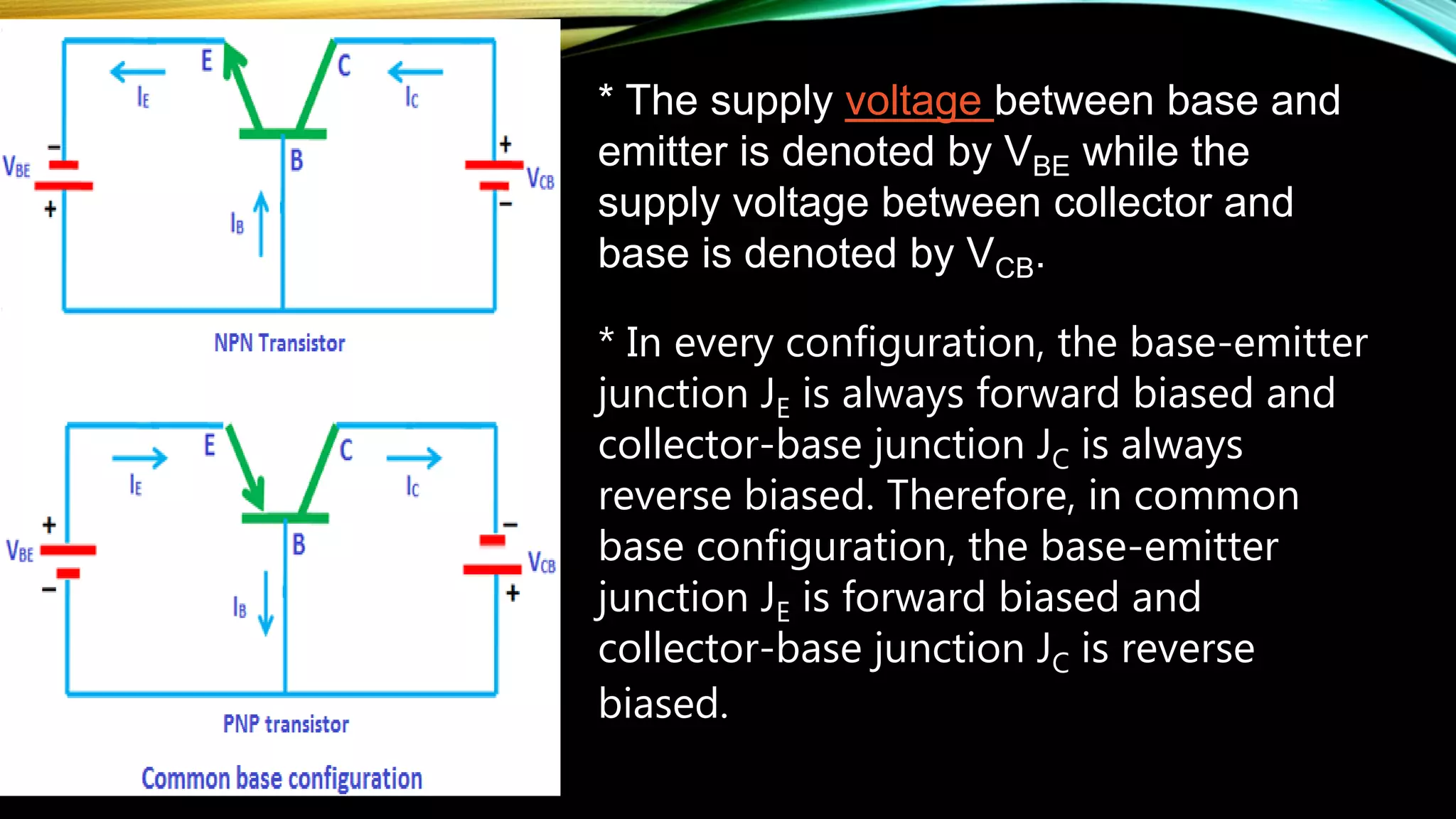
* The supply voltage between base and
emitter is denoted by VBE while the
supply voltage between collector and
base is denoted by VCB.
* In every configuration, the base-emitter
junction JE is always forward biased and
collector-base junction JC is always
reverse biased. Therefore, in common
base configuration, the base-emitter
junction JE is forward biased and
collector-base junction JC is reverse
biased.
CURRENT FLOW IN COMMON BASE AMPLIFIER
For the sake of understanding, let us consider NPN transistor in
common base configuration.
Due to the forward bias voltage VBE, the free
electrons (majority carriers) in the emitter region experience a
repulsive force from the negative terminal of the battery
similarly holes (majority carriers) in the base region experience a
repulsive force from the positive terminal of the battery.
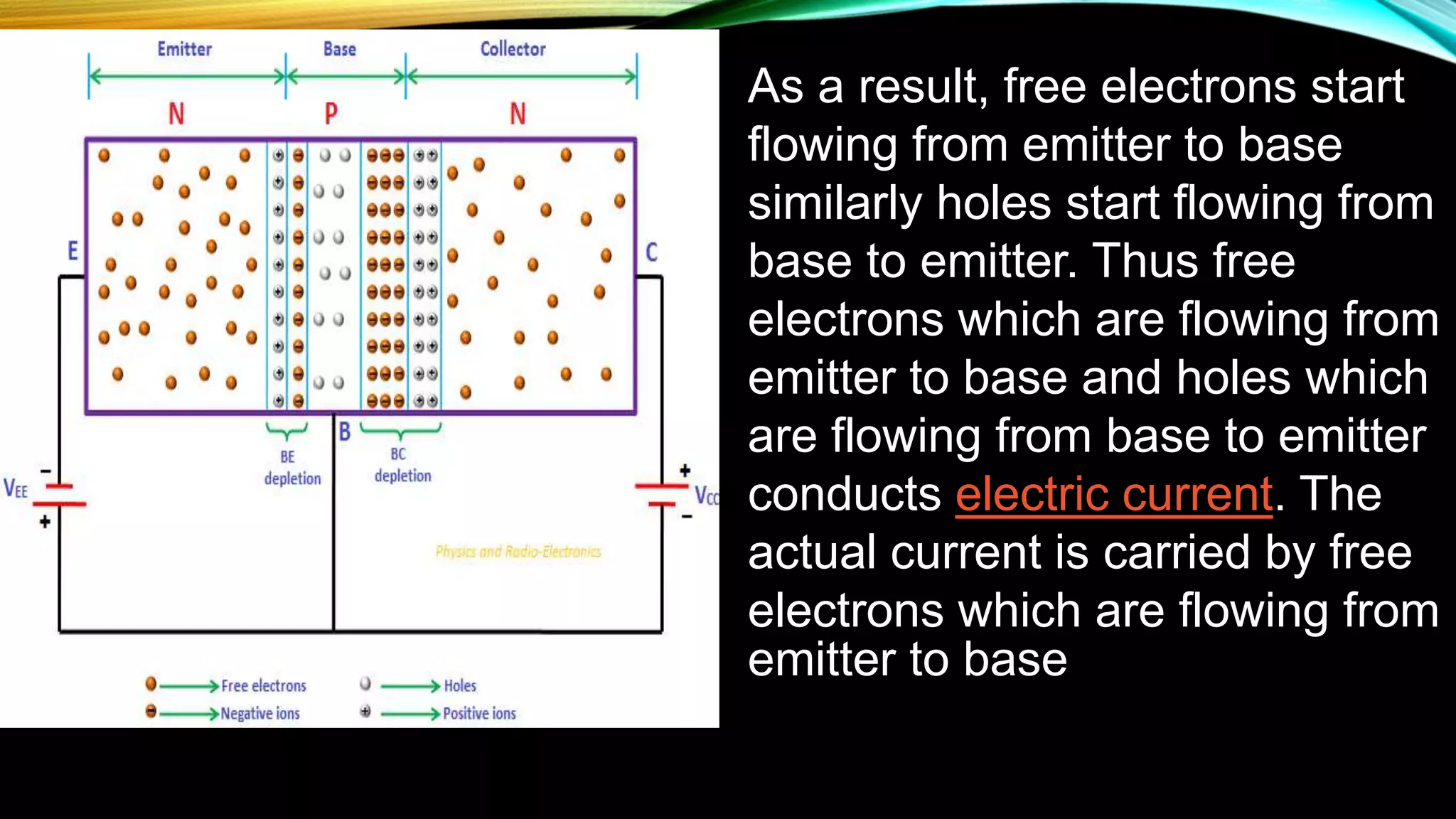
As a result, free electrons start
flowing from emitter to base
similarly holes start flowing from
base to emitter. Thus free
electrons which are flowing from
emitter to base and holes which
are flowing from base to emitter
conducts electric current. The
actual current is carried by free
electrons which are flowing from
emitter to base
INPUT CHARACTERISTICS
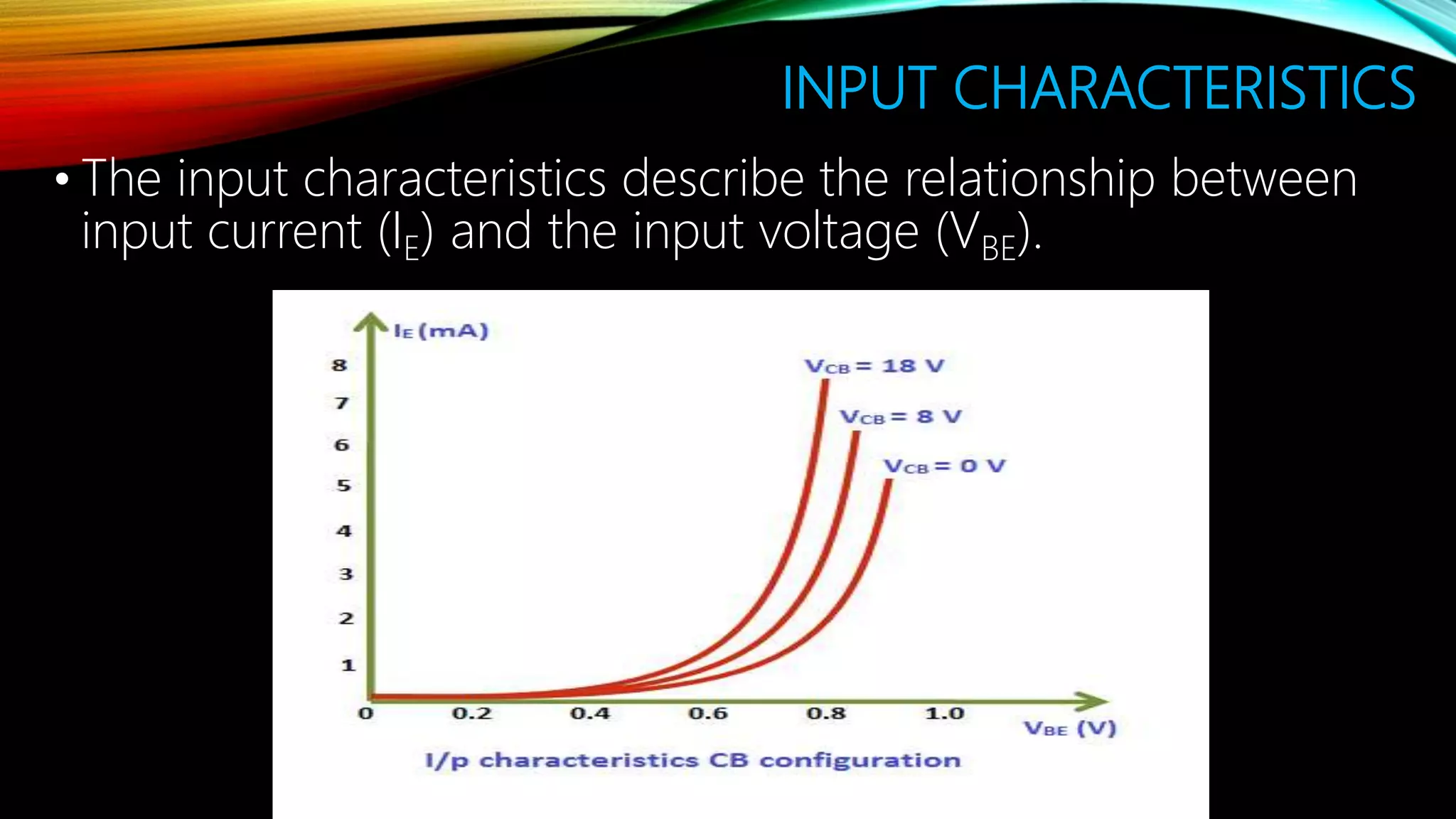
• The input characteristics describe the relationship between
input current (IE) and the input voltage (VBE).
OUTPUT CHARACTERISTICS
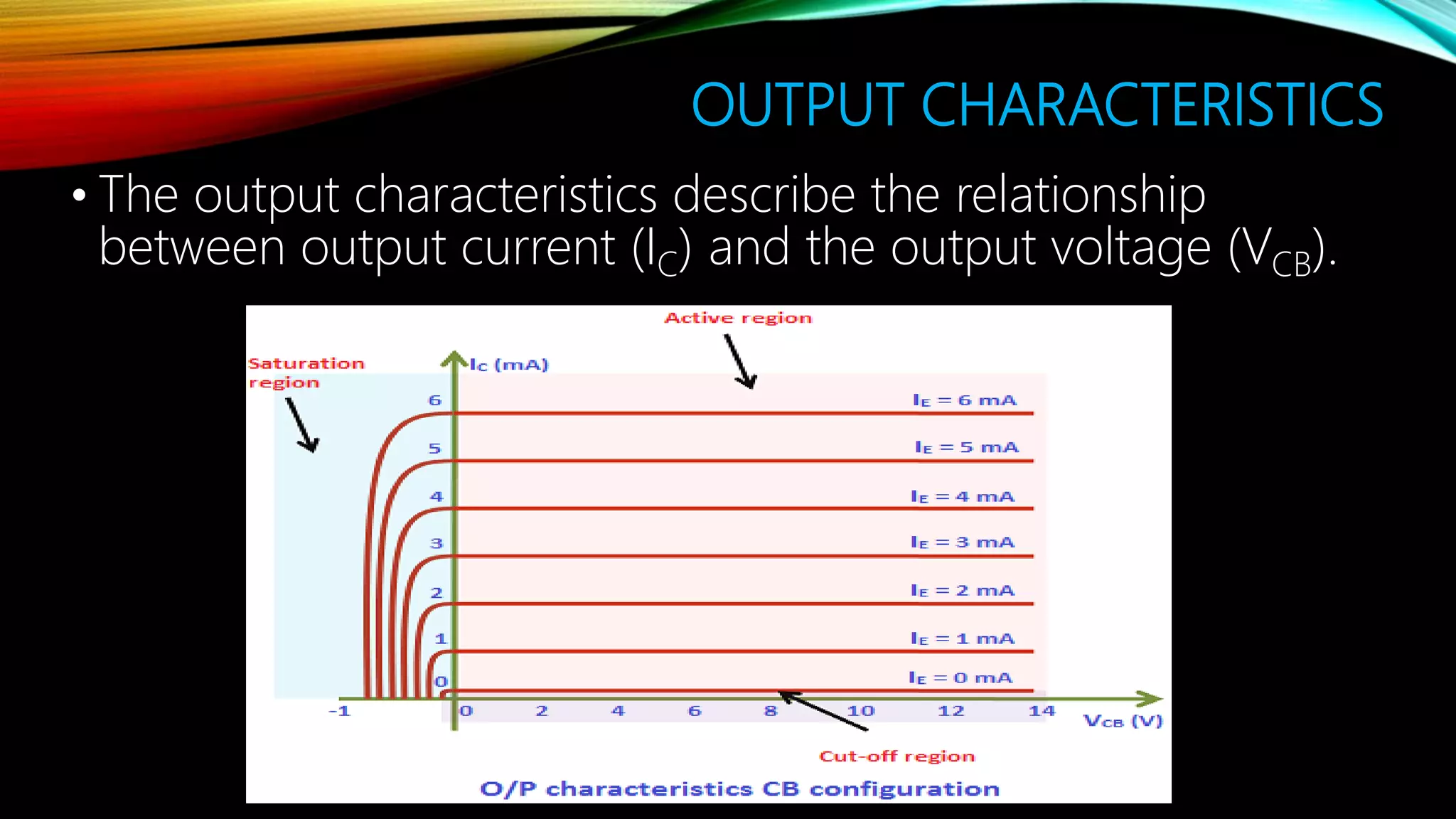
• The output characteristics describe the relationship
between output current (IC) and the output voltage (VCB).
THANK YOU

Common Base Bonfiguration

  • 1.
  • 3.
    What is CommonBase Configuration ? * In common base configuration, emitter is the input terminal, collector is the output terminal and base terminal is connected as a common terminal for both input and output. That means the emitter terminal and common base terminal are known as input terminals whereas the collector terminal and common base terminal are as output terminals. The input signal is applied between the emitter and base terminals while the corresponding output signal is taken across the collector and base terminals. Thus the base terminal of a transistor is common for both input and output terminals and hence it is named as base configuration.
  • 4.
    • In commonbase configuration, the base terminal is grounded so the common base configuration is also known as grounded base configuration. Sometimes common base configuration is referred to as common base amplifier, CB amplifier, or CB configuration.
  • 5.
    * The supplyvoltage between base and emitter is denoted by VBE while the supply voltage between collector and base is denoted by VCB. * In every configuration, the base-emitter junction JE is always forward biased and collector-base junction JC is always reverse biased. Therefore, in common base configuration, the base-emitter junction JE is forward biased and collector-base junction JC is reverse biased.
  • 6.
    CURRENT FLOW INCOMMON BASE AMPLIFIER For the sake of understanding, let us consider NPN transistor in common base configuration. Due to the forward bias voltage VBE, the free electrons (majority carriers) in the emitter region experience a repulsive force from the negative terminal of the battery similarly holes (majority carriers) in the base region experience a repulsive force from the positive terminal of the battery.
  • 7.
    As a result,free electrons start flowing from emitter to base similarly holes start flowing from base to emitter. Thus free electrons which are flowing from emitter to base and holes which are flowing from base to emitter conducts electric current. The actual current is carried by free electrons which are flowing from emitter to base
  • 8.
    INPUT CHARACTERISTICS • Theinput characteristics describe the relationship between input current (IE) and the input voltage (VBE).
  • 9.
    OUTPUT CHARACTERISTICS • Theoutput characteristics describe the relationship between output current (IC) and the output voltage (VCB).
  • 10.