R.M.K COLLEGE OF ENGINEERING AND
TECHNOLOGY
DEPARTMENT OF ECE
EC8252-ELECTRONIC DEVICES
SECOND SEMESTER-I YEAR- (2020-2024 BATCH)
UNIT 2
Mrs.P.Sivalakshmi AP/ECE
SESSION:12
DATE: 4.05.2021
BJT configurations
GAIN CONFIG
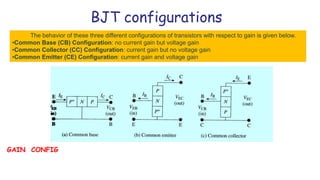
The behavior of these three different configurations of transistors with respect to gain is given below.
•Common Base (CB) Configuration: no current gain but voltage gain
•Common Collector (CC) Configuration: current gain but no voltage gain
•Common Emitter (CE) Configuration: current gain and voltage gain
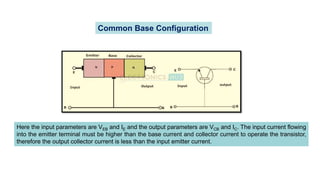
Here the input parameters are VEB and IE and the output parameters are VCB and IC. The input current flowing
into the emitter terminal must be higher than the base current and collector current to operate the transistor,
therefore the output collector current is less than the input emitter current.
Common Base Configuration
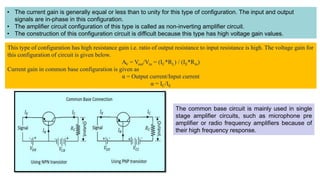
• The current gain is generally equal or less than to unity for this type of configuration. The input and output
signals are in-phase in this configuration.
• The amplifier circuit configuration of this type is called as non-inverting amplifier circuit.
• The construction of this configuration circuit is difficult because this type has high voltage gain values.
This type of configuration has high resistance gain i.e. ratio of output resistance to input resistance is high. The voltage gain for
this configuration of circuit is given below.
AV = Vout/Vin = (IC*RL) / (IE*Rin)
Current gain in common base configuration is given as
α = Output current/Input current
α = IC/IE
The common base circuit is mainly used in single
stage amplifier circuits, such as microphone pre
amplifier or radio frequency amplifiers because of
their high frequency response.
Input Characteristics
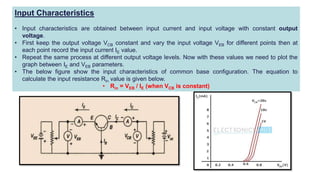
• Input characteristics are obtained between input current and input voltage with constant output
voltage.
• First keep the output voltage VCB constant and vary the input voltage VEB for different points then at
each point record the input current IE value.
• Repeat the same process at different output voltage levels. Now with these values we need to plot the
graph between IE and VEB parameters.
• The below figure show the input characteristics of common base configuration. The equation to
calculate the input resistance Rin value is given below.
• Rin = VEB / IE (when VCB is constant)
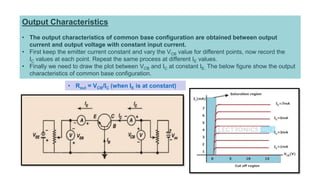
Output Characteristics
• The output characteristics of common base configuration are obtained between output
current and output voltage with constant input current.
• First keep the emitter current constant and vary the VCB value for different points, now record the
IC values at each point. Repeat the same process at different IE values.
• Finally we need to draw the plot between VCB and IC at constant IE. The below figure show the output
characteristics of common base configuration.
• Rout = VCB/IC (when IE is at constant)
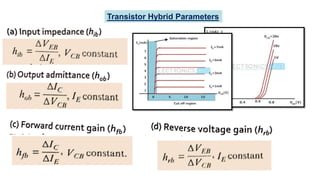
Transistor Hybrid Parameters
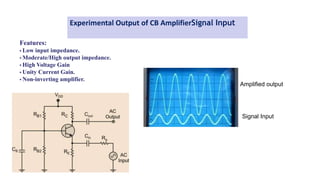
Experimental Output of CB AmplifierSignal Input
Signal Input
Amplified output
Features:
• Low input impedance.
• Moderate/High output impedance.
• High Voltage Gain
• Unity Current Gain.
• Non-inverting amplifier.
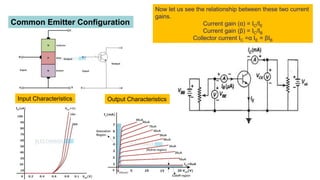
Common Emitter Configuration
Now let us see the relationship between these two current
gains.
Current gain (α) = IC/IE
Current gain (β) = IC/IB
Collector current IC =α IE = βIB
Input Characteristics Output Characteristics
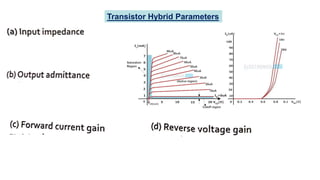
Transistor Hybrid Parameters
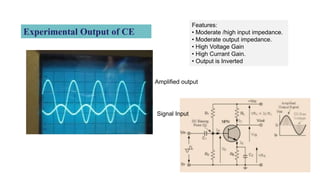
Experimental Output of CE
Amplified output
Features:
• Moderate /high input impedance.
• Moderate output impedance.
• High Voltage Gain
• High Currant Gain.
• Output is Inverted
Signal Input
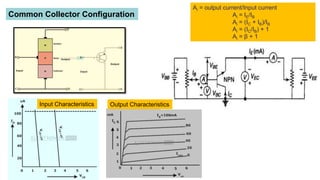
Common Collector Configuration
Ai = output current/Input current
Ai = IE/IB
Ai = (IC + IB)/IB
Ai = (IC/IB) + 1
Ai = β + 1
Input Characteristics Output Characteristics
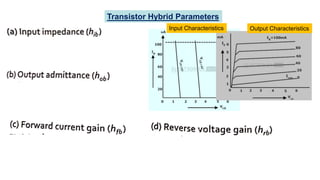
Transistor Hybrid Parameters
Input Characteristics Output Characteristics
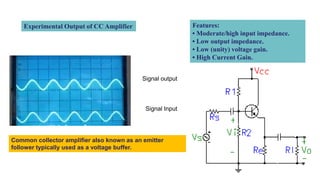
Experimental Output of CC Amplifier
Signal Input
Signal output
Features:
• Moderate/high input impedance.
• Low output impedance.
• Low (unity) voltage gain.
• High Current Gain.
Common collector amplifier also known as an emitter
follower typically used as a voltage buffer.

Bjt session 2

Bjt session 2

  • 3.
    R.M.K COLLEGE OFENGINEERING AND TECHNOLOGY DEPARTMENT OF ECE EC8252-ELECTRONIC DEVICES SECOND SEMESTER-I YEAR- (2020-2024 BATCH) UNIT 2 Mrs.P.Sivalakshmi AP/ECE SESSION:12 DATE: 4.05.2021
  • 4.
    BJT configurations GAIN CONFIG Thebehavior of these three different configurations of transistors with respect to gain is given below. •Common Base (CB) Configuration: no current gain but voltage gain •Common Collector (CC) Configuration: current gain but no voltage gain •Common Emitter (CE) Configuration: current gain and voltage gain
  • 5.
    Here the inputparameters are VEB and IE and the output parameters are VCB and IC. The input current flowing into the emitter terminal must be higher than the base current and collector current to operate the transistor, therefore the output collector current is less than the input emitter current. Common Base Configuration
  • 6.
    • The currentgain is generally equal or less than to unity for this type of configuration. The input and output signals are in-phase in this configuration. • The amplifier circuit configuration of this type is called as non-inverting amplifier circuit. • The construction of this configuration circuit is difficult because this type has high voltage gain values. This type of configuration has high resistance gain i.e. ratio of output resistance to input resistance is high. The voltage gain for this configuration of circuit is given below. AV = Vout/Vin = (IC*RL) / (IE*Rin) Current gain in common base configuration is given as α = Output current/Input current α = IC/IE The common base circuit is mainly used in single stage amplifier circuits, such as microphone pre amplifier or radio frequency amplifiers because of their high frequency response.
  • 7.
    Input Characteristics • Inputcharacteristics are obtained between input current and input voltage with constant output voltage. • First keep the output voltage VCB constant and vary the input voltage VEB for different points then at each point record the input current IE value. • Repeat the same process at different output voltage levels. Now with these values we need to plot the graph between IE and VEB parameters. • The below figure show the input characteristics of common base configuration. The equation to calculate the input resistance Rin value is given below. • Rin = VEB / IE (when VCB is constant)
  • 8.
    Output Characteristics • Theoutput characteristics of common base configuration are obtained between output current and output voltage with constant input current. • First keep the emitter current constant and vary the VCB value for different points, now record the IC values at each point. Repeat the same process at different IE values. • Finally we need to draw the plot between VCB and IC at constant IE. The below figure show the output characteristics of common base configuration. • Rout = VCB/IC (when IE is at constant)
  • 9.
  • 11.
    Experimental Output ofCB AmplifierSignal Input Signal Input Amplified output Features: • Low input impedance. • Moderate/High output impedance. • High Voltage Gain • Unity Current Gain. • Non-inverting amplifier.
  • 12.
    Common Emitter Configuration Nowlet us see the relationship between these two current gains. Current gain (α) = IC/IE Current gain (β) = IC/IB Collector current IC =α IE = βIB Input Characteristics Output Characteristics
  • 13.
  • 14.
    Experimental Output ofCE Amplified output Features: • Moderate /high input impedance. • Moderate output impedance. • High Voltage Gain • High Currant Gain. • Output is Inverted Signal Input
  • 15.
    Common Collector Configuration Ai= output current/Input current Ai = IE/IB Ai = (IC + IB)/IB Ai = (IC/IB) + 1 Ai = β + 1 Input Characteristics Output Characteristics
  • 16.
    Transistor Hybrid Parameters InputCharacteristics Output Characteristics
  • 17.
    Experimental Output ofCC Amplifier Signal Input Signal output Features: • Moderate/high input impedance. • Low output impedance. • Low (unity) voltage gain. • High Current Gain. Common collector amplifier also known as an emitter follower typically used as a voltage buffer.