OPEN EDUCATIONAL PRACTICES
@thatpsychprof
Serving ACCESS, EQUITY,
& INNOVATION through
Special Advisor to the Provost on Open Education, Kwantlen Polytechnic University
Associate Editor, Psychology Learning and Teaching
Ambassador, Center for Open Science
Rajiv Jhangiani, Ph.D.
Increasingly, I think the work of education
is activism not teaching
Jesse Stommel, July 30, 2017, Digital Pedagogy Lab Vancouver
My commitment to engaged pedagogy
is an expression of political activism
bell hooks, 1994, Teaching to Transgress: Education as the Practice of Freedom
Emergency services key box by Dennis van Zuijlekom, CC-BY-SA 2.0
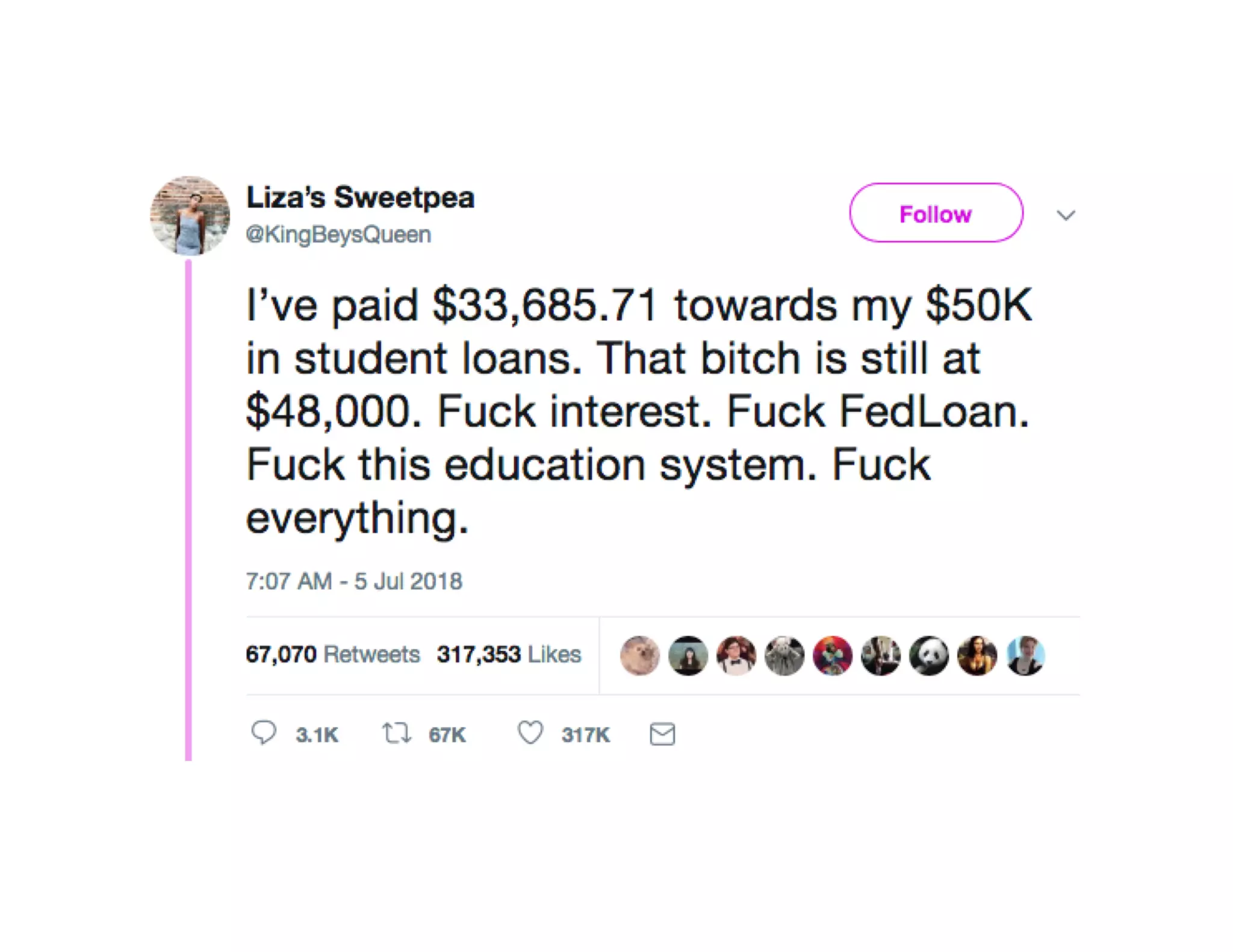
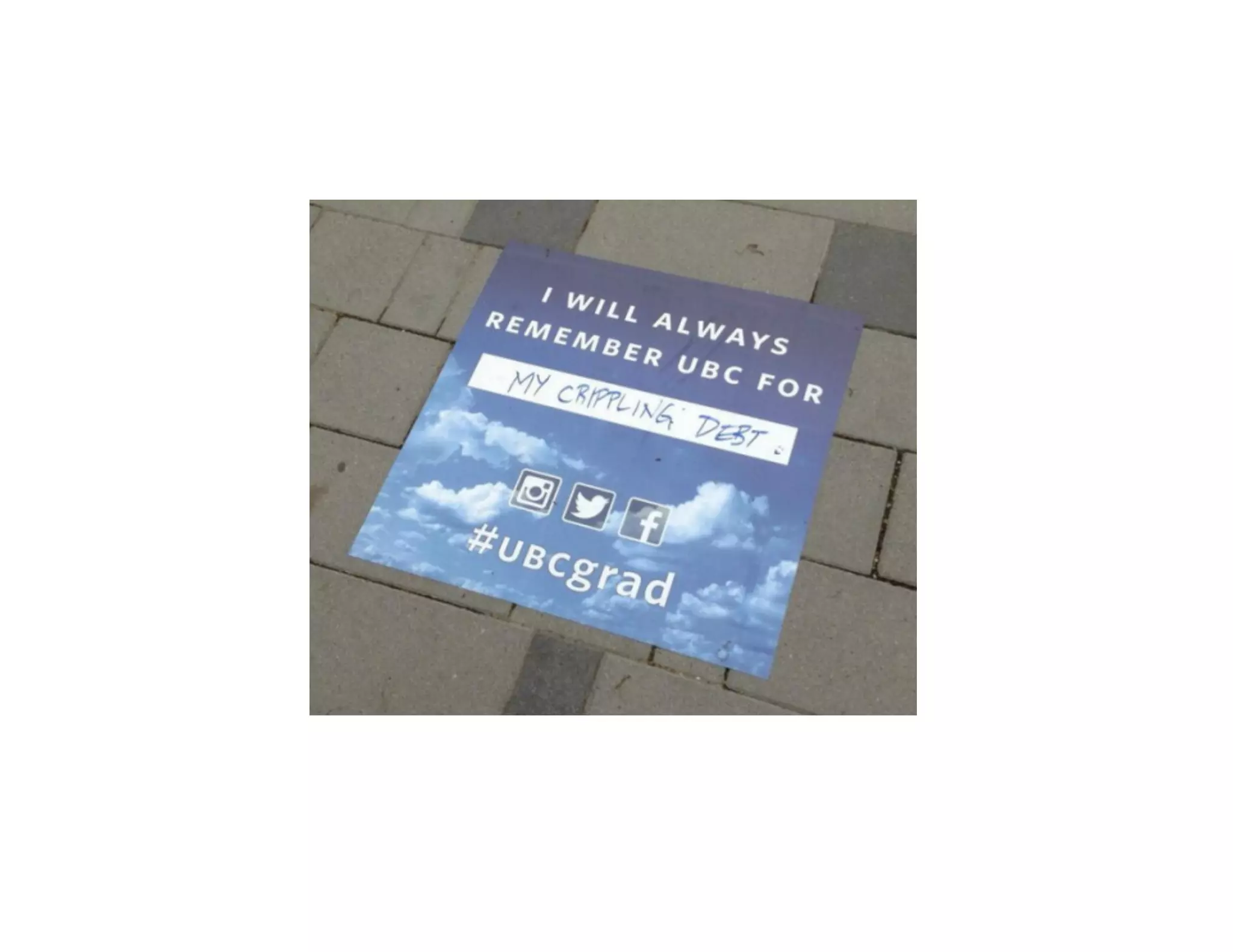
Higher education
replicates and reinforces
existing power structures
The Advisory Committee on Student Financial Assistance http://files.eric.ed.gov/fulltext/ED529499.pdf
The cost barrier kept
2.4 million
low and moderate-income college-qualified
high school graduates from completing
college in the previous decade
http://www.sheeo.org
$1,000
$2,000
$3,000
$4,000
$5,000
$6,000
$7,000
$8,000
$9,000
$10,000
$11,000
$12,000
1992 1994 1996 1998 2000 2002 2004 2006 2008 2010 2012 2014 2016
US Higher Education Funding - $/FTE
State Funding Tuition Revenue
http://www.sheeo.org
$1,000
$2,000
$3,000
$4,000
$5,000
$6,000
$7,000
$8,000
$9,000
$10,000
$11,000
$12,000
1992 1994 1996 1998 2000 2002 2004 2006 2008 2010 2012 2014 2016
Colorado Higher Education Funding - $/FTE
State Funding Tuition Revenue
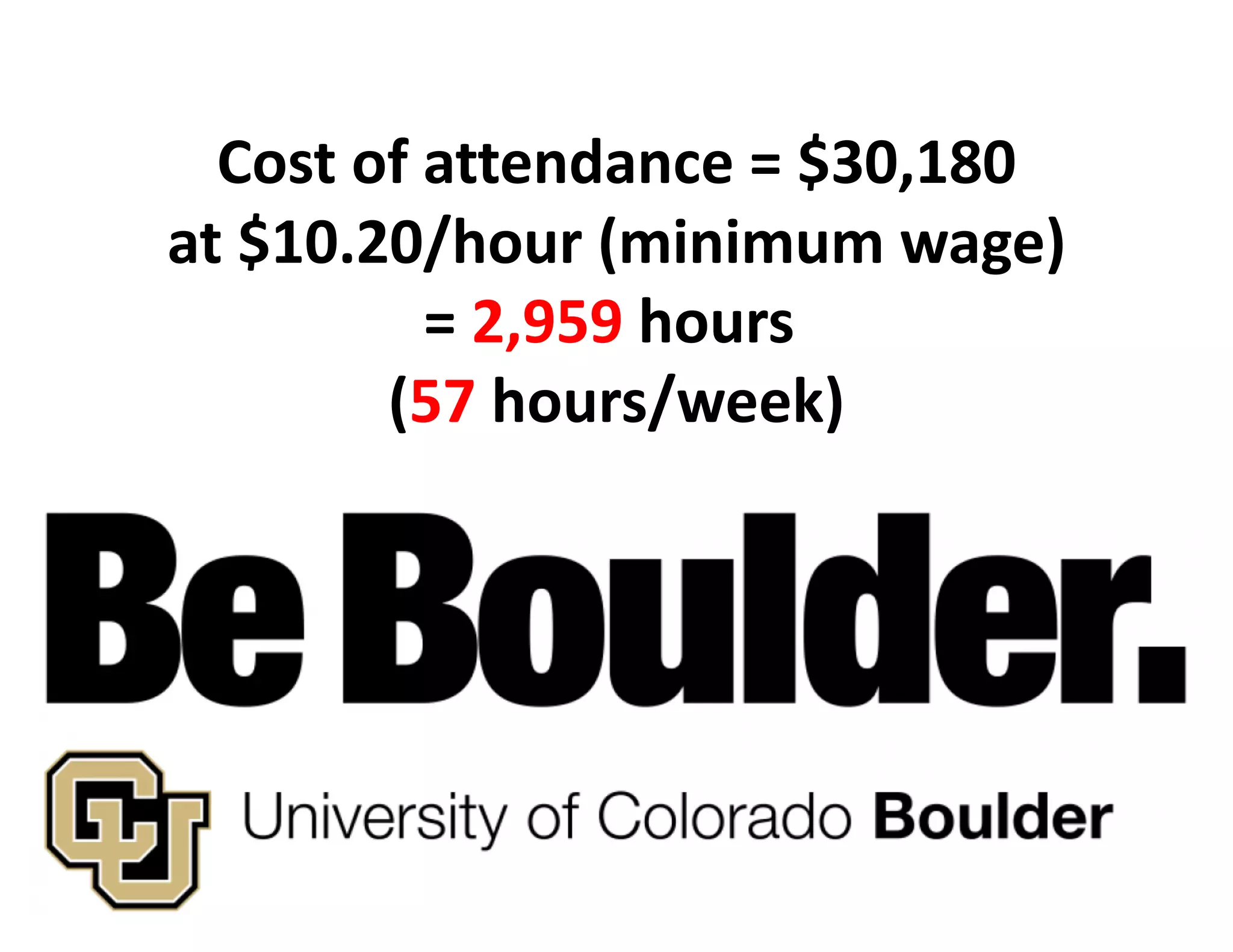
Cost of attendance = $30,180
at $10.20/hour (minimum wage)
= 2,959 hours
(57 hours/week)
http://ticas.org/posd/map-state-data
Untitled image by Aleksi Tappura, CC0
Turn Towards Open to Overcome the Control Valve by Alan Levine, CC0
66.5% Do not purchase a req'd textbook
47.6% Take fewer courses
45.5% Do not register for a specific course
37.6% Earn a poor grade
26.1% Drop a course
19.8% Fail a course
€€€
€€€
€€
€€
€
€
Florida Virtual Campus. (2016). 2016 student textbook and course materials survey. Tallahassee, FL: Author.
– University of Minnesota student
“I figured French hadn't
changed that much”
1
“Inclusive Access”
rijksmuseum.nl
ted.com
ed.ted.com
phet.colorado.edu
LearnChemE.com
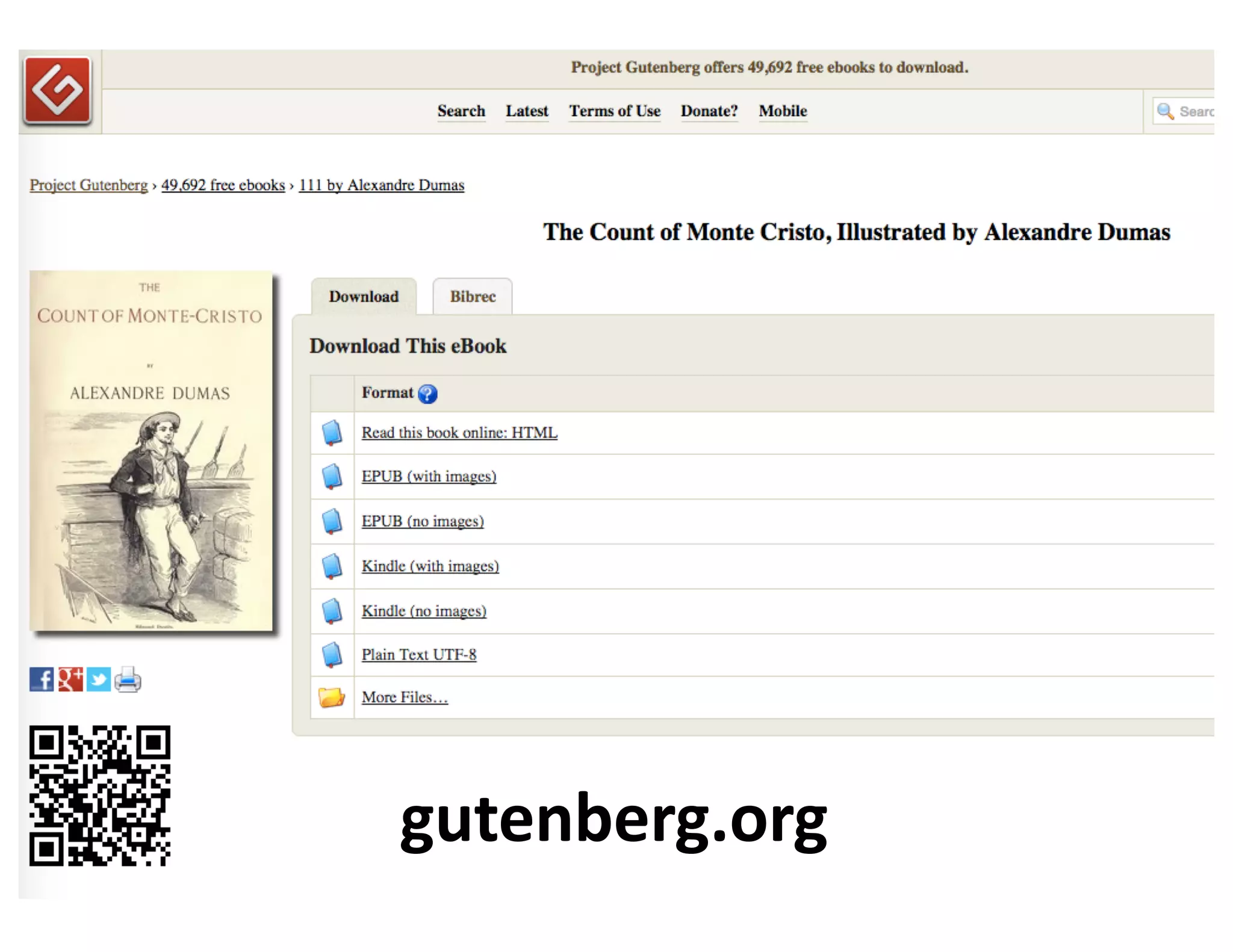
gutenberg.org
open.umn.edu/opentextbooks
I would not have bought the text book for
this course because it's an elective. I
would have possibly walked away with a
C, now I might actually get an A-
It is easily accessible and convenient.
Material is easy to understand and follow
I personally really like the convenience of having the
complete set of chapters on my computer and even
accessible from my phone if I need it. I like that I don't
have to lug around another text book
It's free and it's a great money saver
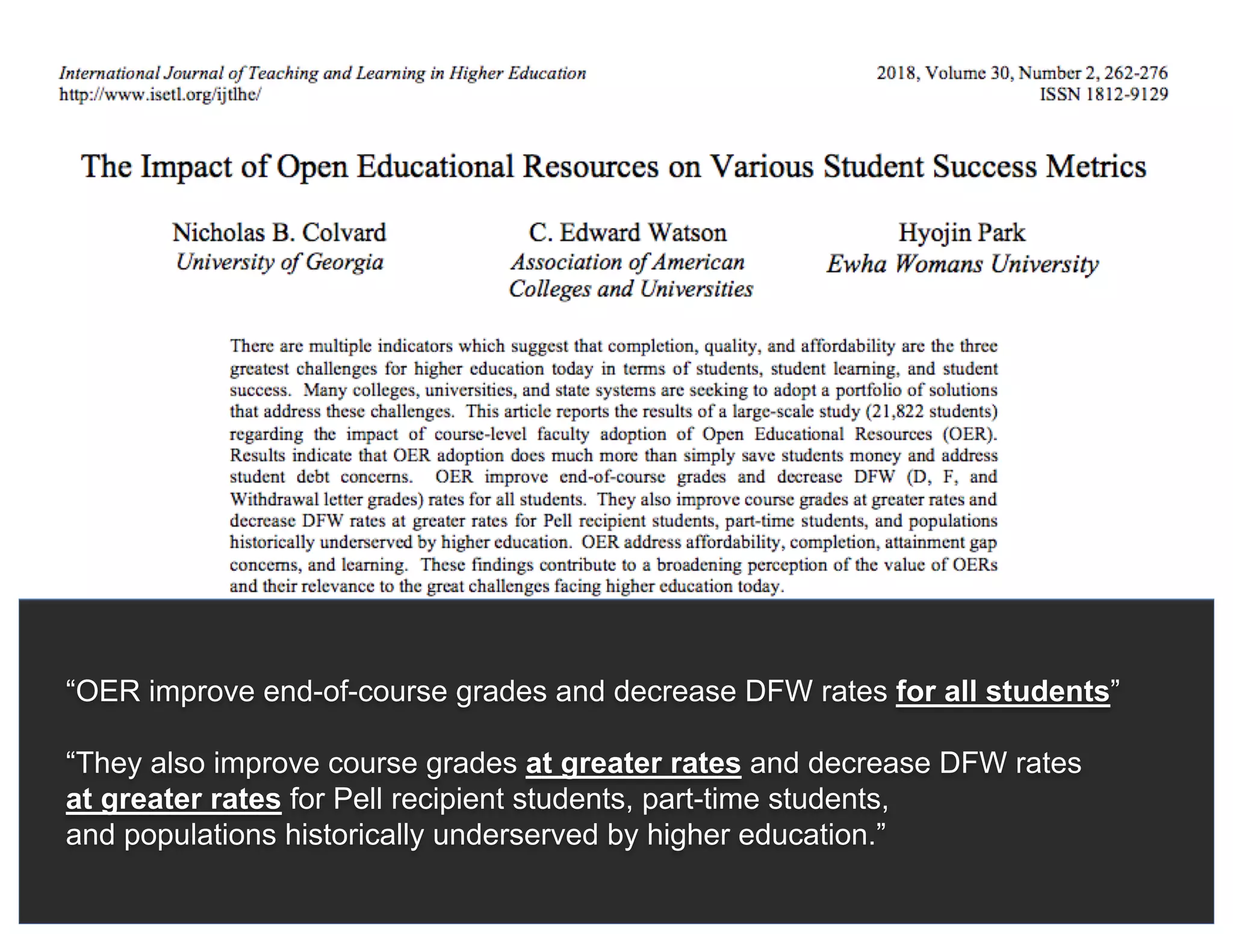
“OER improve end-of-course grades and decrease DFW rates for all students”
“They also improve course grades at greater rates and decrease DFW rates
at greater rates for Pell recipient students, part-time students,
and populations historically underserved by higher education.”
Adaptation of Remixable Thinkery by @visualthinkery is licenced under CC-BY-SA
It’s not only about
equitable access
to knowledge.
It’s about
equitable access
to knowledge
creation.
Photo by Beatriz Pérez Moya on Unsplash
"France in 2000 year (XXI century). Future school." by Jean Marc Cote is in the Public Domain
…it turns them into ‘containers’ to be ‘filled’ by the teacher. The more
completely she fills the receptacles, the better a teacher she is. The more
meekly the receptacles permit themselves to be filled, the better students
they are.
Education thus becomes the act of depositing, in which the students are
the depositories and the teacher is the depositor.
In the banking concept of education, knowledge is a gift bestowed by
those who consider themselves knowledgeable upon those whom they
consider to know nothing.
Paulo Freire, 1970, Pedagogy of the Oppressed
Photo by john foust on Unsplash
Photo by Curtis MacNewton on Unsplash
The Open Web by @bryanMMathers is licenced under CC-BY-ND
"Recycling Water Bottles" by Mr.TinDC is licensed under CC BY-ND 2.0
Screenshot of http://www.capetowndeclaration.org/cpt10/open-pedagogy.html
Critical pedagogy asserts that students can
engage their own learning from a position of
agency . . .
[It] takes seriously the educational imperative
to encourage students to act on the
knowledge, values, and social relations they
acquire by being responsive to the deepest
and most important problems of our times.
Henry Giroux, On Critical Pedagogy
Photo by Aashish R Gautam on Unsplash
PM4ID
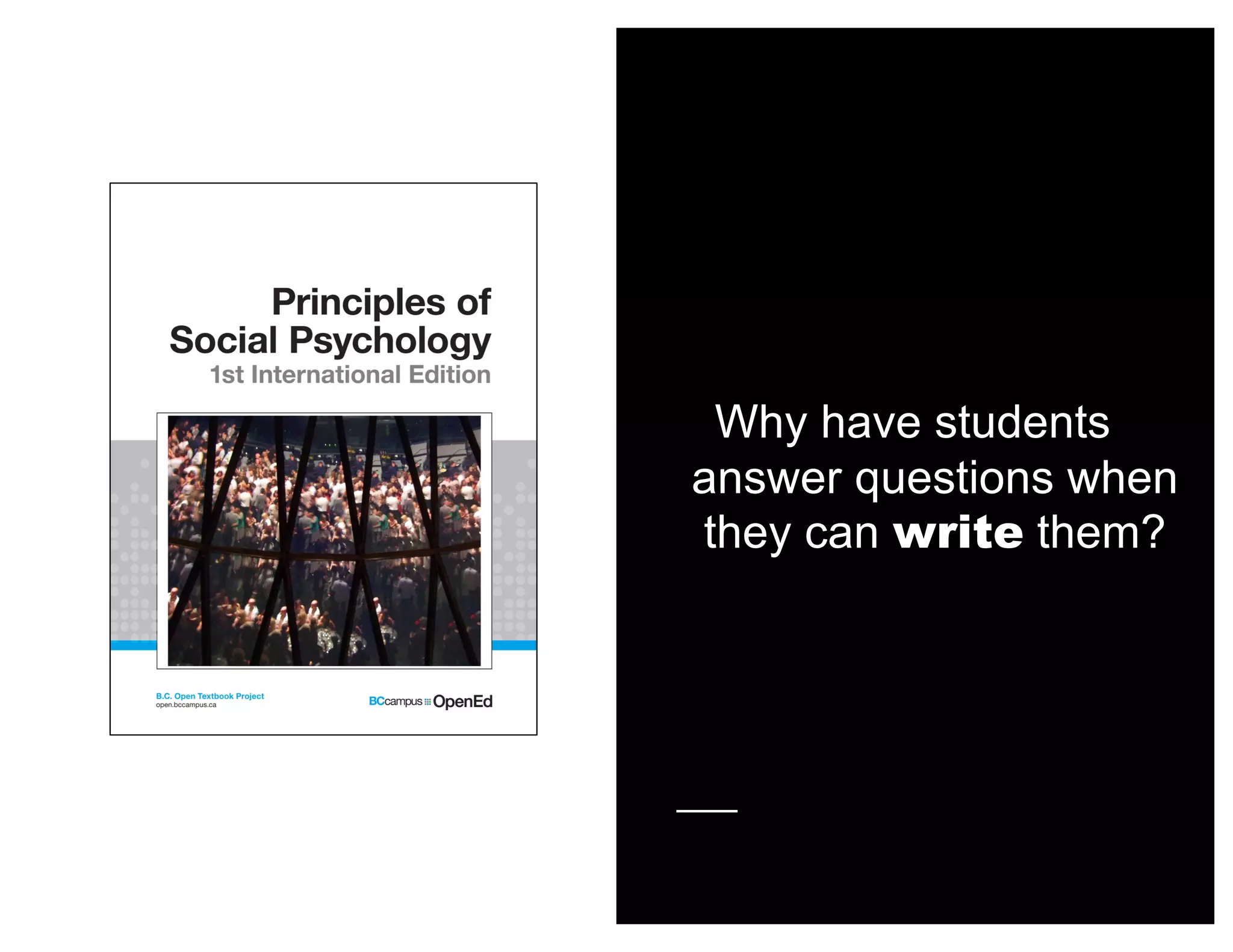
Why have students
answer questions when
they can write them?
OpenPedagogy.org
"Open Textbook Summit 2015” by BCcampus_News is licensed under CC BY-SA 2.0
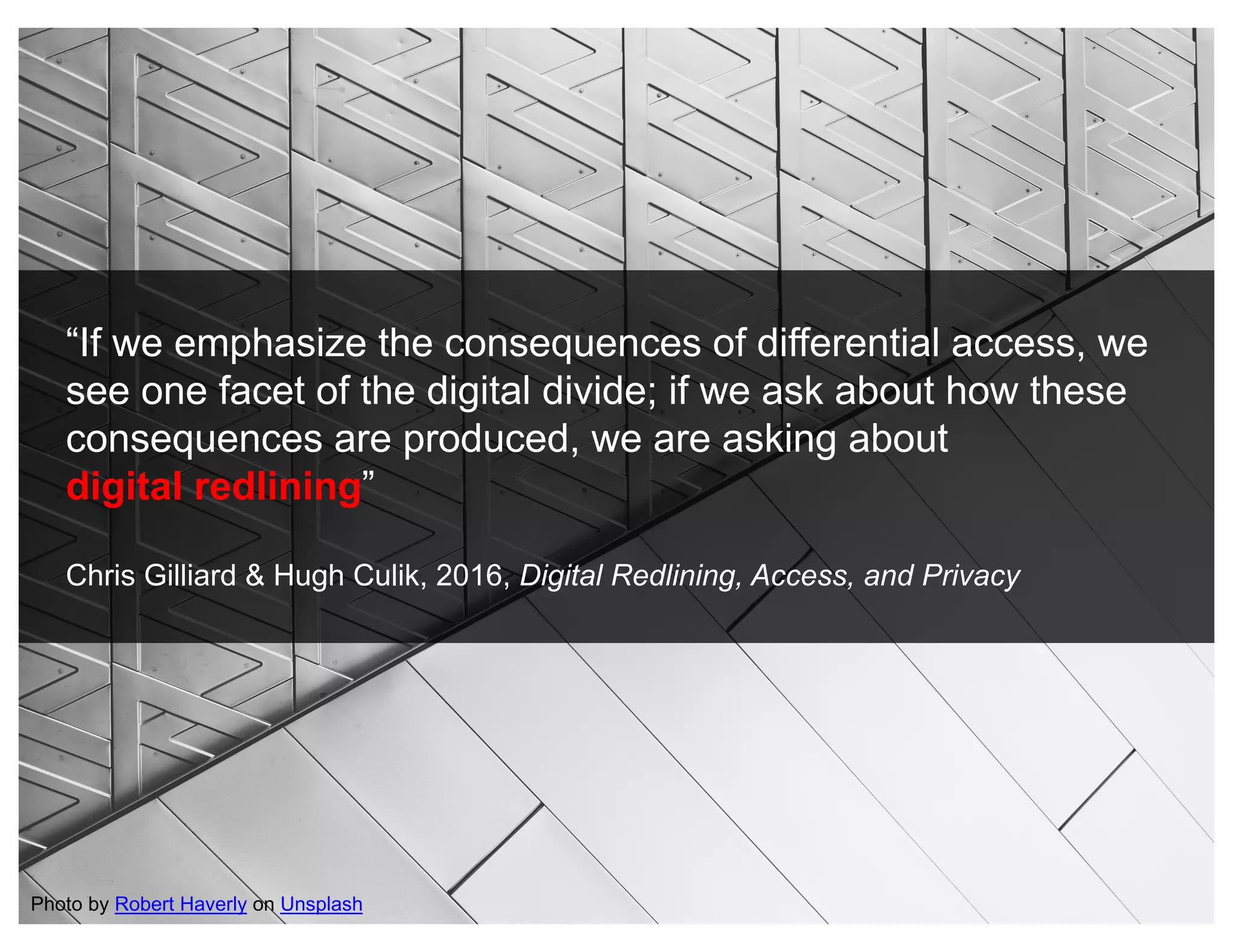
“If we emphasize the consequences of differential access, we
see one facet of the digital divide; if we ask about how these
consequences are produced, we are asking about
digital redlining”
Chris Gilliard & Hugh Culik, 2016, Digital Redlining, Access, and Privacy
Photo by Robert Haverly on Unsplash
Photo by Markus Spiske on Unsplash
There is no such thing as harmless collection of data.
Or benevolent collection of data. Much of what we collect
could be used in ways we do not want it to be used, to harm
or imperil our students.
This disproportionately affects our most vulnerable students.
Low-income students, students of color, LGTBQ+ students,
students who are immigrants…their data are most at risk to
surveillance, discrimination. And many of our vulnerable
students are less likely to have experience with digital literacy
skills.
Amy Collier, 2017, Platforms in Education: A Need for Criticality and Hope
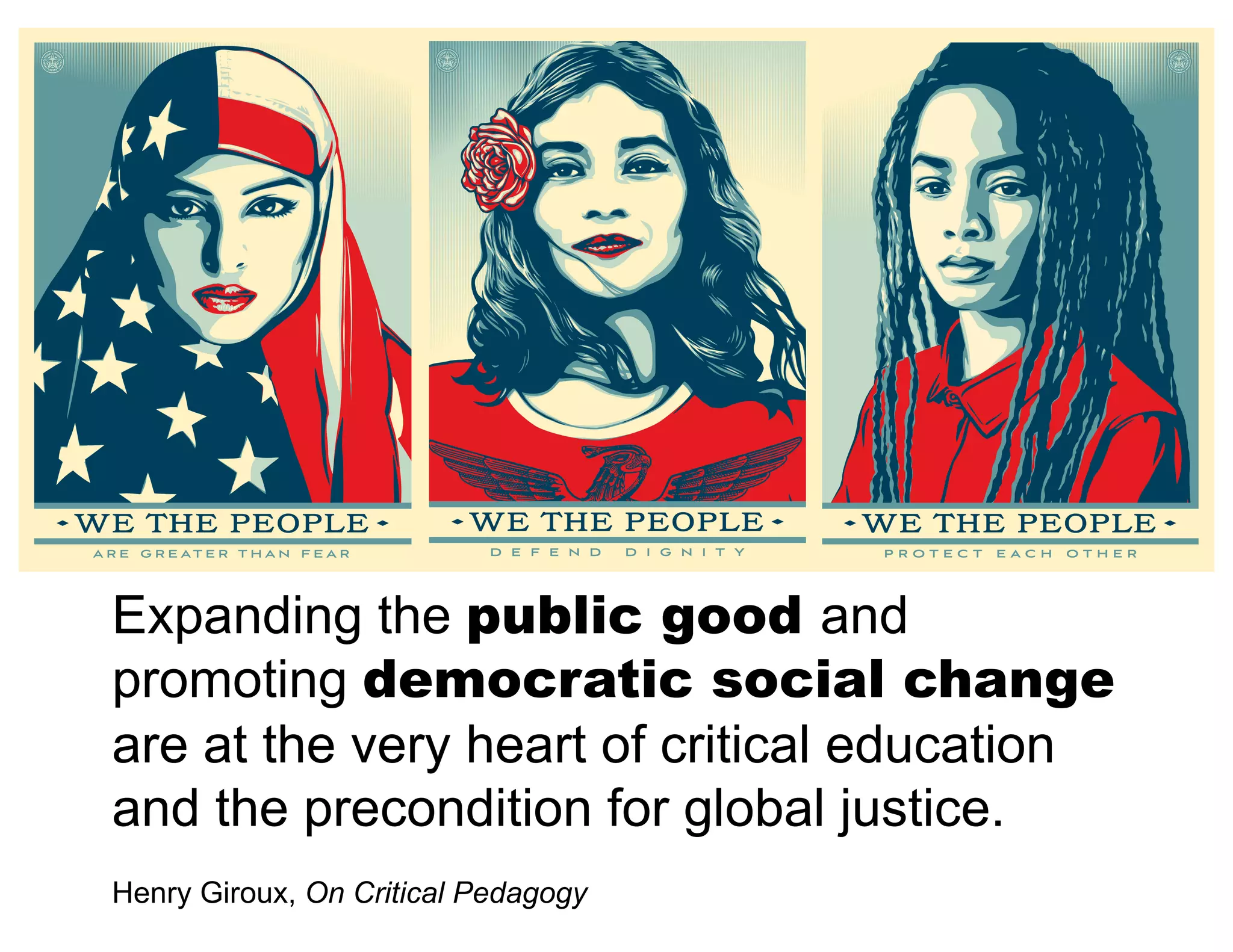
Expanding the public good and
promoting democratic social change
are at the very heart of critical education
and the precondition for global justice.
Henry Giroux, On Critical Pedagogy
"Robben Island" by Rajiv is licensed under CC B
Photo by Lina Trochez on Unsplash
rajiv@kpu.ca
@thatpsychprof
slideshare.net/thatpsychprof

COLTT 2018

  • 1.
    OPEN EDUCATIONAL PRACTICES @thatpsychprof ServingACCESS, EQUITY, & INNOVATION through Special Advisor to the Provost on Open Education, Kwantlen Polytechnic University Associate Editor, Psychology Learning and Teaching Ambassador, Center for Open Science Rajiv Jhangiani, Ph.D.
  • 2.
    Increasingly, I thinkthe work of education is activism not teaching Jesse Stommel, July 30, 2017, Digital Pedagogy Lab Vancouver My commitment to engaged pedagogy is an expression of political activism bell hooks, 1994, Teaching to Transgress: Education as the Practice of Freedom
  • 3.
    Emergency services keybox by Dennis van Zuijlekom, CC-BY-SA 2.0
  • 4.
    Higher education replicates andreinforces existing power structures
  • 6.
    The Advisory Committeeon Student Financial Assistance http://files.eric.ed.gov/fulltext/ED529499.pdf The cost barrier kept 2.4 million low and moderate-income college-qualified high school graduates from completing college in the previous decade
  • 7.
    http://www.sheeo.org $1,000 $2,000 $3,000 $4,000 $5,000 $6,000 $7,000 $8,000 $9,000 $10,000 $11,000 $12,000 1992 1994 19961998 2000 2002 2004 2006 2008 2010 2012 2014 2016 US Higher Education Funding - $/FTE State Funding Tuition Revenue
  • 8.
    http://www.sheeo.org $1,000 $2,000 $3,000 $4,000 $5,000 $6,000 $7,000 $8,000 $9,000 $10,000 $11,000 $12,000 1992 1994 19961998 2000 2002 2004 2006 2008 2010 2012 2014 2016 Colorado Higher Education Funding - $/FTE State Funding Tuition Revenue
  • 10.
    Cost of attendance= $30,180 at $10.20/hour (minimum wage) = 2,959 hours (57 hours/week)
  • 12.
  • 20.
    Untitled image byAleksi Tappura, CC0
  • 21.
    Turn Towards Opento Overcome the Control Valve by Alan Levine, CC0
  • 24.
    66.5% Do notpurchase a req'd textbook 47.6% Take fewer courses 45.5% Do not register for a specific course 37.6% Earn a poor grade 26.1% Drop a course 19.8% Fail a course €€€ €€€ €€ €€ € € Florida Virtual Campus. (2016). 2016 student textbook and course materials survey. Tallahassee, FL: Author.
  • 25.
    – University ofMinnesota student “I figured French hadn't changed that much”
  • 26.
  • 34.
  • 35.
  • 36.
  • 37.
  • 38.
  • 39.
  • 41.
    I would nothave bought the text book for this course because it's an elective. I would have possibly walked away with a C, now I might actually get an A- It is easily accessible and convenient. Material is easy to understand and follow I personally really like the convenience of having the complete set of chapters on my computer and even accessible from my phone if I need it. I like that I don't have to lug around another text book It's free and it's a great money saver
  • 42.
    “OER improve end-of-coursegrades and decrease DFW rates for all students” “They also improve course grades at greater rates and decrease DFW rates at greater rates for Pell recipient students, part-time students, and populations historically underserved by higher education.”
  • 43.
    Adaptation of RemixableThinkery by @visualthinkery is licenced under CC-BY-SA
  • 44.
    Adaptation of RemixableThinkery by @visualthinkery is licenced under CC-BY-SA
  • 45.
    It’s not onlyabout equitable access to knowledge. It’s about equitable access to knowledge creation. Photo by Beatriz Pérez Moya on Unsplash
  • 46.
    "France in 2000year (XXI century). Future school." by Jean Marc Cote is in the Public Domain
  • 47.
    …it turns theminto ‘containers’ to be ‘filled’ by the teacher. The more completely she fills the receptacles, the better a teacher she is. The more meekly the receptacles permit themselves to be filled, the better students they are. Education thus becomes the act of depositing, in which the students are the depositories and the teacher is the depositor. In the banking concept of education, knowledge is a gift bestowed by those who consider themselves knowledgeable upon those whom they consider to know nothing. Paulo Freire, 1970, Pedagogy of the Oppressed Photo by john foust on Unsplash
  • 48.
    Photo by CurtisMacNewton on Unsplash
  • 49.
    The Open Webby @bryanMMathers is licenced under CC-BY-ND
  • 50.
    "Recycling Water Bottles"by Mr.TinDC is licensed under CC BY-ND 2.0
  • 51.
  • 52.
    Critical pedagogy assertsthat students can engage their own learning from a position of agency . . . [It] takes seriously the educational imperative to encourage students to act on the knowledge, values, and social relations they acquire by being responsive to the deepest and most important problems of our times. Henry Giroux, On Critical Pedagogy Photo by Aashish R Gautam on Unsplash
  • 61.
  • 63.
    Why have students answerquestions when they can write them?
  • 66.
  • 67.
    "Open Textbook Summit2015” by BCcampus_News is licensed under CC BY-SA 2.0
  • 69.
    “If we emphasizethe consequences of differential access, we see one facet of the digital divide; if we ask about how these consequences are produced, we are asking about digital redlining” Chris Gilliard & Hugh Culik, 2016, Digital Redlining, Access, and Privacy Photo by Robert Haverly on Unsplash
  • 70.
    Photo by MarkusSpiske on Unsplash There is no such thing as harmless collection of data. Or benevolent collection of data. Much of what we collect could be used in ways we do not want it to be used, to harm or imperil our students. This disproportionately affects our most vulnerable students. Low-income students, students of color, LGTBQ+ students, students who are immigrants…their data are most at risk to surveillance, discrimination. And many of our vulnerable students are less likely to have experience with digital literacy skills. Amy Collier, 2017, Platforms in Education: A Need for Criticality and Hope
  • 72.
    Expanding the publicgood and promoting democratic social change are at the very heart of critical education and the precondition for global justice. Henry Giroux, On Critical Pedagogy
  • 73.
    "Robben Island" byRajiv is licensed under CC B
  • 74.
    Photo by LinaTrochez on Unsplash rajiv@kpu.ca @thatpsychprof slideshare.net/thatpsychprof