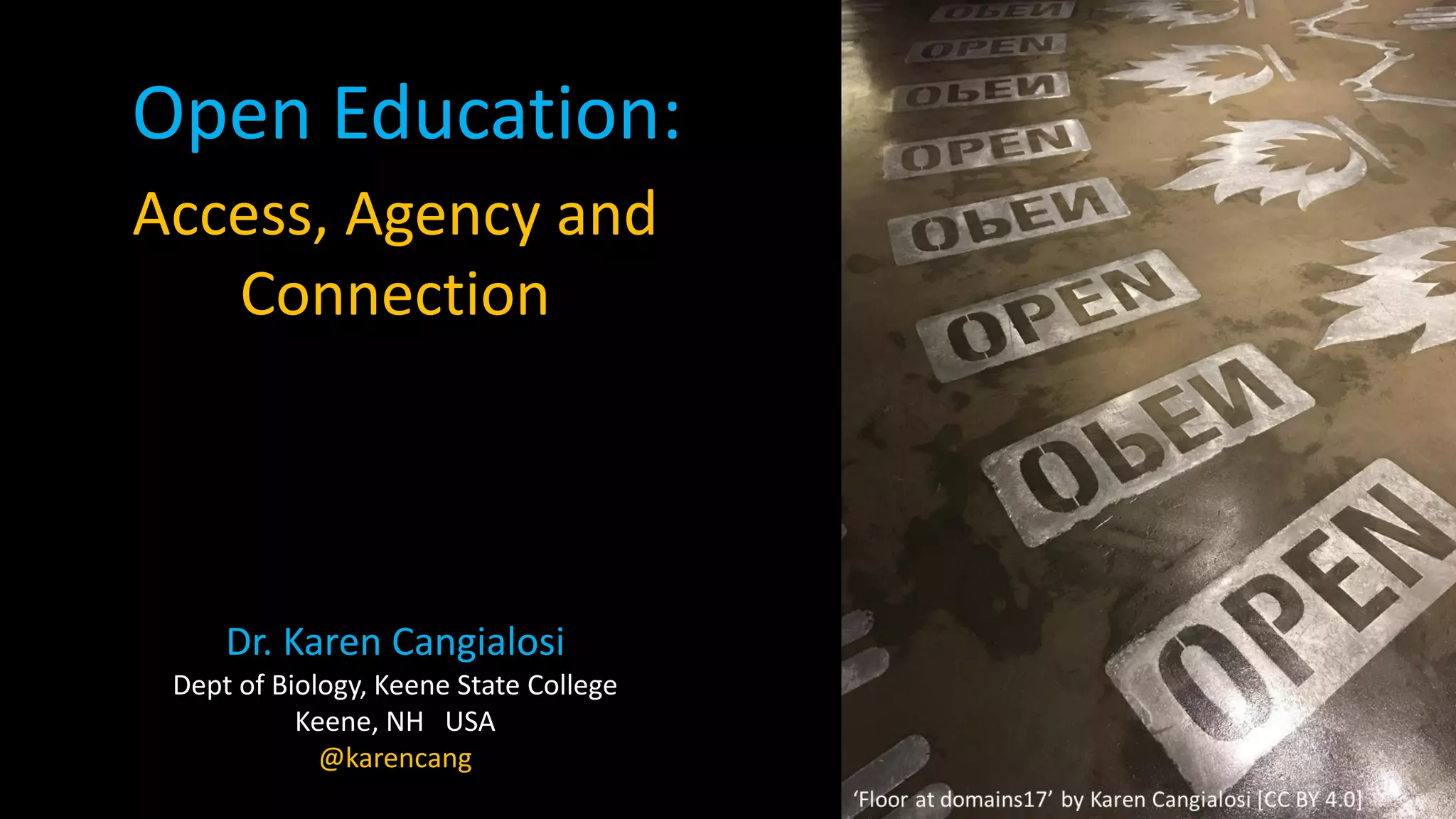
Open Education:
Access, Agency and
Connection
Dr. Karen Cangialosi
Dept of Biology, Keene State College
Keene, NH USA
@karencang
Study of 86,000 students at 123
two and four year institutions across
the U.S. April 2019
• Food Insecure: 45%
• Housing Insecure: 56%
• Homeless: 17%
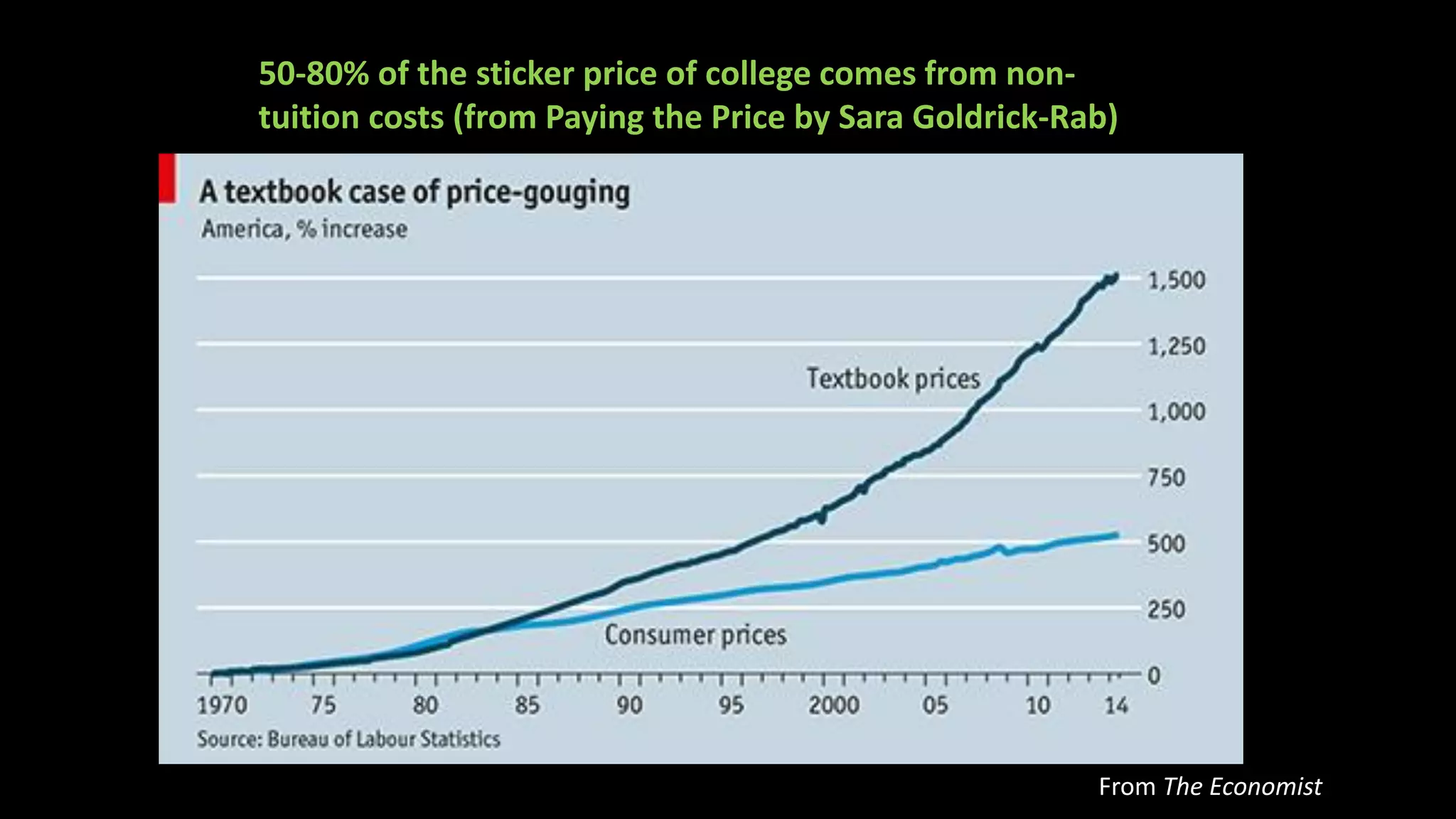
Image: The Economist
From The Economist
50-80% of the sticker price of college comes from non-
tuition costs (from Paying the Price by Sara Goldrick-Rab)
21,000 students in the study
Open Educational Resources by Ron Mader [CC BY 2.0]
• Free
(for students)
OER
Slide by Robin DeRosa [CC BY 4.0]
21,822
students in
this study
Synthesizes results from 36 studies
involving 121,168 students. Students
achieve the same or better learning
outcomes when using OER.
OpenStax.org
OER
LibreTexts.org
OER
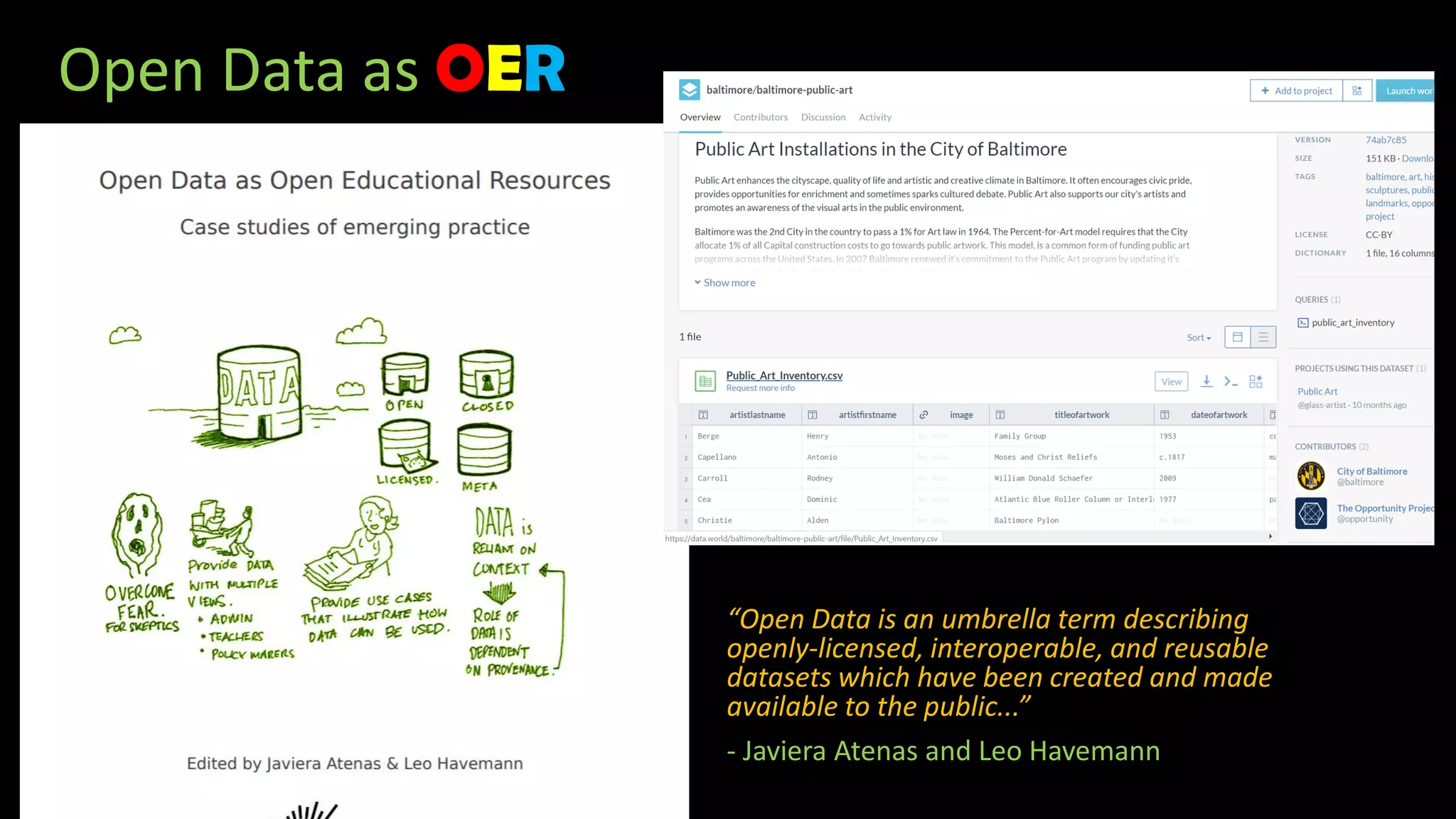
Open Data as OER
“Open Data is an umbrella term describing
openly-licensed, interoperable, and reusable
datasets which have been created and made
available to the public...”
- Javiera Atenas and Leo Havemann
• “Traditional” OER as textbook (e.g.
pressbooks)
• Ancillary materials: test banks,
study guides, lesson plans, etc
• Curated links on websites
• Open Google Docs
• Open Access published articles
• Open Datasets
• Open Lab notebooks and Methods
repositories
• Open Videos
• Open Lab Simulations
• Open Source software/tools
• and more…
Popsicles by Colored Pencil Magazine [CC BY 2.0]
OER
• At Keene State College, we use OER and other free
resources for nearly ALL Biology courses. We have
collectively saved our students about $250,000 over
the last 4 years.
• Many Colleges and Universities have already saved
students MILLIONS of dollars in textbooks costs.
Free as in “Free Beer”
Photo by Elliot Bledsoe [CC BY 2.0]
Free But Not Open
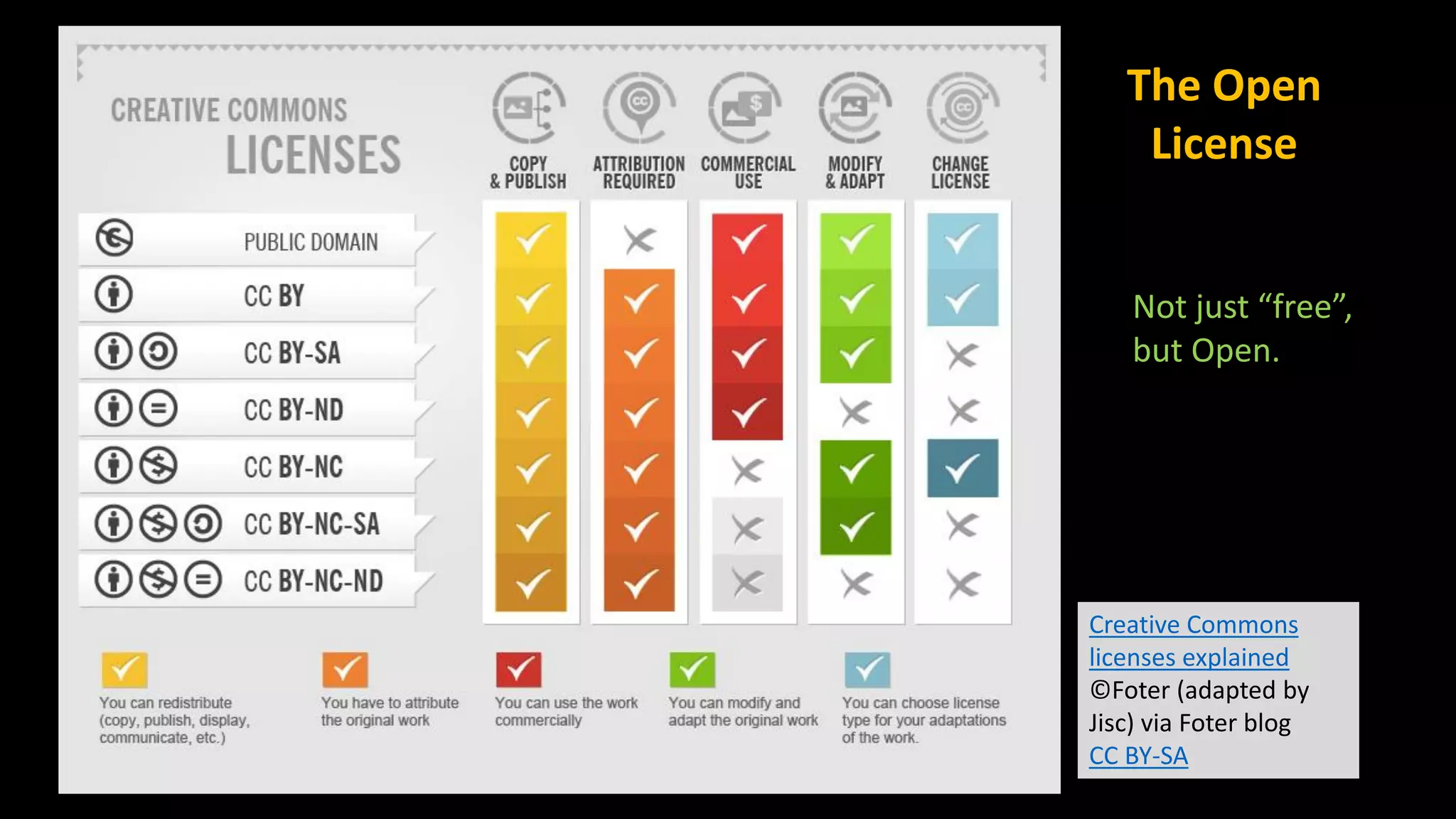
Creative Commons
licenses explained
©Foter (adapted by
Jisc) via Foter blog
CC BY-SA
The Open
License
Not just “free”,
but Open.
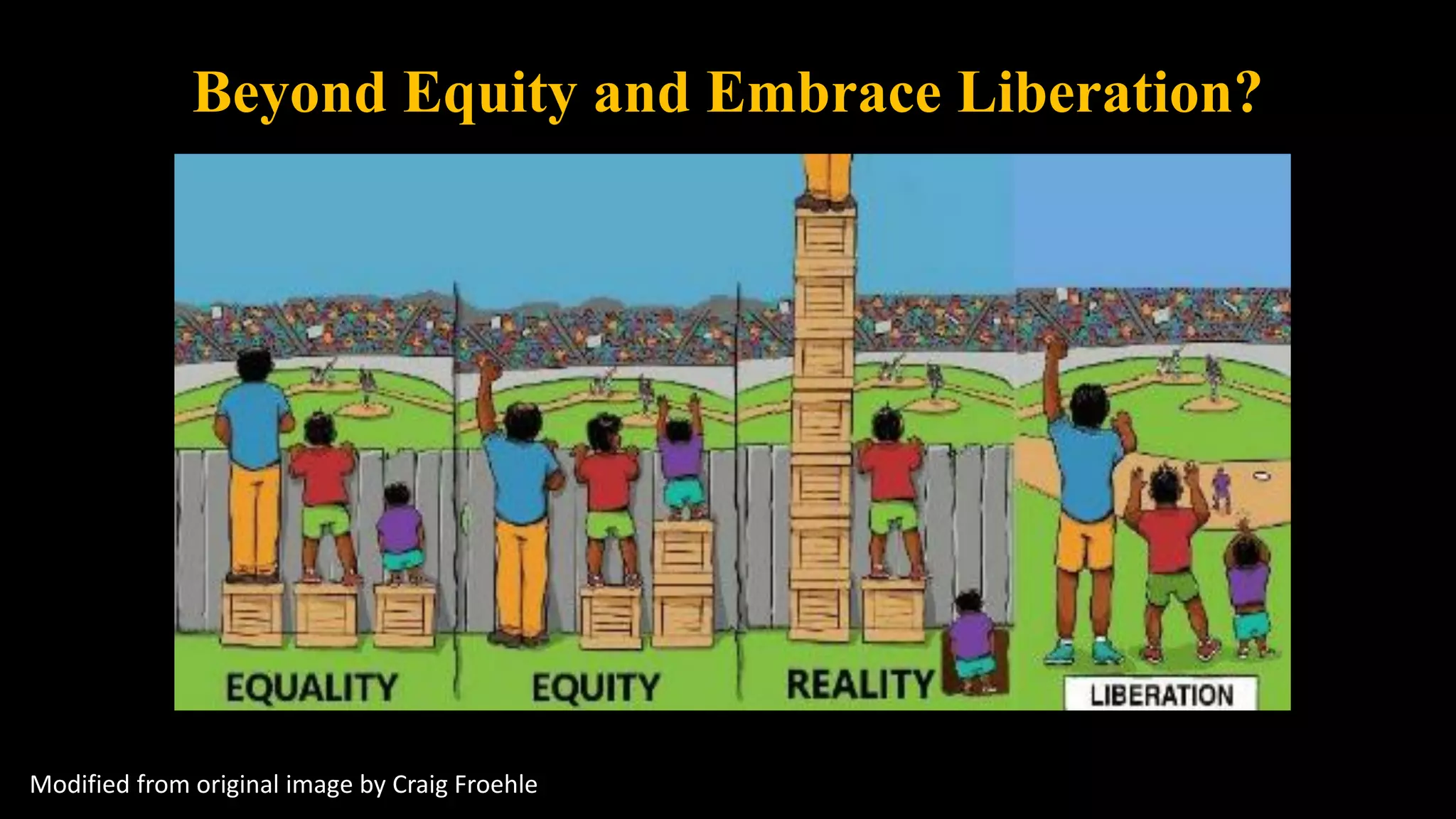
Beyond Equity and Embrace Liberation?
Modified from original image by Craig Froehle
• Reuse
• Revise
• Remix
• Redistribute
• Retain
FREE as in Freedom (the 5 R’s)
“Using OER the same way we used commercial textbooks
misses the point. It’s like driving an airplane down the road.”
– David Wiley
Open Educational Resources by Ron Mader [CC BY 2.0]
• Digital
• Multimedia
• Downloadable
• Adaptable
• Current
• Public
• Openly Licensed
• Free
OER
Open Pedagogy
is about
Access and Agency
Students
Design
Learning
Structures
Knowledge
Knowledge
Creation
Knowledge
Sharing
Community
Connections &
Collaboration
food,
housing, gas,
laptops,
captions,
safety, ETC.
CC 0
Don’t start with
the tools
CC 0
• What are some ways to make education more accessible and
equitable for all students? (Open for whom?)
• How do we authentically give our students voice and power in
the design of learning structures?
• How do we keep the real life circumstances of our students in
mind when we design learning experiences?
• How do we help the public see the value in what our students
are achieving?
• How can we provide transformational (not just transactional)
experiences for our students?
Students can be involved in the production of any of these
• “Traditional” OER as textbook (e.g.
OpenStax)
• Ancillary materials: test banks, etc.
• Curated links on websites
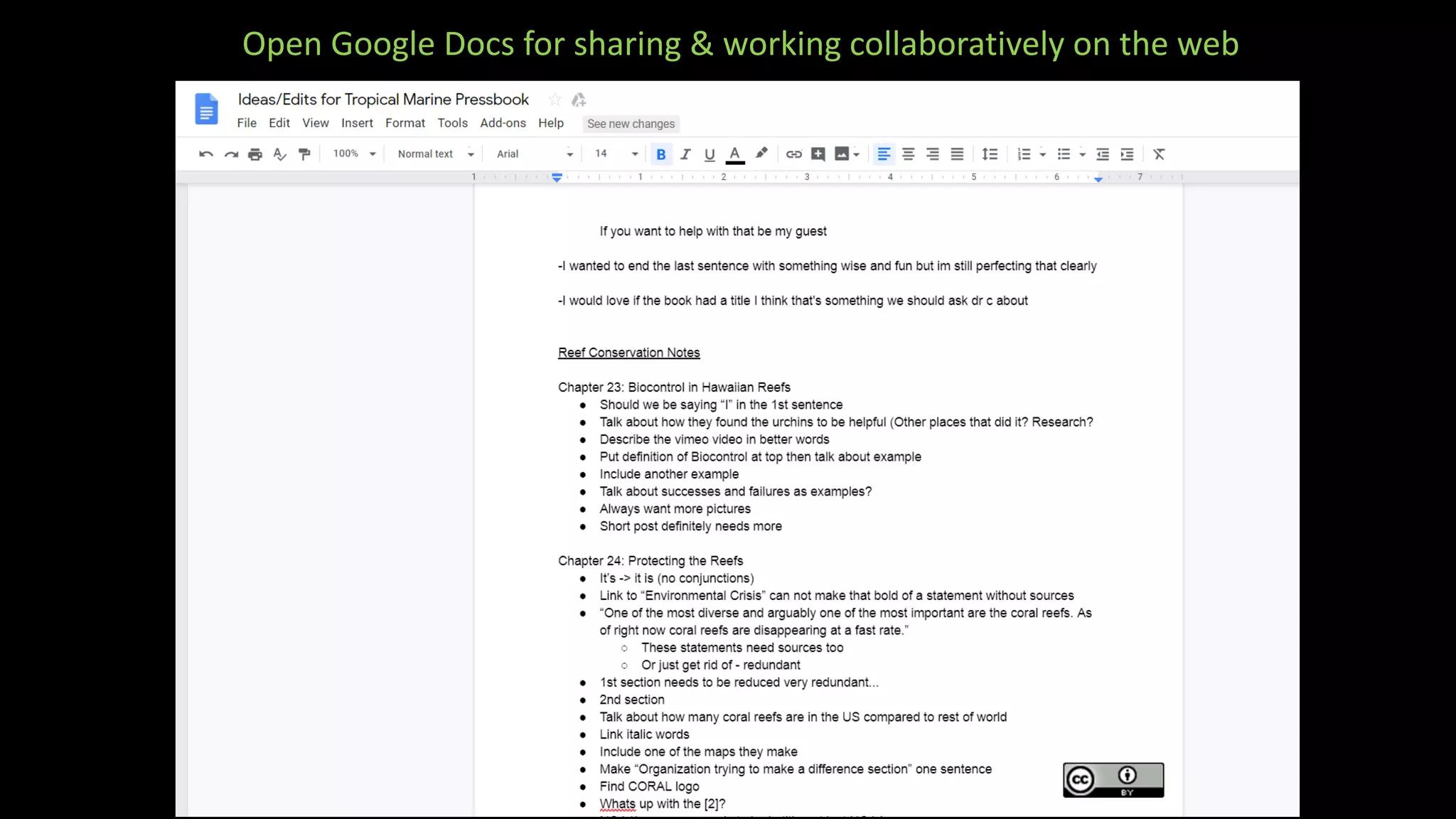
• Open Google Docs
• Open Videos
• Case studies
• Open Labs, simulations, animations
• Open Source software/tools
• Open Access published articles
• Open Datasets
• Open Lab notebooks, Methods
repositories
• and more…
Open Pedagogy
Lollipops by Andrew Malone [CC BY 2.0]
Open Google Docs for sharing & working collaboratively on the web
KSC Open:
Domain of
One’s Own
https://kscopen.org/
Using Digital Tools for Learning in the Open, for Sharing, and for
Contributing Knowledge
Some “Free” Tools for Blogging, making Websites:
Wordpress
Google sites Blogger
Tumblr
Wix
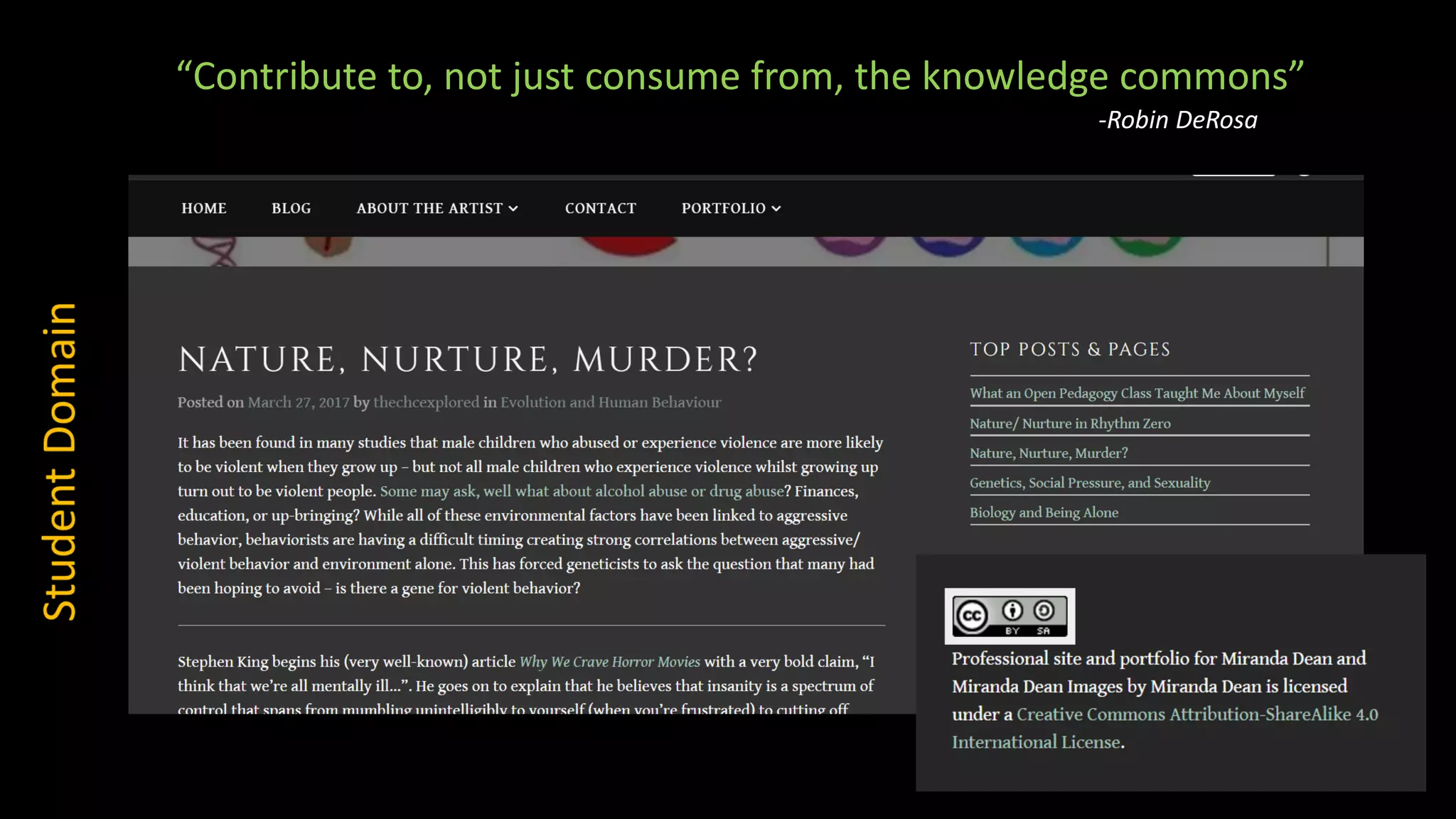
“Contribute to, not just consume from, the knowledge commons”
-Robin DeRosa
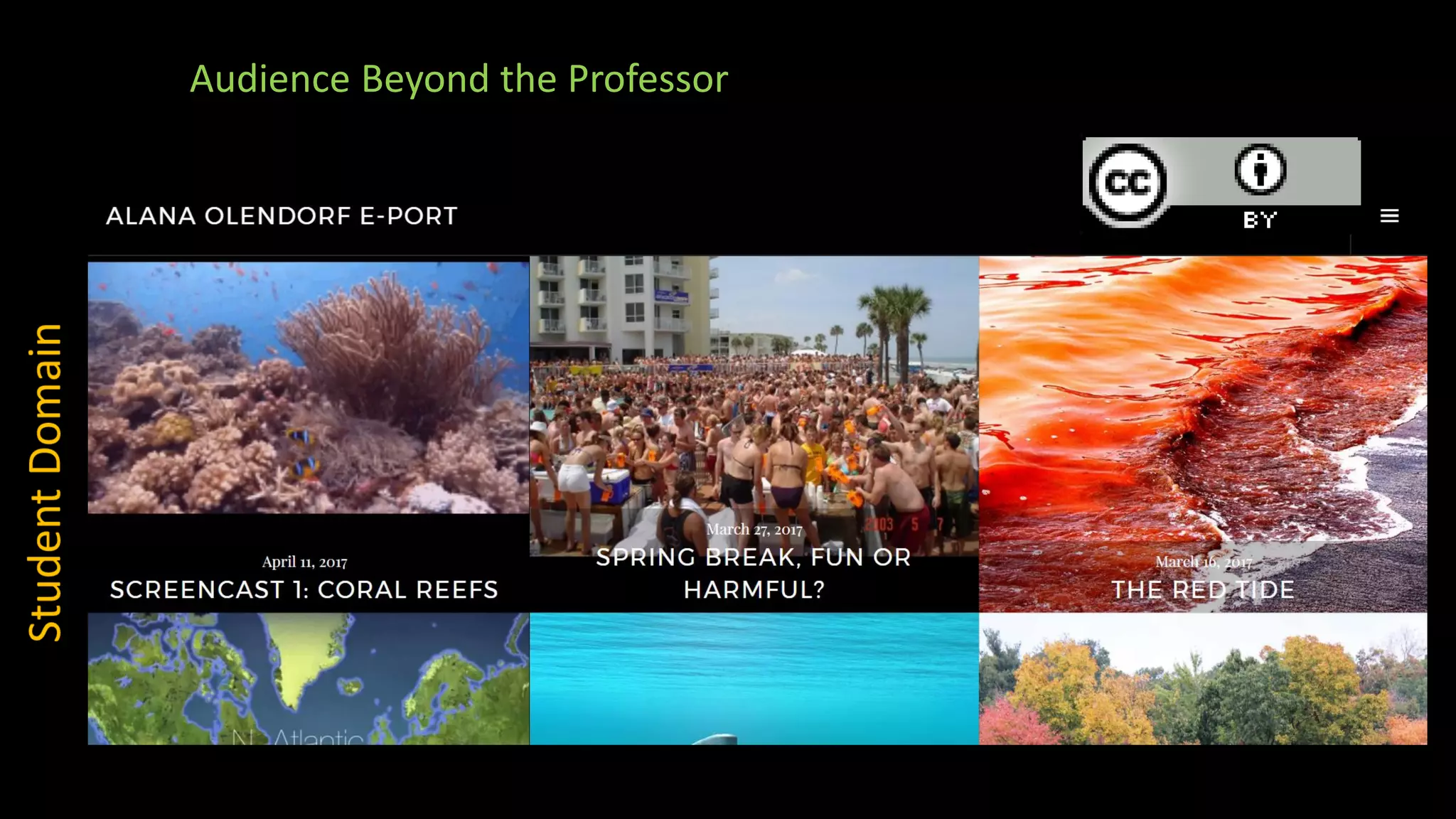
Audience Beyond the Professor
• Students create, remix and
openly license work that is
shared with others.
• Student work lives on past the
end of the semester (if they
want it to).
Non-Disposable Assignments
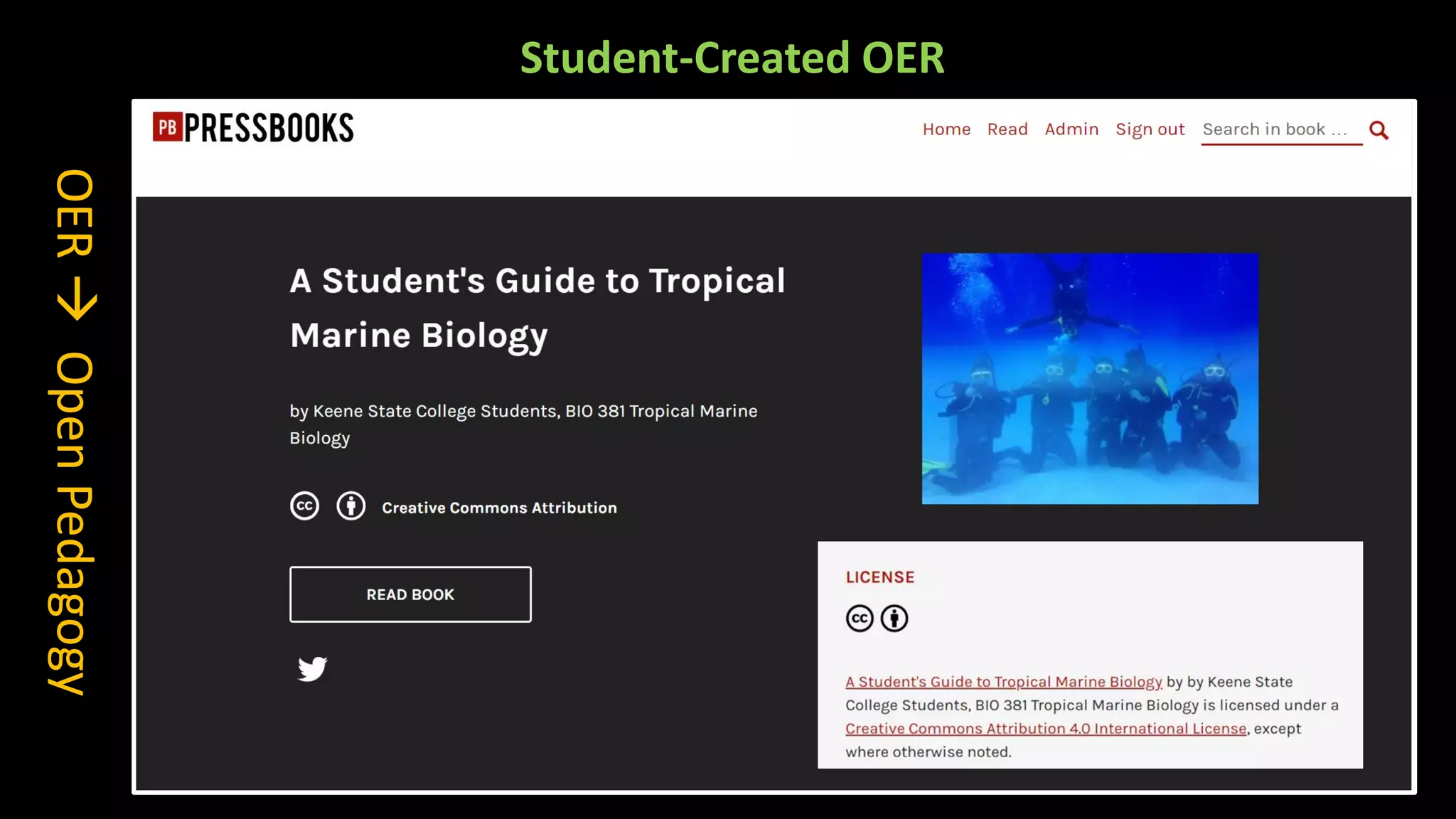
Student-Created OEROEROpenPedagogy
2017 class
• Students create
content on their
domain spaces
2019 class
• Add content from
domain spaces
• Curate and edit
content from
2017 & 2019;
create pressbook
2017 Alumni
• Further edit
Pressbook Content
• Add new content
• Write the intro, title
• Reorganize chapters
Beyond the walls of the classroom
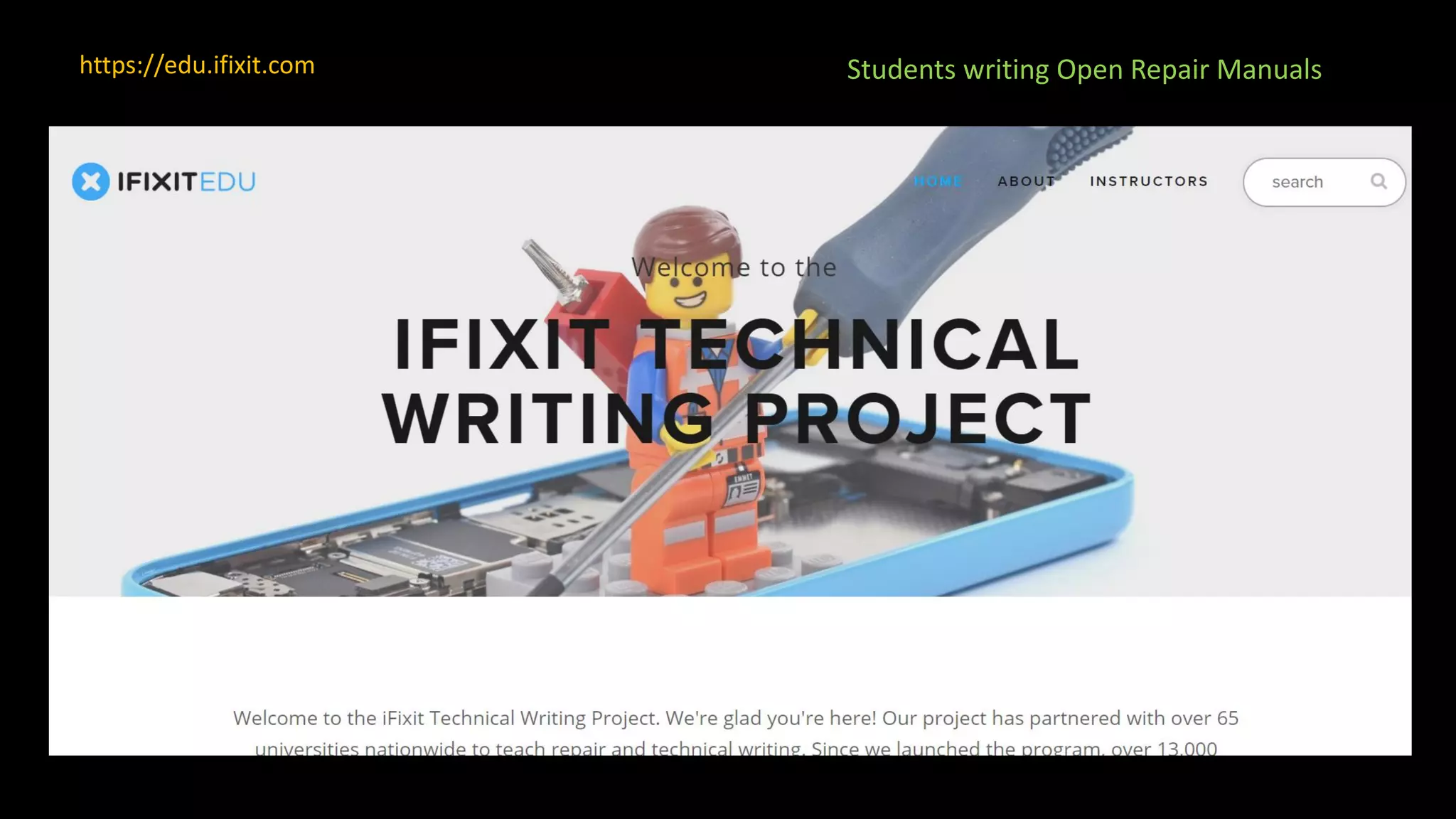
https://edu.ifixit.com Students writing Open Repair Manuals
Web Annotation for Community & Collaboration
Wiki Education Foundation (wikiedu.org)
[CC BY SA]
Creating/Editing Wikipedia Articles
Medical students at the
University of California
San Francisco School of
Medicine edit
Wikipedia articles
http://mediashift.org/2016/05/why-you-and-your-students-should-work-to-improve-wikipedia/
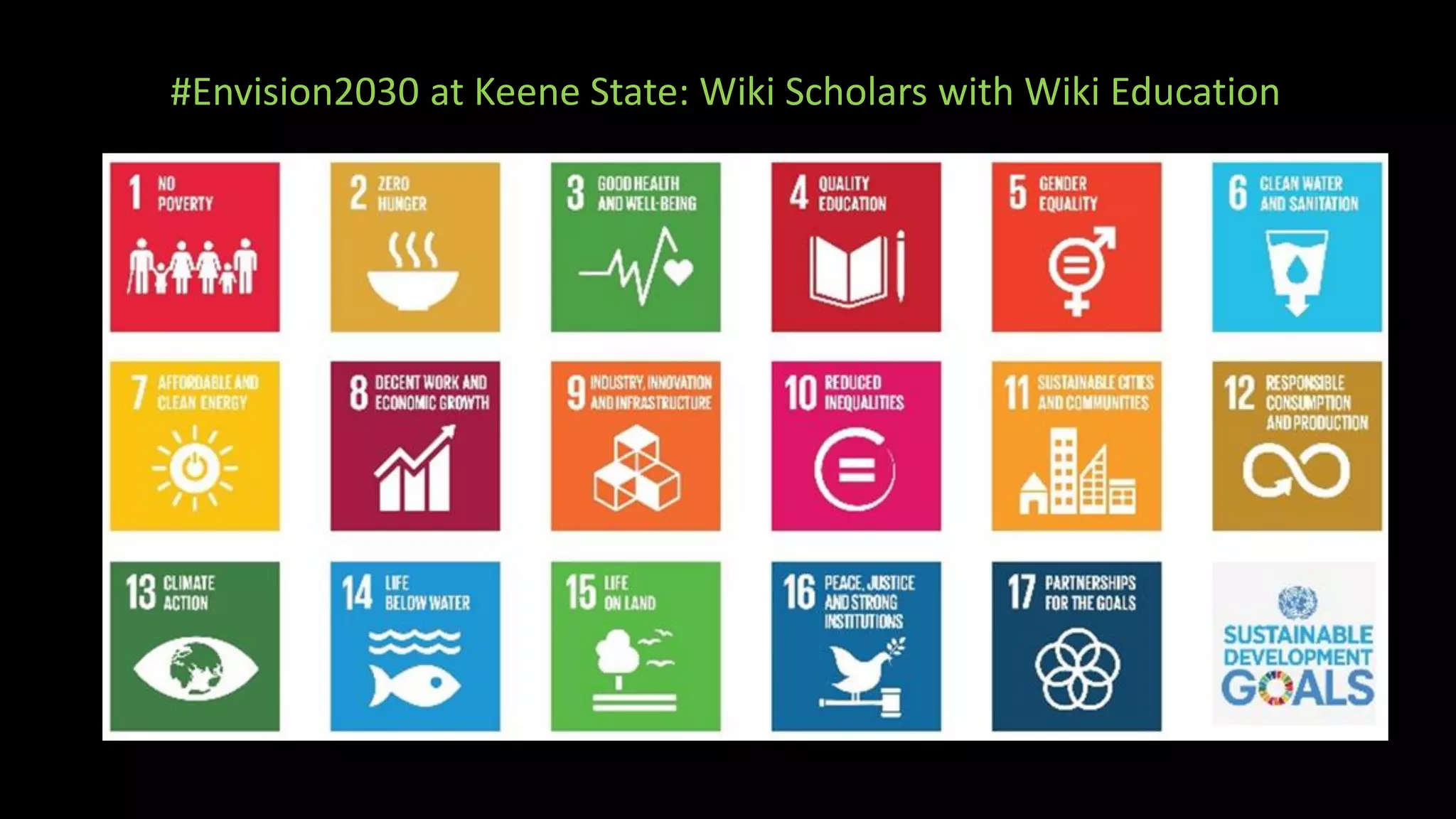
#Envision2030 at Keene State: Wiki Scholars with Wiki Education
“Our students
are not just
going on the
web, they are
constructing it.”
-Martha Burtis
"This is How The Web is Made“ by cogdogblog
https://flickr.com/photos/cogdog/16248316055
[CC BY 2.0]
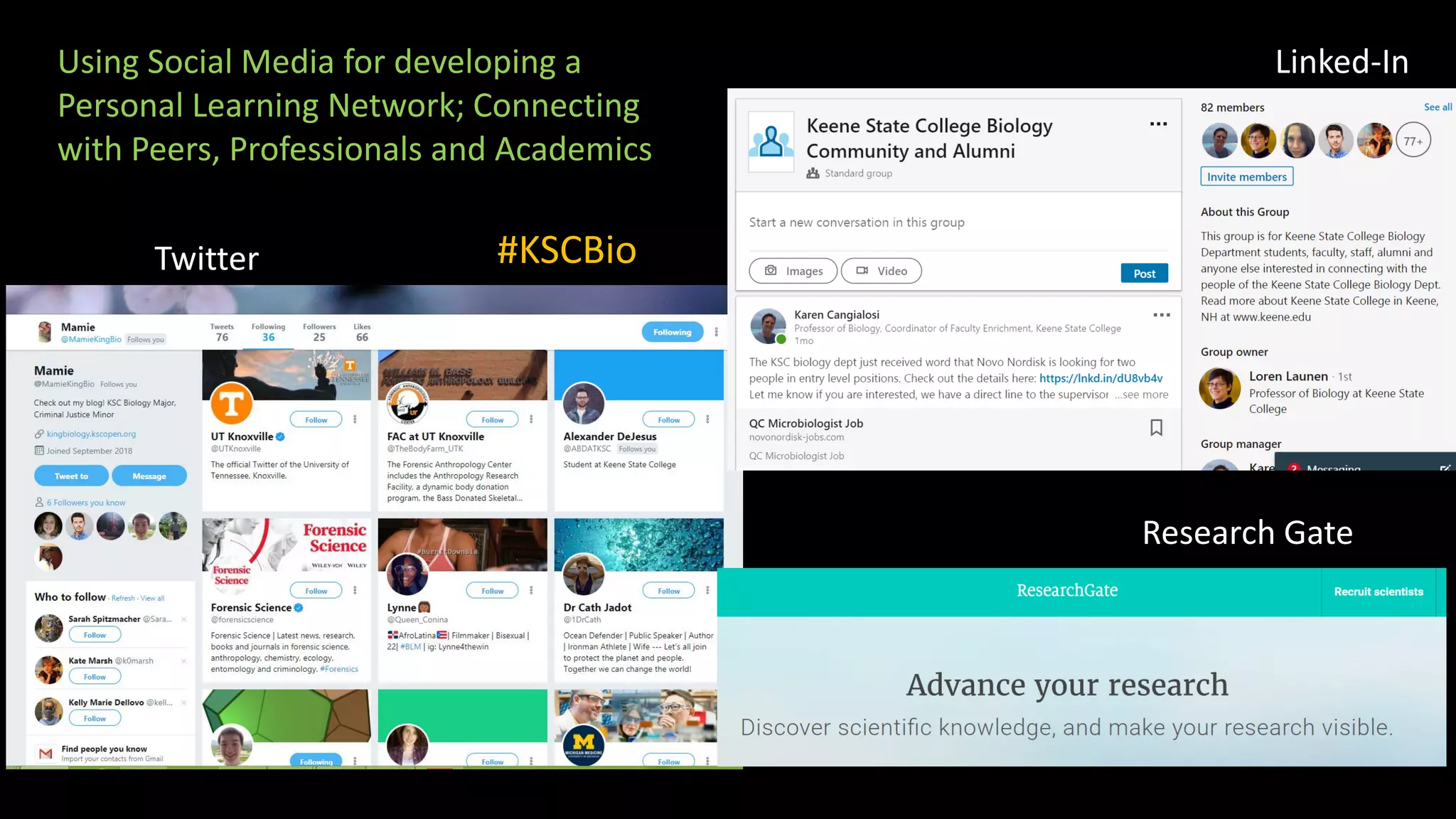
Twitter
Research Gate
Linked-InUsing Social Media for developing a
Personal Learning Network; Connecting
with Peers, Professionals and Academics
#KSCBio
“ I got into several conversations with
professionals about how to save our
planet and things that need to be done
in order to make that happen.… I found
myself enjoying being on twitter for a
purpose other than entertainment.”
-Keene State Biology student
Open provides tangible
pathways from the classroom
to future jobs and careers
Students write about local contamination sites and potential
consequences to humans and wildlife
#SciComm
Open Pedagogy as Public Service
Come for the OER, Stay for the Pedagogy
Students can work with faculty to:
• Create Content
• Write the syllabus
• Write the attendance policy
• Create learning outcomes
• Determine what goes on during class
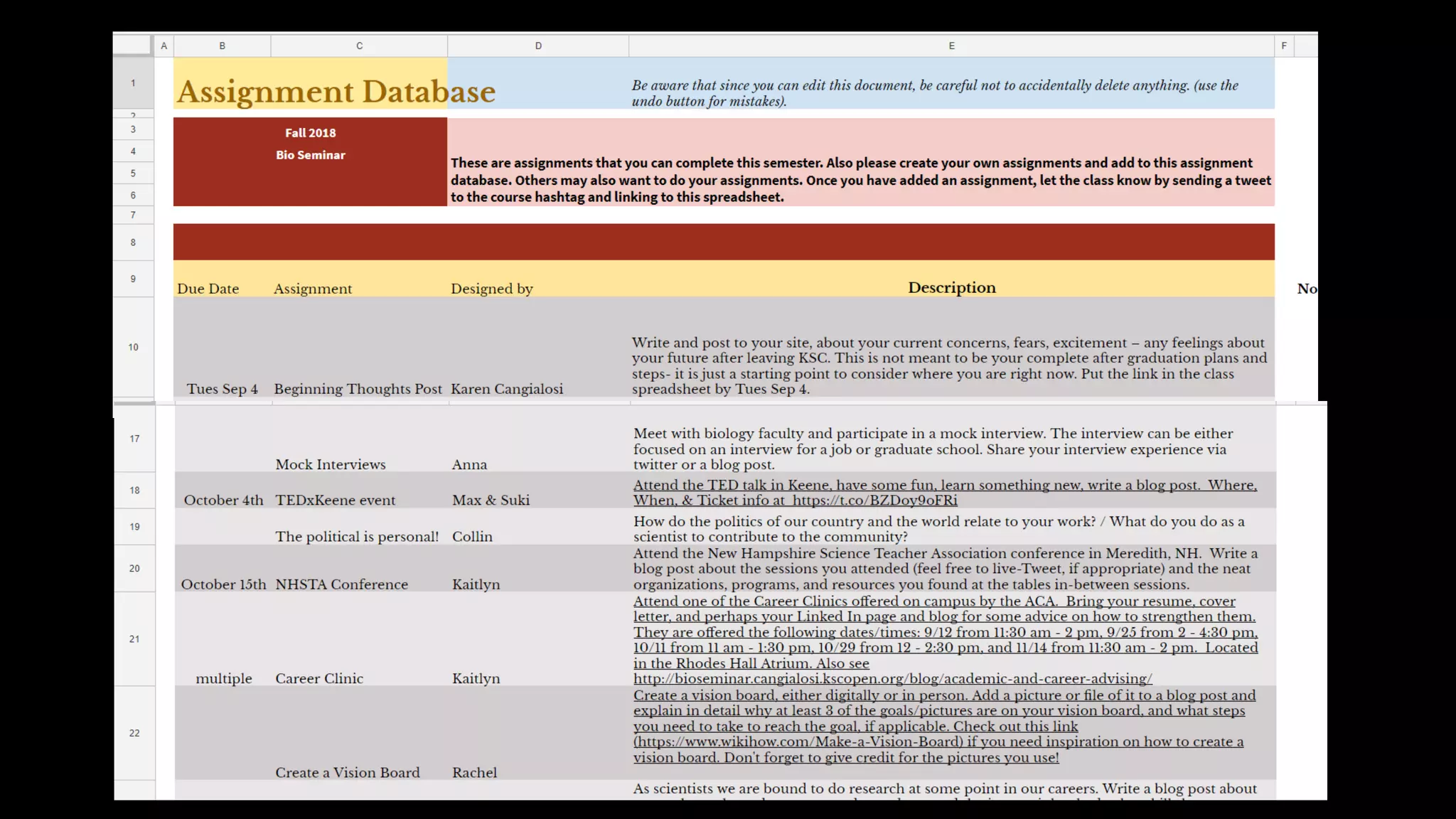
• Design assignments
• Decide what work they want to make public
or openly license
• Determine how they will be graded
Trust, Power, and Agency
CC 0
“Anxiety" by ASweeneyPhoto CC (BY-NC)
More than 60% of college students (in a study of 88,000)
said they had experienced “overwhelming anxiety” in the
past year, according to a 2018 report from the American
College Health Association.
Over 40% said they felt so depressed they had difficulty
functioning.
Source: https://www.nytimes.com/2019/02/21/education/learning/mental-
health-counseling-on-campus.html
In 1985, 18% of college-bound seniors said they “frequently” felt
“overwhelmed by all I had to do” during senior year of high school.
That number had increased to 41% by 2016.
Source: https://willowresearch.com/gen-z/
An atmosphere that places greater value on
“achievement” than on learning
Standardized tests and assessments that suck the
life out of learning
Surveillance systems that track, monitor, punish,
and insist on compliance
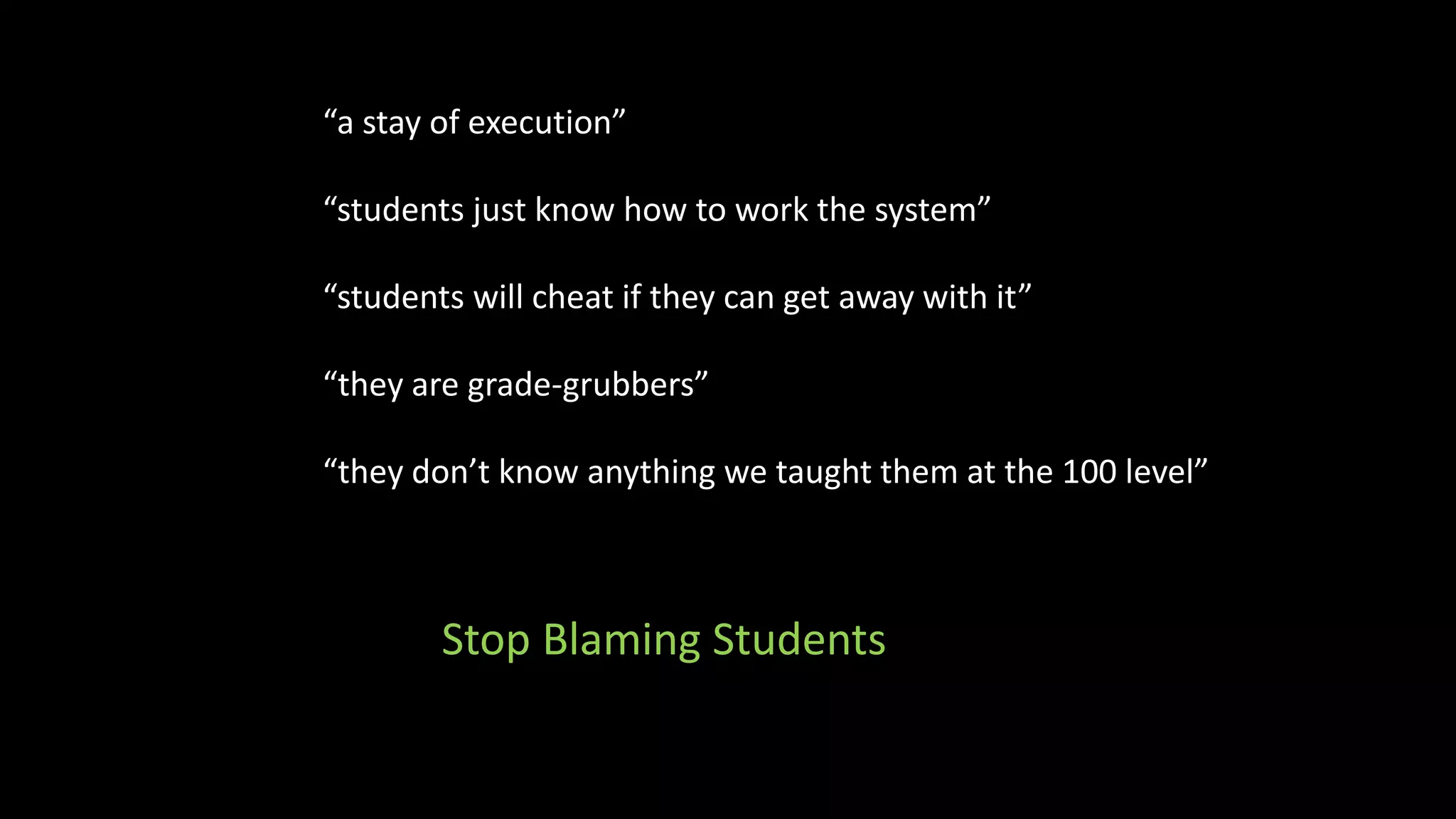
“a stay of execution”
“students just know how to work the system”
“students will cheat if they can get away with it”
“they are grade-grubbers”
“they don’t know anything we taught them at the 100 level”
Stop Blaming Students
Student Anxiety,
Financial stress,
Powerlessness
Open Pedagogy:
Student Trust, Agency,
and Empowerment
Open Pedagogy:
Students Create and
Share knowledge
Other Systemic
Problems:
-Economic
-Environmental
-Social and
Cultural
Systemic issues in
Education:
-Standardization
-Grades-Focus
-Surveillance
-High Cost
OER:
Cost Savings
“When my students gain access to knowledge, I want it to be part of a larger
invitation: we trust that you have important lessons to teach the world, and we trust
that the knowledge you access today will be changed by your perspective, that you
will open doors to new ideas that we, your current teachers, never could have
taught you.” – Robin DeRosa, University of the Margins
“Open is a process, not a panacea”
-Robin DeRosa
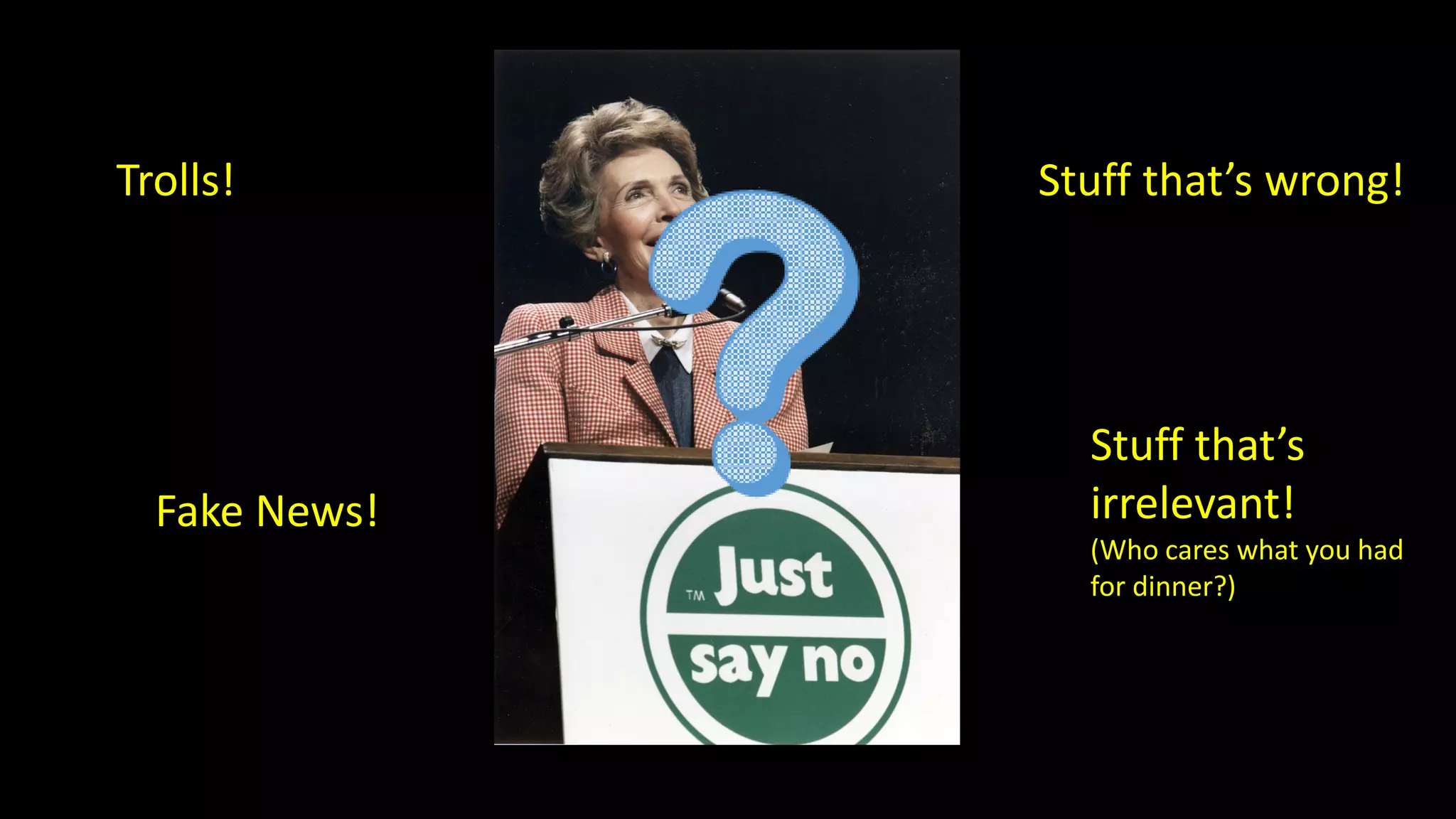
Trolls!
Fake News!
Stuff that’s wrong!
Stuff that’s
irrelevant!
(Who cares what you had
for dinner?)
Students will go online ANYWAY; they will have a digital
presence WITH or WITHOUT your guidance.
Is it responsible to “just say no” to:
• Smartphone use?
• Using social media?
• Reading, posting and interacting on the web?
If faculty and staff in higher education don’t guide students to think
about digital citizenship and their digital footprint – who will?
https://www.cccoer.org/
Twitter: @CCCOER cccoer-advisory@googlegroups.com
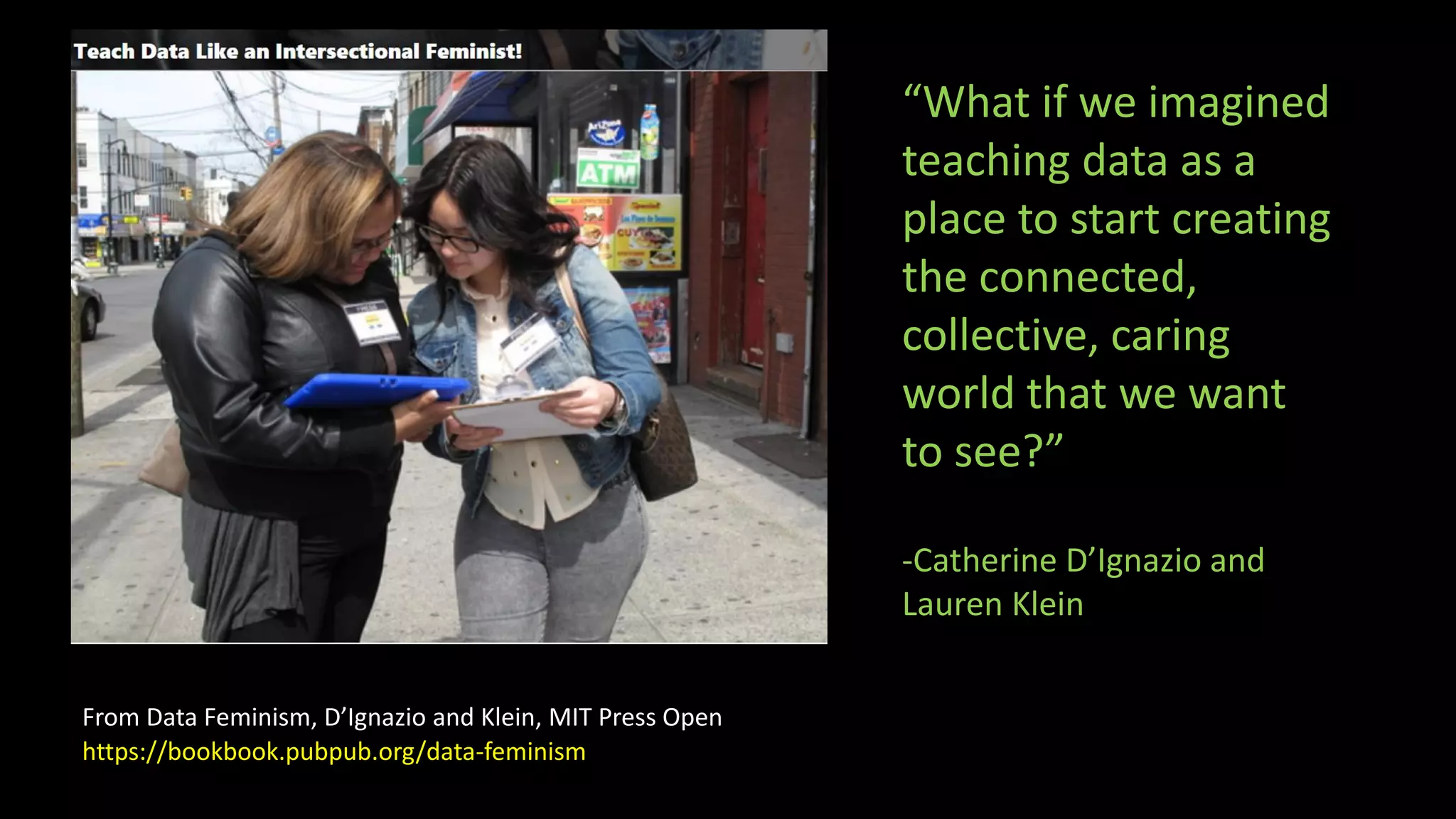
From Data Feminism, D’Ignazio and Klein, MIT Press Open
“What if we imagined
teaching data as a
place to start creating
the connected,
collective, caring
world that we want
to see?”
-Catherine D’Ignazio and
Lauren Klein
https://bookbook.pubpub.org/data-feminism
This work by Karen Cangialosi is licensed under a
Creative Commons Attribution 4.0 International
License
Follow me on twitter @karencang

College of Staten Island OER, OA, OpenPd

  • 1.
    Open Education: Access, Agencyand Connection Dr. Karen Cangialosi Dept of Biology, Keene State College Keene, NH USA @karencang
  • 4.
    Study of 86,000students at 123 two and four year institutions across the U.S. April 2019 • Food Insecure: 45% • Housing Insecure: 56% • Homeless: 17%
  • 5.
    Image: The Economist FromThe Economist 50-80% of the sticker price of college comes from non- tuition costs (from Paying the Price by Sara Goldrick-Rab)
  • 7.
  • 8.
    Open Educational Resourcesby Ron Mader [CC BY 2.0] • Free (for students) OER
  • 9.
    Slide by RobinDeRosa [CC BY 4.0] 21,822 students in this study
  • 10.
    Synthesizes results from36 studies involving 121,168 students. Students achieve the same or better learning outcomes when using OER.
  • 11.
  • 12.
  • 13.
  • 14.
    Open Data asOER “Open Data is an umbrella term describing openly-licensed, interoperable, and reusable datasets which have been created and made available to the public...” - Javiera Atenas and Leo Havemann
  • 15.
    • “Traditional” OERas textbook (e.g. pressbooks) • Ancillary materials: test banks, study guides, lesson plans, etc • Curated links on websites • Open Google Docs • Open Access published articles • Open Datasets • Open Lab notebooks and Methods repositories • Open Videos • Open Lab Simulations • Open Source software/tools • and more… Popsicles by Colored Pencil Magazine [CC BY 2.0] OER
  • 16.
    • At KeeneState College, we use OER and other free resources for nearly ALL Biology courses. We have collectively saved our students about $250,000 over the last 4 years. • Many Colleges and Universities have already saved students MILLIONS of dollars in textbooks costs.
  • 17.
    Free as in“Free Beer” Photo by Elliot Bledsoe [CC BY 2.0]
  • 18.
  • 19.
    Creative Commons licenses explained ©Foter(adapted by Jisc) via Foter blog CC BY-SA The Open License Not just “free”, but Open.
  • 20.
    Beyond Equity andEmbrace Liberation? Modified from original image by Craig Froehle
  • 21.
    • Reuse • Revise •Remix • Redistribute • Retain FREE as in Freedom (the 5 R’s)
  • 22.
    “Using OER thesame way we used commercial textbooks misses the point. It’s like driving an airplane down the road.” – David Wiley
  • 23.
    Open Educational Resourcesby Ron Mader [CC BY 2.0] • Digital • Multimedia • Downloadable • Adaptable • Current • Public • Openly Licensed • Free OER
  • 25.
    Open Pedagogy is about Accessand Agency Students Design Learning Structures Knowledge Knowledge Creation Knowledge Sharing Community Connections & Collaboration food, housing, gas, laptops, captions, safety, ETC.
  • 26.
    CC 0 Don’t startwith the tools CC 0
  • 27.
    • What aresome ways to make education more accessible and equitable for all students? (Open for whom?) • How do we authentically give our students voice and power in the design of learning structures? • How do we keep the real life circumstances of our students in mind when we design learning experiences? • How do we help the public see the value in what our students are achieving? • How can we provide transformational (not just transactional) experiences for our students?
  • 28.
    Students can beinvolved in the production of any of these • “Traditional” OER as textbook (e.g. OpenStax) • Ancillary materials: test banks, etc. • Curated links on websites • Open Google Docs • Open Videos • Case studies • Open Labs, simulations, animations • Open Source software/tools • Open Access published articles • Open Datasets • Open Lab notebooks, Methods repositories • and more… Open Pedagogy Lollipops by Andrew Malone [CC BY 2.0]
  • 29.
    Open Google Docsfor sharing & working collaboratively on the web
  • 30.
    KSC Open: Domain of One’sOwn https://kscopen.org/ Using Digital Tools for Learning in the Open, for Sharing, and for Contributing Knowledge
  • 31.
    Some “Free” Toolsfor Blogging, making Websites: Wordpress Google sites Blogger Tumblr Wix
  • 32.
    “Contribute to, notjust consume from, the knowledge commons” -Robin DeRosa
  • 33.
  • 34.
    • Students create,remix and openly license work that is shared with others. • Student work lives on past the end of the semester (if they want it to). Non-Disposable Assignments
  • 36.
  • 37.
    2017 class • Studentscreate content on their domain spaces 2019 class • Add content from domain spaces • Curate and edit content from 2017 & 2019; create pressbook 2017 Alumni • Further edit Pressbook Content • Add new content • Write the intro, title • Reorganize chapters Beyond the walls of the classroom
  • 39.
  • 40.
    Web Annotation forCommunity & Collaboration
  • 41.
    Wiki Education Foundation(wikiedu.org) [CC BY SA] Creating/Editing Wikipedia Articles
  • 42.
    Medical students atthe University of California San Francisco School of Medicine edit Wikipedia articles
  • 43.
  • 44.
    #Envision2030 at KeeneState: Wiki Scholars with Wiki Education
  • 45.
    “Our students are notjust going on the web, they are constructing it.” -Martha Burtis "This is How The Web is Made“ by cogdogblog https://flickr.com/photos/cogdog/16248316055 [CC BY 2.0]
  • 46.
    Twitter Research Gate Linked-InUsing SocialMedia for developing a Personal Learning Network; Connecting with Peers, Professionals and Academics #KSCBio
  • 47.
    “ I gotinto several conversations with professionals about how to save our planet and things that need to be done in order to make that happen.… I found myself enjoying being on twitter for a purpose other than entertainment.” -Keene State Biology student Open provides tangible pathways from the classroom to future jobs and careers
  • 48.
    Students write aboutlocal contamination sites and potential consequences to humans and wildlife #SciComm Open Pedagogy as Public Service
  • 49.
    Come for theOER, Stay for the Pedagogy
  • 50.
    Students can workwith faculty to: • Create Content • Write the syllabus • Write the attendance policy • Create learning outcomes • Determine what goes on during class • Design assignments • Decide what work they want to make public or openly license • Determine how they will be graded Trust, Power, and Agency CC 0
  • 52.
    “Anxiety" by ASweeneyPhotoCC (BY-NC) More than 60% of college students (in a study of 88,000) said they had experienced “overwhelming anxiety” in the past year, according to a 2018 report from the American College Health Association. Over 40% said they felt so depressed they had difficulty functioning. Source: https://www.nytimes.com/2019/02/21/education/learning/mental- health-counseling-on-campus.html In 1985, 18% of college-bound seniors said they “frequently” felt “overwhelmed by all I had to do” during senior year of high school. That number had increased to 41% by 2016. Source: https://willowresearch.com/gen-z/
  • 53.
    An atmosphere thatplaces greater value on “achievement” than on learning Standardized tests and assessments that suck the life out of learning Surveillance systems that track, monitor, punish, and insist on compliance
  • 54.
    “a stay ofexecution” “students just know how to work the system” “students will cheat if they can get away with it” “they are grade-grubbers” “they don’t know anything we taught them at the 100 level” Stop Blaming Students
  • 55.
    Student Anxiety, Financial stress, Powerlessness OpenPedagogy: Student Trust, Agency, and Empowerment Open Pedagogy: Students Create and Share knowledge Other Systemic Problems: -Economic -Environmental -Social and Cultural Systemic issues in Education: -Standardization -Grades-Focus -Surveillance -High Cost OER: Cost Savings
  • 56.
    “When my studentsgain access to knowledge, I want it to be part of a larger invitation: we trust that you have important lessons to teach the world, and we trust that the knowledge you access today will be changed by your perspective, that you will open doors to new ideas that we, your current teachers, never could have taught you.” – Robin DeRosa, University of the Margins
  • 57.
    “Open is aprocess, not a panacea” -Robin DeRosa
  • 58.
    Trolls! Fake News! Stuff that’swrong! Stuff that’s irrelevant! (Who cares what you had for dinner?)
  • 59.
    Students will goonline ANYWAY; they will have a digital presence WITH or WITHOUT your guidance. Is it responsible to “just say no” to: • Smartphone use? • Using social media? • Reading, posting and interacting on the web? If faculty and staff in higher education don’t guide students to think about digital citizenship and their digital footprint – who will?
  • 61.
  • 62.
    From Data Feminism,D’Ignazio and Klein, MIT Press Open “What if we imagined teaching data as a place to start creating the connected, collective, caring world that we want to see?” -Catherine D’Ignazio and Lauren Klein https://bookbook.pubpub.org/data-feminism
  • 63.
    This work byKaren Cangialosi is licensed under a Creative Commons Attribution 4.0 International License Follow me on twitter @karencang