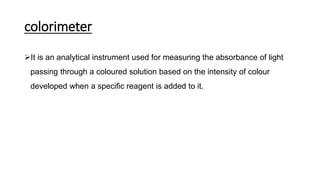
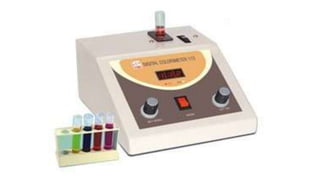
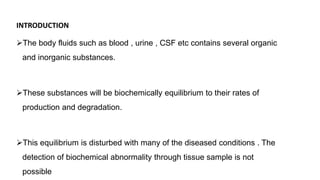
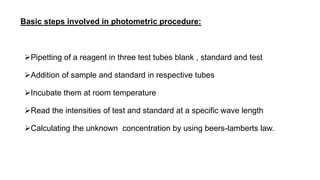
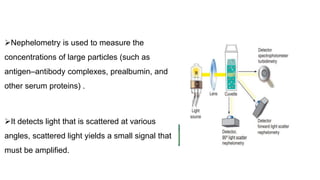
1. Colorimetry, spectrophotometry, and nephelometry are techniques used to determine the concentration of colored compounds in solutions.
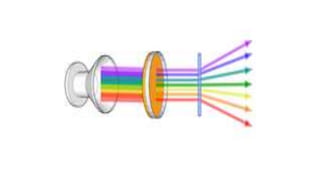
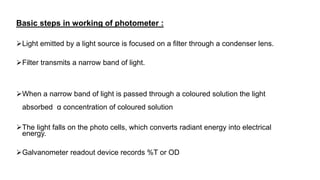
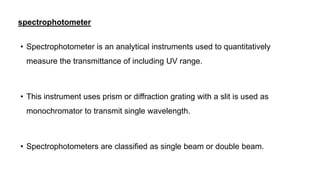
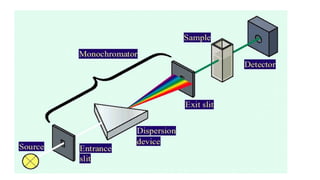
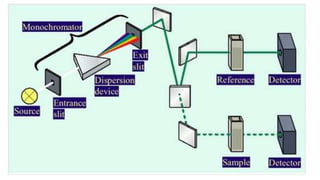
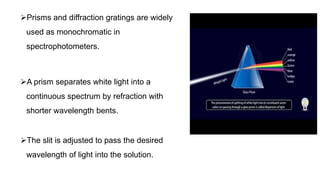
2. A spectrophotometer uses a monochromator such as a prism or diffraction grating to transmit single wavelengths of light, allowing it to measure absorbance across the ultraviolet, visible, and infrared regions of the electromagnetic spectrum.
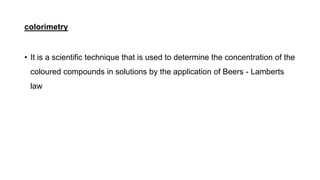
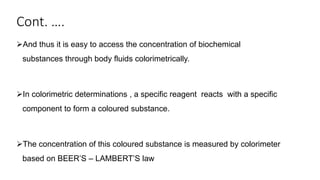
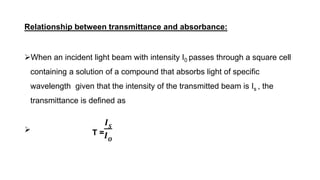
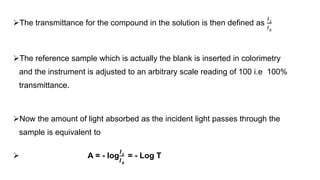
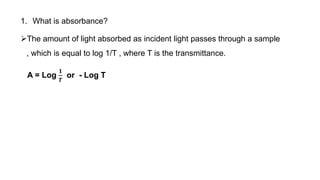
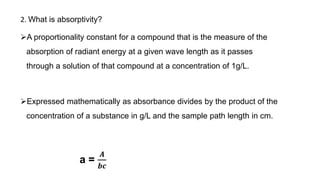
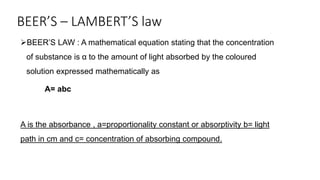
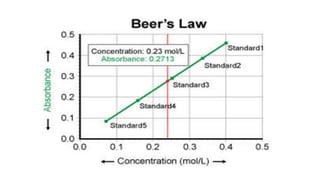
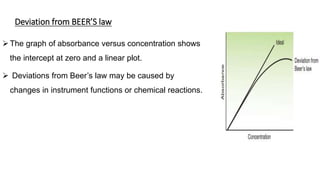
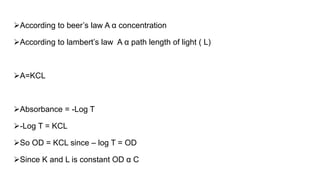
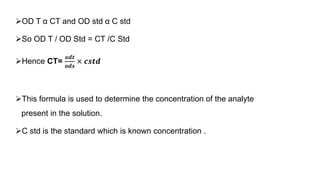
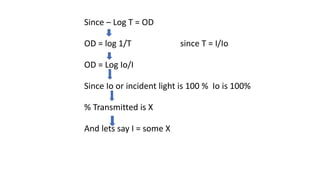
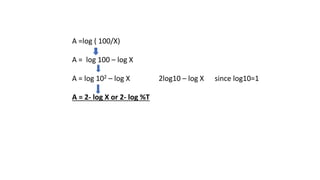
3. The key principles of Beer's Law and Lambert's Law describe the linear relationship between absorbance and concentration, and the effect of path length on absorbance measurements respectively, enabling quantification of unknown analyte concentrations from photometric measurements.





![0LD-spectrophotometry-130121010534-phpapp02 [Autosaved] - Copy.ppt](https://cdn.slidesharecdn.com/ss_thumbnails/0ld-spectrophotometry-130121010534-phpapp02autosaved-copy-251007052503-e63bc71f-thumbnail.jpg?width=640&height=640&fit=bounds)


![CTEV [ clubfoot] DR ARUN LAL ,DR MOHAMED ASHRAF travancore medical college k...](https://cdn.slidesharecdn.com/ss_thumbnails/ctevclubfootdrarunlaldrmohamedashraftravancoremedicalcollegekollamkeralaindia-260208063247-18fc466c-thumbnail.jpg?width=640&height=640&fit=bounds)


