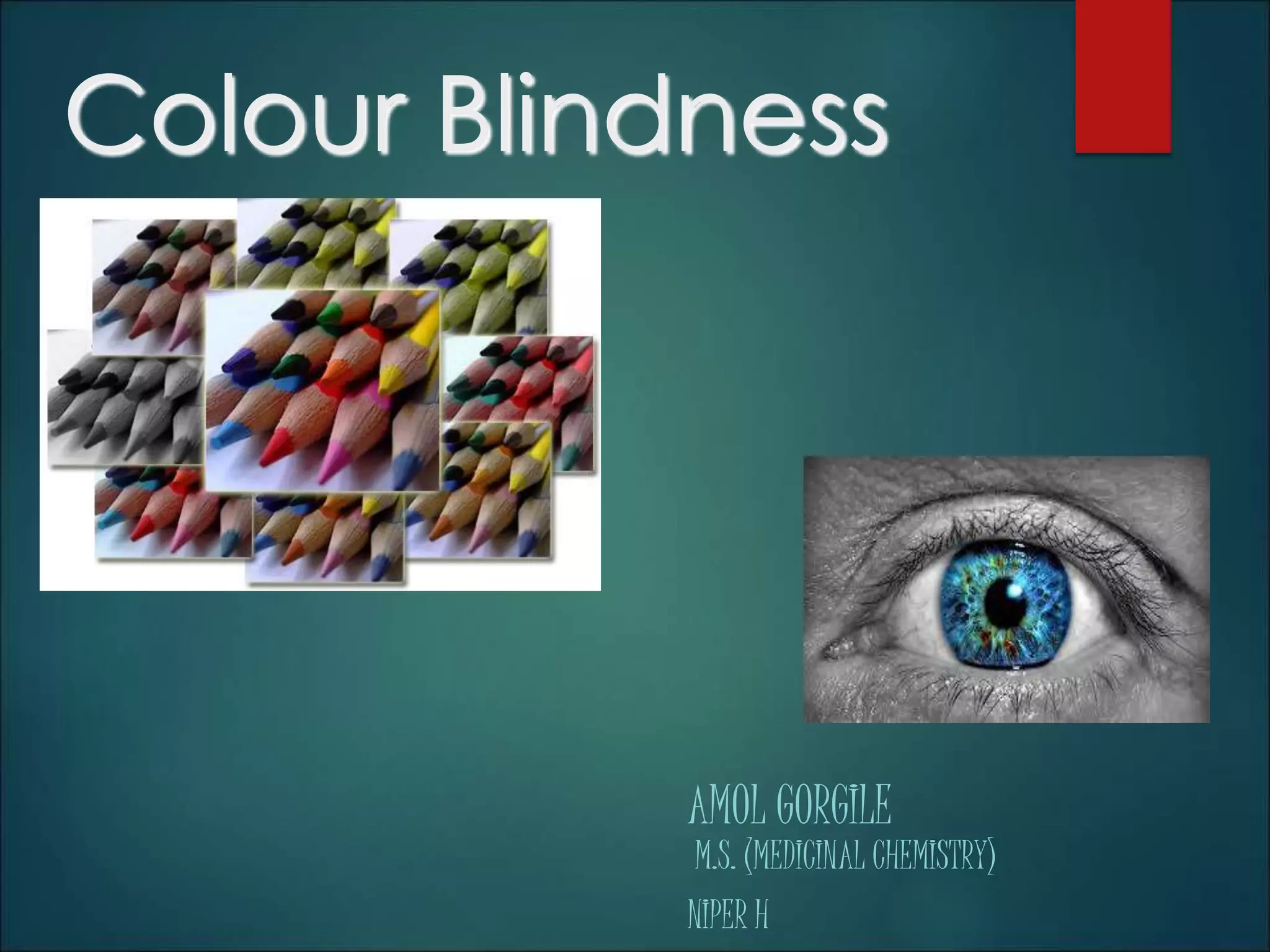
Colour Blindness 
AMOL GORGILE 
M.S. (MEDICINAL CHEMISTRY) 
NIPER H
Introduction 
What is Colour Blindness? 
 Colour Blindness is a defect in vision that makes it 
difficult/impossible for a person to distinguish 
between or among colours.
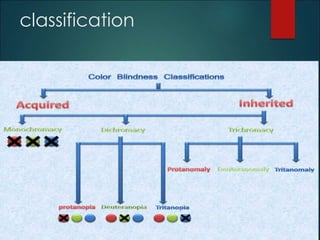
classification
Cause 
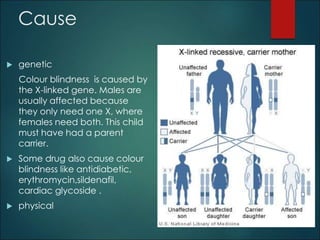
 genetic 
Colour blindness is caused by 
the X-linked gene. Males are 
usually affected because 
they only need one X, where 
females need both. This child 
must have had a parent 
carrier. 
 Some drug also cause colour 
blindness like antidiabetic, 
erythromycin,sildenafil, 
cardiac glycoside . 
 physical
symptoms 
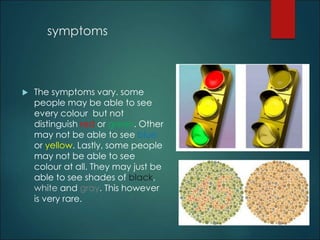
 The symptoms vary. some 
people may be able to see 
every colour but not 
distinguish red or green. Other 
may not be able to see blue 
or yellow. Lastly, some people 
may not be able to see 
colour at all. They may just be 
able to see shades of black, 
white and gray. This however 
is very rare.
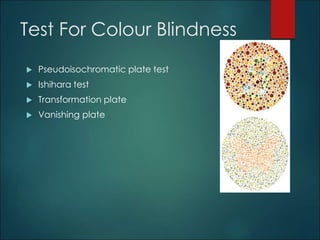
Test For Colour Blindness 
 Pseudoisochromatic plate test 
 Ishihara test 
 Transformation plate 
 Vanishing plate
Treatment 
 Currently No treatment. 
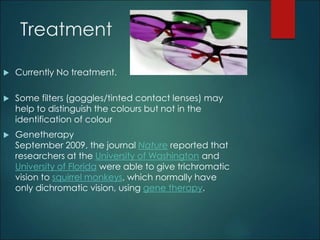
 Some filters (goggles/tinted contact lenses) may 
help to distinguish the colours but not in the 
identification of colour 
 Genetherapy 
September 2009, the journal Nature reported that 
researchers at the University of Washington and 
University of Florida were able to give trichromatic 
vision to squirrel monkeys, which normally have 
only dichromatic vision, using gene therapy.
THANK YOU…

Color blindness powerpoint

  • 1.
    Colour Blindness AMOLGORGILE M.S. (MEDICINAL CHEMISTRY) NIPER H
  • 2.
    Introduction What isColour Blindness?  Colour Blindness is a defect in vision that makes it difficult/impossible for a person to distinguish between or among colours.
  • 3.
  • 4.
    Cause  genetic Colour blindness is caused by the X-linked gene. Males are usually affected because they only need one X, where females need both. This child must have had a parent carrier.  Some drug also cause colour blindness like antidiabetic, erythromycin,sildenafil, cardiac glycoside .  physical
  • 5.
    symptoms  Thesymptoms vary. some people may be able to see every colour but not distinguish red or green. Other may not be able to see blue or yellow. Lastly, some people may not be able to see colour at all. They may just be able to see shades of black, white and gray. This however is very rare.
  • 6.
    Test For ColourBlindness  Pseudoisochromatic plate test  Ishihara test  Transformation plate  Vanishing plate
  • 7.
    Treatment  CurrentlyNo treatment.  Some filters (goggles/tinted contact lenses) may help to distinguish the colours but not in the identification of colour  Genetherapy September 2009, the journal Nature reported that researchers at the University of Washington and University of Florida were able to give trichromatic vision to squirrel monkeys, which normally have only dichromatic vision, using gene therapy.
  • 8.