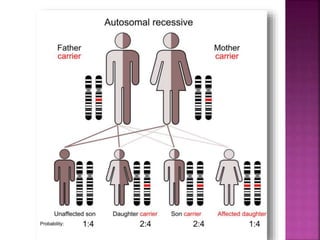


 Albinism is a recessive trait that is normally inherited
from two heterozygous parents
 Also called achromia, achromasia, or achromatosis
 Deficit in the production in melanin and by the partial
or complete absence of pigment in the skin, hair and
eyes
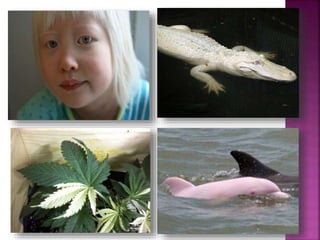
 This hereditary disease can be found in humans
(affecting all races), mammals, birds, fish, reptiles and
amphibians
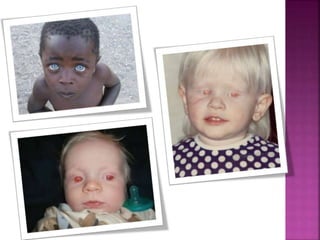
 Absence of color in the hair, skin, or iris of the eye
 Lighter than normal skin and hair
 Patchy, missing skin color
 Crossed eyes (strabismus/heterotropia)
 Light sensitivity (photophobia)
 Rapid eye movements (nystagmus/dancing eyes)
 Vision problems, or functional blindness
 complete absence of melanin is called an
albino.
 small amount of melanin is described as
albinoid.
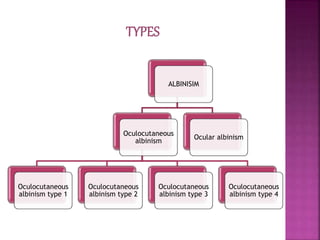
ALBINISIM
Oculocutaneous
albinism
Oculocutaneous
albinism type 1
Oculocutaneous
albinism type 2
Oculocutaneous
albinism type 3
Oculocutaneous
albinism type 4
Ocular albinism
 OCA type 1A
complete absence of pigment in the skin, the hair, and the
eyes
 (OCA type 1B)
moderate pigmentation in these tissues
 (OCA type 1 TS)
pigment in hair follicles of the cooler areas of the body,
such as the arms and the legs
 does not present with complete absence of pigment
but rather manifests with a minimal-to-moderate
amount of pigment remaining in the skin, the hair,
and the eyes.
 Many patients with OCA type 2 can develop
pigmented freckles, lentigines.
 The ocular presentations are similar to those in
OCA type 1
 manifests with minimal pigment reduction in the
skin, the hair, and the eyes. This form of albinism
was previously referred to as Brown albinism.
 The ocular presentations are similar to those in
OCA type 1, but they are not as severe.
 OCA type 4 manifests with a phenotype resembling
OCA type 2
 OA manifests with ocular depigmentation and iris
translucency. In addition, patients with OA present
with congenital motor nystagmus that may be
accompanied by reduced visual acuity, refractive
errors, fundus hypopigmentation, and strabismus.
 Reduce sunburn risk by avoiding the sun, using
sunscreen, and covering up completely with
clothing when exposed to the sun.
 Sunscreen should have a high sun protection factor
(SPF).
 Sunglasses (UV protected) may relieve light
sensitivity.
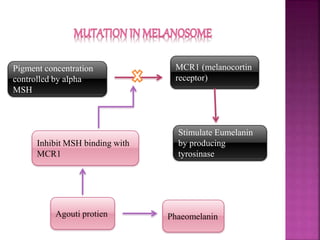
Pigment concentration
controlled by alpha
MSH
MCR1 (melanocortin
receptor)
Stimulate Eumelanin
by producing
tyrosinase
Agouti protien
Inhibit MSH binding with
MCR1
Phaeomelanin
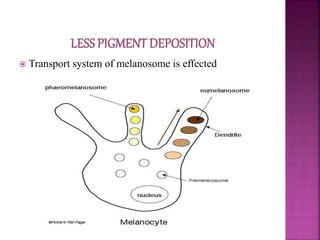
 Transport system of melanosome is effected
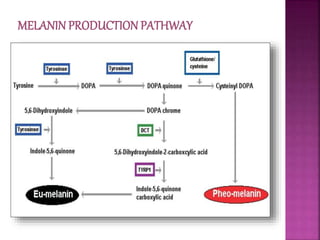
 Chinchili Gene mutation, Non or less functional
tyrosine production
 Poor cellular environment for pigment synthesis
 Mutation in the TRYP1 coding gene
Other factors affecting melanin production
Albinism

Albinism

  • 2.
     Albinism isa recessive trait that is normally inherited from two heterozygous parents  Also called achromia, achromasia, or achromatosis  Deficit in the production in melanin and by the partial or complete absence of pigment in the skin, hair and eyes  This hereditary disease can be found in humans (affecting all races), mammals, birds, fish, reptiles and amphibians
  • 5.
     Absence ofcolor in the hair, skin, or iris of the eye  Lighter than normal skin and hair  Patchy, missing skin color  Crossed eyes (strabismus/heterotropia)  Light sensitivity (photophobia)  Rapid eye movements (nystagmus/dancing eyes)  Vision problems, or functional blindness
  • 6.
     complete absenceof melanin is called an albino.  small amount of melanin is described as albinoid.
  • 7.
    ALBINISIM Oculocutaneous albinism Oculocutaneous albinism type 1 Oculocutaneous albinismtype 2 Oculocutaneous albinism type 3 Oculocutaneous albinism type 4 Ocular albinism
  • 8.
     OCA type1A complete absence of pigment in the skin, the hair, and the eyes  (OCA type 1B) moderate pigmentation in these tissues  (OCA type 1 TS) pigment in hair follicles of the cooler areas of the body, such as the arms and the legs
  • 9.
     does notpresent with complete absence of pigment but rather manifests with a minimal-to-moderate amount of pigment remaining in the skin, the hair, and the eyes.  Many patients with OCA type 2 can develop pigmented freckles, lentigines.  The ocular presentations are similar to those in OCA type 1
  • 10.
     manifests withminimal pigment reduction in the skin, the hair, and the eyes. This form of albinism was previously referred to as Brown albinism.  The ocular presentations are similar to those in OCA type 1, but they are not as severe.
  • 11.
     OCA type4 manifests with a phenotype resembling OCA type 2  OA manifests with ocular depigmentation and iris translucency. In addition, patients with OA present with congenital motor nystagmus that may be accompanied by reduced visual acuity, refractive errors, fundus hypopigmentation, and strabismus.
  • 13.
     Reduce sunburnrisk by avoiding the sun, using sunscreen, and covering up completely with clothing when exposed to the sun.  Sunscreen should have a high sun protection factor (SPF).  Sunglasses (UV protected) may relieve light sensitivity.
  • 16.
    Pigment concentration controlled byalpha MSH MCR1 (melanocortin receptor) Stimulate Eumelanin by producing tyrosinase Agouti protien Inhibit MSH binding with MCR1 Phaeomelanin
  • 17.
     Transport systemof melanosome is effected
  • 18.
     Chinchili Genemutation, Non or less functional tyrosine production  Poor cellular environment for pigment synthesis  Mutation in the TRYP1 coding gene Other factors affecting melanin production