“Lac Cultivation”
Session 2019-20
Presenting by: Rakesh Kumar Ghritlahare
M.sc.(RT) 3rd Semester
DEPARTMENT OF RURAL TECHNOLOGY
AND
SOCIAL DEVELOPMENT
GURU GHASIDAS VISHWAVIDYALAYA BILASPUR (CG.)
Contents
 Introduction
 History
 Methods of Lac Cultivation
 Uses of Lac
 Host Plants
 References
 Conclusion
Introduction
Lac is the resinous secretion of a number of species
of lac insects, of which of the most commonly
cultivated species is Kerria lacca and Laccifer
lacca (India).
History
 The word lac is derived from
the Sanskrit word lākshā' (लाक्षा), which represents the
number 100,000.
 Tachard is known as a father of lac insect.
 The first scientific or detailed study of the lac insect
was given by j. kerr in 1782.
Methods of Lac Cultivation
 Selection of trees and area
 Pruning of host trees
 Inoculation of host tree
 Removing of used-up broodlac sticks(phunki)
 Harvesting
Selection of Trees and Area
 The trees are normally found in a groups, either on
plains or in sub hilly areas or on border of paddy
fields.
 Dense canopy of tree, water bodies or dense forest is
preferred for summer crop.
 Open areas and isolated trees are preferred for rainy
season crop.
Pruning of Host Trees
 The operation is carried out six months before
inoculation for summer crop in the month of april.
 The pruning is done on a february for rainy season
crop.
 Shoots between 1.25-2.5cm diameters should be cut.
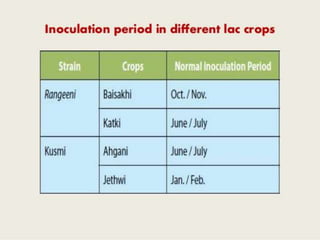
Inoculation of Host Tree
Tying of broodlac bundles on an branches of host trees
for spreading of lac insect on succulent shoots is called
inoculation.
Equipments of inoculation
1.60mm mesh
2.Synthetic net bag
3.Treads for tied on tree kerria lacca
Removing of used-up Broodlac
Sticks(Phunki)
 The used-up broodlac sticks should be removed from
inoculated tree as soon as emergence of lac larvae is
stopped.
 Normally this period is 15-20 days after tying of
bundles on tree.
 This period should not exceed 21 days in any case.
Removal Equipments
Harvesting
1.The crop is harvested either as an immature summer
crop (resin value) or mature crop as broodlac(lac
insect value).
2.Immature summer lac can be cut at any time when
encrustation becomes relatively thicker.
3.Normally broodlac is harvested in October-November
when crop matures
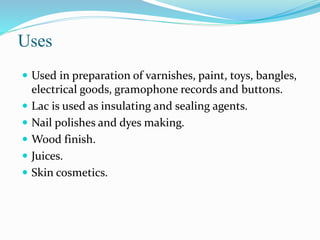
Uses
 Used in preparation of varnishes, paint, toys, bangles,
electrical goods, gramophone records and buttons.
 Lac is used as insulating and sealing agents.
 Nail polishes and dyes making.
 Wood finish.
 Juices.
 Skin cosmetics.
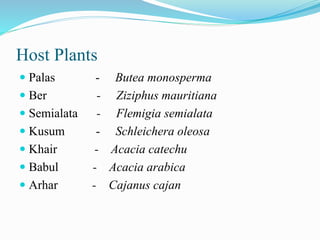
Host Plants
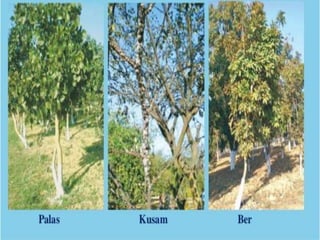
 Palas - Butea monosperma
 Ber - Ziziphus mauritiana
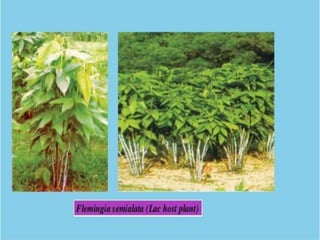
 Semialata - Flemigia semialata
 Kusum - Schleichera oleosa
 Khair - Acacia catechu
 Babul - Acacia arabica
 Arhar - Cajanus cajan
References
 Samiksha S. ,Scientific study of lac started much later.
In 1709 Father Tachard discovered the insect that
produced lac. First of all Kerr (1782) .
 Dr A K Jaiswal and Dr J P Singh (2015),The trees are
normally found in a groups, either on plains or in sub
hilly areas or on border of paddy fields.
Conclusion
The lac host plants shoots should be maintain properly
because the lac production is totally depend on the
good and vigorous of the host plants, so shoots be
required fully under care and management during the
cultivation.
Lac cultivation

Lac cultivation

  • 1.
    “Lac Cultivation” Session 2019-20 Presentingby: Rakesh Kumar Ghritlahare M.sc.(RT) 3rd Semester DEPARTMENT OF RURAL TECHNOLOGY AND SOCIAL DEVELOPMENT GURU GHASIDAS VISHWAVIDYALAYA BILASPUR (CG.)
  • 2.
    Contents  Introduction  History Methods of Lac Cultivation  Uses of Lac  Host Plants  References  Conclusion
  • 3.
    Introduction Lac is theresinous secretion of a number of species of lac insects, of which of the most commonly cultivated species is Kerria lacca and Laccifer lacca (India).
  • 4.
    History  The wordlac is derived from the Sanskrit word lākshā' (लाक्षा), which represents the number 100,000.  Tachard is known as a father of lac insect.  The first scientific or detailed study of the lac insect was given by j. kerr in 1782.
  • 5.
    Methods of LacCultivation  Selection of trees and area  Pruning of host trees  Inoculation of host tree  Removing of used-up broodlac sticks(phunki)  Harvesting
  • 6.
    Selection of Treesand Area  The trees are normally found in a groups, either on plains or in sub hilly areas or on border of paddy fields.  Dense canopy of tree, water bodies or dense forest is preferred for summer crop.  Open areas and isolated trees are preferred for rainy season crop.
  • 7.
    Pruning of HostTrees  The operation is carried out six months before inoculation for summer crop in the month of april.  The pruning is done on a february for rainy season crop.  Shoots between 1.25-2.5cm diameters should be cut.
  • 8.
    Inoculation of HostTree Tying of broodlac bundles on an branches of host trees for spreading of lac insect on succulent shoots is called inoculation. Equipments of inoculation 1.60mm mesh 2.Synthetic net bag 3.Treads for tied on tree kerria lacca
  • 10.
    Removing of used-upBroodlac Sticks(Phunki)  The used-up broodlac sticks should be removed from inoculated tree as soon as emergence of lac larvae is stopped.  Normally this period is 15-20 days after tying of bundles on tree.  This period should not exceed 21 days in any case.
  • 11.
  • 12.
    Harvesting 1.The crop isharvested either as an immature summer crop (resin value) or mature crop as broodlac(lac insect value). 2.Immature summer lac can be cut at any time when encrustation becomes relatively thicker. 3.Normally broodlac is harvested in October-November when crop matures
  • 13.
    Uses  Used inpreparation of varnishes, paint, toys, bangles, electrical goods, gramophone records and buttons.  Lac is used as insulating and sealing agents.  Nail polishes and dyes making.  Wood finish.  Juices.  Skin cosmetics.
  • 14.
    Host Plants  Palas- Butea monosperma  Ber - Ziziphus mauritiana  Semialata - Flemigia semialata  Kusum - Schleichera oleosa  Khair - Acacia catechu  Babul - Acacia arabica  Arhar - Cajanus cajan
  • 17.
    References  Samiksha S.,Scientific study of lac started much later. In 1709 Father Tachard discovered the insect that produced lac. First of all Kerr (1782) .  Dr A K Jaiswal and Dr J P Singh (2015),The trees are normally found in a groups, either on plains or in sub hilly areas or on border of paddy fields.
  • 18.
    Conclusion The lac hostplants shoots should be maintain properly because the lac production is totally depend on the good and vigorous of the host plants, so shoots be required fully under care and management during the cultivation.