What is Beekeeping?
 Beekeeping is Applied Bee Biology
Beekeeping is Colony Population
Management
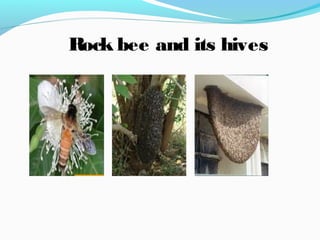
Rock bee and its hives
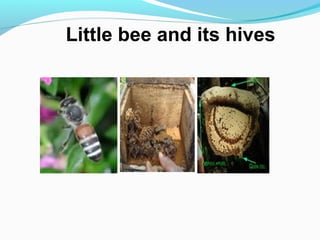
Little bee and its hives
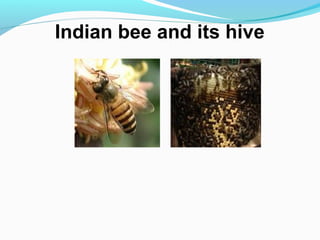
Indian bee and its hive
Bee History
Evolved from wasps perhaps 150 million years ago
A recently found fossilized bee dates back 97 million
years
First honey bee appeared 20-25 million years ago
Bee keeping” by humans occurred 3,500 years ago
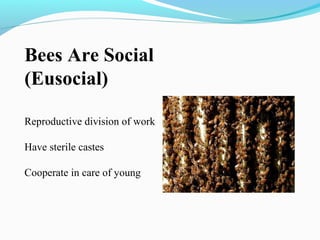
Bees Are Social
(Eusocial)
Reproductive division of work
Have sterile castes
Cooperate in care of young
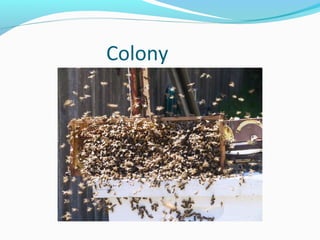
Colony
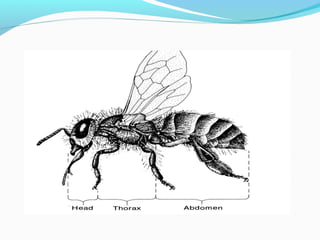
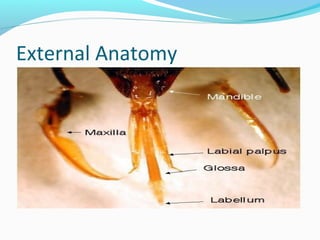
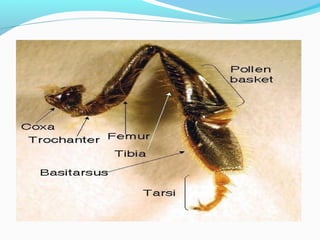
External Anatomy
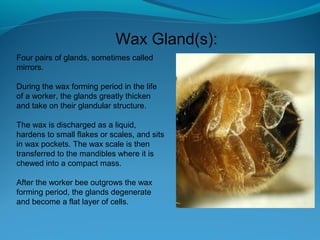
Four pairs of glands, sometimes called
mirrors.
During the wax forming period in the life
of a worker, the glands greatly thicken
and take on their glandular structure.
The wax is discharged as a liquid,
hardens to small flakes or scales, and sits
in wax pockets. The wax scale is then
transferred to the mandibles where it is
chewed into a compact mass.
After the worker bee outgrows the wax
forming period, the glands degenerate
and become a flat layer of cells.
Wax Gland(s):
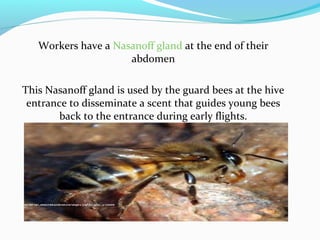
Workers have a Nasanoff gland at the end of their
abdomen
This Nasanoff gland is used by the guard bees at the hive
entrance to disseminate a scent that guides young bees
back to the entrance during early flights.
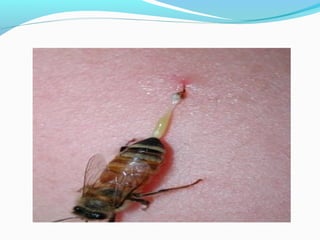
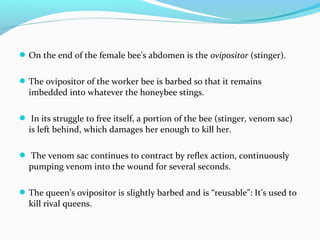
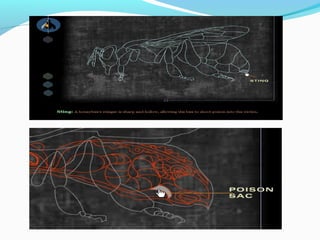
On the end of the female bee's abdomen is the ovipositor (stinger).
The ovipositor of the worker bee is barbed so that it remains
imbedded into whatever the honeybee stings.
 In its struggle to free itself, a portion of the bee (stinger, venom sac)
is left behind, which damages her enough to kill her.
 The venom sac continues to contract by reflex action, continuously
pumping venom into the wound for several seconds.
The queen’s ovipositor is slightly barbed and is “reusable”: It’s used to
kill rival queens.
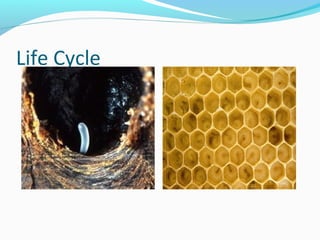
Life Cycle
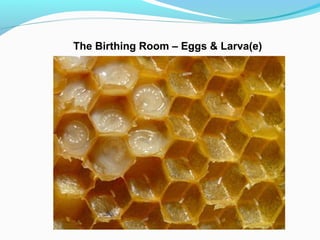
The Birthing Room – Eggs & Larva(e)
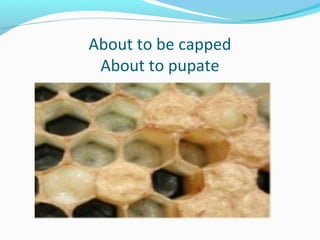
About to be capped
About to pupate
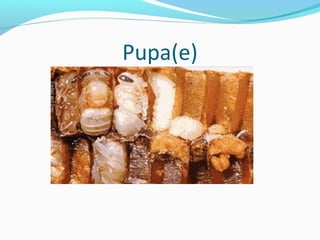
Pupa(e)
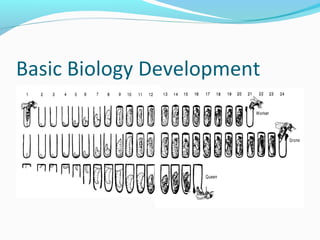
Basic Biology Development
Adults
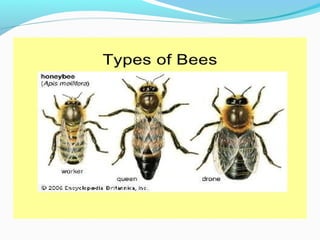
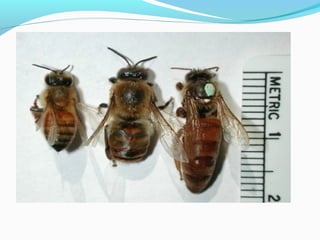
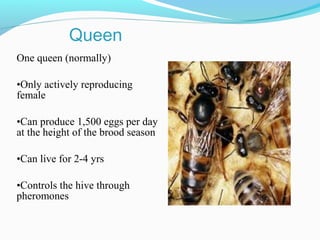
One queen (normally)
•Only actively reproducing
female
•Can produce 1,500 eggs per day
at the height of the brood season
•Can live for 2-4 yrs
•Controls the hive through
pheromones
Queen
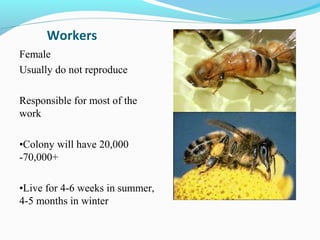
Workers
Female
Usually do not reproduce
Responsible for most of the
work
•Colony will have 20,000
-70,000+
•Live for 4-6 weeks in summer,
4-5 months in winter
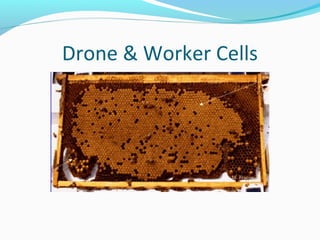
Drone & Worker Cells
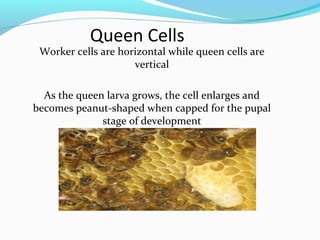
Queen Cells
Worker cells are horizontal while queen cells are
vertical
As the queen larva grows, the cell enlarges and
becomes peanut-shaped when capped for the pupal
stage of development
Drones
Males
Sexually mature at 2 weeks
Mate with female queens while in flight
Upon mating they die
Removed from the hive in late fall
Division of Labor
Among females (reproduction)
Among workers (tasks)
Not fixed somewhat plastic
Depends upon
Age or development of the bee
Needs of the colony
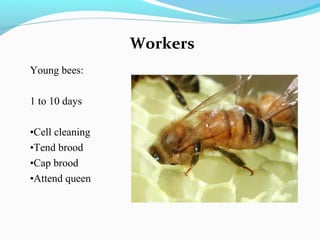
Young bees:
1 to 10 days
•Cell cleaning
•Tend brood
•Cap brood
•Attend queen
Workers
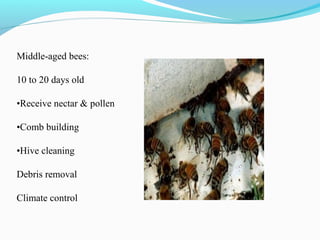
Middle-aged bees:
10 to 20 days old
•Receive nectar & pollen
•Comb building
•Hive cleaning
Debris removal
Climate control
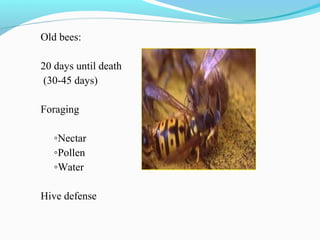
Old bees:
20 days until death
(30-45 days)
Foraging
◦Nectar
◦Pollen
◦Water
Hive defense
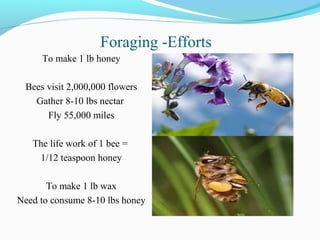
Foraging -Efforts
To make 1 lb honey
Bees visit 2,000,000 flowers
Gather 8-10 lbs nectar
Fly 55,000 miles
The life work of 1 bee =
1/12 teaspoon honey
To make 1 lb wax
Need to consume 8-10 lbs honey
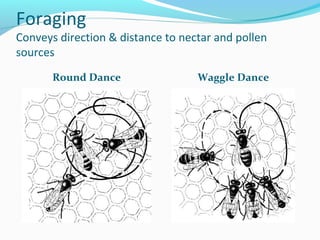
Foraging
Conveys direction & distance to nectar and pollen
sources
Round Dance Waggle Dance
Division of Labor
Reproduction
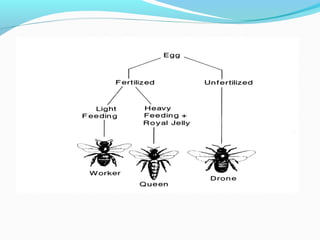
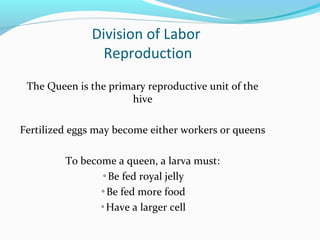
The Queen is the primary reproductive unit of the
hive
Fertilized eggs may become either workers or queens
To become a queen, a larva must:
◦Be fed royal jelly
◦Be fed more food
◦Have a larger cell
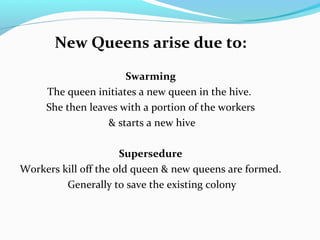
New Queens arise due to:
Swarming
The queen initiates a new queen in the hive.
She then leaves with a portion of the workers
& starts a new hive
Supersedure
Workers kill off the old queen & new queens are formed.
Generally to save the existing colony
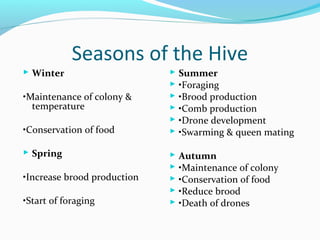
Seasons of the Hive
 Winter
•Maintenance of colony &
temperature
•Conservation of food
 Spring
•Increase brood production
•Start of foraging
 Summer
 •Foraging
 •Brood production
 •Comb production
 •Drone development
 •Swarming & queen mating
 Autumn
 •Maintenance of colony
 •Conservation of food
 •Reduce brood
 •Death of drones

Honey Bee Biology by Madam Ayesha Department of Zoology University of Peshawar Pakistan

  • 2.
    What is Beekeeping? Beekeeping is Applied Bee Biology Beekeeping is Colony Population Management
  • 3.
    Rock bee andits hives
  • 4.
    Little bee andits hives
  • 5.
  • 6.
    Bee History Evolved fromwasps perhaps 150 million years ago A recently found fossilized bee dates back 97 million years First honey bee appeared 20-25 million years ago Bee keeping” by humans occurred 3,500 years ago
  • 7.
    Bees Are Social (Eusocial) Reproductivedivision of work Have sterile castes Cooperate in care of young
  • 10.
  • 13.
  • 16.
    Four pairs ofglands, sometimes called mirrors. During the wax forming period in the life of a worker, the glands greatly thicken and take on their glandular structure. The wax is discharged as a liquid, hardens to small flakes or scales, and sits in wax pockets. The wax scale is then transferred to the mandibles where it is chewed into a compact mass. After the worker bee outgrows the wax forming period, the glands degenerate and become a flat layer of cells. Wax Gland(s):
  • 17.
    Workers have aNasanoff gland at the end of their abdomen This Nasanoff gland is used by the guard bees at the hive entrance to disseminate a scent that guides young bees back to the entrance during early flights.
  • 18.
    On the endof the female bee's abdomen is the ovipositor (stinger). The ovipositor of the worker bee is barbed so that it remains imbedded into whatever the honeybee stings.  In its struggle to free itself, a portion of the bee (stinger, venom sac) is left behind, which damages her enough to kill her.  The venom sac continues to contract by reflex action, continuously pumping venom into the wound for several seconds. The queen’s ovipositor is slightly barbed and is “reusable”: It’s used to kill rival queens.
  • 20.
  • 21.
    The Birthing Room– Eggs & Larva(e)
  • 22.
    About to becapped About to pupate
  • 23.
  • 24.
  • 25.
  • 26.
    One queen (normally) •Onlyactively reproducing female •Can produce 1,500 eggs per day at the height of the brood season •Can live for 2-4 yrs •Controls the hive through pheromones Queen
  • 27.
    Workers Female Usually do notreproduce Responsible for most of the work •Colony will have 20,000 -70,000+ •Live for 4-6 weeks in summer, 4-5 months in winter
  • 28.
  • 29.
    Queen Cells Worker cellsare horizontal while queen cells are vertical As the queen larva grows, the cell enlarges and becomes peanut-shaped when capped for the pupal stage of development
  • 30.
    Drones Males Sexually mature at2 weeks Mate with female queens while in flight Upon mating they die Removed from the hive in late fall
  • 31.
    Division of Labor Amongfemales (reproduction) Among workers (tasks) Not fixed somewhat plastic Depends upon Age or development of the bee Needs of the colony
  • 32.
    Young bees: 1 to10 days •Cell cleaning •Tend brood •Cap brood •Attend queen Workers
  • 33.
    Middle-aged bees: 10 to20 days old •Receive nectar & pollen •Comb building •Hive cleaning Debris removal Climate control
  • 34.
    Old bees: 20 daysuntil death (30-45 days) Foraging ◦Nectar ◦Pollen ◦Water Hive defense
  • 35.
    Foraging -Efforts To make1 lb honey Bees visit 2,000,000 flowers Gather 8-10 lbs nectar Fly 55,000 miles The life work of 1 bee = 1/12 teaspoon honey To make 1 lb wax Need to consume 8-10 lbs honey
  • 36.
    Foraging Conveys direction &distance to nectar and pollen sources Round Dance Waggle Dance
  • 37.
    Division of Labor Reproduction TheQueen is the primary reproductive unit of the hive Fertilized eggs may become either workers or queens To become a queen, a larva must: ◦Be fed royal jelly ◦Be fed more food ◦Have a larger cell
  • 38.
    New Queens arisedue to: Swarming The queen initiates a new queen in the hive. She then leaves with a portion of the workers & starts a new hive Supersedure Workers kill off the old queen & new queens are formed. Generally to save the existing colony
  • 39.
    Seasons of theHive  Winter •Maintenance of colony & temperature •Conservation of food  Spring •Increase brood production •Start of foraging  Summer  •Foraging  •Brood production  •Comb production  •Drone development  •Swarming & queen mating  Autumn  •Maintenance of colony  •Conservation of food  •Reduce brood  •Death of drones