   Motivations?
       Gold, Glory, and God!
   Hispaniola (Haiti and Dom. Rep.),
    Cuba, and Puerto Rico
   Native Americans – suffered
    terribly as they contracted
    European diseases
   Hernan Cortes – Mexico in 1519,
    headed to Tenochtitlan
    ›   Formed alliances with groups
        that didn’t like the Aztecs to rally
        an army
    ›   Moctezuma welcomes him into
        the capital, quickly don’t get
        along
    ›   Spaniards pushed out, retreat
        and plan, return and conquer
        Tenochtitlan – Mexico City
 Francisco Pizarro – finds the
  Incan empire in the midst of
  civil war and easily takes
  over
 Spanish forces stretch from
  Ecuador to Chile and
  continue adding most of the
  rest of S. America (except
  Brazil)
 Reasons for Spaniards
  success?
    › Superior military technology
      (horses, gun powder, and
      thick armor)
    › Diseases of the Europeans
 Stretched from California to S. America
 Catholic Church played a key role – see it
  as a perfect opportunity to spread
  Christianity – Jesuits help a great deal
 Economic Benefits are HUGE:
    › Raw materials exported back to Europe
    › Colonies can only by Spanish manufactured
      goods
    › Silver and gold brought back by the shiploads
    › Sugar cane plantations
    › Encomienda system (labor from locals)
• Peninsulares – Iberian descent, top gvt and
  Cath Ch
• Creoles – American born, own plantations,
ranches, and mines
• Mestizos – Native American + European
• Mulattoes – African + European
• Lowest Classes – Native American and then
  Africans
• Priest who wrote letter to the king
  condemning the encomienda system
• King bans enslavement of the Natives
• Spain and Portugal turn to Africa for
  labor
 Brazil is their biggest colony
 Also use Africans and the Native
  Americans to work sugar plantations
 The rest of Europe is very frustrated by
  Spain’s control over colonial trade
 Privateers (pirates) who were Dutch,
  English and French begin preying on
  Spanish ships carrying supplies (esp. gold
  and silver)
 European governments often
  encouraged and facilitated the
  privateers
    › Ex. Queen Elizabeth and Sir Francis Drake
 Samuel de Champlain – first permanent
  settlement, Quebec, Canada – 1608
 New France
 Louis XIV, powerful absolutist (and
  Catholic) French King – prohibits
  Protestants from settling in France.
 By early 1700s French forts, missions, and
  trading posts stretch from Quebec to
  Lousiana
 Jamestown, Virginia – 1607
 Plymouth, Massachusetts - 1620
 1600 and 1700s – 13 English colonies
  established
    › Commercial ventures
    › Havens for religious persecution
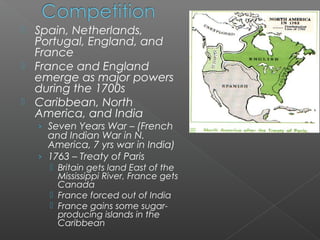
 Spain, Netherlands,
  Portugal, England, and
  France
 France and England
  emerge as major powers
  during the 1700s
 Caribbean, North
  America, and India
    › Seven Years War – (French
      and Indian War in N.
      America, 7 yrs war in India)
    › 1763 – Treaty of Paris
       Britain gets land East of the
        Mississippi River, France gets
        Canada
       France forced out of India
       France gains some sugar-
        producing islands in the
        Caribbean

Colonizing the Americas

  • 2.
    Motivations?  Gold, Glory, and God!  Hispaniola (Haiti and Dom. Rep.), Cuba, and Puerto Rico  Native Americans – suffered terribly as they contracted European diseases  Hernan Cortes – Mexico in 1519, headed to Tenochtitlan › Formed alliances with groups that didn’t like the Aztecs to rally an army › Moctezuma welcomes him into the capital, quickly don’t get along › Spaniards pushed out, retreat and plan, return and conquer Tenochtitlan – Mexico City
  • 3.
     Francisco Pizarro– finds the Incan empire in the midst of civil war and easily takes over  Spanish forces stretch from Ecuador to Chile and continue adding most of the rest of S. America (except Brazil)  Reasons for Spaniards success? › Superior military technology (horses, gun powder, and thick armor) › Diseases of the Europeans
  • 4.
     Stretched fromCalifornia to S. America  Catholic Church played a key role – see it as a perfect opportunity to spread Christianity – Jesuits help a great deal  Economic Benefits are HUGE: › Raw materials exported back to Europe › Colonies can only by Spanish manufactured goods › Silver and gold brought back by the shiploads › Sugar cane plantations › Encomienda system (labor from locals)
  • 5.
    • Peninsulares –Iberian descent, top gvt and Cath Ch • Creoles – American born, own plantations, ranches, and mines • Mestizos – Native American + European • Mulattoes – African + European • Lowest Classes – Native American and then Africans
  • 6.
    • Priest whowrote letter to the king condemning the encomienda system • King bans enslavement of the Natives • Spain and Portugal turn to Africa for labor
  • 7.
     Brazil istheir biggest colony  Also use Africans and the Native Americans to work sugar plantations
  • 8.
     The restof Europe is very frustrated by Spain’s control over colonial trade  Privateers (pirates) who were Dutch, English and French begin preying on Spanish ships carrying supplies (esp. gold and silver)  European governments often encouraged and facilitated the privateers › Ex. Queen Elizabeth and Sir Francis Drake
  • 9.
     Samuel deChamplain – first permanent settlement, Quebec, Canada – 1608  New France  Louis XIV, powerful absolutist (and Catholic) French King – prohibits Protestants from settling in France.  By early 1700s French forts, missions, and trading posts stretch from Quebec to Lousiana
  • 10.
     Jamestown, Virginia– 1607  Plymouth, Massachusetts - 1620  1600 and 1700s – 13 English colonies established › Commercial ventures › Havens for religious persecution
  • 11.
     Spain, Netherlands, Portugal, England, and France  France and England emerge as major powers during the 1700s  Caribbean, North America, and India › Seven Years War – (French and Indian War in N. America, 7 yrs war in India) › 1763 – Treaty of Paris  Britain gets land East of the Mississippi River, France gets Canada  France forced out of India  France gains some sugar- producing islands in the Caribbean