Downloaded 104 times
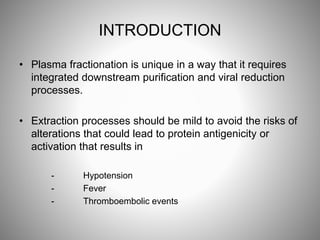

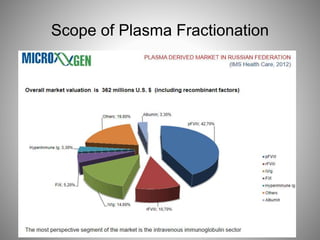
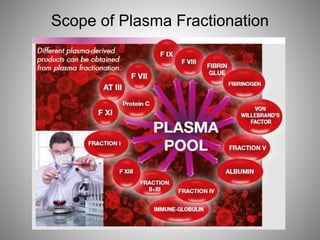
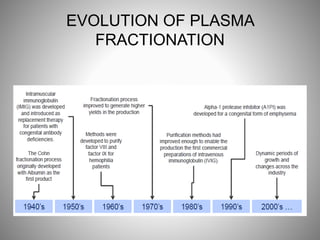
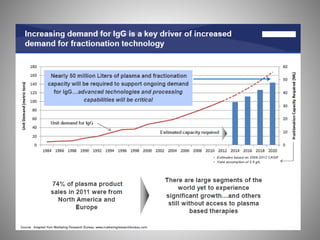
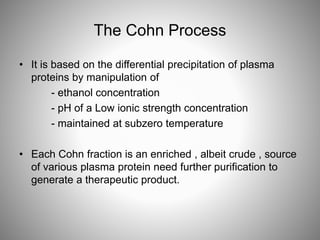
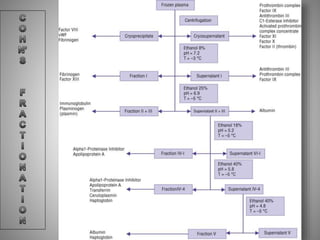
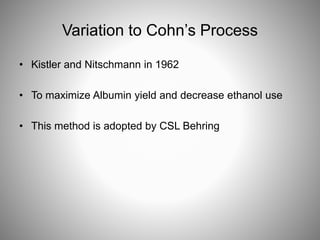
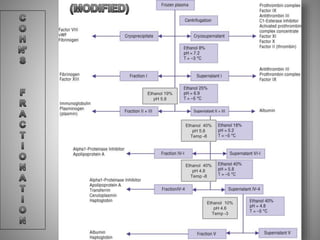
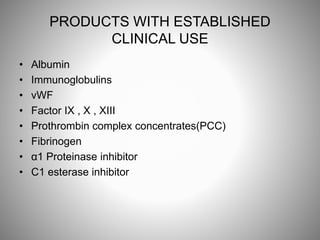
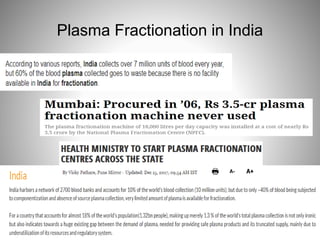
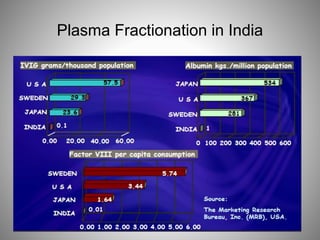
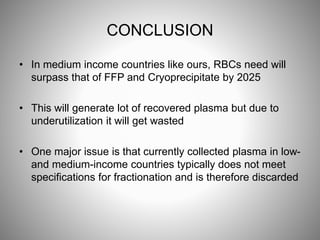


Cohn's fractionation method from the 1940s remains pivotal for plasma fractionation. It allows industrial-scale albumin production and generates fractions with therapeutic interest. The process uses ethanol precipitation under varying conditions to enrich plasma proteins. Additional purification steps like chromatography are needed to produce final therapeutic products. Safety improvements like viral removal filters and solvent-detergent treatment were later incorporated. Plasma fractionation now recovers over 30 million liters annually worldwide. India could better utilize recovered plasma through local or contracted fractionation to produce important proteins like albumin, immunoglobulins and clotting factors.


![APHERESIS [Autosaved].pptx apheresis ppt for mlt](https://cdn.slidesharecdn.com/ss_thumbnails/apheresisautosaved-240728082506-6b08dadf-thumbnail.jpg?width=640&height=640&fit=bounds)


