REVISED NBTC GUIDELINES
FOR BLOOD DONOR
SELECTION AND BLOOD
DONOR DEFERRAL- JUNE 01
2017
DR AKSHAYA TOMAR
DEPT OF IMMUNOHEMATOLOGY AND BLOOD TRANSFUSION
AFMC, PUNE
INTRODUCTION
Ensure safe, sufficient and timely supply of blood and
blood components.
Build and maintain a pool of safe, voluntary non
remunerated blood donors.
Ensure products derived from donated blood are
efficacious with a minimal risk of infection to the
recipient.
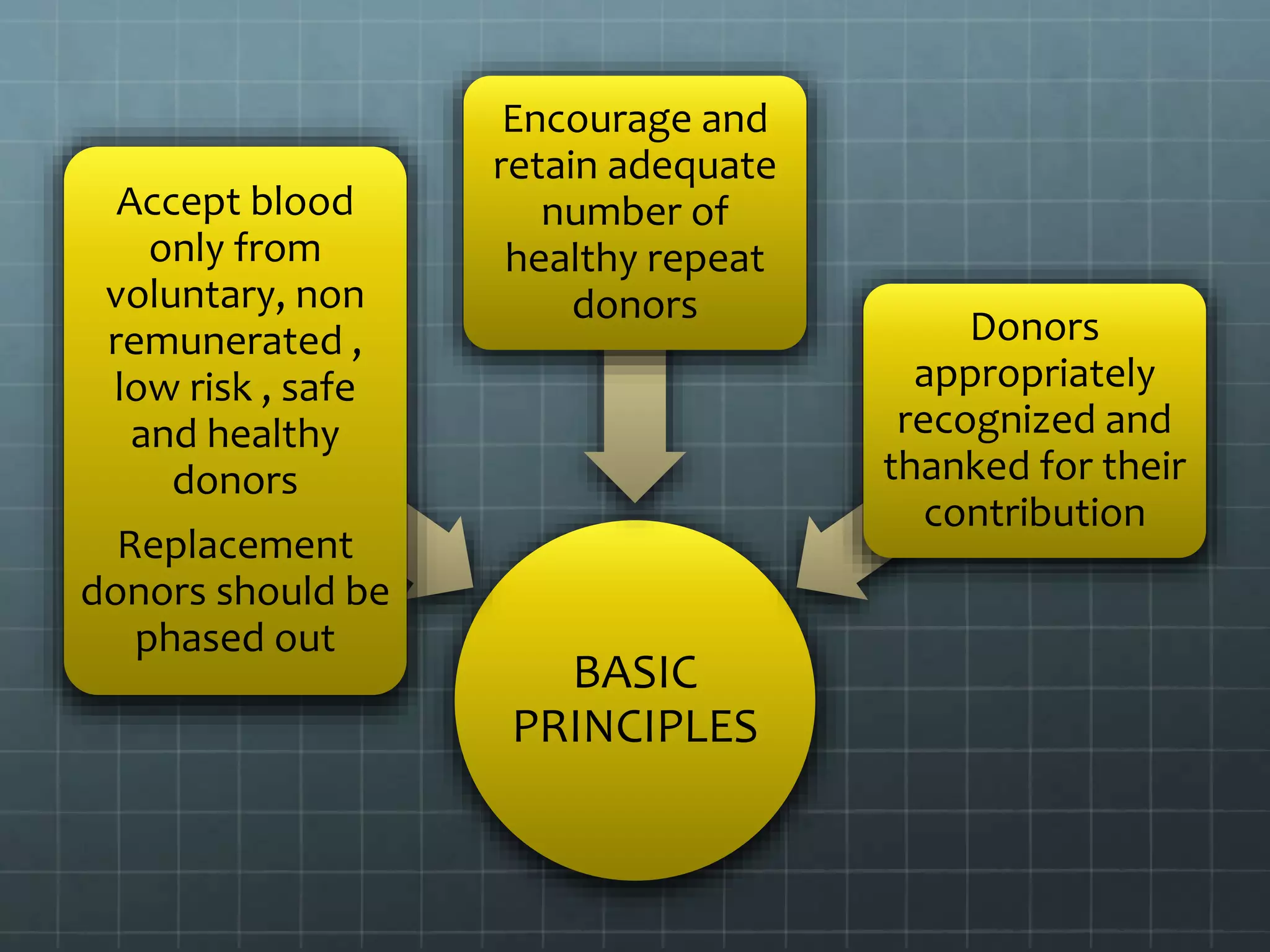
BASIC
PRINCIPLES
Accept blood
only from
voluntary, non
remunerated ,
low risk , safe
and healthy
donors
Replacement
donors should be
phased out
Encourage and
retain adequate
number of
healthy repeat
donors
Donors
appropriately
recognized and
thanked for their
contribution
DONOR MOTIVATION
Done by Volunteers from Community- community
organizations, civil society bodies and NGOs.
Various communication materials and methods used.
The minimum criteria for blood donation ( age btw 18- 65 ,
weight> 45 kgs , Hb >= 12.5 g/dl) verbally screened at this
stage
Once recruited , one time donors to be encouraged to
become regular repeat donors.
Donors should be retained with blood transfusion service
through different communication media.
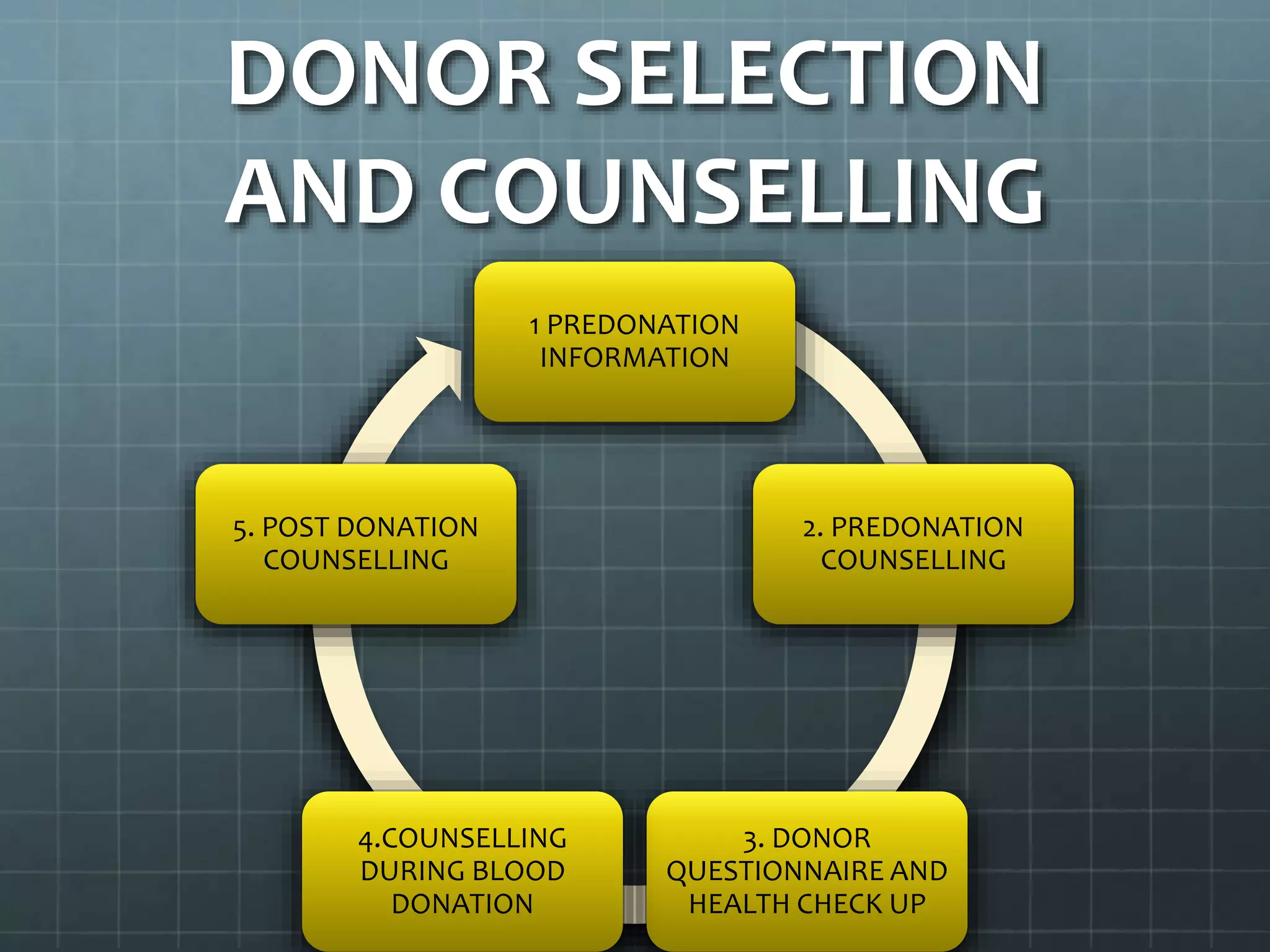
DONOR SELECTION
AND COUNSELLING
1 PREDONATION
INFORMATION
2. PREDONATION
COUNSELLING
3. DONOR
QUESTIONNAIRE AND
HEALTH CHECK UP
4.COUNSELLING
DURING BLOOD
DONATION
5. POST DONATION
COUNSELLING
PRE DONATION INFORMATION
Nature and use of
blood and its
components
Eligibility for blood
donation
Rationale for the
donor
questionnaire and
pre donation
health assessment
Common TTI, modes
of transmission and
window period
Blood donation
process and
potential adverse
donor reactions
Options for the
donor to withdraw
at any time before,
during, after
donation
Basic information
on tests performed
on donated blood
Possible
consequences
for donor and
donated blood
in the case of
abnormal TTI
test results
PRE DONATION COUNSELLING
Understand donor questionnaire to enable correct
responses
Reiterate understanding of TTI testing and disclosure
of results
Clarify any misunderstanding about donor selection,
blood donation and blood screening
Explain self deferral
Explain temporary and permanent deferral
Familiarize donor to process of blood donation
Obtain donor’s informed consent
DONOR QUESTIONNAIRE AND HEALTH
CHECK UP
Enable a quick history taking, limited physical examination and
blood test(Hb) by a Medical Officer
Prepared in English and Local languages
Simple and easy to understand
Demographic details of the donor , date and time of donor selection
and donation to be registered.
Written Informed consent to be obtained with donor’s signature or
thumb impression
Obtain correct contact details of the blood donors
Photo identity can be asked but should not be made mandatory
In case of deferral, donor should be explained the reasons to do so
DONOR CONSENT
Blood donation is a totally voluntary act and no inducement or
remuneration has been offered.
Donation of blood/ components is a medical procedure and that
by donating voluntarily, I accept the risk associated with this
procedure
My donated blood and plasma recovered from my donated blood
may be sent for plasma fractionation for preparation of plasma
derived medicines , which may be used for larger patient
population and not just this blood bank
My blood will be tested for Hepatitis B, Hepatitis C, Malarial
parasite , HIV/AIDS and Syphilis disease in addition to any other
screening tests required to ensure blood safety
I would like to be informed about any abnormal test results done
on my donated blood- yes/ no
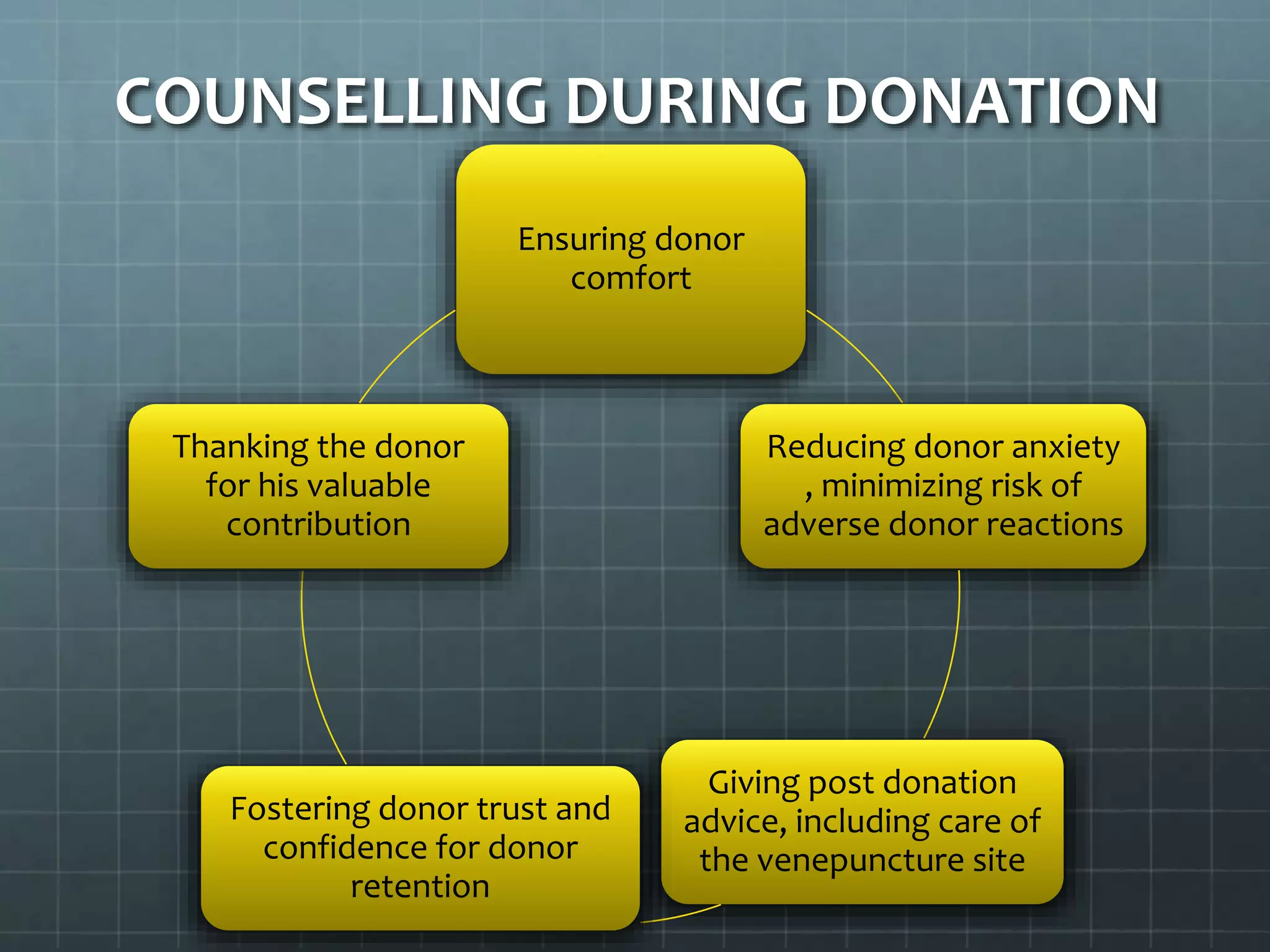
COUNSELLING DURING DONATION
Ensuring donor
comfort
Reducing donor anxiety
, minimizing risk of
adverse donor reactions
Giving post donation
advice, including care of
the venepuncture site
Fostering donor trust and
confidence for donor
retention
Thanking the donor
for his valuable
contribution
POST DONATION INTERACTION
Brief instructions on self care-
1. plenty of fluids
2. No heavy work
3. No smoking or driving immediately post donation
4. Remove bandage after 6 hours
5. Contact details of blood bank in case of discomfort following
donation
Information about what to do in case of specific
adverse donor reactions
Message on healthy lifestyle and regular donation
Donor feedback
Issuance of donor card, donor certificate or a
memento
Reiteration for recalling of blood donor for abnormal
test results
POST DONATION INTERACTION
BLOOD DONATION
SELECTION CRITERIA-
GENERAL
BLOOD DONOR SELECTION CRITERIA
S.No. Criteria Recommendations
1 Well Being • Donor shall be in good health, mentally alert, physically fit
• Shall not be inmate of jail or any other confinement
• “Differently abled” can donate blood provided that clear
and confidential information can be established
2 Age • Minimum – 18 years
• Maximum – 65 years
• First time donor – not more than 60 years
• For apheresis - 18- 60 years
3 Whole blood
volume collected
and weight of the
donor
350 ml – 45 kg
450 ml- > 55 kg
Apheresis – 50 kg
S. no Criteria Recommendations
4 Donation
Interval
• Whole blood donation – once in three months( 90 days)
for males and four months ( 120 days ) for females
• For apheresis – at least 48 hours interval after platelet/
plasma apheresis shall be kept( not more than 2 times a

week, limited to 24 in one year)
• After whole blood donation a plateletpheresis donor shall
not be accepted before 28 days
• After apheresis – whole blood donation after 28 days from
last platelet donation – if red cell re infusion was complete
• After apheresis - whole blood donation after 90 days - if
red cell reinfusion was not complete
• A donor shall not donate any type of donation within 12
months after a bone marrow harvest
• A donor shall not donate any type of donation within 6
months after a peripheral stem cell harvest
BLOOD DONOR SELECTION CRITERIA
S. No Criteria Recommendations
5 Blood Pressure • 100-140 mm Hg systolic
• 60 – 90 mm Hg diastolic with or without medications
• No finding suggestive of end organ damage or
secondary complications( cardiac, renal, eye or vascular)
• No history of giddiness, fainting
• Neither the drug nor its dosage should have been
altered in the last 28 days
6 Pulse 60 – 100 regular
7 Temperature Afebrile; 37 C / 98.4 F
BLOOD DONOR SELECTION CRITERIA
S No Criteria Recommendations
8 Respiration The donor shall be free from acute respiratory disease
9 Hemoglobin • >= 12.5 g/dl
• Thalassemia trait may be accepted , provided
hemoglobin is acceptable
10 Meal • Donor shall not be fasting before blood donation
• Last meal 4 hours prior to donation
• Donor shall not have consumed alcohol / show signs of
intoxication before blood donation
• Donor shall not be a person having regular heavy alcohol
intake
11 Occupation • Donor shall not be a night shift worker without adequate
sleep
• Air crew members, long distance vehicle driver, indls
doing strenuous work shall not donate blood 24 hours
prior to their next duty shift
BLOOD DONOR SELECTION CRITERIA
S No Criteria Recommendations
12 Risk behavior • Donor shall be free from any disease transmissible by
transfusion,(by history and examination)
• Donor shall not be at risk for HIV, Hepatitis B or C infections
13 Travel and
residence
• Donor shall not be a person with history of residence or
travel in a geographical area which is endemic for diseases
transmitted by blood transfusion, for which screening is not
mandated
14 Donor Skin • Free from skin diseases at the site of phlebotomy
• Arms and forearms free of skin puncture/ scars indicative of
professional blood donors/ self injected narcotics
BLOOD DONOR SELECTION CRITERIA
PHYSIOLOGICAL
STATUS FOR WOMEN
S. No Criteria Recommendations
15 Pregnancy/
recently
delivered
• Defer for 12 months after delivery
16 Abortion • Defer for 6 months after abortion
17 Breast feeding • Defer for total period of lactation
18 Menstruation • Defer for period of menstruation
BLOOD DONATION IN
RESPIRATORY
DISEASES
S No Criteria Recommendations
19 Non specific symptoms
including pain, malaise,
headache
Defer until all symptoms subside and donor is
afebrile
20 Cold, flu, cough, sore
throat or acute sinusitis
Defer until all symptoms subside and donor is
afebrile
21 Chronic sinusitis Accept unless on antibiotics
22 Asthmatic attack Permanently defer
23 Asthmatic on steroids Permanently defer
BLOOD DONATION
AFTER SURGICAL
PROCEDURES
S No Criteria Recommendations
24 Major surgery Defer for 12 months after recovery
25 Minor surgery Defer for 6 months after recovery
26 Received blood
transfusion
Defer for 12 months
27 Open heart surgery
including By- pass
surgery
Permanently defer
28 Cancer surgery Permanently defer
29 Tooth extraction Defer for 6 months after tooth extraction
30 Dental surgery under
anaesthesia
Defer for 6 months after recovery
CARDIO VASCULAR
DISEASES
S No Criteria Recommendations
31 Has any active symptom(chest pain,
shortness of breath, swelling of feet)
Permanently defer
32 Myocardial infarction( heart attack) Permanently defer
33 Cardiac medication Permanently defer
34 Hypertensive heart disease Permanently defer
35 Coronary artery disease Permanently defer
36 Angina pectoris Permanently defer
37 Rheumatic heart disease with residual
damage
Permanently defer
CNS AND ENDOCRINE
DISORDERS
S No Criteria Recommendations
38 Migraine Accept if not severe and occurs at a frequency of less than once a
week
39 Convulsions and
epilepsy
Permanently defer
40 Schizophrenia Permanently defer
41 Anxiety and
mood disorders
Accept person having anxiety and mood( affective) disorders like
depression or bipolar disorder , but is stable and feeling well on
the day regardless of medication
S no Criteria Recommendations
42 Diabetes
mellitus
• Accept – diabetics well controlled on oral hypoglycemic
medication, with no history of orthostatic hypotension, infection,
neuropathy or vascular disease
• Permanently defer - diabetics requiring insulin and / or with
complications of diabetes with multi organ involvement
• Defer if oral hypoglycemic medication has been altered/ dosage
adjusted in last 4 weeks
43 Thyroid
disorders
• Accept – benign thyroid disorders if euthyroid ( asymptomatic
Goiter , history of viral thyroiditis, auto immune hypo thyroidism)
• Defer if under investigation for thyroid disease or thyroid status is
not known
• Permanently defer if:
• Thyrotoxicosis due to Grave’s disease
• Hyper / hypo thyroid
• History of malignant thyroid tumours
44 Other
endocrine
disorders
Permanently defer
LIVER DISEASE AND
HEPATITIS INFECTION
S No Criteria Recommendations
45 Hepatitis Known hepatitis B, C – Permanently defer
Unknown hepatitis – permanently defer
Known hepatitis A or E; Defer for 12 months
46 Spouse/ partner/ close contact
of individual suffering with
hepatitis
Defer for 12 months
47 At risk for hepatitis by tattoos,
acupuncture or body piercing,
scarification and any other
invasive cosmetic procedure by
self or spouse/ partner
Defer for 12 months
48 Spouse/ partner of individual
receiving transfusion of blood/
components
Defer for 12 months
49 Jaundice Accept donor with history of jaundice that was
attributed to gall stones , Rh disease,
mononucleosis or in neonatal period
50 Chronic liver disease/ liver failure Permanently defer
HIV/AIDS AND STDs
S no Criteria Recommendations
51 At risk for HIV infection
(transgender, men who
have sex with men, female
sex workers, injecting drug
users, persons with
multiple sex partners
Permanently defer
52 Known HIV positive person
or spouse/ partner of PLHA
( person living with HIV
AIDS)
Permanently defer
53 Persons having symptoms
suggestive of AIDS
Permanently defer person having lymphadenopathy,
prolonged and repeated fever, prolonged and
repeated diarrhoea irrespective of HIV risk or status
54 Syphilis( generalized skin
rash/ genital sore)
Permanently defer
55 Gonorrhoea Permanently defer
MISCELLANEOUS
S No Criteria Recommendations
56 History of measles,
mumps and chicken
pox
• Defer for 2 weeks following full recovery
57 Malaria • Defer for 3 months following full recovery
58 Typhoid • Defer for 12 months following full recovery
59 Dengue/
Chikungunya
• In case of history of Dengue/ Chikungunya : defer for 6
months following full recovery
• Following visit to Dengue/ Chikungunya endemic area: 4
weeks following return from visit to dengue endemic
area if no febrile illness is noted
60 Zika Virus/ West Nile
Virus
In case of Zika infection: defer for 4 months following
recovery
In case of history of travel to West Nile virus endemic area/
Zika virus outbreak zone: defer for 4 months
61 Tuberculosis Defer for 2 years following confirmation of cure
62/ 63 Leishmaniasis /
leprosy
Permanently defer
64 Conjunctivitis Defer for the period of illness and continuation of local
medication
65 Osteomyelitis Defer for 2 years following completion of treatment
and cure
66 Acute infection of kidney(
pyelonephritis)
Defer for 6 months after complete recovery and last
dose of medication
67 UTI/ cystitis Defer for 2 weeks after complete recovery and last
dose of medication
68 Chronic infection of kidney /
kidney disease/ renal failure
Permanently defer
69 Diarrhoea Person having history of diarrhoea in preceding week
particularly if associated with fever: defer for 2 weeks
after complete recovery and last dose of medication
70 GI endoscopy Defer for 12 months
71 Acid peptic disease Accept – person with acid reflux, mild gastro
oesophageal reflux disorder( GERD) , hiatus hernia
Permanently defer : stomach ulcer with symptoms or
with recurrent bleeding
72 Autoimmune disorders- SLE, scleroderma,
ankylosing spondylitis, severe RA
Permanently defer
73 Polycythaemia Vera Permanently defer
74 Bleeding disorders and unexplained
bleeding tendency
Permanently defer
75 Malignancy Permanently defer
76 Severe allergic disorders Permanently defer
77 Haemoglobinopathies and red cell enzyme
deficiencies with known history of
haemolysis
Permanently defer
VACCINATION AND
DRUGS
78 NON LIVE VACCINES AND TOXOID: Typhoid ,
Cholera , Papillomavirus, Influenza,
Meningococcal, Pertussis , Pneumococcal , Polio
injectable , Diphtheria , Tetanus , Plague
Defer for 14 days
79 LIVE ATTENUATED VACCINES: Polio oral,
Measles( rubella ), Mumps , Yellow fever ,
Japanese encephalitis , influenza , Typhoid ,
Cholera, Hepatitis A
Defer for 28 days
80 Anti tetanus serum, anti venom serum, anti
diphtheria serum, anti gas gangrene serum
Defer for 28 days
81 Anti rabies vaccination following animal bite,
Hepatitis B Immunoglobulin, Immunoglobulins
Defer for 1 year
82 Oral contraceptives Accept
83 Analgesics Accept
84 Vitamins Accept
85 Mild sedatives and
tranquilizers
Accept
86 Allopurinol Accept
87 Cholesterol lowering
medication
Accept
88 Salicylates ( aspirin) ,
other NSAIDs
Defer for 3 days if blood is to be used for platelet
preparation
89 Ketoconazole ,
antihelminthic drugs
including
mebendazolede
Defer for 7 days after last dose if donor is well
90 Antibiotics Defer for two weeks after last dose if donor is well
91 Ticlopidine, clopidogrel Defer for two weeks after last dose
92 Piroxicam, dipyridamole Defer for two weeks after last dose
93 Etretinate, Acitrecin or Isotretinoin Defer for 1 month after the last dose
94 Finasteride used to treat benign prostatatic
hyperplasia
Defer for 1 month after the last dose
95 Radioactive contrast material 8 weeks deferral
96 Dutasteride used to treat benign
prostatatic hyperplasia
Defer for 6 months after the last dose
97 Any medication of unknown nature Defer till details are available
98 Oral anti – diabetic drugs Accept if there is no alteration in dose
within last 4 weeks
99 Insulin Permanently defer
100 Anti arrhythmic, anti convulsions, anti
coagulant, anti thyroid drugs, cytotoxic
drugs, cardiac failure drugs
Permanently defer
101 Recipients of organ, stem cell and tissue
transplants
Donors who have had unexplained delayed
faint with injury or two consecutive faints
following blood donation
Permanently defer
INFORMATION OF TEST RESULTS
• In case of initial sero positive reaction and document on record
Recall donor to blood bank
•Before referring to appropriate medical services for confirmation of
diagnosis, follow up and treatment
Provide post donation counseling
•Contact details of counsellors to be added
State AIDS control Societies to make available updated list of ICTC
TESTING STRATEGY FOR
TTIs AT BLOOD BANKS
BLOOD UNIT SUBJECTED TO A TEST OF HIGH
SENSITIVITY FOR HIV/ HBV, HCV, MALARIA AND
SYPHILIS REACTIVITY
STRATEGY FOCUSSED ON ENSURING RECIPIENT
SAFETY AND IS ALSO USED IN THE SETTING OF
ORGANS, TISSUES, SPERM AND OTHER DONATIONS
One test
required( A0)
A0 +
Consider positive
A0 –
Consider
negative
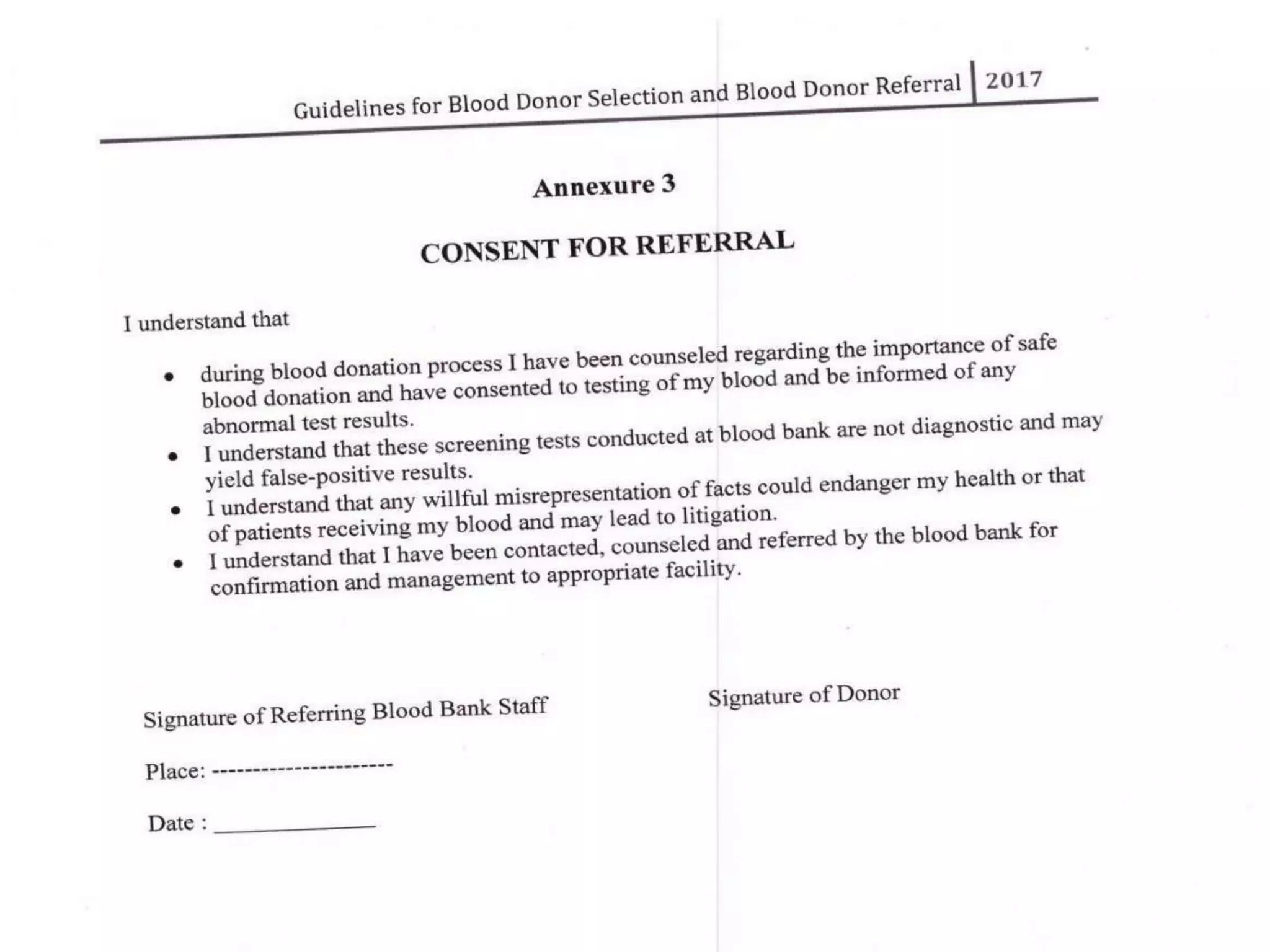
• PRIOR CONSENT SHALL BE
TAKEN FROM THE DONOR FOR
BOTH CONDUCTION OF
SCREENING TESTS AND TO BE
INFORMED OF RESULT OF
TESTING AT THE TIME OF
DONATION
• ALL BLOOD DONORS FOUND
TO BE INITIALLY SERO
REACTIVE WILL BE REFERRED
TO ICTC ( IN CASE OF HIV) OR
CLINICIANS IN THE OPD OF
ASSOCIATED HOSPITALS IN
OTHER TTIs FOR
COUNSELLING AND
CONFIRMATION
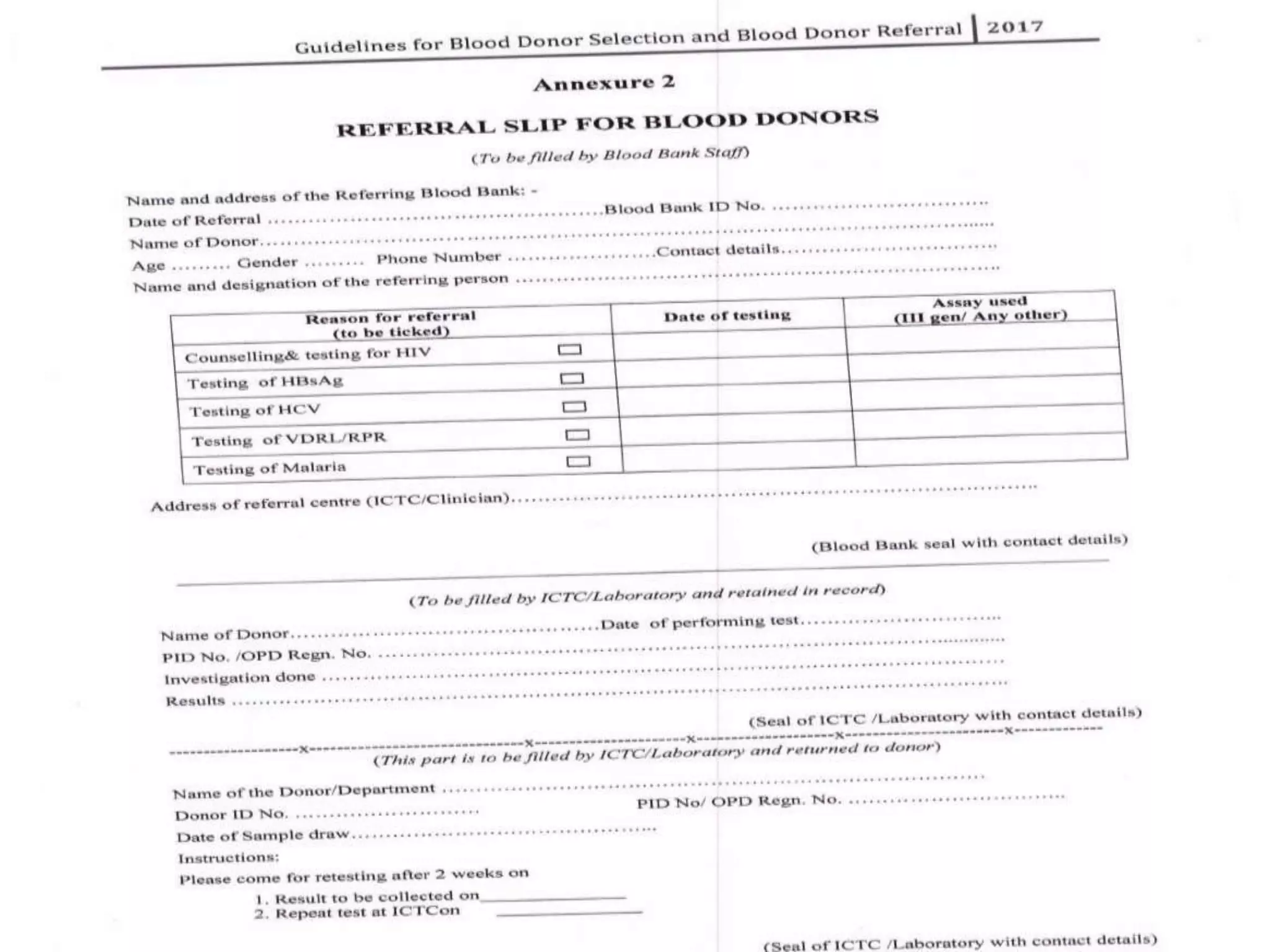
• BLOOD BANK SHALL FILL OUT
THE REFERRAL FORM AS PER
STANDARD FORMAT AND
SEND IT ALONG WITH
REFERRED DONOR
• CONFIDENTIALITY SHALL BE
MAINTAINED AT ALL LEVELS
BLOOD DONOR
QUESTIONNAIRE -
SAMPLE
REFERRAL SLIP FOR
BLOOD DONORS
BOMBAY BLOOD GROUP-DISCOVERY AND
PREVALENCE
Discovered by Dr YM Bhende in 1952 and published in a
paper “new blood group character related to the ABO
blood group”
Prevalence – 1 in 10,000 individuals in India
In some places In maharashtra the prevalence maybe as
high as 0.01%
The prevalence Is also high in Bhuyan tribal population in
Orissa
The prevalence is high in taiwan, Madagascar and the
prevalence in europe is 1 in 1 million indl
THANK YOU

Blood donor selection guidelines 2017

  • 1.
    REVISED NBTC GUIDELINES FORBLOOD DONOR SELECTION AND BLOOD DONOR DEFERRAL- JUNE 01 2017 DR AKSHAYA TOMAR DEPT OF IMMUNOHEMATOLOGY AND BLOOD TRANSFUSION AFMC, PUNE
  • 2.
    INTRODUCTION Ensure safe, sufficientand timely supply of blood and blood components. Build and maintain a pool of safe, voluntary non remunerated blood donors. Ensure products derived from donated blood are efficacious with a minimal risk of infection to the recipient.
  • 3.
    BASIC PRINCIPLES Accept blood only from voluntary,non remunerated , low risk , safe and healthy donors Replacement donors should be phased out Encourage and retain adequate number of healthy repeat donors Donors appropriately recognized and thanked for their contribution
  • 4.
    DONOR MOTIVATION Done byVolunteers from Community- community organizations, civil society bodies and NGOs. Various communication materials and methods used. The minimum criteria for blood donation ( age btw 18- 65 , weight> 45 kgs , Hb >= 12.5 g/dl) verbally screened at this stage Once recruited , one time donors to be encouraged to become regular repeat donors. Donors should be retained with blood transfusion service through different communication media.
  • 5.
    DONOR SELECTION AND COUNSELLING 1PREDONATION INFORMATION 2. PREDONATION COUNSELLING 3. DONOR QUESTIONNAIRE AND HEALTH CHECK UP 4.COUNSELLING DURING BLOOD DONATION 5. POST DONATION COUNSELLING
  • 6.
    PRE DONATION INFORMATION Natureand use of blood and its components Eligibility for blood donation Rationale for the donor questionnaire and pre donation health assessment Common TTI, modes of transmission and window period Blood donation process and potential adverse donor reactions Options for the donor to withdraw at any time before, during, after donation Basic information on tests performed on donated blood Possible consequences for donor and donated blood in the case of abnormal TTI test results
  • 7.
    PRE DONATION COUNSELLING Understanddonor questionnaire to enable correct responses Reiterate understanding of TTI testing and disclosure of results Clarify any misunderstanding about donor selection, blood donation and blood screening Explain self deferral Explain temporary and permanent deferral Familiarize donor to process of blood donation Obtain donor’s informed consent
  • 8.
    DONOR QUESTIONNAIRE ANDHEALTH CHECK UP Enable a quick history taking, limited physical examination and blood test(Hb) by a Medical Officer Prepared in English and Local languages Simple and easy to understand Demographic details of the donor , date and time of donor selection and donation to be registered. Written Informed consent to be obtained with donor’s signature or thumb impression Obtain correct contact details of the blood donors Photo identity can be asked but should not be made mandatory In case of deferral, donor should be explained the reasons to do so
  • 9.
    DONOR CONSENT Blood donationis a totally voluntary act and no inducement or remuneration has been offered. Donation of blood/ components is a medical procedure and that by donating voluntarily, I accept the risk associated with this procedure My donated blood and plasma recovered from my donated blood may be sent for plasma fractionation for preparation of plasma derived medicines , which may be used for larger patient population and not just this blood bank My blood will be tested for Hepatitis B, Hepatitis C, Malarial parasite , HIV/AIDS and Syphilis disease in addition to any other screening tests required to ensure blood safety I would like to be informed about any abnormal test results done on my donated blood- yes/ no
  • 10.
    COUNSELLING DURING DONATION Ensuringdonor comfort Reducing donor anxiety , minimizing risk of adverse donor reactions Giving post donation advice, including care of the venepuncture site Fostering donor trust and confidence for donor retention Thanking the donor for his valuable contribution
  • 11.
    POST DONATION INTERACTION Briefinstructions on self care- 1. plenty of fluids 2. No heavy work 3. No smoking or driving immediately post donation 4. Remove bandage after 6 hours 5. Contact details of blood bank in case of discomfort following donation
  • 12.
    Information about whatto do in case of specific adverse donor reactions Message on healthy lifestyle and regular donation Donor feedback Issuance of donor card, donor certificate or a memento Reiteration for recalling of blood donor for abnormal test results POST DONATION INTERACTION
  • 13.
  • 14.
    BLOOD DONOR SELECTIONCRITERIA S.No. Criteria Recommendations 1 Well Being • Donor shall be in good health, mentally alert, physically fit • Shall not be inmate of jail or any other confinement • “Differently abled” can donate blood provided that clear and confidential information can be established 2 Age • Minimum – 18 years • Maximum – 65 years • First time donor – not more than 60 years • For apheresis - 18- 60 years 3 Whole blood volume collected and weight of the donor 350 ml – 45 kg 450 ml- > 55 kg Apheresis – 50 kg
  • 15.
    S. no CriteriaRecommendations 4 Donation Interval • Whole blood donation – once in three months( 90 days) for males and four months ( 120 days ) for females • For apheresis – at least 48 hours interval after platelet/ plasma apheresis shall be kept( not more than 2 times a week, limited to 24 in one year) • After whole blood donation a plateletpheresis donor shall not be accepted before 28 days • After apheresis – whole blood donation after 28 days from last platelet donation – if red cell re infusion was complete • After apheresis - whole blood donation after 90 days - if red cell reinfusion was not complete • A donor shall not donate any type of donation within 12 months after a bone marrow harvest • A donor shall not donate any type of donation within 6 months after a peripheral stem cell harvest BLOOD DONOR SELECTION CRITERIA
  • 16.
    S. No CriteriaRecommendations 5 Blood Pressure • 100-140 mm Hg systolic • 60 – 90 mm Hg diastolic with or without medications • No finding suggestive of end organ damage or secondary complications( cardiac, renal, eye or vascular) • No history of giddiness, fainting • Neither the drug nor its dosage should have been altered in the last 28 days 6 Pulse 60 – 100 regular 7 Temperature Afebrile; 37 C / 98.4 F BLOOD DONOR SELECTION CRITERIA
  • 17.
    S No CriteriaRecommendations 8 Respiration The donor shall be free from acute respiratory disease 9 Hemoglobin • >= 12.5 g/dl • Thalassemia trait may be accepted , provided hemoglobin is acceptable 10 Meal • Donor shall not be fasting before blood donation • Last meal 4 hours prior to donation • Donor shall not have consumed alcohol / show signs of intoxication before blood donation • Donor shall not be a person having regular heavy alcohol intake 11 Occupation • Donor shall not be a night shift worker without adequate sleep • Air crew members, long distance vehicle driver, indls doing strenuous work shall not donate blood 24 hours prior to their next duty shift BLOOD DONOR SELECTION CRITERIA
  • 18.
    S No CriteriaRecommendations 12 Risk behavior • Donor shall be free from any disease transmissible by transfusion,(by history and examination) • Donor shall not be at risk for HIV, Hepatitis B or C infections 13 Travel and residence • Donor shall not be a person with history of residence or travel in a geographical area which is endemic for diseases transmitted by blood transfusion, for which screening is not mandated 14 Donor Skin • Free from skin diseases at the site of phlebotomy • Arms and forearms free of skin puncture/ scars indicative of professional blood donors/ self injected narcotics BLOOD DONOR SELECTION CRITERIA
  • 19.
  • 20.
    S. No CriteriaRecommendations 15 Pregnancy/ recently delivered • Defer for 12 months after delivery 16 Abortion • Defer for 6 months after abortion 17 Breast feeding • Defer for total period of lactation 18 Menstruation • Defer for period of menstruation
  • 21.
  • 22.
    S No CriteriaRecommendations 19 Non specific symptoms including pain, malaise, headache Defer until all symptoms subside and donor is afebrile 20 Cold, flu, cough, sore throat or acute sinusitis Defer until all symptoms subside and donor is afebrile 21 Chronic sinusitis Accept unless on antibiotics 22 Asthmatic attack Permanently defer 23 Asthmatic on steroids Permanently defer
  • 23.
  • 24.
    S No CriteriaRecommendations 24 Major surgery Defer for 12 months after recovery 25 Minor surgery Defer for 6 months after recovery 26 Received blood transfusion Defer for 12 months 27 Open heart surgery including By- pass surgery Permanently defer 28 Cancer surgery Permanently defer 29 Tooth extraction Defer for 6 months after tooth extraction 30 Dental surgery under anaesthesia Defer for 6 months after recovery
  • 25.
  • 26.
    S No CriteriaRecommendations 31 Has any active symptom(chest pain, shortness of breath, swelling of feet) Permanently defer 32 Myocardial infarction( heart attack) Permanently defer 33 Cardiac medication Permanently defer 34 Hypertensive heart disease Permanently defer 35 Coronary artery disease Permanently defer 36 Angina pectoris Permanently defer 37 Rheumatic heart disease with residual damage Permanently defer
  • 27.
  • 28.
    S No CriteriaRecommendations 38 Migraine Accept if not severe and occurs at a frequency of less than once a week 39 Convulsions and epilepsy Permanently defer 40 Schizophrenia Permanently defer 41 Anxiety and mood disorders Accept person having anxiety and mood( affective) disorders like depression or bipolar disorder , but is stable and feeling well on the day regardless of medication
  • 29.
    S no CriteriaRecommendations 42 Diabetes mellitus • Accept – diabetics well controlled on oral hypoglycemic medication, with no history of orthostatic hypotension, infection, neuropathy or vascular disease • Permanently defer - diabetics requiring insulin and / or with complications of diabetes with multi organ involvement • Defer if oral hypoglycemic medication has been altered/ dosage adjusted in last 4 weeks 43 Thyroid disorders • Accept – benign thyroid disorders if euthyroid ( asymptomatic Goiter , history of viral thyroiditis, auto immune hypo thyroidism) • Defer if under investigation for thyroid disease or thyroid status is not known • Permanently defer if: • Thyrotoxicosis due to Grave’s disease • Hyper / hypo thyroid • History of malignant thyroid tumours 44 Other endocrine disorders Permanently defer
  • 30.
  • 31.
    S No CriteriaRecommendations 45 Hepatitis Known hepatitis B, C – Permanently defer Unknown hepatitis – permanently defer Known hepatitis A or E; Defer for 12 months 46 Spouse/ partner/ close contact of individual suffering with hepatitis Defer for 12 months 47 At risk for hepatitis by tattoos, acupuncture or body piercing, scarification and any other invasive cosmetic procedure by self or spouse/ partner Defer for 12 months 48 Spouse/ partner of individual receiving transfusion of blood/ components Defer for 12 months 49 Jaundice Accept donor with history of jaundice that was attributed to gall stones , Rh disease, mononucleosis or in neonatal period 50 Chronic liver disease/ liver failure Permanently defer
  • 32.
  • 33.
    S no CriteriaRecommendations 51 At risk for HIV infection (transgender, men who have sex with men, female sex workers, injecting drug users, persons with multiple sex partners Permanently defer 52 Known HIV positive person or spouse/ partner of PLHA ( person living with HIV AIDS) Permanently defer 53 Persons having symptoms suggestive of AIDS Permanently defer person having lymphadenopathy, prolonged and repeated fever, prolonged and repeated diarrhoea irrespective of HIV risk or status 54 Syphilis( generalized skin rash/ genital sore) Permanently defer 55 Gonorrhoea Permanently defer
  • 34.
  • 35.
    S No CriteriaRecommendations 56 History of measles, mumps and chicken pox • Defer for 2 weeks following full recovery 57 Malaria • Defer for 3 months following full recovery 58 Typhoid • Defer for 12 months following full recovery 59 Dengue/ Chikungunya • In case of history of Dengue/ Chikungunya : defer for 6 months following full recovery • Following visit to Dengue/ Chikungunya endemic area: 4 weeks following return from visit to dengue endemic area if no febrile illness is noted 60 Zika Virus/ West Nile Virus In case of Zika infection: defer for 4 months following recovery In case of history of travel to West Nile virus endemic area/ Zika virus outbreak zone: defer for 4 months 61 Tuberculosis Defer for 2 years following confirmation of cure 62/ 63 Leishmaniasis / leprosy Permanently defer
  • 36.
    64 Conjunctivitis Deferfor the period of illness and continuation of local medication 65 Osteomyelitis Defer for 2 years following completion of treatment and cure 66 Acute infection of kidney( pyelonephritis) Defer for 6 months after complete recovery and last dose of medication 67 UTI/ cystitis Defer for 2 weeks after complete recovery and last dose of medication 68 Chronic infection of kidney / kidney disease/ renal failure Permanently defer 69 Diarrhoea Person having history of diarrhoea in preceding week particularly if associated with fever: defer for 2 weeks after complete recovery and last dose of medication 70 GI endoscopy Defer for 12 months 71 Acid peptic disease Accept – person with acid reflux, mild gastro oesophageal reflux disorder( GERD) , hiatus hernia Permanently defer : stomach ulcer with symptoms or with recurrent bleeding
  • 37.
    72 Autoimmune disorders-SLE, scleroderma, ankylosing spondylitis, severe RA Permanently defer 73 Polycythaemia Vera Permanently defer 74 Bleeding disorders and unexplained bleeding tendency Permanently defer 75 Malignancy Permanently defer 76 Severe allergic disorders Permanently defer 77 Haemoglobinopathies and red cell enzyme deficiencies with known history of haemolysis Permanently defer
  • 38.
  • 39.
    78 NON LIVEVACCINES AND TOXOID: Typhoid , Cholera , Papillomavirus, Influenza, Meningococcal, Pertussis , Pneumococcal , Polio injectable , Diphtheria , Tetanus , Plague Defer for 14 days 79 LIVE ATTENUATED VACCINES: Polio oral, Measles( rubella ), Mumps , Yellow fever , Japanese encephalitis , influenza , Typhoid , Cholera, Hepatitis A Defer for 28 days 80 Anti tetanus serum, anti venom serum, anti diphtheria serum, anti gas gangrene serum Defer for 28 days 81 Anti rabies vaccination following animal bite, Hepatitis B Immunoglobulin, Immunoglobulins Defer for 1 year
  • 40.
    82 Oral contraceptivesAccept 83 Analgesics Accept 84 Vitamins Accept 85 Mild sedatives and tranquilizers Accept 86 Allopurinol Accept 87 Cholesterol lowering medication Accept 88 Salicylates ( aspirin) , other NSAIDs Defer for 3 days if blood is to be used for platelet preparation 89 Ketoconazole , antihelminthic drugs including mebendazolede Defer for 7 days after last dose if donor is well 90 Antibiotics Defer for two weeks after last dose if donor is well
  • 41.
    91 Ticlopidine, clopidogrelDefer for two weeks after last dose 92 Piroxicam, dipyridamole Defer for two weeks after last dose 93 Etretinate, Acitrecin or Isotretinoin Defer for 1 month after the last dose 94 Finasteride used to treat benign prostatatic hyperplasia Defer for 1 month after the last dose 95 Radioactive contrast material 8 weeks deferral 96 Dutasteride used to treat benign prostatatic hyperplasia Defer for 6 months after the last dose 97 Any medication of unknown nature Defer till details are available 98 Oral anti – diabetic drugs Accept if there is no alteration in dose within last 4 weeks 99 Insulin Permanently defer 100 Anti arrhythmic, anti convulsions, anti coagulant, anti thyroid drugs, cytotoxic drugs, cardiac failure drugs Permanently defer 101 Recipients of organ, stem cell and tissue transplants Donors who have had unexplained delayed faint with injury or two consecutive faints following blood donation Permanently defer
  • 42.
    INFORMATION OF TESTRESULTS • In case of initial sero positive reaction and document on record Recall donor to blood bank •Before referring to appropriate medical services for confirmation of diagnosis, follow up and treatment Provide post donation counseling •Contact details of counsellors to be added State AIDS control Societies to make available updated list of ICTC
  • 43.
    TESTING STRATEGY FOR TTIsAT BLOOD BANKS BLOOD UNIT SUBJECTED TO A TEST OF HIGH SENSITIVITY FOR HIV/ HBV, HCV, MALARIA AND SYPHILIS REACTIVITY STRATEGY FOCUSSED ON ENSURING RECIPIENT SAFETY AND IS ALSO USED IN THE SETTING OF ORGANS, TISSUES, SPERM AND OTHER DONATIONS
  • 44.
    One test required( A0) A0+ Consider positive A0 – Consider negative • PRIOR CONSENT SHALL BE TAKEN FROM THE DONOR FOR BOTH CONDUCTION OF SCREENING TESTS AND TO BE INFORMED OF RESULT OF TESTING AT THE TIME OF DONATION • ALL BLOOD DONORS FOUND TO BE INITIALLY SERO REACTIVE WILL BE REFERRED TO ICTC ( IN CASE OF HIV) OR CLINICIANS IN THE OPD OF ASSOCIATED HOSPITALS IN OTHER TTIs FOR COUNSELLING AND CONFIRMATION • BLOOD BANK SHALL FILL OUT THE REFERRAL FORM AS PER STANDARD FORMAT AND SEND IT ALONG WITH REFERRED DONOR • CONFIDENTIALITY SHALL BE MAINTAINED AT ALL LEVELS
  • 45.
  • 50.
  • 53.
    BOMBAY BLOOD GROUP-DISCOVERYAND PREVALENCE Discovered by Dr YM Bhende in 1952 and published in a paper “new blood group character related to the ABO blood group” Prevalence – 1 in 10,000 individuals in India In some places In maharashtra the prevalence maybe as high as 0.01% The prevalence Is also high in Bhuyan tribal population in Orissa The prevalence is high in taiwan, Madagascar and the prevalence in europe is 1 in 1 million indl
  • 54.

Editor's Notes

  • #15 1- the differently abled should fully understand the doantion process and give a valid consent
  • #25 Major surgery being defined as that requiring hospitalisation , anaesthesia ( general/ spinal) had blood transfusion and/ or significant blood loss
  • #45 All donors found to be positive for HBV , HCV, Malaria and syphilis should be counseeld to defer themselves and their spouses/ partners from the donor pool, in addition to appropriate management