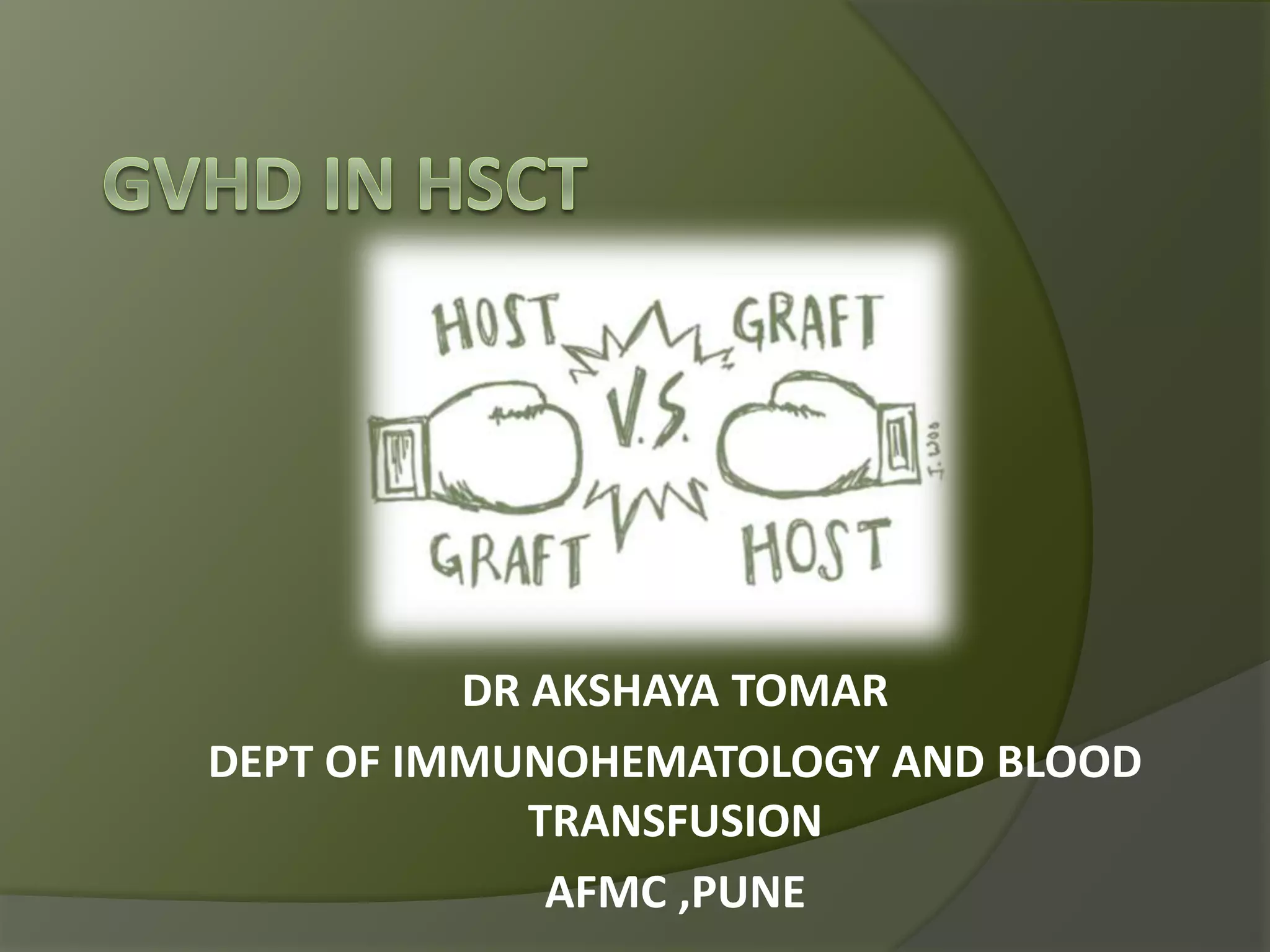
DR AKSHAYA TOMAR
DEPT OF IMMUNOHEMATOLOGY AND BLOOD
TRANSFUSION
AFMC ,PUNE
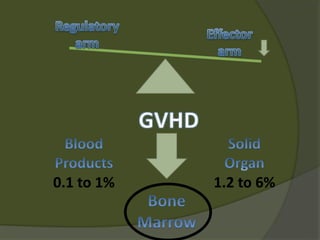
0.1 to 1% 1.2 to 6%
Why to know about GvHD?
 Delayed Engraftment
 Delayed Immune reconstitution
 Increased rate of infections
 Increased cost of treatment
 Increased length of hospital stay
 Adverse effects of chronic immunosuppressive therapy
 Increased morbidity and mortality
DIFFERENCE BETWEEN TA-GvHD & GvHD
 Unlike GVHD after allogeneic marrow transplantation,
TA-GVHD leads to profound marrow aplasia, with a
mortality rate higher than 90%.
INTRODUCTION
 Hematopoietic cell (marrow, umbilical cord blood or
mobilized peripheral blood) transplantation is performed
- To replace inadequate or defective blood cell production
- For adoptive immunotherapy in malignancy
- To reconstitute the immune system in immune deficiency
 The number of HSCTs has increased steadily over the past two
decades due to improvements in
- Outcome
- Expanded indications
- The ability to safely perform transplantation in
older individuals
INTRODUCTION
 Along with infection, GvHD is the leading cause of non-
relapse mortality following HSCT.
 Despite improvements in GvHD prevention,
approximately 30–60% of matched sibling HSCT
recipients will develop Acute GvHD (aGvHD) and the
rates are higher for unmatched or unrelated donors
ROLE OF HLA IN HSCT
 HLA system is generally viewed as second in importance only to
the ABO antigens in influencing the survival of transplanted
Bone marrow.
 In hematopoietic progenitor cell (HPC) transplantation, the HLA
system is paramount with regard to graft rejection and graft-vs-
host disease (GVHD)
ROLE OF HLA IN HSCT
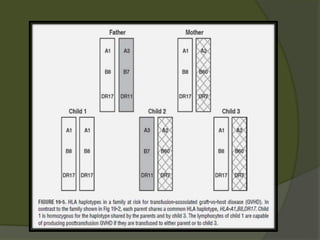
 The role of HLA ‘compatibility’ falls into four different
areas:
1. Sufficient compatibility to permit engraftment and
prevent late rejection (with appropriate preparative
and immunosuppressive regimens)
2. Enough compatibility to minimize graft-versus-host-
disease (GVHD)
3. Ample immune reconstitution to permit
immunosurveillance
4. Sufficient immune potency to effect adoptive immune
therapy of neoplasia
GRAFT VS HOST DISEASE (GvHD)
 Complex immunological disorder caused by Donor T
Lymphocytes in allogenic HSCT
 GVHD results from the recognition of host tissues as
foreign by donor immunocompetent cells
 The incidence increases with greater HLA disparity
between the donor and host
 Fundamental problem for allogeneic transplantation is
the close association between this complication and
the derived benefit resulting from a GVT effect
GRAFT VS HOST DISEASE (GvHD)
 GvHD also delays the immune reconstitution in the recipient
 Reports of an increased incidence of chronic GvHD if more
than 8 × 10⁶ CD34 cells/kg are transplanted suggest that
4–8 × 10⁶ CD34 cells/kg should be regarded as the desirable
stem cell dose.
 PBSCs results in an increased incidence of chronic GvHD,
reflecting the five- to tenfold greater dose of T cells
transplanted if mobilized cells are used in preference to bone
marrow-harvested cells
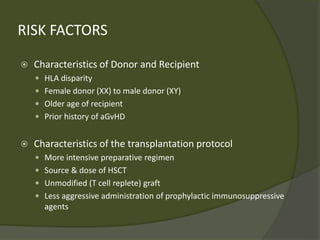
RISK FACTORS
 Characteristics of Donor and Recipient
 HLA disparity
 Female donor (XX) to male donor (XY)
 Older age of recipient
 Prior history of aGvHD
 Characteristics of the transplantation protocol
 More intensive preparative regimen
 Source & dose of HSCT
 Unmodified (T cell replete) graft
 Less aggressive administration of prophylactic immunosuppressive
agents
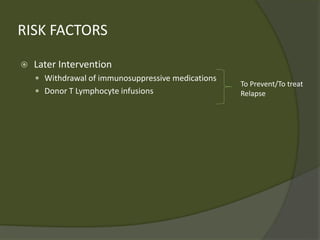
RISK FACTORS
 Later Intervention
 Withdrawal of immunosuppressive medications
 Donor T Lymphocyte infusions
To Prevent/To treat
Relapse
REDUCED INTENSITY CONDITIONING
 Immunosuppress the host sufficiently to allow donor
engraftment, cure of disease being delivered
subsequently by the allogeneic GvL effect.
 Aim of the conditioning therapy is no longer principally
to eradicate disease
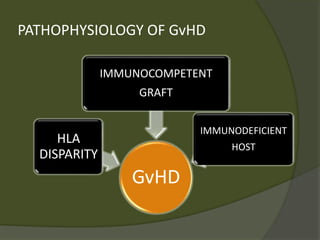
PATHOPHYSIOLOGY OF GvHD
GvHD
HLA
DISPARITY
IMMUNOCOMPETENT
GRAFT
IMMUNODEFICIENT
HOST
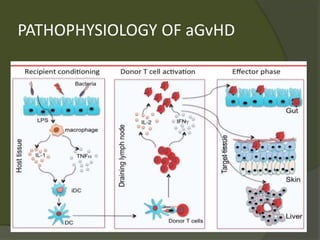
PATHOPHYSIOLOGY OF aGvHD
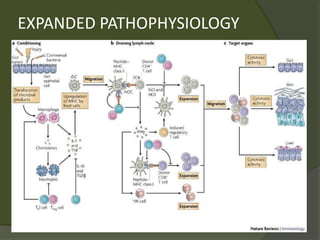
EXPANDED PATHOPHYSIOLOGY
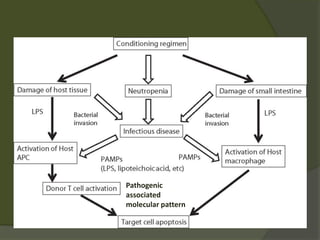
Pathogenic
associated
molecular pattern
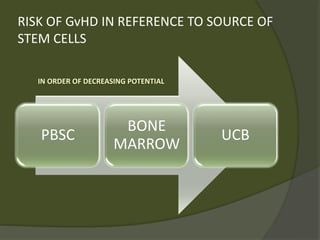
RISK OF GvHD IN REFERENCE TO SOURCE OF
STEM CELLS
PBSC
BONE
MARROW
UCB
IN ORDER OF DECREASING POTENTIAL
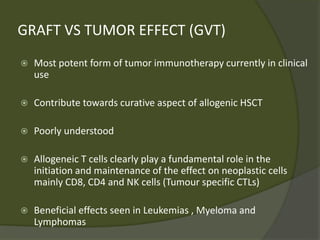
GRAFT VS TUMOR EFFECT (GVT)
 Most potent form of tumor immunotherapy currently in clinical
use
 Contribute towards curative aspect of allogenic HSCT
 Poorly understood
 Allogeneic T cells clearly play a fundamental role in the
initiation and maintenance of the effect on neoplastic cells
mainly CD8, CD4 and NK cells (Tumour specific CTLs)
 Beneficial effects seen in Leukemias , Myeloma and
Lymphomas
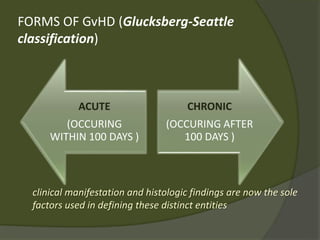
FORMS OF GvHD (Glucksberg-Seattle
classification)
ACUTE
(OCCURING
WITHIN 100 DAYS )
CHRONIC
(OCCURING AFTER
100 DAYS )
clinical manifestation and histologic findings are now the sole
factors used in defining these distinct entities
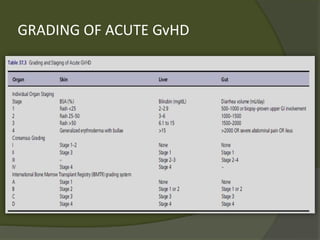
GRADING OF ACUTE GvHD
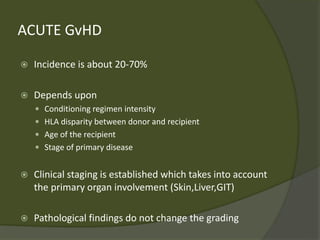
ACUTE GvHD
 Incidence is about 20-70%
 Depends upon
 Conditioning regimen intensity
 HLA disparity between donor and recipient
 Age of the recipient
 Stage of primary disease
 Clinical staging is established which takes into account
the primary organ involvement (Skin,Liver,GIT)
 Pathological findings do not change the grading
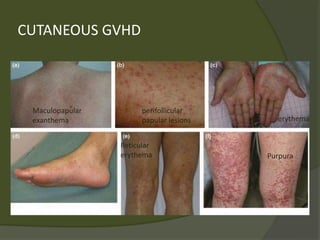
CUTANEOUS GVHD
Maculopapular
exanthema
perifollicular
papular lesions erythema
Purpura
Reticular
erythema
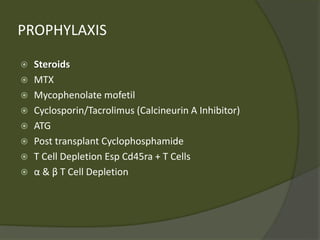
PROPHYLAXIS
 Steroids
 MTX
 Mycophenolate mofetil
 Cyclosporin/Tacrolimus (Calcineurin A Inhibitor)
 ATG
 Post transplant Cyclophosphamide
 T Cell Depletion Esp Cd45ra + T Cells
 α & β T Cell Depletion
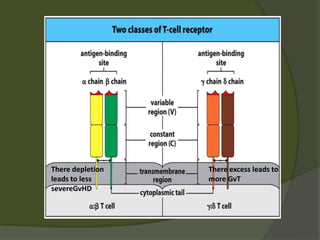
There depletion
leads to less
severeGvHD
There excess leads to
more GvT
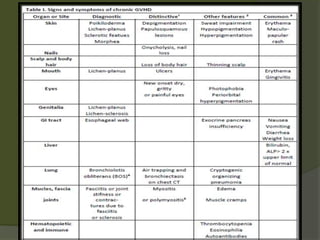
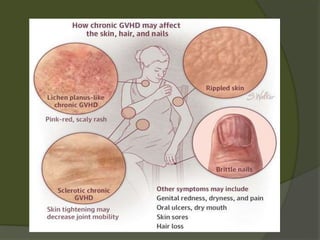
CHRONIC GvHD
 Reported in 60 to 70% of allogenic recipients
 Limited information available
 More extensive involvement but most people recover
 Involve practically all the organs
 Shares common features with many autoimmune
diseases like Scleroderma, Sicca syndrome etc
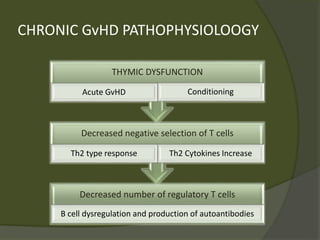
CHRONIC GvHD PATHOPHYSIOLOOGY
Decreased number of regulatory T cells
B cell dysregulation and production of autoantibodies
Decreased negative selection of T cells
Th2 type response Th2 Cytokines Increase
THYMIC DYSFUNCTION
Acute GvHD Conditioning
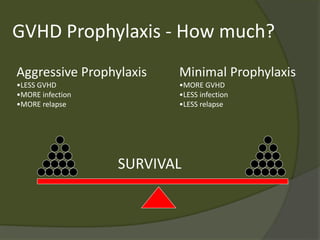
GVHD Prophylaxis - How much?
Aggressive Prophylaxis
•LESS GVHD
•MORE infection
•MORE relapse
Minimal Prophylaxis
•MORE GVHD
•LESS infection
•LESS relapse
SURVIVAL
RECENT ADVANCES
 ADOPTIVE IMMUNOTHERAPY
 EXTRACORPOREAL PHOTOPHERESIS
 MESENCHYMAL STEM CELLS
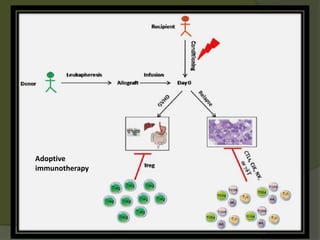
Adoptive
immunotherapy
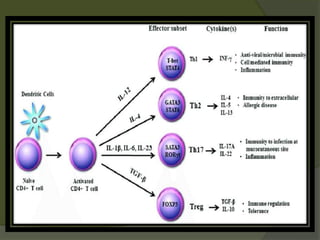
REGULATORY T CELLS
 Regulatory T cells are characterized by the
 Co- expression of CD4,
 High levels of surface CD25,
 Master switch transcription factor called
forkhead box P3 (Foxp3) ; suppresses autoreactive lymphocytes
 Ultra lowdose IL-2 for GVHD prophylaxis after allo-HSCT
mediates expansion of Tregs without diminishing antiviral and
antileukemic activity
 Its still in clinical trial
CYTOTOXIC T CELLS
 Directed against minor histocompatibility antigens and tumor
associated antigens
 CD8+ cells
 By in vivo/ex vivo expansion, they can give enhanced GvT
without increasing the risk of GvHD
 CTL clones generation with IL21 exposure showed increased in
vivo life span with excellent tumor specific activity
CYTOKINE INDUCED KILLER CELLS (CIK)
 Cytotoxic effector T cells , CD3+ CD56+ TCR+
 Very strong non HLA restricted NK cell like cytotoxicity
 Completely lack GvHD activity
 Donor-derived CIK cells can be administered to
lymphoma/leukemia patients who relapsed after allo-HSCT
 Still in Phase I clinical trials
NK CELLS
 CD3- , CD56+ , CD16 + cells
 Rapidly kill certain target cells without prior immunization or
MHC restriction
 This cell type might prevent T cell–mediated GVHD through
killing
 Some tumor cells avoid recognition by CTL by down-regulating
their expression of MHC-I, but these escape mutants
consequently become targets for NK cells (No MHC needed for
presentation)
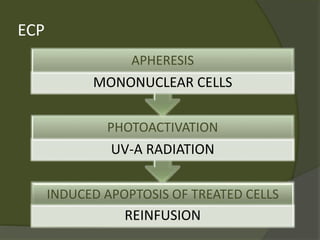
EXTRACORPOREAL PHOTOPHERESIS (ECP)
 ECP is a specialized procedure in which the buffy-coat layer is
collected from peripheral blood, treated with 8 methoxy-
psoralen and ultraviolet A light, and re-infused into the
patient.
 Cross-linking of leukocyte DNA, prevents replication and
induces apoptosis.
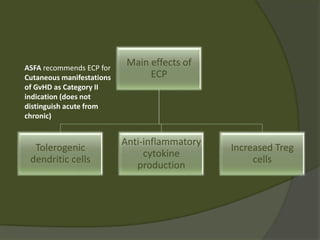
 ECP has complex immunomodulatory effects, including
induction of monocyte differentiation to dendritic cells,
alteration of T-cell subsets, and changes in cytokine
production profiles
ECP
INDUCED APOPTOSIS OF TREATED CELLS
REINFUSION
PHOTOACTIVATION
UV-A RADIATION
APHERESIS
MONONUCLEAR CELLS
Main effects of
ECP
Tolerogenic
dendritic cells
Anti-inflammatory
cytokine
production
Increased Treg
cells
ASFA recommends ECP for
Cutaneous manifestations
of GvHD as Category II
indication (does not
distinguish acute from
chronic)
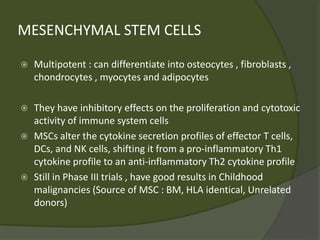
MESENCHYMAL STEM CELLS
 Multipotent : can differentiate into osteocytes , fibroblasts ,
chondrocytes , myocytes and adipocytes
 They have inhibitory effects on the proliferation and cytotoxic
activity of immune system cells
 MSCs alter the cytokine secretion profiles of effector T cells,
DCs, and NK cells, shifting it from a pro-inflammatory Th1
cytokine profile to an anti-inflammatory Th2 cytokine profile
 Still in Phase III trials , have good results in Childhood
malignancies (Source of MSC : BM, HLA identical, Unrelated
donors)
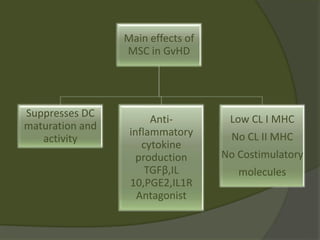
Main effects of
MSC in GvHD
Suppresses DC
maturation and
activity
Anti-
inflammatory
cytokine
production
TGFβ,IL
10,PGE2,IL1R
Antagonist
Low CL I MHC
No CL II MHC
No Costimulatory
molecules
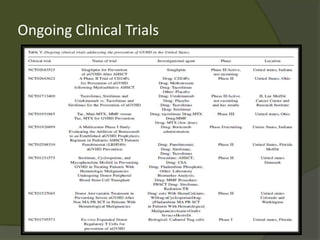
Ongoing Clinical Trials
SUMMARY
 Despite advances in procedure and post-transplantation
prophylaxis more than half of Allogenic HSCT patients develop
GvHD
 Major cause of morbidity and mortality
 Still poorly understood
 Elimination of alloreactive T cells and preserving tumor and
pathogen-specific immunity will still be a major task to further
improve outcome after HSCT
SUMMARY
 Unanswered questions remain:
 How to define the appropriate cell dose for optimal
therapeutic response and minimal toxicity?
 What is the best schedule to infuse these cells?
 Should these be infused as a preemptive or a curative
therapeutic dose?
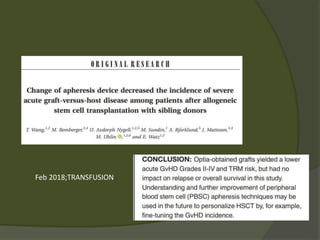
Feb 2018;TRANSFUSION
BIBLIOGRAPHY
 Rossi’s principle of transfusion medicine 5th edition
 Mollison’s Blood Transfusion in clinical practice 12th edition
 AABB technical manual 18th edition
 Hoffbrand Postgraduate Hematology 5th edition
 Adoptive Immunotherapies After Allogeneic Hematopoietic
Stem Cell Transplantation in Patients With Hematologic
Malignancies – TRANSFUSION MEDICINE REVIEWS- 2015
 GVHD : comprehensive review – ANTICANCER RESEARCH 2017

GRAFT VS HOST DISEASE IN HSCT

  • 1.
    DR AKSHAYA TOMAR DEPTOF IMMUNOHEMATOLOGY AND BLOOD TRANSFUSION AFMC ,PUNE
  • 2.
    0.1 to 1%1.2 to 6%
  • 3.
    Why to knowabout GvHD?  Delayed Engraftment  Delayed Immune reconstitution  Increased rate of infections  Increased cost of treatment  Increased length of hospital stay  Adverse effects of chronic immunosuppressive therapy  Increased morbidity and mortality
  • 4.
    DIFFERENCE BETWEEN TA-GvHD& GvHD  Unlike GVHD after allogeneic marrow transplantation, TA-GVHD leads to profound marrow aplasia, with a mortality rate higher than 90%.
  • 5.
    INTRODUCTION  Hematopoietic cell(marrow, umbilical cord blood or mobilized peripheral blood) transplantation is performed - To replace inadequate or defective blood cell production - For adoptive immunotherapy in malignancy - To reconstitute the immune system in immune deficiency  The number of HSCTs has increased steadily over the past two decades due to improvements in - Outcome - Expanded indications - The ability to safely perform transplantation in older individuals
  • 6.
    INTRODUCTION  Along withinfection, GvHD is the leading cause of non- relapse mortality following HSCT.  Despite improvements in GvHD prevention, approximately 30–60% of matched sibling HSCT recipients will develop Acute GvHD (aGvHD) and the rates are higher for unmatched or unrelated donors
  • 7.
    ROLE OF HLAIN HSCT  HLA system is generally viewed as second in importance only to the ABO antigens in influencing the survival of transplanted Bone marrow.  In hematopoietic progenitor cell (HPC) transplantation, the HLA system is paramount with regard to graft rejection and graft-vs- host disease (GVHD)
  • 8.
    ROLE OF HLAIN HSCT  The role of HLA ‘compatibility’ falls into four different areas: 1. Sufficient compatibility to permit engraftment and prevent late rejection (with appropriate preparative and immunosuppressive regimens) 2. Enough compatibility to minimize graft-versus-host- disease (GVHD) 3. Ample immune reconstitution to permit immunosurveillance 4. Sufficient immune potency to effect adoptive immune therapy of neoplasia
  • 10.
    GRAFT VS HOSTDISEASE (GvHD)  Complex immunological disorder caused by Donor T Lymphocytes in allogenic HSCT  GVHD results from the recognition of host tissues as foreign by donor immunocompetent cells  The incidence increases with greater HLA disparity between the donor and host  Fundamental problem for allogeneic transplantation is the close association between this complication and the derived benefit resulting from a GVT effect
  • 11.
    GRAFT VS HOSTDISEASE (GvHD)  GvHD also delays the immune reconstitution in the recipient  Reports of an increased incidence of chronic GvHD if more than 8 × 10⁶ CD34 cells/kg are transplanted suggest that 4–8 × 10⁶ CD34 cells/kg should be regarded as the desirable stem cell dose.  PBSCs results in an increased incidence of chronic GvHD, reflecting the five- to tenfold greater dose of T cells transplanted if mobilized cells are used in preference to bone marrow-harvested cells
  • 12.
    RISK FACTORS  Characteristicsof Donor and Recipient  HLA disparity  Female donor (XX) to male donor (XY)  Older age of recipient  Prior history of aGvHD  Characteristics of the transplantation protocol  More intensive preparative regimen  Source & dose of HSCT  Unmodified (T cell replete) graft  Less aggressive administration of prophylactic immunosuppressive agents
  • 13.
    RISK FACTORS  LaterIntervention  Withdrawal of immunosuppressive medications  Donor T Lymphocyte infusions To Prevent/To treat Relapse
  • 14.
    REDUCED INTENSITY CONDITIONING Immunosuppress the host sufficiently to allow donor engraftment, cure of disease being delivered subsequently by the allogeneic GvL effect.  Aim of the conditioning therapy is no longer principally to eradicate disease
  • 15.
  • 16.
  • 17.
  • 18.
  • 19.
    RISK OF GvHDIN REFERENCE TO SOURCE OF STEM CELLS PBSC BONE MARROW UCB IN ORDER OF DECREASING POTENTIAL
  • 20.
    GRAFT VS TUMOREFFECT (GVT)  Most potent form of tumor immunotherapy currently in clinical use  Contribute towards curative aspect of allogenic HSCT  Poorly understood  Allogeneic T cells clearly play a fundamental role in the initiation and maintenance of the effect on neoplastic cells mainly CD8, CD4 and NK cells (Tumour specific CTLs)  Beneficial effects seen in Leukemias , Myeloma and Lymphomas
  • 21.
    FORMS OF GvHD(Glucksberg-Seattle classification) ACUTE (OCCURING WITHIN 100 DAYS ) CHRONIC (OCCURING AFTER 100 DAYS ) clinical manifestation and histologic findings are now the sole factors used in defining these distinct entities
  • 22.
  • 23.
    ACUTE GvHD  Incidenceis about 20-70%  Depends upon  Conditioning regimen intensity  HLA disparity between donor and recipient  Age of the recipient  Stage of primary disease  Clinical staging is established which takes into account the primary organ involvement (Skin,Liver,GIT)  Pathological findings do not change the grading
  • 24.
  • 25.
    PROPHYLAXIS  Steroids  MTX Mycophenolate mofetil  Cyclosporin/Tacrolimus (Calcineurin A Inhibitor)  ATG  Post transplant Cyclophosphamide  T Cell Depletion Esp Cd45ra + T Cells  α & β T Cell Depletion
  • 26.
    There depletion leads toless severeGvHD There excess leads to more GvT
  • 27.
    CHRONIC GvHD  Reportedin 60 to 70% of allogenic recipients  Limited information available  More extensive involvement but most people recover  Involve practically all the organs  Shares common features with many autoimmune diseases like Scleroderma, Sicca syndrome etc
  • 28.
    CHRONIC GvHD PATHOPHYSIOLOOGY Decreasednumber of regulatory T cells B cell dysregulation and production of autoantibodies Decreased negative selection of T cells Th2 type response Th2 Cytokines Increase THYMIC DYSFUNCTION Acute GvHD Conditioning
  • 31.
    GVHD Prophylaxis -How much? Aggressive Prophylaxis •LESS GVHD •MORE infection •MORE relapse Minimal Prophylaxis •MORE GVHD •LESS infection •LESS relapse SURVIVAL
  • 32.
    RECENT ADVANCES  ADOPTIVEIMMUNOTHERAPY  EXTRACORPOREAL PHOTOPHERESIS  MESENCHYMAL STEM CELLS
  • 33.
  • 35.
    REGULATORY T CELLS Regulatory T cells are characterized by the  Co- expression of CD4,  High levels of surface CD25,  Master switch transcription factor called forkhead box P3 (Foxp3) ; suppresses autoreactive lymphocytes  Ultra lowdose IL-2 for GVHD prophylaxis after allo-HSCT mediates expansion of Tregs without diminishing antiviral and antileukemic activity  Its still in clinical trial
  • 36.
    CYTOTOXIC T CELLS Directed against minor histocompatibility antigens and tumor associated antigens  CD8+ cells  By in vivo/ex vivo expansion, they can give enhanced GvT without increasing the risk of GvHD  CTL clones generation with IL21 exposure showed increased in vivo life span with excellent tumor specific activity
  • 37.
    CYTOKINE INDUCED KILLERCELLS (CIK)  Cytotoxic effector T cells , CD3+ CD56+ TCR+  Very strong non HLA restricted NK cell like cytotoxicity  Completely lack GvHD activity  Donor-derived CIK cells can be administered to lymphoma/leukemia patients who relapsed after allo-HSCT  Still in Phase I clinical trials
  • 38.
    NK CELLS  CD3-, CD56+ , CD16 + cells  Rapidly kill certain target cells without prior immunization or MHC restriction  This cell type might prevent T cell–mediated GVHD through killing  Some tumor cells avoid recognition by CTL by down-regulating their expression of MHC-I, but these escape mutants consequently become targets for NK cells (No MHC needed for presentation)
  • 39.
    EXTRACORPOREAL PHOTOPHERESIS (ECP) ECP is a specialized procedure in which the buffy-coat layer is collected from peripheral blood, treated with 8 methoxy- psoralen and ultraviolet A light, and re-infused into the patient.  Cross-linking of leukocyte DNA, prevents replication and induces apoptosis.  ECP has complex immunomodulatory effects, including induction of monocyte differentiation to dendritic cells, alteration of T-cell subsets, and changes in cytokine production profiles
  • 40.
    ECP INDUCED APOPTOSIS OFTREATED CELLS REINFUSION PHOTOACTIVATION UV-A RADIATION APHERESIS MONONUCLEAR CELLS
  • 41.
    Main effects of ECP Tolerogenic dendriticcells Anti-inflammatory cytokine production Increased Treg cells ASFA recommends ECP for Cutaneous manifestations of GvHD as Category II indication (does not distinguish acute from chronic)
  • 42.
    MESENCHYMAL STEM CELLS Multipotent : can differentiate into osteocytes , fibroblasts , chondrocytes , myocytes and adipocytes  They have inhibitory effects on the proliferation and cytotoxic activity of immune system cells  MSCs alter the cytokine secretion profiles of effector T cells, DCs, and NK cells, shifting it from a pro-inflammatory Th1 cytokine profile to an anti-inflammatory Th2 cytokine profile  Still in Phase III trials , have good results in Childhood malignancies (Source of MSC : BM, HLA identical, Unrelated donors)
  • 43.
    Main effects of MSCin GvHD Suppresses DC maturation and activity Anti- inflammatory cytokine production TGFβ,IL 10,PGE2,IL1R Antagonist Low CL I MHC No CL II MHC No Costimulatory molecules
  • 44.
  • 45.
    SUMMARY  Despite advancesin procedure and post-transplantation prophylaxis more than half of Allogenic HSCT patients develop GvHD  Major cause of morbidity and mortality  Still poorly understood  Elimination of alloreactive T cells and preserving tumor and pathogen-specific immunity will still be a major task to further improve outcome after HSCT
  • 46.
    SUMMARY  Unanswered questionsremain:  How to define the appropriate cell dose for optimal therapeutic response and minimal toxicity?  What is the best schedule to infuse these cells?  Should these be infused as a preemptive or a curative therapeutic dose?
  • 47.
  • 48.
    BIBLIOGRAPHY  Rossi’s principleof transfusion medicine 5th edition  Mollison’s Blood Transfusion in clinical practice 12th edition  AABB technical manual 18th edition  Hoffbrand Postgraduate Hematology 5th edition  Adoptive Immunotherapies After Allogeneic Hematopoietic Stem Cell Transplantation in Patients With Hematologic Malignancies – TRANSFUSION MEDICINE REVIEWS- 2015  GVHD : comprehensive review – ANTICANCER RESEARCH 2017

Editor's Notes

  • #7 Allogeneic hematopoietic cell transplantation (HCT) applied for the cure of hematologic malignancies is associated with 2 main risk factors for poor outcomes: (1) transplantation-related morbidity/mortality and (2) mortality from disease relapse (relapse-related mortality). efforts to reduce graft-versus-host disease (GVHD) risk by T-cell depletion of the allograft can lower transplantation-related morbidity/mortality, but can also increase relapse 
  • #26 Steroids -curtailing activation of NF-kB, which increases apoptosis of activated cells Calcineurin A inh -these drugs bind to an immunophilin (cyclophilin for cyclosporine or FKBP-12 for tacrolimus), resulting in subsequent interaction with calcineurin to block its phosphatase activity. Calcineurin-catalyzed dephosphorylation is required for movement of a component of the nuclear factor of activated T lymphocytes (NFAT) into the nucleus Tacrolimus (PROGRAF, FK506) is a macrolide antibiotic produced by Streptomyces tsukubaensis Tacrolimus binds to an intracellular protein, FK506-binding protein-12 (FKBP-12), an immunophilin structurally related to cyclophilin Sirolimus (rapamycin; RAPAMUNE) is a macrocyclic lactone produced by Streptomyces hygroscopicus Mycophenolate mofetil is a prodrug that is rapidly hydrolyzed to the active drug, mycophenolic acid (MPA), a selective, noncompetitive, and reversible inhibitor of inosine monophosphate dehydrogenase (IMPDH) an important enzyme in the de novo pathway of guanine nucleotide synthesis. B and T lymphocytes are highly dependent on this pathway for cell proliferation,