APHERESIS 
BY EKTA 
JAJODIA
DEFINITION 
 Apheresis is derived from a greek word 
meaning “to take away” 
 Technique in which whole blood is 
withdrawn – separated into its components – 
desired component is retained and remaining 
constituents are returned to donor
MECHANISM OF ACTION 
 Large-bore intravenous catheter is connected to 
spinning centrifuge bowl 
 Whole blood collected from donor/ patient into 
the centrifuge bowl 
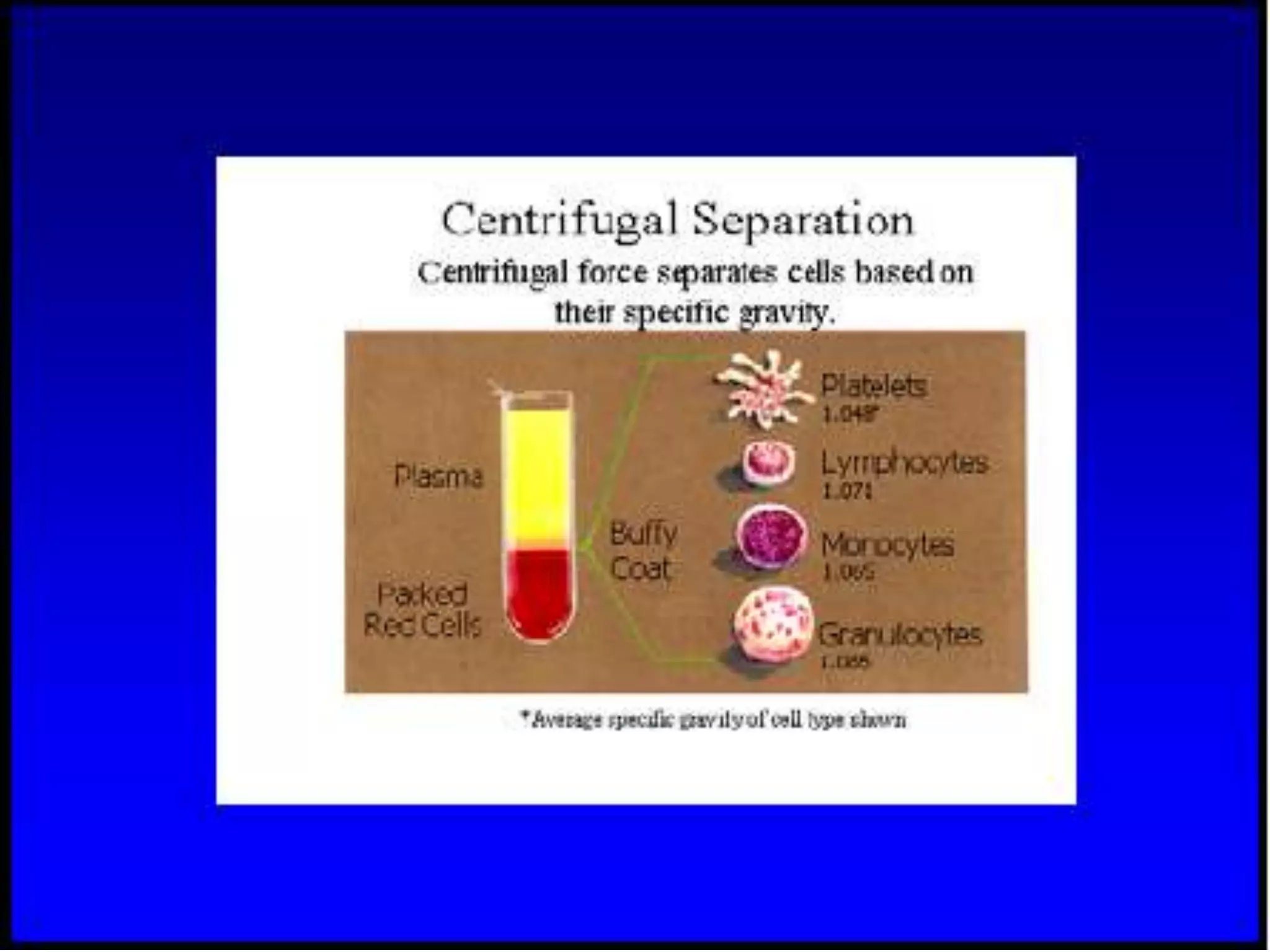
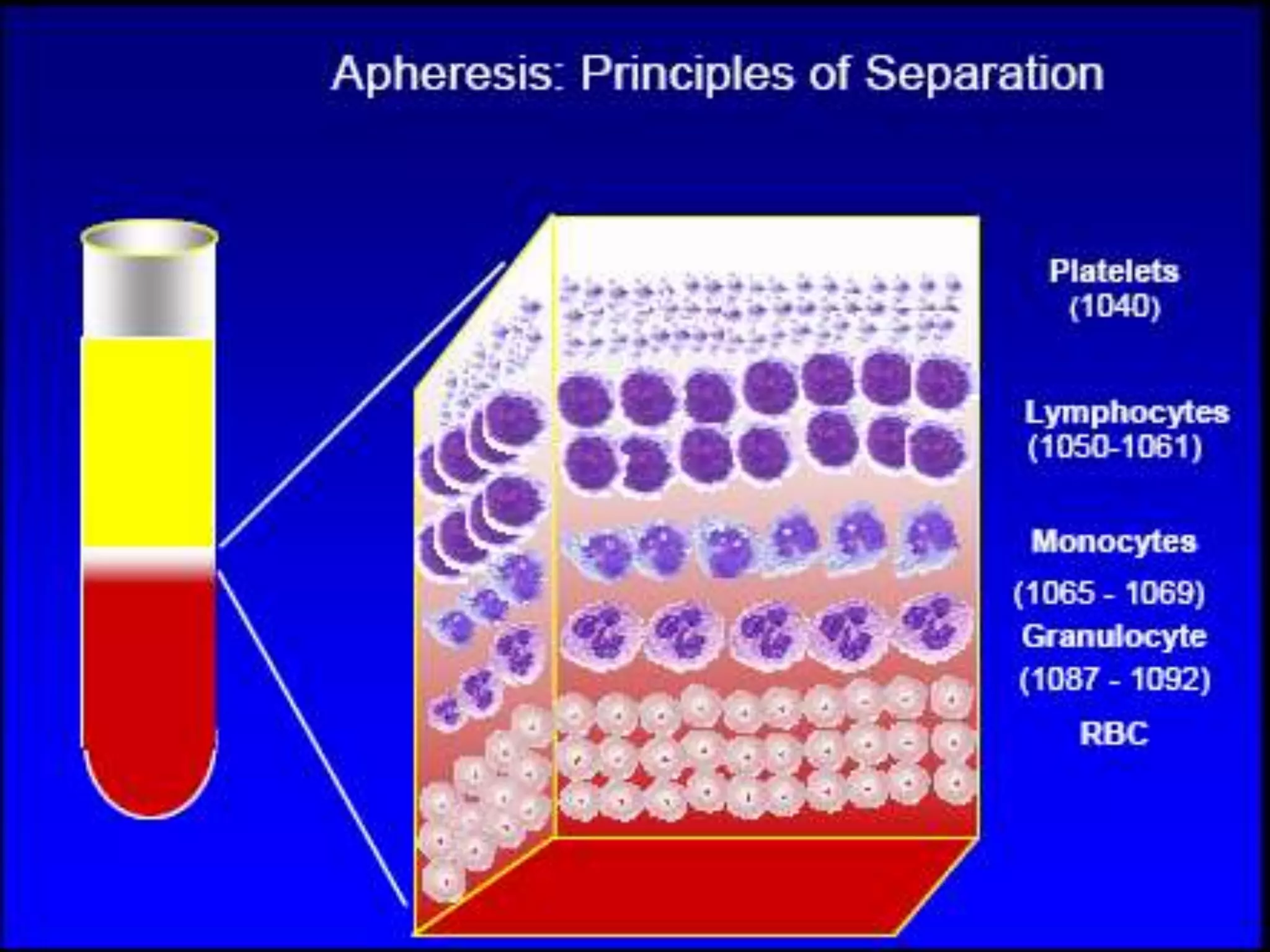
 More dense elements like RBCs settle to the 
bottom – then WBC – Platelets – and plasma on 
the top
METHODOLOGY 
1. Centrifugation method – separation is by density 
2. Membrane filtration technique 
 Centrifugation method is most commonly used
TYPES OF CENTRIFUGATION 
METHOD 
1. Intermittent flow centrifugation (IFC) – 
 Performed in cycles ( known as passes) 
 Blood is collected from an individual 
to prevent clotting , anticoagulant added to tubing
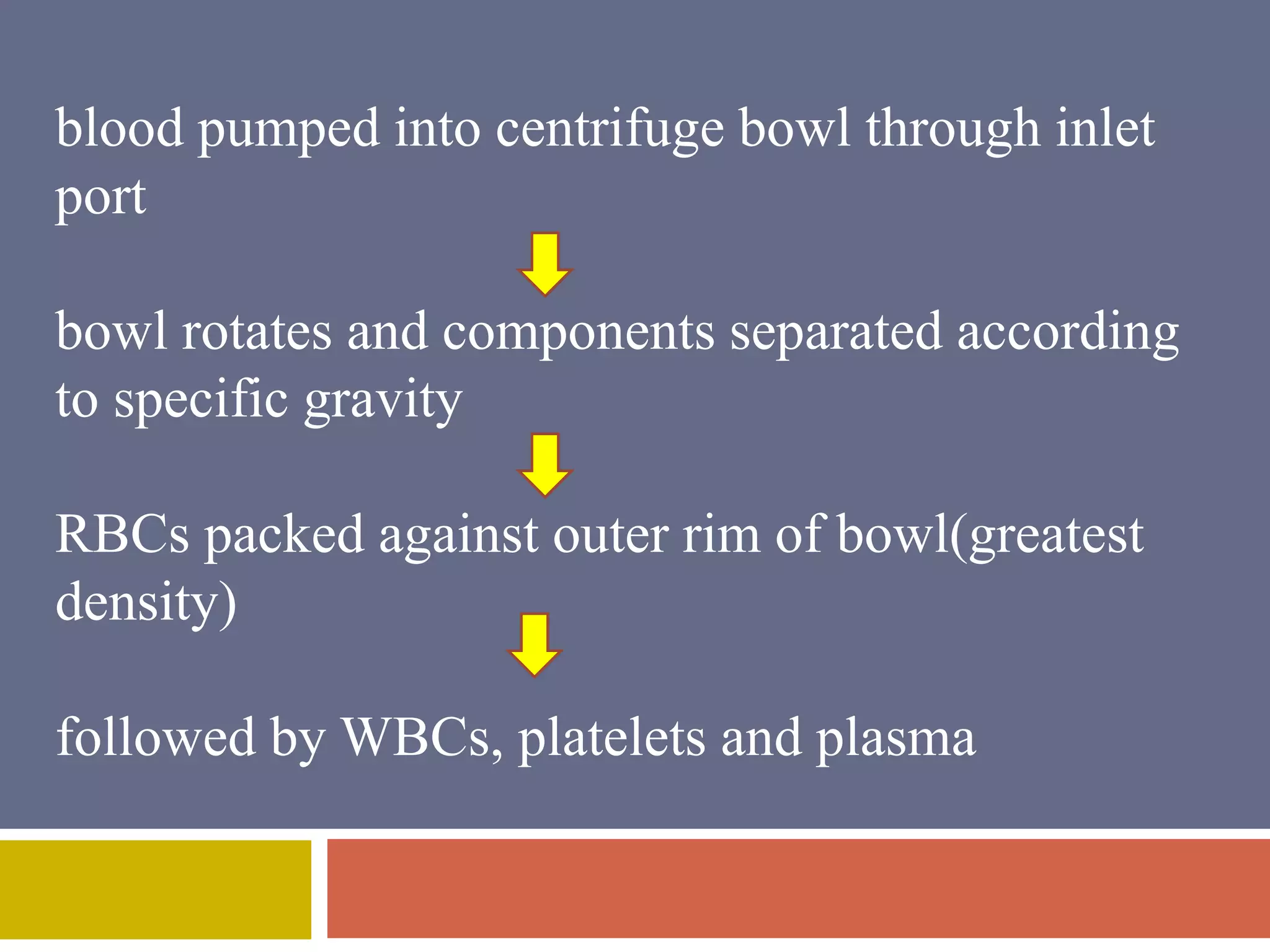
blood pumped into centrifuge bowl through inlet 
port 
bowl rotates and components separated according 
to specific gravity 
RBCs packed against outer rim of bowl(greatest 
density) 
followed by WBCs, platelets and plasma
separated components flow from bowl through outlet 
port into separate collection bags 
undesired components are diverted into reinfusion 
bag and returned to the individual 
reinfusion completes one cycle 
Cycles are repeated until the desired quantity of 
product is obtained (eg – plateletpheresis usually 
takes 6-8 cycles to collect a therapeutic dose)
 IFC can be done – 
 
a. With 1 venepuncture (one arm procedure) – 
blood is withdrawn and reinfused through the 
same needle 
b. With 2 venepuncture (2 arm procedure) – one 
for phlebotomy and 1 for reinfusion
2. Continuous flow centrifugation(CFC) – 
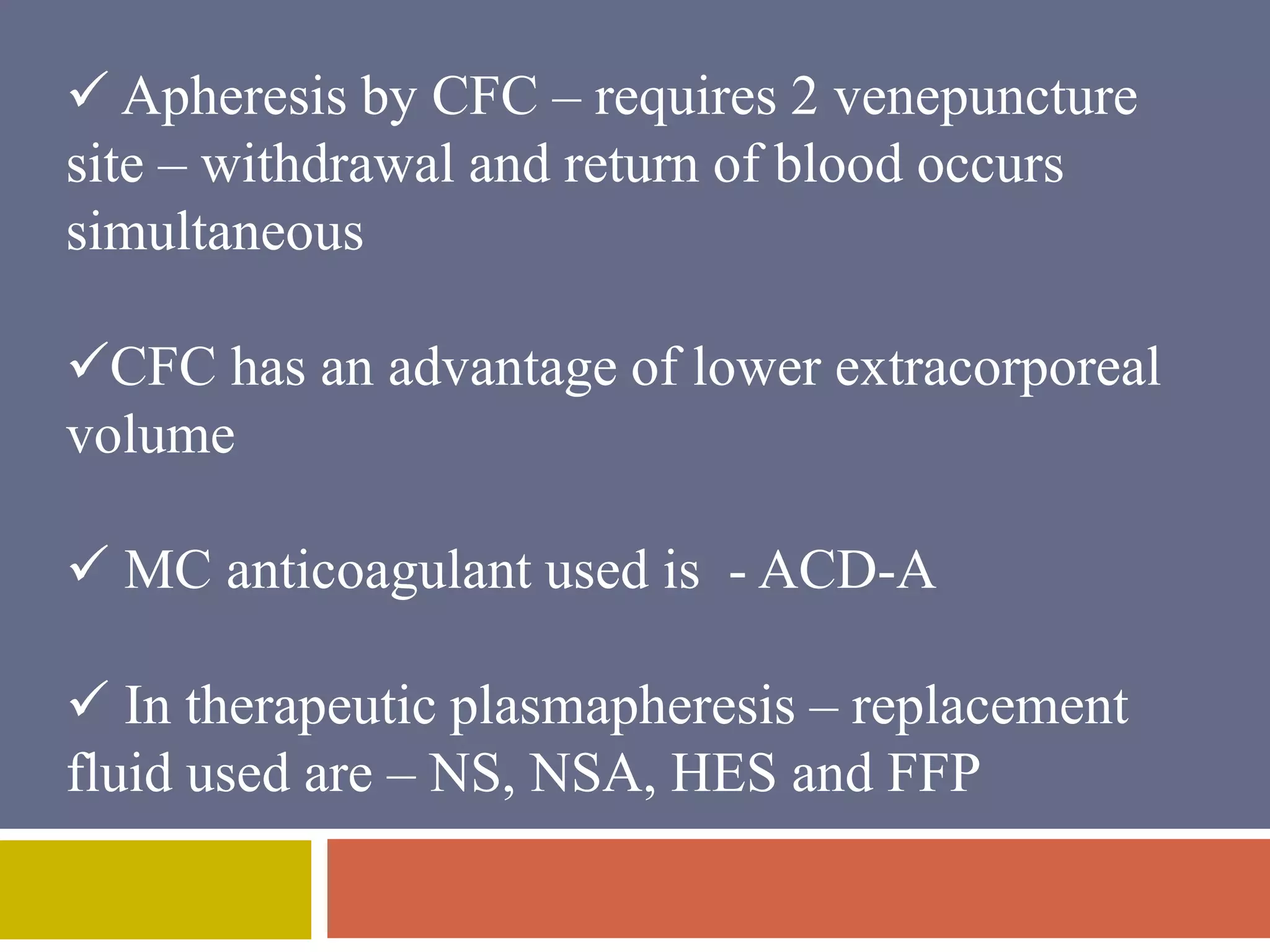
 It withdraws , process and return the blood to 
individual simultaneously 
 This is in contrast to IFC procedure , which 
completes a cycle before beginning a new one 
 Always done with 2 venepuncture sites 
 ADV- low extracorporeal blood volume is used 
– so useful in elderly and children
MEMBRANE FILTRATION 
TECHNIQUE 
 Blood that passes over membranes with specific 
pore sizes allows passage of plasma through 
membrane while cellular portion passes over it 
 Limited to only plasma collection
GUIDELINES FOR THERAPEUTIC 
HEMAPHERESIS BY AMERICAN 
SOCIETY OF APHERESIS 
1. CATEGORY 1 – Efficacy demonstrated 
apheresis as primary therapy 
a. Hyperviscosity 
b. TTP 
c. GBS 
d. Cryoglobulinemia 
e. Myasthenia gravis 
f. CTCL
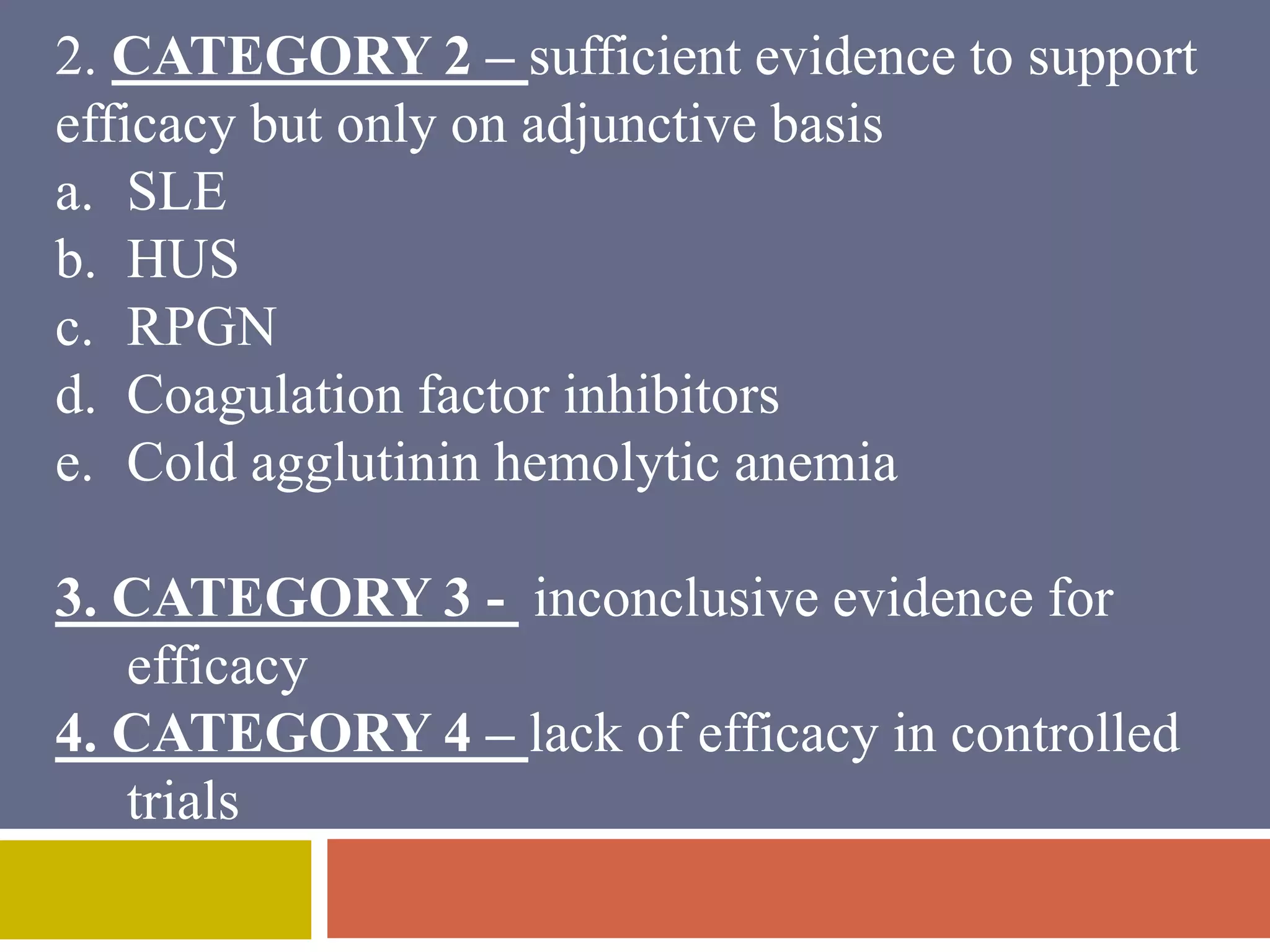
2. CATEGORY 2 – sufficient evidence to support 
efficacy but only on adjunctive basis 
a. SLE 
b. HUS 
c. RPGN 
d. Coagulation factor inhibitors 
e. Cold agglutinin hemolytic anemia 
3. CATEGORY 3 - inconclusive evidence for 
efficacy 
4. CATEGORY 4 – lack of efficacy in controlled 
trials
APHERESIS PROCEDURAL 
ELEMEMTS 
1. Venous access 
2. Replacement fluid 
3. Normal constituents removed 
4. Anticoagulation 
5. Patient history and medication 
6. Frequency and number of procedures 
7. Complications
VENOUS ACCESS 
 Requires large bore venous catheters to sustain 
a flow rate of 50-100ml/min 
 Location – Peripheral – anticubital 
Central – femoral/subclavian/jugular
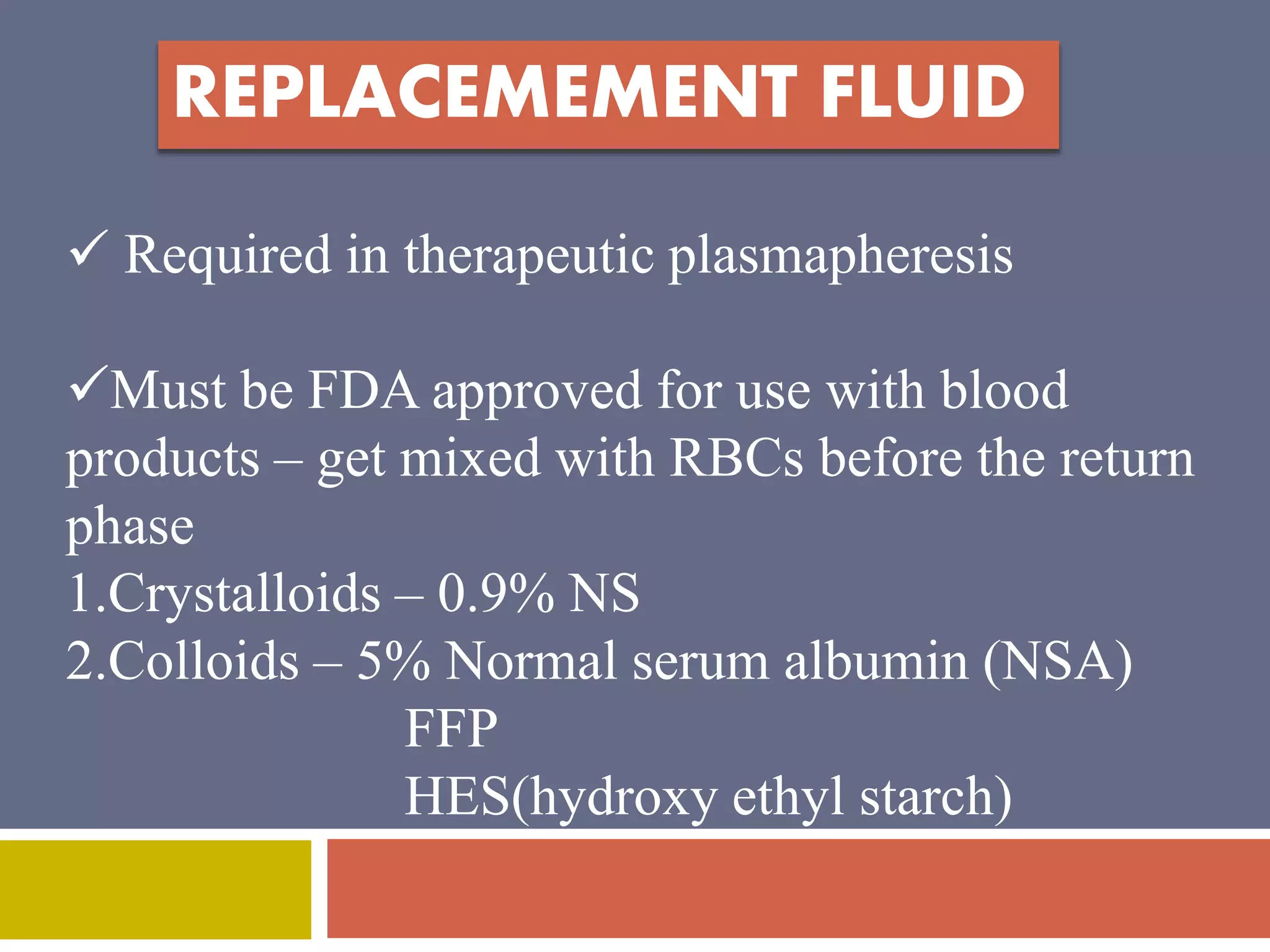
REPLACEMEMENT FLUID 
 Required in therapeutic plasmapheresis 
Must be FDA approved for use with blood 
products – get mixed with RBCs before the return 
phase 
1.Crystalloids – 0.9% NS 
2.Colloids – 5% Normal serum albumin (NSA) 
FFP 
HES(hydroxy ethyl starch)
 NS provides less oncotic pressure than plasma , 
so 2-3 times the volume removed should be 
replaced 
Mixtures of NSA and NS has also been used 
 FFP is especially recommended in case of TTP
NORMAL CONSTITUENTS 
REMOVED 
 Coagulation factors – replaced in 2-3 days after 
exchange 
Measure PT/APTT every 2-3 days rather than 
daily 
 Platelets – 25-30% loss per procedure 
 Endogenous synthesis replaces in 2-4 days
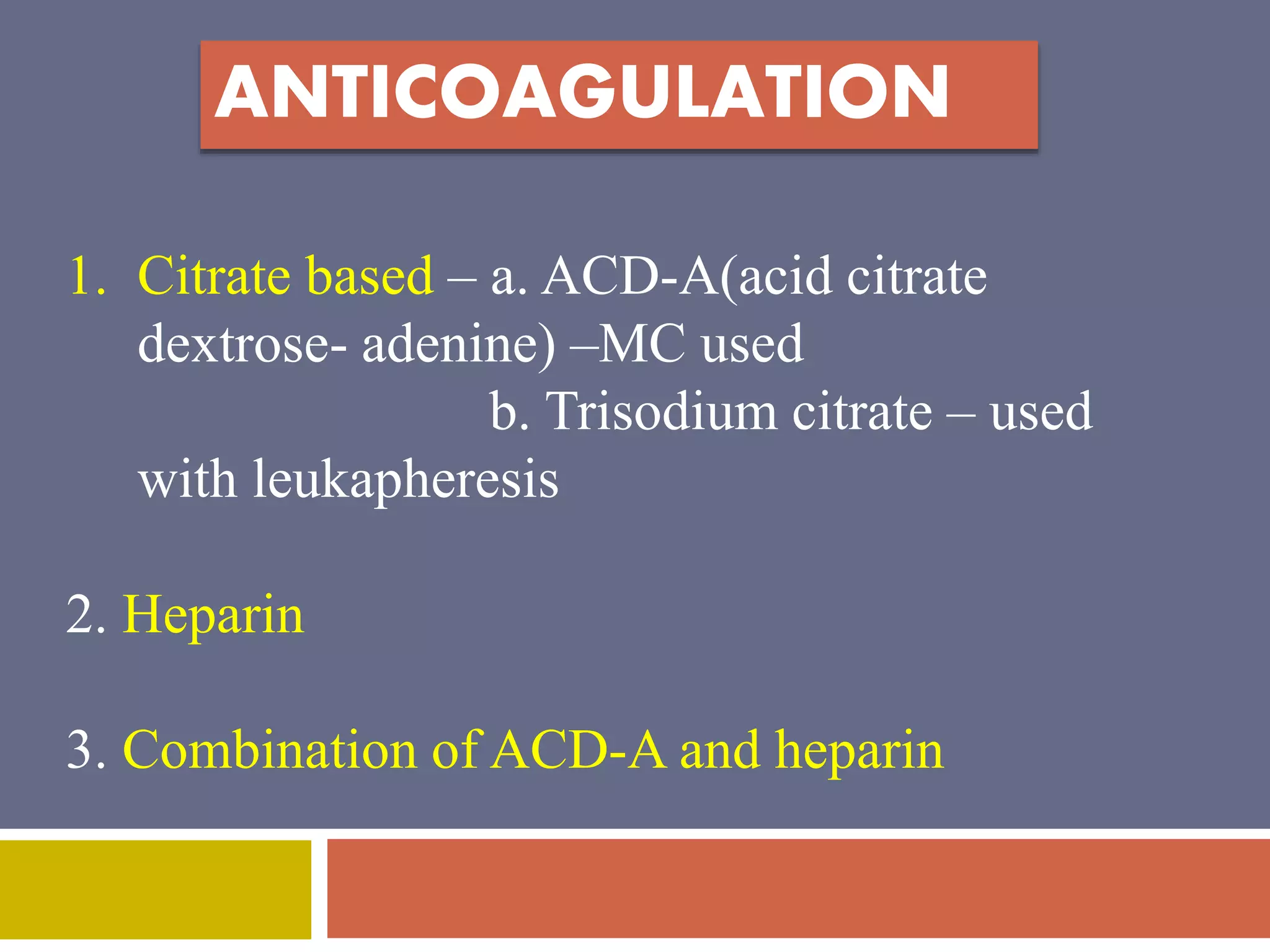
ANTICOAGULATION 
1. Citrate based – a. ACD-A(acid citrate 
dextrose- adenine) –MC used 
b. Trisodium citrate – used 
with leukapheresis 
2. Heparin 
3. Combination of ACD-A and heparin
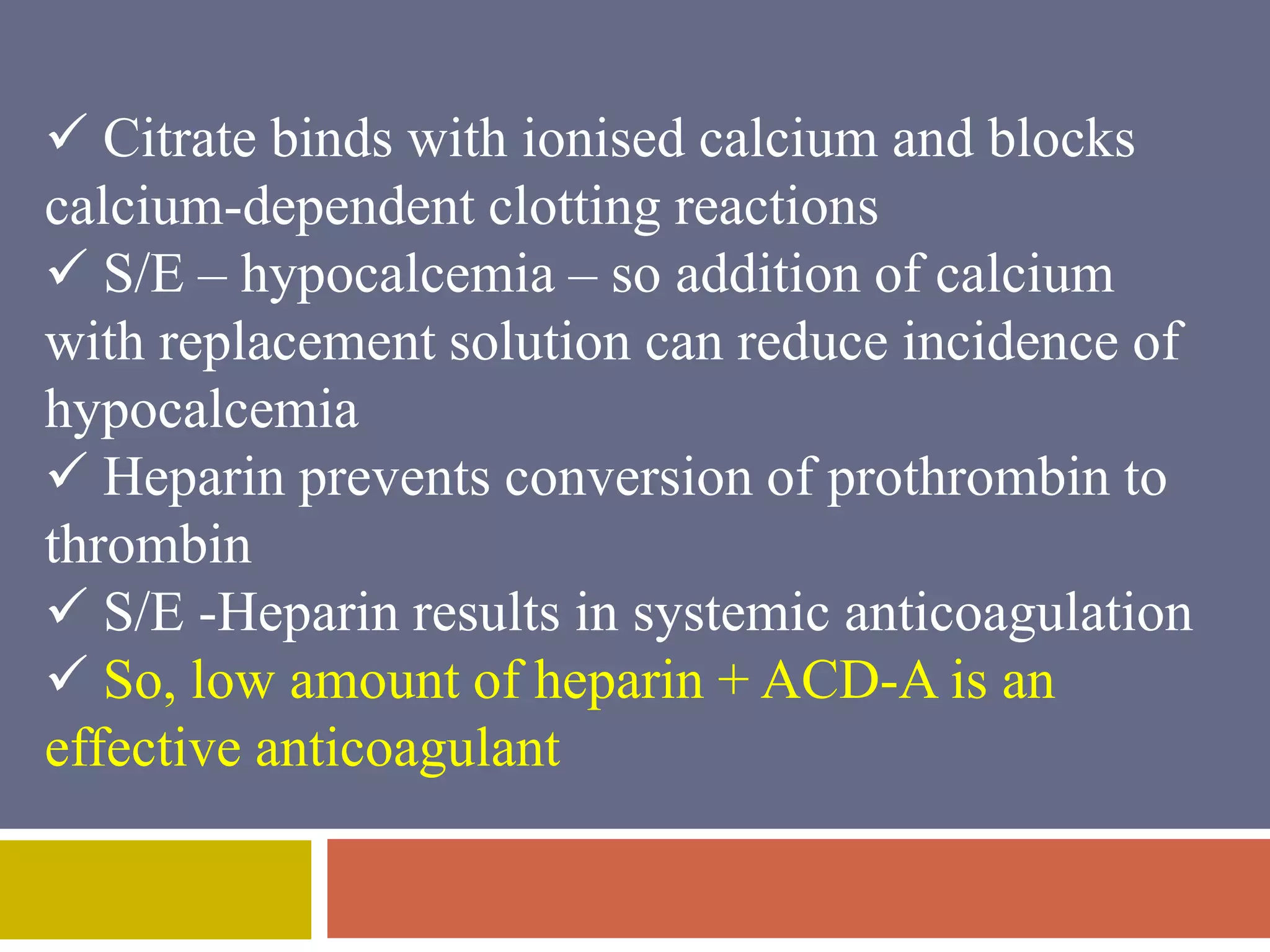
 Citrate binds with ionised calcium and blocks 
calcium-dependent clotting reactions 
 S/E – hypocalcemia – so addition of calcium 
with replacement solution can reduce incidence of 
hypocalcemia 
 Heparin prevents conversion of prothrombin to 
thrombin 
 S/E -Heparin results in systemic anticoagulation 
 So, low amount of heparin + ACD-A is an 
effective anticoagulant
PATIENT HISTORY AND 
MEDICATION 
 Certain medications like antibiotic and 
anticoagulant are removed during aphereis – so 
should be given immediately after procedure 
 Should avoid ACE inhibitors upto 48hrs after 
apheresis
I I 
I
 ACE inh causes – vasodilatation 
 Apheresis – causes activation of bradykinin in 
extracorporeal circuit – potent vasodilator – 
profound hypotension 
 If ACE inh given – further hypotension
 Use of apheresis technique is divided into 2 – 
1. Component collection 
2. Therapeutic procedure 
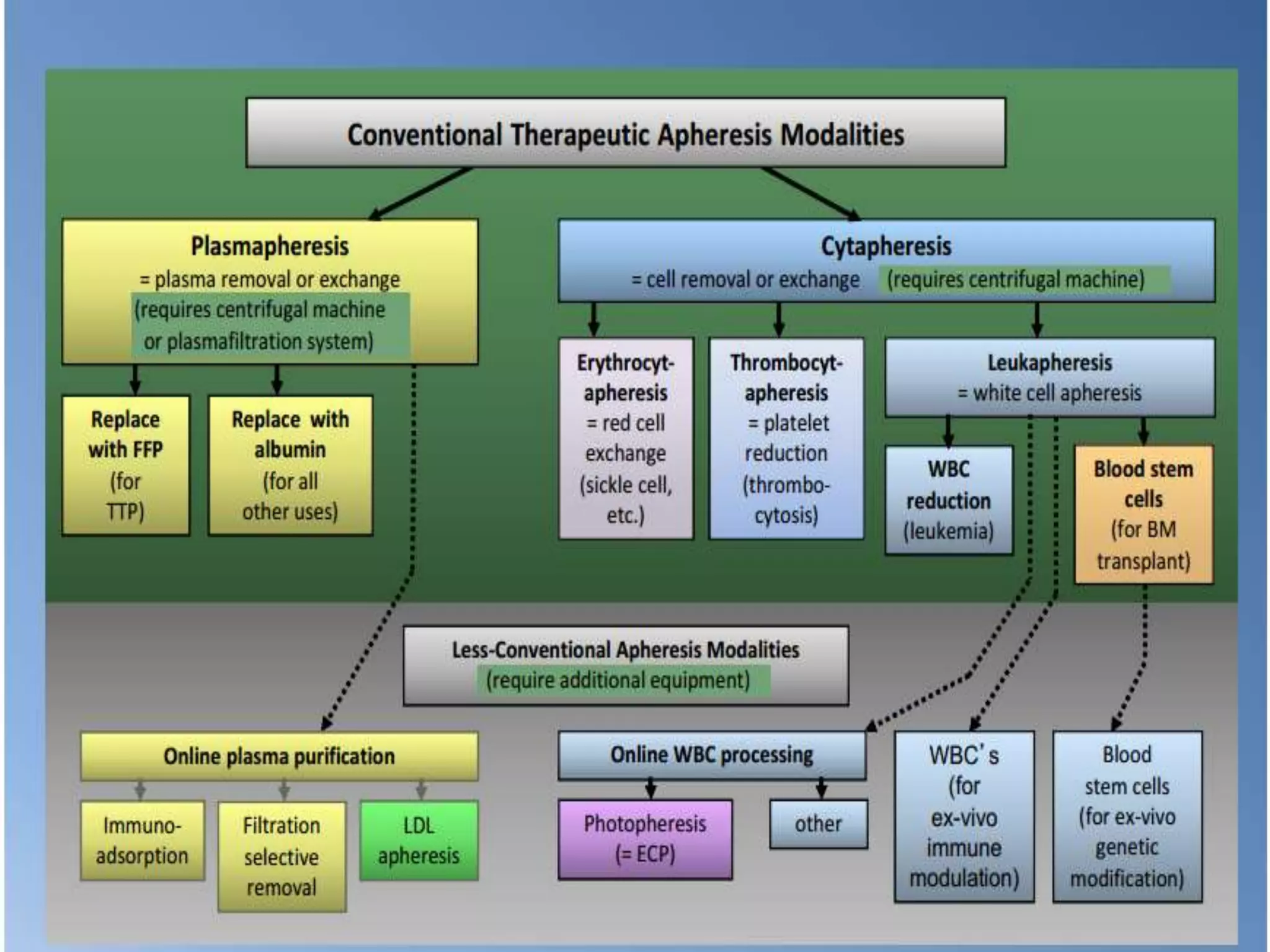
 2 types of apheresis- 
1. Cytapheresis (leucapheresis, plateletpheresis 
and erythrocytapheresis) 
2. Plasmapheresis
PLATELETPHERESIS 
COMPONENT COLLECTION 
 Indication – Bleeding – secondary to 
thrombocytopenia or platelet dysfunction 
Platelet transfusion 
By platelet concentrates 
harvested from routine 
whole blood 
donations(RDP) 
By apheresis – Platelet 
yield is related to donor’s 
initial Platelet count (SDP)
 Donor’s PC should be > 1.5 lakhs 
 If it’s the 1st donation or if 4 wks have elapsed 
since prior platelet donation – a PC is not reqd 
If platelet donation done in <4wks – PC reqd 
In apheresis product – Number of platelets (3 * 
10^11 in about 300ml ) is equivalent to 6-10 
random donor platelets 
 In case of emergency can donate again after 3 
days
 Must not have taken NSAIDs or Aspirin within 
last 48 hrs 
 Takes about 45-90 mins 
 Approved for 5 days storage at 20-24°C with 
continuous gentle agitation 
 At the end of storage period – the pH should be ≥ 
6.2 
 If RBC contamination in product is negligible 
(<2ml) – compatibility testing not reqd
THERAPEUTIC PLATELETPHERESIS 
Indications - 
1. For management of patients with symptomatic 
thrombocythemia 
2. For those who cant tolerate drug therapy like 
hydroxyurea and anagrelide 
3. In polycythemia vera 
With each procedure of TP – 50% reduction in PC
 In pregnancy with thrombocythemia – drug 
therapy is C/I – so TP is the preferred treatment 
for rapid lowering of PC to prevent placental 
infarction and fetal death
LEUKAPHERESIS 
COMPONENT COLLECTION 
 Indication – 
1. Severe neutropenia 
2. Patients with infection unresponsive to 
traditional therapy 
 Sedimenting agents like HES allows better 
separation of granulocytes from RBCs
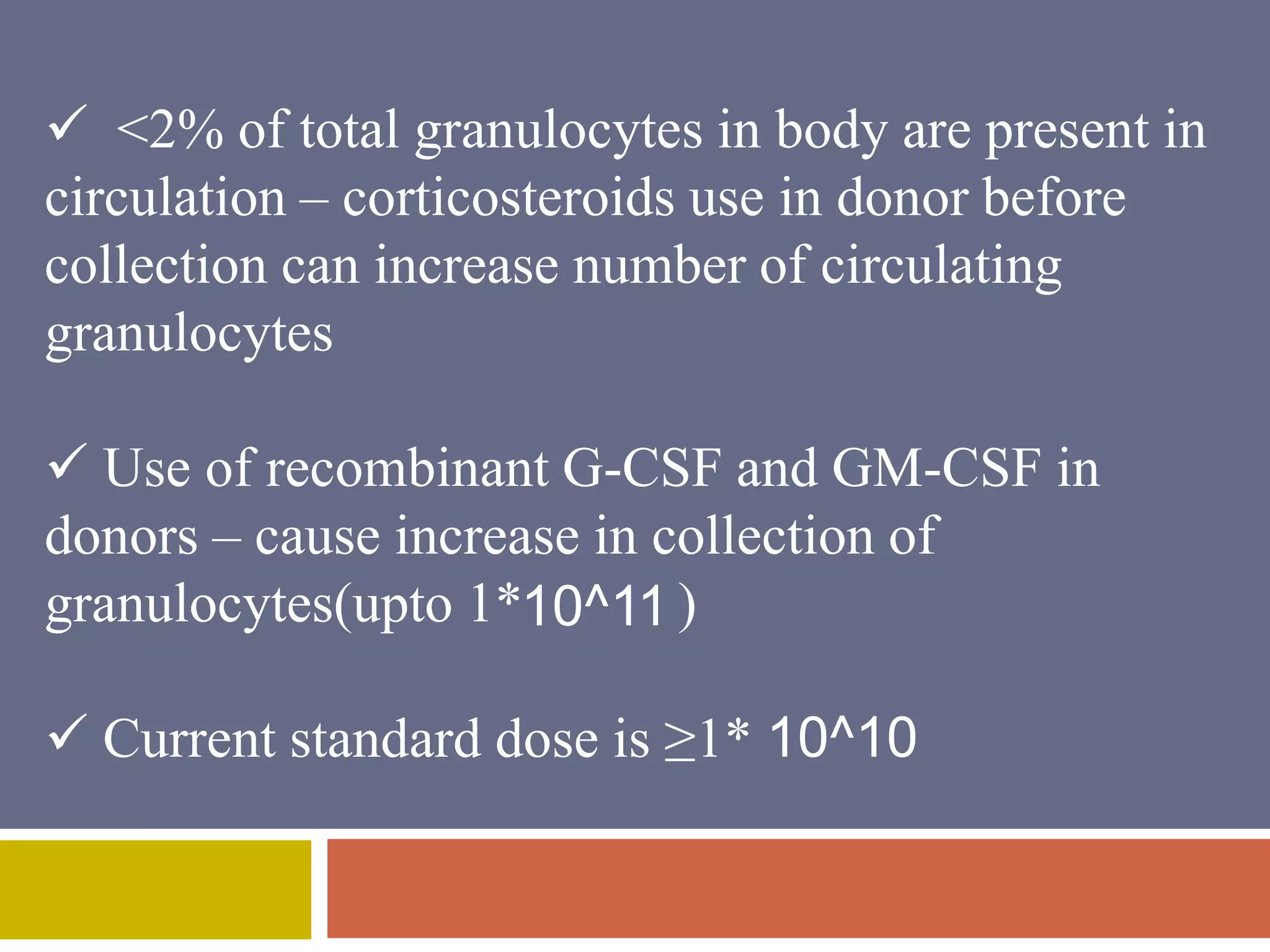
 <2% of total granulocytes in body are present in 
circulation – corticosteroids use in donor before 
collection can increase number of circulating 
granulocytes 
 Use of recombinant G-CSF and GM-CSF in 
donors – cause increase in collection of 
granulocytes(upto 1* ) 
10^11 
 Current standard dose is ≥1* 10^10
 Shelf life is 24hrs at 20-24°C but s/b transfused 
as soon as possible 
Due to large no. of lymphocytes present – must 
be irradiated to prevent GVHD (function of 
granulocytes is not affected by irradiation) 
 If RBC contamination >2ml – ABO compability 
testing reqd
THERAPEUTIC LEUCOCYTAPHERESIS 
 Indication – 
1. To deplete malignant leucocytes in both acute 
and chronic leukemias – to prevent/treat 
leucostatic syndrome wherein 
pulmonary/cerebral dysfunction may develop 
once TLC is >1 lakhs/cumm in AML or > 3 
lakhs/cumm in CML 
2. Leukemic phase of cutaneous T cell lymphoma 
(sezary syndrome)
ERYTHROCYTAPHERESIS 
COMPONENT COLLECTION 
 done in 2 ways 
2 units of RBCs 
In such a case, donor must 
wait for 16 weeks before 
next RBC donation 
1 unit of RBC collected 
concurrently with 
plasma/platelets
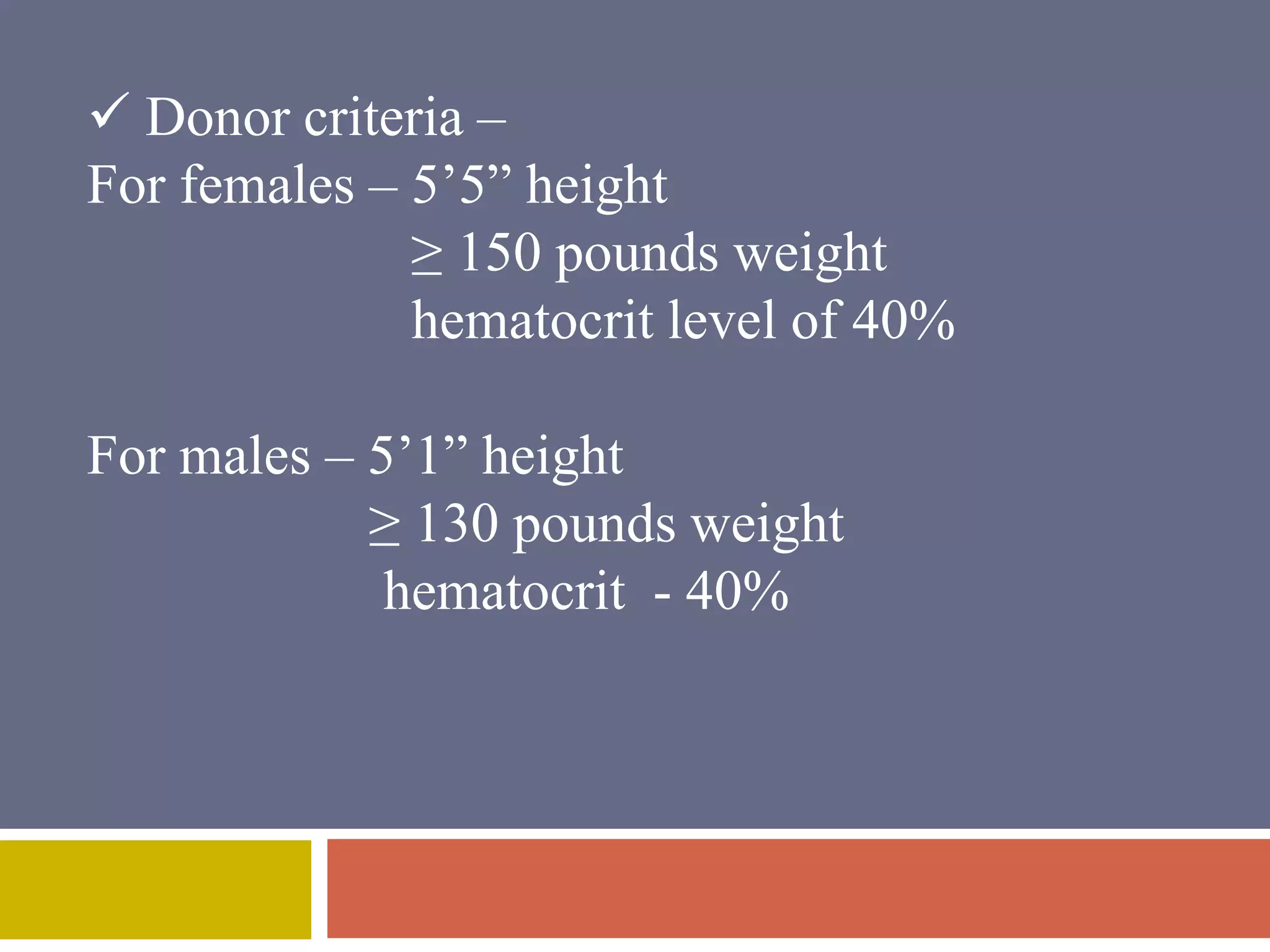
 Donor criteria – 
For females – 5’5” height 
≥ 150 pounds weight 
hematocrit level of 40% 
For males – 5’1” height 
≥ 130 pounds weight 
hematocrit - 40%
THERAPEUTIC ERYTHROCYTAPHERESIS 
 Its an exchange procedure 
 MC used in – 1. Sickle cell disease – during 
severe crisis such as stroke, acute chest syndrome, 
priapism and cholestasis 
Exchanged with RBC containing ≥ 70% HbA 
2. In parasitic infection – severe falciparum 
malaria and babesiosis – to lower parasite load
PLASMAPHERESIS 
COMPONENT COLLECTION 
 Indication – To collect immune plasma from 
donors with increased concentration of certain 
plasma immunoglobins 
 RBCs must be returned within 2 hrs of 
phlebotomy 
 RBC loss s/n/b > 25ml/week
 Amount of blood processed at one time s/n/b 
>500ml – not >1000 ml in 48 hrs – and not >2000 
ml in 7 day period
THERAPEUTIC PLASMAPHERESIS 
 Purpose is to remove offending agent in plasma 
causing clinical symptoms 
 Replacement fluid must be given 
 Factors removed by plasmapheresis – 
1. Immune complexes (in SLE) 
2. AutoAbs or alloAbs (F-VIII inh)
4. Abs causing hyperviscosity (in Waldenstrom’s 
macroglobulinemia 
5. Protein bound toxins 
6. Lipoproteins 
7. Platelet aggregating factors (in TTP)
IMMUNOADSORPTION 
 Method in which a specific ligand binds to 
insoluble matrix in a column 
Plasma is then perfused over the column 
Selective removal of pathogenetic substance and 
return of patient’s own plasma
ADSORBENT SUBSTANCE REMOVED APPLICATION 
Charcoal Bile acids Cholestasis 
A and B Ags Anti-A and Anti-B Transplantation 
Anti-LDL LDL hypercholesterolemia 
DNA ANA, Immune complexes SLE 
Protein A(styphylococcal) IgG, Immune complexes ITP, HUS
PHOTOPHERESIS 
 FDA approved for Cutaneous T-cell lymphoma 
 Patient is treated with drug psoralen 
It binds to DNA of all nucleated cells 
Leucocytapheresis done and WBCs exposed to UV-A 
light
this activates psoralen and prevents replication 
These treated cells are then returned to patient 
 Also indicated in – scleroderma, RA, Acute and 
chronic GVHD
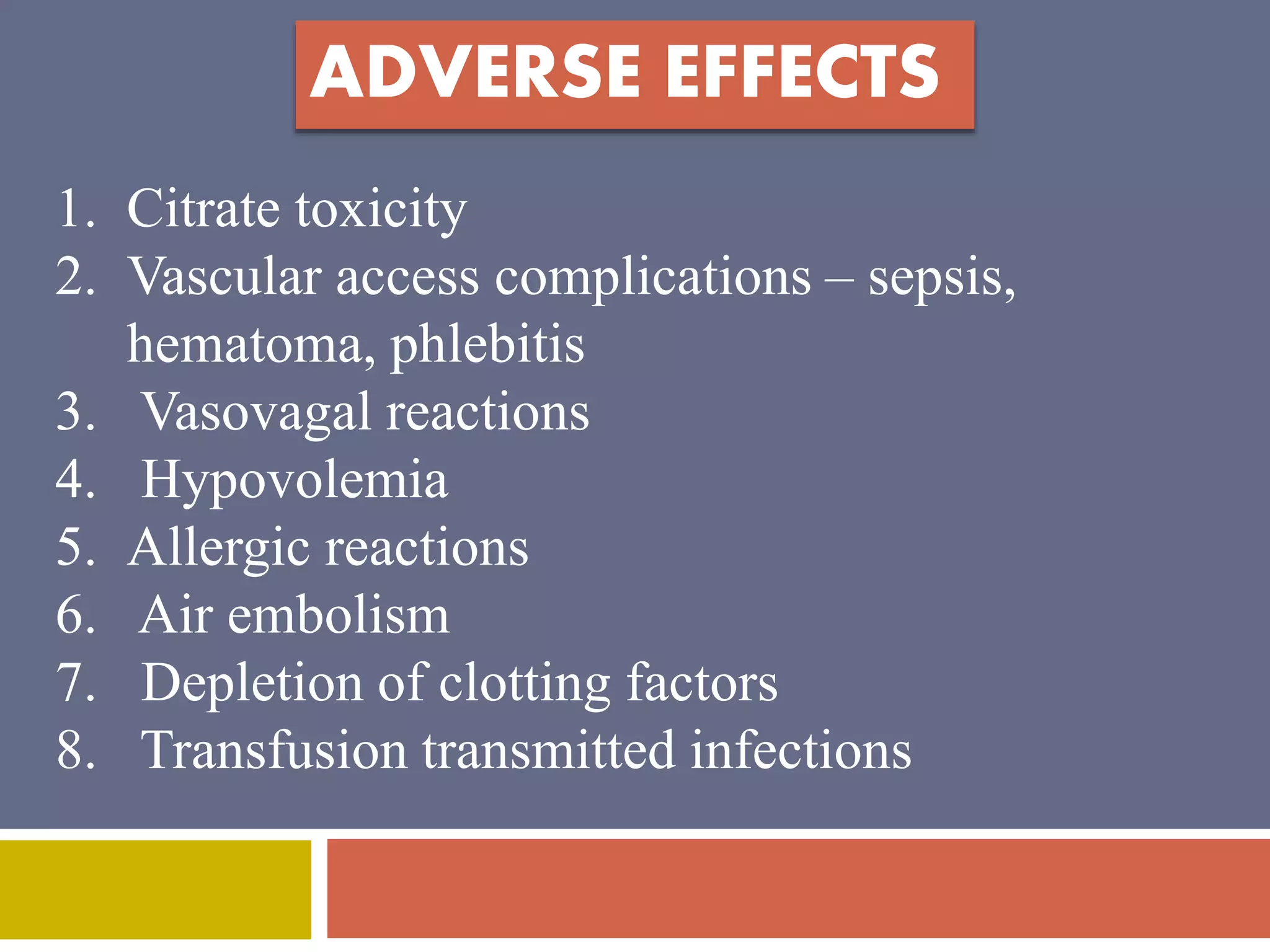
ADVERSE EFFECTS 
1. Citrate toxicity 
2. Vascular access complications – sepsis, 
hematoma, phlebitis 
3. Vasovagal reactions 
4. Hypovolemia 
5. Allergic reactions 
6. Air embolism 
7. Depletion of clotting factors 
8. Transfusion transmitted infections
IMPORTANT POINTS TO REMEMBER 
 In apheresis procedure, blood is withdrawn from 
donor/patient – separated into components – one or 
more components are retained – remaining 
constituents combined and returned back to the 
individual 
 Apheresis by IFC – requires only one 
venepuncture site
 Apheresis by CFC – requires 2 venepuncture 
site – withdrawal and return of blood occurs 
simultaneous 
CFC has an advantage of lower extracorporeal 
volume 
 MC anticoagulant used is - ACD-A 
 In therapeutic plasmapheresis – replacement 
fluid used are – NS, NSA, HES and FFP
FFP especially in case of TTP 
 Granulocyte concentrates should contain a 
minimum of 1 * 10^10 granulocytes 
 Plateletpheresis products should contain a 
minimum of 3 * 10^11 platelets , an equivalent of 6- 
10 random platelet concentrates
REFERENCES 
1. Modern blood banking and tranfusion practices 
– Denise M. Harmening 
2. Recent advances in hematology 
3. Various internet sources
THANK YOU

Apheresis

  • 1.
  • 2.
    DEFINITION  Apheresisis derived from a greek word meaning “to take away”  Technique in which whole blood is withdrawn – separated into its components – desired component is retained and remaining constituents are returned to donor
  • 3.
    MECHANISM OF ACTION  Large-bore intravenous catheter is connected to spinning centrifuge bowl  Whole blood collected from donor/ patient into the centrifuge bowl  More dense elements like RBCs settle to the bottom – then WBC – Platelets – and plasma on the top
  • 6.
    METHODOLOGY 1. Centrifugationmethod – separation is by density 2. Membrane filtration technique  Centrifugation method is most commonly used
  • 7.
    TYPES OF CENTRIFUGATION METHOD 1. Intermittent flow centrifugation (IFC) –  Performed in cycles ( known as passes)  Blood is collected from an individual to prevent clotting , anticoagulant added to tubing
  • 8.
    blood pumped intocentrifuge bowl through inlet port bowl rotates and components separated according to specific gravity RBCs packed against outer rim of bowl(greatest density) followed by WBCs, platelets and plasma
  • 9.
    separated components flowfrom bowl through outlet port into separate collection bags undesired components are diverted into reinfusion bag and returned to the individual reinfusion completes one cycle Cycles are repeated until the desired quantity of product is obtained (eg – plateletpheresis usually takes 6-8 cycles to collect a therapeutic dose)
  • 10.
     IFC canbe done –  a. With 1 venepuncture (one arm procedure) – blood is withdrawn and reinfused through the same needle b. With 2 venepuncture (2 arm procedure) – one for phlebotomy and 1 for reinfusion
  • 11.
    2. Continuous flowcentrifugation(CFC) –  It withdraws , process and return the blood to individual simultaneously  This is in contrast to IFC procedure , which completes a cycle before beginning a new one  Always done with 2 venepuncture sites  ADV- low extracorporeal blood volume is used – so useful in elderly and children
  • 12.
    MEMBRANE FILTRATION TECHNIQUE  Blood that passes over membranes with specific pore sizes allows passage of plasma through membrane while cellular portion passes over it  Limited to only plasma collection
  • 13.
    GUIDELINES FOR THERAPEUTIC HEMAPHERESIS BY AMERICAN SOCIETY OF APHERESIS 1. CATEGORY 1 – Efficacy demonstrated apheresis as primary therapy a. Hyperviscosity b. TTP c. GBS d. Cryoglobulinemia e. Myasthenia gravis f. CTCL
  • 14.
    2. CATEGORY 2– sufficient evidence to support efficacy but only on adjunctive basis a. SLE b. HUS c. RPGN d. Coagulation factor inhibitors e. Cold agglutinin hemolytic anemia 3. CATEGORY 3 - inconclusive evidence for efficacy 4. CATEGORY 4 – lack of efficacy in controlled trials
  • 15.
    APHERESIS PROCEDURAL ELEMEMTS 1. Venous access 2. Replacement fluid 3. Normal constituents removed 4. Anticoagulation 5. Patient history and medication 6. Frequency and number of procedures 7. Complications
  • 16.
    VENOUS ACCESS Requires large bore venous catheters to sustain a flow rate of 50-100ml/min  Location – Peripheral – anticubital Central – femoral/subclavian/jugular
  • 17.
    REPLACEMEMENT FLUID Required in therapeutic plasmapheresis Must be FDA approved for use with blood products – get mixed with RBCs before the return phase 1.Crystalloids – 0.9% NS 2.Colloids – 5% Normal serum albumin (NSA) FFP HES(hydroxy ethyl starch)
  • 18.
     NS providesless oncotic pressure than plasma , so 2-3 times the volume removed should be replaced Mixtures of NSA and NS has also been used  FFP is especially recommended in case of TTP
  • 20.
    NORMAL CONSTITUENTS REMOVED  Coagulation factors – replaced in 2-3 days after exchange Measure PT/APTT every 2-3 days rather than daily  Platelets – 25-30% loss per procedure  Endogenous synthesis replaces in 2-4 days
  • 21.
    ANTICOAGULATION 1. Citratebased – a. ACD-A(acid citrate dextrose- adenine) –MC used b. Trisodium citrate – used with leukapheresis 2. Heparin 3. Combination of ACD-A and heparin
  • 22.
     Citrate bindswith ionised calcium and blocks calcium-dependent clotting reactions  S/E – hypocalcemia – so addition of calcium with replacement solution can reduce incidence of hypocalcemia  Heparin prevents conversion of prothrombin to thrombin  S/E -Heparin results in systemic anticoagulation  So, low amount of heparin + ACD-A is an effective anticoagulant
  • 24.
    PATIENT HISTORY AND MEDICATION  Certain medications like antibiotic and anticoagulant are removed during aphereis – so should be given immediately after procedure  Should avoid ACE inhibitors upto 48hrs after apheresis
  • 25.
  • 26.
     ACE inhcauses – vasodilatation  Apheresis – causes activation of bradykinin in extracorporeal circuit – potent vasodilator – profound hypotension  If ACE inh given – further hypotension
  • 27.
     Use ofapheresis technique is divided into 2 – 1. Component collection 2. Therapeutic procedure  2 types of apheresis- 1. Cytapheresis (leucapheresis, plateletpheresis and erythrocytapheresis) 2. Plasmapheresis
  • 28.
    PLATELETPHERESIS COMPONENT COLLECTION  Indication – Bleeding – secondary to thrombocytopenia or platelet dysfunction Platelet transfusion By platelet concentrates harvested from routine whole blood donations(RDP) By apheresis – Platelet yield is related to donor’s initial Platelet count (SDP)
  • 29.
     Donor’s PCshould be > 1.5 lakhs  If it’s the 1st donation or if 4 wks have elapsed since prior platelet donation – a PC is not reqd If platelet donation done in <4wks – PC reqd In apheresis product – Number of platelets (3 * 10^11 in about 300ml ) is equivalent to 6-10 random donor platelets  In case of emergency can donate again after 3 days
  • 30.
     Must nothave taken NSAIDs or Aspirin within last 48 hrs  Takes about 45-90 mins  Approved for 5 days storage at 20-24°C with continuous gentle agitation  At the end of storage period – the pH should be ≥ 6.2  If RBC contamination in product is negligible (<2ml) – compatibility testing not reqd
  • 31.
    THERAPEUTIC PLATELETPHERESIS Indications- 1. For management of patients with symptomatic thrombocythemia 2. For those who cant tolerate drug therapy like hydroxyurea and anagrelide 3. In polycythemia vera With each procedure of TP – 50% reduction in PC
  • 32.
     In pregnancywith thrombocythemia – drug therapy is C/I – so TP is the preferred treatment for rapid lowering of PC to prevent placental infarction and fetal death
  • 33.
    LEUKAPHERESIS COMPONENT COLLECTION  Indication – 1. Severe neutropenia 2. Patients with infection unresponsive to traditional therapy  Sedimenting agents like HES allows better separation of granulocytes from RBCs
  • 34.
     <2% oftotal granulocytes in body are present in circulation – corticosteroids use in donor before collection can increase number of circulating granulocytes  Use of recombinant G-CSF and GM-CSF in donors – cause increase in collection of granulocytes(upto 1* ) 10^11  Current standard dose is ≥1* 10^10
  • 35.
     Shelf lifeis 24hrs at 20-24°C but s/b transfused as soon as possible Due to large no. of lymphocytes present – must be irradiated to prevent GVHD (function of granulocytes is not affected by irradiation)  If RBC contamination >2ml – ABO compability testing reqd
  • 36.
    THERAPEUTIC LEUCOCYTAPHERESIS Indication – 1. To deplete malignant leucocytes in both acute and chronic leukemias – to prevent/treat leucostatic syndrome wherein pulmonary/cerebral dysfunction may develop once TLC is >1 lakhs/cumm in AML or > 3 lakhs/cumm in CML 2. Leukemic phase of cutaneous T cell lymphoma (sezary syndrome)
  • 37.
    ERYTHROCYTAPHERESIS COMPONENT COLLECTION  done in 2 ways 2 units of RBCs In such a case, donor must wait for 16 weeks before next RBC donation 1 unit of RBC collected concurrently with plasma/platelets
  • 38.
     Donor criteria– For females – 5’5” height ≥ 150 pounds weight hematocrit level of 40% For males – 5’1” height ≥ 130 pounds weight hematocrit - 40%
  • 39.
    THERAPEUTIC ERYTHROCYTAPHERESIS Its an exchange procedure  MC used in – 1. Sickle cell disease – during severe crisis such as stroke, acute chest syndrome, priapism and cholestasis Exchanged with RBC containing ≥ 70% HbA 2. In parasitic infection – severe falciparum malaria and babesiosis – to lower parasite load
  • 40.
    PLASMAPHERESIS COMPONENT COLLECTION  Indication – To collect immune plasma from donors with increased concentration of certain plasma immunoglobins  RBCs must be returned within 2 hrs of phlebotomy  RBC loss s/n/b > 25ml/week
  • 41.
     Amount ofblood processed at one time s/n/b >500ml – not >1000 ml in 48 hrs – and not >2000 ml in 7 day period
  • 42.
    THERAPEUTIC PLASMAPHERESIS Purpose is to remove offending agent in plasma causing clinical symptoms  Replacement fluid must be given  Factors removed by plasmapheresis – 1. Immune complexes (in SLE) 2. AutoAbs or alloAbs (F-VIII inh)
  • 43.
    4. Abs causinghyperviscosity (in Waldenstrom’s macroglobulinemia 5. Protein bound toxins 6. Lipoproteins 7. Platelet aggregating factors (in TTP)
  • 44.
    IMMUNOADSORPTION  Methodin which a specific ligand binds to insoluble matrix in a column Plasma is then perfused over the column Selective removal of pathogenetic substance and return of patient’s own plasma
  • 45.
    ADSORBENT SUBSTANCE REMOVEDAPPLICATION Charcoal Bile acids Cholestasis A and B Ags Anti-A and Anti-B Transplantation Anti-LDL LDL hypercholesterolemia DNA ANA, Immune complexes SLE Protein A(styphylococcal) IgG, Immune complexes ITP, HUS
  • 46.
    PHOTOPHERESIS  FDAapproved for Cutaneous T-cell lymphoma  Patient is treated with drug psoralen It binds to DNA of all nucleated cells Leucocytapheresis done and WBCs exposed to UV-A light
  • 47.
    this activates psoralenand prevents replication These treated cells are then returned to patient  Also indicated in – scleroderma, RA, Acute and chronic GVHD
  • 48.
    ADVERSE EFFECTS 1.Citrate toxicity 2. Vascular access complications – sepsis, hematoma, phlebitis 3. Vasovagal reactions 4. Hypovolemia 5. Allergic reactions 6. Air embolism 7. Depletion of clotting factors 8. Transfusion transmitted infections
  • 50.
    IMPORTANT POINTS TOREMEMBER  In apheresis procedure, blood is withdrawn from donor/patient – separated into components – one or more components are retained – remaining constituents combined and returned back to the individual  Apheresis by IFC – requires only one venepuncture site
  • 51.
     Apheresis byCFC – requires 2 venepuncture site – withdrawal and return of blood occurs simultaneous CFC has an advantage of lower extracorporeal volume  MC anticoagulant used is - ACD-A  In therapeutic plasmapheresis – replacement fluid used are – NS, NSA, HES and FFP
  • 52.
    FFP especially incase of TTP  Granulocyte concentrates should contain a minimum of 1 * 10^10 granulocytes  Plateletpheresis products should contain a minimum of 3 * 10^11 platelets , an equivalent of 6- 10 random platelet concentrates
  • 53.
    REFERENCES 1. Modernblood banking and tranfusion practices – Denise M. Harmening 2. Recent advances in hematology 3. Various internet sources
  • 54.