Downloaded 64 times
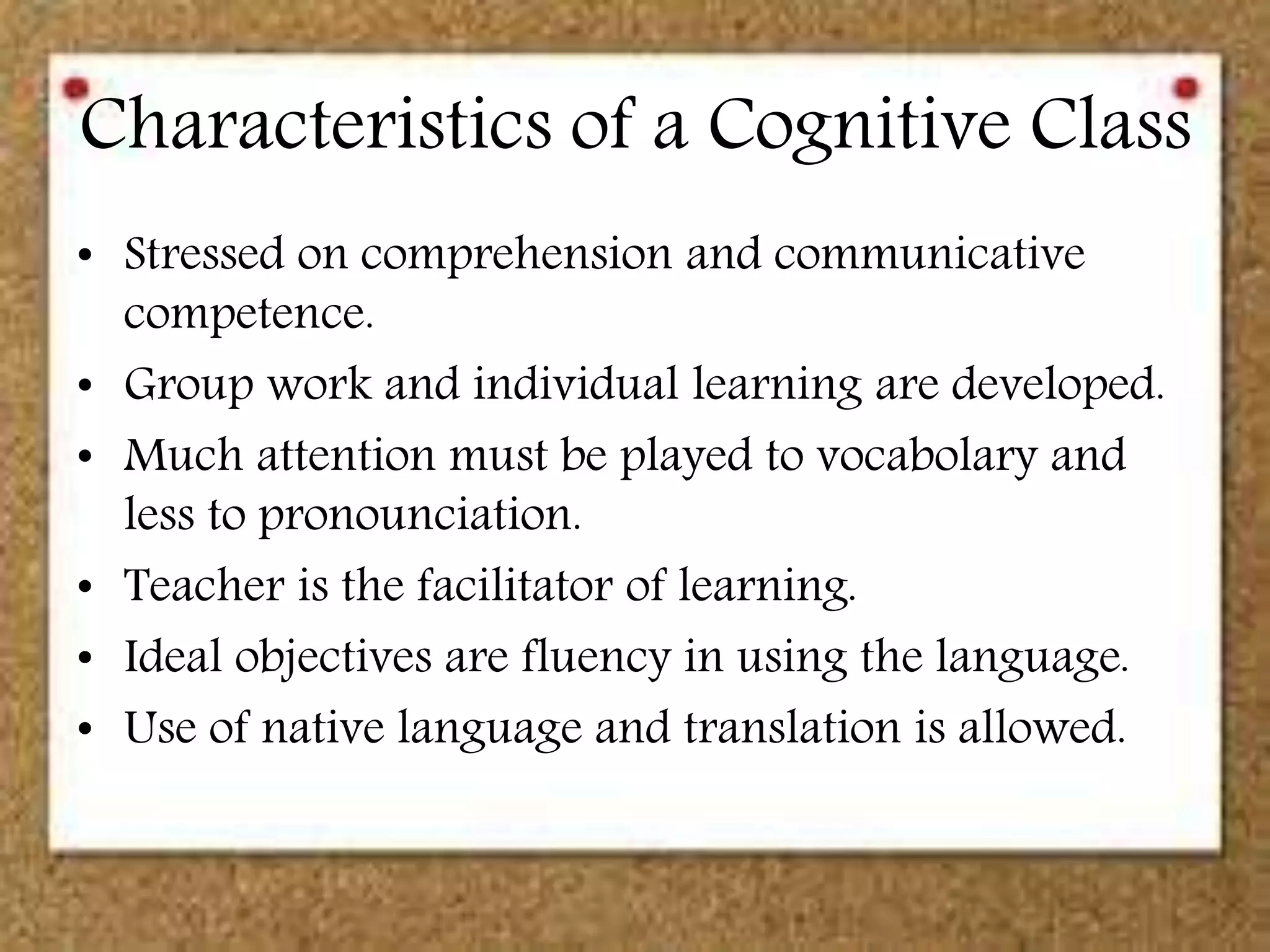


Cognitive learning theory views learning as an active internal process involving how information is processed, stored, and retrieved. It focuses on how students think, process information, and apply knowledge. Key aspects include starting lessons with prior knowledge, relating new ideas to existing understanding, using visual aids, and giving students opportunities to actively problem solve. Strengths are improving problem solving and motivation, while weaknesses include difficulty measuring cognitive awareness in individual students. Cognitive classrooms emphasize comprehension, group work, vocabulary over pronunciation, and using the native language to facilitate fluency.


