
CognitivismMegan
The Cognitive Theory of Learning in EducationCognitive theory defines learning as a “semi-permanent change in mental processes or associations”.
Cognitivists do not require an outward exhibition of learning, but focus more on the internal processes and connections that take place during learning.
Important classroom principles from cognitive psychology include meaningful learning, organization, and elaboration.www.innovativelearning.com/educational_psychology/cognitivism/index.htm
Cognitivism as a reaction to Behaviorism-Cognitivist theory developed as a reaction to Behaviorism.-Cognitivists objected to behaviorists because they felt that behaviorists thought learning was simply reactionary and ignored the idea that thinking plays a role.-Paivio, Gagne, and Gardner are a few of the cognitivists who have contributed to developing the cognitive theory.Text p. 371
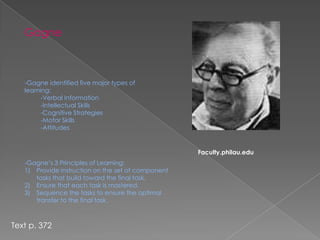
GagneGagne identified five major types of learning:
Verbal Information
Intellectual Skills

Cognitivism

  • 1.
  • 2.
    The Cognitive Theoryof Learning in EducationCognitive theory defines learning as a “semi-permanent change in mental processes or associations”.
  • 3.
    Cognitivists do notrequire an outward exhibition of learning, but focus more on the internal processes and connections that take place during learning.
  • 4.
    Important classroom principlesfrom cognitive psychology include meaningful learning, organization, and elaboration.www.innovativelearning.com/educational_psychology/cognitivism/index.htm
  • 5.
    Cognitivism as areaction to Behaviorism-Cognitivist theory developed as a reaction to Behaviorism.-Cognitivists objected to behaviorists because they felt that behaviorists thought learning was simply reactionary and ignored the idea that thinking plays a role.-Paivio, Gagne, and Gardner are a few of the cognitivists who have contributed to developing the cognitive theory.Text p. 371
  • 6.
    GagneGagne identified fivemajor types of learning:
  • 7.
  • 8.