Cognitive Behavioral Therapy:
The Counseling Process from Start
to Finish
James Ikonomopoulos Ph.D., LPC-S
Presentation Objectives
 Explain the connection between thoughts,
feelings, and behaviors
 Develop a cognitive case conceptualization
and understand its relationship to Cognitive
Therapy
 Choose and apply cognitive interventions
appropriate for use with children and adults
 Choose and apply behavioral interventions
appropriate for use with children and adults
Outline of Presentation
 Introduction to CBT
 Basic principles and overview of treatment
 Cognitive Conceptualization
 The cognitive model
 The Evaluation Session
 Intake and assessment
 The Initial Therapy Session
 Treatment Planning
 The 2nd
Session and Beyond
Outline of Concepts
 Behavioral Activation
 Identifying Automatic Thoughts
 Identifying Emotions
 Evaluating Automatic Thoughts
 Responding to Automatic Thoughts
 Identifying and Modifying Intermediate Beliefs
 Identifying and Modifying Core Beliefs
 Imagery
 Homework
 Additional Techniques
Introduction to CBT
 A revolution in the field of mental health was
started in the 1960’s by Aaron T. Beck
 He began as a fully trained and practicing
Psychoanalyst.
 He was a scientist at heart, believed theories
should be empirically valid.
 Began studying depression, and results of his
experiments lead him to pursue other
explanations for depression.
What is CBT?
 Dr. Beck decided to test the psychoanalytic concept
that depression is the result of hostility turned inward
toward the self.
 He investigated the dreams of depressed patients,
which, he predicted, would manifest greater themes of
hostility than the dreams of normal control patients.
 To his surprise, he ultimately found that the dreams of
depressed patients contained fewer themes of hostility
and far greater themes of defectiveness, deprivation,
and loss. He recognized that these themes paralleled
his patients’ thinking when they were awake.
What is CBT?
 He identified distorted, negative cognition
(primarily thoughts and beliefs) as a primary
feature of depression and developed a short-term
treatment, one of whose primary targets was the
reality testing of patients’ depressed thinking.
 Aaron Beck developed a form of psychotherapy in
the early 1960s that he originally termed
“cognitive therapy.”
 “Cognitive therapy” is now used synonymously
with “cognitive behavior therapy” by much of our
field.
What is CBT?
 Beck devised a structured, short-term, present-
oriented psychotherapy for depression, directed
toward solving current problems and modifying
dysfunctional (inaccurate and/or unhelpful) thinking
and behavior (Beck, 1964).
 Since that time, he and others have successfully
adapted this therapy to a surprisingly diverse set of
populations with a wide range of disorders and
problems.
 These adaptations have changed the focus, techniques,
and length of treatment, but the theoretical
assumptions themselves have remained constant.
What is CBT?
 In all forms of cognitive behavior therapy that
are derived from Beck’s model, treatment is
based on a cognitive formulation, the beliefs and
behavioral strategies that characterize a specific
disorder (Alford & Beck, 1997).
 Treatment is also based on a conceptualization,
or understanding, of individual patients (their
specific beliefs and patterns of behavior). The
therapist seeks in a variety of ways to produce
cognitive change—modification in the patient’s
thinking and belief system—to bring about
enduring emotional and behavioral change.
What is CBT?
 Beck drew on a number of different sources
when he developed this form of psychotherapy,
including early philosophers, such as Epicetus,
and theorists, such as Karen Horney, Alfred
Adler, George Kelly, Albert Ellis, Richard
Lazarus, and Albert Bandura. Beck’s work, has
been expanded by current researchers and
theorists, in the United States and abroad.
Different Forms of CBT
 There are a number of forms of cognitive behavior therapy that
share characteristics of Beck’s therapy, but whose
conceptualizations and emphases in treatment vary to some degree.
 These include rational emotional behavior therapy (Ellis, 1962),
dialectical behavior therapy (Linehan, 1993), problem-solving
therapy (D’Zurilla & Nezu, 2006), acceptance and commitment
therapy (Hayes, Follette, & Linehan, 2004), exposure therapy (Foa
& Rothbaum, 1998), cognitive processing therapy (Resick &
Schnicke, 1993), cognitive behavioral analysis system of
psychotherapy (McCullough, 1999), behavioral activation
(Lewinsohn, Sullivan, & Grosscup, 1980; Martell, Addis, & Jacobson,
2001), cognitive behavior modification (Meichenbaum, 1977), TF-
CBT (Cohen, Mannarino, & Knudsen, 2004; Cohen,. Mannarino, &
Staron, 2006), and others.
 Beck’s cognitive behavior therapy often incorporates techniques
from all these therapies, and other psychotherapies, within a
cognitive framework.
The Cognitive Model
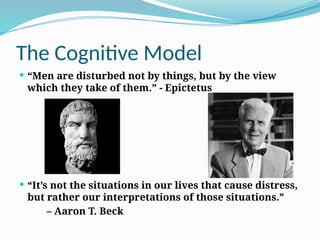
 “Men are disturbed not by things, but by the view
which they take of them.” - Epictetus
 “It’s not the situations in our lives that cause distress,
but rather our interpretations of those situations.”
– Aaron T. Beck
What is the Theory of CBT?
 The cognitive model proposes that dysfunctional thinking
(which influences the patient’s mood and behavior) is common to
all psychological disturbances.
 When people learn to evaluate their thinking in a more realistic
and adaptive way, they experience improvement in their
emotional state and in their behavior.
 For example, if you were quite depressed and bounced some
checks, you might have an automatic thought, an idea that just
seemed to pop up in your mind: “I can’t do anything right.” This
thought might then lead to a particular reaction: you might feel
sad (emotion) and retreat to bed (behavior). If you then
examined the validity of this idea, you might conclude that you
had overgeneralized and that, in fact, you actually do many
things well. Looking at your experience from this new
perspective would probably make you feel better and lead to
more functional behavior.
What is the Theory of CBT?
 For lasting improvement in patients’ mood and behavior,
cognitive therapists work at a deeper level of cognition: patients’
basic beliefs about themselves, their world, and other people.
 Modification of their underlying dysfunctional beliefs produces
more enduring change. For example, if you continually
underestimate your abilities, you might have an underlying
belief of incompetence.
 Modifying this general belief (i.e., seeing yourself in a more
realistic light as having both strengths and weaknesses) can alter
your perception of specific situations that you encounter daily.
You will no longer have as many thoughts with the theme, “I can’t
do anything right.” Instead, in specific situations where you make
mistakes, you will probably think, “I’m not good at this [specific
task].”
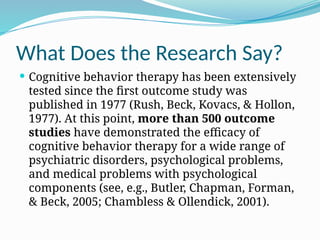
What Does the Research Say?
 Cognitive behavior therapy has been extensively
tested since the first outcome study was
published in 1977 (Rush, Beck, Kovacs, & Hollon,
1977). At this point, more than 500 outcome
studies have demonstrated the efficacy of
cognitive behavior therapy for a wide range of
psychiatric disorders, psychological problems,
and medical problems with psychological
components (see, e.g., Butler, Chapman, Forman,
& Beck, 2005; Chambless & Ollendick, 2001).
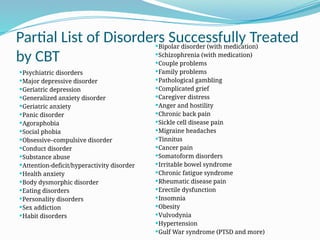
Partial List of Disorders Successfully Treated
by CBT
Psychiatric disorders
Major depressive disorder
Geriatric depression
Generalized anxiety disorder
Geriatric anxiety
Panic disorder
Agoraphobia
Social phobia
Obsessive–compulsive disorder
Conduct disorder
Substance abuse
Attention-deficit/hyperactivity disorder
Health anxiety
Body dysmorphic disorder
Eating disorders
Personality disorders
Sex addiction
Habit disorders
Bipolar disorder (with medication)
Schizophrenia (with medication)
Couple problems
Family problems
Pathological gambling
Complicated grief
Caregiver distress
Anger and hostility
Chronic back pain
Sickle cell disease pain
Migraine headaches
Tinnitus
Cancer pain
Somatoform disorders
Irritable bowel syndrome
Chronic fatigue syndrome
Rheumatic disease pain
Erectile dysfunction
Insomnia
Obesity
Vulvodynia
Hypertension
Gulf War syndrome (PTSD and more)
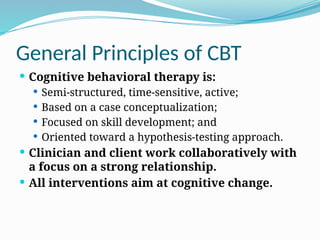
General Principles of CBT
 Cognitive behavioral therapy is:
 Semi‐structured, time‐sensitive, active;
 Based on a case conceptualization;
 Focused on skill development; and
 Oriented toward a hypothesis‐testing approach.
 Clinician and client work collaboratively with
a focus on a strong relationship.
 All interventions aim at cognitive change.
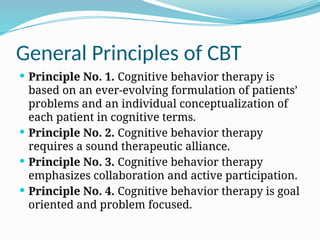
General Principles of CBT
 Principle No. 1. Cognitive behavior therapy is
based on an ever-evolving formulation of patients’
problems and an individual conceptualization of
each patient in cognitive terms.
 Principle No. 2. Cognitive behavior therapy
requires a sound therapeutic alliance.
 Principle No. 3. Cognitive behavior therapy
emphasizes collaboration and active participation.
 Principle No. 4. Cognitive behavior therapy is goal
oriented and problem focused.
General Principles of CBT
 Principle No. 5. Cognitive behavior therapy
initially emphasizes the present.
 Principle No. 6. Cognitive behavior therapy is
educative, aims to teach the patient to be her
own therapist, and emphasizes relapse
prevention.
 Principle No. 7. Cognitive behavior therapy aims
to be time limited.
 Principle No. 8. Cognitive behavior therapy
sessions are structured.
General Principles of CBT
 Principle No. 9. Cognitive behavior therapy
teaches patients to identify, evaluate, and
respond to their dysfunctional thoughts and
beliefs.
 Principle No. 10. Cognitive behavior therapy
uses a variety of techniques to change thinking,
mood, and behavior.
Importance of the Therapeutic Relationship
 Like most other therapies, the therapeutic
relationship is a necessary and critical
component of CBT:
 Empathic
 Understanding
 Warm
 Genuine
 Direct and sensitive
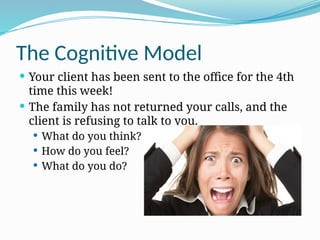
The Cognitive Model
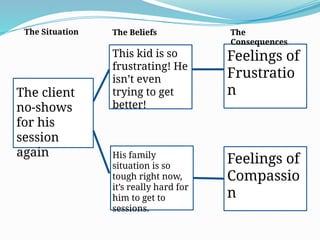
 Your client has been sent to the office for the 4th
time this week!
 The family has not returned your calls, and the
client is refusing to talk to you.
 What do you think?
 How do you feel?
 What do you do?
The client
no-shows
for his
session
again
The Situation The Beliefs The
Consequences
This kid is so
frustrating! He
isn’t even
trying to get
better!
Feelings of
Frustratio
n
His family
situation is so
tough right now,
it’s really hard for
him to get to
sessions.
Feelings of
Compassio
n
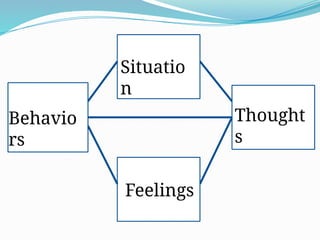
Situatio
n
Thought
s
Feelings
Behavio
rs
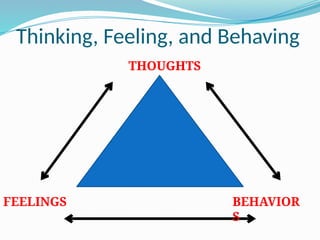
Thinking, Feeling, and Behaving
THOUGHTS
FEELINGS BEHAVIOR
S
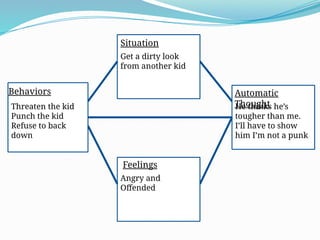
Situation
Automatic
Thought
Feelings
Behaviors
Get a dirty look
from another kid
He thinks he’s
tougher than me.
I’ll have to show
him I’m not a punk
Angry and
Offended
Threaten the kid
Punch the kid
Refuse to back
down
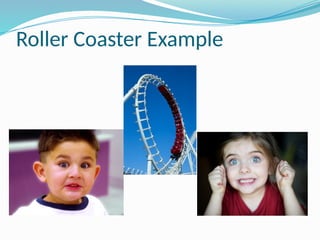
Roller Coaster Example
Cognitive Model: Situations
 A situation or activating event may be an
internal or external event that prompts an
automatic thought.
 External event: alarm clock ringing, being
interrupted, called on in class
 Internal event: memory, thought, emotion,
sensation
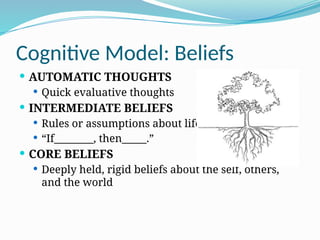
Cognitive Model: Beliefs
 AUTOMATIC THOUGHTS
 Quick evaluative thoughts
 INTERMEDIATE BELIEFS
 Rules or assumptions about life
 “If________, then_____.”
 CORE BELIEFS
 Deeply held, rigid beliefs about the self, others,
and the world
Cognitive Model: Automatic Thoughts
 Quick, evaluative thoughts or images that are
situation specific
 Automatic thoughts = interpretations
 We are more likely to be aware of the emotion
that follows an automatic thought.
Automatic Thoughts
 When you notice a strong reaction (emotional,
behavioral, physiological), ask yourself:
“What was going through my mind just then?”
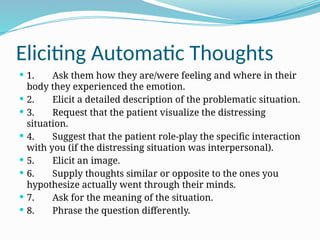
Eliciting Automatic Thoughts
 1. Ask them how they are/were feeling and where in their
body they experienced the emotion.
 2. Elicit a detailed description of the problematic situation.
 3. Request that the patient visualize the distressing
situation.
 4. Suggest that the patient role-play the specific interaction
with you (if the distressing situation was interpersonal).
 5. Elicit an image.
 6. Supply thoughts similar or opposite to the ones you
hypothesize actually went through their minds.
 7. Ask for the meaning of the situation.
 8. Phrase the question differently.
Intermediate Beliefs
 Attitudes, rules, or assumptions that stem
from core beliefs and fuel automatic thoughts
 Commonly in the form of “if/then” statements
 If I can’t do this perfectly, then why bother trying?
 If I open up to people, then I will get hurt.
Core Beliefs
 MOST CENTRAL, FUNDAMENTAL BELIEFS
ABOUT OURSELVES, OTHERS, AND THE
WORLD
 Absolute and rigid beliefs (+ or ‐) in 1‐2 words
 “I’m worthless.”
 May result in biases in attention, information
processing, and memory.
 When activated, we interpret situations through
the lens of this belief.
 Not necessarily accurate or helpful
Sad, gives up, avoids
studying, ultimately
fails
Core Belief: I am
Smart
Core Belief: I am
Stupid
Event: Hears that a hard math test is scheduled for next
week
Automatic Thoughts and Images
“I’ll really have to pay
attention and ask for
help”
“This is too hard, I’ll
never understand this.”
Feels determined, seeks
out help, studies, passes
Reaction and Behaviors
How Core Beliefs Impact Thoughts
Inaccurate and Unhelpful Beliefs
 UNLOVABLE
 I am disgusting.
 No one wants me.
 People hate me.
 WORTHLESS
 I am bad.
 I am a waste.
 I am a burden.
 HELPLESS
 I am incompetent.
 I am vulnerable.
 I am not good enough.
 1. All-or-nothing thinking (also called black-and-white, polarized, or
dichotomous thinking): You view a situation in only two categories
instead of on a continuum.
 Example: “If I’m not a total success, I’m a failure.”
 2. Catastrophizing (also called fortune-telling): You predict the future
negatively without considering other, more likely outcomes.
 Example: “I’ll be so upset, I won’t be able to function at all.”
 3. Disqualifying or discounting the positive: You unreasonably tell
yourself that positive experiences, deeds, or qualities do not count.
 Example: “I did that project well, but that doesn’t mean I’m competent; I just
got lucky.”
 4. Emotional reasoning: You think something must be true because
you “feel” (actually believe) it so strongly, ignoring or discounting
evidence to the contrary.
 Example: “I know I do a lot of things okay at work, but I still feel like I’m a
failure.”
 5. Labeling: You put a fixed, global label on yourself or others without
considering that the evidence might more reasonably lead to a less
disastrous conclusion.
 Example: “I’m a loser. He’s no good.”
Common Unhelpful Thoughts
 6. Magnification/minimization: When you evaluate yourself,
another person, or a situation, you unreasonably magnify the
negative and/or minimize the positive.
 Example: “Getting a mediocre evaluation proves how
inadequate I am. Getting high marks doesn’t mean I’m
smart.”
 7. Mental filter (also called selective abstraction): You pay
undue attention to one negative detail instead of seeing the
whole picture.
 Example: “Because I got one low rating on my evaluation
[which also contained several high ratings] it means I’m
doing a lousy job.”
 8. Mind reading: You believe you know what others are
thinking, failing to consider other, more likely possibilities.
 Example: “He thinks that I don’t know the first thing about
this project.”
 9. Overgeneralization: You make a sweeping negative
Common Unhelpful Thoughts
 10. Personalization: You believe others are behaving
negatively because of you, without considering more
plausible explanations for their behavior.
 Example: “The repairman was curt to me because I did
something wrong.”
 11. “Should” and “must” statements (also called
imperatives): You have a precise, fixed idea of how you
or others should behave, and you overestimate how bad it
is that these expectations are not met.
 Example: “It’s terrible that I made a mistake. I should
always do my best.”
 12. Tunnel vision: You only see the negative aspects of a
situation.
 Example: “My son’s teacher can’t do anything right.
He’s critical and insensitive and lousy at teaching.”
Common Unhelpful Thoughts
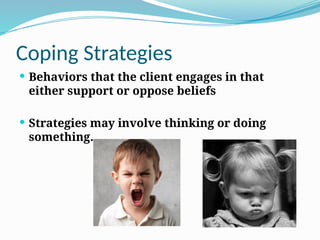
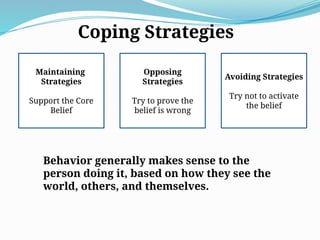
Coping Strategies
 Behaviors that the client engages in that
either support or oppose beliefs
 Strategies may involve thinking or doing
something.
Maintaining
Strategies
Support the Core
Belief
Opposing
Strategies
Try to prove the
belief is wrong
Avoiding Strategies
Try not to activate
the belief
Behavior generally makes sense to the
person doing it, based on how they see the
world, others, and themselves.
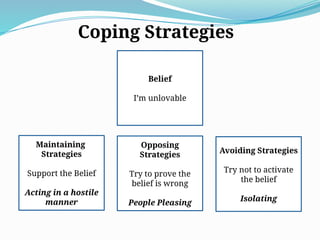
Coping Strategies
Maintaining
Strategies
Support the Belief
Acting in a hostile
manner
Opposing
Strategies
Try to prove the
belief is wrong
People Pleasing
Avoiding Strategies
Try not to activate
the belief
Isolating
Coping Strategies
Belief
I’m unlovable
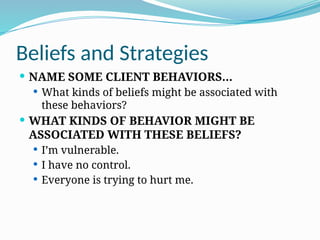
Beliefs and Strategies
 NAME SOME CLIENT BEHAVIORS…
 What kinds of beliefs might be associated with
these behaviors?
 WHAT KINDS OF BEHAVIOR MIGHT BE
ASSOCIATED WITH THESE BELIEFS?
 I’m vulnerable.
 I have no control.
 Everyone is trying to hurt me.
Case Conceptualization
 Foundation of CBT treatment
 Brings together all the information into one
coherent story
 Takes into consideration life experiences that
lead us to think and behave in specific ways
 Based on here‐and‐now functioning and
symptoms
Case Conceptualization
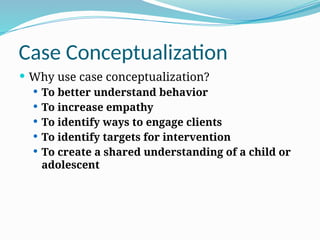
 Why use case conceptualization?
 To better understand behavior
 To increase empathy
 To identify ways to engage clients
 To identify targets for intervention
 To create a shared understanding of a child or
adolescent
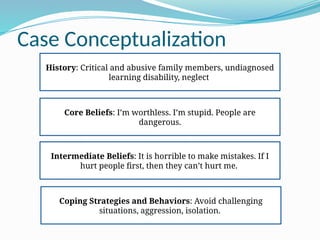
Case Conceptualization
History: Critical and abusive family members, undiagnosed
learning disability, neglect
Core Beliefs: I’m worthless. I’m stupid. People are
dangerous.
Coping Strategies and Behaviors: Avoid challenging
situations, aggression, isolation.
Intermediate Beliefs: It is horrible to make mistakes. If I
hurt people first, then they can’t hurt me.
Case Vignette: Michele
 Please read the vignette about Michele.
 When you are finished, please review the case
conceptualization.
 WHAT ARE THE IMPORTANT FACTS FROM HER
PAST?
 WHAT ARE HER BELIEFS?
 WHICH EMOTIONS AND BEHAVIOR DOES SHE
HAVE, AND HOW ARE THEY RELATED TO HER
BELIEFS?
 Please be ready to discuss with your group.
Session Structure
 Mood check & general assessment
 Bridge from the previous session
 Agenda setting
 Homework review
 Discussion of issues on the agenda
 Summary and feedback (periodic summaries
and homework assignment)
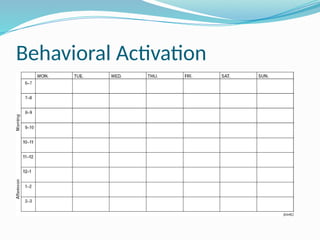
Behavioral Activation
Situation: Thinking about initiating an activity
[Common] Automatic thoughts: “I’m too tired. I won’t
enjoy it. My friends won’t want to spend time with me. I
won’t be able to do it. Nothing can help me feel better.”
[Common] Emotional reactions: Sadness, anxiety,
hopelessness
[Common] Behavior: Remain inactive.
Behavioral Activation
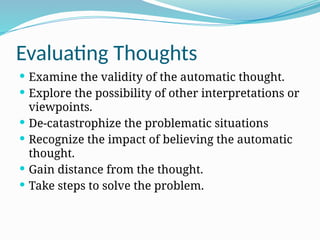
Evaluating Thoughts
 Examine the validity of the automatic thought.
 Explore the possibility of other interpretations or
viewpoints.
 De-catastrophize the problematic situations
 Recognize the impact of believing the automatic
thought.
 Gain distance from the thought.
 Take steps to solve the problem.
Evaluating Thoughts
 1. What is the evidence that supports this idea?
 What is the evidence against this idea?
 2. Is there an alternative explanation or viewpoint?
 3. What is the worst that could happen (if I’m not already
thinking the worst)? If it happened, how could I cope?
 What is the best that could happen?
 What is the most realistic outcome?
 4. What is the effect of my believing the automatic thought?
 What could be the effect of changing my thinking?
 5. What would I tell____________[a specific friend or family
member] if he or she were in the same situation?
 6. What should I do?
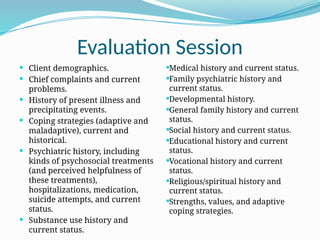
Evaluation Session
 Client demographics.
 Chief complaints and current
problems.
 History of present illness and
precipitating events.
 Coping strategies (adaptive and
maladaptive), current and
historical.
 Psychiatric history, including
kinds of psychosocial treatments
(and perceived helpfulness of
these treatments),
hospitalizations, medication,
suicide attempts, and current
status.
 Substance use history and
current status.
Medical history and current status.
Family psychiatric history and
current status.
Developmental history.
General family history and current
status.
Social history and current status.
Educational history and current
status.
Vocational history and current
status.
Religious/spiritual history and
current status.
Strengths, values, and adaptive
coping strategies.
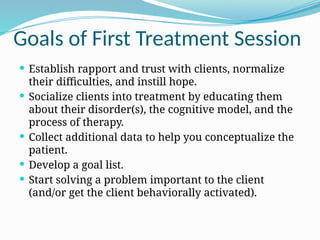
Goals of First Treatment Session
 Establish rapport and trust with clients, normalize
their difficulties, and instill hope.
 Socialize clients into treatment by educating them
about their disorder(s), the cognitive model, and the
process of therapy.
 Collect additional data to help you conceptualize the
patient.
 Develop a goal list.
 Start solving a problem important to the client
(and/or get the client behaviorally activated).
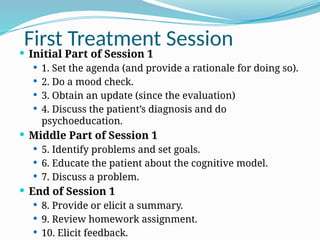
First Treatment Session
 Initial Part of Session 1
 1. Set the agenda (and provide a rationale for doing so).
 2. Do a mood check.
 3. Obtain an update (since the evaluation)
 4. Discuss the patient’s diagnosis and do
psychoeducation.
 Middle Part of Session 1
 5. Identify problems and set goals.
 6. Educate the patient about the cognitive model.
 7. Discuss a problem.
 End of Session 1
 8. Provide or elicit a summary.
 9. Review homework assignment.
 10. Elicit feedback.
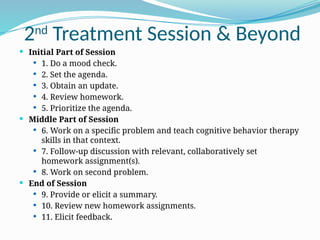
2nd
Treatment Session & Beyond
 Initial Part of Session
 1. Do a mood check.
 2. Set the agenda.
 3. Obtain an update.
 4. Review homework.
 5. Prioritize the agenda.
 Middle Part of Session
 6. Work on a specific problem and teach cognitive behavior therapy
skills in that context.
 7. Follow-up discussion with relevant, collaboratively set
homework assignment(s).
 8. Work on second problem.
 End of Session
 9. Provide or elicit a summary.
 10. Review new homework assignments.
 11. Elicit feedback.
Tips for Setting Homework
 1. One Size Does Not Fit All.
 2. Explain In Detail.
 3. Set Homework as a Team.
 4. Create a Win-Win Situation.
 5. Start Homework In-Session.
 6. Ask About and Review Homework.
 7. Anticipate and Prepare for Problems.
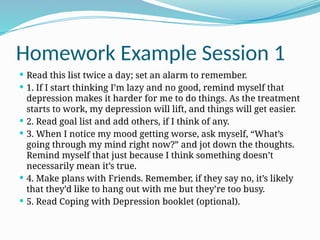
Homework Example Session 1
 Read this list twice a day; set an alarm to remember.
 1. If I start thinking I’m lazy and no good, remind myself that
depression makes it harder for me to do things. As the treatment
starts to work, my depression will lift, and things will get easier.
 2. Read goal list and add others, if I think of any.
 3. When I notice my mood getting worse, ask myself, “What’s
going through my mind right now?” and jot down the thoughts.
Remind myself that just because I think something doesn’t
necessarily mean it’s true.
 4. Make plans with Friends. Remember, if they say no, it’s likely
that they’d like to hang out with me but they’re too busy.
 5. Read Coping with Depression booklet (optional).
Homework Example Session 2
 1. Daily: When I notice my mood changing, ask myself, “What’s going
through my mind right now?” and jot down my automatic thoughts
(which may or may not be completely true).
 2. If I can’t figure out my automatic thoughts, jot down just the
situation. Remember, learning to identify my thinking is a skill I’ll get
better at, like typing.
 3. Ask Friend for help with studying.
 4. Daily: Read therapy notes.
 5. Continue running/swimming.
 6. Plan two to three social activities.
 7. Daily: Add to credit list (anything I do that is even a little difficult
but I do it anyway).
 8. (Tuesday morning): Review Preparing for Therapy Worksheet for 2
minutes.
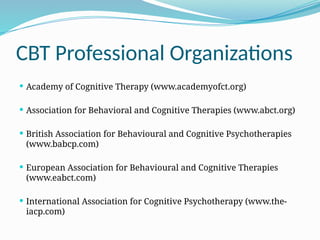
CBT Professional Organizations
 Academy of Cognitive Therapy (www.academyofct.org)
 Association for Behavioral and Cognitive Therapies (www.abct.org)
 British Association for Behavioural and Cognitive Psychotherapies
(www.babcp.com)
 European Association for Behavioural and Cognitive Therapies
(www.eabct.com)
 International Association for Cognitive Psychotherapy (www.the-
iacp.com)
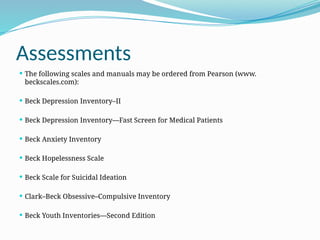
Assessments
 The following scales and manuals may be ordered from Pearson (www.­
beckscales.com):
 Beck Depression Inventory–II
 Beck Depression Inventory—Fast Screen for Medical Patients
 Beck Anxiety Inventory
 Beck Hopelessness Scale
 Beck Scale for Suicidal Ideation
 Clark–Beck Obsessive–Compulsive Inventory
 Beck Youth Inventories—Second Edition
References
 Alford, B. A., & Beck, A. T. (1997). The integrative power of cognitive therapy. New York: Guilford Press.
 American Psychiatric Association. (2000). Diagnostic and statistical manual of mental disorders (4th ed., text rev.).
Washington, DC: Author.
 Antony, M. M., & Barlow, D. H. (Eds.). (2010). Handbook of assessment and treatment planning for psychological disorders
(2nd ed.). New York: Guilford Press.
 Arnkoff, D. B., & Glass, C. R. (1992). Cognitive therapy and psychotherapy integration. In D. K. Freedheim (Ed.), History of
psychotherapy: A century of change (pp. 657–694). Washington, DC: American Psychological Association.
 Barlow, D. H. (2002). Anxiety and its disorders: The nature and treatment of anxiety and panic (2nd ed.). New York: Guilford
Press.
 Beck, A. T. (1964). Thinking and depression: II. Theory and therapy. Archives of General Psychiatry, 10, 561–571.
 Beck, A. T. (1967). Depression: Causes and treatment. Philadelphia: University of Pennsylvania Press.
 Beck, A. T. (1976). Cognitive therapy and the emotional disorders. New York: International Universities Press.
 Beck, A. T. (1987). Cognitive approaches to panic disorder: Theory and therapy. In S. Rachman & J. Maser (Eds.), Panic:
Psychological perspectives (pp. 91–109). Hillsdale, NJ: Erlbaum.
 Beck, A. T. (1999). Cognitive aspects of personality disorders and their relation to syndromal disorders: A psychoevolutionary
approach. In C. R. Cloninger (Ed.), Personality and psychopathology (pp. 411–429). Washington, DC: American Psychiatric
Press.
References
 Beck, A. T. (2005). The current state of cognitive therapy: A 40-year retrospective. Archives of General
Psychiatry, 62, 953–959.
 Beck, A. T., & Beck, J. S. (1991). The personality belief questionnaire. Bala Cynwyd, PA: Beck Institute for
Cognitive Behavior Therapy.
 Beck, A. T., & Emery, G. (with Greenberg, R. L.). (1985). Anxiety disorders and phobias: A cognitive
perspective. New York: Basic Books.
 Beck, A. T., Freeman, A., Davis, D. D., & Associates. (2004). Cognitive therapy of personality disorders (2nd
ed.). New York: Guilford Press.
 Beck, A. T., Rush, A. J., Shaw, B. F., & Emery, G. (1979). Cognitive therapy of depression. New York: Guilford
Press.
 Beck, A. T., Wright, F. D., Newman, C. F., & Liese, B. S. (1993). Cognitive therapy of substance abuse. New
York: Guilford Press.
 Beck, J. S. (2001). A cognitive therapy approach to medication compliance. In J. Kay (Ed.), Integrated
treatment of psychiatric disorders (pp. 113–141). Washington, DC: American Psychiatric Publishing.
 Beck, J. S. (2005). Cognitive therapy for challenging problems: What to do when the basics don’t work. New
York: Guilford Press.
 Beck, J. S. (2011). Cognitive behavior therapy worksheet packet (3rd ed.). Bala Cynwyd, PA: Beck Institute
for Cognitive Behavior Therapy.
 Bennett-Levy, J., Butler, G., Fennell, M., Hackman, A., Mueller, M., & Westbrook, D. (Eds.). (2004). Oxford
guide to behavioral experiments in cognitive therapy. Oxford, UK: Oxford University.
 Benson, H. (1975). The relaxation response. New York: Avon.
 Burns, D. D. (1980). Feeling good: The new mood therapy. New York: Signet.
References
 Butler, A. C., Chapman, J. E. Forman, E. M., & Beck, A. T. (2006). The empirical status of cognitive-behavioral
therapy: A review of meta-analyses. Clinical Psychology Review, 26, 17–31.
 Chambless, D., & Ollendick, T. H. (2001). Empirically supported psychological interventions. Annual Review
of Psychology, 52, 685–716.
 Chiesa A., & Serretti, A. (2010a). Mindfulness based cognitive therapy for psychiatric disorders: A
systematic review and meta-analysis. Psychiatry Research.
 Chiesa A., & Serretti, A. (2010b). A systematic review of neurobiological and clinical features of
mindfulness mediation. Psychological Medicine, 40, 1239–1252.
 Clark, D. A., & Beck, A. T. (2010). Cognitive therapy of anxiety disorders: Science and practice. New York:
Guilford Press.
 Clark, D. A., Beck, A. T., & Alford, B. A. (1999). Scientific foundations of cognitive theory and therapy of
depression. Hoboken, NJ: Wiley.
 Clark, D. M. (1989). Anxiety states: Panic and generalized anxiety. In K. Hawton, P. M. Salkovskis, J. Kirk, &
D. M. Clark (Eds.), Cognitive-behavior therapy for psychiatric problems: A practical guide (pp. 52–96). New
York: Oxford University Press.
 D’Zurilla, T. J., & Nezu, A. M. (2006). Problem-solving therapy: A positive approach to clinical intervention
(3rd ed.). New York: Springer.
 Davis, M., Eshelman, E. R., & McKay, M. (2008). The relaxation and stress reduction workbook (6th ed.).
Oakland, CA: New Harbinger.
 DeRubeis, R. J., & Feeley, M. (1990). Determinants of change in cognitive therapy for depression. Cognitive
Therapy and Research, 14, 469–482.
 Dobson, D., & Dobson, K. S. (2009). Evidence-based practice of cognitive-behavioral therapy. New York:
Guilford Press.
 Dobson, K. S., & Dozois D. J. A. (2009). Historical and philosophical bases of the cognitive-behavioral
therapies. In K. S. Dobson (Ed.), Handbook of cognitive-behavioral therapies (3rd ed., pp. 3–37). New York:
Guilford Press.
 Edwards, D. J. A. (1989). Cognitive restructuring through guided imagery: Lessons from Gestalt therapy. In
A. Freeman, K. M. Simon, L. E. Beutler, & H. Arkowitz (Eds.), Comprehensive handbook of cognitive therapy

cbt-refreshervvvvvvvvvvvvvbbbbbbbbbbb.pptx

  • 1.
    Cognitive Behavioral Therapy: TheCounseling Process from Start to Finish James Ikonomopoulos Ph.D., LPC-S
  • 2.
    Presentation Objectives  Explainthe connection between thoughts, feelings, and behaviors  Develop a cognitive case conceptualization and understand its relationship to Cognitive Therapy  Choose and apply cognitive interventions appropriate for use with children and adults  Choose and apply behavioral interventions appropriate for use with children and adults
  • 3.
    Outline of Presentation Introduction to CBT  Basic principles and overview of treatment  Cognitive Conceptualization  The cognitive model  The Evaluation Session  Intake and assessment  The Initial Therapy Session  Treatment Planning  The 2nd Session and Beyond
  • 4.
    Outline of Concepts Behavioral Activation  Identifying Automatic Thoughts  Identifying Emotions  Evaluating Automatic Thoughts  Responding to Automatic Thoughts  Identifying and Modifying Intermediate Beliefs  Identifying and Modifying Core Beliefs  Imagery  Homework  Additional Techniques
  • 5.
    Introduction to CBT A revolution in the field of mental health was started in the 1960’s by Aaron T. Beck  He began as a fully trained and practicing Psychoanalyst.  He was a scientist at heart, believed theories should be empirically valid.  Began studying depression, and results of his experiments lead him to pursue other explanations for depression.
  • 6.
    What is CBT? Dr. Beck decided to test the psychoanalytic concept that depression is the result of hostility turned inward toward the self.  He investigated the dreams of depressed patients, which, he predicted, would manifest greater themes of hostility than the dreams of normal control patients.  To his surprise, he ultimately found that the dreams of depressed patients contained fewer themes of hostility and far greater themes of defectiveness, deprivation, and loss. He recognized that these themes paralleled his patients’ thinking when they were awake.
  • 7.
    What is CBT? He identified distorted, negative cognition (primarily thoughts and beliefs) as a primary feature of depression and developed a short-term treatment, one of whose primary targets was the reality testing of patients’ depressed thinking.  Aaron Beck developed a form of psychotherapy in the early 1960s that he originally termed “cognitive therapy.”  “Cognitive therapy” is now used synonymously with “cognitive behavior therapy” by much of our field.
  • 8.
    What is CBT? Beck devised a structured, short-term, present- oriented psychotherapy for depression, directed toward solving current problems and modifying dysfunctional (inaccurate and/or unhelpful) thinking and behavior (Beck, 1964).  Since that time, he and others have successfully adapted this therapy to a surprisingly diverse set of populations with a wide range of disorders and problems.  These adaptations have changed the focus, techniques, and length of treatment, but the theoretical assumptions themselves have remained constant.
  • 9.
    What is CBT? In all forms of cognitive behavior therapy that are derived from Beck’s model, treatment is based on a cognitive formulation, the beliefs and behavioral strategies that characterize a specific disorder (Alford & Beck, 1997).  Treatment is also based on a conceptualization, or understanding, of individual patients (their specific beliefs and patterns of behavior). The therapist seeks in a variety of ways to produce cognitive change—modification in the patient’s thinking and belief system—to bring about enduring emotional and behavioral change.
  • 10.
    What is CBT? Beck drew on a number of different sources when he developed this form of psychotherapy, including early philosophers, such as Epicetus, and theorists, such as Karen Horney, Alfred Adler, George Kelly, Albert Ellis, Richard Lazarus, and Albert Bandura. Beck’s work, has been expanded by current researchers and theorists, in the United States and abroad.
  • 11.
    Different Forms ofCBT  There are a number of forms of cognitive behavior therapy that share characteristics of Beck’s therapy, but whose conceptualizations and emphases in treatment vary to some degree.  These include rational emotional behavior therapy (Ellis, 1962), dialectical behavior therapy (Linehan, 1993), problem-solving therapy (D’Zurilla & Nezu, 2006), acceptance and commitment therapy (Hayes, Follette, & Linehan, 2004), exposure therapy (Foa & Rothbaum, 1998), cognitive processing therapy (Resick & Schnicke, 1993), cognitive behavioral analysis system of psychotherapy (McCullough, 1999), behavioral activation (Lewinsohn, Sullivan, & Grosscup, 1980; Martell, Addis, & Jacobson, 2001), cognitive behavior modification (Meichenbaum, 1977), TF- CBT (Cohen, Mannarino, & Knudsen, 2004; Cohen,. Mannarino, & Staron, 2006), and others.  Beck’s cognitive behavior therapy often incorporates techniques from all these therapies, and other psychotherapies, within a cognitive framework.
  • 12.
    The Cognitive Model “Men are disturbed not by things, but by the view which they take of them.” - Epictetus  “It’s not the situations in our lives that cause distress, but rather our interpretations of those situations.” – Aaron T. Beck
  • 13.
    What is theTheory of CBT?  The cognitive model proposes that dysfunctional thinking (which influences the patient’s mood and behavior) is common to all psychological disturbances.  When people learn to evaluate their thinking in a more realistic and adaptive way, they experience improvement in their emotional state and in their behavior.  For example, if you were quite depressed and bounced some checks, you might have an automatic thought, an idea that just seemed to pop up in your mind: “I can’t do anything right.” This thought might then lead to a particular reaction: you might feel sad (emotion) and retreat to bed (behavior). If you then examined the validity of this idea, you might conclude that you had overgeneralized and that, in fact, you actually do many things well. Looking at your experience from this new perspective would probably make you feel better and lead to more functional behavior.
  • 14.
    What is theTheory of CBT?  For lasting improvement in patients’ mood and behavior, cognitive therapists work at a deeper level of cognition: patients’ basic beliefs about themselves, their world, and other people.  Modification of their underlying dysfunctional beliefs produces more enduring change. For example, if you continually underestimate your abilities, you might have an underlying belief of incompetence.  Modifying this general belief (i.e., seeing yourself in a more realistic light as having both strengths and weaknesses) can alter your perception of specific situations that you encounter daily. You will no longer have as many thoughts with the theme, “I can’t do anything right.” Instead, in specific situations where you make mistakes, you will probably think, “I’m not good at this [specific task].”
  • 15.
    What Does theResearch Say?  Cognitive behavior therapy has been extensively tested since the first outcome study was published in 1977 (Rush, Beck, Kovacs, & Hollon, 1977). At this point, more than 500 outcome studies have demonstrated the efficacy of cognitive behavior therapy for a wide range of psychiatric disorders, psychological problems, and medical problems with psychological components (see, e.g., Butler, Chapman, Forman, & Beck, 2005; Chambless & Ollendick, 2001).
  • 16.
    Partial List ofDisorders Successfully Treated by CBT Psychiatric disorders Major depressive disorder Geriatric depression Generalized anxiety disorder Geriatric anxiety Panic disorder Agoraphobia Social phobia Obsessive–compulsive disorder Conduct disorder Substance abuse Attention-deficit/hyperactivity disorder Health anxiety Body dysmorphic disorder Eating disorders Personality disorders Sex addiction Habit disorders Bipolar disorder (with medication) Schizophrenia (with medication) Couple problems Family problems Pathological gambling Complicated grief Caregiver distress Anger and hostility Chronic back pain Sickle cell disease pain Migraine headaches Tinnitus Cancer pain Somatoform disorders Irritable bowel syndrome Chronic fatigue syndrome Rheumatic disease pain Erectile dysfunction Insomnia Obesity Vulvodynia Hypertension Gulf War syndrome (PTSD and more)
  • 17.
    General Principles ofCBT  Cognitive behavioral therapy is:  Semi‐structured, time‐sensitive, active;  Based on a case conceptualization;  Focused on skill development; and  Oriented toward a hypothesis‐testing approach.  Clinician and client work collaboratively with a focus on a strong relationship.  All interventions aim at cognitive change.
  • 18.
    General Principles ofCBT  Principle No. 1. Cognitive behavior therapy is based on an ever-evolving formulation of patients’ problems and an individual conceptualization of each patient in cognitive terms.  Principle No. 2. Cognitive behavior therapy requires a sound therapeutic alliance.  Principle No. 3. Cognitive behavior therapy emphasizes collaboration and active participation.  Principle No. 4. Cognitive behavior therapy is goal oriented and problem focused.
  • 19.
    General Principles ofCBT  Principle No. 5. Cognitive behavior therapy initially emphasizes the present.  Principle No. 6. Cognitive behavior therapy is educative, aims to teach the patient to be her own therapist, and emphasizes relapse prevention.  Principle No. 7. Cognitive behavior therapy aims to be time limited.  Principle No. 8. Cognitive behavior therapy sessions are structured.
  • 20.
    General Principles ofCBT  Principle No. 9. Cognitive behavior therapy teaches patients to identify, evaluate, and respond to their dysfunctional thoughts and beliefs.  Principle No. 10. Cognitive behavior therapy uses a variety of techniques to change thinking, mood, and behavior.
  • 21.
    Importance of theTherapeutic Relationship  Like most other therapies, the therapeutic relationship is a necessary and critical component of CBT:  Empathic  Understanding  Warm  Genuine  Direct and sensitive
  • 22.
    The Cognitive Model Your client has been sent to the office for the 4th time this week!  The family has not returned your calls, and the client is refusing to talk to you.  What do you think?  How do you feel?  What do you do?
  • 23.
    The client no-shows for his session again TheSituation The Beliefs The Consequences This kid is so frustrating! He isn’t even trying to get better! Feelings of Frustratio n His family situation is so tough right now, it’s really hard for him to get to sessions. Feelings of Compassio n
  • 24.
  • 25.
    Thinking, Feeling, andBehaving THOUGHTS FEELINGS BEHAVIOR S
  • 26.
    Situation Automatic Thought Feelings Behaviors Get a dirtylook from another kid He thinks he’s tougher than me. I’ll have to show him I’m not a punk Angry and Offended Threaten the kid Punch the kid Refuse to back down
  • 27.
  • 28.
    Cognitive Model: Situations A situation or activating event may be an internal or external event that prompts an automatic thought.  External event: alarm clock ringing, being interrupted, called on in class  Internal event: memory, thought, emotion, sensation
  • 29.
    Cognitive Model: Beliefs AUTOMATIC THOUGHTS  Quick evaluative thoughts  INTERMEDIATE BELIEFS  Rules or assumptions about life  “If________, then_____.”  CORE BELIEFS  Deeply held, rigid beliefs about the self, others, and the world
  • 30.
    Cognitive Model: AutomaticThoughts  Quick, evaluative thoughts or images that are situation specific  Automatic thoughts = interpretations  We are more likely to be aware of the emotion that follows an automatic thought.
  • 31.
    Automatic Thoughts  Whenyou notice a strong reaction (emotional, behavioral, physiological), ask yourself: “What was going through my mind just then?”
  • 32.
    Eliciting Automatic Thoughts 1. Ask them how they are/were feeling and where in their body they experienced the emotion.  2. Elicit a detailed description of the problematic situation.  3. Request that the patient visualize the distressing situation.  4. Suggest that the patient role-play the specific interaction with you (if the distressing situation was interpersonal).  5. Elicit an image.  6. Supply thoughts similar or opposite to the ones you hypothesize actually went through their minds.  7. Ask for the meaning of the situation.  8. Phrase the question differently.
  • 33.
    Intermediate Beliefs  Attitudes,rules, or assumptions that stem from core beliefs and fuel automatic thoughts  Commonly in the form of “if/then” statements  If I can’t do this perfectly, then why bother trying?  If I open up to people, then I will get hurt.
  • 34.
    Core Beliefs  MOSTCENTRAL, FUNDAMENTAL BELIEFS ABOUT OURSELVES, OTHERS, AND THE WORLD  Absolute and rigid beliefs (+ or ‐) in 1‐2 words  “I’m worthless.”  May result in biases in attention, information processing, and memory.  When activated, we interpret situations through the lens of this belief.  Not necessarily accurate or helpful
  • 35.
    Sad, gives up,avoids studying, ultimately fails Core Belief: I am Smart Core Belief: I am Stupid Event: Hears that a hard math test is scheduled for next week Automatic Thoughts and Images “I’ll really have to pay attention and ask for help” “This is too hard, I’ll never understand this.” Feels determined, seeks out help, studies, passes Reaction and Behaviors How Core Beliefs Impact Thoughts
  • 36.
    Inaccurate and UnhelpfulBeliefs  UNLOVABLE  I am disgusting.  No one wants me.  People hate me.  WORTHLESS  I am bad.  I am a waste.  I am a burden.  HELPLESS  I am incompetent.  I am vulnerable.  I am not good enough.
  • 37.
     1. All-or-nothingthinking (also called black-and-white, polarized, or dichotomous thinking): You view a situation in only two categories instead of on a continuum.  Example: “If I’m not a total success, I’m a failure.”  2. Catastrophizing (also called fortune-telling): You predict the future negatively without considering other, more likely outcomes.  Example: “I’ll be so upset, I won’t be able to function at all.”  3. Disqualifying or discounting the positive: You unreasonably tell yourself that positive experiences, deeds, or qualities do not count.  Example: “I did that project well, but that doesn’t mean I’m competent; I just got lucky.”  4. Emotional reasoning: You think something must be true because you “feel” (actually believe) it so strongly, ignoring or discounting evidence to the contrary.  Example: “I know I do a lot of things okay at work, but I still feel like I’m a failure.”  5. Labeling: You put a fixed, global label on yourself or others without considering that the evidence might more reasonably lead to a less disastrous conclusion.  Example: “I’m a loser. He’s no good.” Common Unhelpful Thoughts
  • 38.
     6. Magnification/minimization:When you evaluate yourself, another person, or a situation, you unreasonably magnify the negative and/or minimize the positive.  Example: “Getting a mediocre evaluation proves how inadequate I am. Getting high marks doesn’t mean I’m smart.”  7. Mental filter (also called selective abstraction): You pay undue attention to one negative detail instead of seeing the whole picture.  Example: “Because I got one low rating on my evaluation [which also contained several high ratings] it means I’m doing a lousy job.”  8. Mind reading: You believe you know what others are thinking, failing to consider other, more likely possibilities.  Example: “He thinks that I don’t know the first thing about this project.”  9. Overgeneralization: You make a sweeping negative Common Unhelpful Thoughts
  • 39.
     10. Personalization:You believe others are behaving negatively because of you, without considering more plausible explanations for their behavior.  Example: “The repairman was curt to me because I did something wrong.”  11. “Should” and “must” statements (also called imperatives): You have a precise, fixed idea of how you or others should behave, and you overestimate how bad it is that these expectations are not met.  Example: “It’s terrible that I made a mistake. I should always do my best.”  12. Tunnel vision: You only see the negative aspects of a situation.  Example: “My son’s teacher can’t do anything right. He’s critical and insensitive and lousy at teaching.” Common Unhelpful Thoughts
  • 40.
    Coping Strategies  Behaviorsthat the client engages in that either support or oppose beliefs  Strategies may involve thinking or doing something.
  • 41.
    Maintaining Strategies Support the Core Belief Opposing Strategies Tryto prove the belief is wrong Avoiding Strategies Try not to activate the belief Behavior generally makes sense to the person doing it, based on how they see the world, others, and themselves. Coping Strategies
  • 42.
    Maintaining Strategies Support the Belief Actingin a hostile manner Opposing Strategies Try to prove the belief is wrong People Pleasing Avoiding Strategies Try not to activate the belief Isolating Coping Strategies Belief I’m unlovable
  • 43.
    Beliefs and Strategies NAME SOME CLIENT BEHAVIORS…  What kinds of beliefs might be associated with these behaviors?  WHAT KINDS OF BEHAVIOR MIGHT BE ASSOCIATED WITH THESE BELIEFS?  I’m vulnerable.  I have no control.  Everyone is trying to hurt me.
  • 44.
    Case Conceptualization  Foundationof CBT treatment  Brings together all the information into one coherent story  Takes into consideration life experiences that lead us to think and behave in specific ways  Based on here‐and‐now functioning and symptoms
  • 45.
    Case Conceptualization  Whyuse case conceptualization?  To better understand behavior  To increase empathy  To identify ways to engage clients  To identify targets for intervention  To create a shared understanding of a child or adolescent
  • 46.
    Case Conceptualization History: Criticaland abusive family members, undiagnosed learning disability, neglect Core Beliefs: I’m worthless. I’m stupid. People are dangerous. Coping Strategies and Behaviors: Avoid challenging situations, aggression, isolation. Intermediate Beliefs: It is horrible to make mistakes. If I hurt people first, then they can’t hurt me.
  • 47.
    Case Vignette: Michele Please read the vignette about Michele.  When you are finished, please review the case conceptualization.  WHAT ARE THE IMPORTANT FACTS FROM HER PAST?  WHAT ARE HER BELIEFS?  WHICH EMOTIONS AND BEHAVIOR DOES SHE HAVE, AND HOW ARE THEY RELATED TO HER BELIEFS?  Please be ready to discuss with your group.
  • 48.
    Session Structure  Moodcheck & general assessment  Bridge from the previous session  Agenda setting  Homework review  Discussion of issues on the agenda  Summary and feedback (periodic summaries and homework assignment)
  • 49.
    Behavioral Activation Situation: Thinkingabout initiating an activity [Common] Automatic thoughts: “I’m too tired. I won’t enjoy it. My friends won’t want to spend time with me. I won’t be able to do it. Nothing can help me feel better.” [Common] Emotional reactions: Sadness, anxiety, hopelessness [Common] Behavior: Remain inactive.
  • 50.
  • 51.
    Evaluating Thoughts  Examinethe validity of the automatic thought.  Explore the possibility of other interpretations or viewpoints.  De-catastrophize the problematic situations  Recognize the impact of believing the automatic thought.  Gain distance from the thought.  Take steps to solve the problem.
  • 52.
    Evaluating Thoughts  1.What is the evidence that supports this idea?  What is the evidence against this idea?  2. Is there an alternative explanation or viewpoint?  3. What is the worst that could happen (if I’m not already thinking the worst)? If it happened, how could I cope?  What is the best that could happen?  What is the most realistic outcome?  4. What is the effect of my believing the automatic thought?  What could be the effect of changing my thinking?  5. What would I tell____________[a specific friend or family member] if he or she were in the same situation?  6. What should I do?
  • 53.
    Evaluation Session  Clientdemographics.  Chief complaints and current problems.  History of present illness and precipitating events.  Coping strategies (adaptive and maladaptive), current and historical.  Psychiatric history, including kinds of psychosocial treatments (and perceived helpfulness of these treatments), hospitalizations, medication, suicide attempts, and current status.  Substance use history and current status. Medical history and current status. Family psychiatric history and current status. Developmental history. General family history and current status. Social history and current status. Educational history and current status. Vocational history and current status. Religious/spiritual history and current status. Strengths, values, and adaptive coping strategies.
  • 54.
    Goals of FirstTreatment Session  Establish rapport and trust with clients, normalize their difficulties, and instill hope.  Socialize clients into treatment by educating them about their disorder(s), the cognitive model, and the process of therapy.  Collect additional data to help you conceptualize the patient.  Develop a goal list.  Start solving a problem important to the client (and/or get the client behaviorally activated).
  • 55.
    First Treatment Session Initial Part of Session 1  1. Set the agenda (and provide a rationale for doing so).  2. Do a mood check.  3. Obtain an update (since the evaluation)  4. Discuss the patient’s diagnosis and do psychoeducation.  Middle Part of Session 1  5. Identify problems and set goals.  6. Educate the patient about the cognitive model.  7. Discuss a problem.  End of Session 1  8. Provide or elicit a summary.  9. Review homework assignment.  10. Elicit feedback.
  • 56.
    2nd Treatment Session &Beyond  Initial Part of Session  1. Do a mood check.  2. Set the agenda.  3. Obtain an update.  4. Review homework.  5. Prioritize the agenda.  Middle Part of Session  6. Work on a specific problem and teach cognitive behavior therapy skills in that context.  7. Follow-up discussion with relevant, collaboratively set homework assignment(s).  8. Work on second problem.  End of Session  9. Provide or elicit a summary.  10. Review new homework assignments.  11. Elicit feedback.
  • 57.
    Tips for SettingHomework  1. One Size Does Not Fit All.  2. Explain In Detail.  3. Set Homework as a Team.  4. Create a Win-Win Situation.  5. Start Homework In-Session.  6. Ask About and Review Homework.  7. Anticipate and Prepare for Problems.
  • 58.
    Homework Example Session1  Read this list twice a day; set an alarm to remember.  1. If I start thinking I’m lazy and no good, remind myself that depression makes it harder for me to do things. As the treatment starts to work, my depression will lift, and things will get easier.  2. Read goal list and add others, if I think of any.  3. When I notice my mood getting worse, ask myself, “What’s going through my mind right now?” and jot down the thoughts. Remind myself that just because I think something doesn’t necessarily mean it’s true.  4. Make plans with Friends. Remember, if they say no, it’s likely that they’d like to hang out with me but they’re too busy.  5. Read Coping with Depression booklet (optional).
  • 59.
    Homework Example Session2  1. Daily: When I notice my mood changing, ask myself, “What’s going through my mind right now?” and jot down my automatic thoughts (which may or may not be completely true).  2. If I can’t figure out my automatic thoughts, jot down just the situation. Remember, learning to identify my thinking is a skill I’ll get better at, like typing.  3. Ask Friend for help with studying.  4. Daily: Read therapy notes.  5. Continue running/swimming.  6. Plan two to three social activities.  7. Daily: Add to credit list (anything I do that is even a little difficult but I do it anyway).  8. (Tuesday morning): Review Preparing for Therapy Worksheet for 2 minutes.
  • 60.
    CBT Professional Organizations Academy of Cognitive Therapy (www.academyofct.org)  Association for Behavioral and Cognitive Therapies (www.abct.org)  British Association for Behavioural and Cognitive Psychotherapies (www.babcp.com)  European Association for Behavioural and Cognitive Therapies (www.eabct.com)  International Association for Cognitive Psychotherapy (www.the- iacp.com)
  • 61.
    Assessments  The followingscales and manuals may be ordered from Pearson (www.­ beckscales.com):  Beck Depression Inventory–II  Beck Depression Inventory—Fast Screen for Medical Patients  Beck Anxiety Inventory  Beck Hopelessness Scale  Beck Scale for Suicidal Ideation  Clark–Beck Obsessive–Compulsive Inventory  Beck Youth Inventories—Second Edition
  • 62.
    References  Alford, B.A., & Beck, A. T. (1997). The integrative power of cognitive therapy. New York: Guilford Press.  American Psychiatric Association. (2000). Diagnostic and statistical manual of mental disorders (4th ed., text rev.). Washington, DC: Author.  Antony, M. M., & Barlow, D. H. (Eds.). (2010). Handbook of assessment and treatment planning for psychological disorders (2nd ed.). New York: Guilford Press.  Arnkoff, D. B., & Glass, C. R. (1992). Cognitive therapy and psychotherapy integration. In D. K. Freedheim (Ed.), History of psychotherapy: A century of change (pp. 657–694). Washington, DC: American Psychological Association.  Barlow, D. H. (2002). Anxiety and its disorders: The nature and treatment of anxiety and panic (2nd ed.). New York: Guilford Press.  Beck, A. T. (1964). Thinking and depression: II. Theory and therapy. Archives of General Psychiatry, 10, 561–571.  Beck, A. T. (1967). Depression: Causes and treatment. Philadelphia: University of Pennsylvania Press.  Beck, A. T. (1976). Cognitive therapy and the emotional disorders. New York: International Universities Press.  Beck, A. T. (1987). Cognitive approaches to panic disorder: Theory and therapy. In S. Rachman & J. Maser (Eds.), Panic: Psychological perspectives (pp. 91–109). Hillsdale, NJ: Erlbaum.  Beck, A. T. (1999). Cognitive aspects of personality disorders and their relation to syndromal disorders: A psychoevolutionary approach. In C. R. Cloninger (Ed.), Personality and psychopathology (pp. 411–429). Washington, DC: American Psychiatric Press.
  • 63.
    References  Beck, A.T. (2005). The current state of cognitive therapy: A 40-year retrospective. Archives of General Psychiatry, 62, 953–959.  Beck, A. T., & Beck, J. S. (1991). The personality belief questionnaire. Bala Cynwyd, PA: Beck Institute for Cognitive Behavior Therapy.  Beck, A. T., & Emery, G. (with Greenberg, R. L.). (1985). Anxiety disorders and phobias: A cognitive perspective. New York: Basic Books.  Beck, A. T., Freeman, A., Davis, D. D., & Associates. (2004). Cognitive therapy of personality disorders (2nd ed.). New York: Guilford Press.  Beck, A. T., Rush, A. J., Shaw, B. F., & Emery, G. (1979). Cognitive therapy of depression. New York: Guilford Press.  Beck, A. T., Wright, F. D., Newman, C. F., & Liese, B. S. (1993). Cognitive therapy of substance abuse. New York: Guilford Press.  Beck, J. S. (2001). A cognitive therapy approach to medication compliance. In J. Kay (Ed.), Integrated treatment of psychiatric disorders (pp. 113–141). Washington, DC: American Psychiatric Publishing.  Beck, J. S. (2005). Cognitive therapy for challenging problems: What to do when the basics don’t work. New York: Guilford Press.  Beck, J. S. (2011). Cognitive behavior therapy worksheet packet (3rd ed.). Bala Cynwyd, PA: Beck Institute for Cognitive Behavior Therapy.  Bennett-Levy, J., Butler, G., Fennell, M., Hackman, A., Mueller, M., & Westbrook, D. (Eds.). (2004). Oxford guide to behavioral experiments in cognitive therapy. Oxford, UK: Oxford University.  Benson, H. (1975). The relaxation response. New York: Avon.  Burns, D. D. (1980). Feeling good: The new mood therapy. New York: Signet.
  • 64.
    References  Butler, A.C., Chapman, J. E. Forman, E. M., & Beck, A. T. (2006). The empirical status of cognitive-behavioral therapy: A review of meta-analyses. Clinical Psychology Review, 26, 17–31.  Chambless, D., & Ollendick, T. H. (2001). Empirically supported psychological interventions. Annual Review of Psychology, 52, 685–716.  Chiesa A., & Serretti, A. (2010a). Mindfulness based cognitive therapy for psychiatric disorders: A systematic review and meta-analysis. Psychiatry Research.  Chiesa A., & Serretti, A. (2010b). A systematic review of neurobiological and clinical features of mindfulness mediation. Psychological Medicine, 40, 1239–1252.  Clark, D. A., & Beck, A. T. (2010). Cognitive therapy of anxiety disorders: Science and practice. New York: Guilford Press.  Clark, D. A., Beck, A. T., & Alford, B. A. (1999). Scientific foundations of cognitive theory and therapy of depression. Hoboken, NJ: Wiley.  Clark, D. M. (1989). Anxiety states: Panic and generalized anxiety. In K. Hawton, P. M. Salkovskis, J. Kirk, & D. M. Clark (Eds.), Cognitive-behavior therapy for psychiatric problems: A practical guide (pp. 52–96). New York: Oxford University Press.  D’Zurilla, T. J., & Nezu, A. M. (2006). Problem-solving therapy: A positive approach to clinical intervention (3rd ed.). New York: Springer.  Davis, M., Eshelman, E. R., & McKay, M. (2008). The relaxation and stress reduction workbook (6th ed.). Oakland, CA: New Harbinger.  DeRubeis, R. J., & Feeley, M. (1990). Determinants of change in cognitive therapy for depression. Cognitive Therapy and Research, 14, 469–482.  Dobson, D., & Dobson, K. S. (2009). Evidence-based practice of cognitive-behavioral therapy. New York: Guilford Press.  Dobson, K. S., & Dozois D. J. A. (2009). Historical and philosophical bases of the cognitive-behavioral therapies. In K. S. Dobson (Ed.), Handbook of cognitive-behavioral therapies (3rd ed., pp. 3–37). New York: Guilford Press.  Edwards, D. J. A. (1989). Cognitive restructuring through guided imagery: Lessons from Gestalt therapy. In A. Freeman, K. M. Simon, L. E. Beutler, & H. Arkowitz (Eds.), Comprehensive handbook of cognitive therapy