PRACTICE TEACHING ON
COGNITIVE BEHAVIOUR THERAPY
PRESENTED BY
TAMBOLI AMIT S.
FIRST YEAR
MSC[PSYCHIATRIC]NURSING
MIMH PUNE
DEFINITION
Cognitive behavioral therapy (CBT):
A type of psychotherapeutic treatment that helps people
learn how to identify and change destructive or disturbing
thought patterns that have a negative influence on
behavior and emotions.
AIMS
At the end of this practice teaching, the
group will be able to acquire thorough
knowledge about cognitive behavioural
therapy and implement this knowledge in
clinical area.
1.To study the definition of cognitive
behaviour therapy.
2.To explain the cognitive behaviour therapy model.
3.To describe the various types of cognitive behaviour therapy.
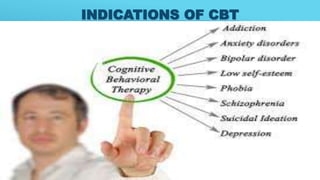
4.To enlist the indications of cognitive behaviour therapy.
5.To describe the impact of cognitive behaviour therapy.
6.Discuss the role of a nurse in cognitive behaviour therapy.
OBJECTIVES
INTRODUCTION
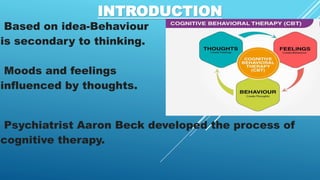
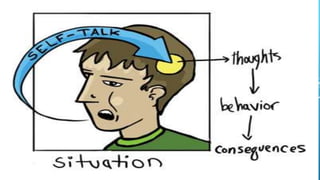
Based on idea-Behaviour
is secondary to thinking.
Moods and feelings
influenced by thoughts.
Psychiatrist Aaron Beck developed the process of
cognitive therapy.
๏ฑThrough CBT, thoughts identified, and
replaced with more realistic thoughts.
๏ฑFocused on using a wide range of strategies
to help people overcome these thoughts
(eg: journaling, role-playing, relaxation
techniques.)
For example, a person who spends a lot of time thinking about plane crashes,
runway accidents, and other air disasters may avoid air travel as a result.
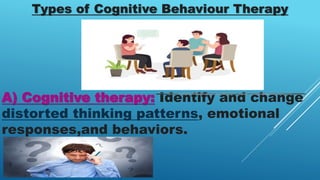
A) Cognitive therapy: Identify and change
distorted thinking patterns, emotional
responses,and behaviors.
Types of Cognitive Behaviour Therapy
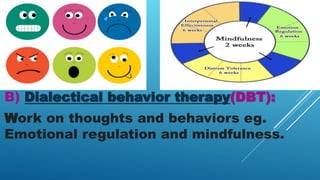
B) Dialectical behavior therapy(DBT):
Work on thoughts and behaviors eg.
Emotional regulation and mindfulness.
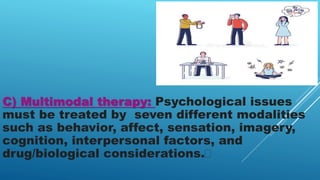
C) Multimodal therapy: Psychological issues
must be treated by seven different modalities
such as behavior, affect, sensation, imagery,
cognition, interpersonal factors, and
drug/biological considerations.๏ปฟ
D) RATIONAL EMOTIVE
BEHAVIOR THERAPY (REBT):
IDENTIFY IRRATIONAL
BELIEFS, ACTIVELY
CHALLENGING THESE
BELIEFS, AND FINALLY
LEARNING TO RECOGNIZE
AND CHANGE THESE
THOUGHT PATTERNS.
INDICATIONS OF CBT
Impact of cognitive behaviour therapy
GOAL:To teach people that they cannot control
every aspect of the world around them but can
control of how they interpret and deal with
things in their environment.
1. People made aware of the negative and unrealistic
thoughts hampering their feelings and moods, they
are started engaging in healthier thinking patterns.
๏ปฟ
2. CBT can be an effective short-term treatment
option.
3. Can help people with certain types of
emotional distress that don't
require psychotropic medication.
4. Shown to effectively help patients overcome
a wide variety of maladaptive behaviors.
5. Often more affordable than some other types
of therapy.
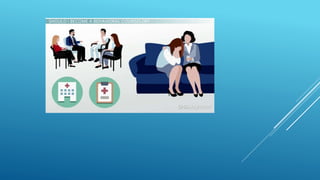
ROLE OF A NURSE IN
COGNITIVE BEHAVIOUR THERAPY
REFERENCES

Cbt ppt

  • 1.
    PRACTICE TEACHING ON COGNITIVEBEHAVIOUR THERAPY PRESENTED BY TAMBOLI AMIT S. FIRST YEAR MSC[PSYCHIATRIC]NURSING MIMH PUNE
  • 3.
    DEFINITION Cognitive behavioral therapy(CBT): A type of psychotherapeutic treatment that helps people learn how to identify and change destructive or disturbing thought patterns that have a negative influence on behavior and emotions.
  • 4.
    AIMS At the endof this practice teaching, the group will be able to acquire thorough knowledge about cognitive behavioural therapy and implement this knowledge in clinical area.
  • 5.
    1.To study thedefinition of cognitive behaviour therapy. 2.To explain the cognitive behaviour therapy model. 3.To describe the various types of cognitive behaviour therapy. 4.To enlist the indications of cognitive behaviour therapy. 5.To describe the impact of cognitive behaviour therapy. 6.Discuss the role of a nurse in cognitive behaviour therapy. OBJECTIVES
  • 6.
    INTRODUCTION Based on idea-Behaviour issecondary to thinking. Moods and feelings influenced by thoughts. Psychiatrist Aaron Beck developed the process of cognitive therapy.
  • 7.
    ๏ฑThrough CBT, thoughtsidentified, and replaced with more realistic thoughts. ๏ฑFocused on using a wide range of strategies to help people overcome these thoughts (eg: journaling, role-playing, relaxation techniques.)
  • 8.
    For example, aperson who spends a lot of time thinking about plane crashes, runway accidents, and other air disasters may avoid air travel as a result.
  • 10.
    A) Cognitive therapy:Identify and change distorted thinking patterns, emotional responses,and behaviors. Types of Cognitive Behaviour Therapy
  • 11.
    B) Dialectical behaviortherapy(DBT): Work on thoughts and behaviors eg. Emotional regulation and mindfulness.
  • 12.
    C) Multimodal therapy:Psychological issues must be treated by seven different modalities such as behavior, affect, sensation, imagery, cognition, interpersonal factors, and drug/biological considerations.๏ปฟ
  • 13.
    D) RATIONAL EMOTIVE BEHAVIORTHERAPY (REBT): IDENTIFY IRRATIONAL BELIEFS, ACTIVELY CHALLENGING THESE BELIEFS, AND FINALLY LEARNING TO RECOGNIZE AND CHANGE THESE THOUGHT PATTERNS.
  • 14.
  • 15.
    Impact of cognitivebehaviour therapy GOAL:To teach people that they cannot control every aspect of the world around them but can control of how they interpret and deal with things in their environment.
  • 18.
    1. People madeaware of the negative and unrealistic thoughts hampering their feelings and moods, they are started engaging in healthier thinking patterns. ๏ปฟ 2. CBT can be an effective short-term treatment option.
  • 19.
    3. Can helppeople with certain types of emotional distress that don't require psychotropic medication. 4. Shown to effectively help patients overcome a wide variety of maladaptive behaviors. 5. Often more affordable than some other types of therapy.
  • 20.
    ROLE OF ANURSE IN COGNITIVE BEHAVIOUR THERAPY
  • 23.